-
-
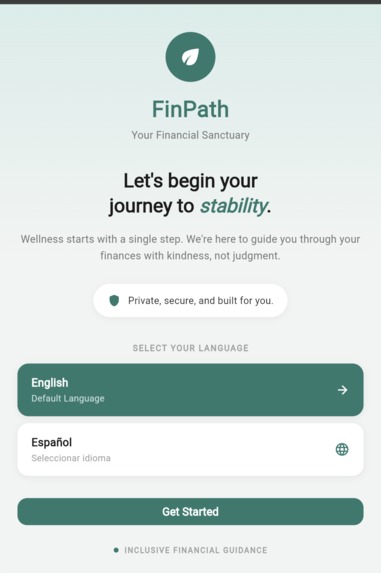
Welcome page
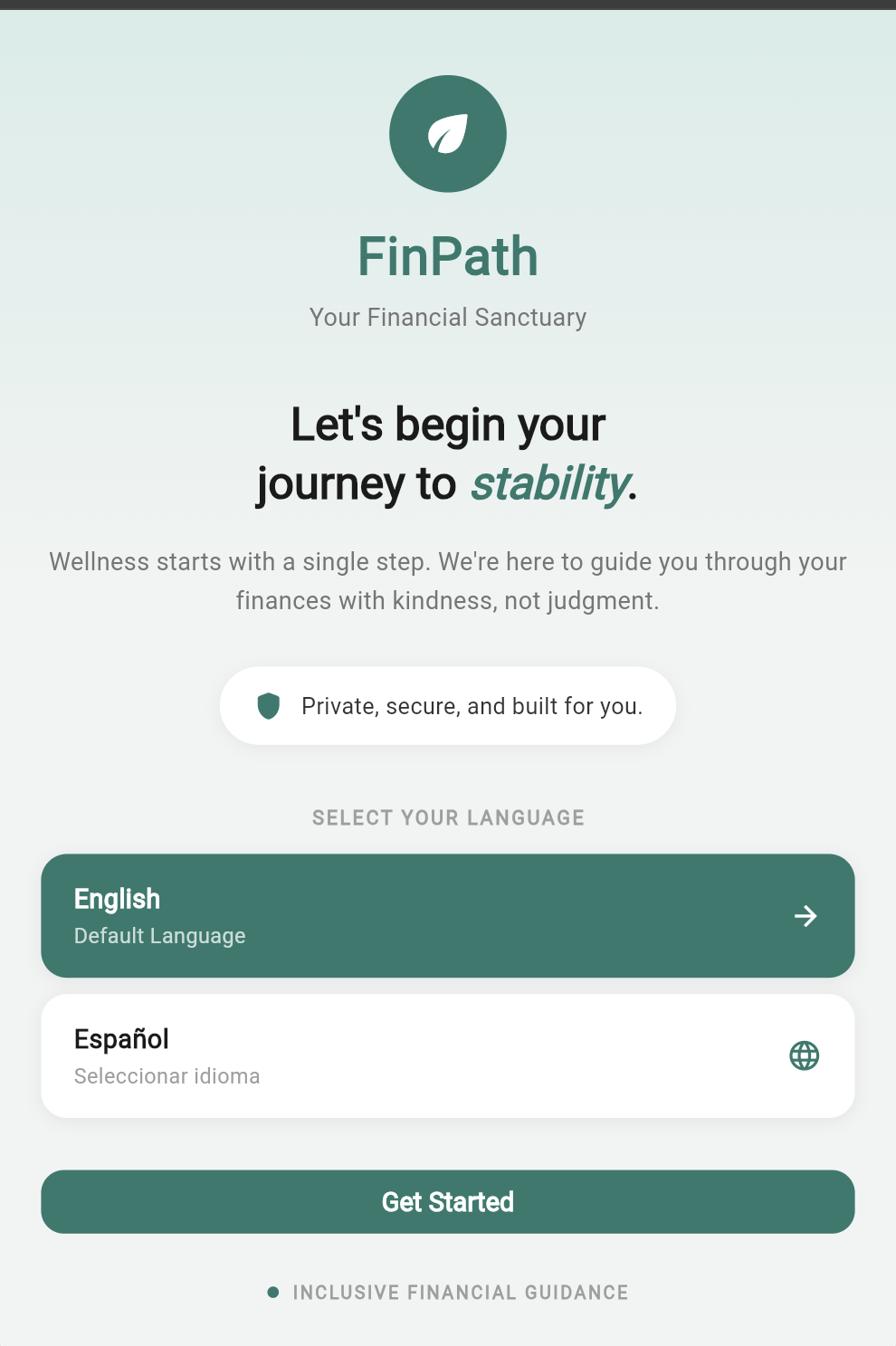
Inspiration
Recently, while filing my taxes, I noticed something interesting, not just with myself, but with my friends too. No one’s first instinct was to go to ChatGPT or any AI tool.
As international students, everyone was looking for someone, someone who had been in their exact situation before. Because when you’re new to things like taxes, insurance, or financial decisions, you don’t even know the right questions to ask… or even the language to use.
So the real problem isn’t a lack of information, it’s knowing what to do next.
That insight led us to build FinPath.
What it does
FinPath is a financial decision engine for beginners.
It understands your personal financial situation through onboarding and translates that into:
A clear risk score A personalized snapshot of your financial gaps A prioritized action plan (top 3 steps) An AI assistant that explains decisions in plain language
Instead of overwhelming users with information, FinPath tells them: 👉 “Here’s your situation — and here’s your next best step.”
It acts like an experienced friend guiding you through unfamiliar financial territory.
How we built it
- Frontend: Flutter mobile app for a smooth, accessible user experience
- Backend: Flask API handling authentication, onboarding, and business logic
- Database: PostgreSQL (via Render), storing user profiles and progress
- AI Layer: Claude API (Anthropic) for: generating personalized financial insights explaining concepts in simple, human language
- Architecture:
- Onboarding → Profile stored → Risk calculated → Actions generated
- Token-based authentication with refresh handling
- Modular services for risk engine, action generation, and AI responses
Challenges we ran into
- Schema evolution: Transitioning from a simple model to a richer onboarding structure required aligning frontend, backend, and database simultaneously
- Token handling: Implementing proper access + refresh token flow to avoid session issues
- AI reliability: Ensuring the app doesn’t break when the AI API fails (we added fallback logic) Data consistency: Moving from numeric IDs to string-based action keys across the entire app
- UX alignment: Making sure the UI reflects real user states (e.g., renter’s insurance vs “needs renters insurance”)
Accomplishments that we're proud of
Schema evolution: Transitioning from a simple model to a richer onboarding structure required aligning frontend, backend, and database simultaneously Token handling: Implementing proper access + refresh token flow to avoid session issues AI reliability: Ensuring the app doesn’t break when the AI API fails (we added fallback logic) Data consistency: Moving from numeric IDs to string-based action keys across the entire app UX alignment: Making sure the UI reflects real user states (e.g., renter’s insurance vs “needs renters insurance”)
What we learned
The hardest part of financial tools isn’t data — it’s decision clarity AI is most powerful when used for contextual guidance, not just answering questions Consistency across frontend, backend, and database is critical Building for beginners means: simplifying language reducing choices guiding step-by-step A system that never breaks (fallbacks) is more valuable than a perfect one
What's next for FinPath
The hardest part of financial tools isn’t data — it’s decision clarity AI is most powerful when used for contextual guidance, not just answering questions Consistency across frontend, backend, and database is critical Building for beginners means: simplifying language reducing choices guiding step-by-step A system that never breaks (fallbacks) is more valuable than a perfect one

Log in or sign up for Devpost to join the conversation.