-
-
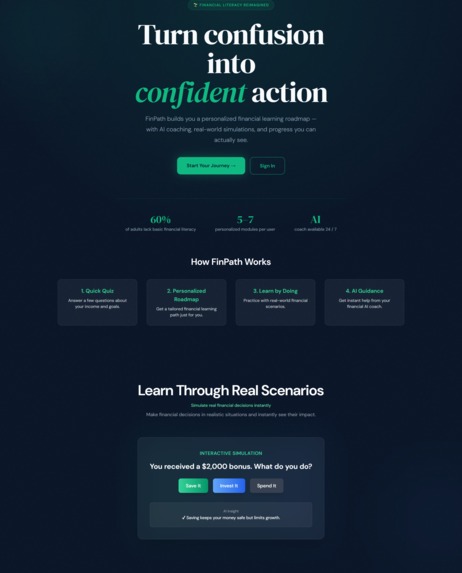
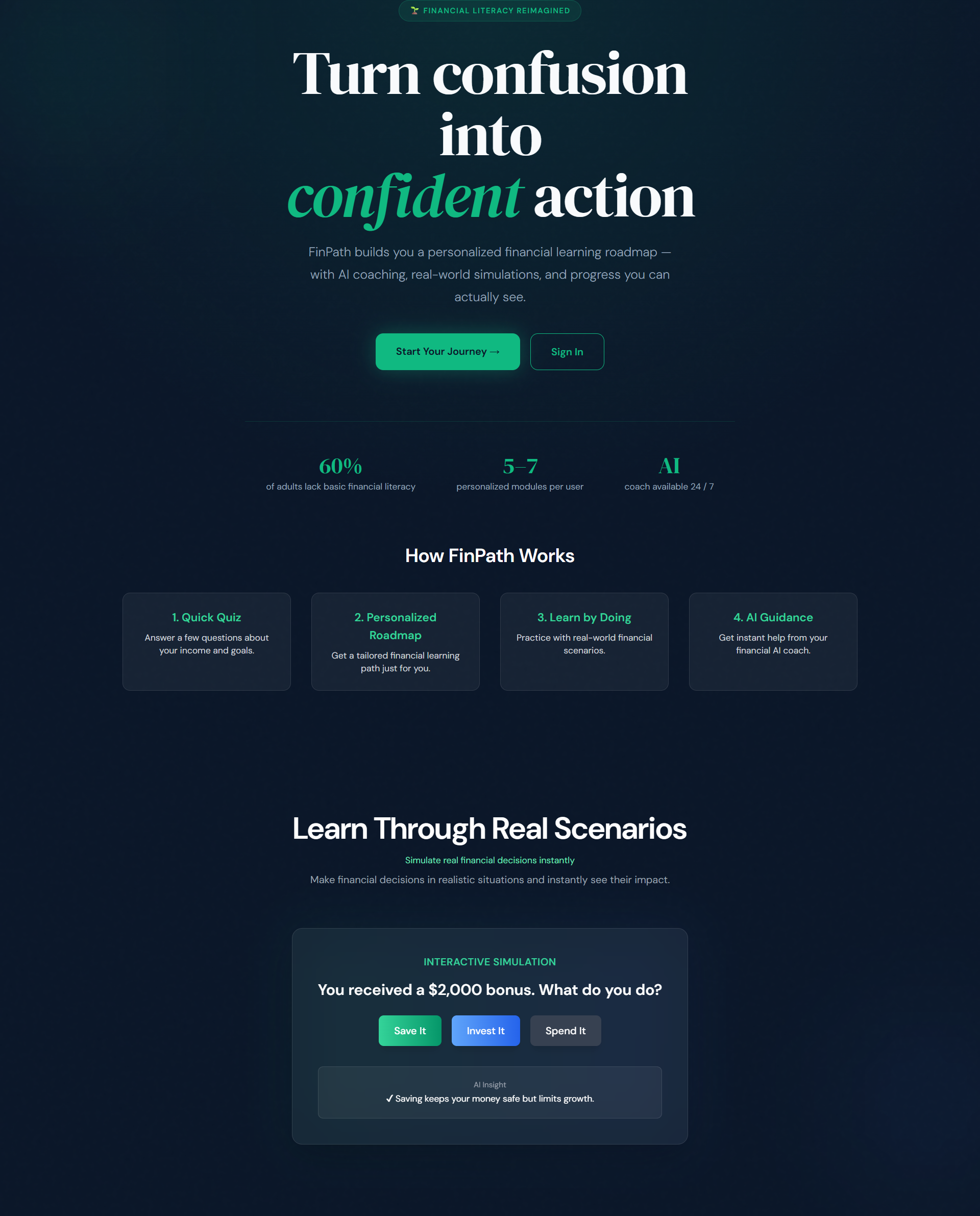
Landing page
-
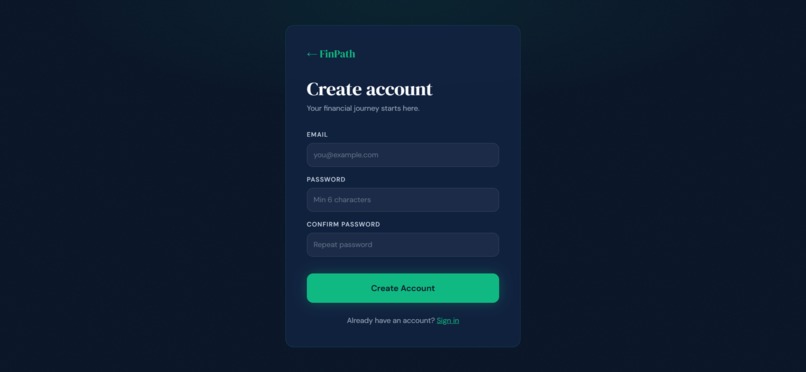
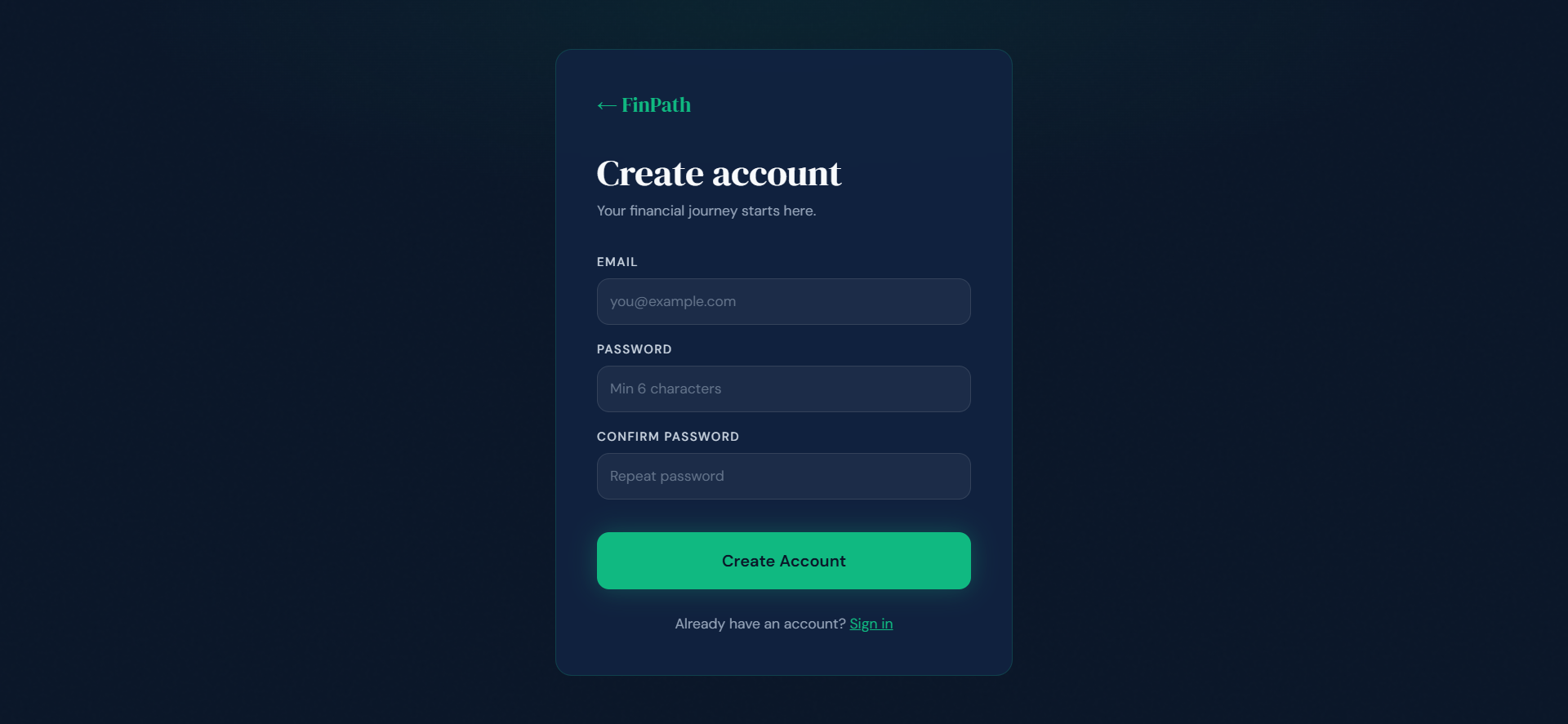
Sign-up page
-
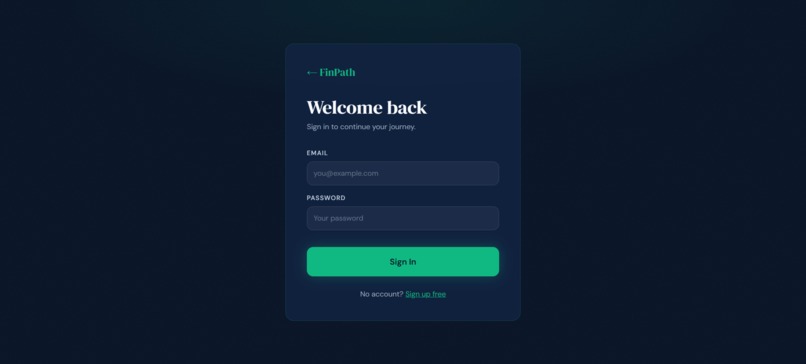
Sign-in page
-
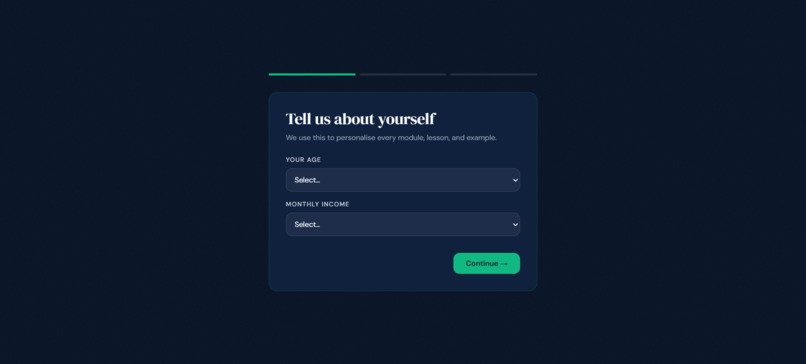
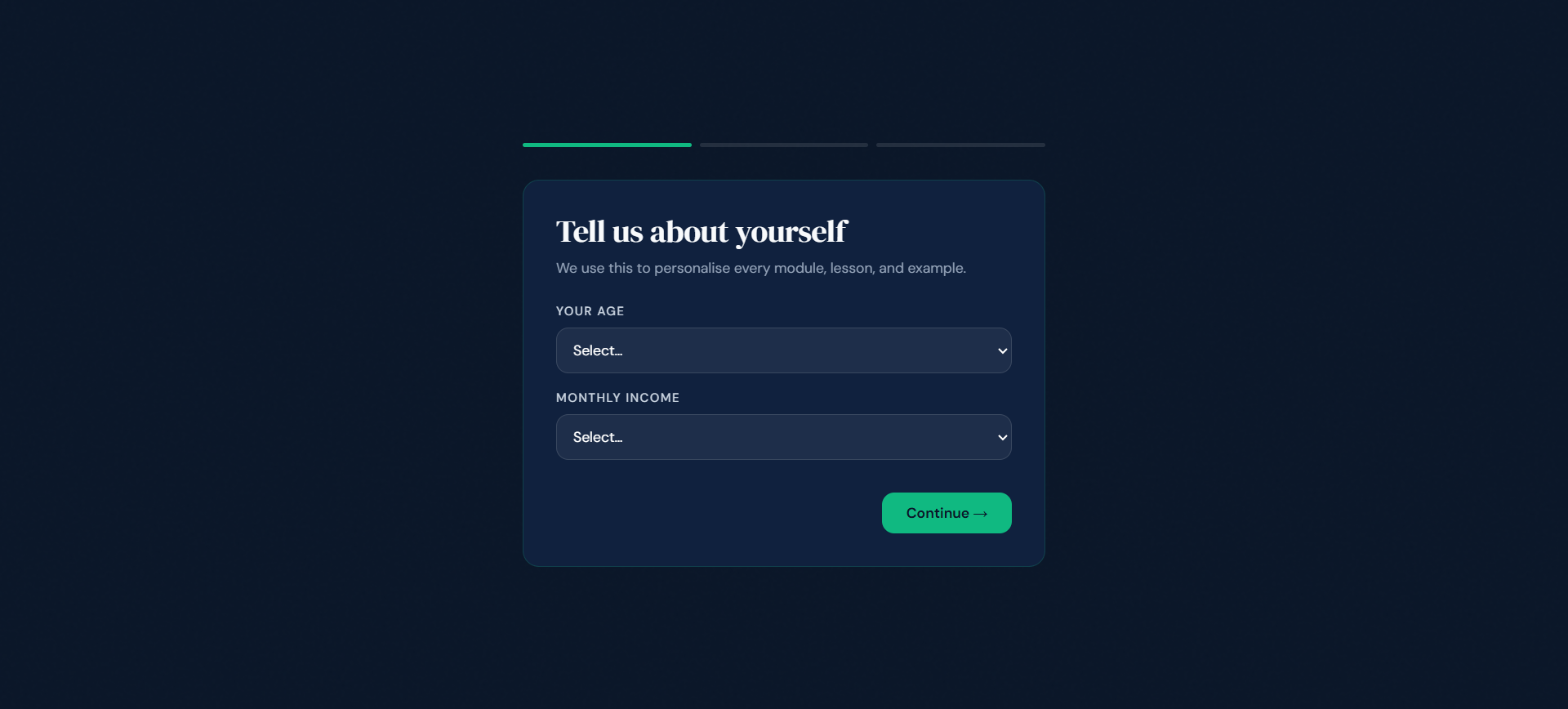
Create account first page
-
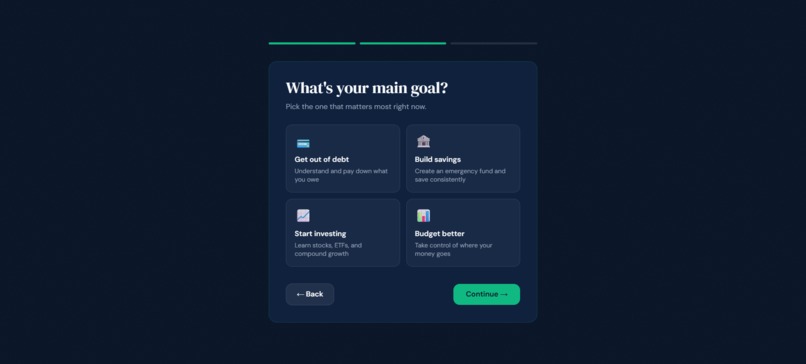
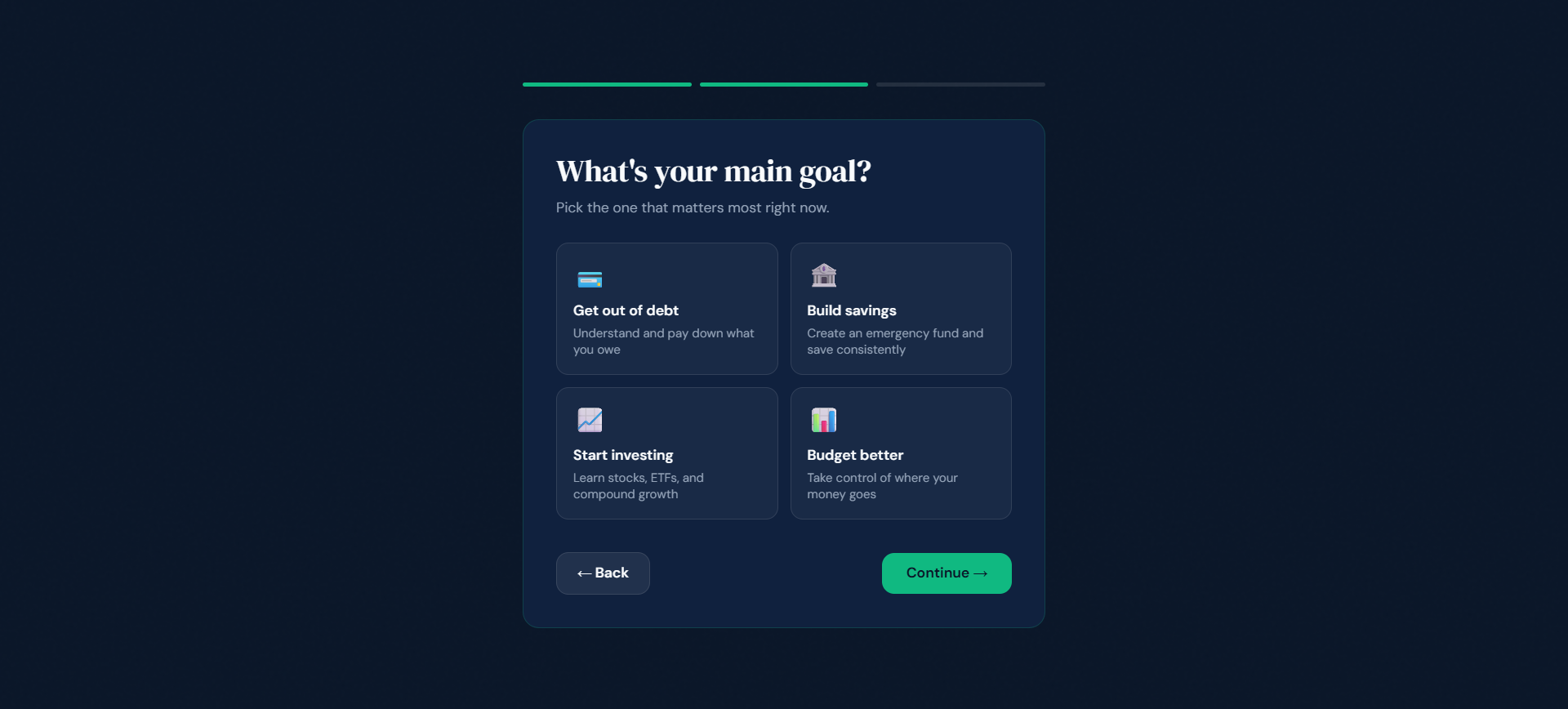
Create account second page
-
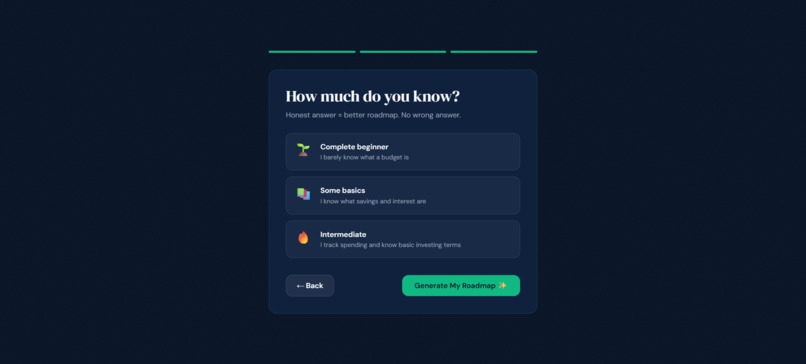
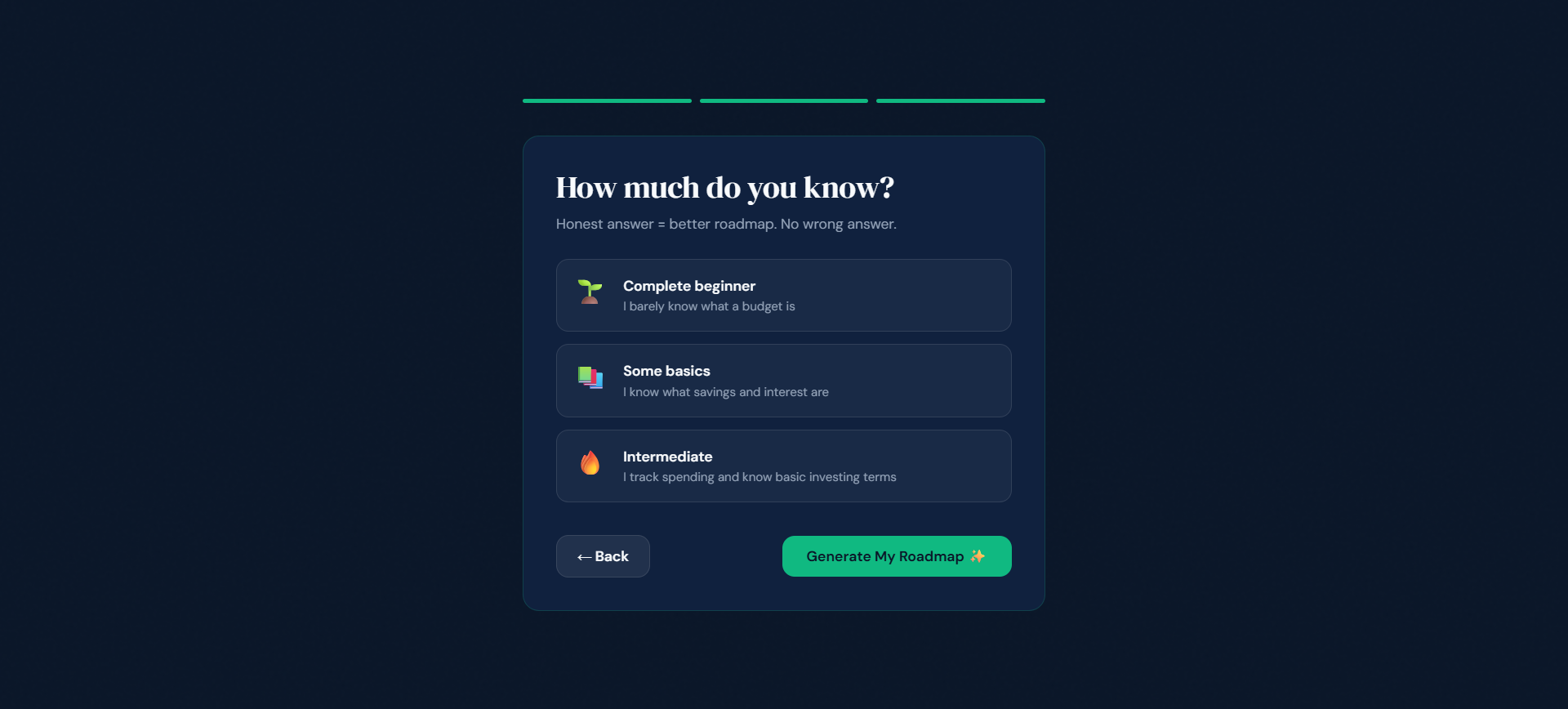
Create account third page
-
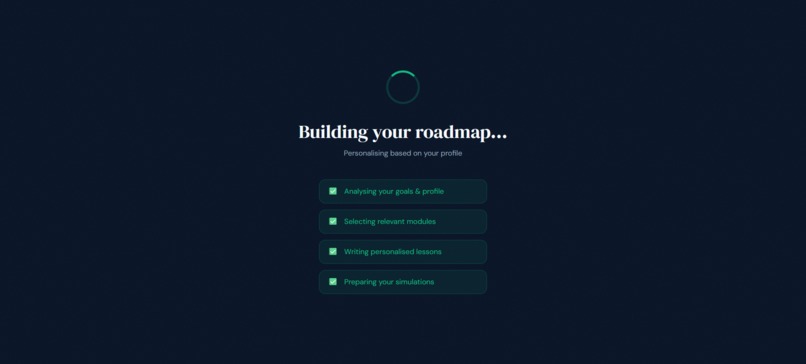
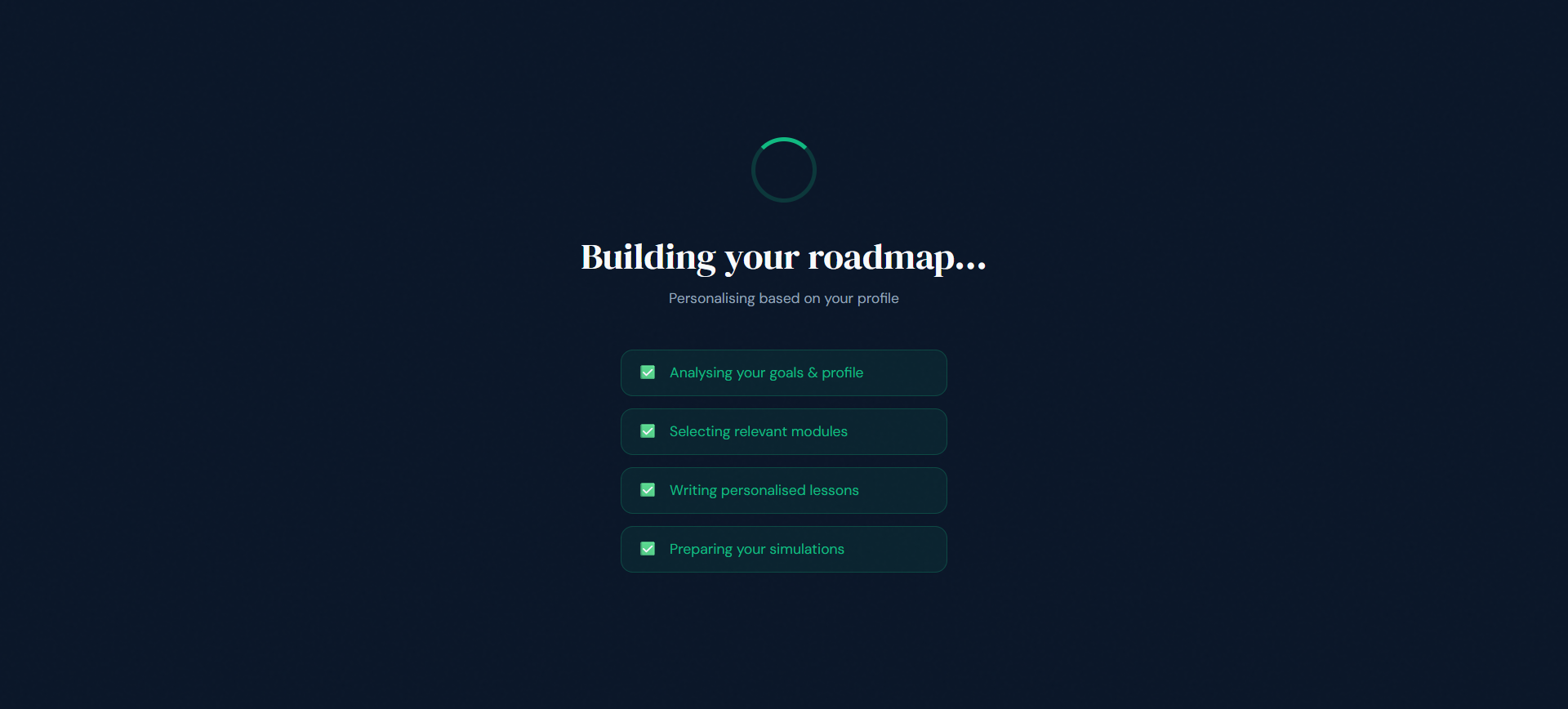
Building Roadmap Page
-
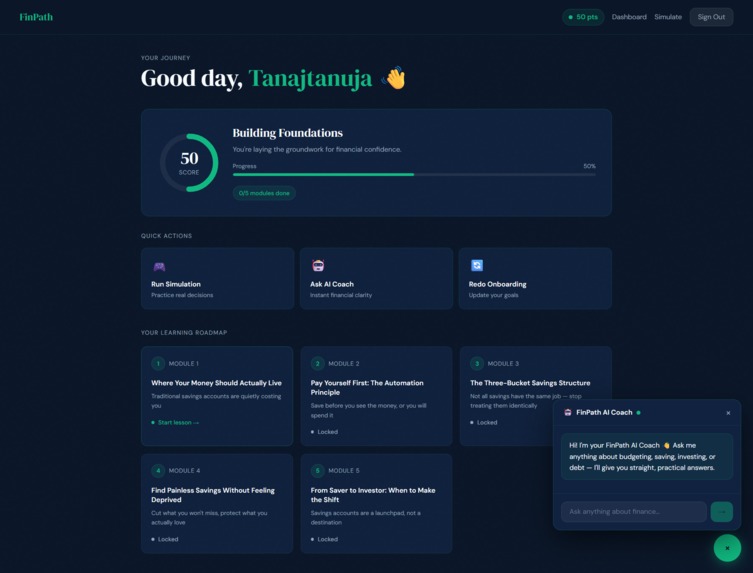
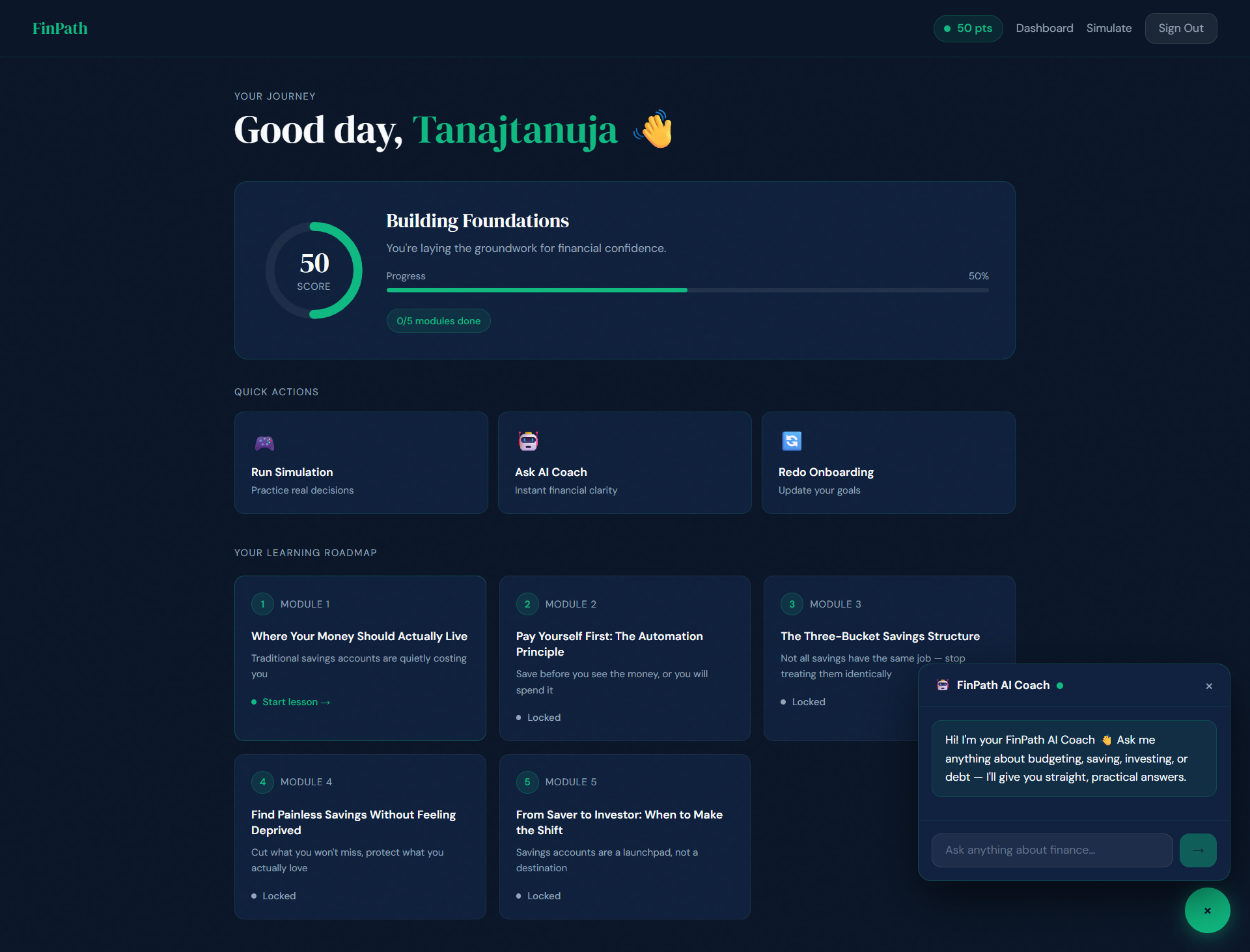
Dashboard with AI chatbox
-
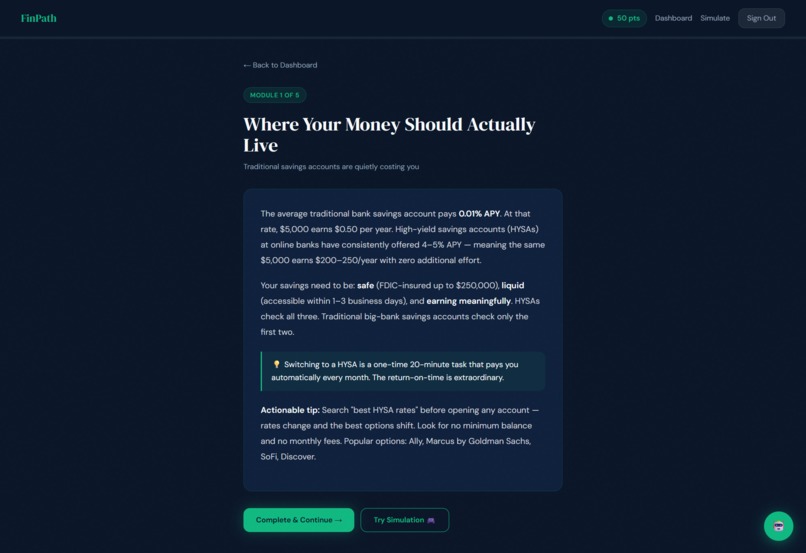
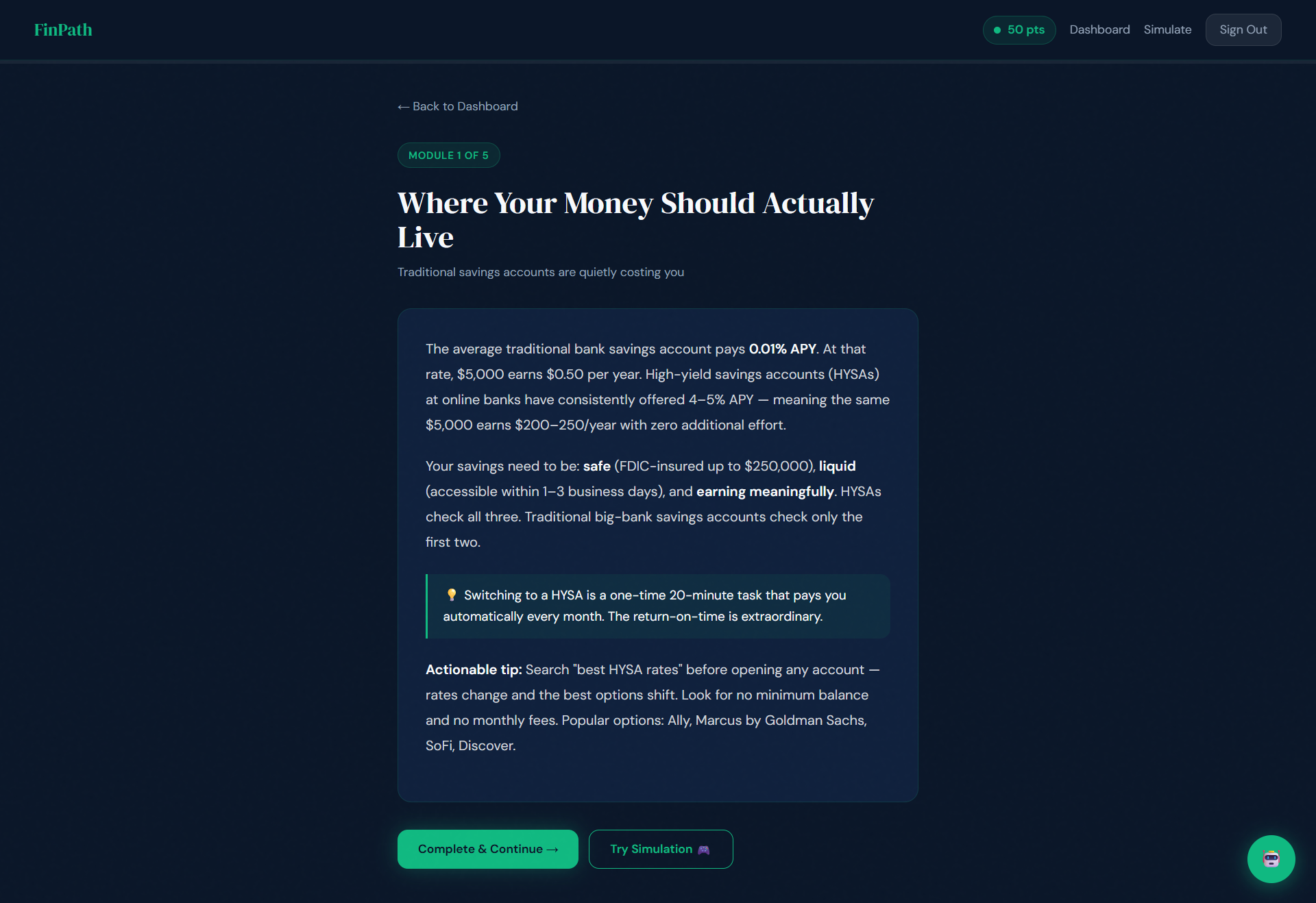
Module page
-
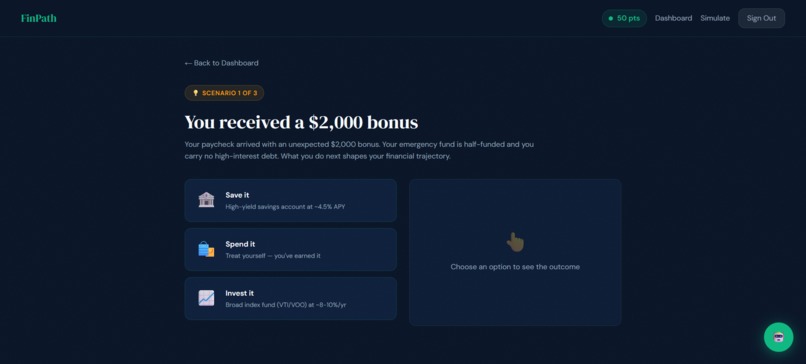
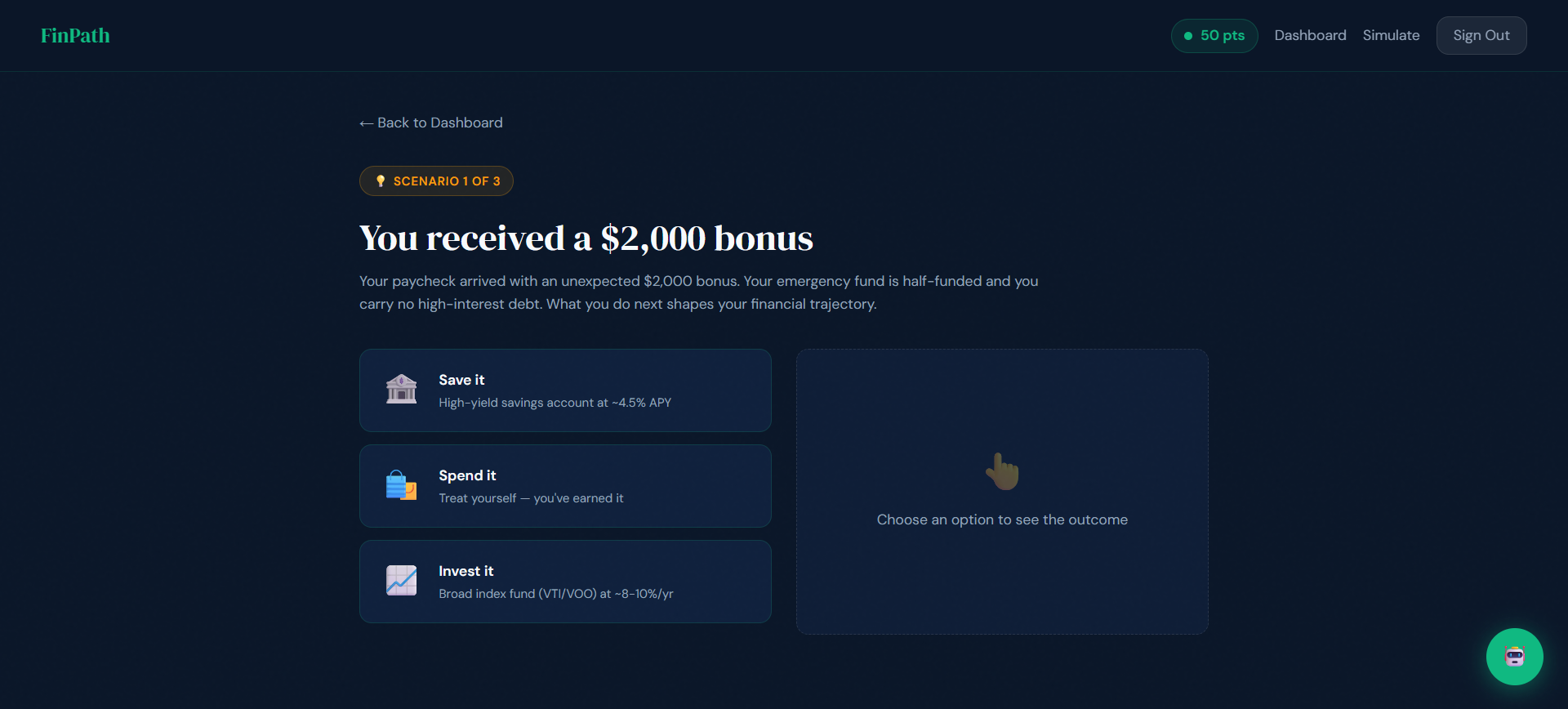
Simulation page
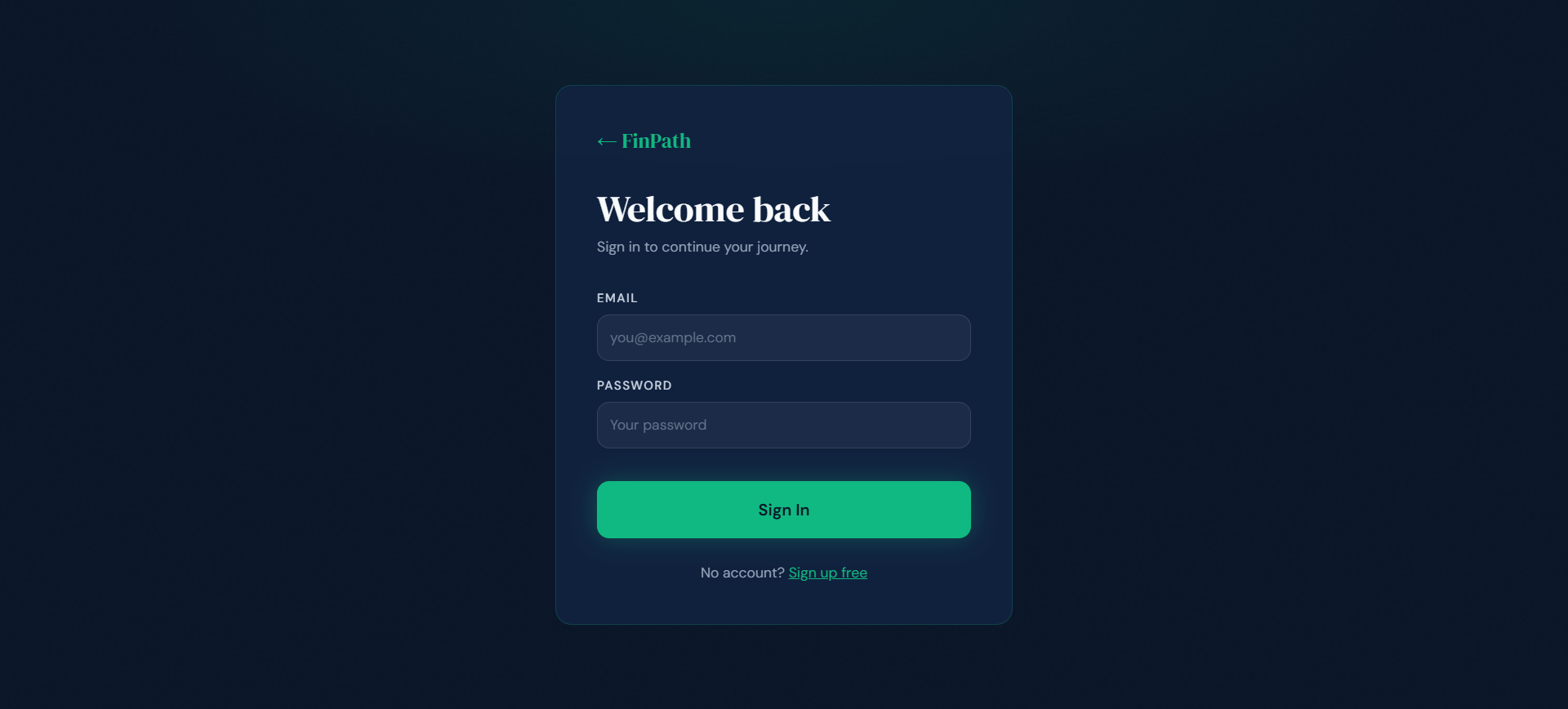
Inspiration
Over 60% of adults lack basic financial literacy — not because they're careless, but because every existing resource fails them in a different way. YouTube videos are too generic. Textbooks are too complex. Articles are too passive. None of them know your age, your income, or your specific goal.
We kept asking: what if a tool could meet someone exactly where they are financially, and build a personalized path forward, not a one-size-fits-all lecture? That question became FinPath.
What It Does
FinPath is an AI-powered financial literacy platform that turns your personal financial situation into a custom learning roadmap.
Users complete a 3-step onboarding quiz, age, income bracket, financial goal, and knowledge level and Claude AI generates a personalized 5-module learning roadmap built specifically for them. Every lesson, every example, and every tip is tailored to their exact profile.
Key features:
- Personalized AI Roadmap: 5 modules generated by Claude AI based on your unique profile
- Interactive Lessons: Plain-English explanations with real-world examples relevant to your income and goals
- Real-World Simulations: Make financial decisions (save, spend, invest) and see projected outcomes with animated charts
- AI Coach: A context-aware floating chat coach available on every page, powered by Claude, that knows your financial profile
- Confidence Score: A live score that climbs as you complete lessons and make smart simulation choices, giving you visible proof of progress
How We Built It
We built FinPath as a full-stack Next.js 14 application with the following architecture:
- Frontend: Next.js 14 (App Router), Tailwind CSS, Framer Motion for animations
- Backend: Next.js API Routes (Node.js serverless functions)
- AI: Anthropic Claude API (
claude-haiku-4-5) — used for roadmap generation and the AI Coach, with full user context injected into every prompt - Auth: bcryptjs password hashing + JWT tokens with 7-day expiry
- Database: JSON file-based storage (zero-config, instantly deployable)
- Charts: Custom inline SVG — no external chart library dependency
The Claude API integration is the core of FinPath. Every roadmap prompt includes the user's age, income, goal, and knowledge level, so Claude generates content that is genuinely personalized, not generic. The AI Coach also receives the full user profile as system context, so its answers are relevant to that specific person's situation.
Challenges We Ran Into
Building this project surfaced several bugs that we caught and fixed before submission:
- Roadmap API ignored all user inputs: the original code never used age, income, goal, or level. Every user was getting the same generic roadmap. We rewrote the code to inject all four variables explicitly.
- JSON parsing crash on Claude markdown fences: if Claude returned
jsonwrapped output,JSON.parsewould throw silently and the dashboard would break. We added fence stripping and shape validation before storing. - JWT tokens had no expiry: the original implementation created tokens that lived forever. Fixed with a 7-day expiry.
- Login routing ignored existing roadmaps: returning users were always pushed back to onboarding even if they already had a roadmap. Fixed by checking localStorage before routing.
- Missing Content-Type headers: all client-side fetch calls were missing
Content-Type: application/json, causing intermittent body parsing failures.
Accomplishments That We're Proud Of
- The AI roadmap genuinely feels personalized: two users with different goals and income levels get meaningfully different content
- The simulation engine teaches through consequence, not instruction: users feel the financial impact of their decisions in real time
- The app works fully offline with a rich fallback content library (4 goals × 5 full modules): no dependency on API availability for the core demo
- The entire project is production-deployable to Vercel in a single command
What We Learned
- Prompt engineering matters enormously: the difference between a generic and a genuinely personalized AI response comes down to exactly what context you inject and how
- Simulation-based learning is far more engaging than passive reading: users remember decisions they made, not content they scrolled past
- Graceful degradation is a competitive advantage in hackathons: when the API is slow or unavailable, the app should still work and impress
What's Next for FinPath
- Real financial data integration: connecting FRED API (Federal Reserve) for live economic data in simulations
- Streak and badge system: gamification layer to drive daily return visits
- School and community center deployment: white-label version for nonprofits and financial literacy programs
- Progress sharing: shareable certificate on roadmap completion for social accountability
- Multi-language support: financial literacy is a global problem; English-only is a limitation we want to fix
Built With
- api
- bcryptjs
- framer-motion
- json
- next.js
- node.js
- react
- tailwind
- typescript


Log in or sign up for Devpost to join the conversation.