-
-
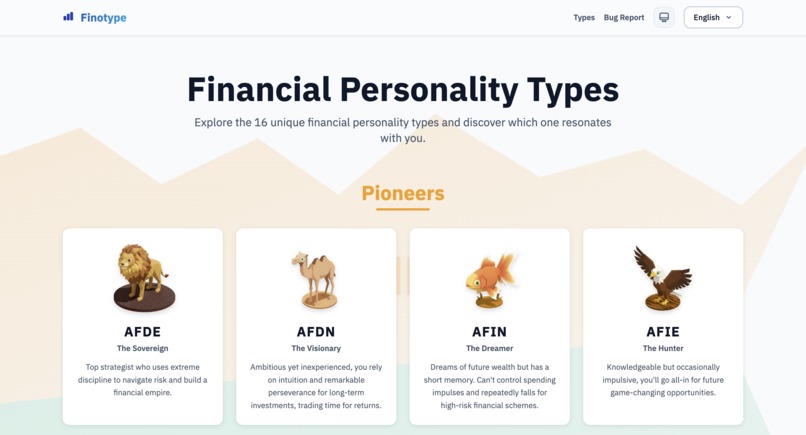
Financial Personality Overview
-
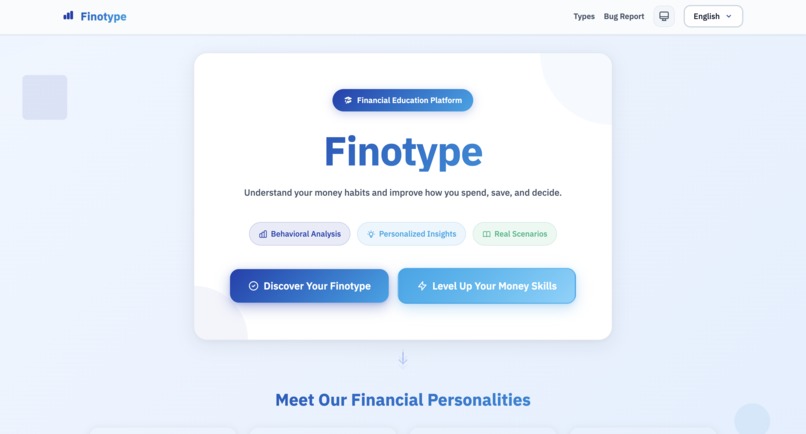
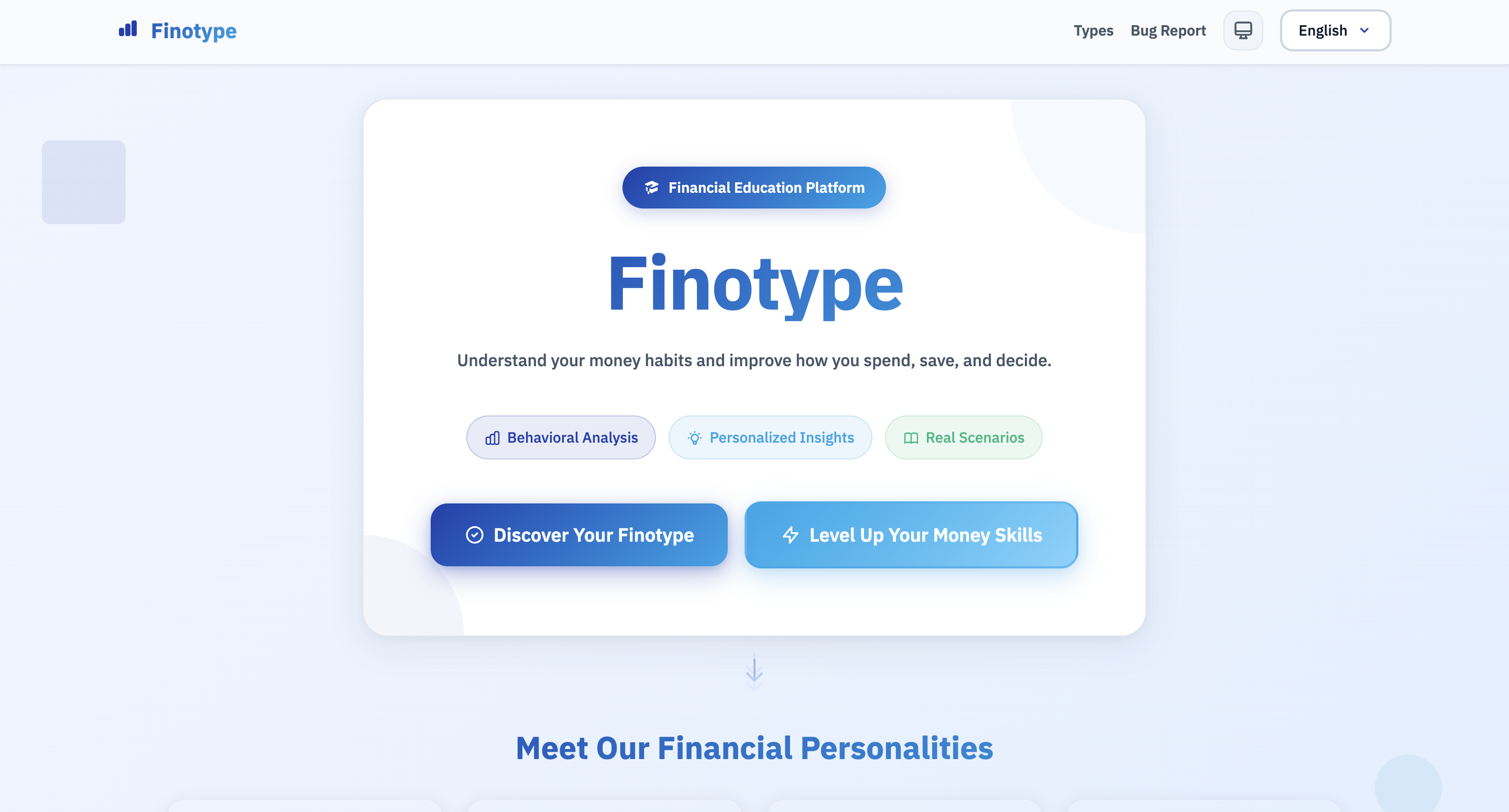
Home Page - Start Testing / Learning
-
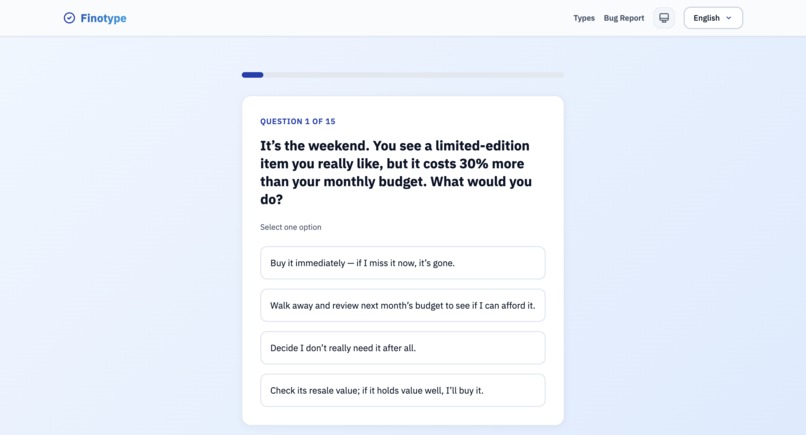
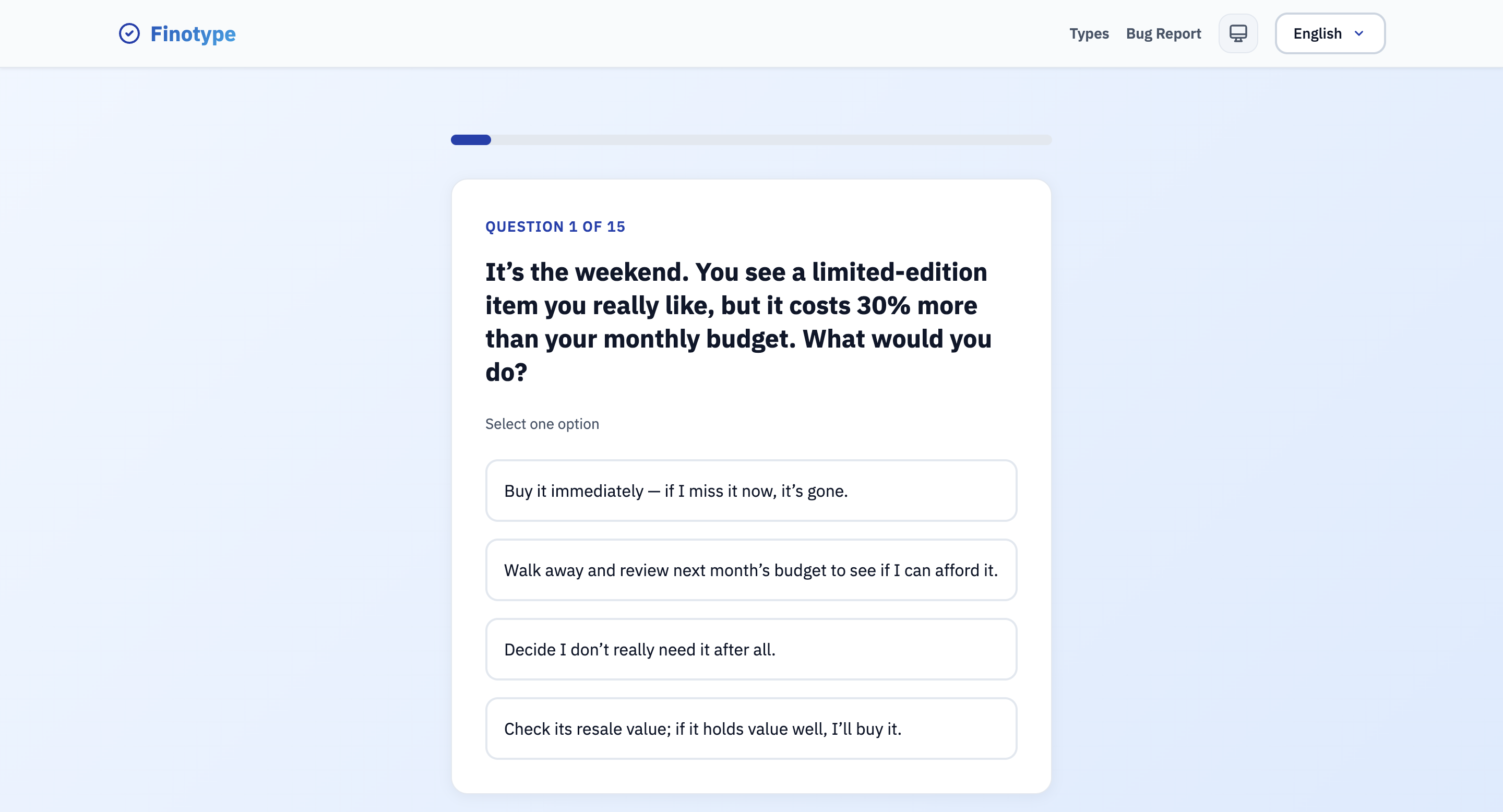
Scenario Questions
-
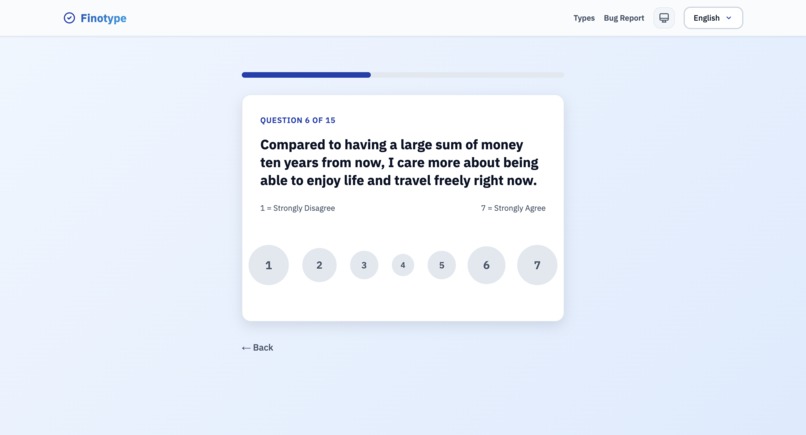
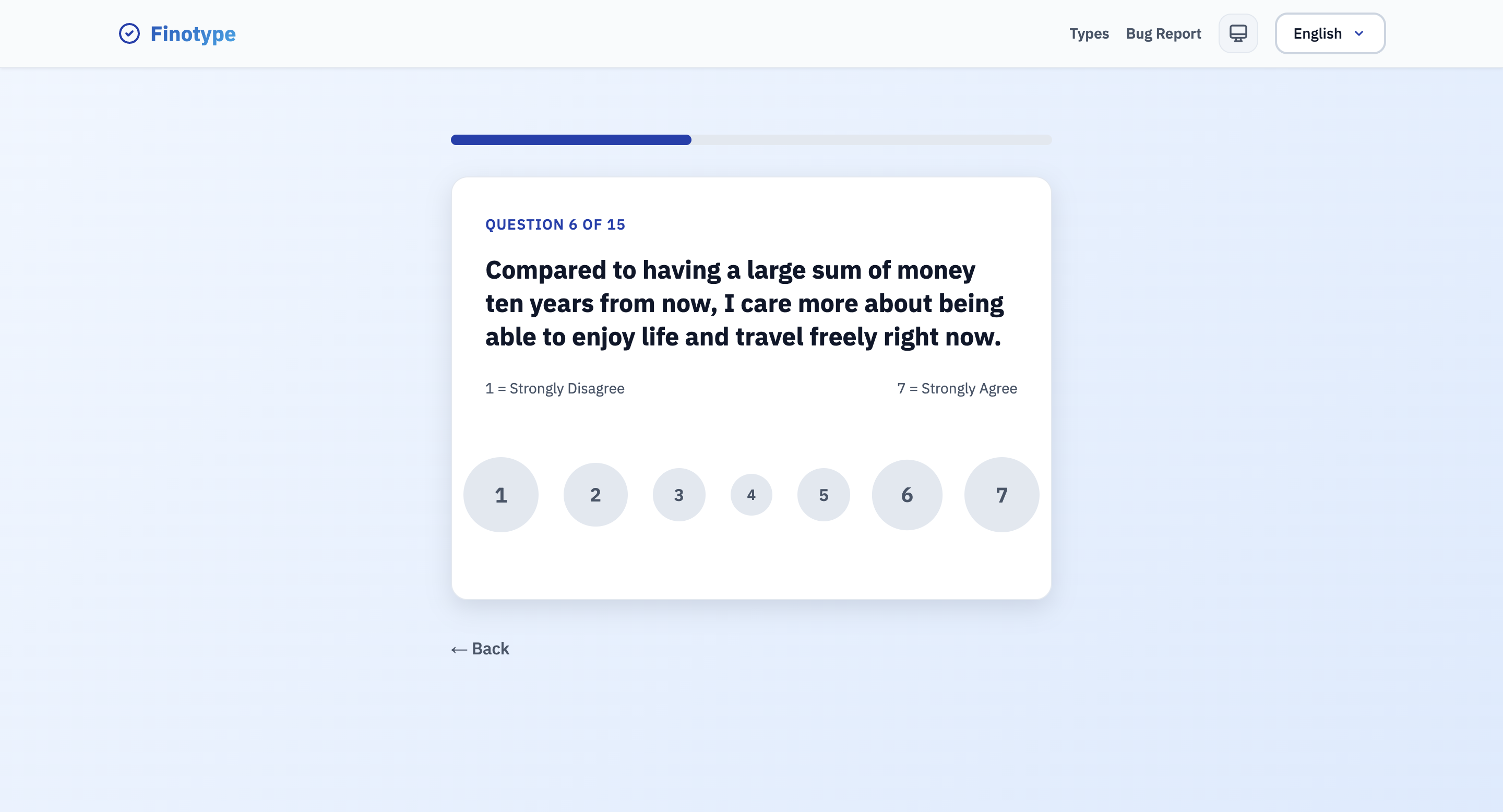
Preference Scale Questions
-
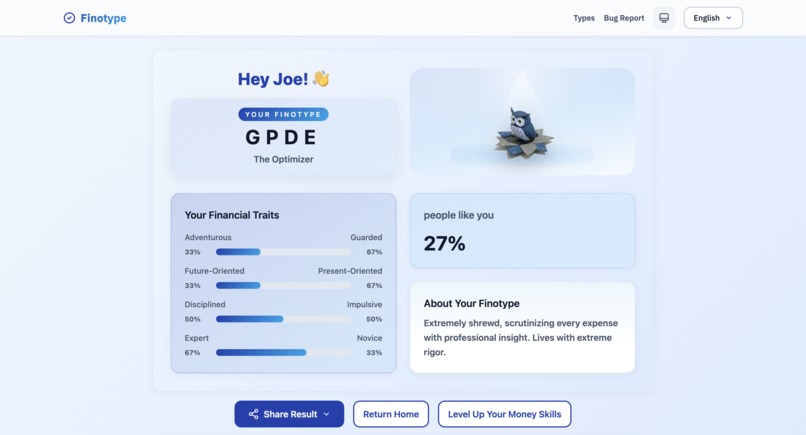
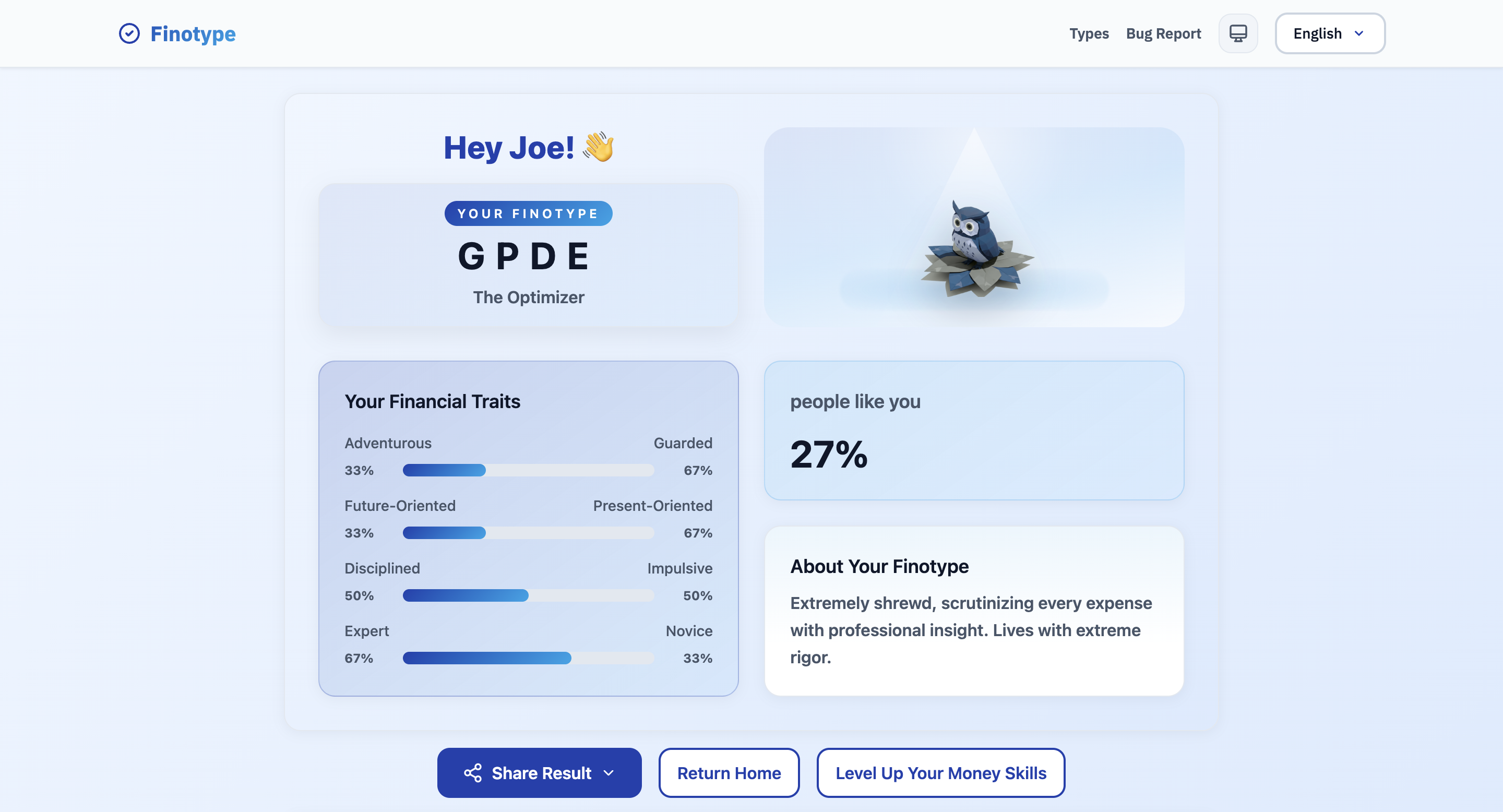
Financial Personality Results
-
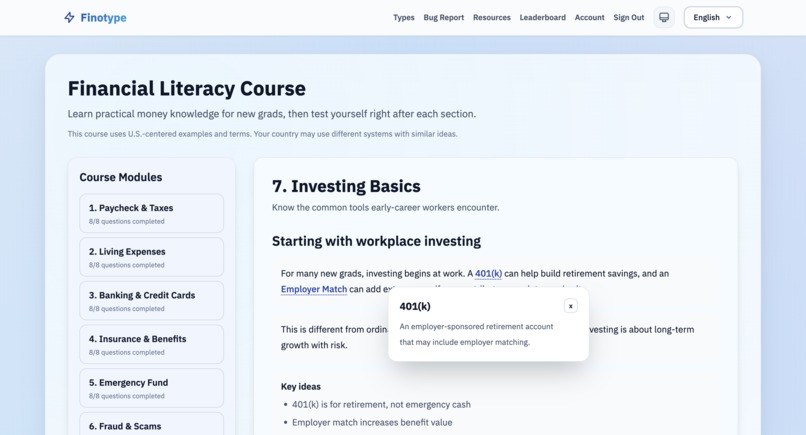
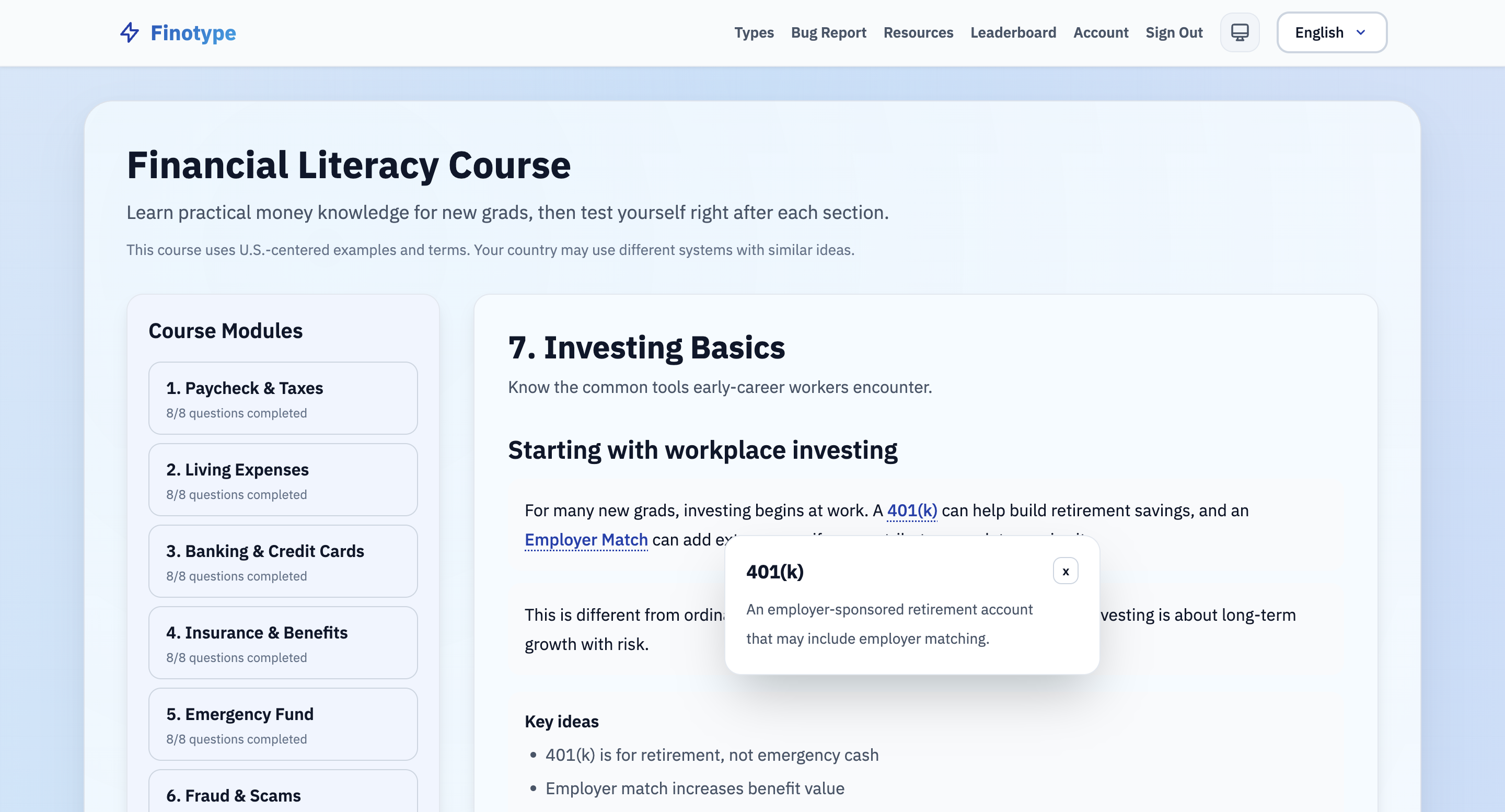
Learning Module Contents
-
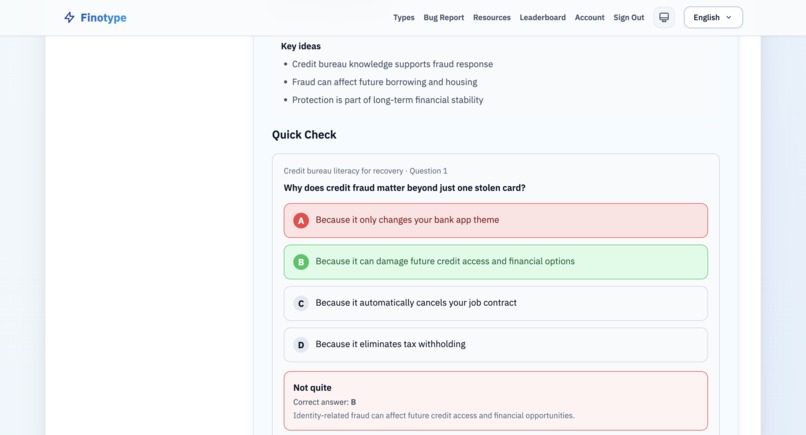
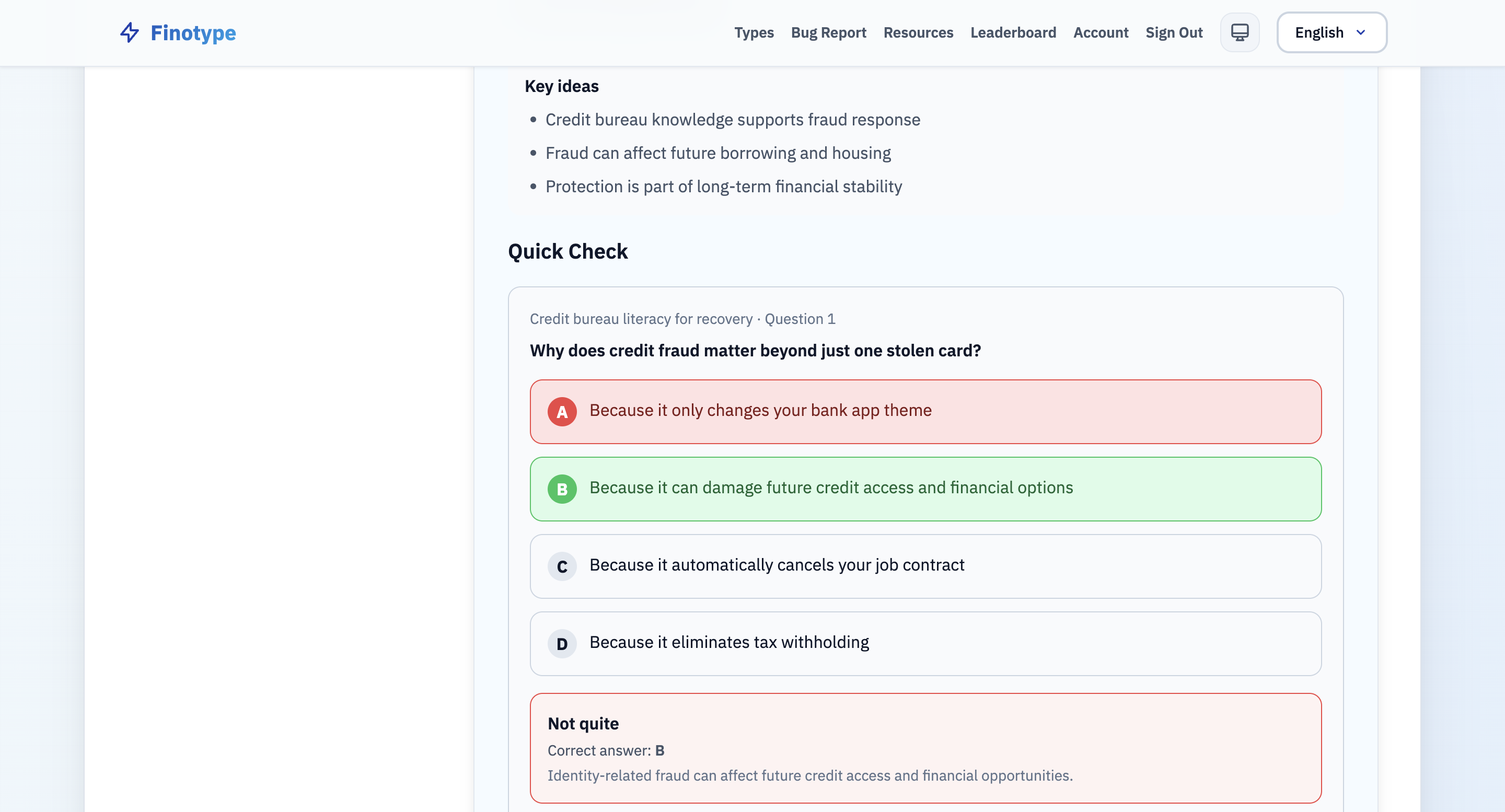
Quiz Interface
-
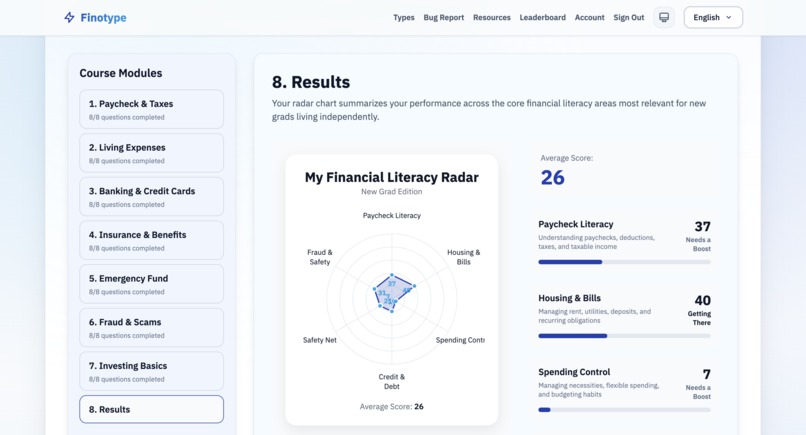
Learning Outcomes
-
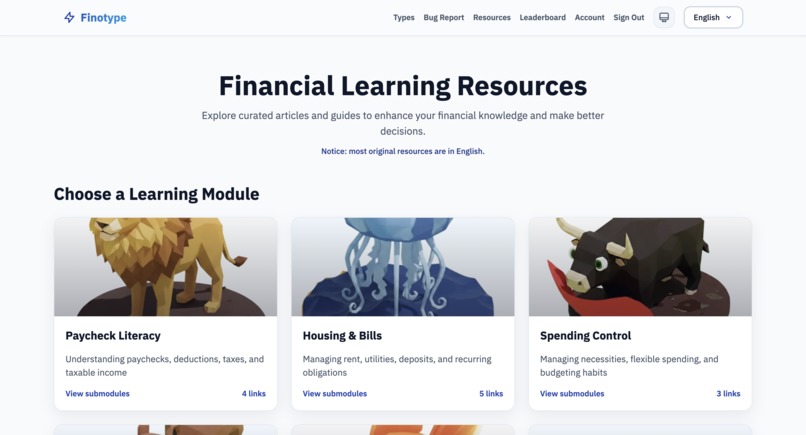
Curated Learning Materials
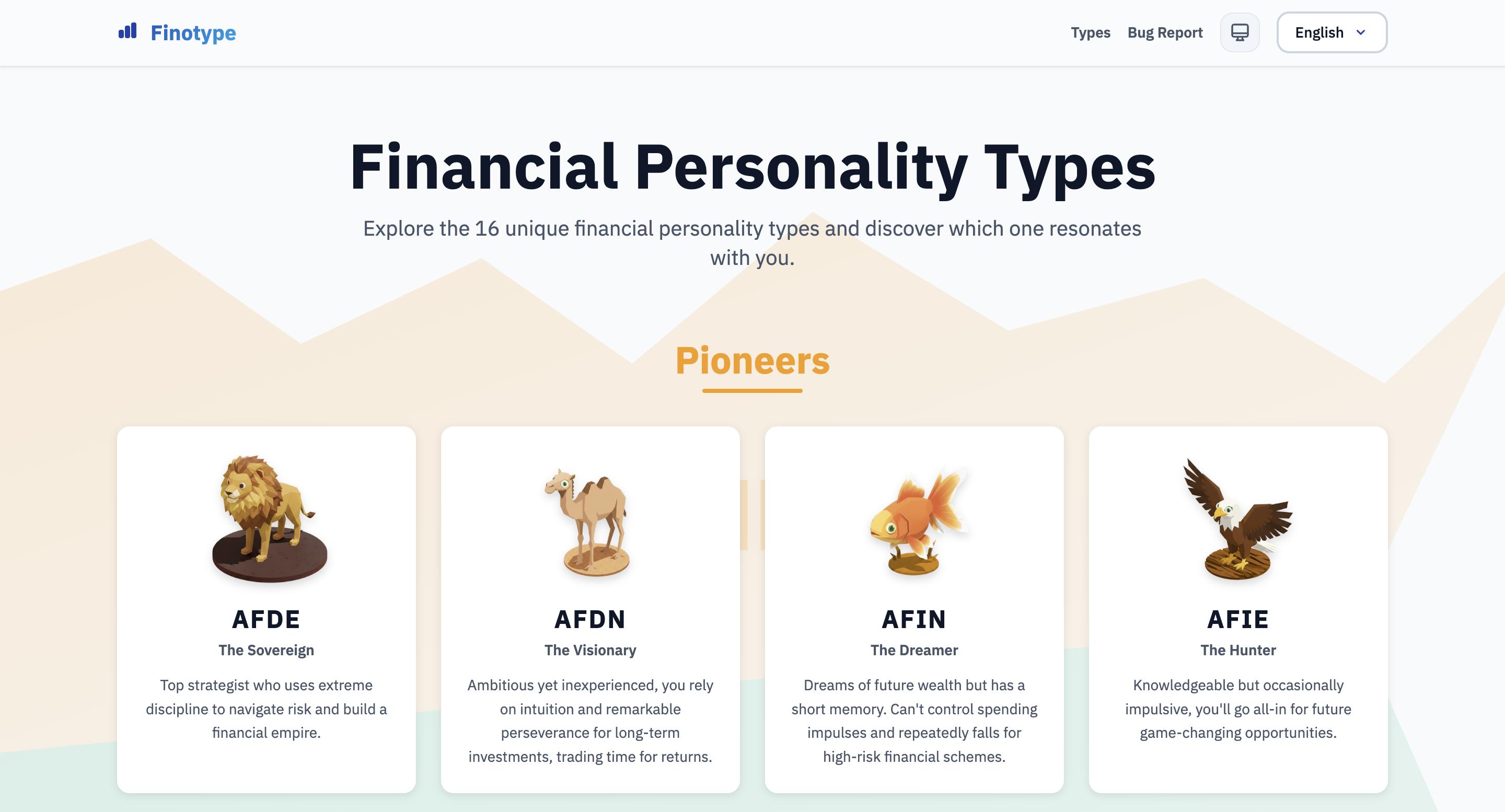
Inspiration
Finotype started from something very personal.
As students transitioning into independent life, we found ourselves unprepared for real financial decisions: getting our first paycheck, managing rent, using credit cards, or understanding taxes. Despite years of education, practical financial literacy was missing.
And it wasn’t just us. Many people around us felt the same way–confused, unsure, and often overwhelmed when it came to managing money independently.
We also noticed something deeper: even when people know what they should do financially, they don’t always act on it. That’s because money isn’t just about knowledge, it’s also about behavior.
This led us to the key question: What if financial education started with understanding yourself?
Finotype was created to bridge this gap, by making financial literacy more personal, relevant, and actionable.
What it does
Finotype is an interactive financial literacy platform that combines behavioral insights with structured learning.
It helps users:
- Discover their financial personality through a scenario-based assessment
- Understand their strengths and blind spots in managing money
- Improve through personalized, modular learning
The platform integrates two core experiences:
1. Financial Personality Test
Users complete an interactive, scenario-based assessment that evaluates how they make financial decisions in real-life situations.
The system analyzes responses across key behavioral dimensions, such as risk tolerance, time preference, self-control, to generate a financial personality profile.
This helps users understand their habits, strengths, and blind spots, turning abstract financial behavior into something concrete and relatable.
2. Learning Hub
Based on their needs, users can enter a structured learning hub that provides:
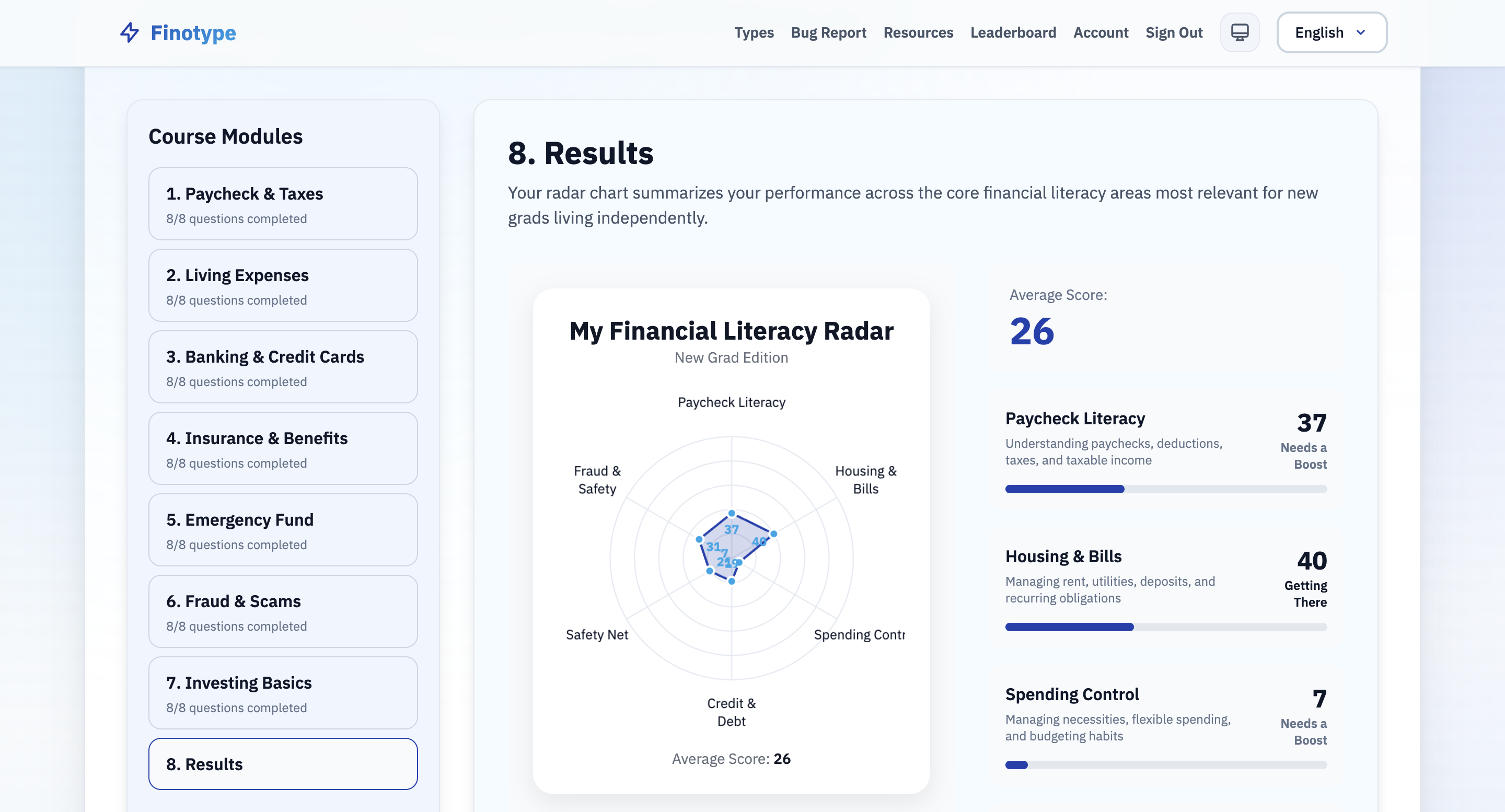
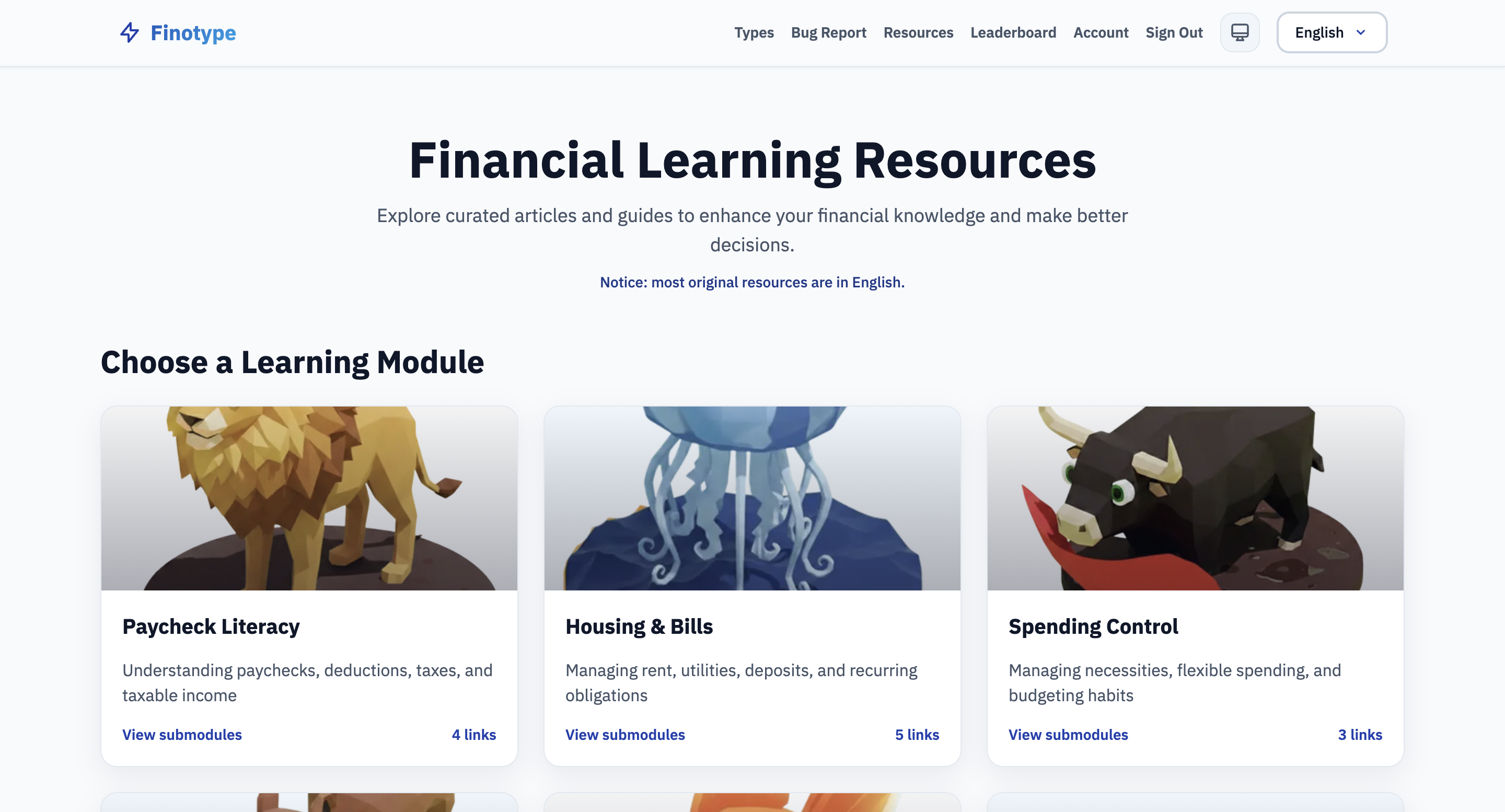
- Modular lessons on topics like taxes, expenses, credit cards, insurance, and investing basics
- Short quizzes to reinforce understanding
- A visual radar diagram and detailed analytics to track strengths and weaknesses
User progress is saved over time, creating a continuous learning experience.
How we built it
We built Finotype with a focus on modularity, scalability, and behavioral alignment.
Behavioral engine:
At the core is a rule-based classification system grounded in behavioral finance and psychology research, mapping user responses across key dimensions such as risk tolerance, time preference, self-control, and financial literacy.
It integrates multi-layered inputs (including scenario-based decisions, Likert-scale preferences, behavioral indicators, and rapid instinctive responses) to generate a nuanced, behaviorally grounded financial personality profile.Learning system:
A modular, data-driven architecture where content, logic, and UI are separated for easy expansionBackend:
Next.js API routes with Supabase for authentication (Google/email signup) and PostgreSQL databaseFrontend:
Next.js with React component-based design and Tailwind CSS for stylingAccessibility & Localization:
Alt text for images; Keyboard navigation support (enter key for actions); Multi-language support via next-intl (EN, ES, ZH)
Challenges
One of our biggest challenges was translating behavioral insights into actionable learning.
While it’s relatively straightforward to categorize users, designing meaningful pathways that actually help them improve required careful iteration.
We also faced challenges in:
- Designing realistic and engaging survey questions
- Balancing simplicity with accuracy in financial education
- Maintaining engagement while delivering educational value
- Ensuring the system is both technically structured and intuitive for users
These challenges pushed us to continuously refine both the logic and the user experience.
Accomplishments that we're proud of
- Designing a behavior-first financial literacy model
- Building a closed-loop learning system (diagnosis → action → feedback)
- Delivering a cohesive user journey across multiple features
- Creating a platform that is both technically structured and user-friendly
We also successfully positioned financial education as something interactive and personalized, rather than passive and generic.
What we learned
Through building Finotype, we learned that:
- Self-awareness is a powerful entry point for learning
- Personalization significantly increases engagement
- Financial behavior is as important as financial knowledge
- Simplicity is critical when designing educational tools
- Technical architecture must align closely with user experience
We also gained valuable experience in building scalable, user-centered systems that integrate psychology, education, and technology.
What’s next for Finotype
Looking ahead, we see strong potential for Finotype to grow in both capability and impact.
Future directions include:
- Adaptive personalization based on user behavior over time
- AI-driven insights for real-time financial guidance
- Enhanced gamification to increase engagement
- Partnerships with schools and organizations to reach more users
In the long term, Phenotype has the potential to scale as a platform that improves financial literacy at both an individual and societal level.
Our goal is to redefine financial education as a personalized, behavior-driven experience that helps people build lifelong financial confidence.
Built With
- next-intl
- next.js
- postgresql
- react
- rest
- supabase
- tailwind
- typescript
- vercel

Log in or sign up for Devpost to join the conversation.