-
-
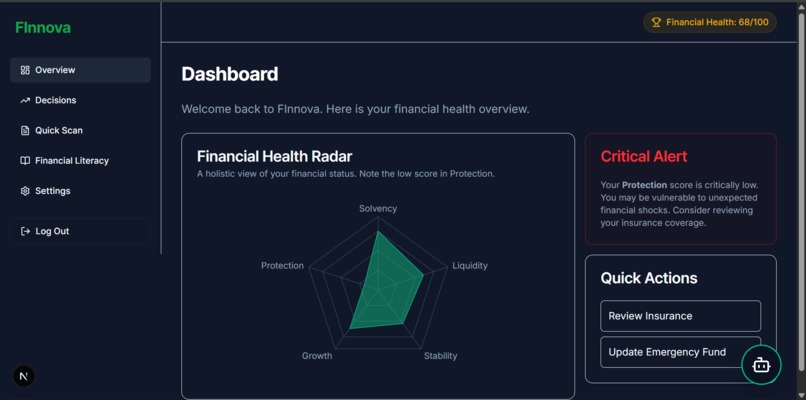
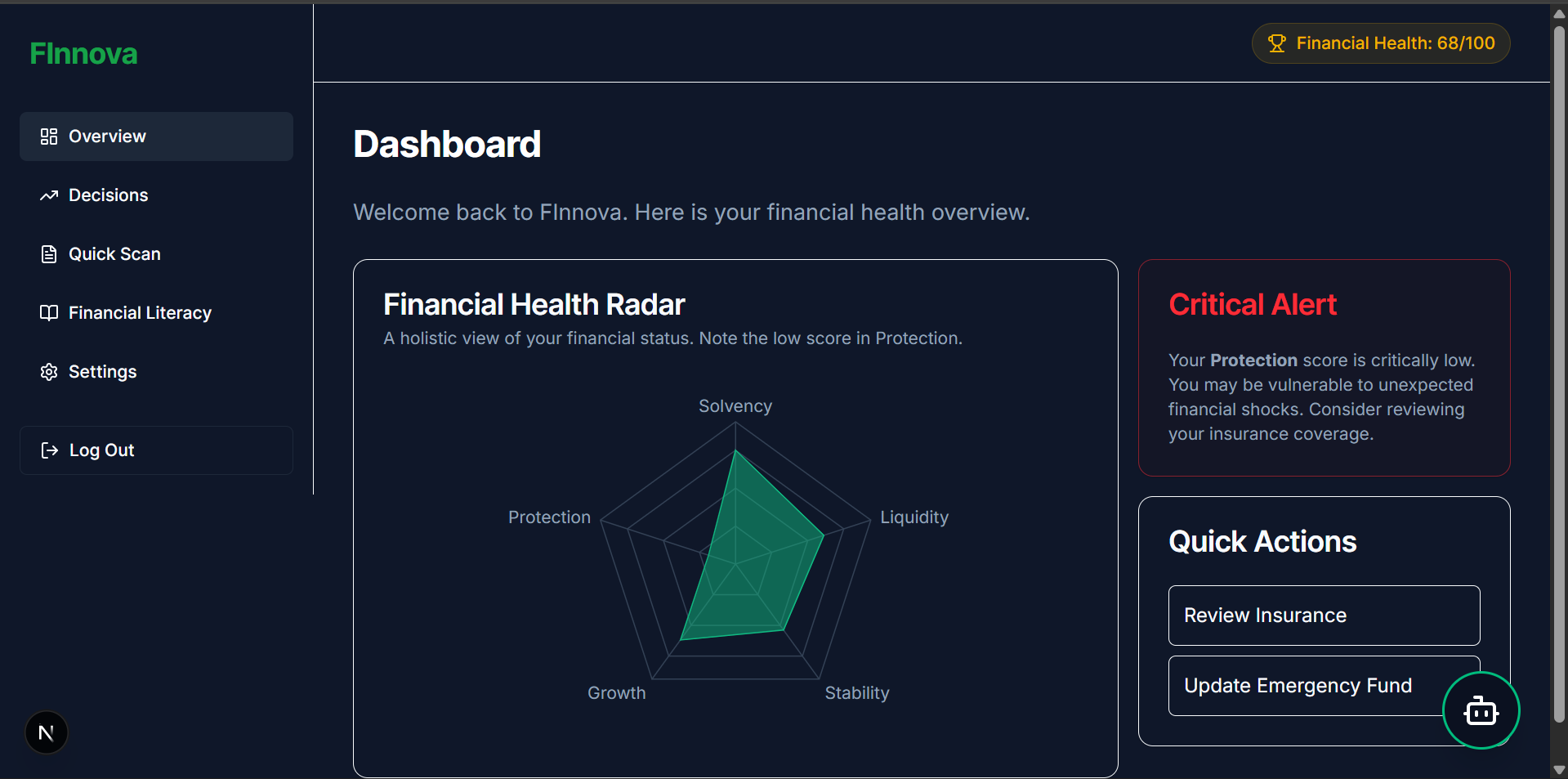
The Overview page displaying the different financial aspect of user
-
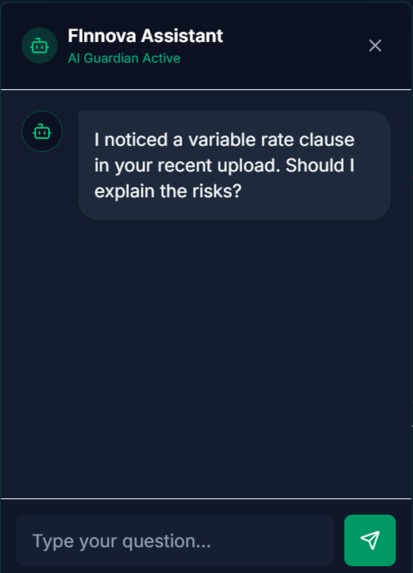
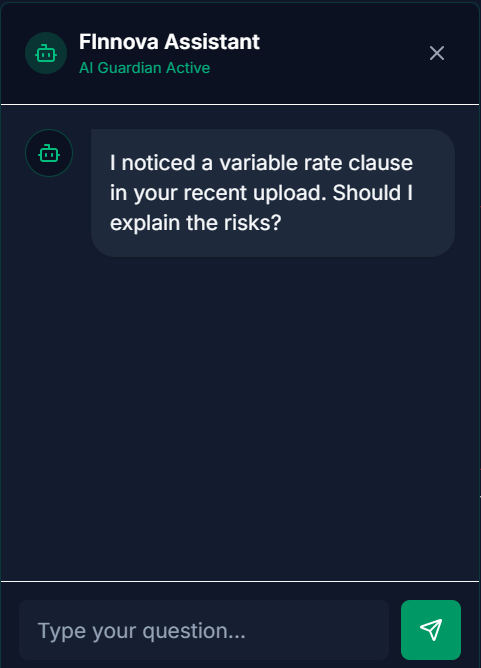
Personalised Chatbot Handling all the user queries
-
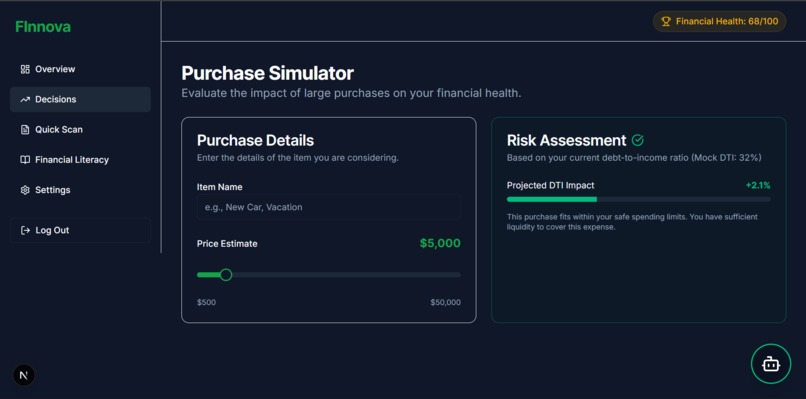
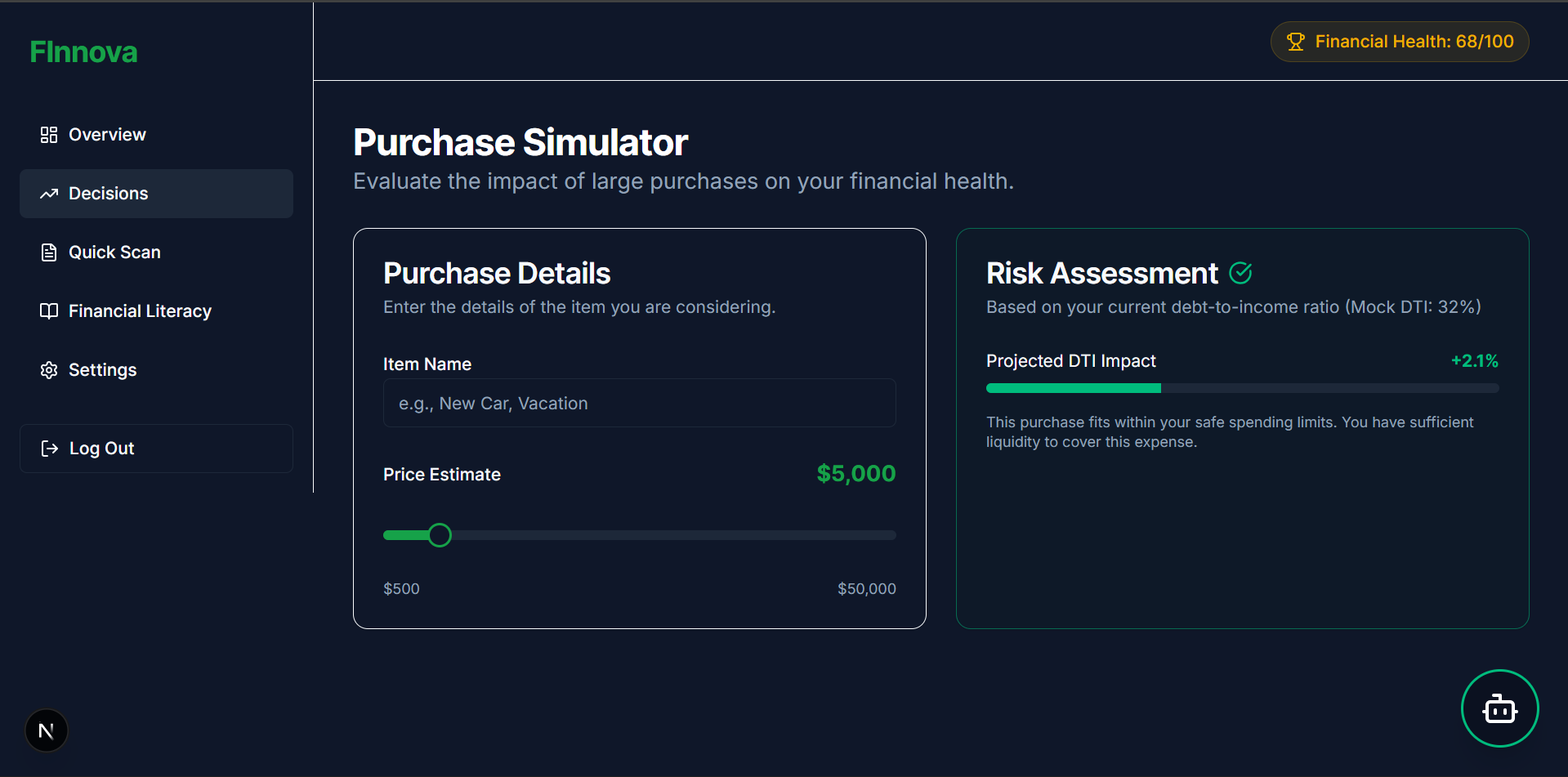
Decision Simulator helping the user
-
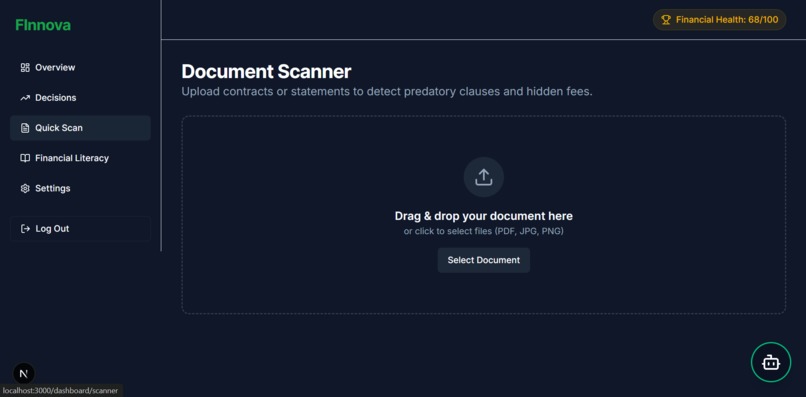
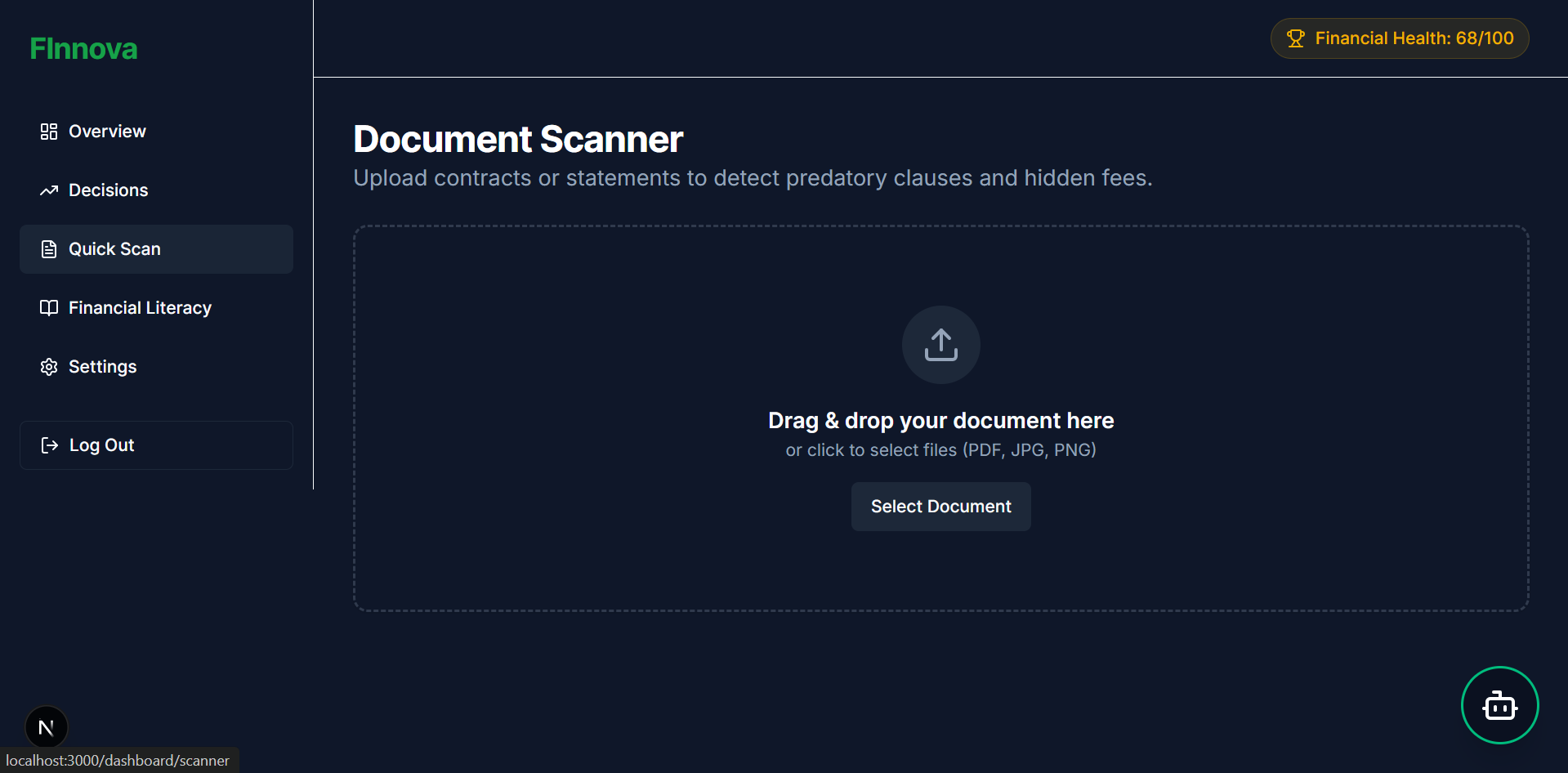
Quick Scan: Instantly provides valuable insights of any financial document
-
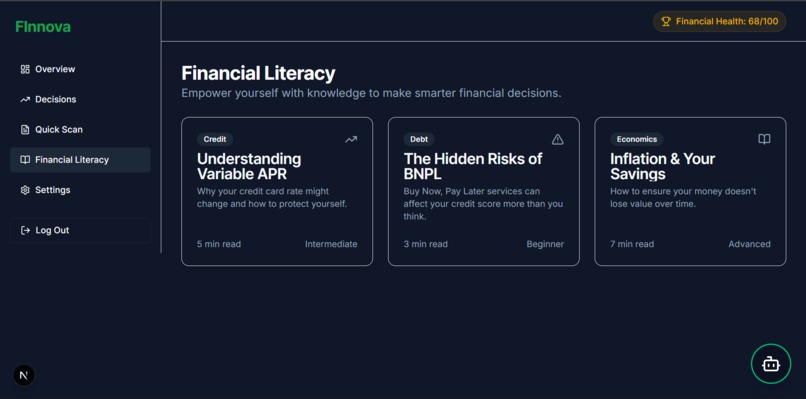
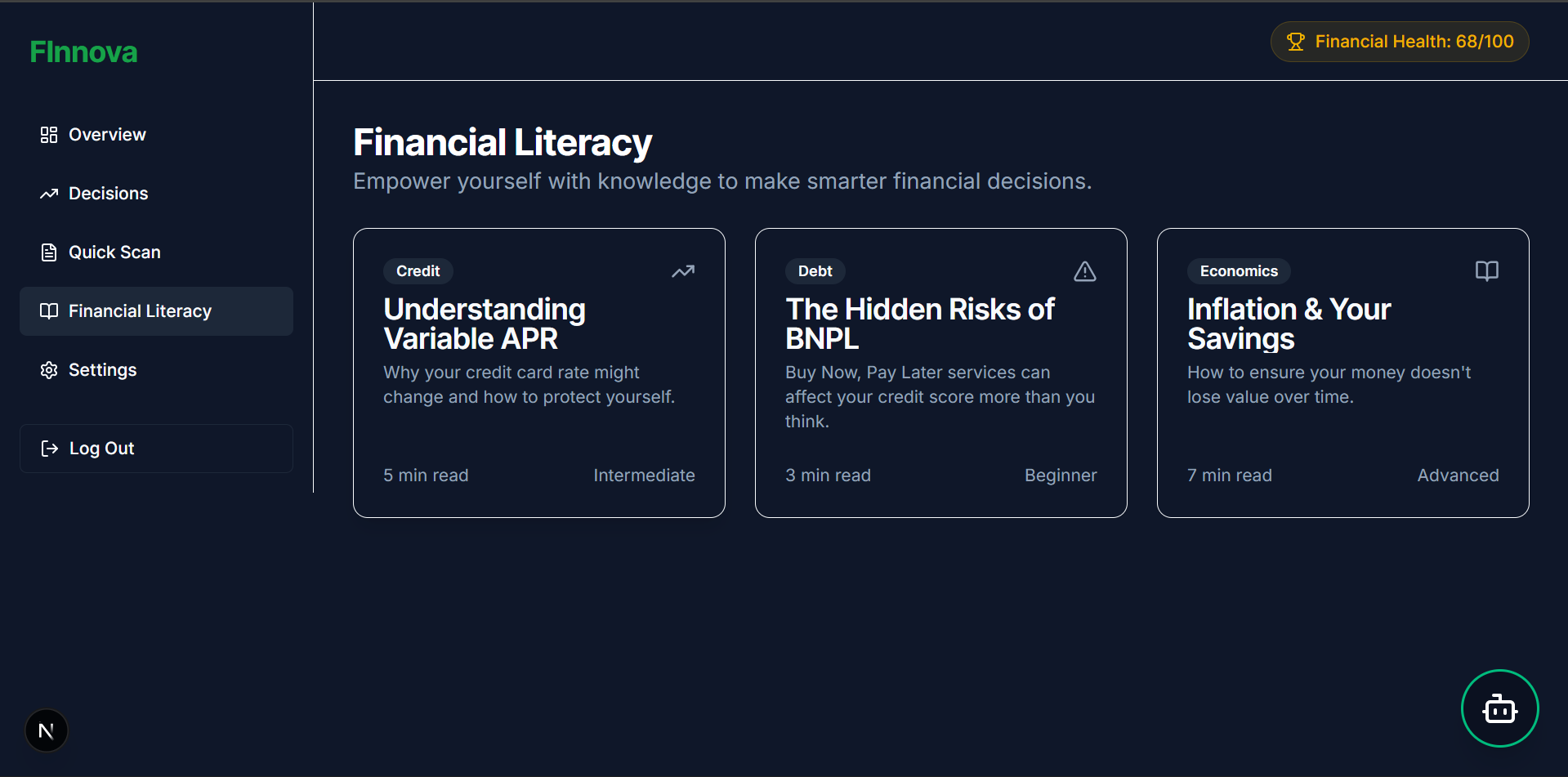
A financial Literacy Page relevant to the user
-
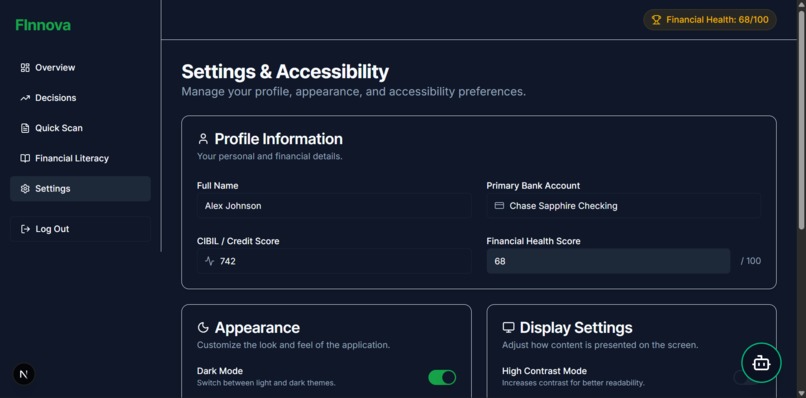
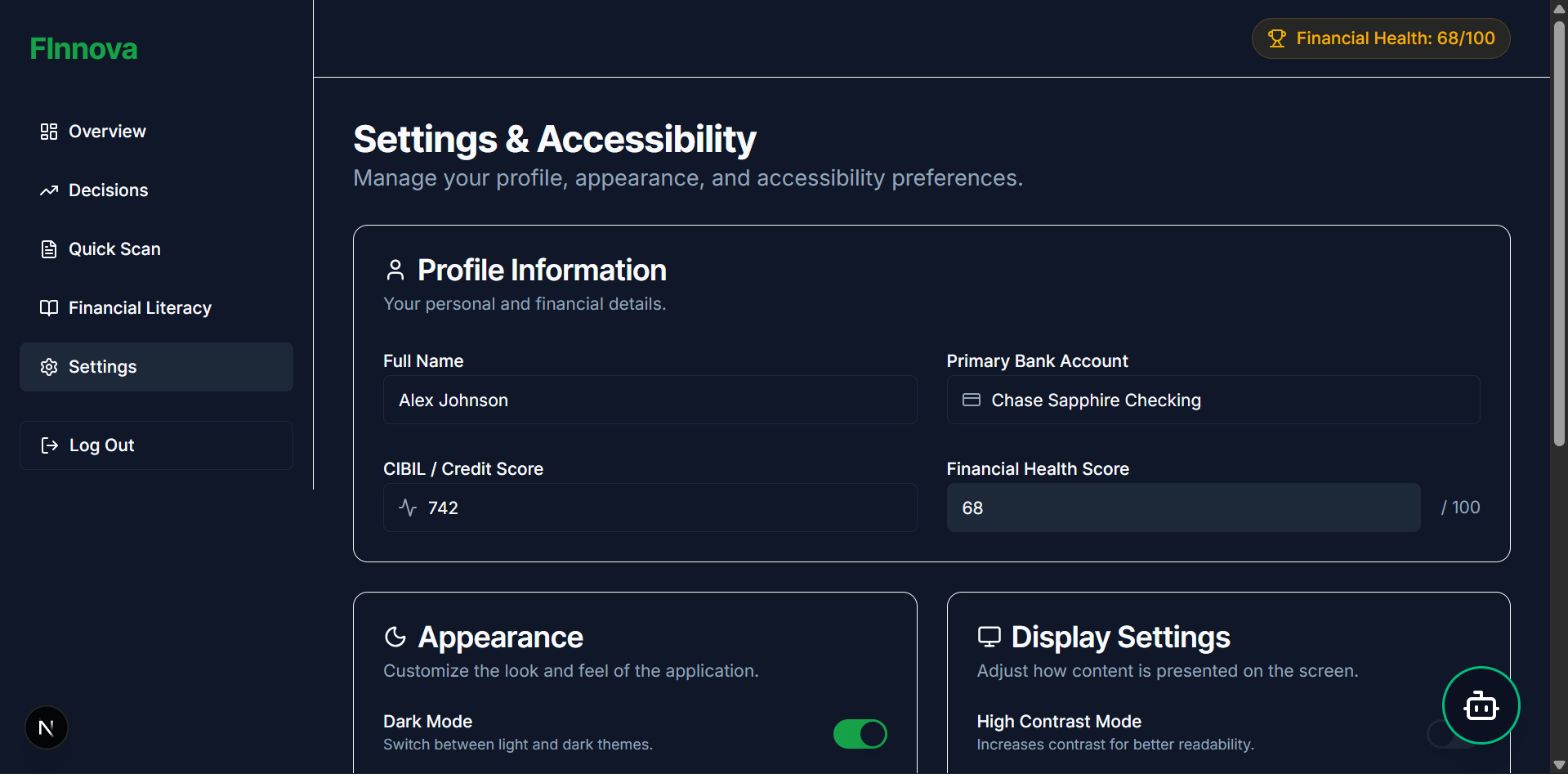
Dynamic Settings and accessibility
Inspiration
Financial literacy is the new digital divide. In a world of complex user agreements, variable interest rates, and hidden fees, the "fine print" acts as a gatekeeper. We realised that millions of people especially those from underserved communities, make life-altering financial decisions based on gut feeling rather than data, simply because professional financial advice is a luxury they cannot afford. We wanted to build a bridge: a tool that doesn't just "manage" money, but translates the language of finance into something equitable, accessible, and actionable for everyone.
What it does
FInnova is an AI-powered financial assistance platform designed to democratize access to expert-level analysis. It functions as a secure, private financial guardian with three core pillars:
The Jargon Slayer (OCR + Translation): Users can upload photos or PDFs of loans, credit card offers, or legal contracts. Our system extracts the text and translates "Legalese" into plain, 5th-grade English, highlighting predatory clauses (like balloon payments) in red.
Decision Simulation Engine: Before a user makes a major purchase (e.g., a car or home), the app simulates the impact on their long-term solvency, using real-time data to answer: "Can I actually afford this?"
Vulnerability Radar: The system analyzes both internal factors (debt-to-income ratio) and external factors (market volatility/inflation news) to warn users of economic vulnerabilities before they become emergencies.
How we built it
We prioritised a high-performance, secure architecture to ensure feasibility and trust:
Frontend: Built with Next.js and Tailwind CSS for a responsive, accessible UI (high contrast support included).
AI Pipeline: We utilised Python (FastAPI) to orchestrate the backend. We integrated Tesseract OCR (enhanced with preprocessing for low-quality images) to digitise documents.
Layer: We combined Large Language Models (LLMs) with deterministic financial formulas to prevent hallucinations. For example, when calculating affordability, we force the model to adhere to strict mathematical constraints, such as the Debt-to-Income (DTI) formula:
$$ DTI = \frac{\text{Total Monthly Debt Payments}}{\text{Gross Monthly Income}} \times 100 $$
Security: Implemented strict data handling routes where personal financial documents are processed in memory and never permanently stored without encryption.
Challenges we ran into
OCR Reliability: Financial documents often have complex table structures that standard OCR tools scramble. We had to build a custom pre-processing step to preserve table geometry so the AI understands which interest rate belongs to which timeline.
Balancing Empathy with Math: An LLM can be too verbose. Tuning the prompt engineering to be concise yet empathetic (without sounding condescending) required multiple iterations.
Latency: processing high-res PDFs took time. We implemented a queuing system to allow the user to continue navigating the app while the "heavy lifting" happened in the background.
Accomplishments that we're proud of
Accessibility: The application is fully navigable via screen readers, ensuring that visually impaired users have equal access to financial clarity.
Feasibility: We didn't just build a wrapper; we built a functional pipeline that takes a raw image and outputs a structured JSON financial summary in under 5 seconds.
What we learned
We learned that equity isn't just about access; it's about comprehension. Giving someone a loan document is access; explaining what it means is equity. We also learned that hybrid AI systems (combining deterministic math with probabilistic LLMs) are the only safe way to handle fintech products, you cannot rely on a chatbot alone for math.
What's next for FInnova
Multilingual Support: We plan to add real-time voice-to-voice translation for users who may be illiterate or non-native speakers.
Multilingual Support: We plan to add real-time voice-to-voice translation for users who may be illiterate or non-native speakers.
The "Red Flag" Algorithm: Further tuning the AI to detect specific predatory keywords (e.g., "variable rate," "early repayment penalty") with over 90% accuracy in future tests.


Log in or sign up for Devpost to join the conversation.