Inspiration
Most small business owners in Ghana don’t fail because they lack effort — they fail because they lack visibility.
Provision shops, roadside food vendors, and small pharmacies handle dozens of transactions daily, yet rely on memory or scattered notes. Over time, money quietly disappears through unrecorded sales, small mistakes, or assistant handling. This creates constant financial stress and uncertainty.
We were inspired by one simple reality:
People are working hard every day, but they cannot clearly see whether they are winning or losing.
Finly was built to give them that visibility — to turn financial blindness into clarity.
What it does
Finly is an AI-powered financial memory assistant for small business owners.
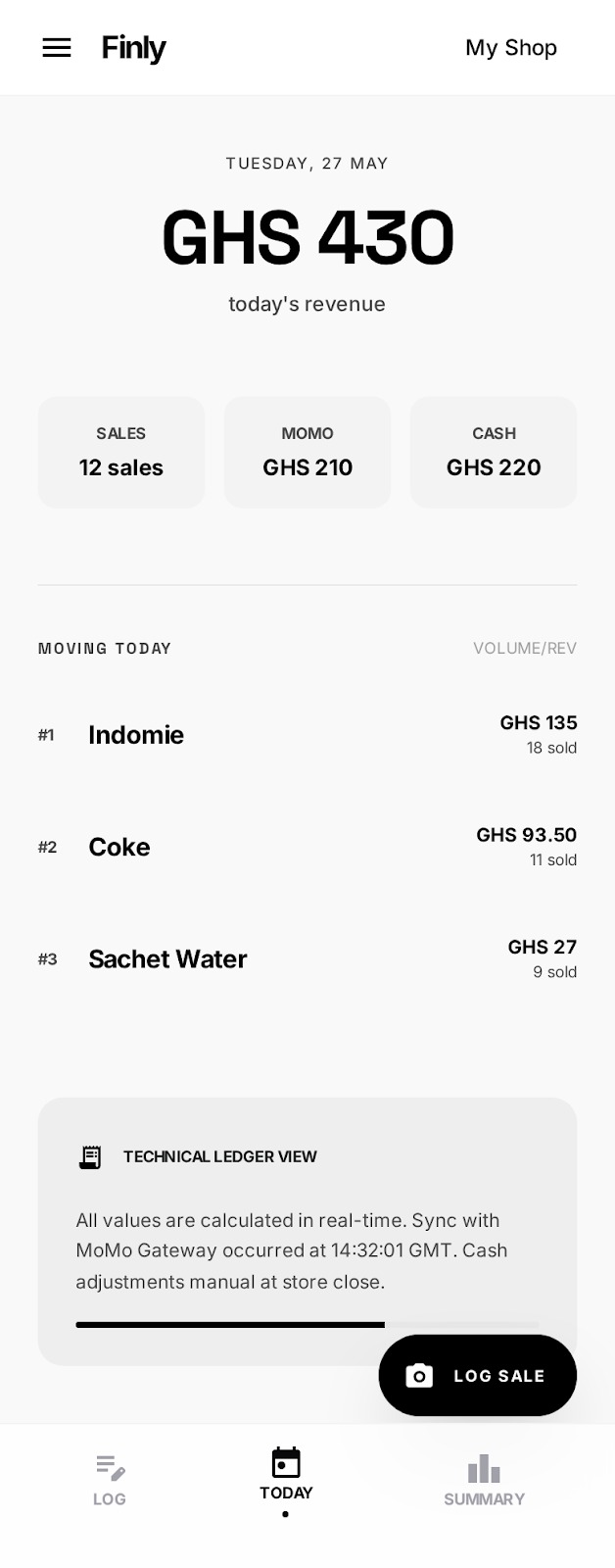
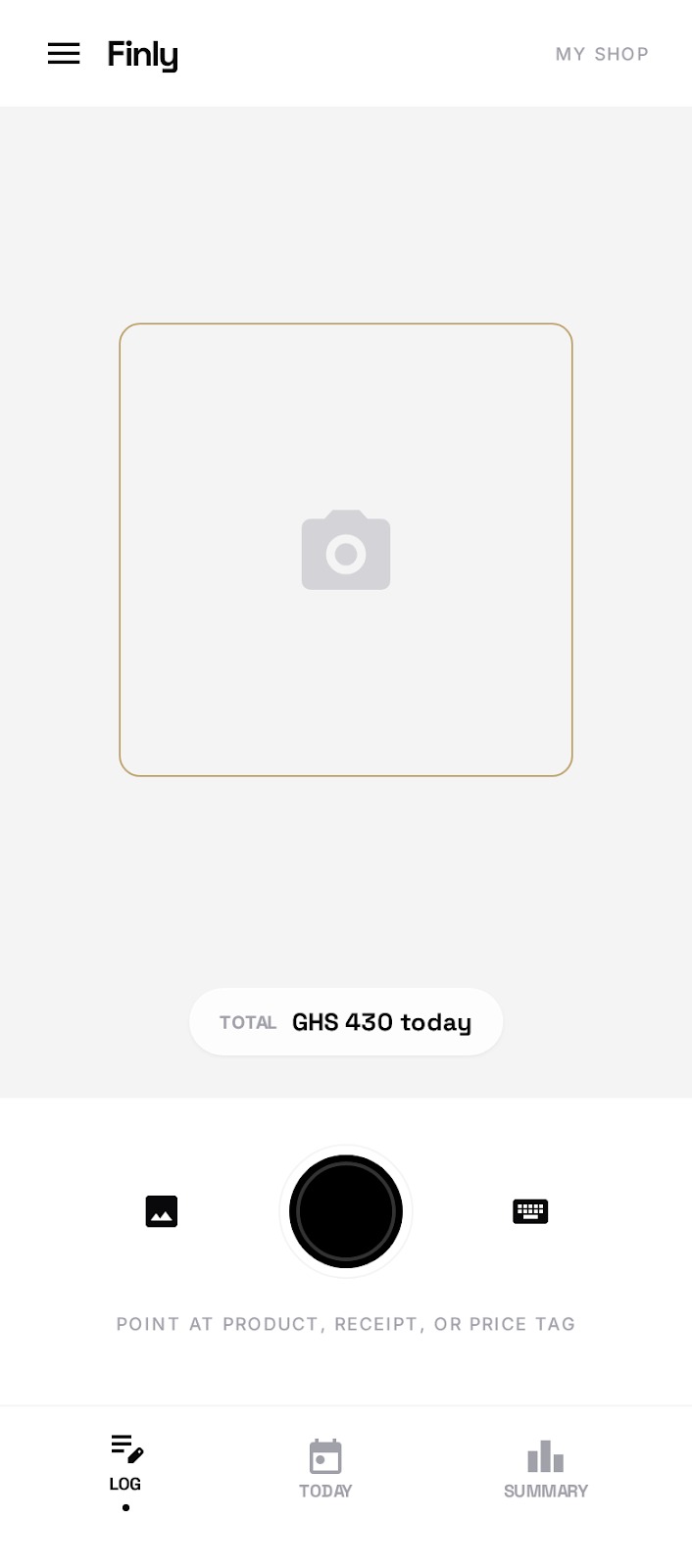
It allows users to log everyday sales quickly using natural language (voice or text), and automatically turns those messy inputs into structured financial records.
At the end of the day, Finly generates a simple, clear summary:
Total revenue Top-selling items ⚠️A “possible leak” — highlighting gaps between expected and recorded money
This helps users immediately see:
what is working what is not and where money might be disappearing
Finly does not make decisions — it simply shows the truth more clearly so the owner can act.
How we built it
We used a lightweight, mobile-first approach to ensure accessibility for real-world users.
Frontend: Simple mobile/web interface designed for quick transaction logging and daily summaries Backend: Minimal API layer for storing transactions (Firebase/Supabase) AI (Claude API): Parses messy natural language into structured transactions Extracts key data (product, quantity, revenue) Generates daily summaries and insights Detects inconsistencies between expected and recorded totals
We focused on a hybrid approach:
AI handles understanding and reasoning Our system controls the flow, logic, and user experience
This ensured we could explain every part of the system clearly.
Challenges we ran into
The biggest challenge was avoiding overengineering.
Initially, we wanted to include:
image-based product detection advanced forecasting full inventory systems
But we realized quickly:
trying to do everything would make the product unclear and unreliable.
We made a deliberate decision to strip the product down to one core value: detecting and revealing financial leaks.
Another challenge was designing trustworthy AI output. We had to ensure Finly:
does not overclaim accuracy clearly communicates uncertainty always keeps the human in control
Accomplishments that we're proud of
Delivering a clear, focused product instead of a bloated idea Creating a real “aha moment” with leak detection Building something that is immediately understandable and useful in the Ghanaian context Designing AI to support, not replace human decision-making Making the system simple enough for non-technical users What we learned Simplicity is more powerful than feature quantity Real-world impact comes from solving specific problems, not broad ones AI is most useful when it: structures messy data highlights patterns supports human judgment
We also learned that:
trust matters more than intelligence — users need to understand and verify what the system tells them.
What we learned
Simplicity is more powerful than feature quantity Real-world impact comes from solving specific problems, not broad ones AI is most useful when it: structures messy data highlights patterns supports human judgment
We also learned that:
trust matters more than intelligence — users need to understand and verify what the system tells them.
What's next for Finly
Add voice-first interaction for low-literacy users Improve leak detection accuracy using longer transaction histories Integrate offline support for low-connectivity environments Pilot with real SMEs (provision shops, food vendors) Expand insights into simple profit tracking and spending awareness
Long term, Finly can become: a foundational financial tool for informal businesses across Africa — giving millions of entrepreneurs clarity, confidence, and control over their money.


Log in or sign up for Devpost to join the conversation.