Inspiration
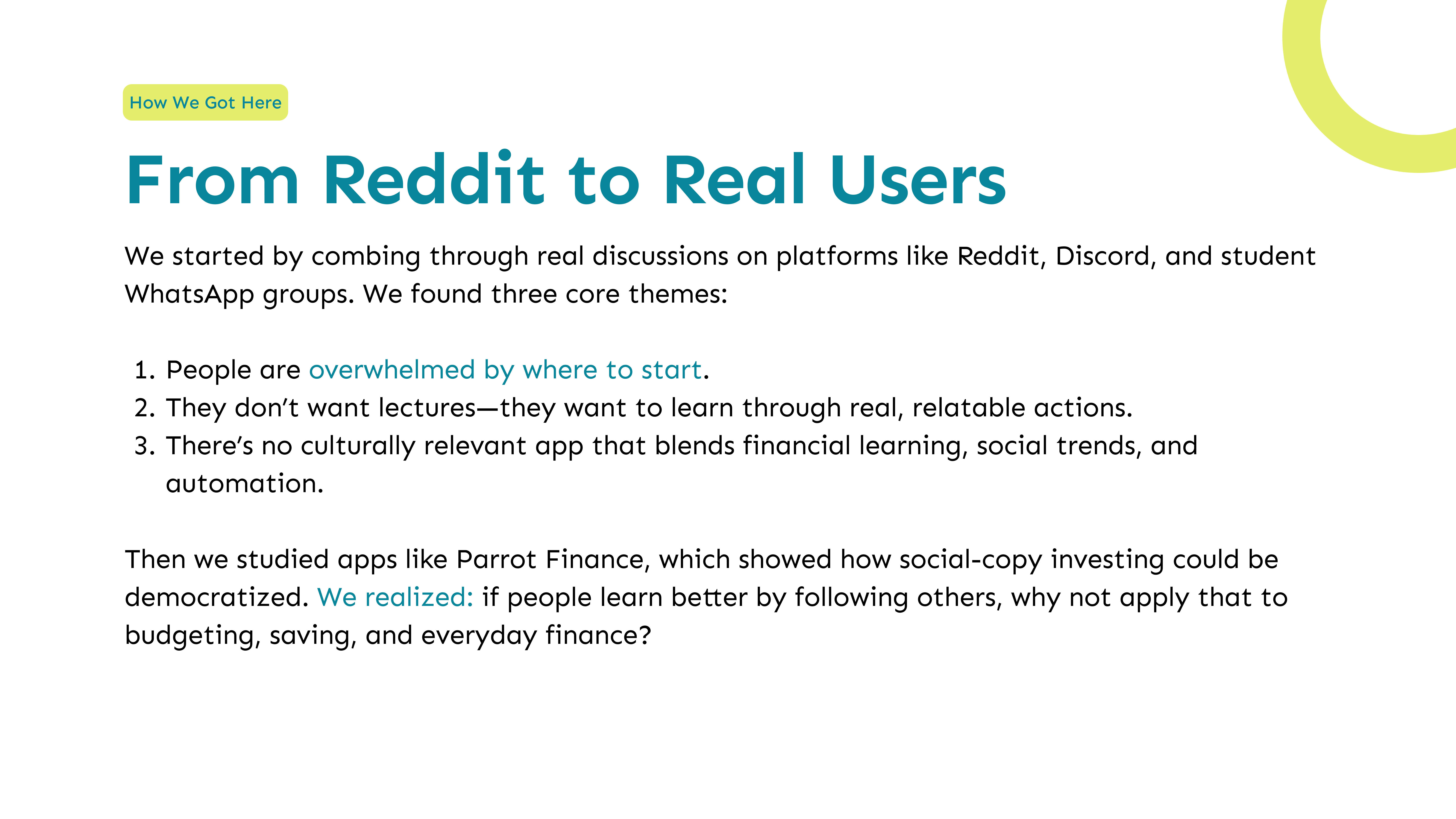
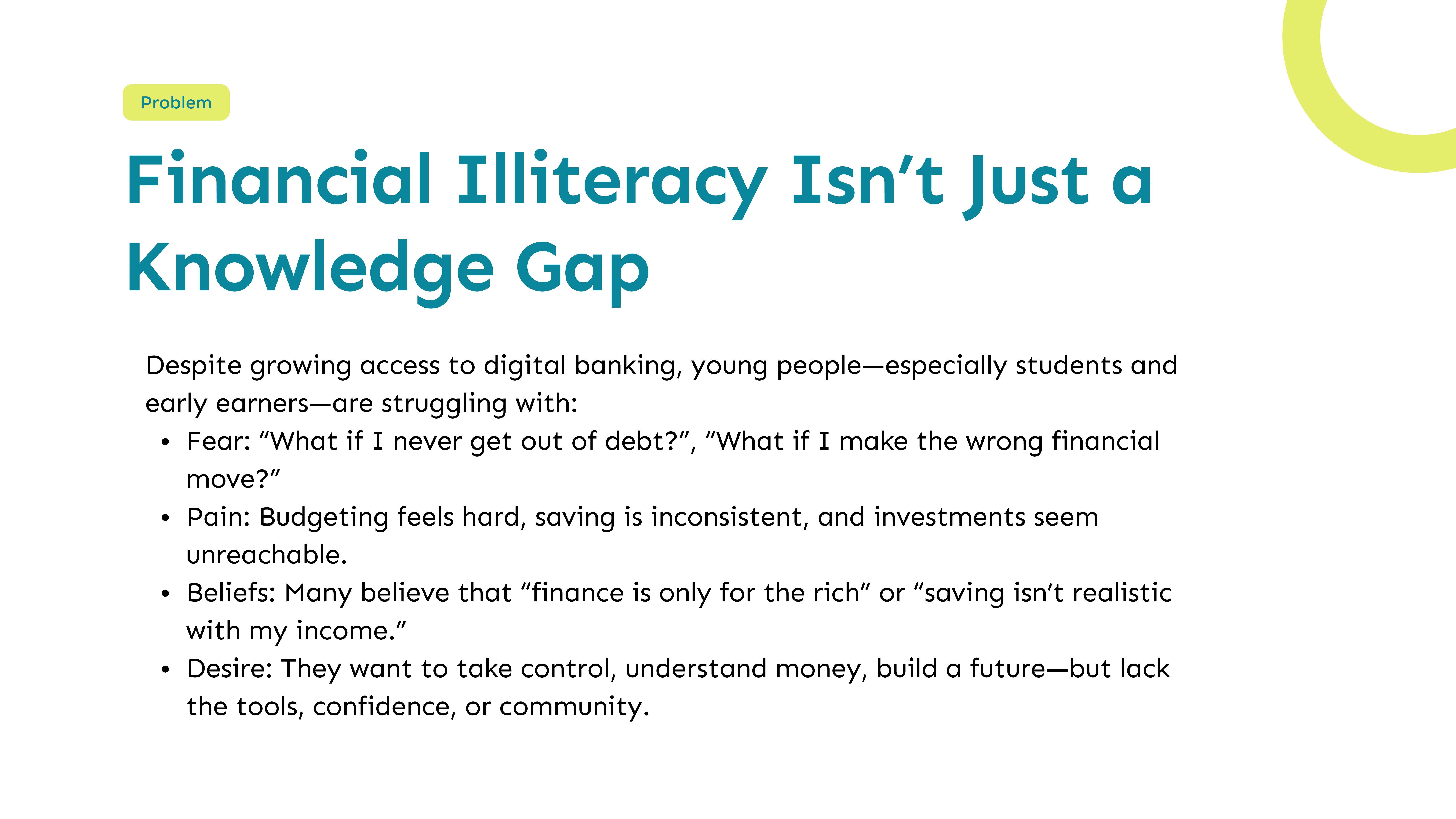
The inspiration behind FinLit Pulse came from listening deeply to the real struggles people face with money. We explored Reddit threads, community WhatsApp groups, and personal stories shared by students, side hustlers, and young professionals. Across all these conversations, one theme stood out: people want to feel in control of their finances, but the tools they have either overwhelm them, don’t match how they actually earn and spend, or feel inaccessible and intimidating. We were moved by these voices and driven to create something that could bridge the gap — a simple, supportive app that makes personal finance, saving, and investing approachable for everyone, regardless of their background.
What it does
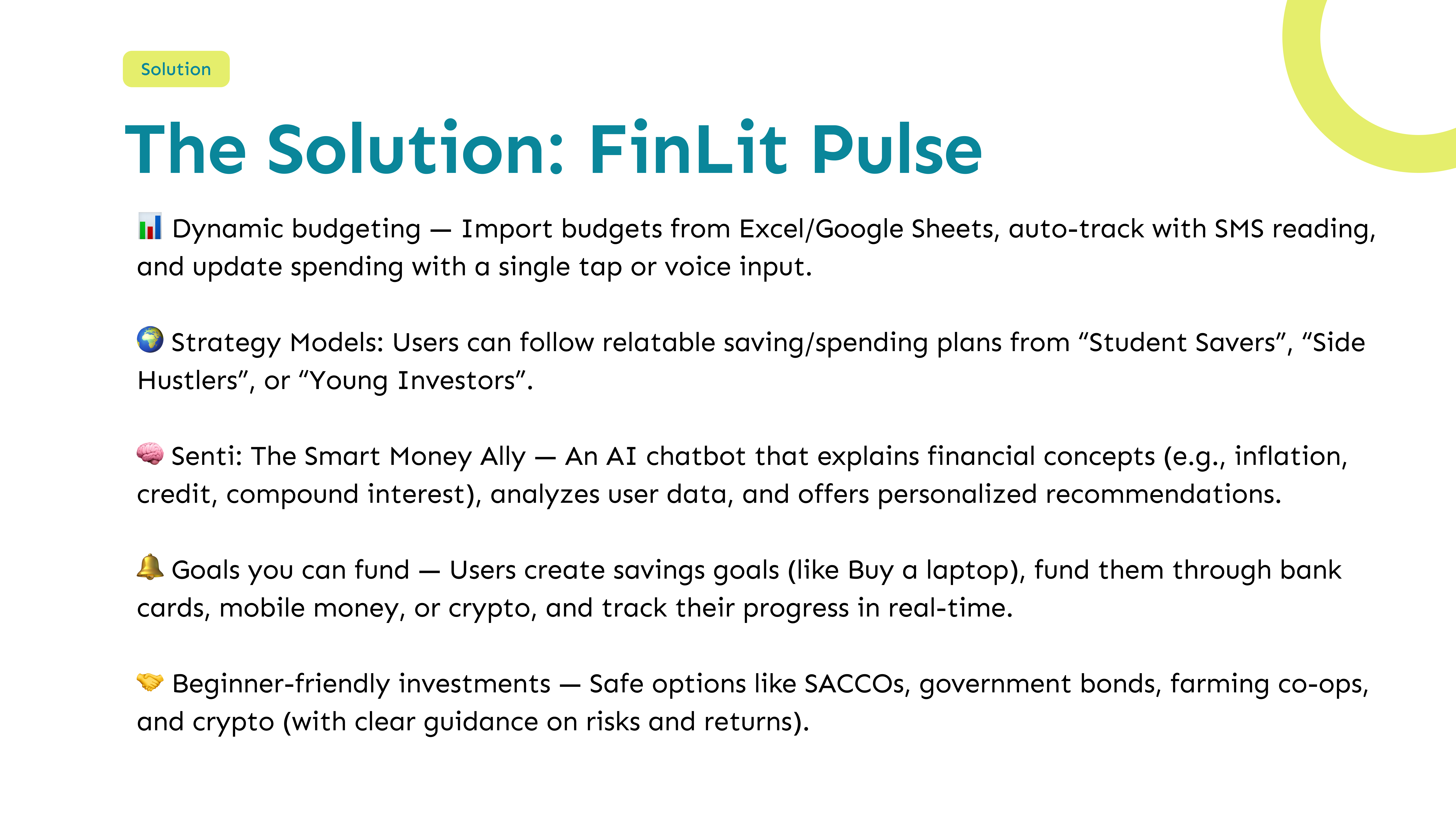
Allows users to import budgets from Google Sheets, Excel, or CSV files, with AI matching and auto-filling categories.
Lets users create and fund financial goals, tracking their progress visually.
Provides a dynamic budget planner where users can manually log spending or respond to app prompts after outside transactions.
Offers beginner-friendly investment options with simple risk summaries and progress tracking.
Features Senti, an AI assistant that explains financial concepts, gives personalized insights, and answers user questions in plain language.
Empowers users to monitor their financial health with charts, summaries, and community impact insights.
How we built it
The idea for FinLit Pulse evolved from reading hundreds of comments, questions, and frustrations shared by real people online — people trying to budget, save, or understand investments, but feeling lost or unsupported. From there, we used ChatGPT to brainstorm, refine ideas, and build out the user flows and feature set piece by piece. We translated these into low-fidelity wireframes and then polished them into a complete Figma prototype, focusing on simplicity, clarity, and user empowerment. Each feature — from budget import to AI coaching — was directly shaped by insights from real users.
Challenges we ran into
One major challenge was the sheer number of budgeting and finance apps that already exist. Coming up with an idea that felt fresh, meaningful, and genuinely helpful — not just “another budgeting app” — pushed us to dig deeper into what people really need. We also had to balance feature richness with simplicity, ensuring the app wouldn’t feel overwhelming while still delivering powerful tools.
Accomplishments that we're proud of
We’re proud that we created an app design that integrates budgeting, saving, investing, and financial education into a single, unified experience. We’re especially proud of how we made the app feel like a supportive companion, not just a tracker — combining tools with personalized AI guidance. The design respects local contexts, offering mobile money and crypto options, and focuses on privacy by keeping data on the device.
What we learned
We learned that financial literacy isn’t just about numbers — it’s about confidence, clarity, and culture. The comments and user insights showed us how deeply personal money management is, and how much people appreciate tools that meet them where they are. From a design perspective, we learned the value of simplicity, empathy, and iteration — how important it is to listen first, then build thoughtfully.
What's next for FinLit Pulse
Next, we want to:
Build working prototypes that can be tested with real users in schools, community groups, and among young professionals.
Integrate real data connections (e.g., M-Pesa APIs, crypto wallet readers, stablecoin features).
Expand Senti to support local languages like Swahili, Pidgin, or Hausa, making the app even more accessible.
Partner with NGOs, educational institutions, or fintech startups to pilot FinLit Pulse as part of financial literacy campaigns.
FinLit Pulse isn’t just a hackathon project — it’s a vision we hope can grow into a real tool that helps people build stronger financial futures.
Built With
- api
- chatgpt
- figma
- openai


Log in or sign up for Devpost to join the conversation.