Inspiration
Financial literacy gap: We were inspired by the growing need for accessible financial education, especially among young adults and beginners who find investing intimidating. With only 57% of American adults being financially literate, we wanted to create a solution that makes complex investment concepts approachable and engaging. T. Rowe Price's mission: The hackathon's focus on helping people better understand investing principles like risk vs. return and diversification resonated with our belief that everyone deserves the knowledge to make informed financial decisions.
What it does
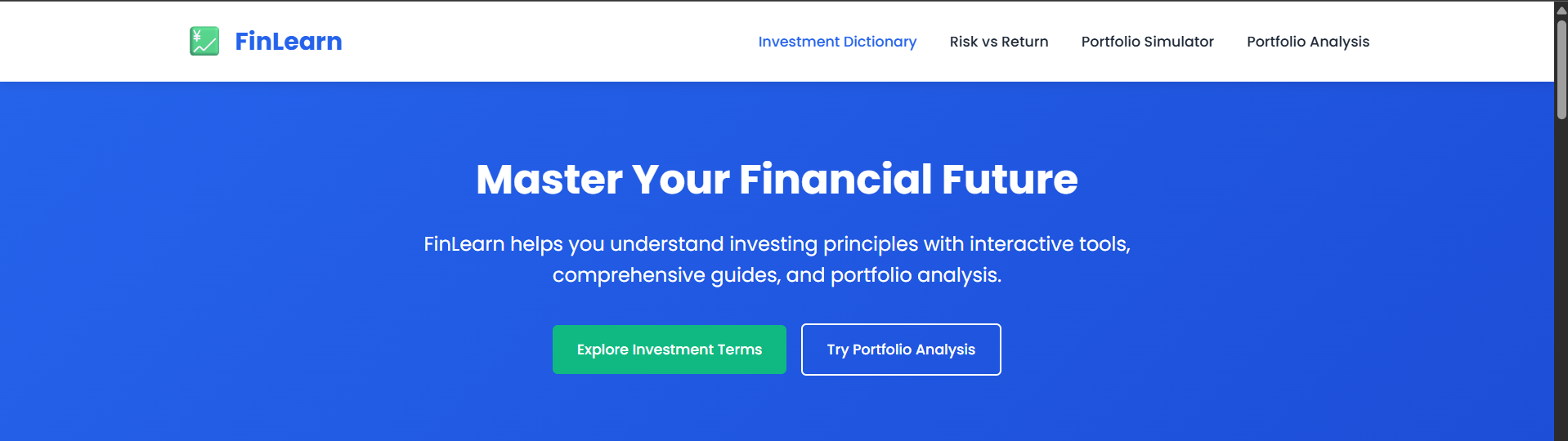
FinLearn is an interactive financial literacy platform that transforms complex investing concepts into engaging, practical learning experiences through three main components:
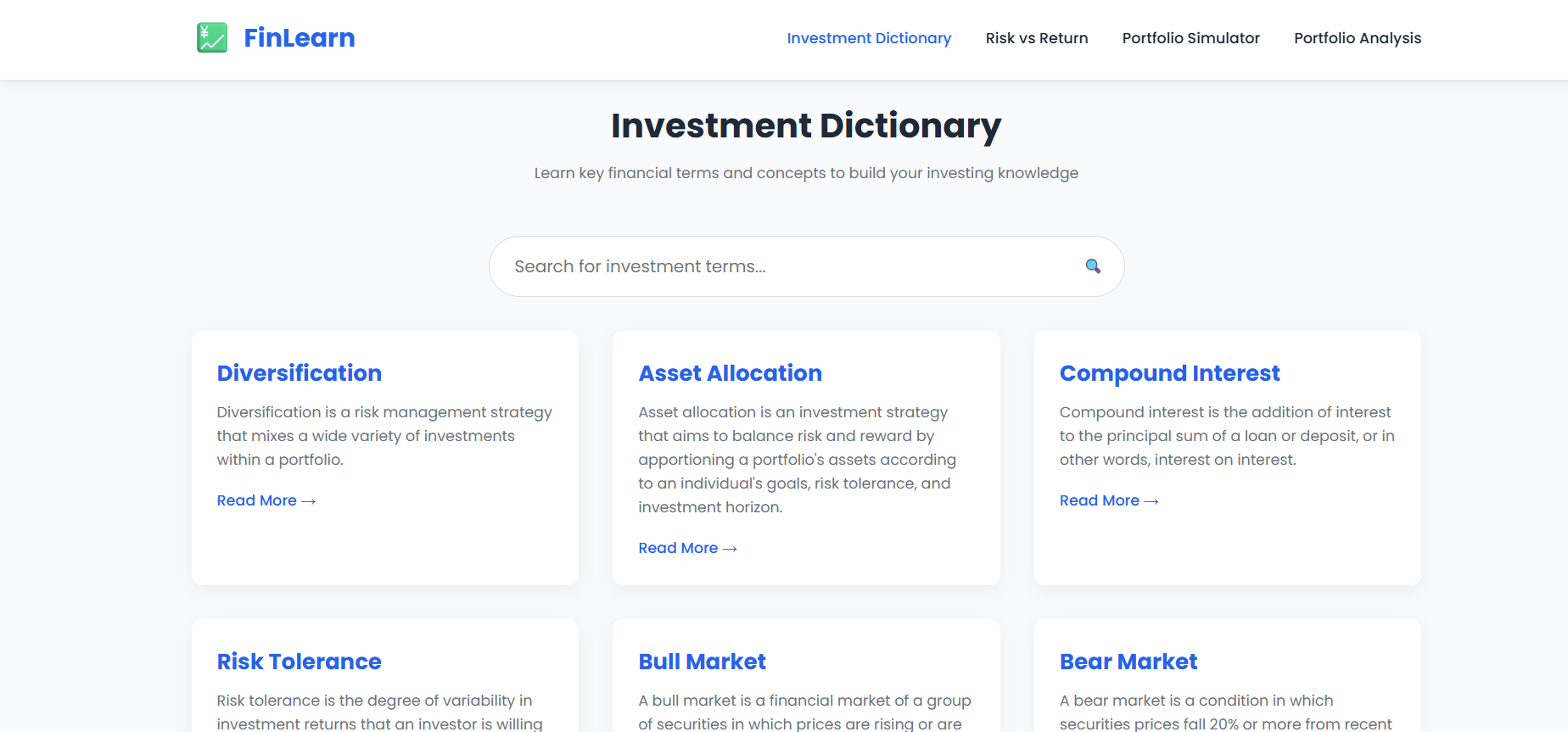
Investment Dictionary: A searchable database of financial terms with clear explanations and practical examples
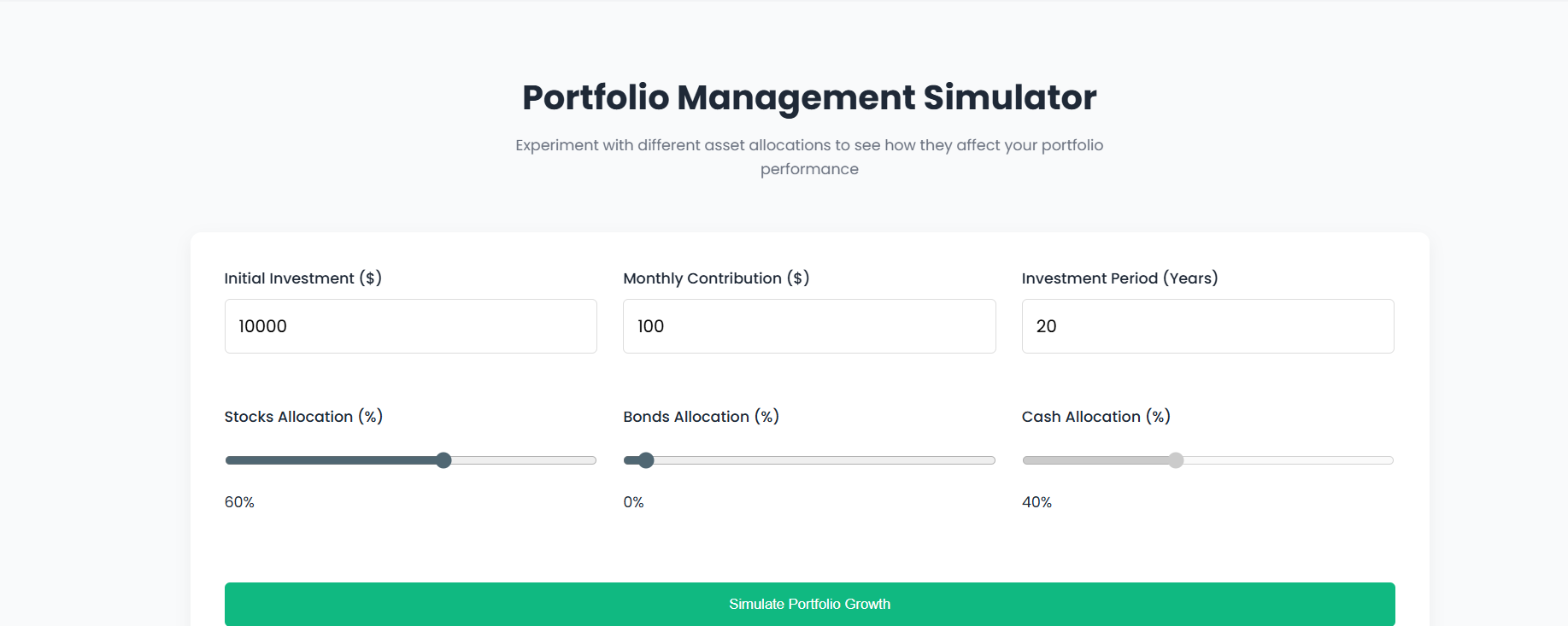
Portfolio Simulator: An interactive tool that lets users experiment with different asset allocations and see projected growth over time
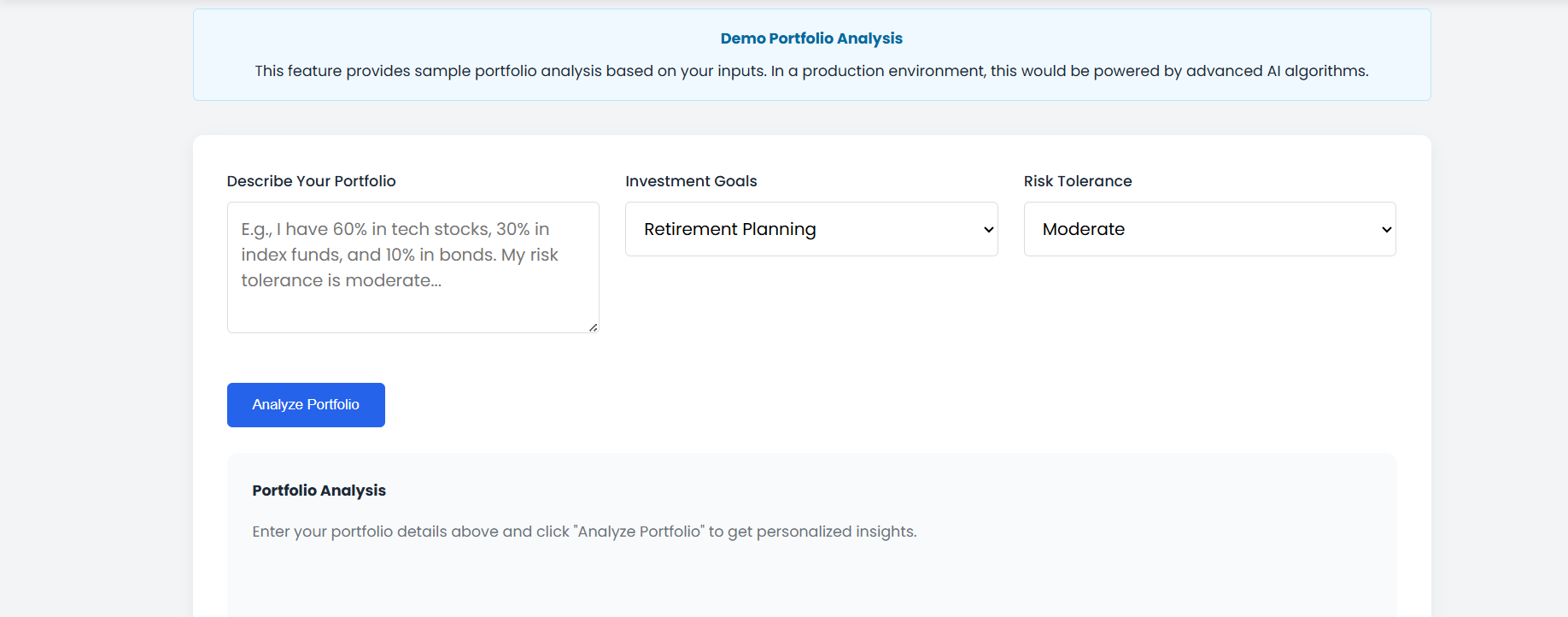
Portfolio Analysis: A demo AI-powered tool that provides personalized insights based on user's portfolio description, goals, and risk tolerance
The platform helps users understand fundamental principles like diversification, asset allocation, compound interest, and risk management through hands-on interaction rather than passive reading.
How we built it
Frontend Architecture:
Built with vanilla HTML5, CSS3, and JavaScript for maximum accessibility
Used Chart.js for interactive data visualizations
Implemented responsive design with CSS Grid and Flexbox
Created a mobile-first approach for cross-device compatibility
Technical Implementation:
Modular JavaScript architecture for maintainability
Local storage for user preferences and inputs
Real-time calculations for portfolio projections
Interactive sliders and form validation for user inputs
Design Philosophy:
Clean, intuitive interface focused on educational value
Progressive disclosure of complex information
Visual storytelling through charts and simulations
Accessibility considerations for diverse users
Challenges we ran into
Complex financial modeling: Creating accurate yet understandable portfolio simulations that balance mathematical precision with educational clarity was challenging. We had to simplify complex formulas without oversimplifying the concepts.
User experience design: Making financial content engaging without being overwhelming required careful information architecture and progressive learning paths.
Technical limitations: Implementing realistic portfolio analysis without backend infrastructure meant creating sophisticated client-side algorithms that could generate meaningful insights from limited inputs.
Educational balance: Ensuring the content was accurate and educational while remaining accessible to complete beginners required multiple iterations and testing.
Accomplishments that we're proud of
Educational impact: Creating a platform that genuinely helps people understand complex financial concepts through interactive learning.
Technical execution: Building a fully functional financial simulator with real-time calculations and professional-grade visualizations using only frontend technologies.
User experience: Designing an interface that makes intimidating financial topics approachable and even enjoyable to learn.
Hackathon delivery: Completing a comprehensive solution that addresses the core challenge of financial literacy education within the competition timeframe.
Practical utility: Developing tools that provide immediate value to users wanting to understand their own investment decisions better.
What we learned
Financial education gaps: We gained deeper insights into which investment concepts people find most challenging and how to break them down effectively.
Interactive learning principles: Discovered how hands-on simulation leads to better retention and understanding compared to traditional educational methods.
Technical constraints: Learned to work within browser limitations while still delivering sophisticated financial modeling capabilities.
User behavior: Understood how different learning styles require varied approaches to financial education - some prefer visual charts, others prefer interactive tools.
Importance of simplicity: Realized that the most effective financial education tools often simplify complex concepts without losing their essential truths.
What's next for Finlearn
API-Powered Integrated Solutions: We're developing a comprehensive API ecosystem that will serve as a one-stop solution for financial literacy integration
Enhanced content: Expand the investment dictionary with more terms, case studies, and real-world examples.
Advanced simulations: Add more sophisticated portfolio scenarios, including tax implications, inflation adjustments, and market condition variations.
Personalization features: Implement user accounts to track learning progress and save portfolio scenarios.
Mobile application: Develop native mobile apps for iOS and Android to increase accessibility.
Community features: Add discussion forums, expert Q&A sessions, and peer learning opportunities.
Integration possibilities: Explore partnerships with financial institutions for real portfolio analysis (with proper security and privacy measures).
Educational pathways: Create structured learning paths for different goals (retirement planning, wealth building, etc.).
Multi-language support: Make financial literacy accessible to non-English speakers.
Instructor tools: Develop resources for educators and financial advisors to use FinLearn in their teaching practices.


Log in or sign up for Devpost to join the conversation.