-
-
-
-
-
-
-
-
Tech Stack
Inspiration
Few people have one clear view of how they're doing financially or what move to make next. Money is scattered across checking, savings, IRAs, loans, and cards, and most dashboards only show past balances. Inspired by the PNC Financial Wellness challenge, we wanted a tool that shows where your cash is headed and helps you make big decisions with confidence.
What it does
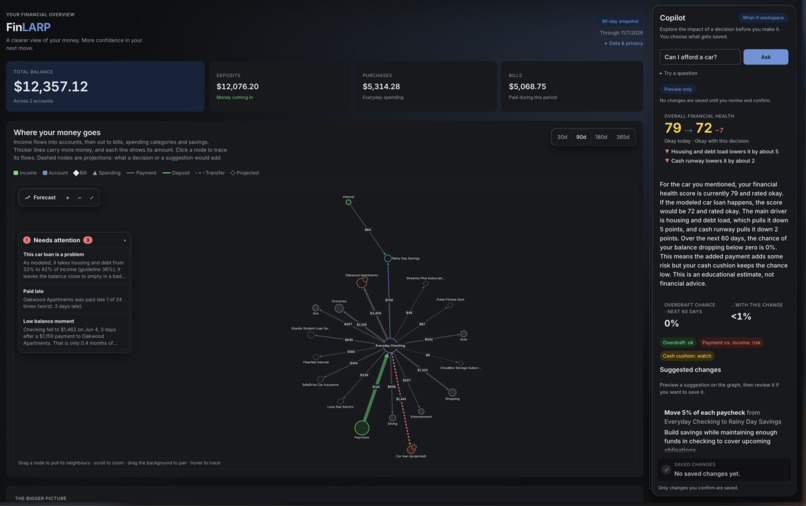
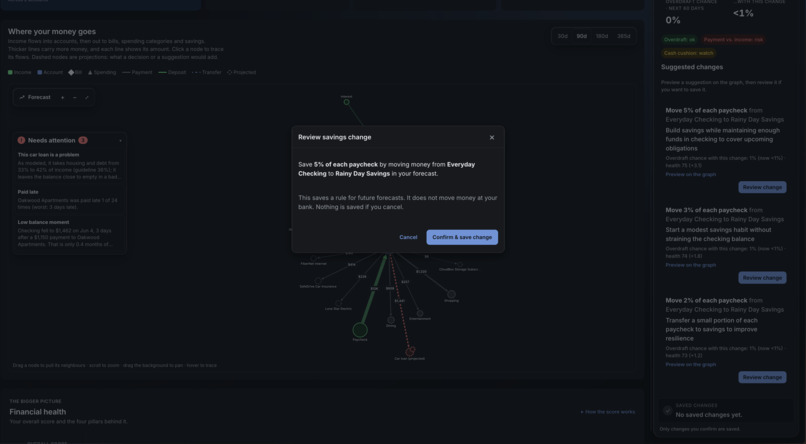
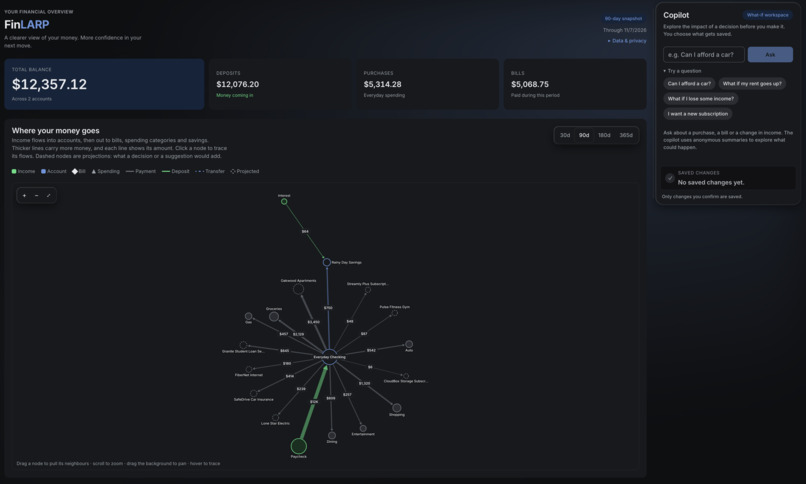
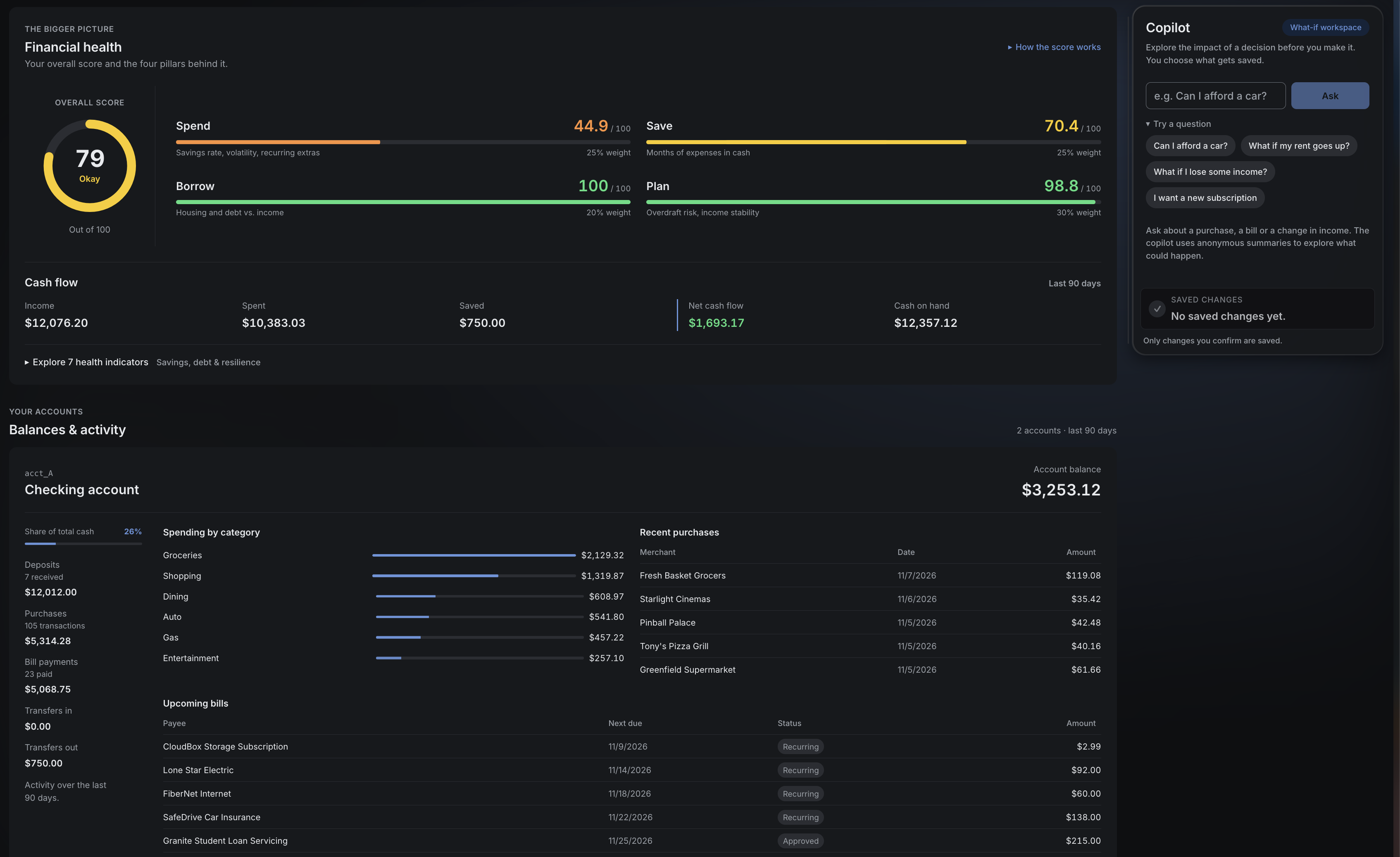
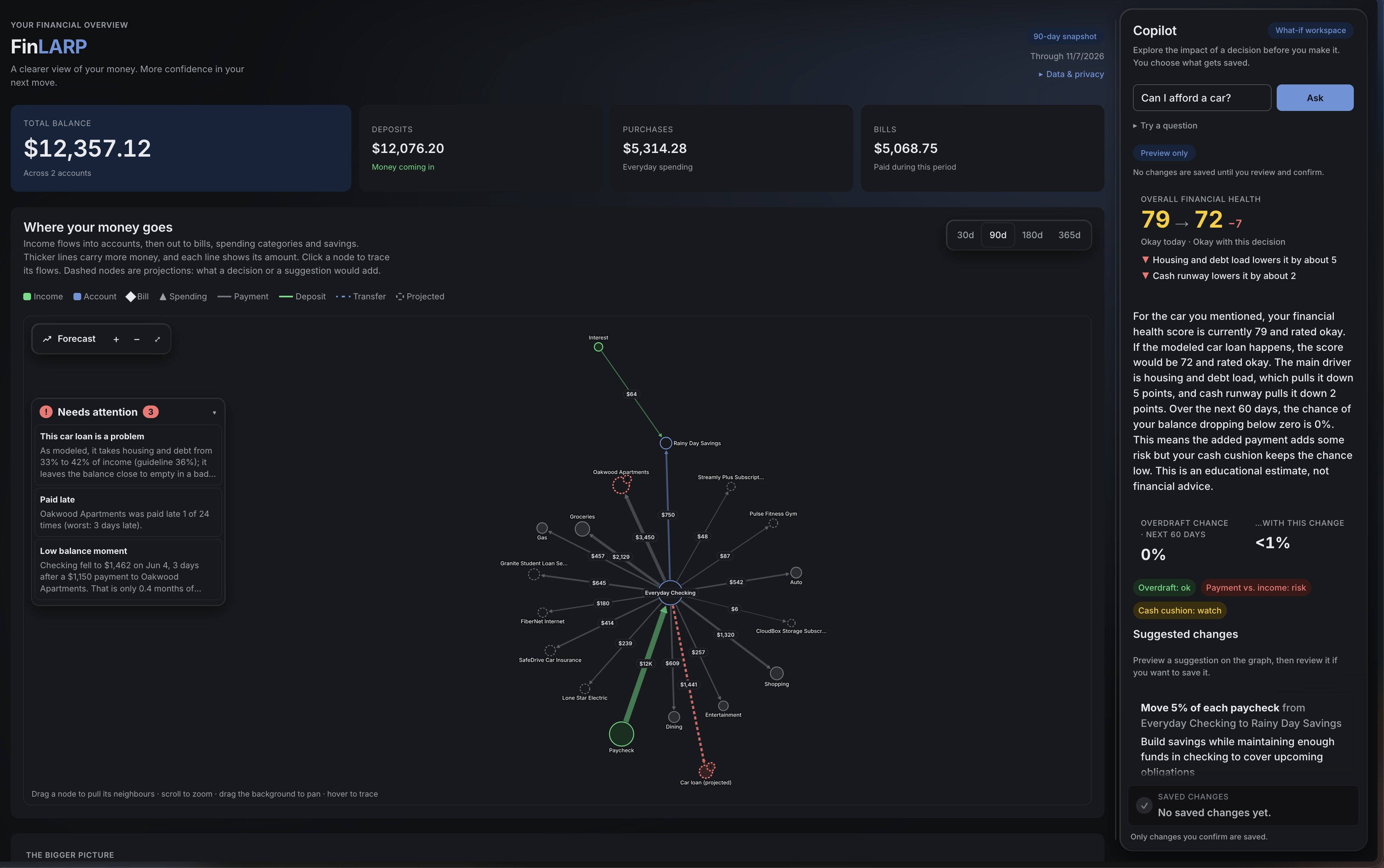
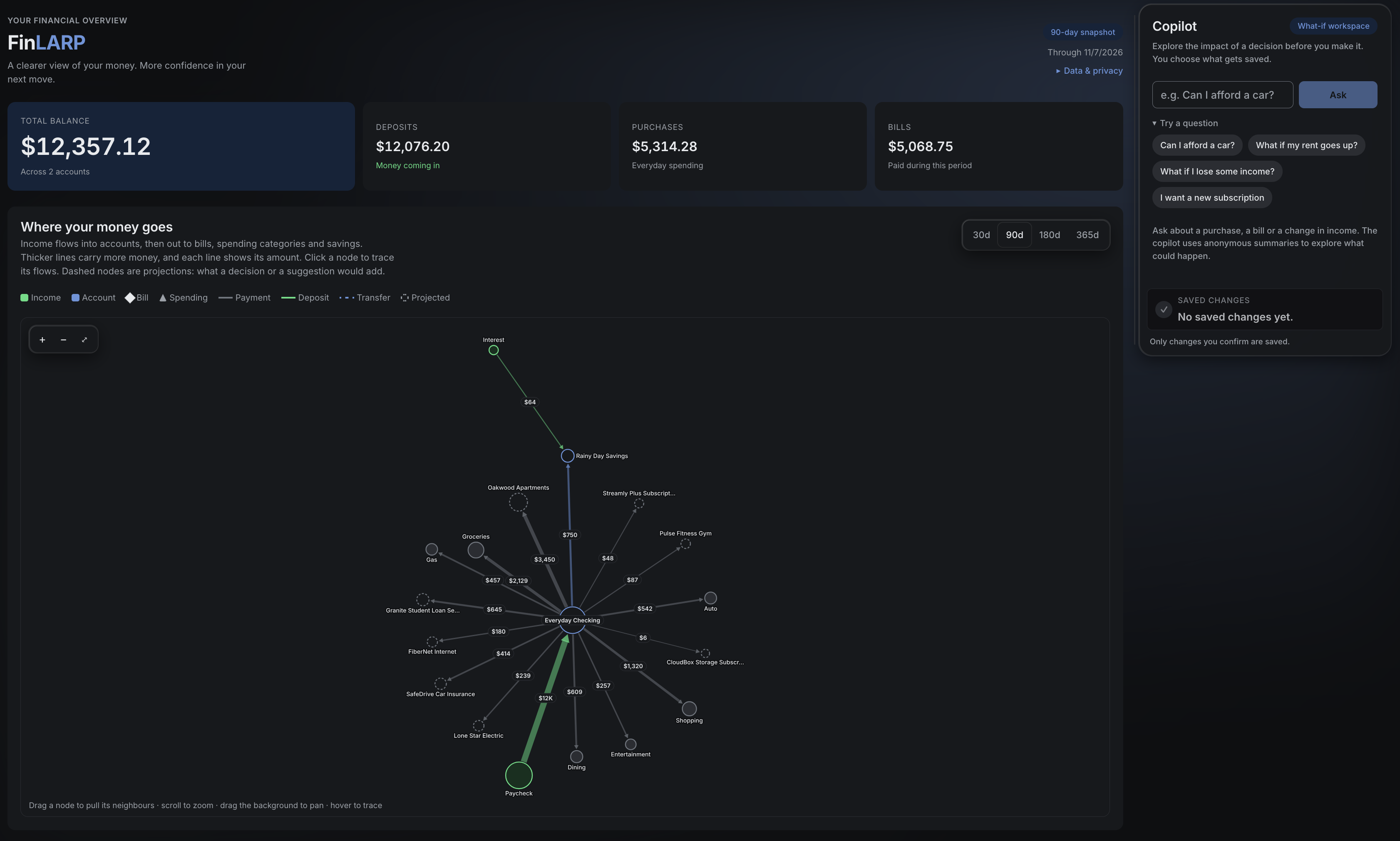
FinLARP models a person's finances as a dynamic graph: accounts, expenses, and goals are nodes, and cash flows and commitments are edges.
- Live node graph of accounts, loans, and projected milestones
- Risk highlighting when cash reserves drop below safety thresholds
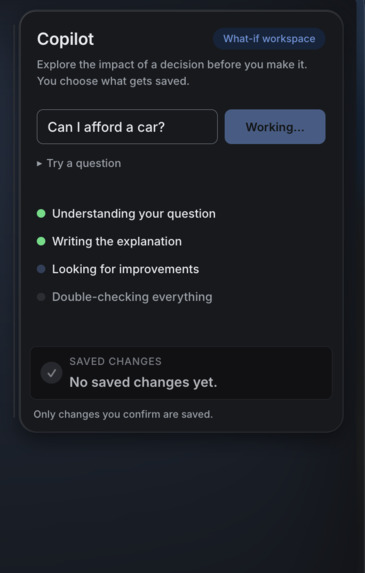
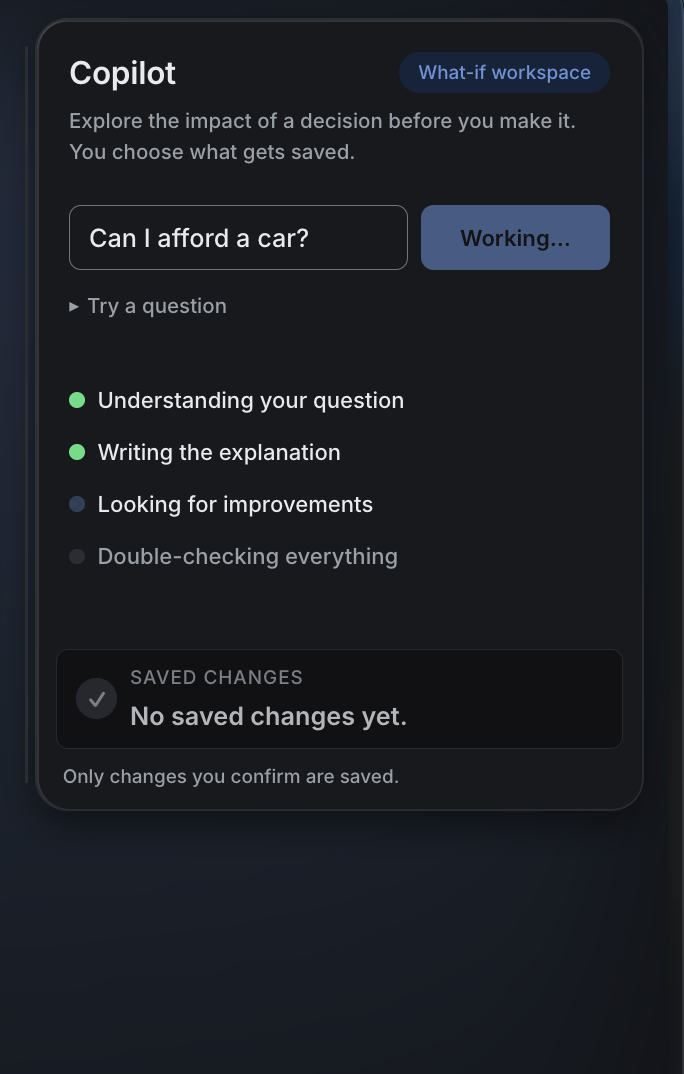
- "What if" simulator to test purchases like a car loan or tuition before committing
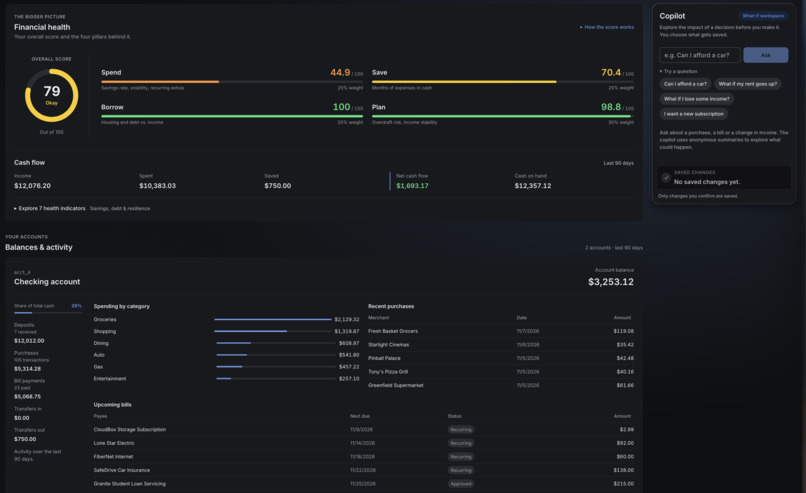
- Health indicators: Net Flow Velocity, Obligation Strain Index, and Emergency Buffer Days
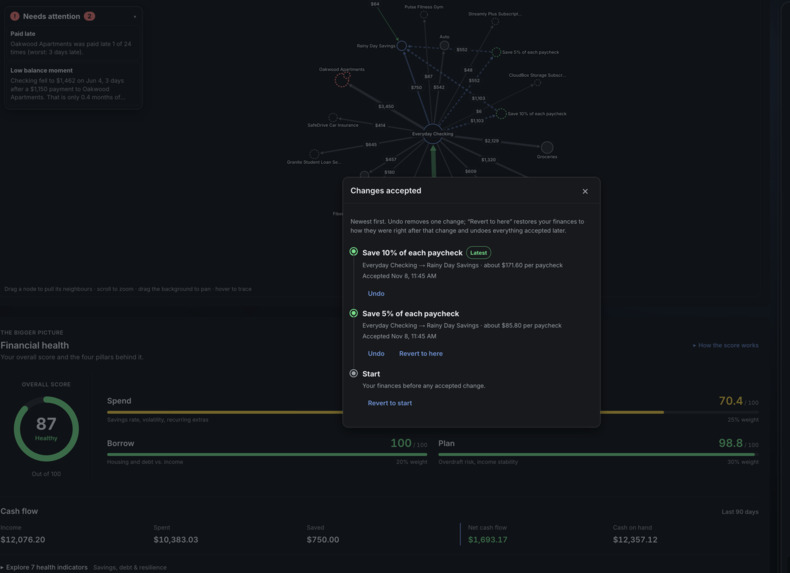
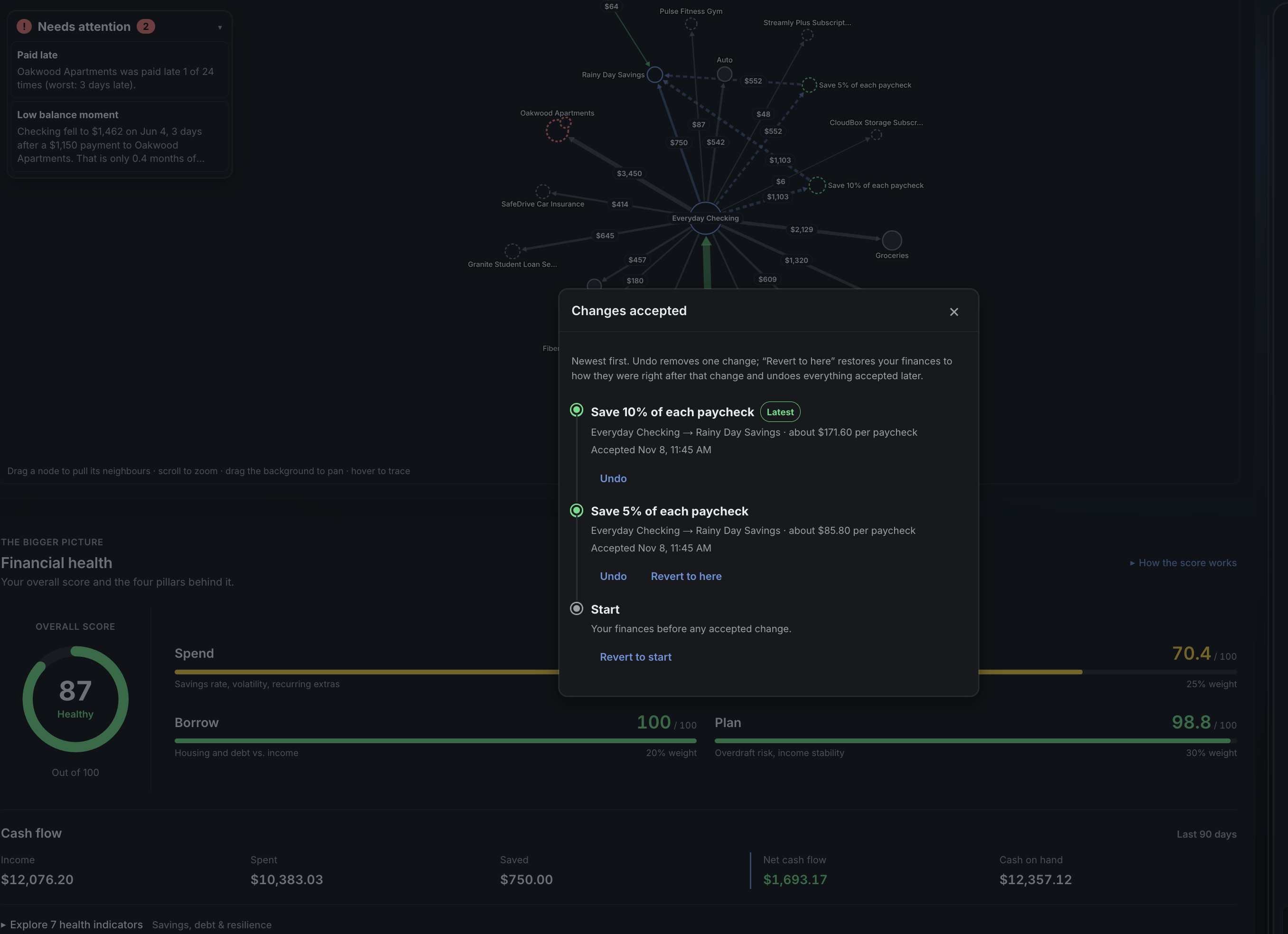
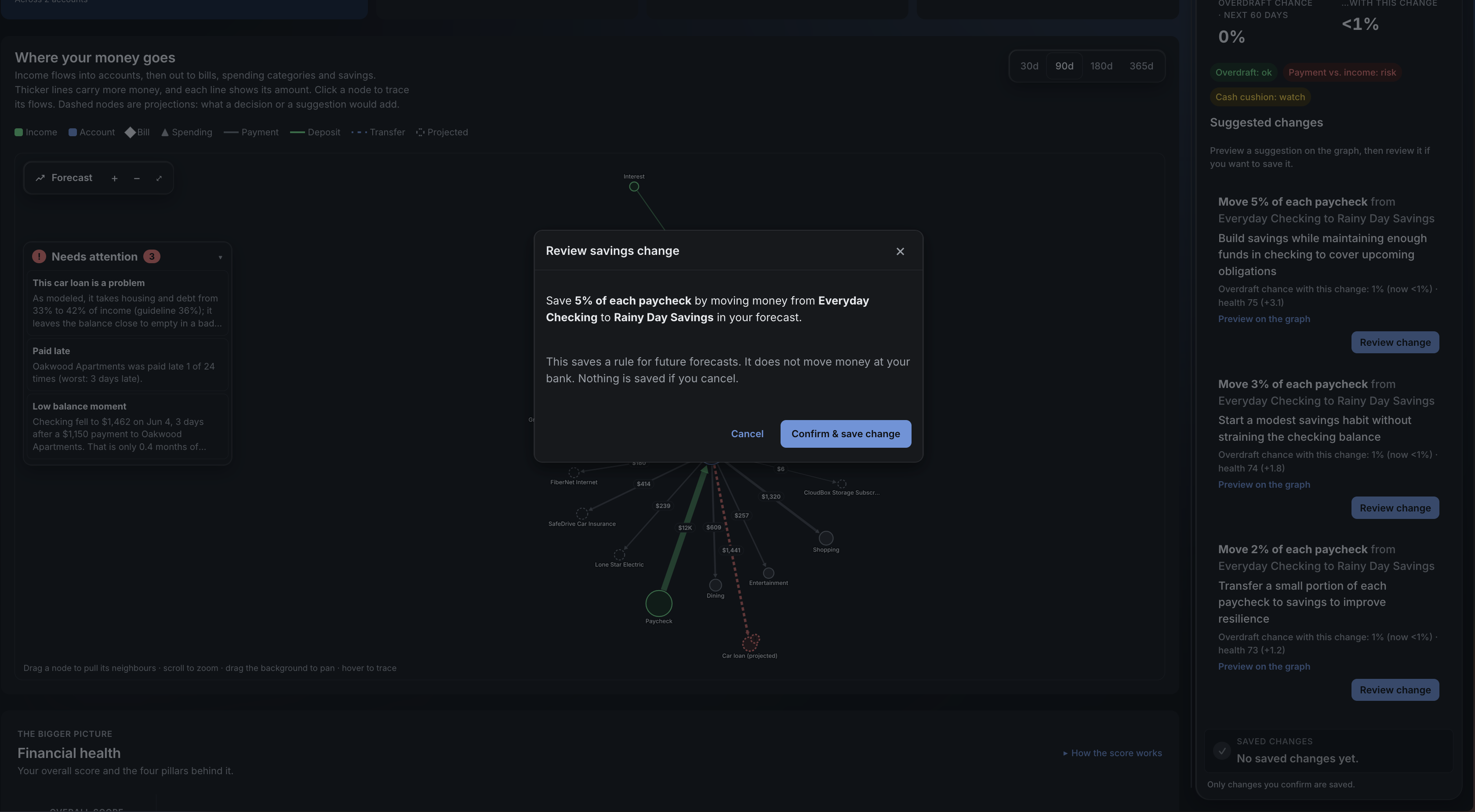
- Plain-language coaching with disclaimers and user approval for every change
How we built it
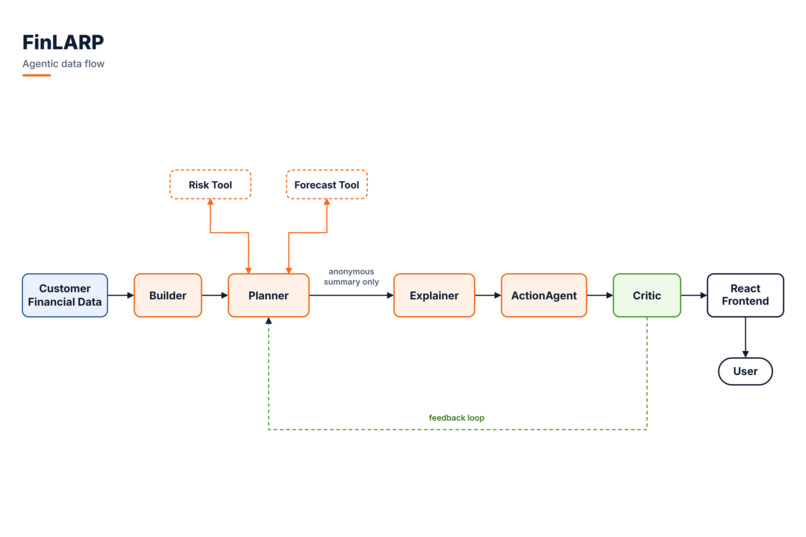
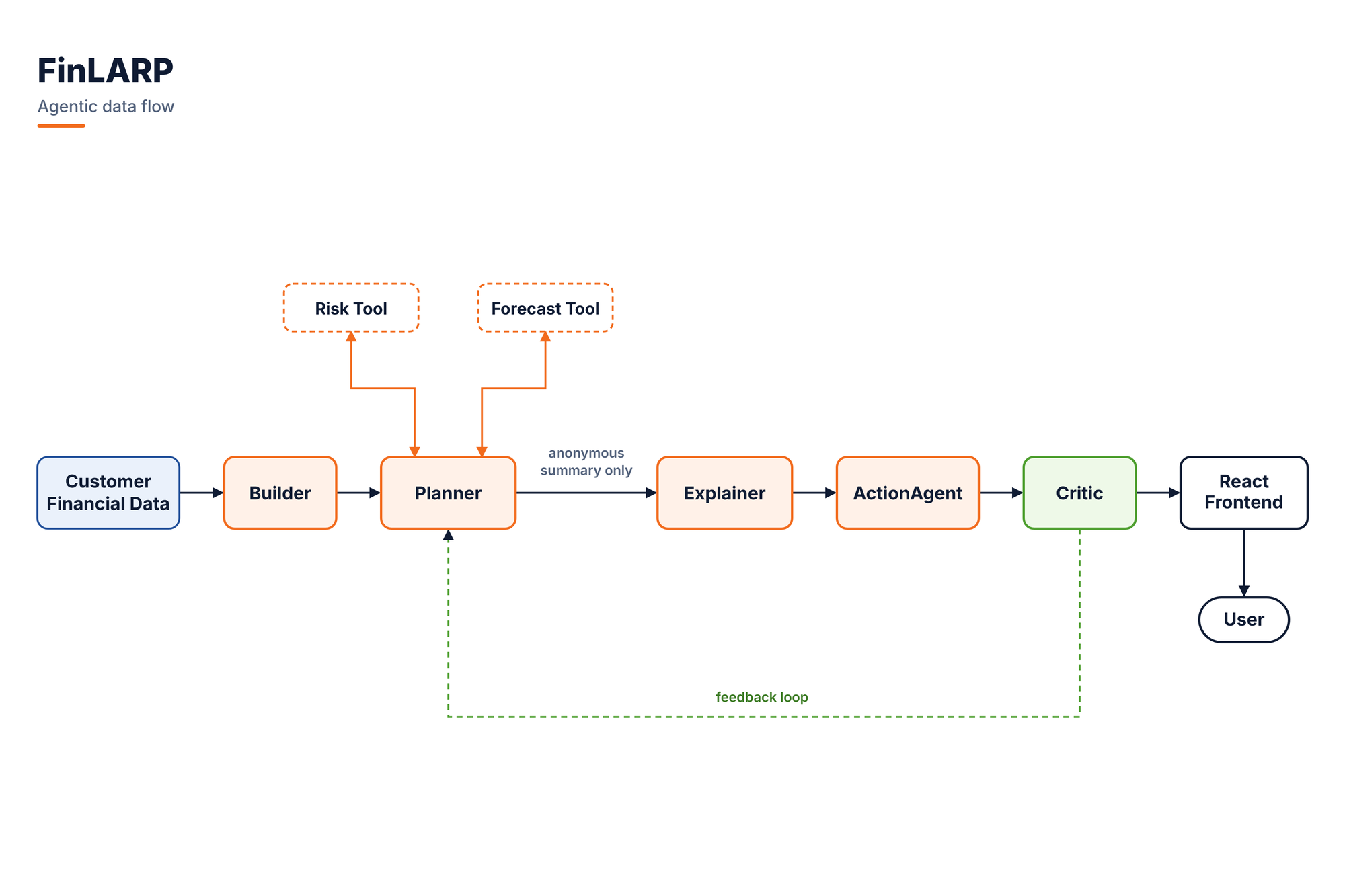
Six autonomous agents on NVIDIA Nemotron collaborate on one shared graph state:
- Builder parses accounts and transactions into graph nodes
- Forecaster projects milestones and edge values
- Risk detects negative balances and debt stress points
- Explainer turns subgraphs into plain-text insights
- Action proposes graph edits with disclaimers
- Critic validates every proposal against guardrails
Nemotron's fast reasoning and structured tool calling coordinate the agents, with a graph visualization UI and conversational interface on top.
Challenges we ran into
- Coordinating six agents on one shared graph without conflicts
- Keeping Action Agent suggestions safe and realistic
- Translating dense graph data into plain language
- Designing a graph view that stays readable
Accomplishments that we're proud of
- A working six-agent pipeline on Nemotron, built within the hackathon
- A graph view that makes future cash flow visible
- A what-if simulator for testing major purchases
- Guardrails built in from the start: a Critic Agent, disclaimers, and user approval
What we learned
- Graphs make dependencies between accounts, bills, and goals easier to reason about than flat lists
- Multi-agent systems work best when each agent has one narrow job and a shared source of truth
- Forecasts only help if people can understand them
What's next for FinLARP
- Next: live bank feeds via Open Banking APIs
- Later: authorized automated actions like debt consolidation and savings reallocation
- Validate the health indicators with real users
Built With
- agents
- express.js
- fast-api
- fintech
- llm
- monte-carlo
- nemotron
- node.js
- nvidia
- react-flow
- recharts
- typescript
- vite
