-
-
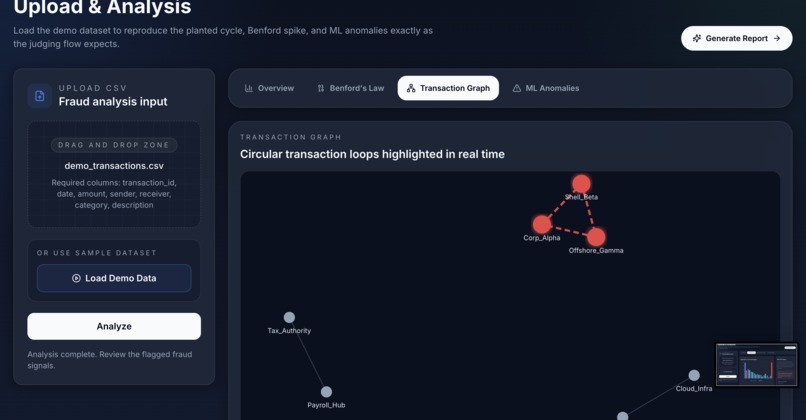
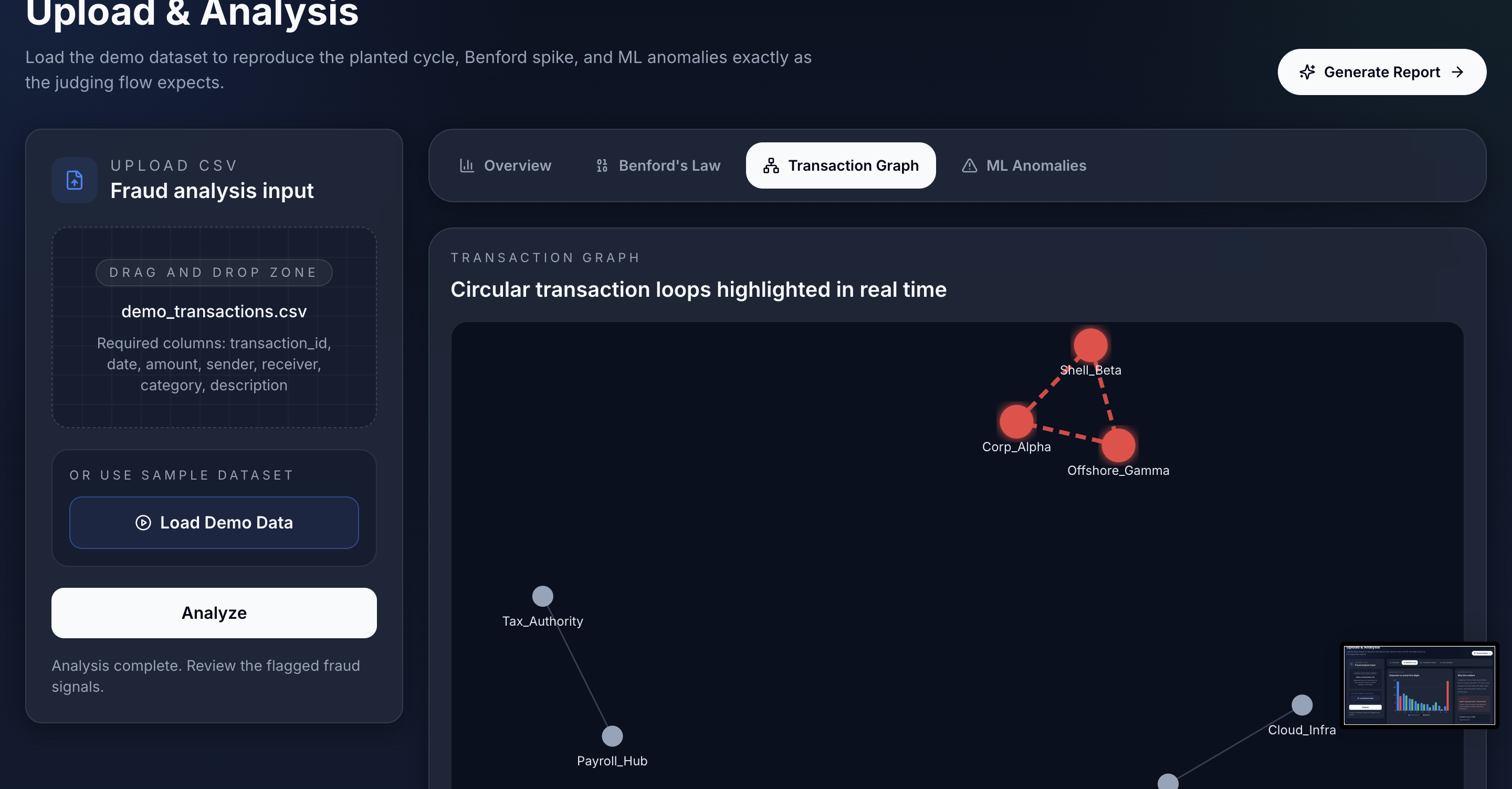
Transaction Graph
-
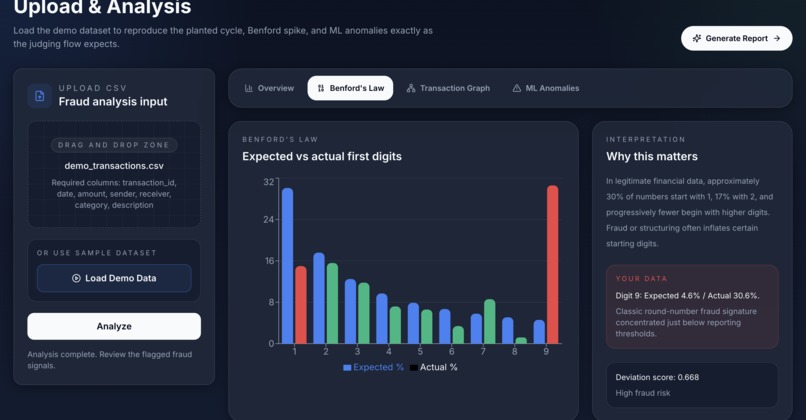
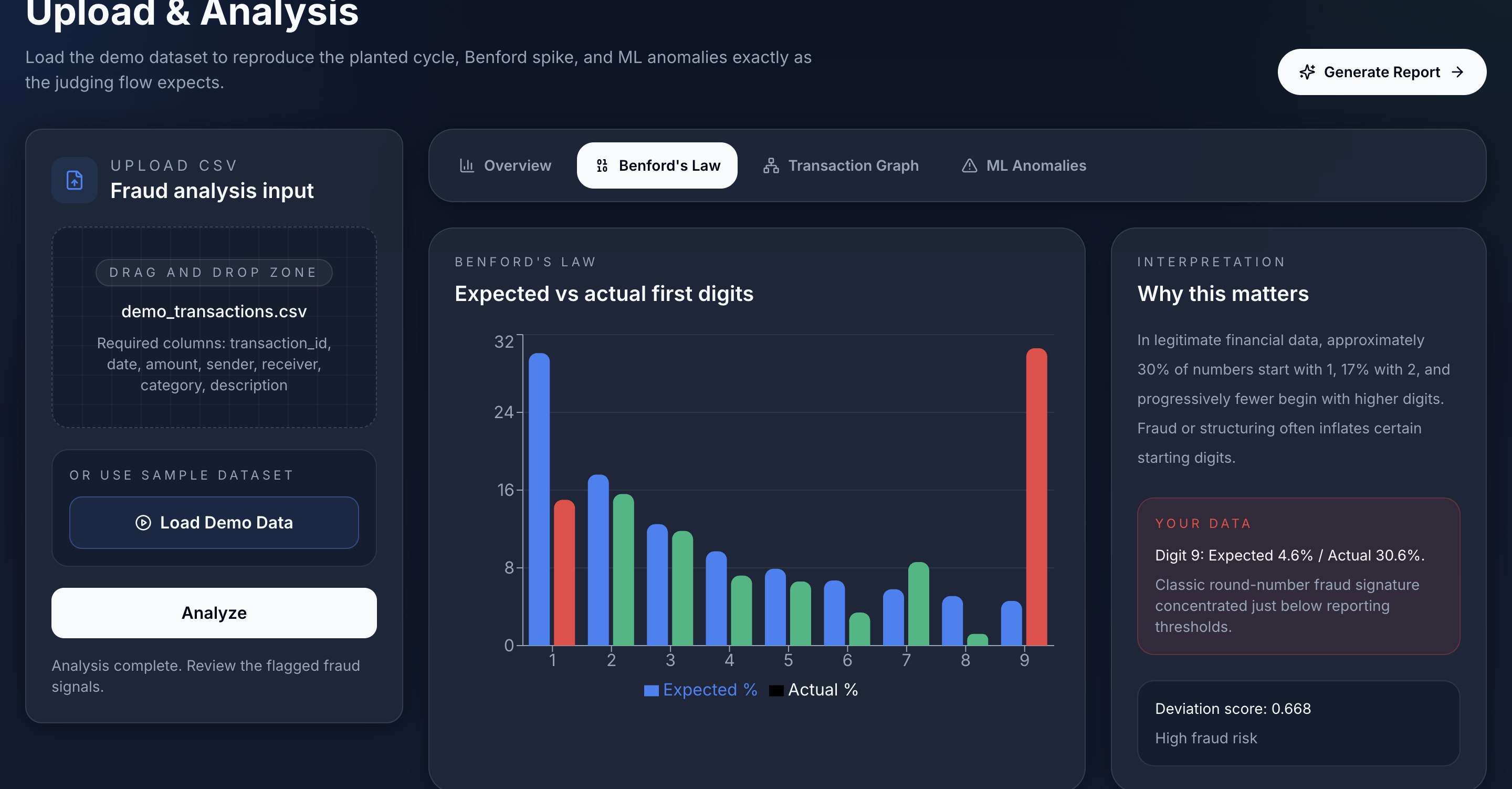
Benford’s law and analysis
-
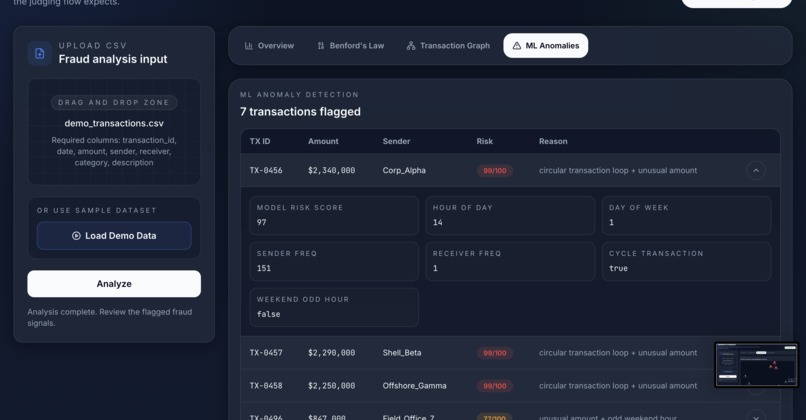
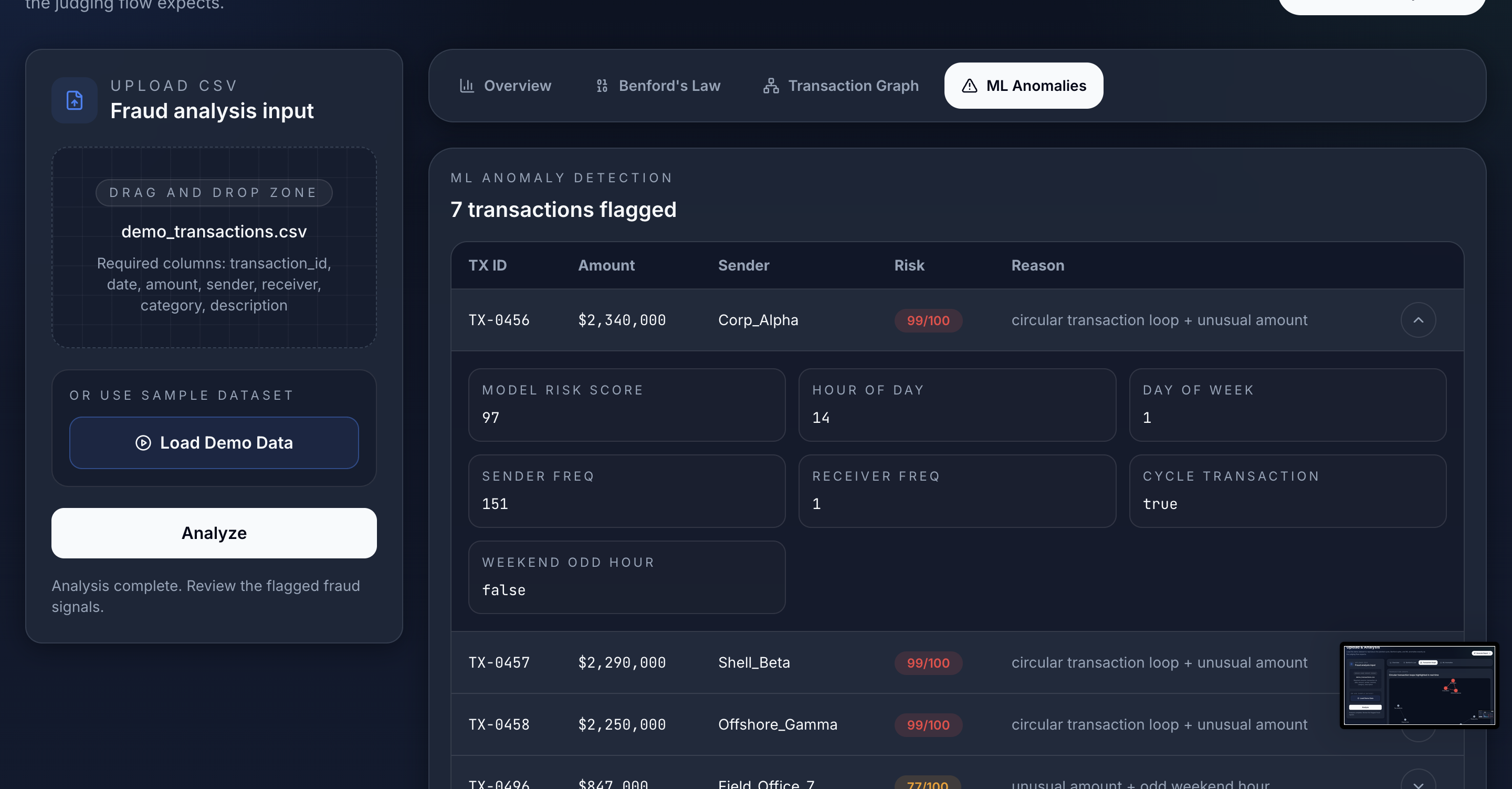
ML tab
-
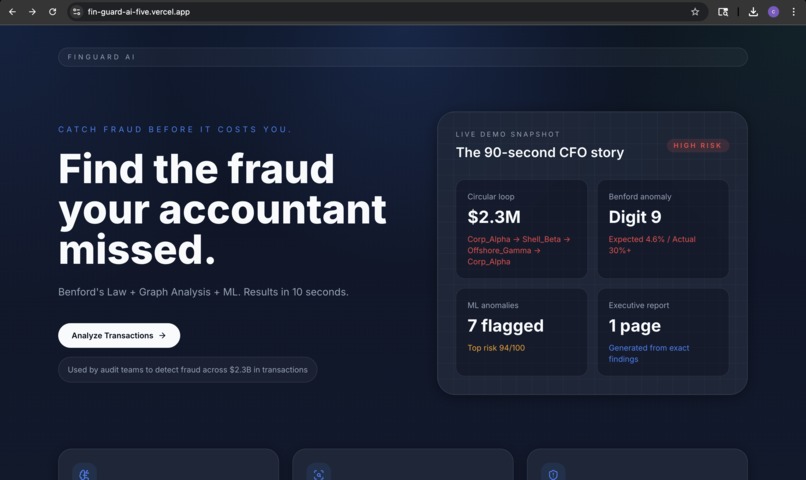
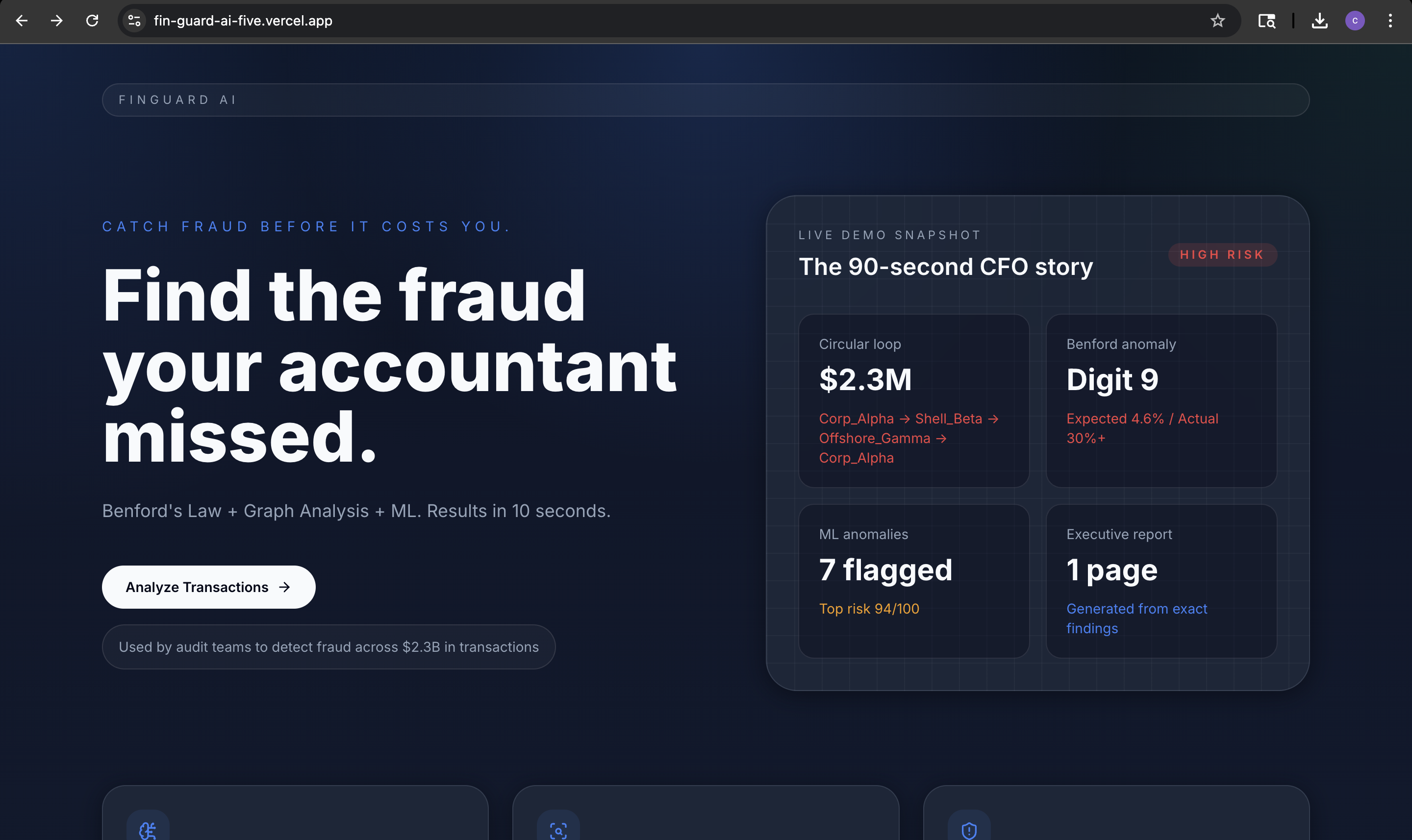
Landing page
Inspiration
Financial fraud detection is still too slow, expensive, and dependent on manual audits. We wanted to build a system that could give a CFO or audit team an immediate fraud-risk picture from a raw transaction file. The inspiration behind FinGuard AI was to combine statistical forensics, graph intelligence, machine learning, and AI-generated reporting into one workflow that feels fast, modern, and actionable.
What it does
FinGuard AI analyzes transaction CSVs to detect suspicious financial behavior. It applies Benford’s Law to identify unnatural first-digit distributions, detects circular transaction loops using graph cycle analysis, uses Isolation Forest to flag anomalous payments, and generates an executive audit summary from the results. The goal is to help users quickly spot unusual money movement, suspicious payment structuring, and high-risk transactions without waiting for a traditional audit process.
How we built it
We built the frontend using Next.js 14, React, Tailwind CSS, Recharts, and D3.js for the graph visualization. The backend was built in FastAPI using Pandas and NumPy for transaction processing, NetworkX for graph cycle detection, and scikit-learn for anomaly scoring with Isolation Forest. We also created a synthetic dataset with planted fraud patterns for demo reliability and connected a Groq-powered report generation pipeline to turn raw detection results into an executive-ready summary.
Challenges we ran into
One of the biggest challenges was balancing demo polish with analytical correctness. It was easy to make the product look impressive, but much harder to ensure the backend logic was defensible on arbitrary uploaded datasets. We also had to solve frontend performance issues on the analysis route, serialization issues in the backend, and the challenge of translating complex fraud signals into plain-English explanations that a judge or business user could understand quickly.
Accomplishments that we're proud of
We’re proud that FinGuard AI is not just a static dashboard or mockup. It uses real detection techniques, presents them in a visually strong enterprise-style interface, and connects the analysis to an executive summary workflow. The transaction graph, Benford analysis, anomaly explanations, and report generation together make the product feel like a serious audit intelligence platform rather than a student demo.
What we learned
We learned that trust matters as much as intelligence in fraud products. A model is not enough by itself; users need transparency, interpretability, and consistency across the UI and backend. We also learned how important it is to align product storytelling with actual algorithmic behavior, especially when building something judges may test with their own data. On the technical side, we gained hands-on experience combining statistical analysis, graph algorithms, ML anomaly detection, and AI summarization into a single application.
What's next for FinGuard AI
Next, we want to improve robustness for arbitrary real-world financial datasets, make the fraud scoring more calibrated, and deepen explainability for each suspicious transaction. We also want to strengthen report generation, improve validation for uploaded data, and support deployment-ready production infrastructure. Longer term, FinGuard AI could evolve into a full audit intelligence platform for SMB finance teams, compliance analysts, and internal audit functions.
Built With
- 14
- api
- css
- csv-based
- d3.js
- fastapi
- groq
- networkx
- next.js
- numpy
- pandas
- python
- react
- recharts
- scikit-learn
- synthetic
- tailwind
- typescript

Log in or sign up for Devpost to join the conversation.