-
-
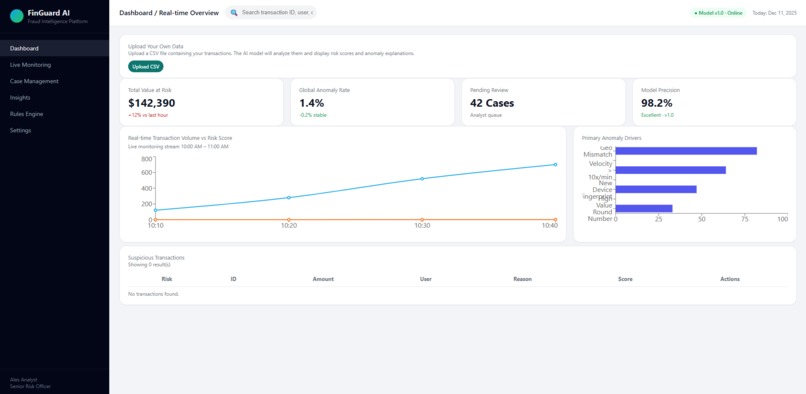
Dashboard
-
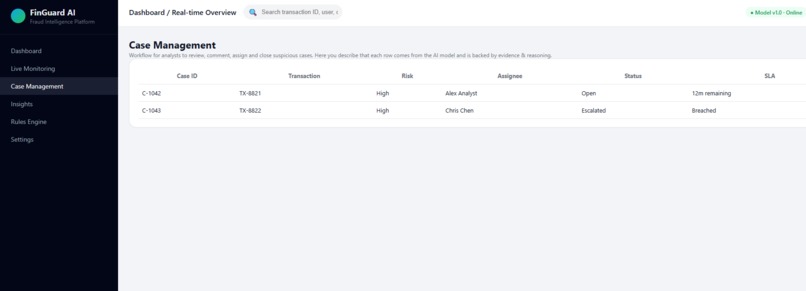
Case Management
-

Live Monitoring
-
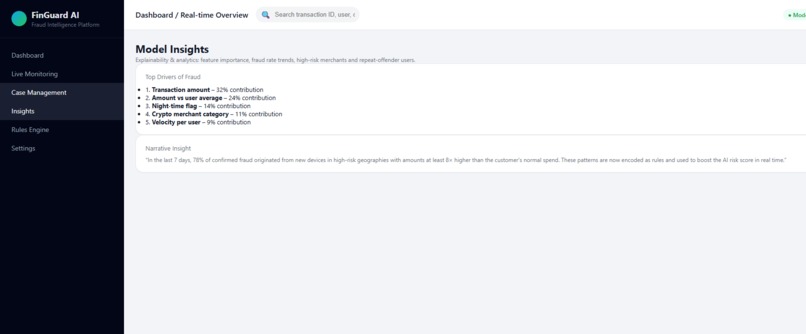
Insights
-

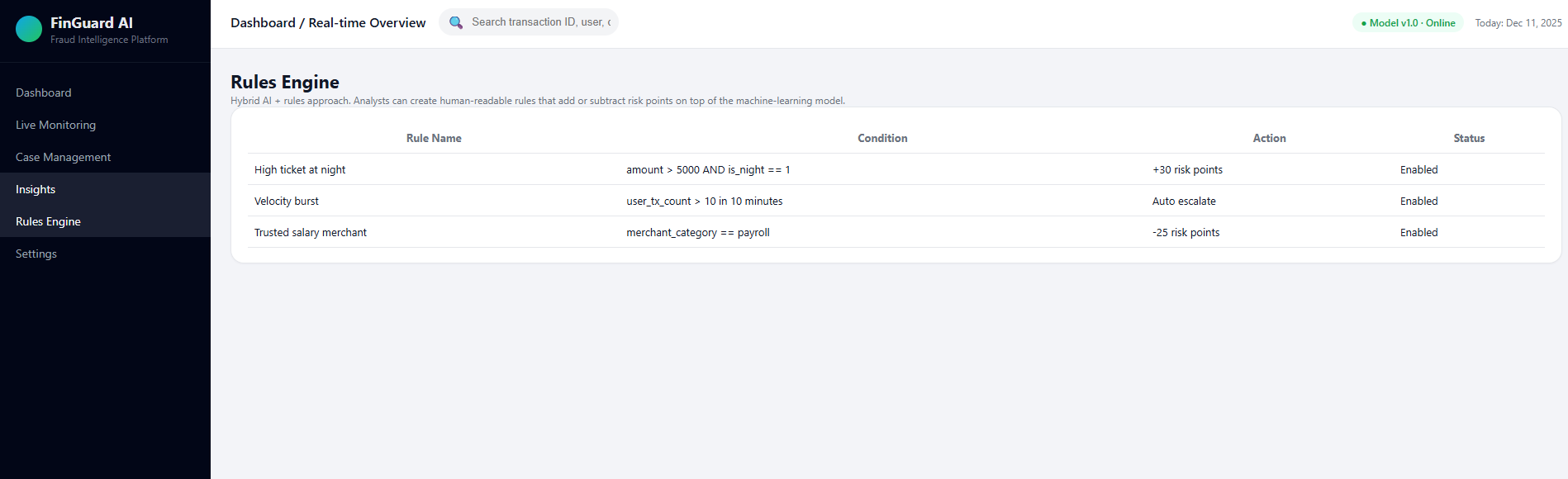
Engine rules applied
-
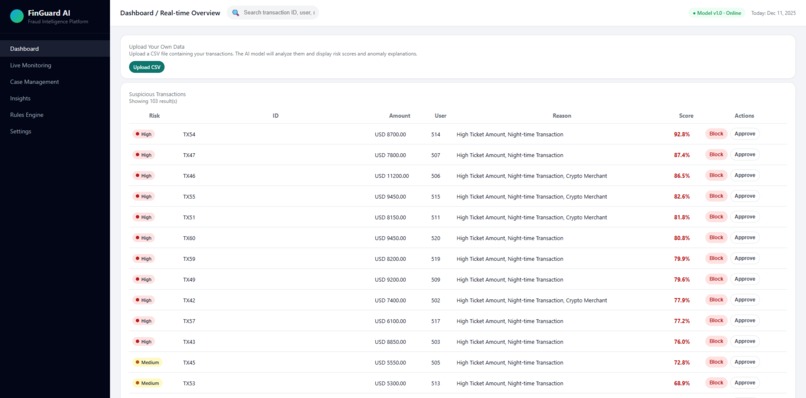
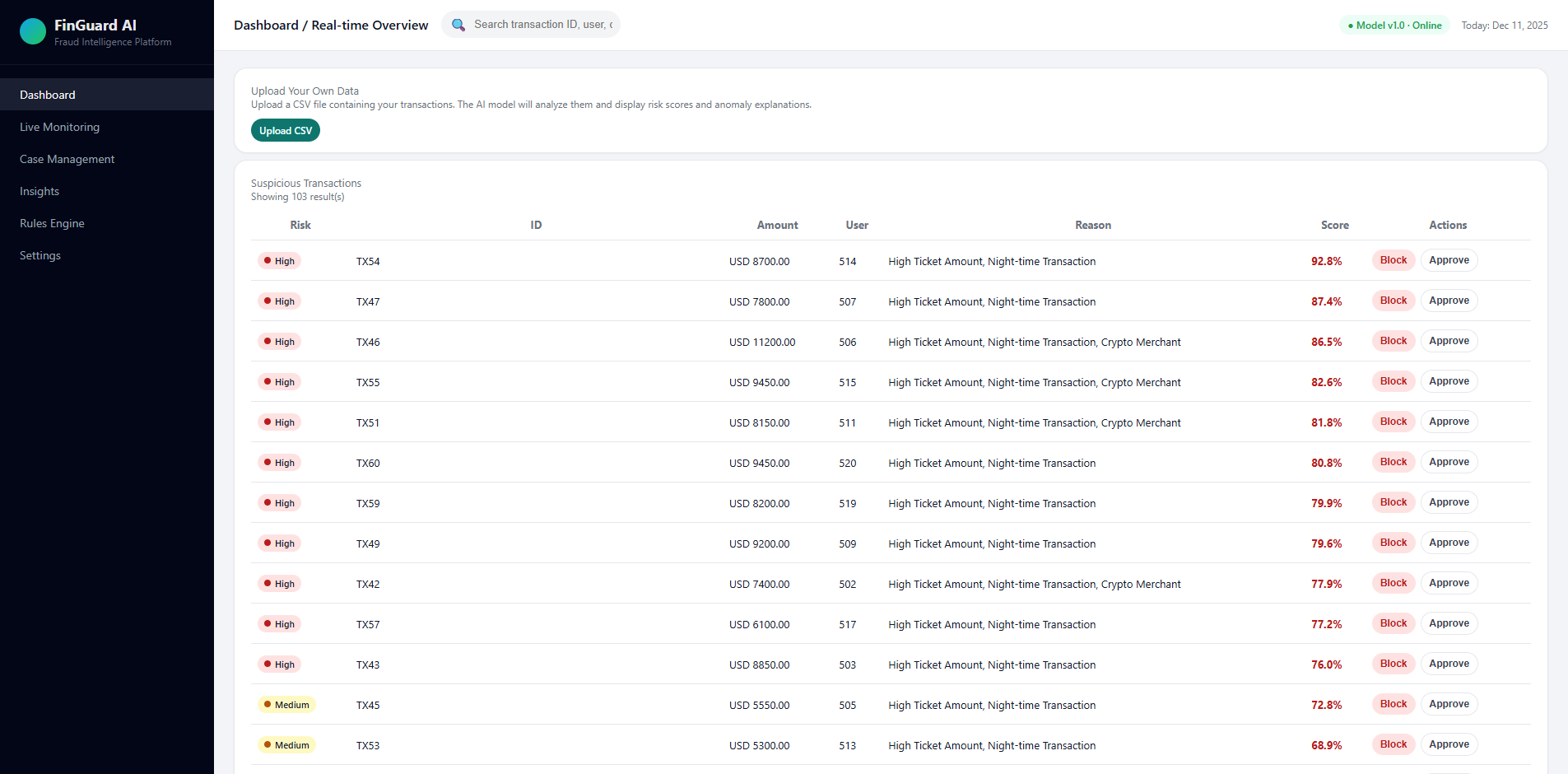
Scored CSV - Uploaded data
Inspiration
The rise of digital transactions has created an environment where fraud evolves faster than traditional rule-based systems can adapt. Most fraud detection tools are expensive, complex to integrate, and offer limited transparency into why a transaction is considered risky. We wanted to create a modern solution that is accessible, explainable, and immediately usable—something that allows any organization, from small businesses to emerging fintechs, to analyze risk without specialized infrastructure. This motivation led to FinGuard AI: a platform that brings enterprise-level fraud intelligence into a simple, usable, and cloud-ready system.
What it does
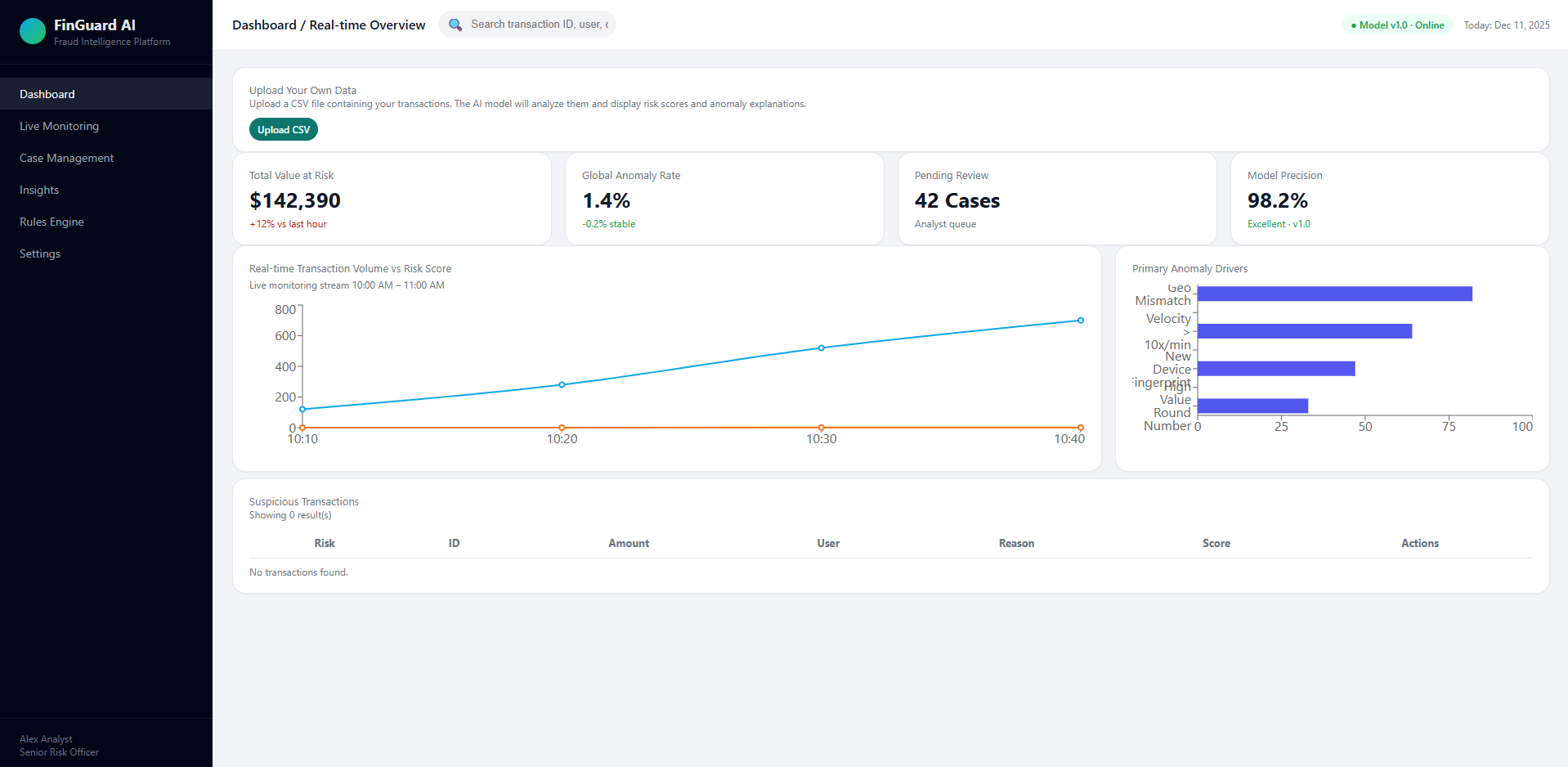
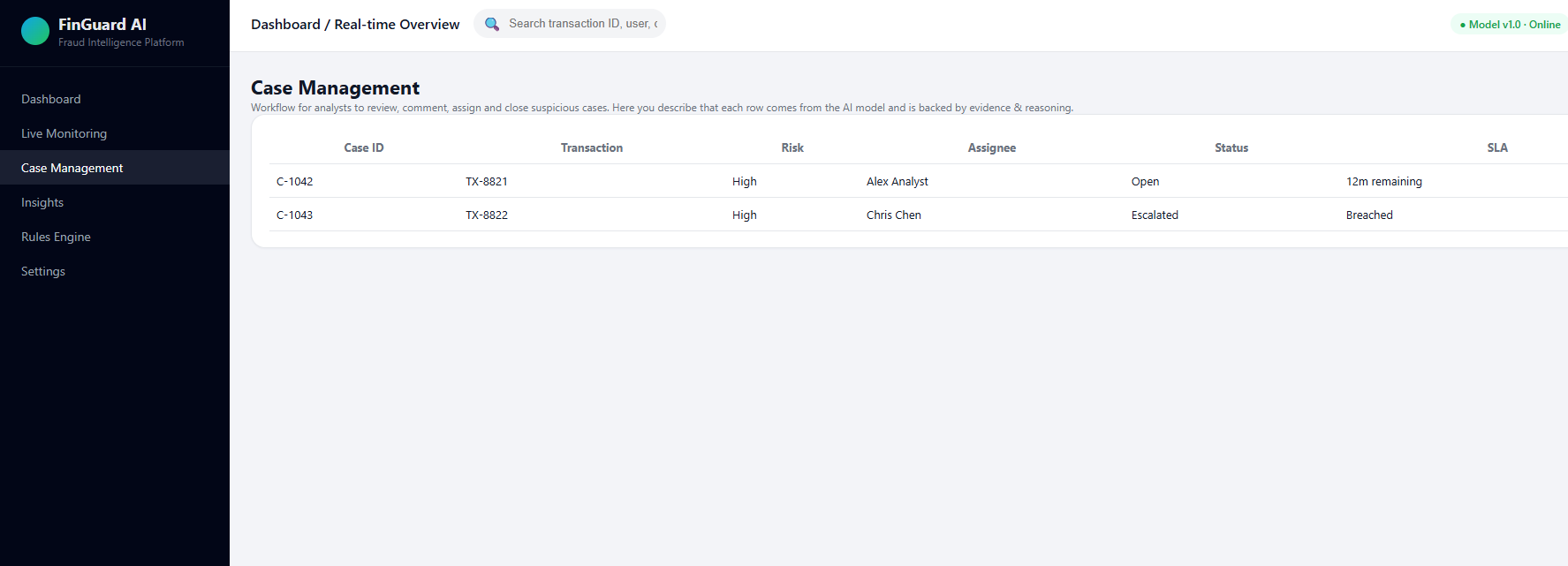
FinGuard AI evaluates financial transactions and predicts the likelihood of fraud while also providing clear, human-readable explanations for the decisions it makes. Users can upload a CSV of transactions and instantly receive a risk assessment, supported by behavioral features, anomaly detection signals, and contextual tags. The platform includes a professional dashboard that visualizes transaction patterns, highlights anomalies, and organizes cases for review. It blends machine-learning-based scoring with customizable rules, offering a hybrid detection method that mirrors real fraud prevention systems used in industry.
How we built it
The backend was developed using FastAPI and integrates both supervised and unsupervised models—RandomForest for classification and IsolationForest for anomaly detection. A robust feature engineering pipeline was created to extract temporal features, behavioral profiles based on user spending, device and location patterns, and logarithmic transformations for amount values. The backend exposes simple endpoints for training and scoring and was deployed on Railway along with the trained model artifacts.
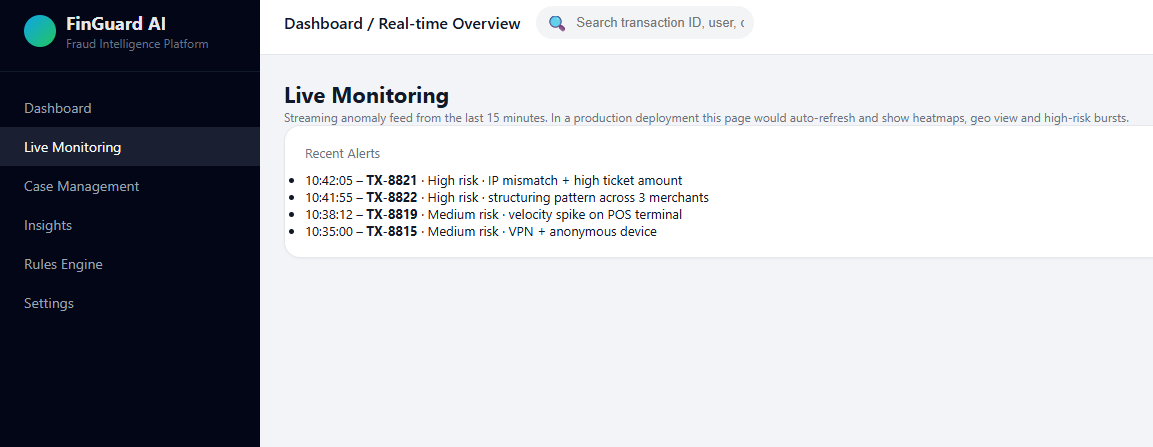
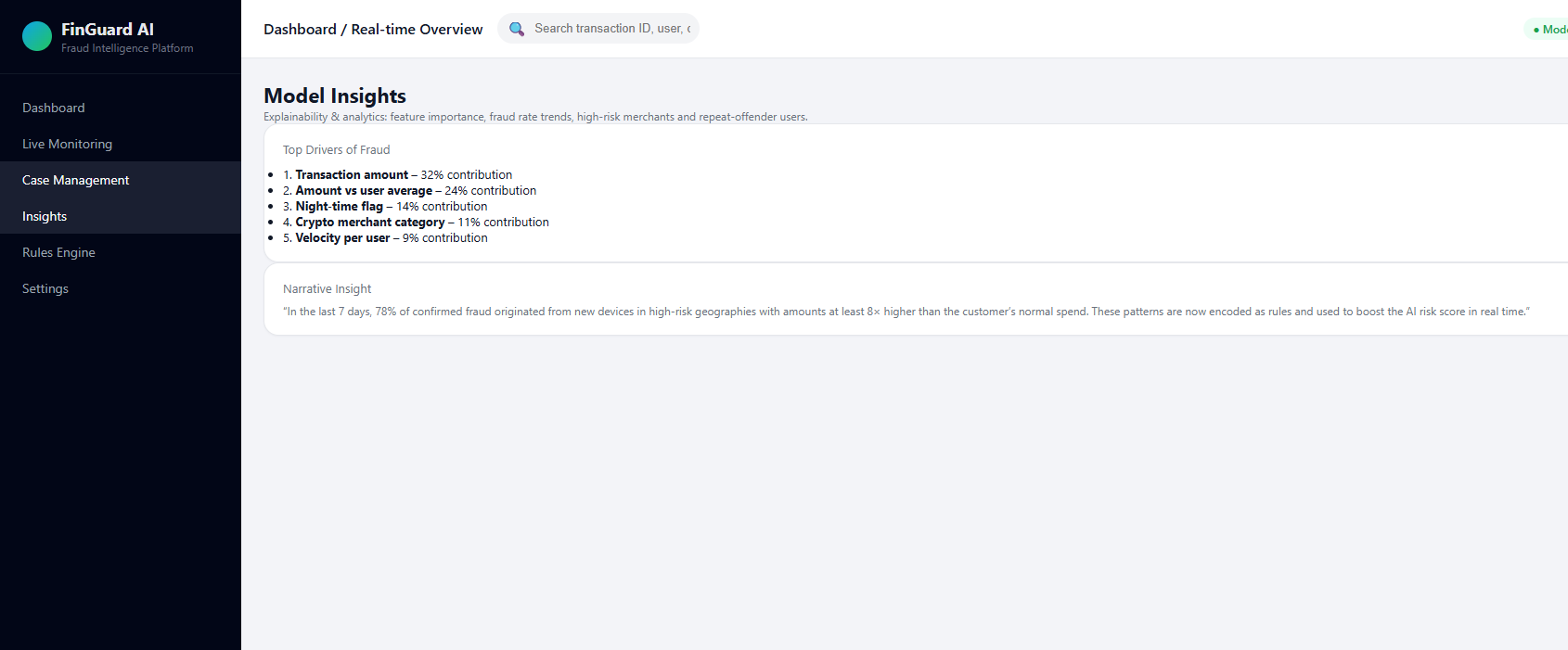
The frontend was built using React and Vite, focusing on a clean and responsive dashboard with dedicated sections for monitoring, insights, case management, and rules configuration. CSV parsing and API communication are handled client-side, and the interface uses charting components to present risk trends and anomaly drivers in a clear and interpretable manner. The frontend is deployed on Vercel for fast and reliable global delivery.
Challenges we ran into
One challenge involved making the machine learning pipeline production-safe. This required handling inconsistent CSV formats, cleaning numeric fields, dealing with missing timestamps, and ensuring the data fed into the models would not cause crashes. Deployment introduced its own issues, such as model path handling on Railway, CORS configuration for frontend communication, and addressing JSON serialization errors caused by NaN or infinite values.
Managing Git on Windows—especially inside a OneDrive-synced folder—created unexpected difficulties, including unwanted tracking of node_modules and line-ending warnings. Cleaning the repository and restructuring the .gitignore became a necessary step before deployment could proceed smoothly.
Accomplishments that we're proud of
We are particularly proud of creating a complete, fully deployed fraud detection platform with both a machine learning inference API and a professional dashboard. The explainability engine that accompanies each risk score adds significant value and sets the system apart from black-box models. Deploying the entire solution in the cloud and ensuring it works end-to-end, from dataset upload to scoring and visualization, is another milestone. The project effectively simulates how modern fraud intelligence systems operate, but in a simplified and accessible form.
What we learned
We learned how to productionize machine learning models by building stable FastAPI services, preparing data pipelines that tolerate real-world inconsistencies, and deploying models in resource-constrained cloud environments. On the frontend side, we gained experience creating performant dashboards, integrating file uploads with live APIs, and handling cross-origin communication between services hosted on different platforms. The project reinforced the importance of explainability in AI systems, especially in sensitive domains like fraud detection.
What's next for FinGuard AI
The next steps include supporting real-time streaming transactions instead of batch uploads, adding authentication and workspace management for multi-tenant usage, and integrating a cloud database for storing transactions, audit histories, and case notes. We also plan to extend the detection engine with graph-based methods for identifying coordinated fraud rings and incorporate more advanced reasoning systems that generate narrative insights. Eventually, FinGuard AI could evolve into a full SaaS product with an API-first design and integrations for payment gateways, financial platforms, and compliance systems.
Built With
- css
- fastapi
- html
- javascript
- numpy
- pandas
- python
- railway
- react
- scikit-learn
- uvicorn
- vercel
- vite
