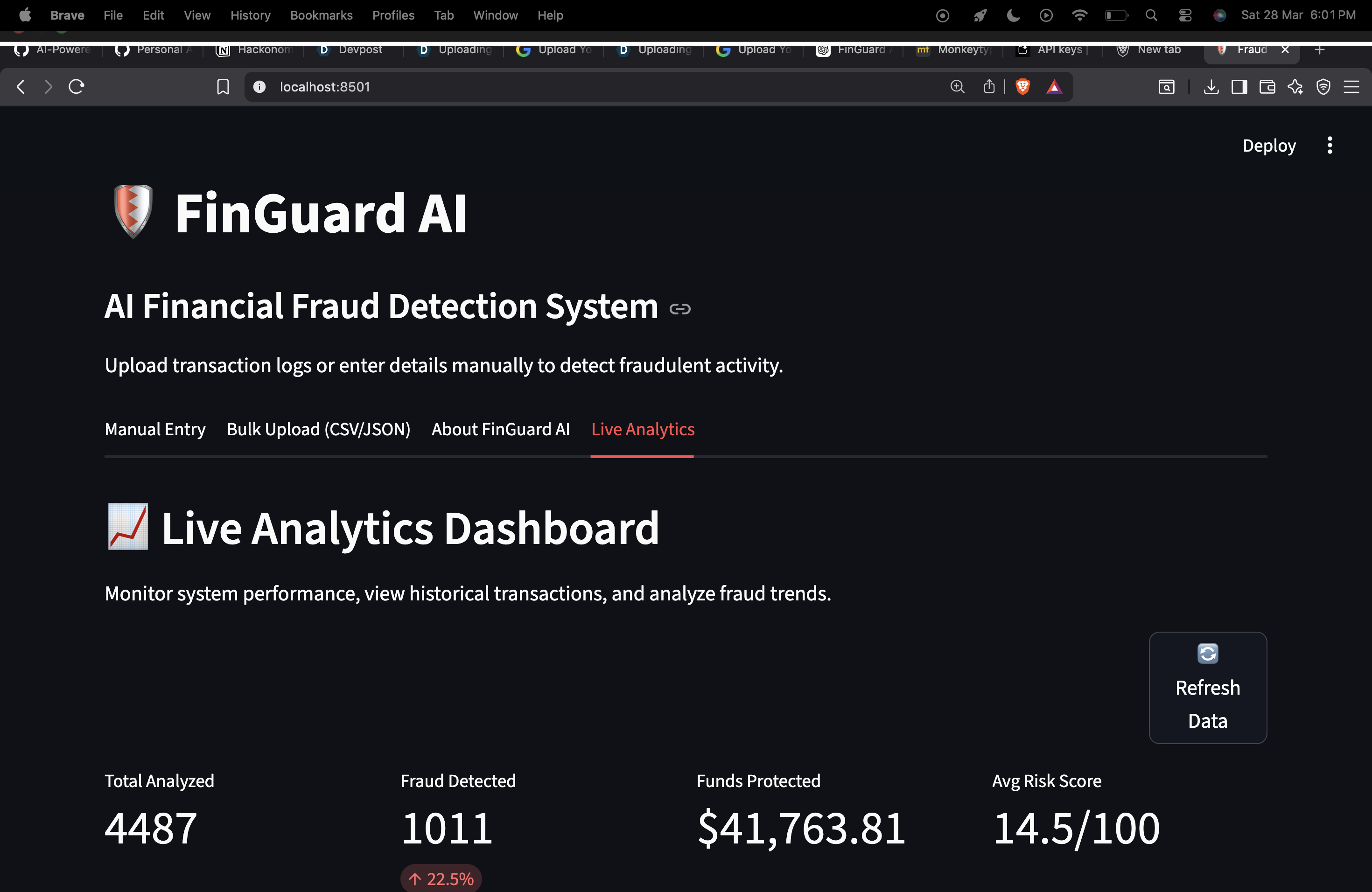
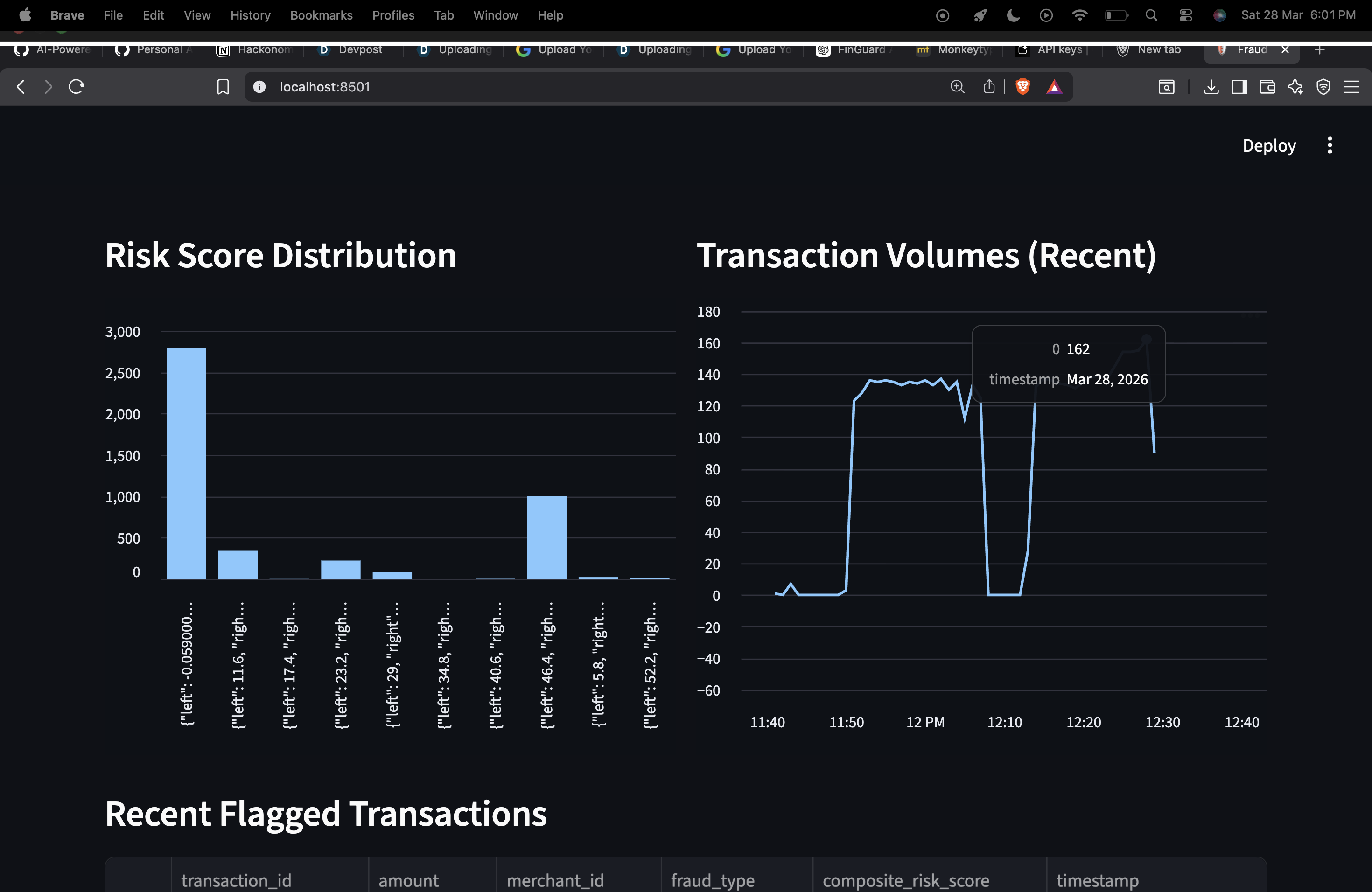
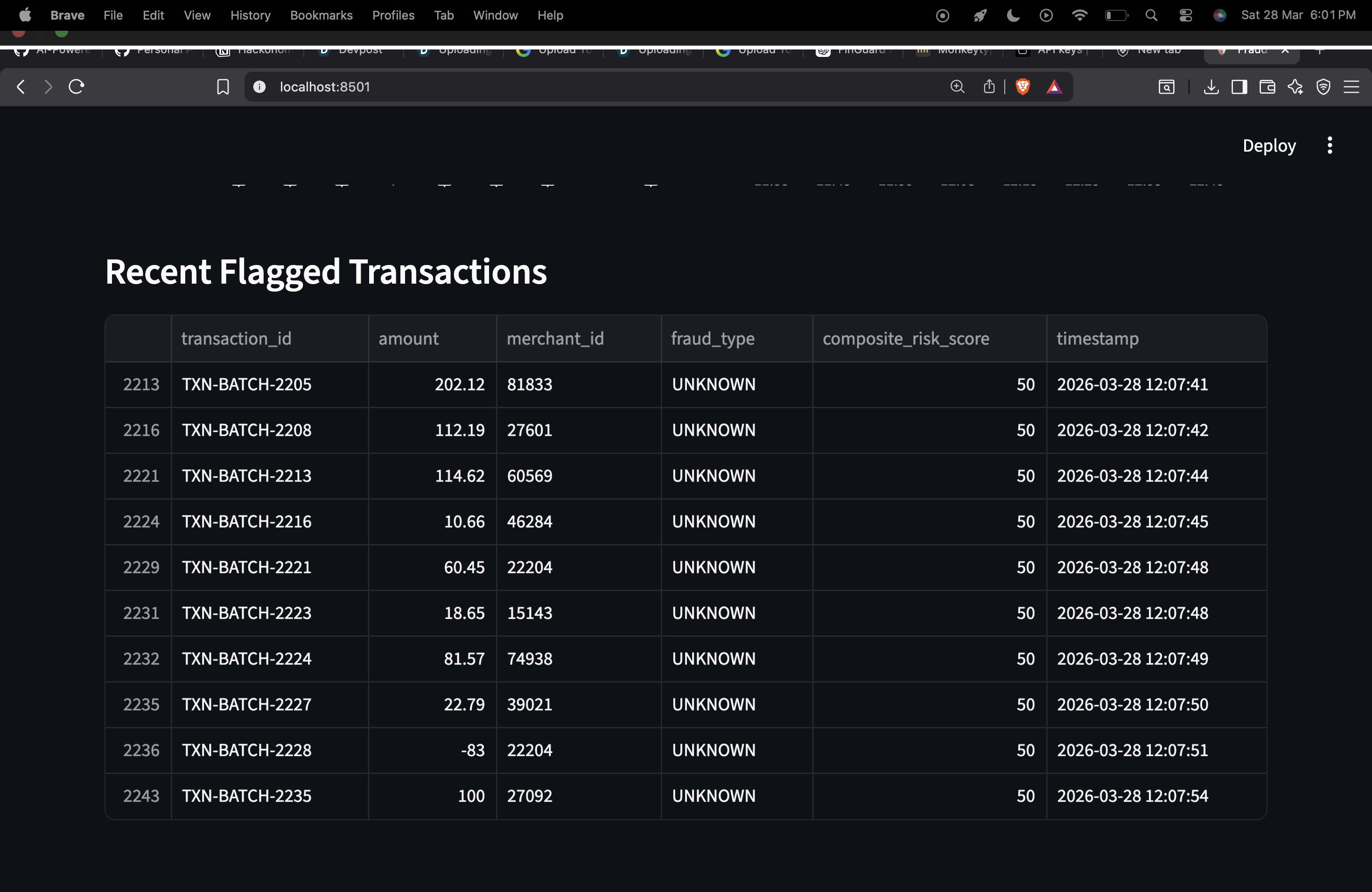
Inspiration
The rapid growth of digital financial platforms such as _ UPI payments, mobile banking, and digital wallets _ has significantly increased the number of online transactions worldwide. While these technologies provide convenience and accessibility, they have also created new opportunities for financial fraud and cybercrime.
Traditional fraud detection systems often rely on manual reviews or static rule-based systems, which struggle to handle the massive scale of modern financial transactions. Fraud patterns such as Account Takeovers (ATO) or Card Skimming can occur within seconds and may remain undetected until serious financial damage occurs.
This inspired us to build FinGuard AI, an intelligent system capable of automatically analyzing transaction data, detecting suspicious patterns, and identifying potential fraud in real time.
What it does
FinGuard AI is an AI-powered fraud detection pipeline designed to analyze transaction logs and detect suspicious activities.
The system can:
- Process raw transaction logs in JSON or CSV format
- Clean and structure messy financial data
- Detect behavioral anomalies in transactions
- Classify potential fraud types
- Generate a risk score for each transaction
- Provide a suspicious indicator checklist
For example, a system output might look like:
{
  "fraud_type":"Account Takeover",
  "risk_score":87,
  "reason":"Login from new device followed by large transfer"
}```
This helps investigators quickly understand whether a transaction is safe or potentially fraudulent.

## How we built it
We designed **FinGuard AI** as a modular AI pipeline consisting of several stages.

### 1. Data Ingestion

The system receives raw transaction logs containing:

- Transaction ID
- Timestamp
- Amount
- Sender and receiver details
- Device ID
- IP address
- Merchant information

### 2. Data Preprocessing

Because transaction logs are often messy, the system performs several cleaning steps:

- Handling **missing values**
- Standardizing **merchant names**
- Converting **timestamps**
- Extracting **location from IP addresses**

### 3. Feature Extraction

The system generates important fraud indicators such as:

- Sudden location changes
- Login from a new device
- Large unusual transactions
- Multiple failed login attempts
- Rapid transaction activity

### 4. Machine Learning Fraud Detection

The extracted features are passed to a **machine learning model** that predicts the transaction category:

- **Account Takeover**
- **Card Skimming / Cloning**
- **Safe Transaction**
- **Unknown Suspicious Activity**

The model also produces a **risk score** calculated as:

$$RiskScore = (TotalIndicators/SuspiciousIndicators)×100$$

This score helps determine how likely a transaction is fraudulent.

### 5. Suspicious Indicator Checklist

The system compares transaction behavior with a configuration file:
```fraud_typology.json```
Each indicator is labeled as:

- **PRESENT** – suspicious behavior detected
- **MISSING** – no abnormal behavior
- **PARTIAL** – incomplete information

## Challenges we ran into
While developing FinGuard AI, we encountered several challenges.

One of the biggest issues was handling **messy real-world data**. Transaction logs often contain missing fields, inconsistent formats, and non-standard merchant names like *AMZN*MKTP* or *PAYTM_RNDM_882*.

Another challenge was identifying **meaningful fraud indicators**. Fraud patterns often resemble normal user behavior, so designing reliable anomaly detection logic required careful feature engineering.

We also had to ensure the system provided **clear explanations** instead of just predicting fraud, which is essential for trust in financial systems.

## Accomplishments that we're proud of
We are proud of successfully building a **complete AI fraud detection pipeline** that transforms messy transaction data into meaningful insights.

Some of our key achievements include:

- Designing an automated **data preprocessing system**
- Implementing **fraud classification models**
- Creating a **config-driven indicator checklist**
- Building a scalable **API-based pipeline architecture**
- Producing clear and interpretable fraud analysis results

These accomplishments demonstrate how AI can help improve **financial security and fraud detection efficiency**.

## What we learned
Through this project, we gained valuable experience in several technical areas.

We learned how to build **end-to-end data pipelines** for real-world financial datasets and how to handle inconsistent transaction logs.

We also explored **feature engineering techniques** that help detect suspicious patterns in financial transactions.

Another important lesson was understanding how **machine learning and rule-based logic can complement each other** to create more reliable fraud detection systems.

## What's next for FinGuard AI
In the future, we plan to expand FinGuard AI with additional capabilities.

One major improvement is implementing **Explainable AI**, which will generate detailed explanations such as:

> _ “User device is located in Dhaka while the ATM withdrawal occurred in Dubai within 40 minutes.” _
>

We also plan to build a **fraud network visualization system** that uses graph analysis to detect connections between suspicious wallets.

Example research inspiration:

Fraud Detection Research

Eventually, FinGuard AI could evolve into a **real-time fraud monitoring platform** used by financial institutions to prevent fraud at scale.

Log in or sign up for Devpost to join the conversation.