-
-
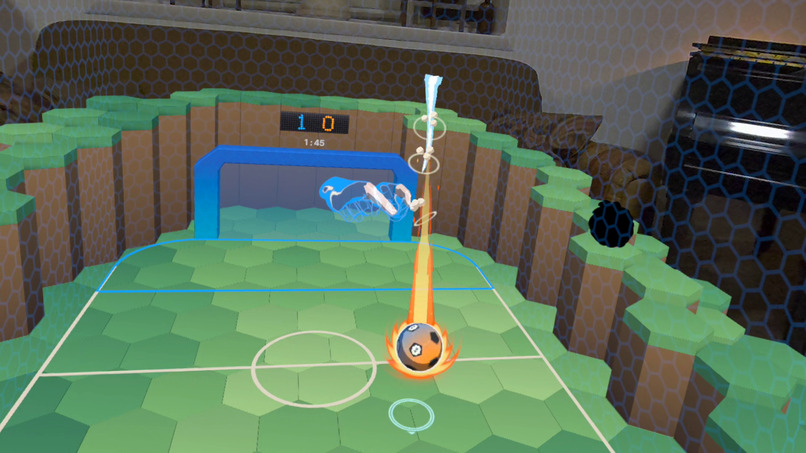
Online matchmaking.
-
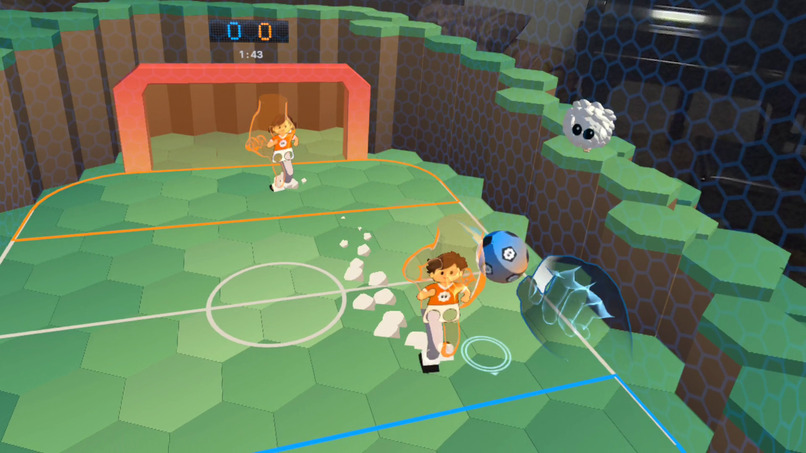
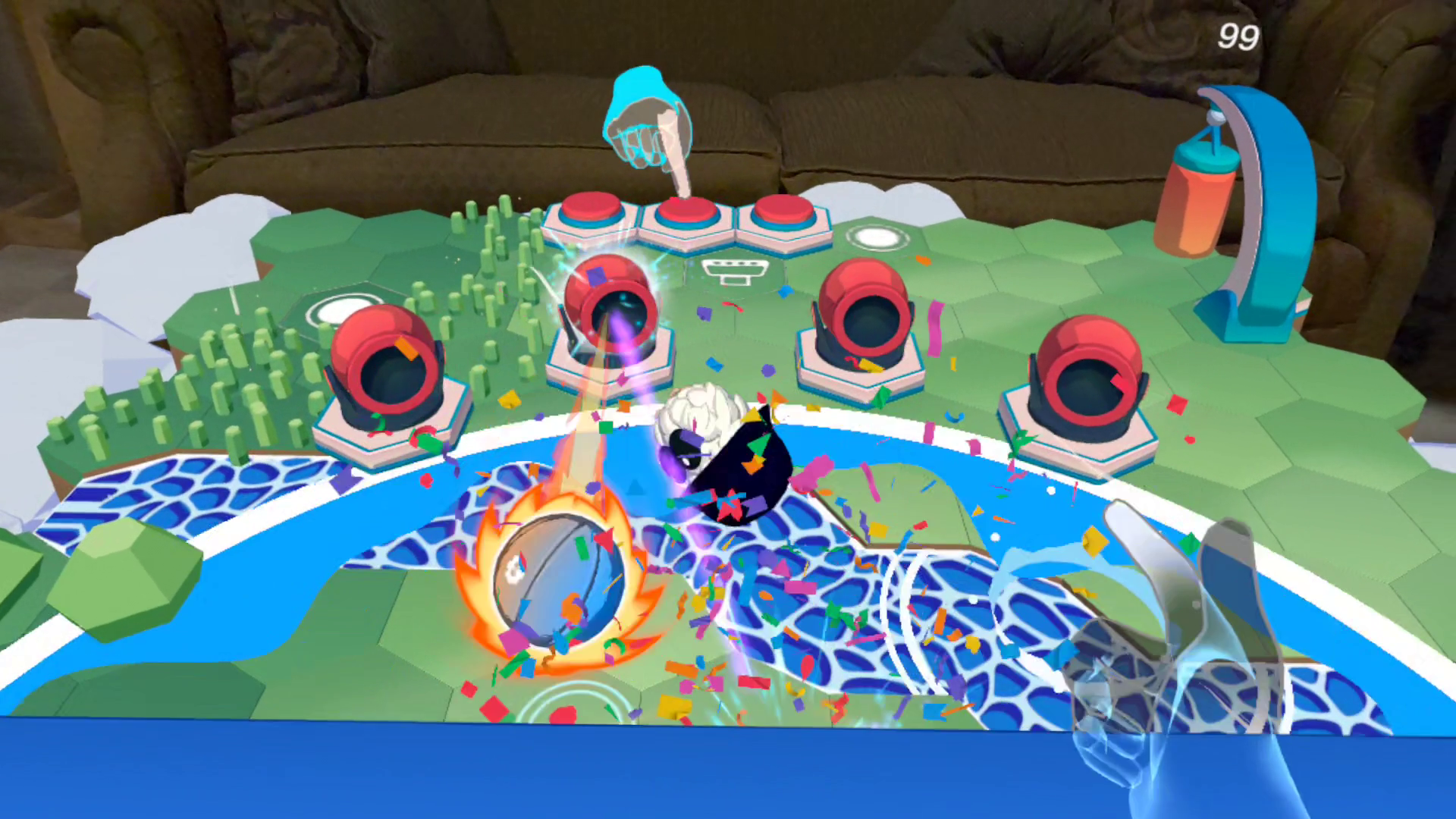
Procedurally animated bot battles, each with their own move set.
-
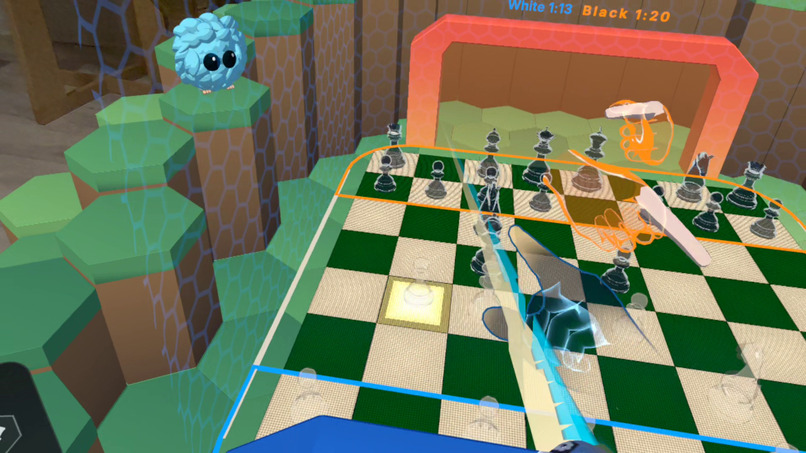
Online Chess Ball. Win on the board, or on the field. Your pieces play with you!
-
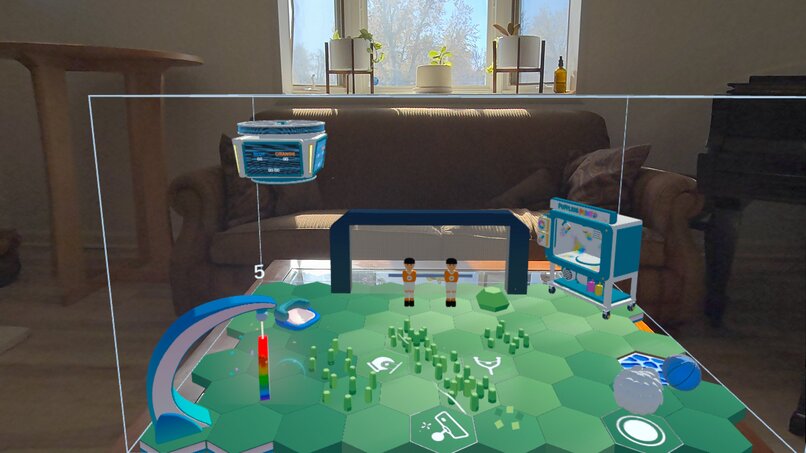
Cozy Lobby.
-
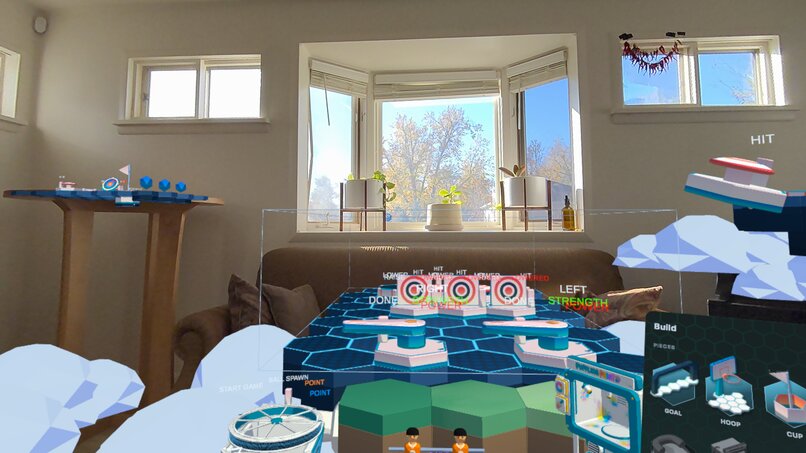
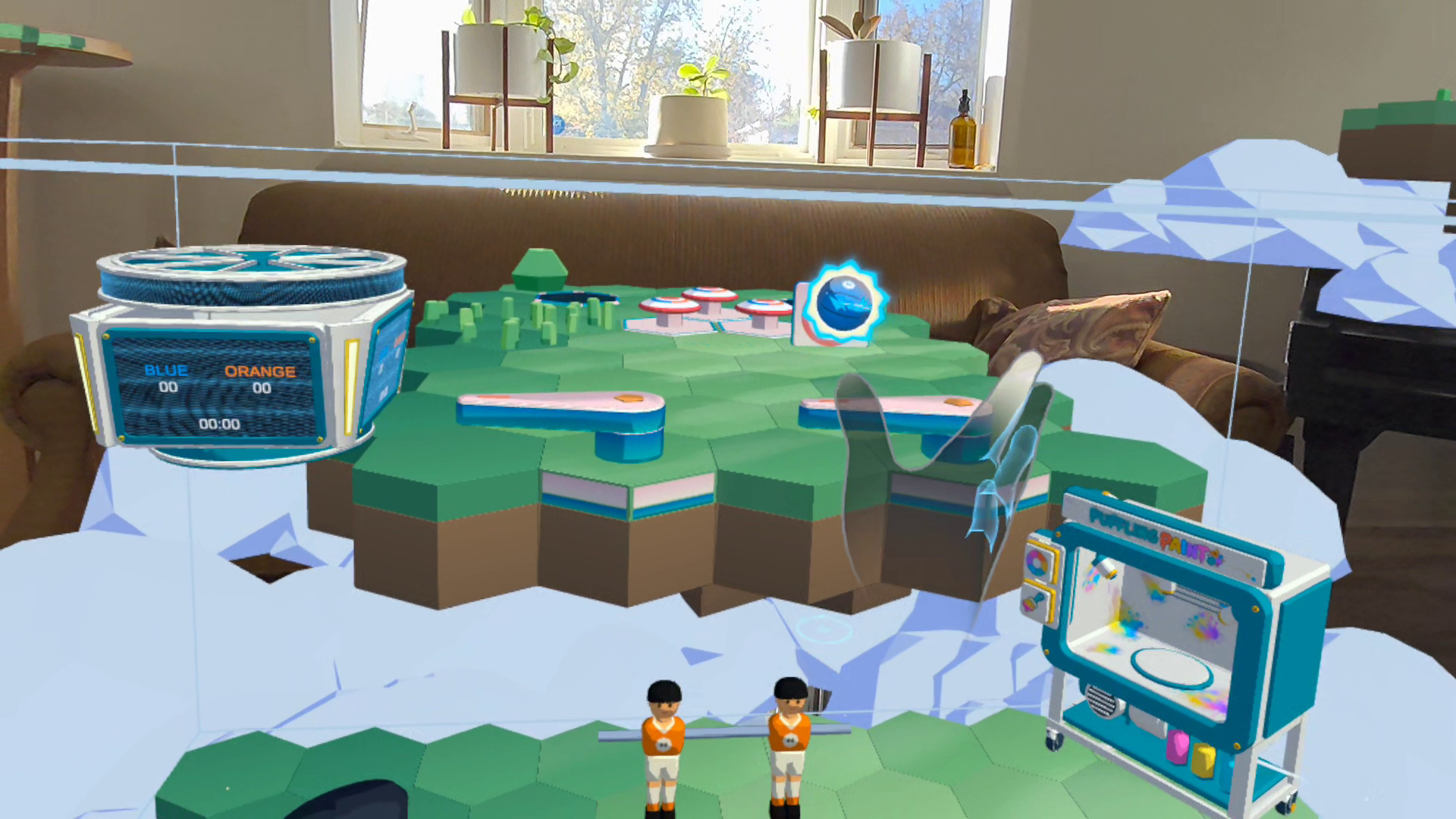
Build multiple islands all while sitting down.
-
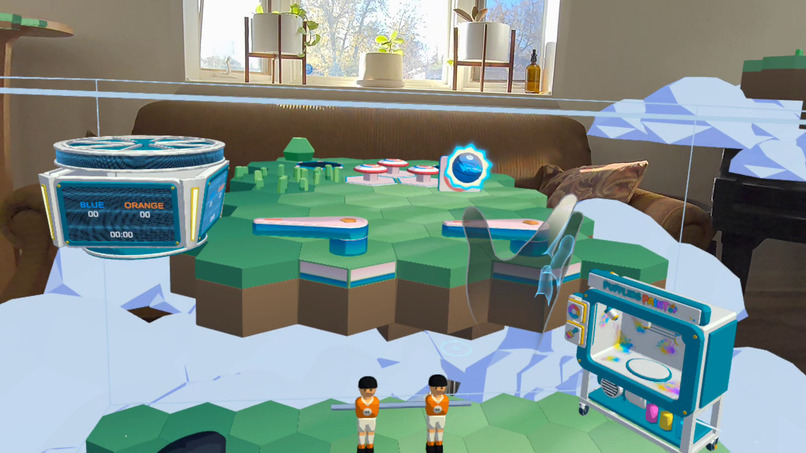
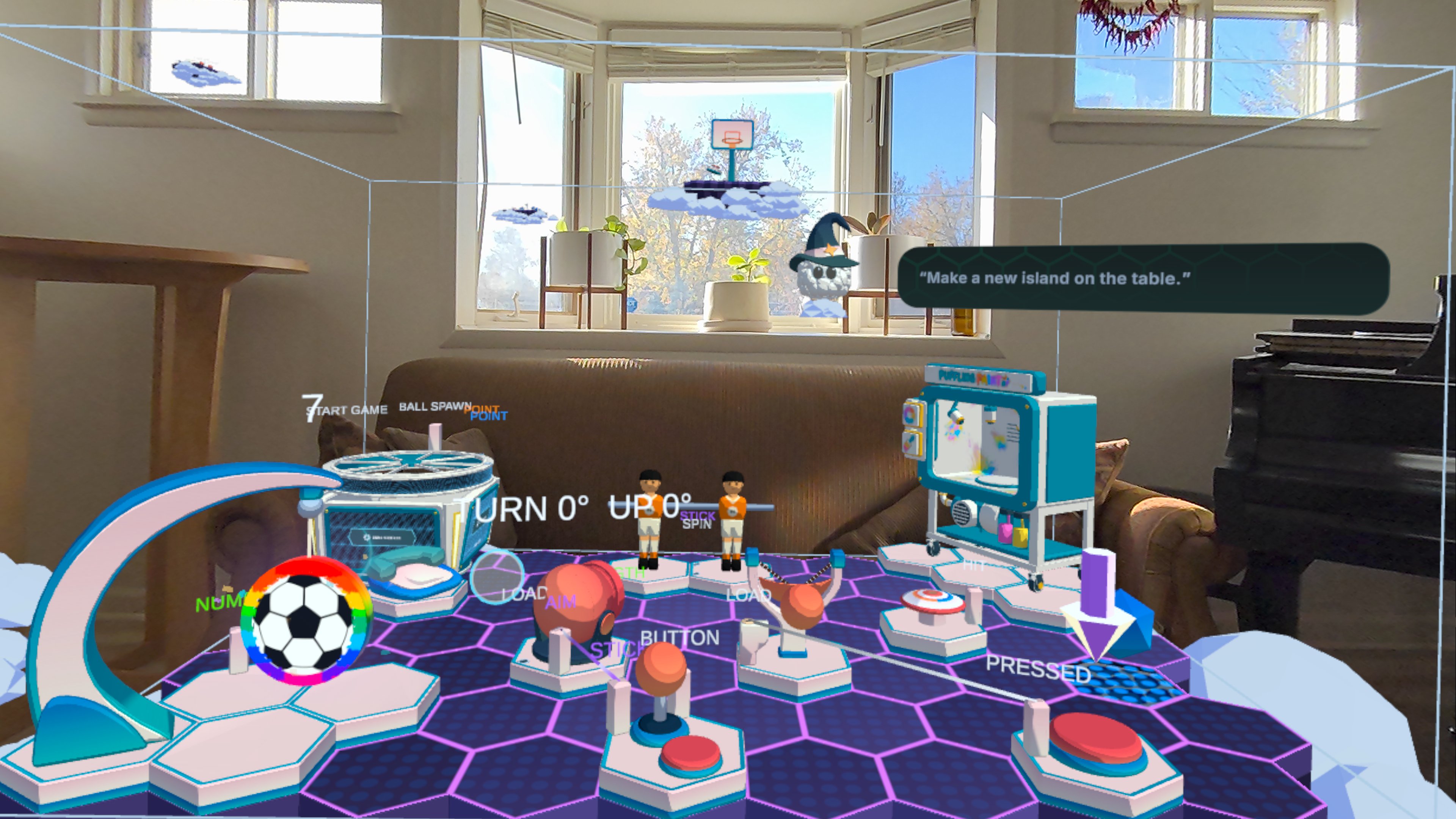
Build functional games or devices from 36 unique build logic pieces!
-
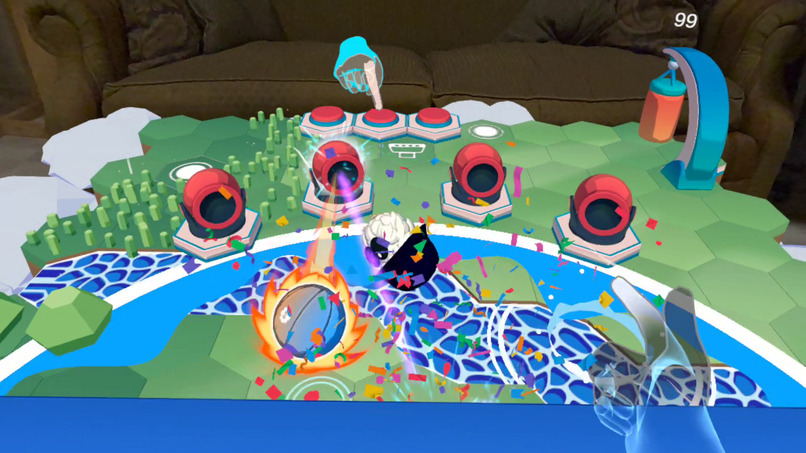
Online sandbox lobby play.
-
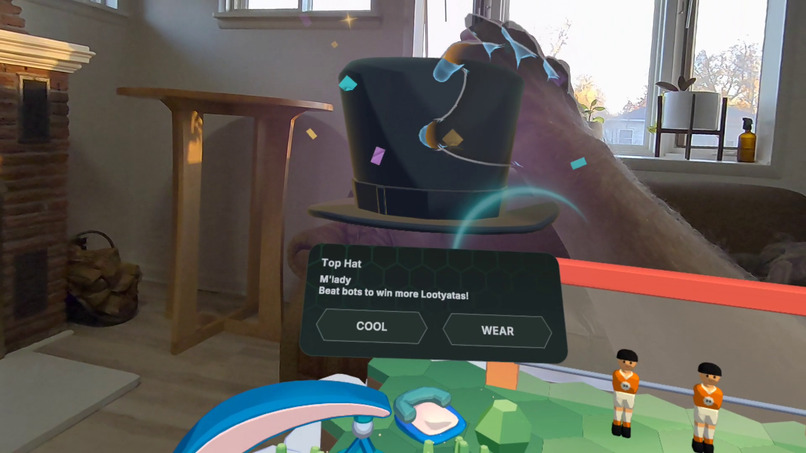
If it looks like you can interact with it, you can!
-
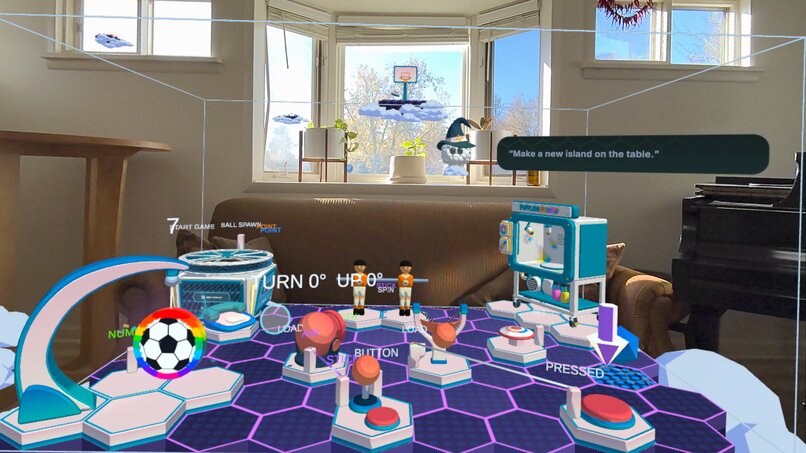
On headset voice to text AI build assistant.
-
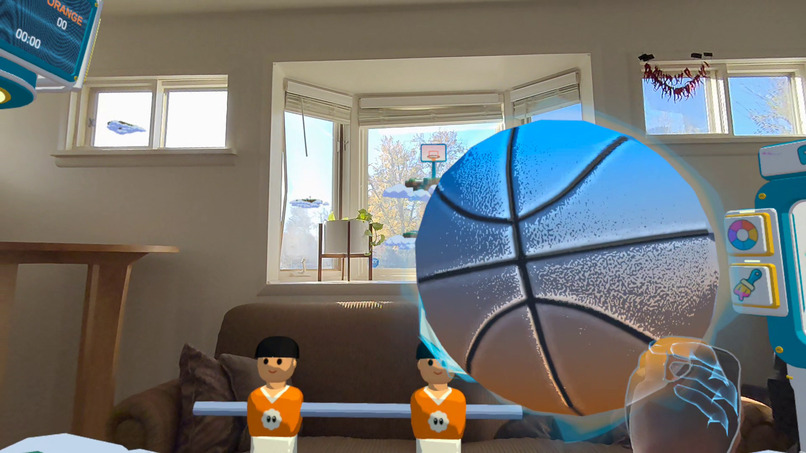
Scale it up to fill your room!
-
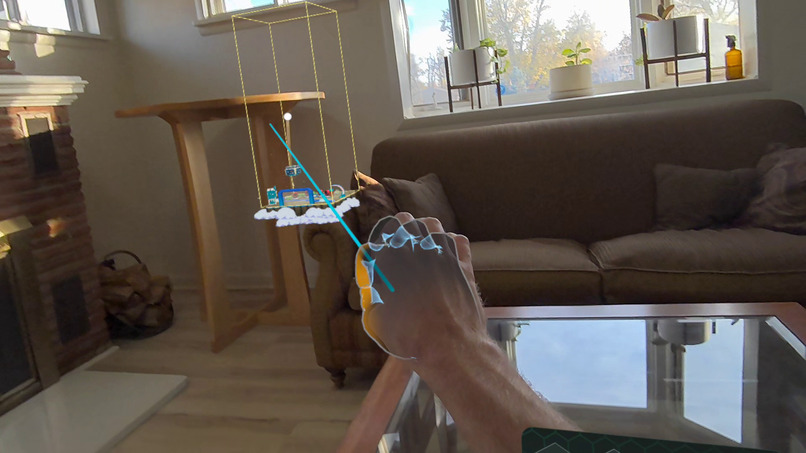
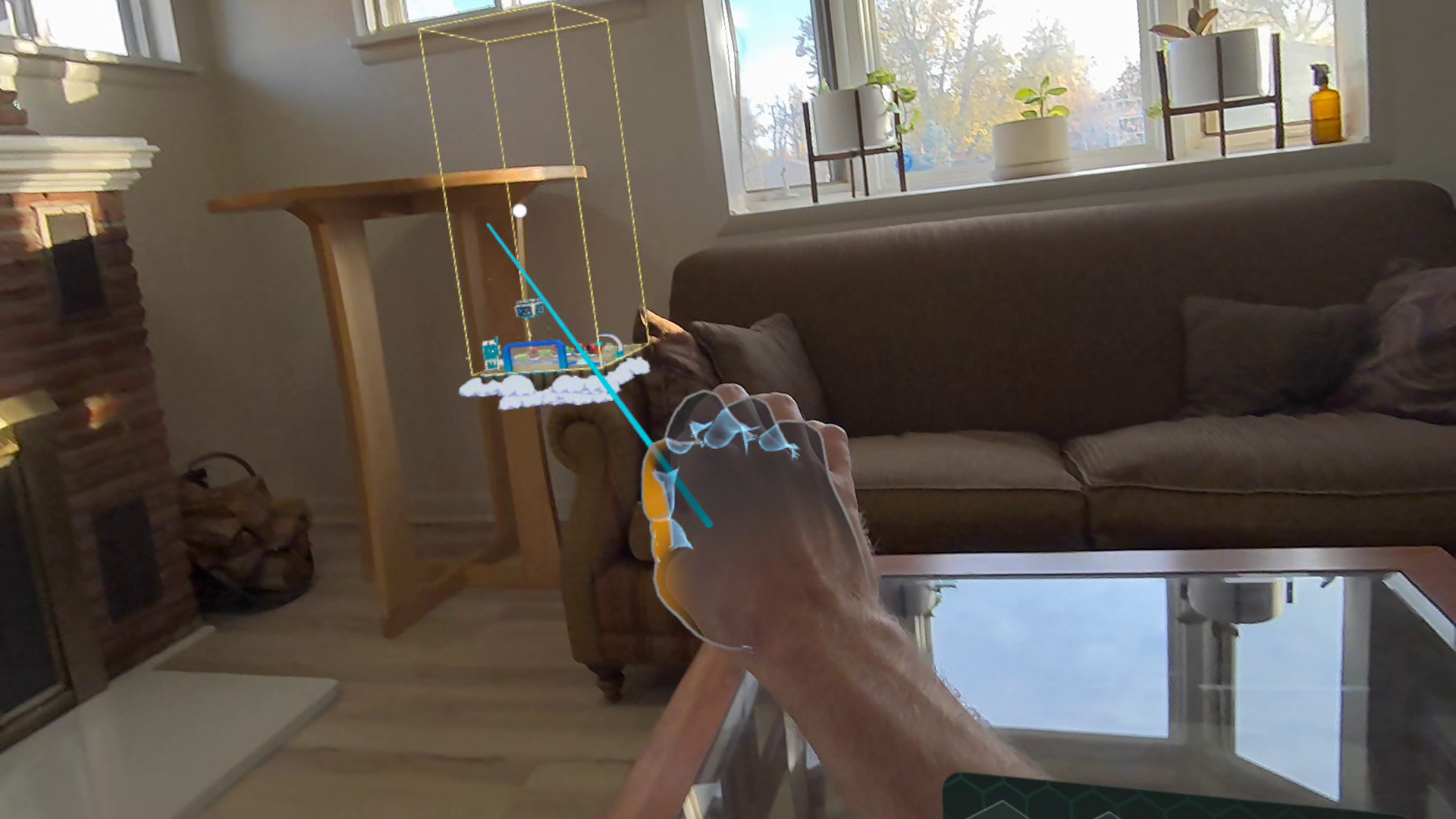
Move and scale islands from a distance, without leaving your seat.
Inspiration
Most of the things that I love to do are done with my hands: woodworking, playing music, and gaming. I think that I'm drawn to tactile things, and to complicating simple problems. Hands-first game design is both.
Finger League is a bouncing ball that you hit into a goal with your fingers. But because the game is hands-first and in mixed reality, it doesn't allow itself to be one-dimensional, or that's how I see it at least. Why is the game on a table? Can it be played in the air? Does scale need to be static? What does the player do when they aren't playing? How can they play without getting fatigued? What does this thing do?
I think that hands-first design is a wellspring of novel puzzles and humor, and that's what pulled me in.
What it does
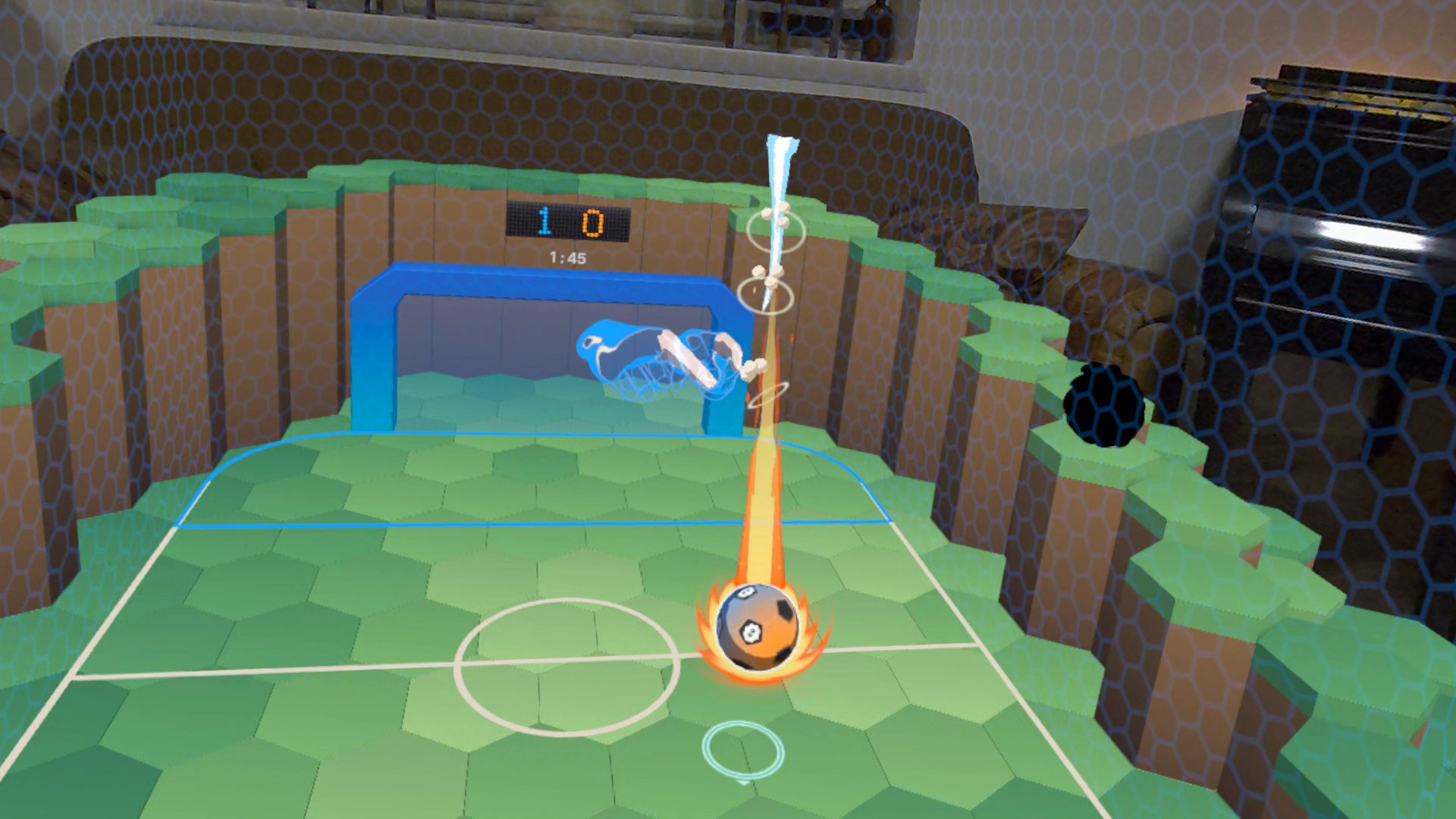
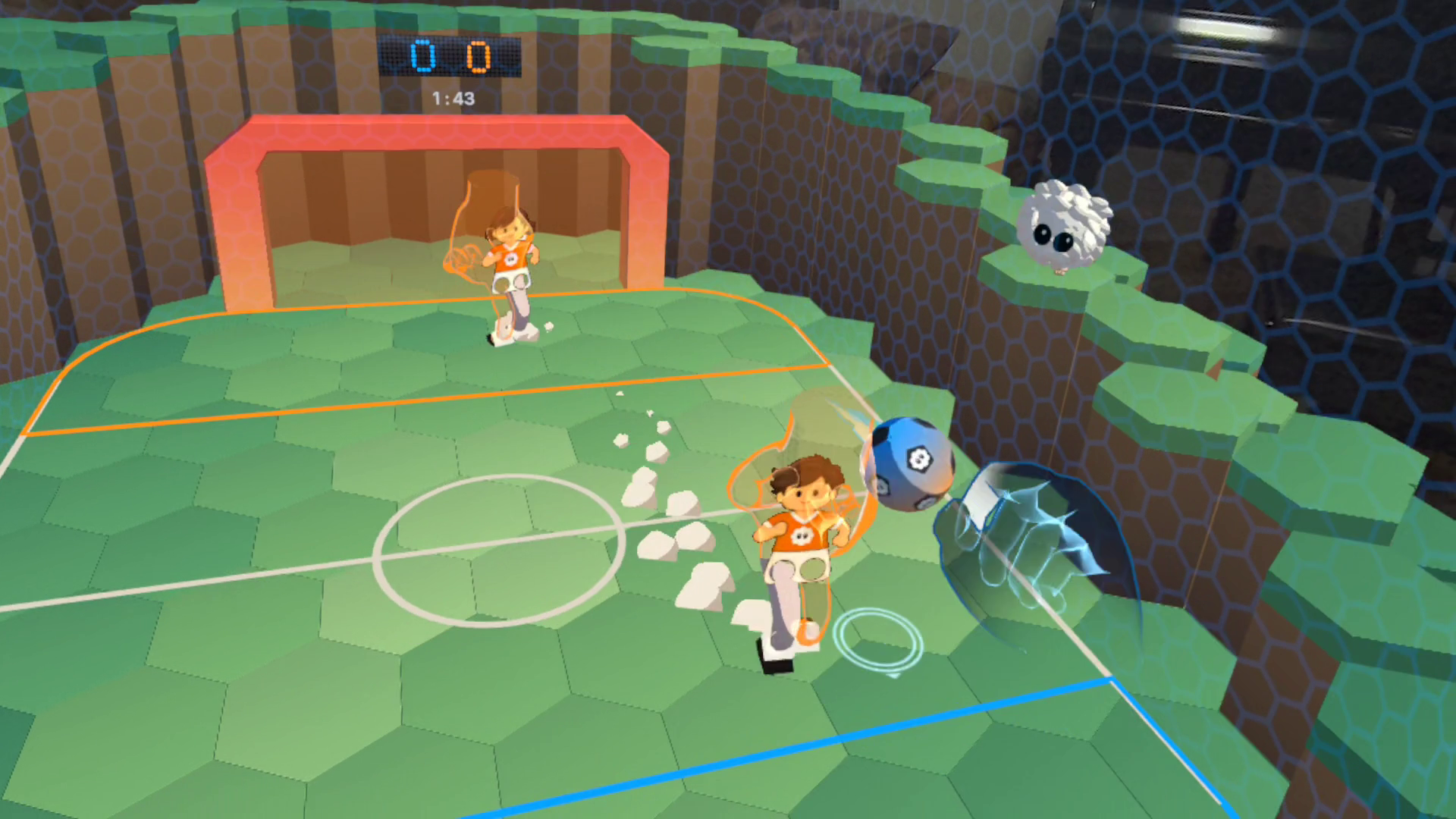
Finger League is a tabletop ball game you play with your hands. Flick the ball into the goal against bots or other players online, and build your own games in a composable room-aware sandbox lobby.
Game Features Include:
- Online Multiplayer: Play 1v1 quick matches against other players.
- Party Play: Invite friends into your lobby to play your custom built lobby games, or the Soccer, Chess Ball, and Ping Pong modes.
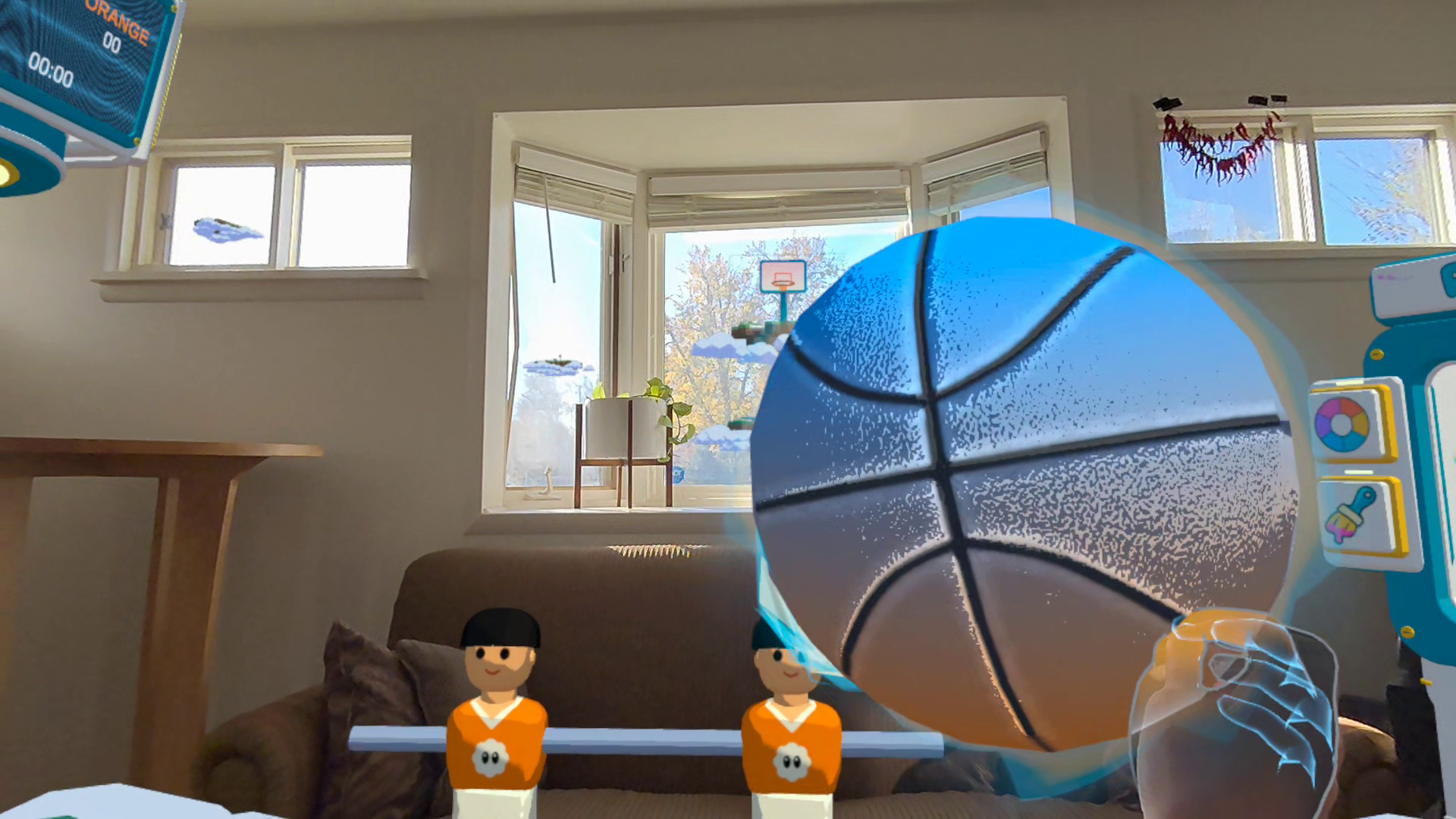
- Bot Battle: play soccer against a cast of topical bots: a crawling hand Spider, thumb-wrestling Luchadors, a Foam Finger, finger-walking Finger Puppets, Foosball Players, a chess playing Spider, and a Mirror (mostly) of your own hands.
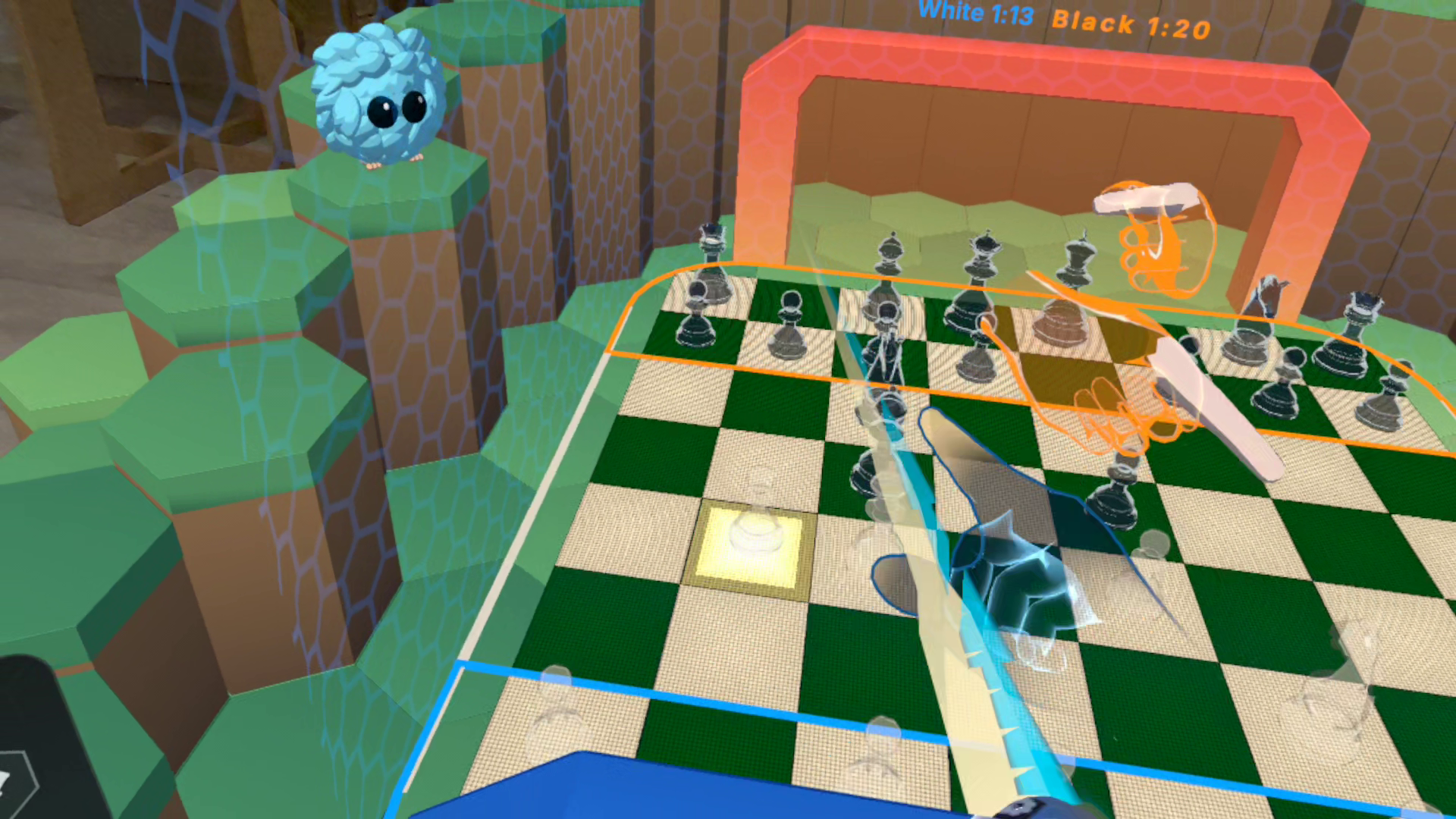
- Chess Ball: soccer on a chess board! You move the pieces by hand, and the pieces are NPCs that can attack the ball on your opponent's turn. The chess clocks are the match clock. Play online with a friend, or against a fully capable bot.
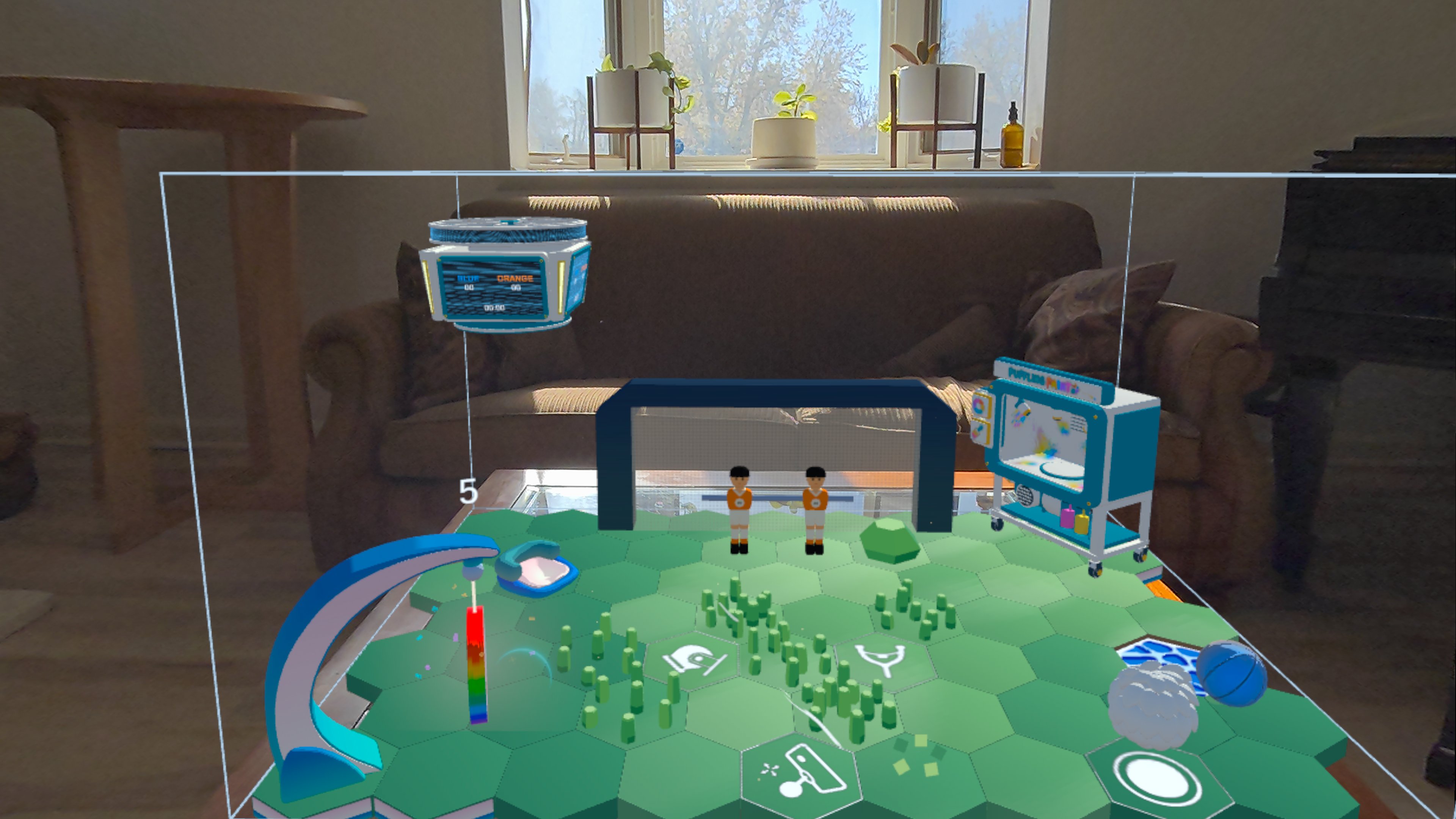
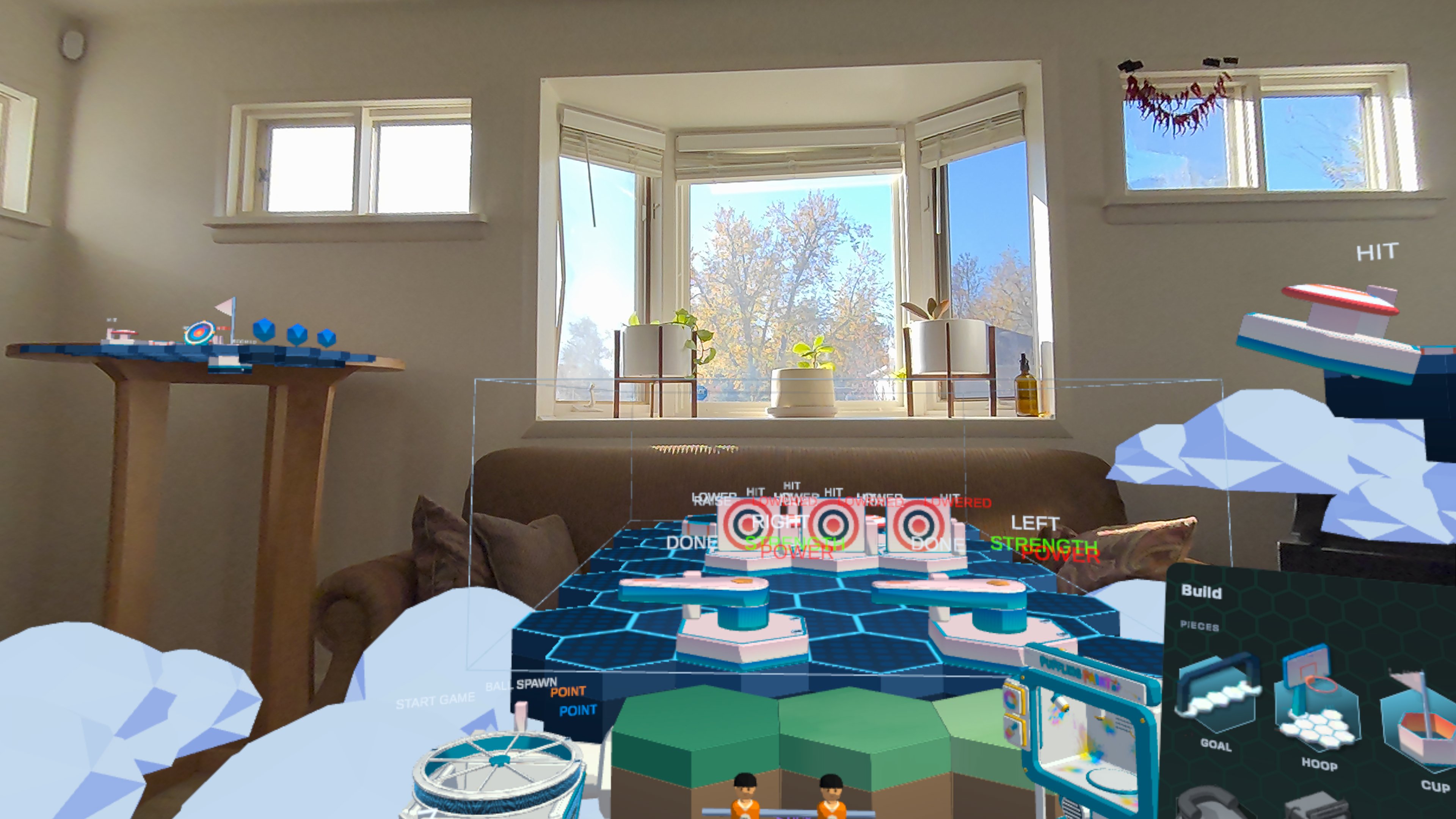
- Build Mode: build your own games in the composable lobby. Grow the floor, pinch, move and resize pieces with your hands, and wire them together with logic to make them do stuff.
- Island Mode: shape the space itself. Add new islands, scale them up or down, move them from a distance, and tether them together.
- Mini Games: playable games built from build mode logic.
- The Wizard: build by voice. Say what you want, an on-device language model turns it into build steps, and you confirm them on a card before it gets built.
- The Puffling: The Puffling dreams to one day be a ball. Your squishy pet and cheerleader. It reacts to the ball, your gaze, and touch. You can pet it, pick it up, color it, and dress it.
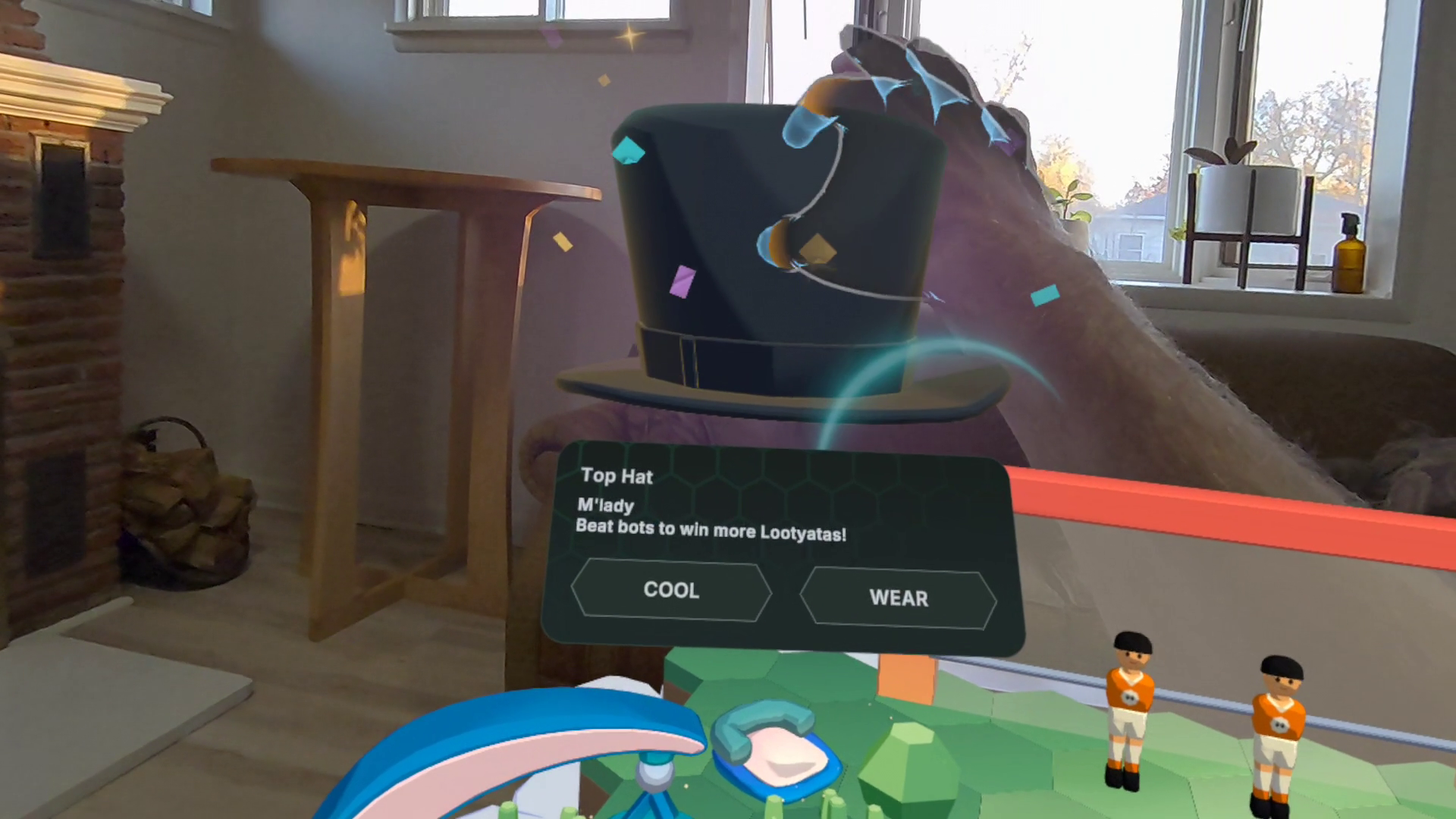
- Lootyatas: first wins drop a Lootyata that breaks open into a hat, for your finger or for the Puffling.
- Dynamic Tutorial: the core lessons are player and event aware, reacting to what you do and what happens in the match. Everything after that is a teachable moment, triggered by your first interaction with a feature, spaced out and opt-in.
How I built it
I built Finger League solo in Unity 6, starting October 1st.
- Workflow: I worked with AI coding agents throughout, held to a written engineering brief, automated tests and custom tooling.
- Meta XR SDKs: the Core SDK for passthrough and hand tracking, MR Utility Kit for scene understanding so the islands snap to your real table when desired, spatial anchors to hold it in space, and the Interaction SDK for pinch, grab and poke. Meta's Platform SDK handles friend invites.
- Performance: benchmarked on Quest 2 as the floor, with no post-processing. Build Mode's limits are set from load tests on the headset.
- Physics: the ball never touches Unity's physics. The ball and hit physics are ported to C# from RocketSim, an open-source physics library, and run inside a deterministic simulation I built around them for hands, build pieces and game rules.
- Online: Photon Fusion 2 with client-side prediction. The whole game state syncs as one block, so every mode and every player-built game works online. Friends join through Meta invites or invite codes.
- The Wizard: runs entirely on the headset, with no cloud. Whisper transcribes your speech, and a Gemma 3 270M model fine-tuned on the game's pieces and build operations turns it into build steps, with a grammar restricting its output to valid ones. Both run through llama.cpp and whisper.cpp.
Challenges I ran into
- Scope creep: I'm very happy with the features I added, but each new idea cut into polish.
- Playtesting: I was able to participate in some very instructive play test sessions from other people participating in the competition, and each session uncovered issues in my blind spots. It's challenging to develop in a silo.
- Quest 2: I developed on a Quest 2, partly because it was the headset that I had when the competition started, and partly because I believe many players still use theirs. It is a limiting factor for performance.
- On-device AI: getting a language model small enough for the Quest 2 to understand in game build mode requests took many rounds of training. I'm hoping to one day get training data from the player base itself, with their permission.
Accomplishments that I'm proud of
I'm proud of the build system and Chess Ball. I haven't seen a visual scripting system before where the objects are the graph itself. I'm excited to see what users can make with it, and to continue developing pieces. Chess is a love of mine, so it was fun melding it with Finger League in a way that I think is novel and cohesive. I couldn't resist building it.
And ultimately, the core gameplay. I think 99% of what players will do is play soccer against bots, online, or against friends. This core mode is a small part of what I built. I love games that can stand on a simple premise, but carry depth that most players do not reach, and I'm proud to have hopefully delivered something like this in such a short timeframe.
What I learned
This was my first time working with Meta's SDKs, my first hands-first game, and my first hackathon.
- Use the platform's tools. I started with my own hand and room code, then switched to Meta's SDKs around week 4. This turned out to be core to the game's feel.
- Think in affordance. I went to many of the Zoom events and I think I left each with a new learning. Affordance was taught in the first one that I went to, and I've designed around it since.
What's next for Finger League
- Colocation
- Networked Build Mode
- Player progression
- Cosmetics expansion
- More party game modes: basketball, volleyball, and more.
- More bots!
- Release


