-
-
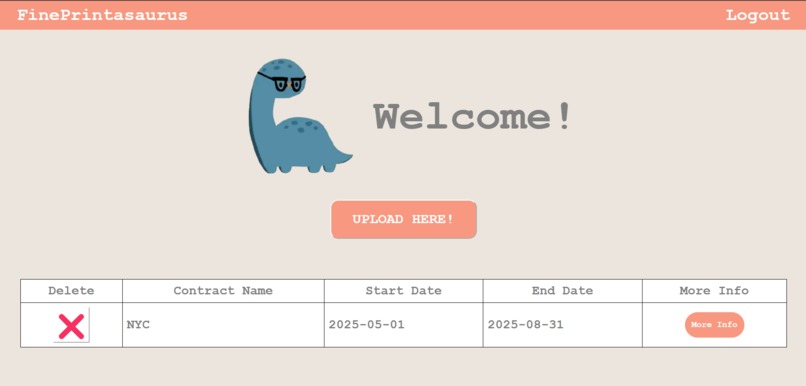
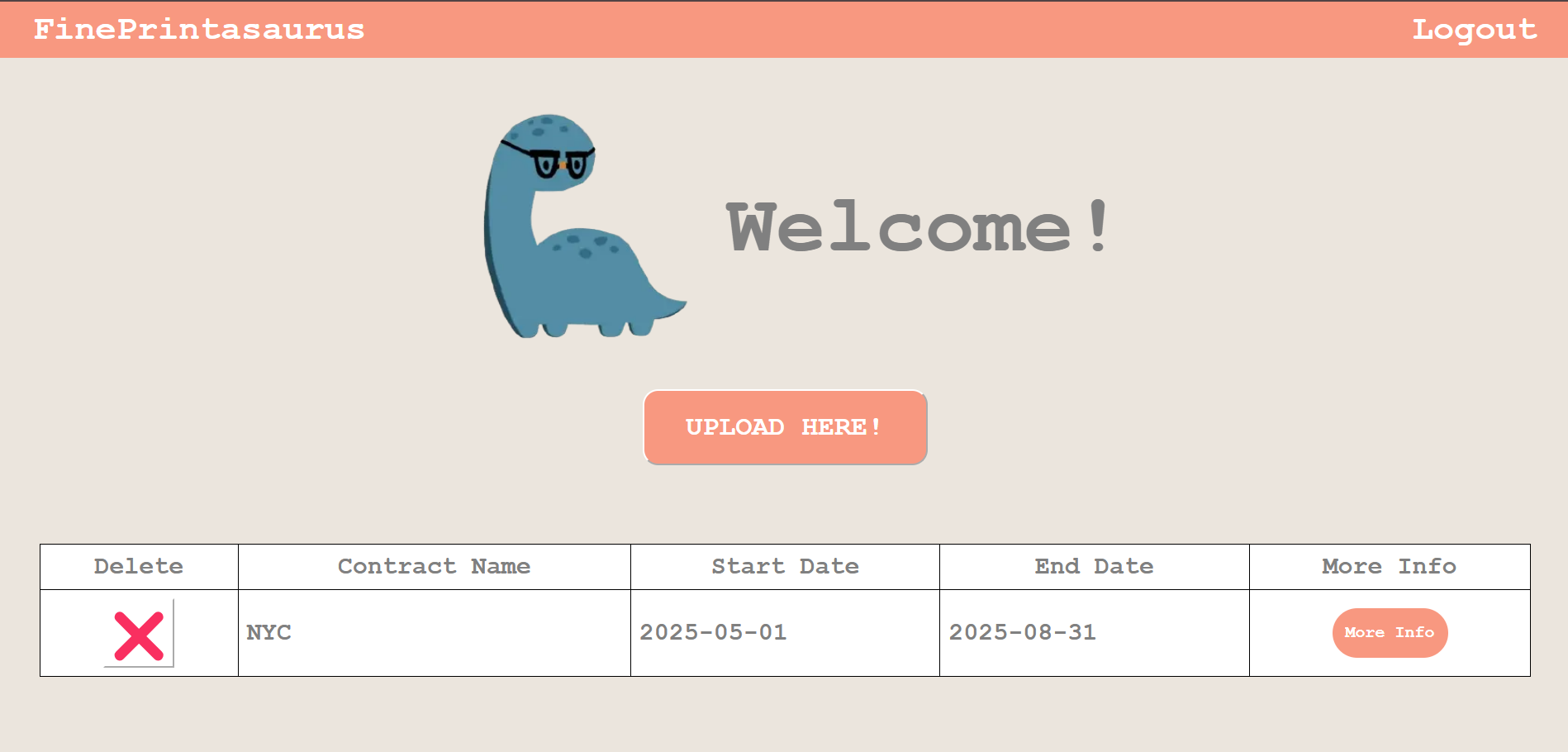
Home Screen
-
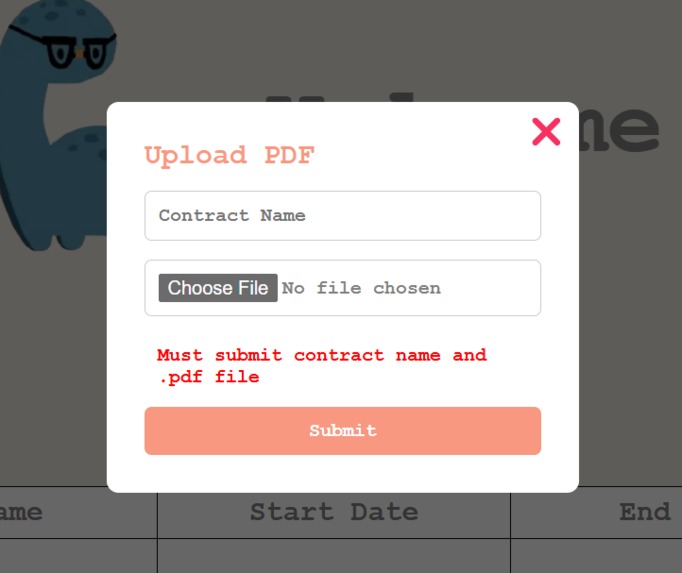
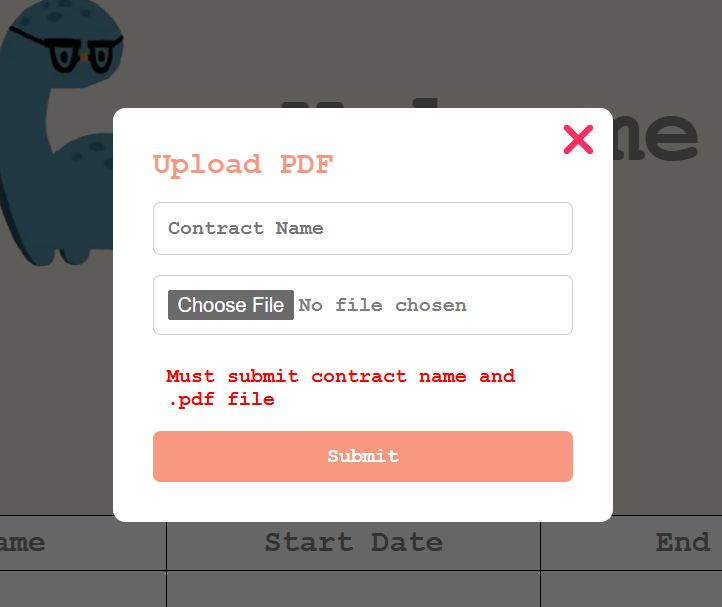
Error if user attempts to submit without uploading a file
-
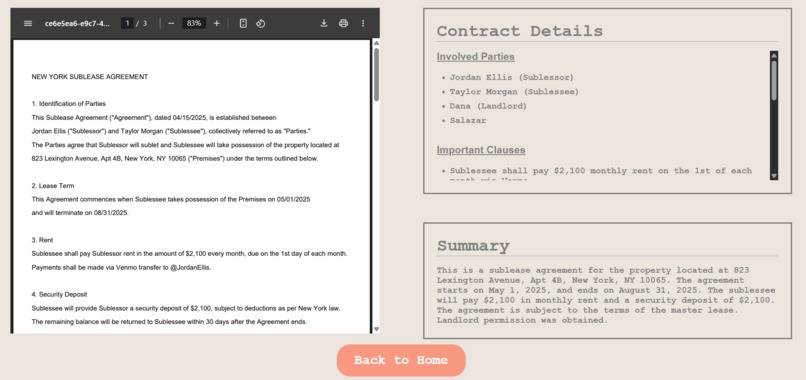
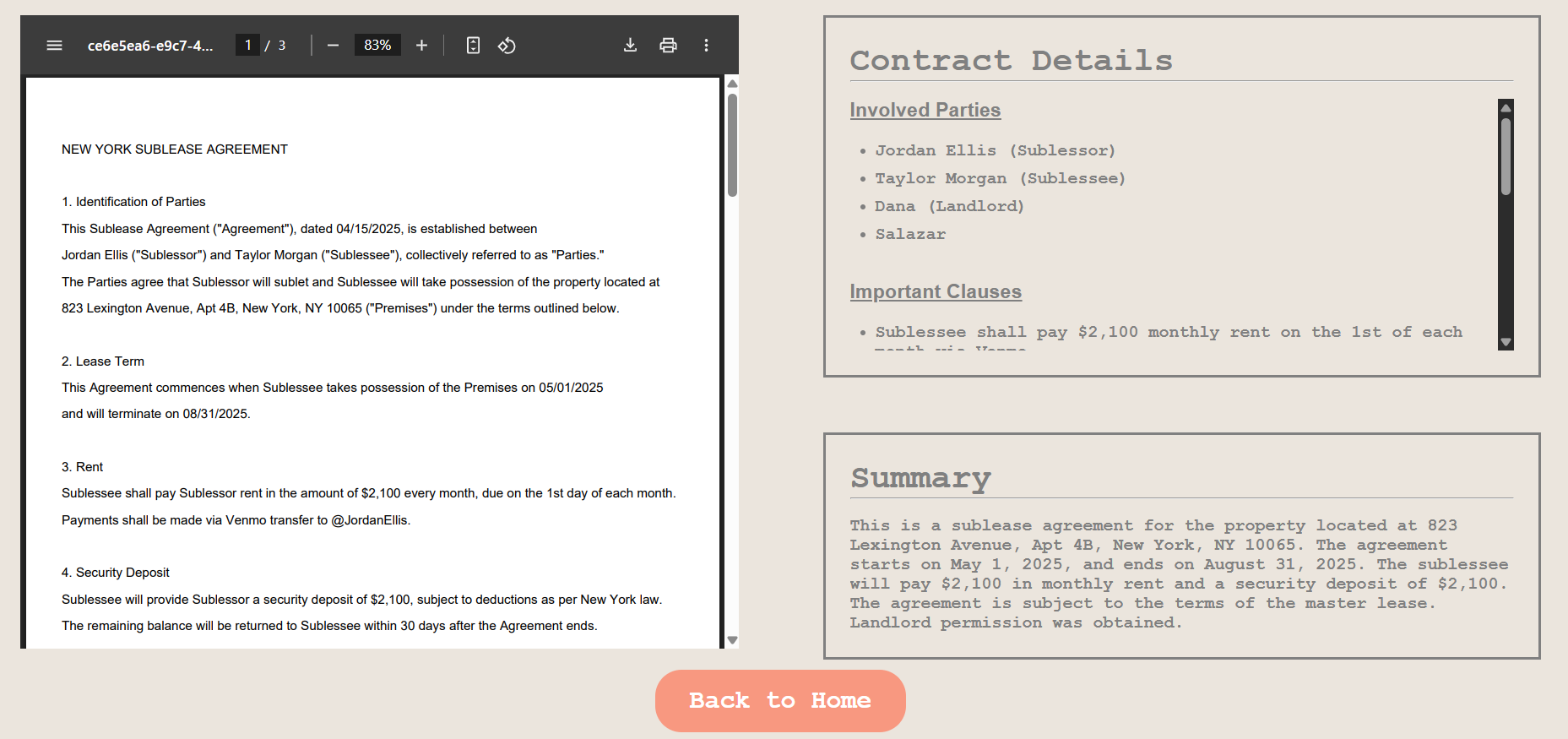
More Info Page with Summary
-
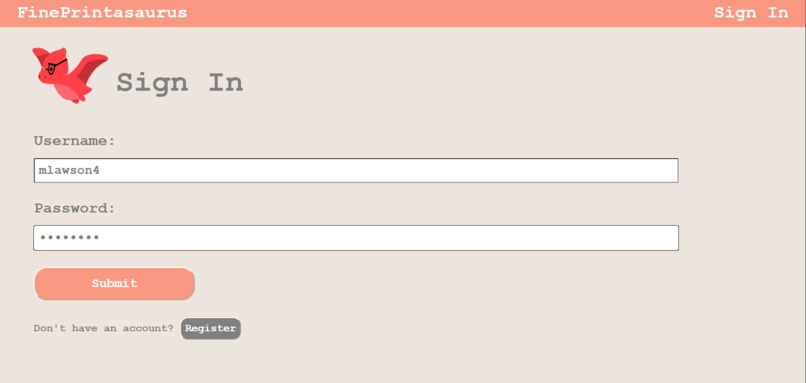
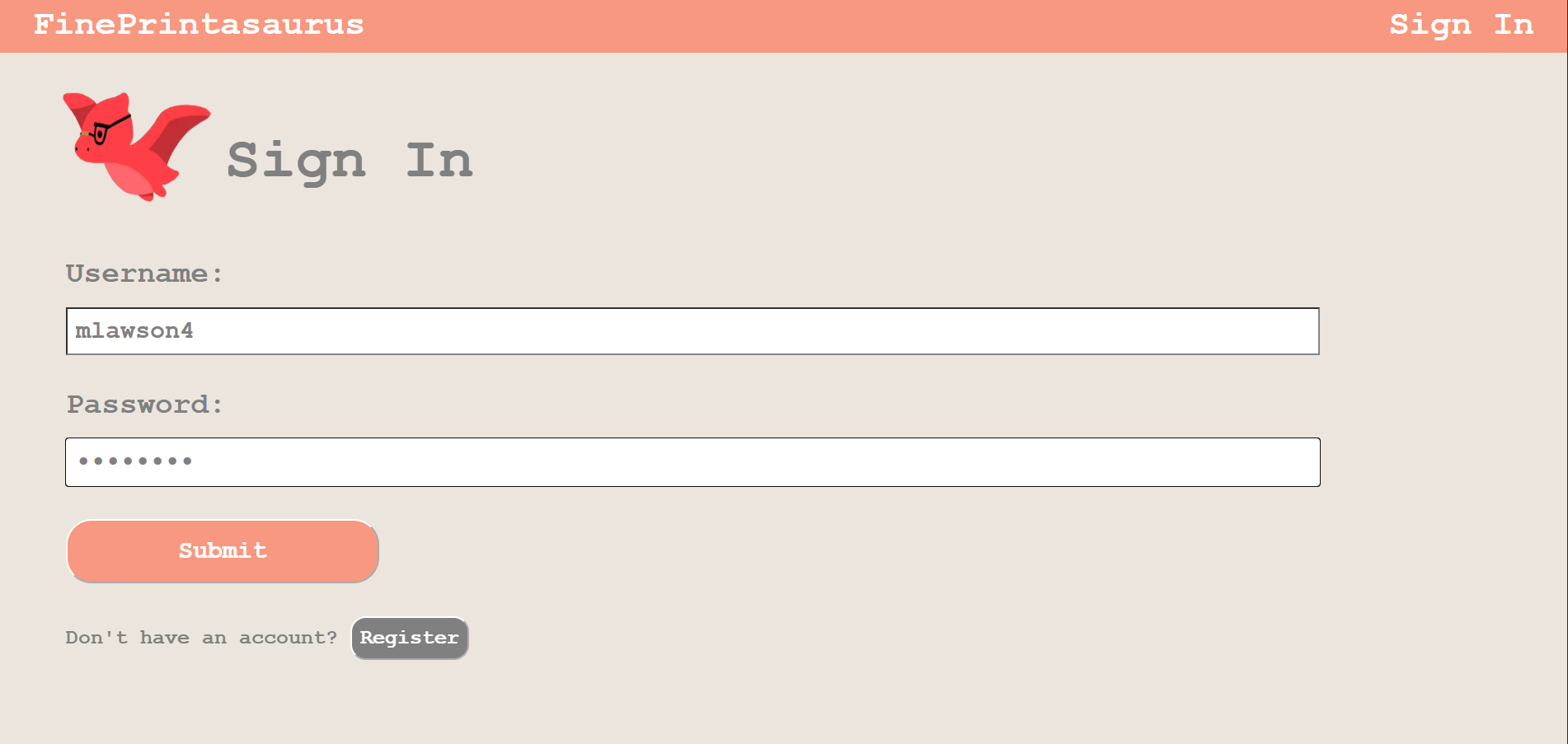
Login Screen
Inspiration
According to The Economic Policy Institute, over 60 million U.S. workers are bound by forced arbitration, where they are unable to settle disputes outside of the company, with non-unionized, low-wage, and minority workers being the most affected. With this in mind, we developed FinePrintasaurus: a user-friendly app that helps users understand vaguely-worded contracts.
As college students beginning to enter a corporate world, we knew we’d soon be signing papers with conditions we didn’t understand. We hope that FinePrintasaurus can protect us, our peers, and our community from vague legal terms and deceptive fine print.
What it does
Users are able to upload pdf files of legal documents, contracts, and/or terms of services onto the app and extract the crucial information in a quick, digestible manner that requires no legal expertise. FinePrintasaurus summarizes the involved parties, the most important clauses that the user should know, and the consequences of terminating/breaching the contract.
There also is a login feature where users can save the different contracts they have uploaded and have all of them recorded in a table on the home page. If they wish to get rid of it, they can simply delete it by pressing the X button.
Throughout the entire process, we prioritized making our user interface as minimalistic and intuitive as possible for increased accessibility.
How we built it
Technologies for frontend: React, TypeScript, Next.js. Technologies for backend: MongoDB, GeminiAPI,Node.js, Expressjs. For deployment Vercel was used for the frontend and Render was used for the backend.
Challenges we ran into
There were multiple issues that we ran into over the course of the project. One issue that we ran across was CORS errors because the back-end server did not like the front-end pulling from it. There were also limitations with the Gemini API that we were using which made it difficult to scrap a whole file, needing it to be parsed. The original js-based parser that we were using also did not work properly so we had to pivot to a python based one.
Accomplishments that we're proud of
During this hackathon, we were able to implement a deployable website on Vercel (front-end) and render (back-end) that utilizes a login feature that saves user progress onto MongoDB. Before Bitcamp, we didn’t have much hackathon experience and had never used MongoDB or Gemini API. Despite this, we were able to use our own personal strengths to contribute to different aspects of the project. From the little victories to the late-night conversations, we’re proud to say that we will have walked away from this event knowing that we gave it everything we had.
What we learned
We learned how to use MongoDB atlas to store our information. We learned how to use GEMINI API, and how to create user authentication with JWT. We learned how to debug and deploy web applications. We also learned how to distribute tasks and communicate with a team.
What's next for FinePrintasaurus
With Generative AI being a relatively new development, our parsing isn’t the most accurate. But as time passes, Generative AI will continue to evolve, as will the accuracy of our legal summaries.
As for future developments of FinePrintasaurus, we understand the significance of the language barrier, and so in future cases, we aim to reach a wider-audience by implementing linguistic APIs that can fluently translate these terms.
Though it’s only been 36 hours, we’re extremely proud of what we’ve done. And we hope that this app will be able to support many users in making informed decisions on contractual agreements.
Thank you, and this has been FinePrintasarus!


Log in or sign up for Devpost to join the conversation.