
✨ Inspiration
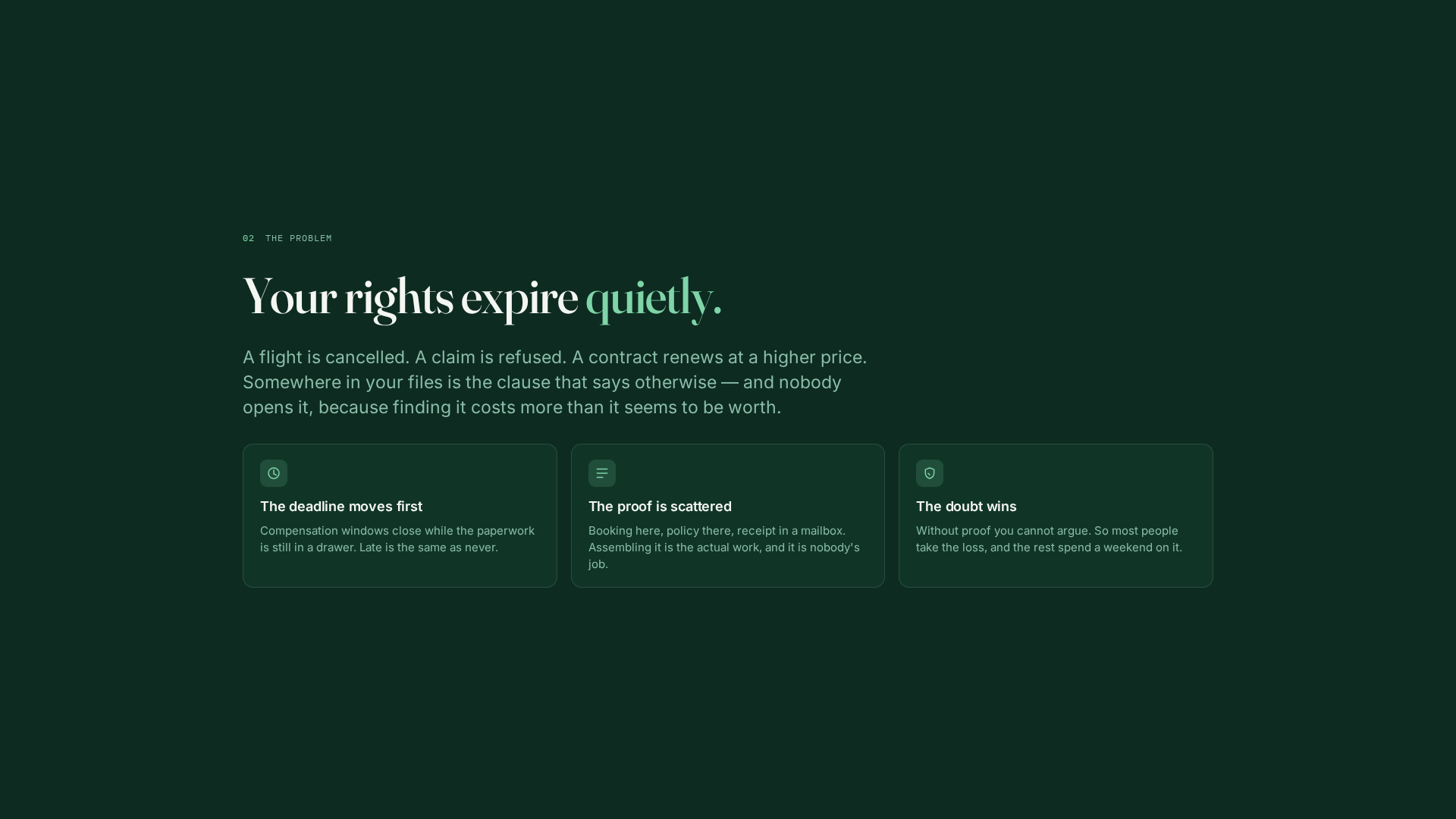
Important rights, benefits, deadlines, reimbursements, and opportunities are often buried across contracts, insurance policies, bookings, invoices, receipts, and other documents.
The real problem usually begins when something happens.
A flight gets cancelled. An unexpected expense occurs. A deadline starts running.
Suddenly, the user needs to understand:
- Which documents matter now?
- Which rules apply?
- What can I actually do?
- What can I prove?
- What is still missing?
That is where Fineprint started.
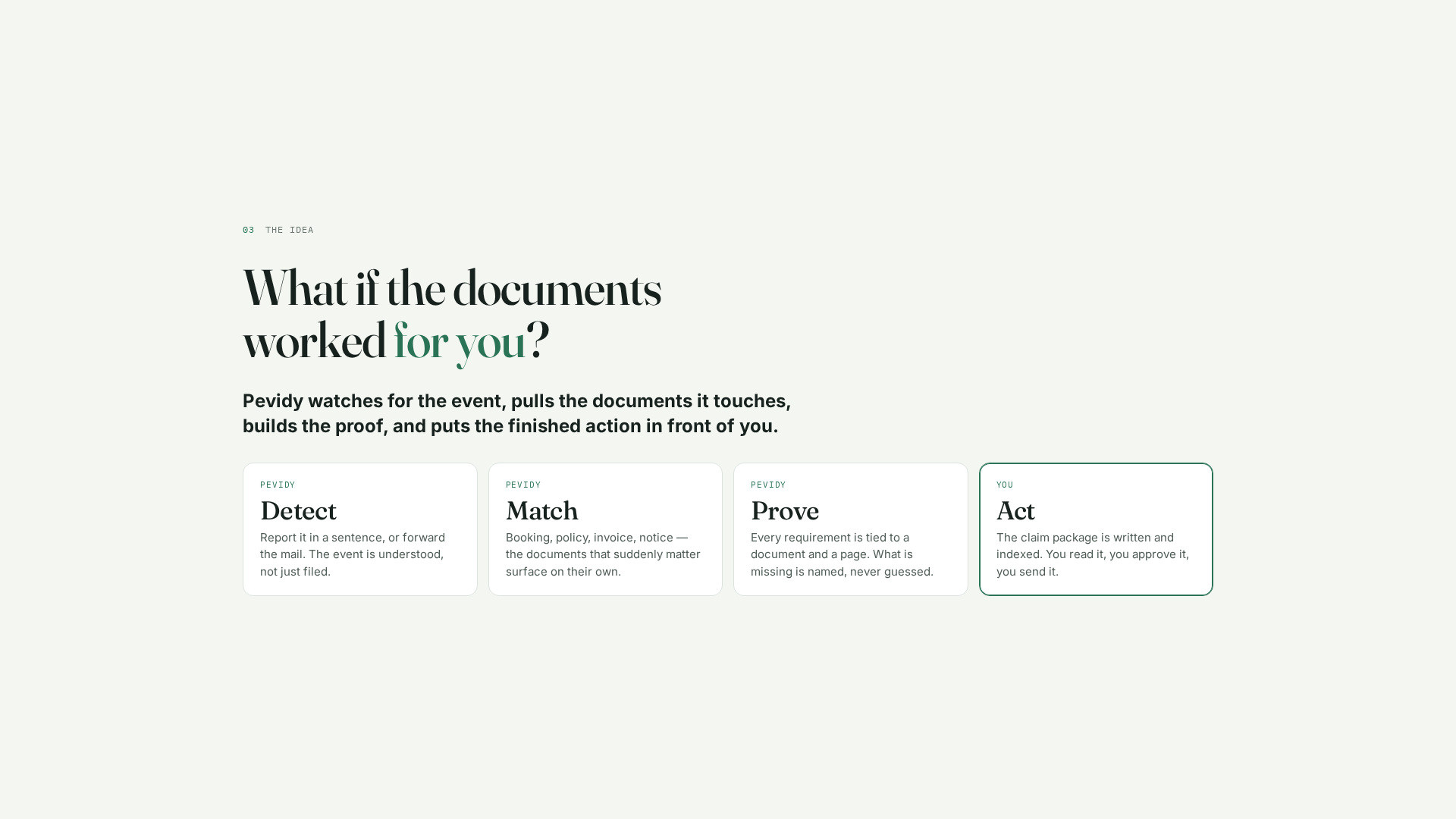
Instead of making people search through their documents and interpret the fine print themselves, Fineprint starts with the real-world event.
Something happened. Fineprint identifies which documents matter — and what should happen next.
Fineprint is not another PDF chatbot.
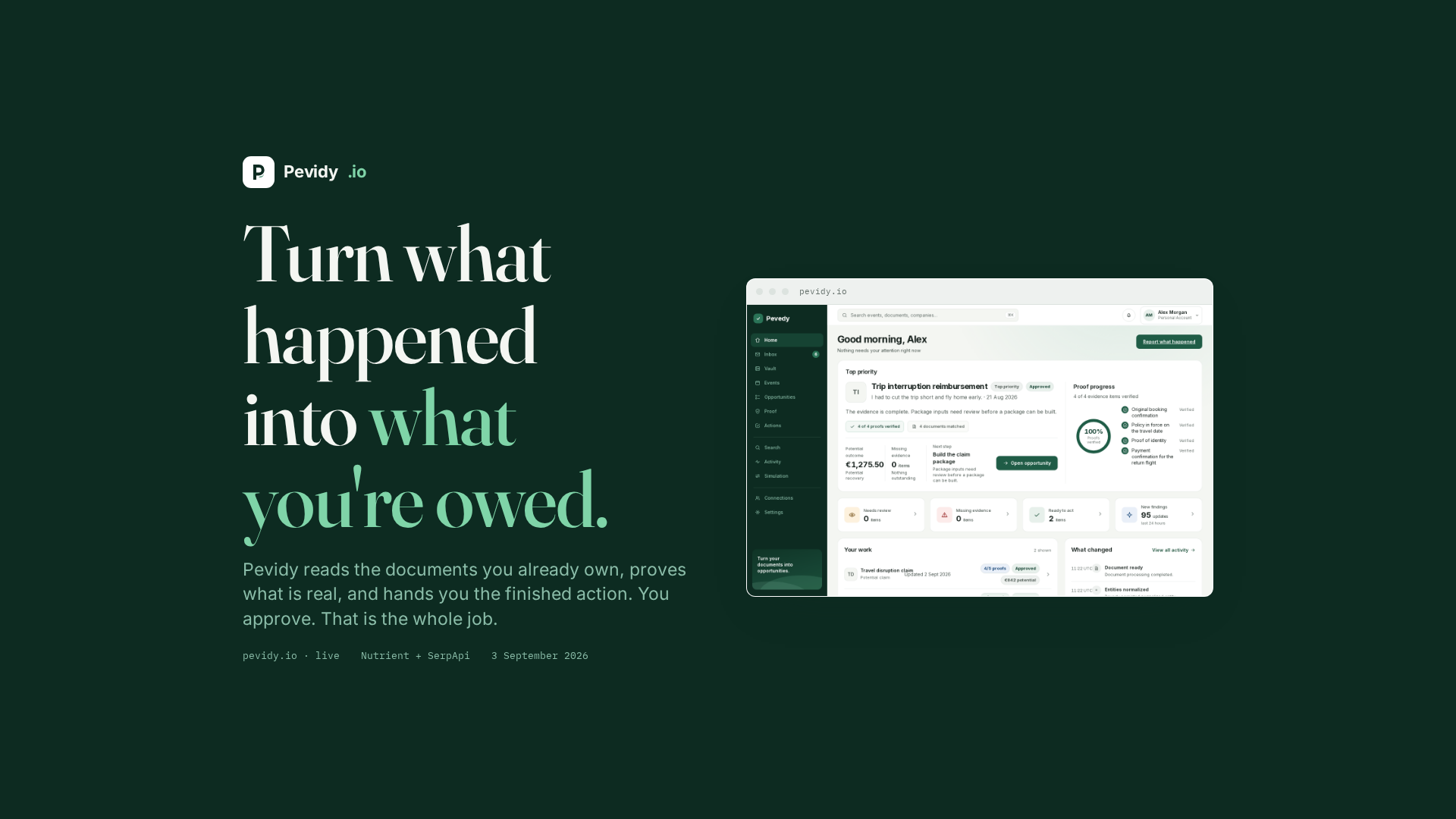
It is an action layer between documents and real life.
⚡ What it does
Fineprint transforms documents into a structured network of:
Entities → Rules → Requirements → Evidence → Actions
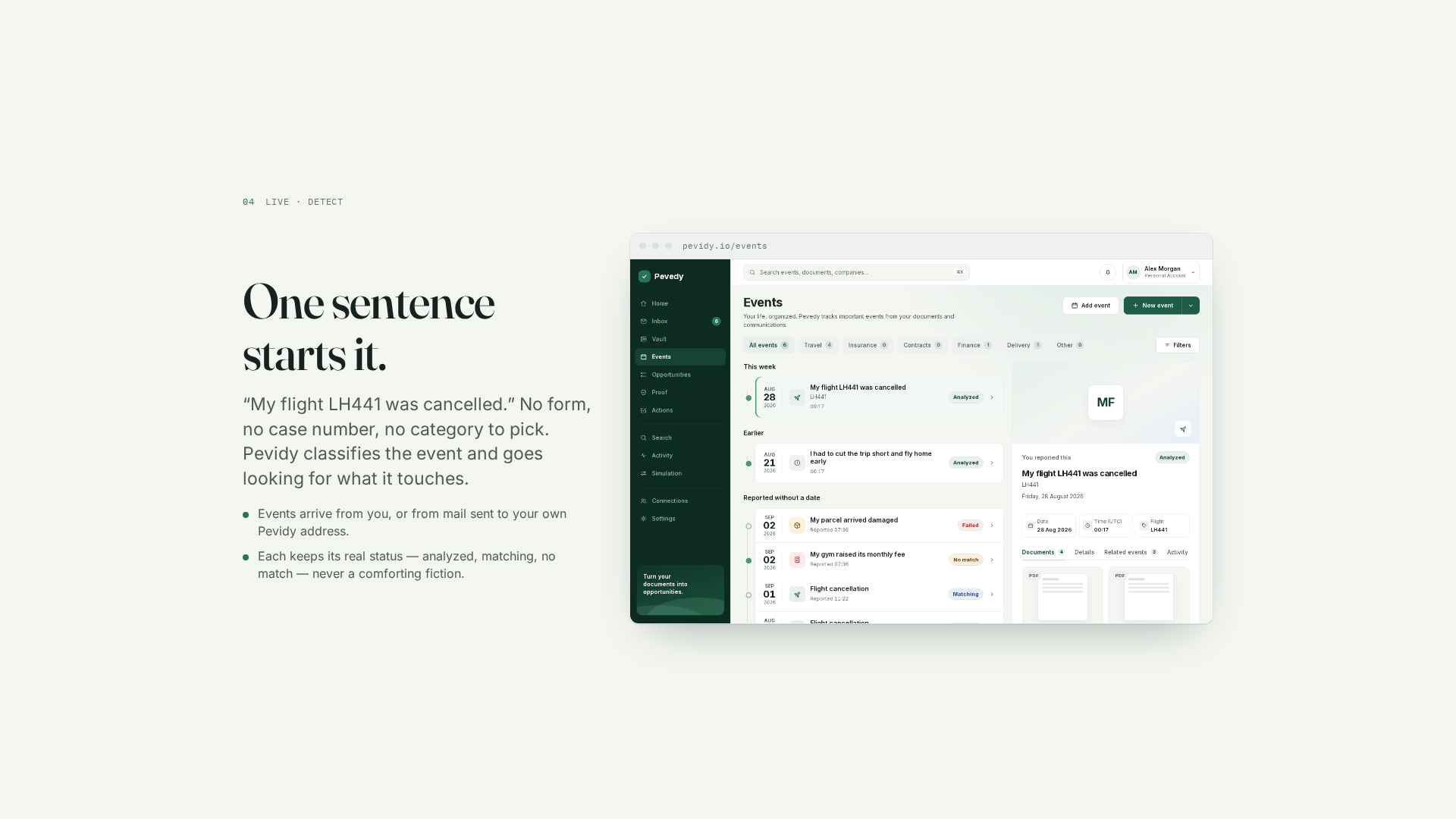
In our demo scenario, the user simply says:
“My flight LH441 was cancelled.”
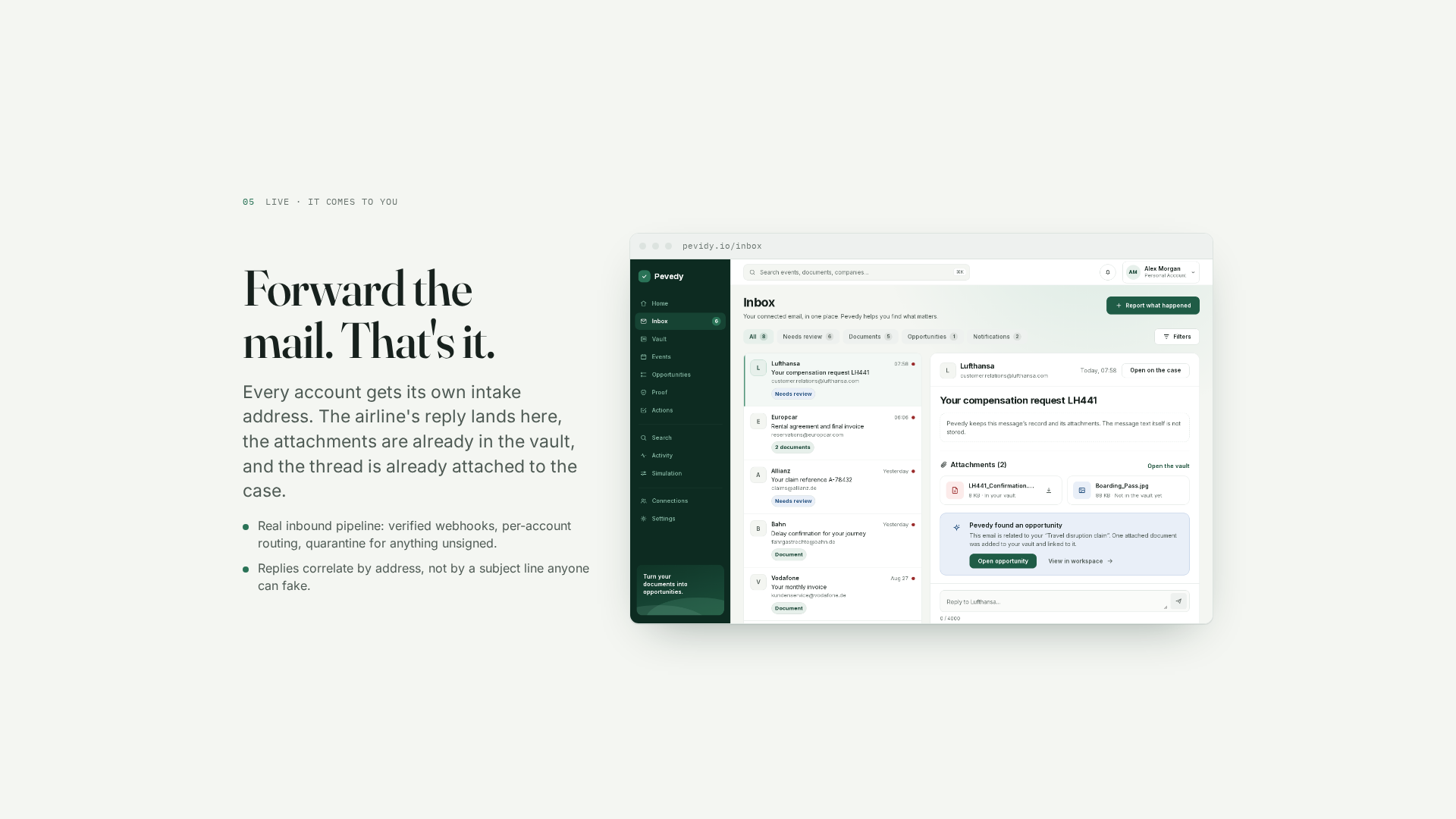
Fineprint connects that event to the user’s booking, insurance policy, cancellation confirmation, and travel expenses.
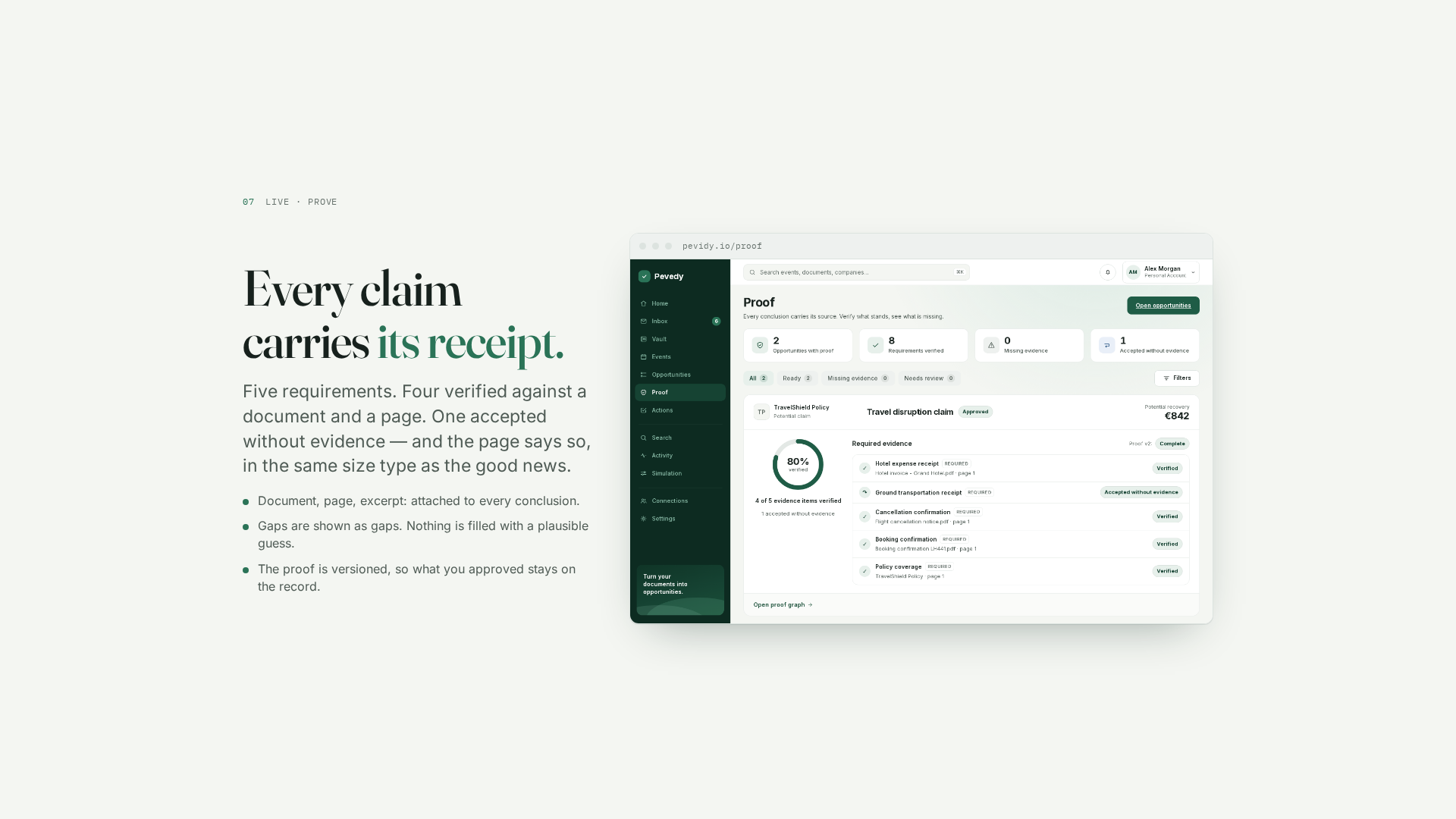
It identifies a potential recovery of:
€842
But Fineprint does not simply generate an AI answer like:
“You probably have a valid claim.”
Instead, it builds a verifiable proof chain:
Event → Rule → Requirement → Evidence → Source
Initially, Fineprint finds:
4 of 5 evidence items verified
One thing is missing:
Taxi receipt
The user uploads the receipt.
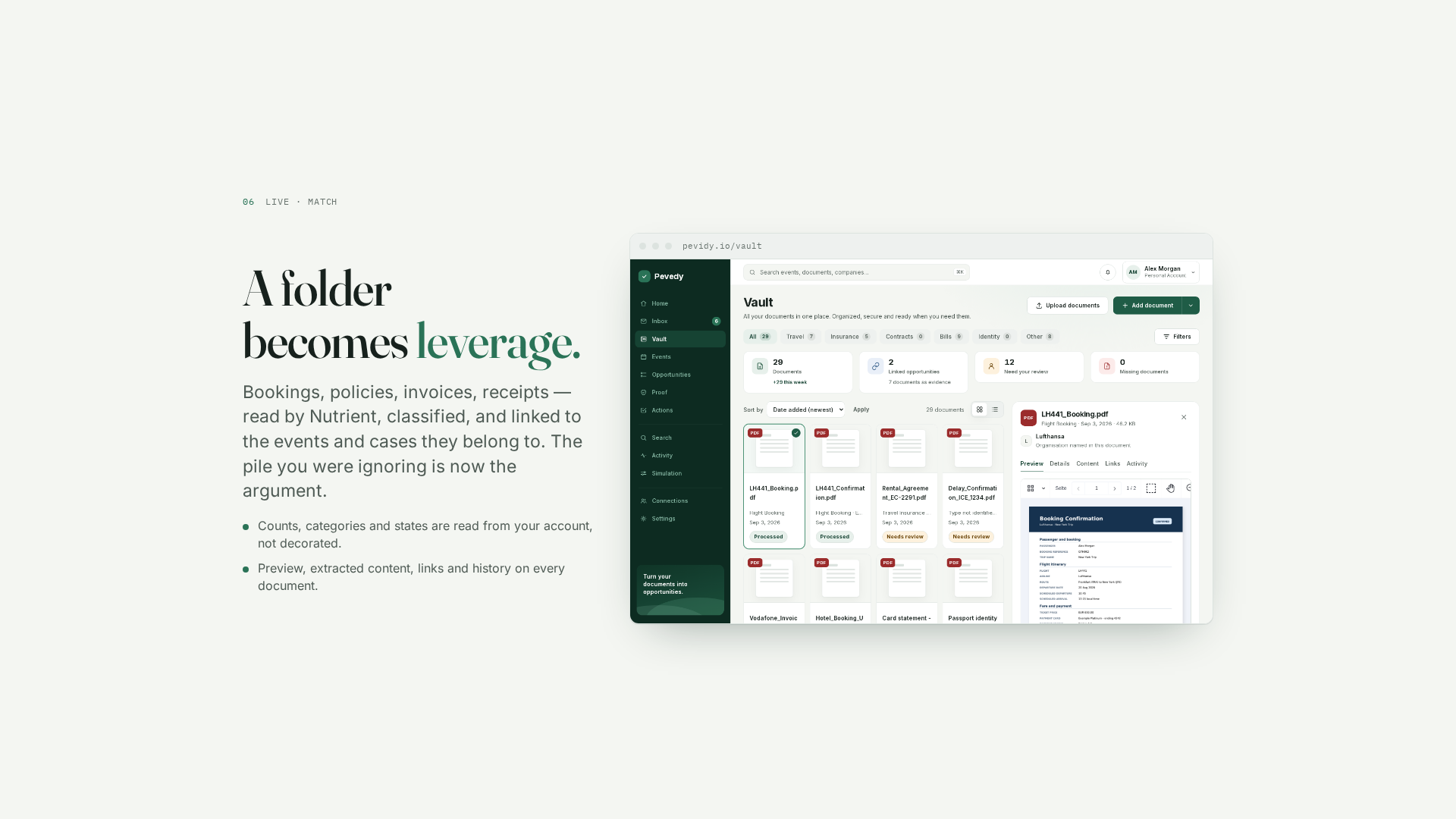
Fineprint processes it, extracts the relevant information, matches it to the correct requirement, and re-evaluates the proof.
The result becomes:
5 of 5 verified
Every important conclusion remains connected to the original source supporting it.
The core workflow is:
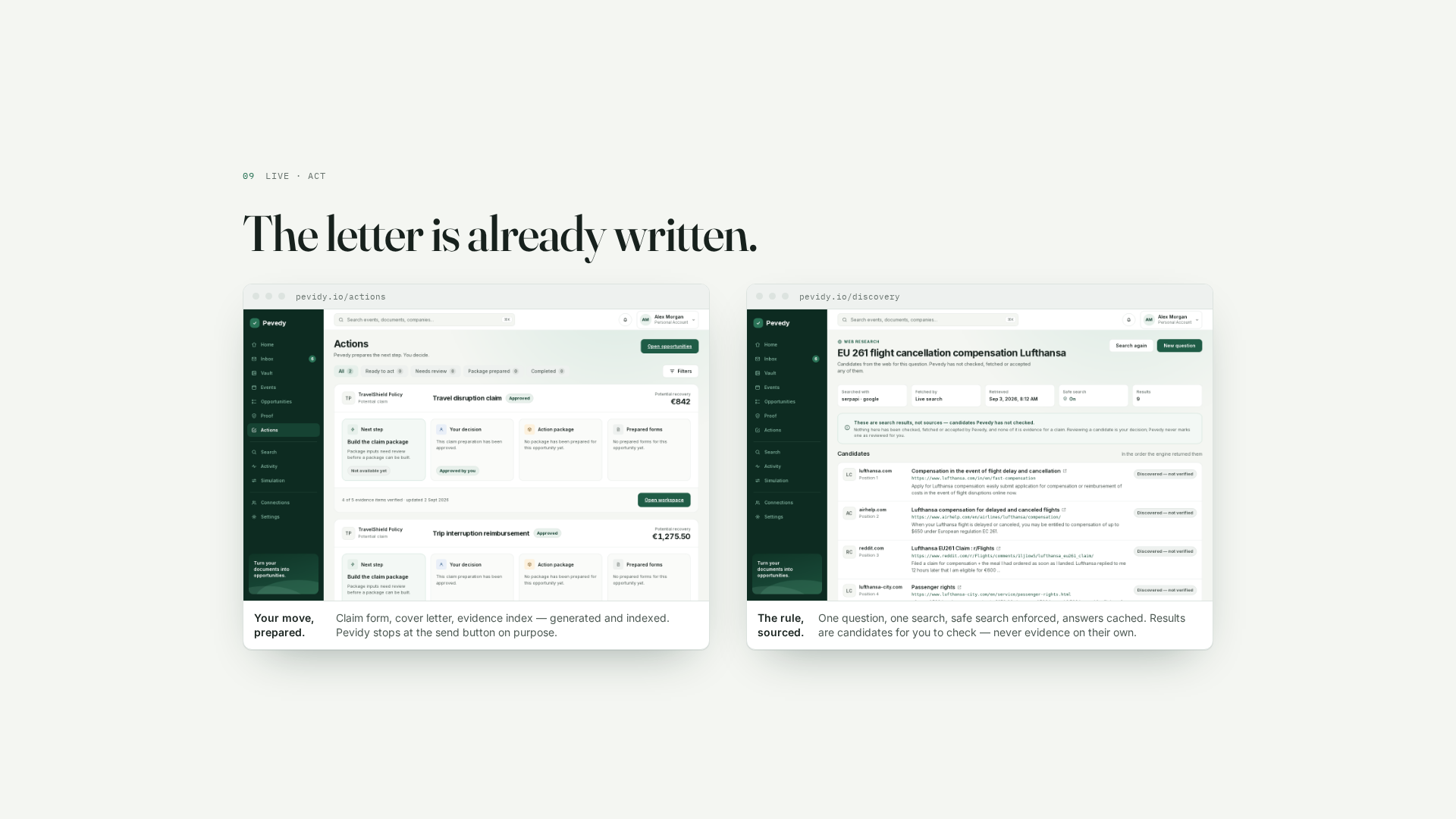
Detect → Match → Prove → Act
🧠 How we built it
Fineprint is built around one central principle:
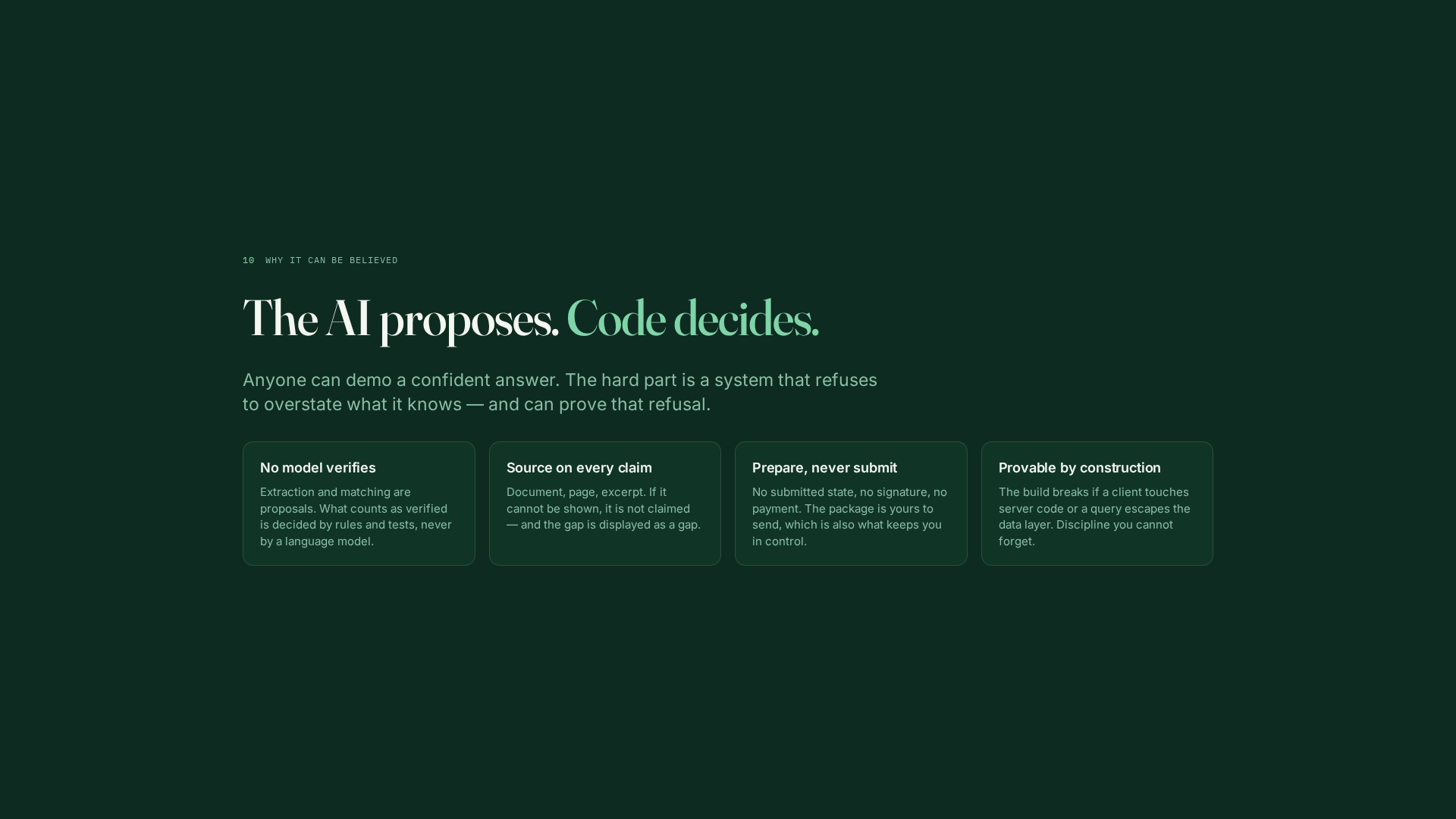
AI proposes meaning. Fineprint verifies state.
Large Language Models handle bounded tasks such as:
- document classification
- entity and relationship extraction
- rule extraction
- event classification
- applicability evaluation
- evidence matching
- counterfactual reasoning
But an LLM cannot simply mark something as verified.
AI outputs first become structured candidates.
They then pass through:
Schema Validation → Source Validation → Deterministic Validation
Only after those checks can something become verified, require human review, or be rejected.
Fineprint therefore separates:
- what the document actually says
- what AI interprets
- what the system verifies
- what a human approves
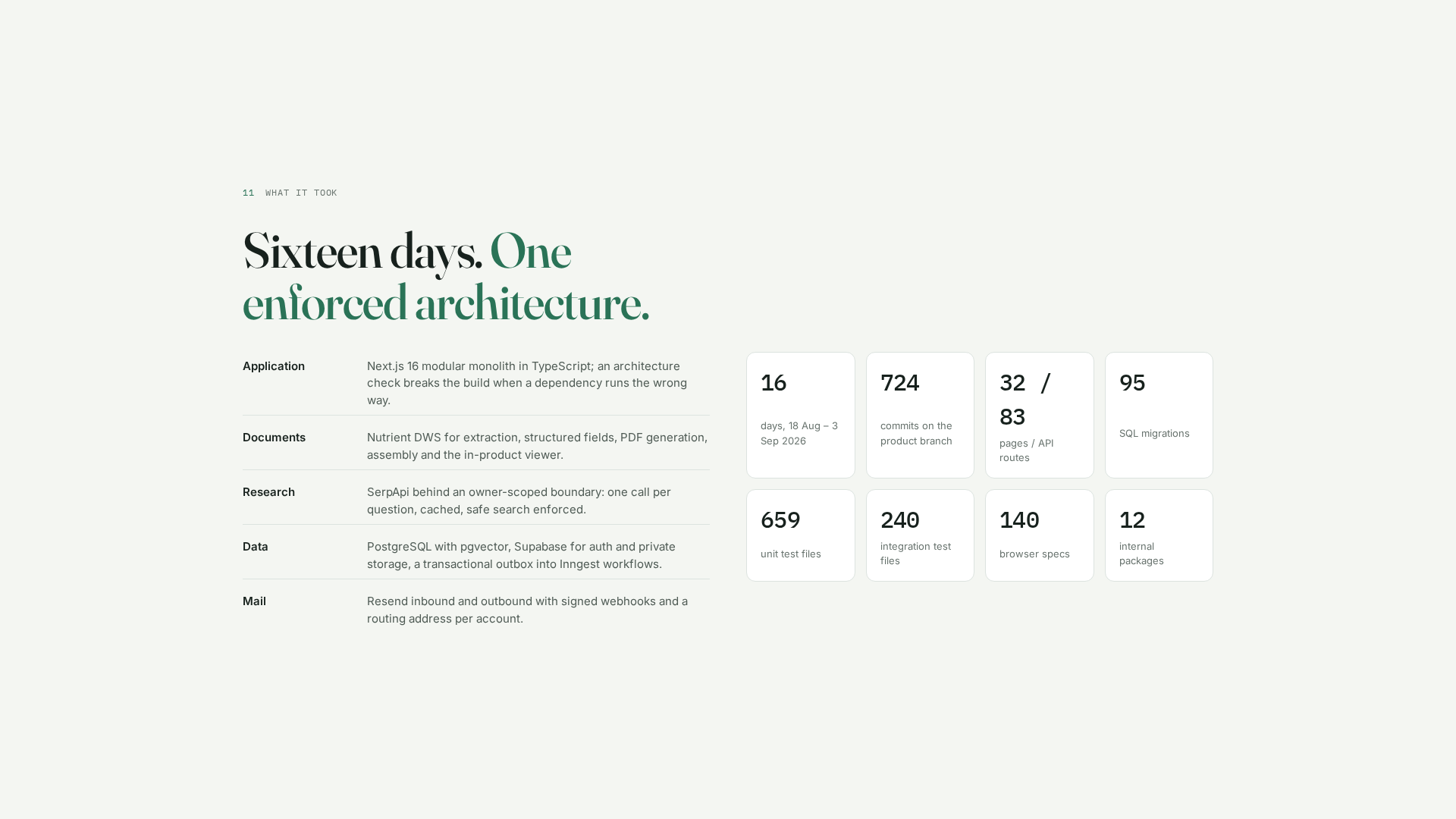
Technically, Fineprint combines:
Next.js + TypeScript · PostgreSQL + pgvector · Supabase · LLM Gateway · asynchronous workflows · explicit state machines
Nutrient DWS acts as the document infrastructure for:
- document processing
- structured extraction
- source context
- document review
- document generation
The separation is intentional:
Nutrient understands and operates on documents. Fineprint understands why those documents matter.
🧩 Challenges we ran into
The hardest part was not getting AI to read documents.
The hard part was turning uncertain AI interpretation into reliable, verifiable application state.
The biggest challenges included:
- preserving source provenance across the entire workflow
- separating probabilistic AI reasoning from verified state
- matching information across multiple documents
- building a real end-to-end workflow without hardcoded demo shortcuts
- reducing a complex internal model into a simple user experience
Internally, Fineprint works with rules, candidates, requirements, sources, evidence, workflows, and state machines.
For the user, that complexity should become:
€842 potential recovery 4 of 5 verified 1 thing missing: Taxi receipt
🏆 Accomplishments we’re proud of
We turned the original document-AI idea into a real:
Detect → Match → Prove → Act
architecture.
We are especially proud of:
- a source-grounded Proof Graph
- deterministic verification on top of AI
- multi-document reasoning
- dynamic evidence completion
- human review and approval
- real Nutrient integration inside the core workflow
The biggest takeaway:
AI does not need to be the final authority to be incredibly useful.
💡 What we learned
The hardest problem in document intelligence is not extraction.
It is trust.
A useful system needs to know:
- where information came from
- whether it is actually supported
- what remains uncertain
- what is still missing
- when a human needs to decide
We also learned that users often need less AI text, not more.
Instead of long explanations, clear states such as:
€842 potential recovery 4 of 5 verified Taxi receipt missing
can be far more useful.
🚀 What’s next for Fineprint
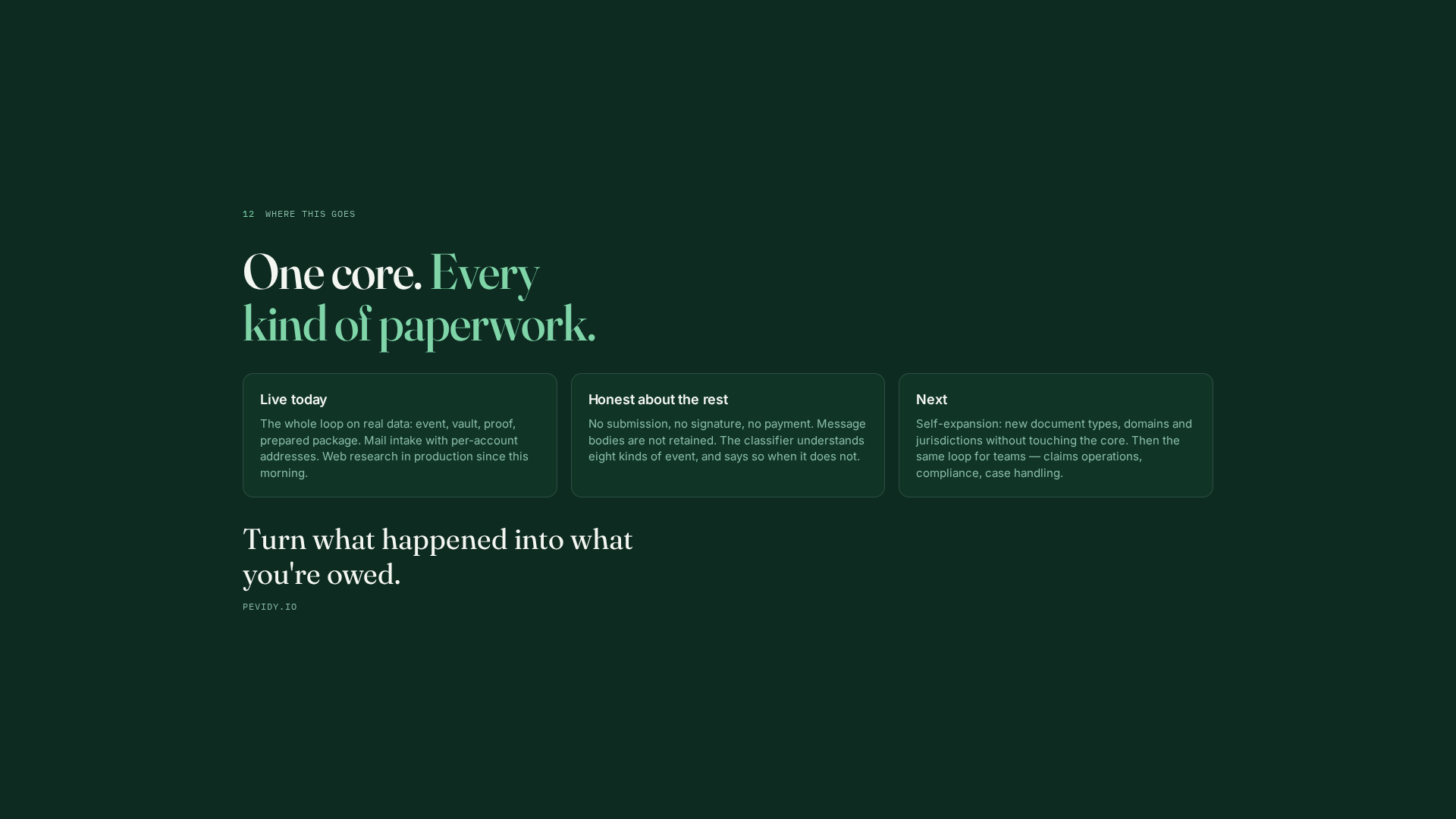
The cancelled-flight scenario is only the first clear use case.
The same architecture can extend to:
- insurance
- warranties
- subscriptions
- rental agreements
- employment agreements
- purchases and receipts
- benefits
- other contractual relationships
Over time, Fineprint can become more proactive by connecting additional event sources and carefully separated, source-grounded external information.
The same architecture can also support counterfactual reasoning, for example:
“What happens if I quit my job?”
“What happens if I cancel this contract next month?”
That moves Fineprint beyond document assistance toward something broader:
A reasoning and action layer for the agreements surrounding a person’s life.
Most document AI starts with:
“What does this document say?”
We believe the more useful question is:
“Something happened. What does it mean for me, what can I prove, what’s missing, and what can I do next?”
Built With
- css
- dws
- flow
- inngest
- next.js
- nutrient
- openai
- postgresql
- react
- shadcn/ui
- supabase
- tailwind
- typescript
- zod


Log in or sign up for Devpost to join the conversation.