Inspiration
Any athlete knows the value of having one-on-one coaching time. Why not get a machine to tell you what you're doing wrong? Our team's mission was to create a device with the ability to give precision feedback without the assistance of a professional.
What it does
The Fine Adaptive Sport Support system tracks the fine movements of the arm and wrist and analyzes it. It compares the incoming data to a training set created by recorded samples that corresponded with correct gestures and successful results in any number of tasks. By pinpointing the exact variables, or specific motions, whose changes correlate with undesirable outcomes, and providing them to the wearer in an understandable way, FASS effectively coaches its user to perfection.
How I built it
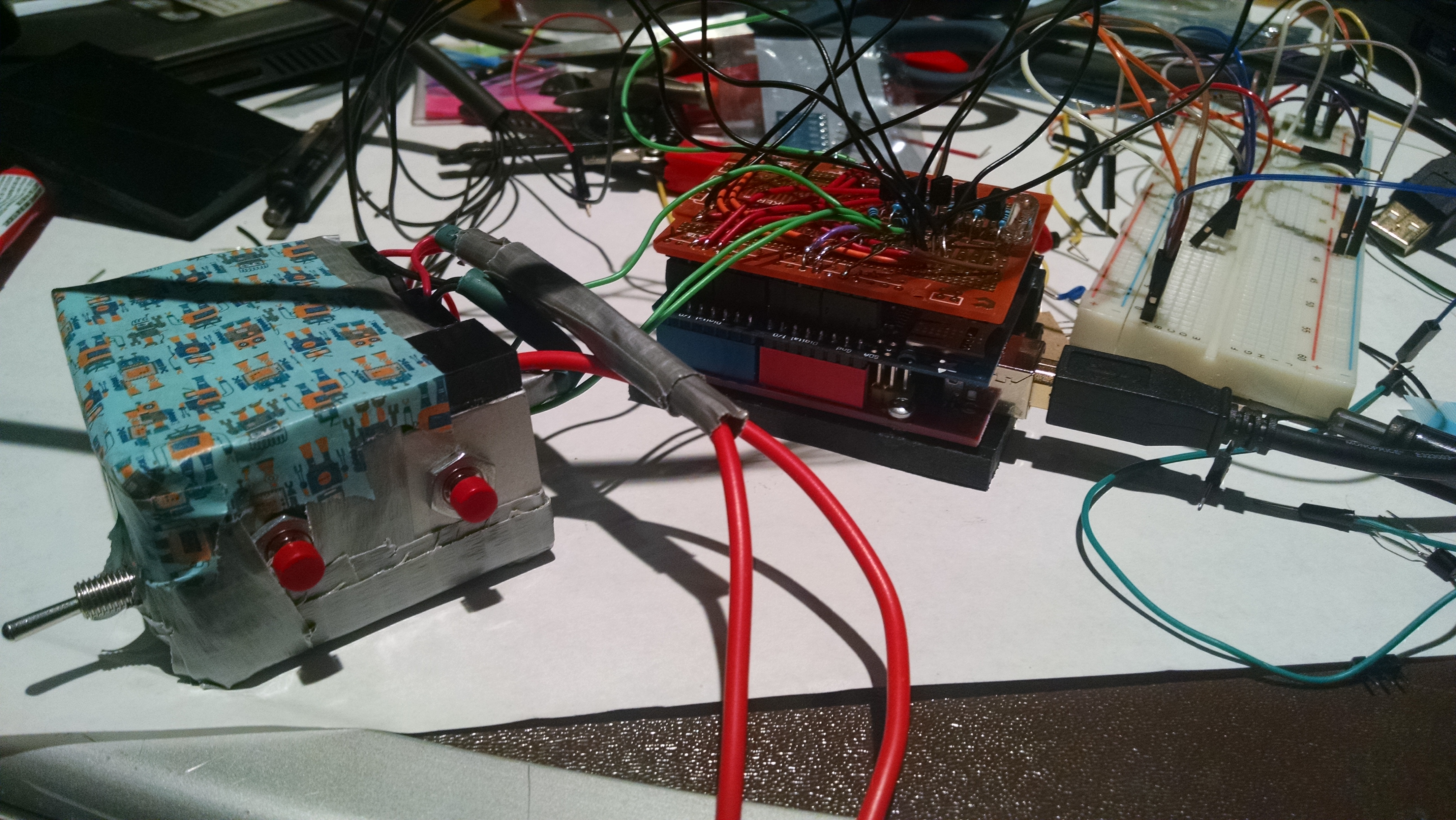
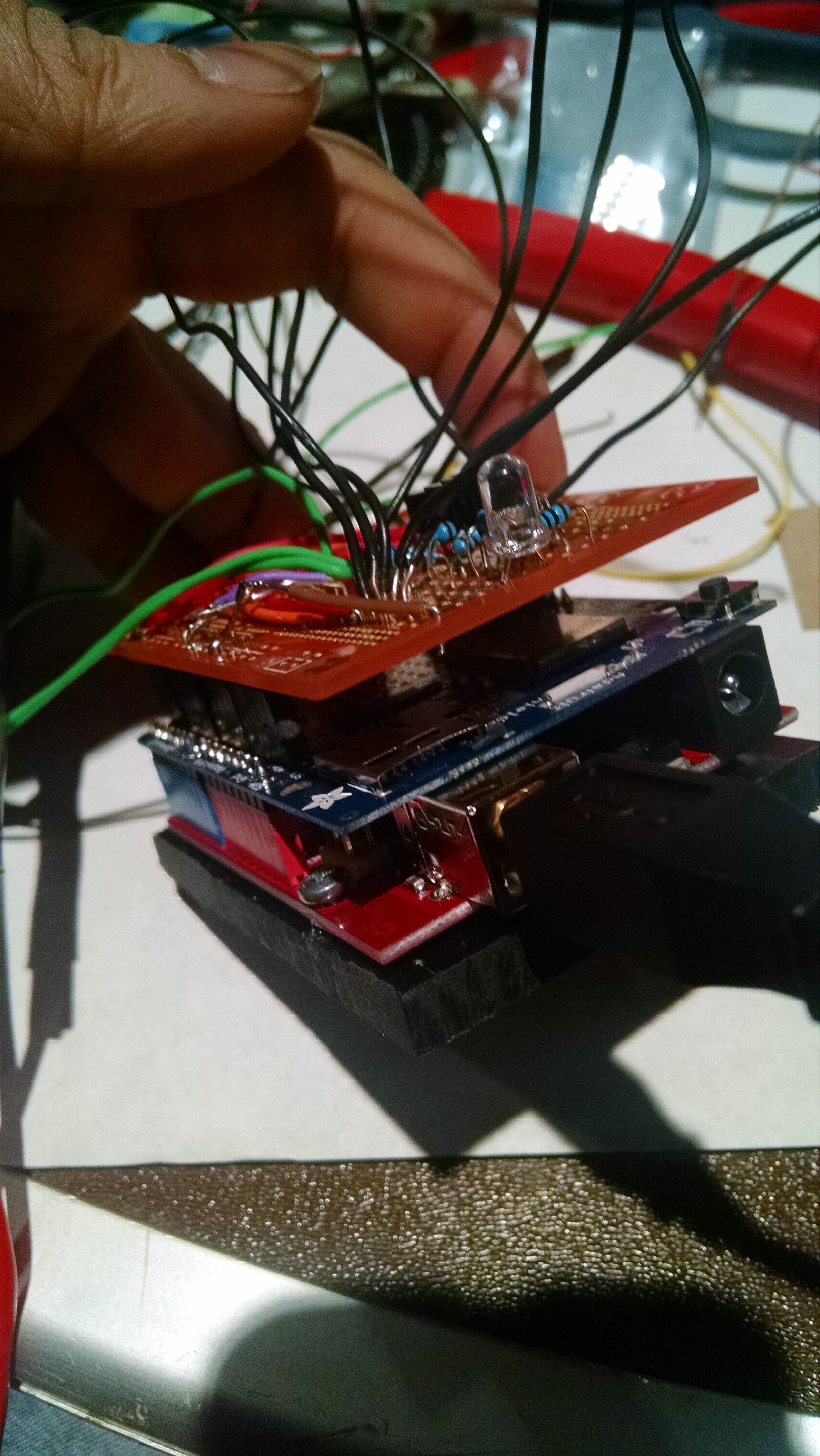
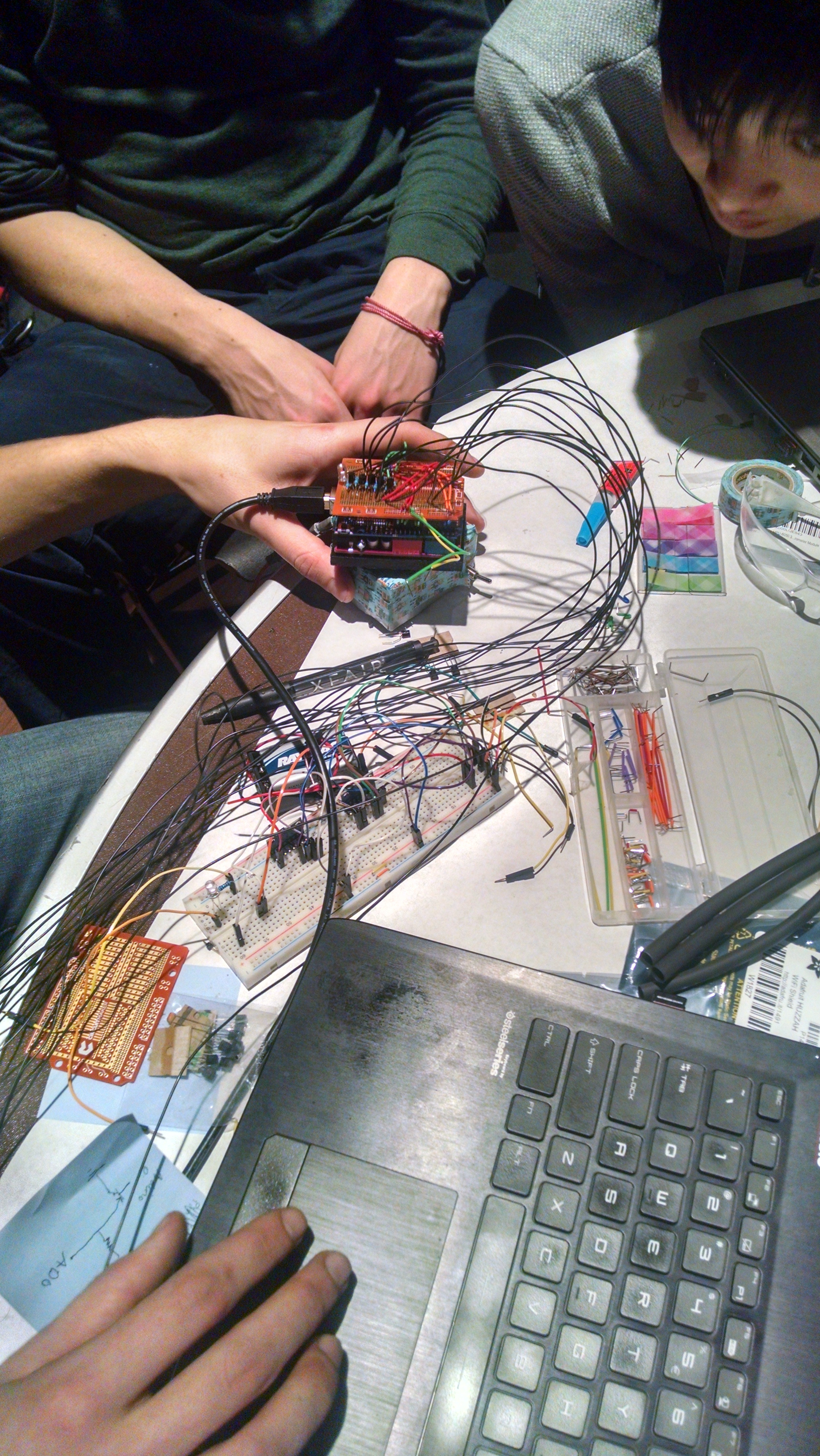
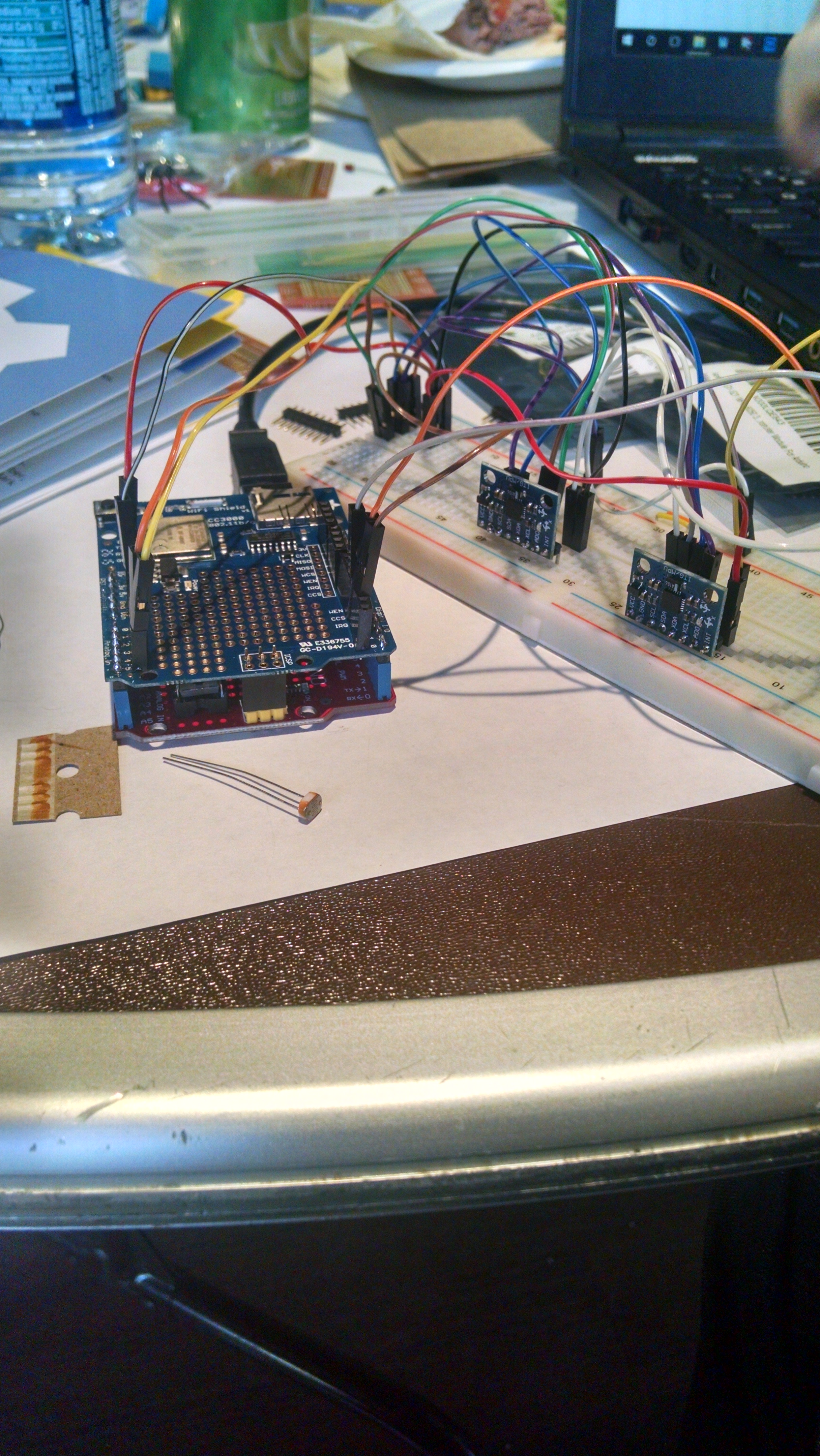
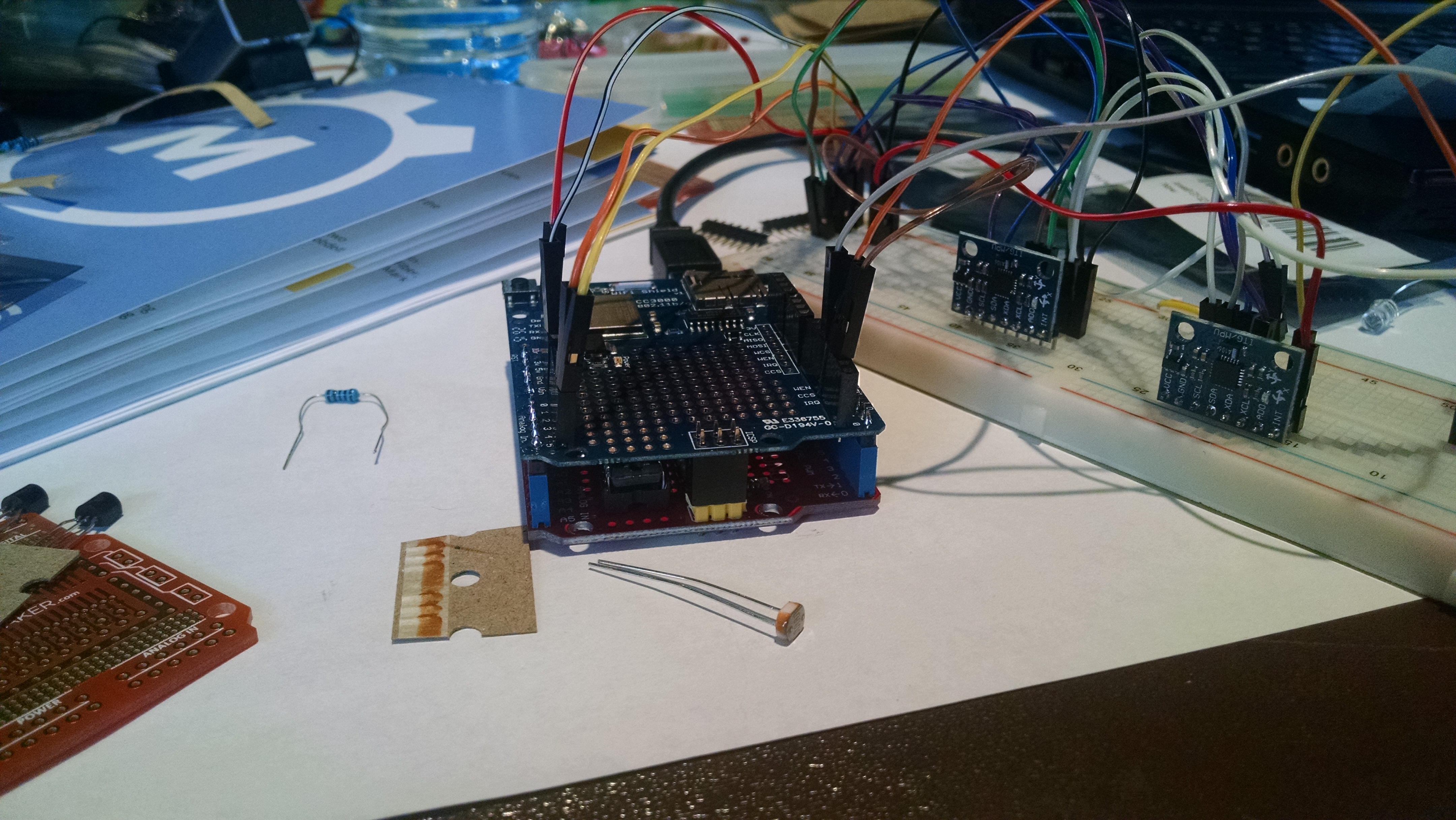
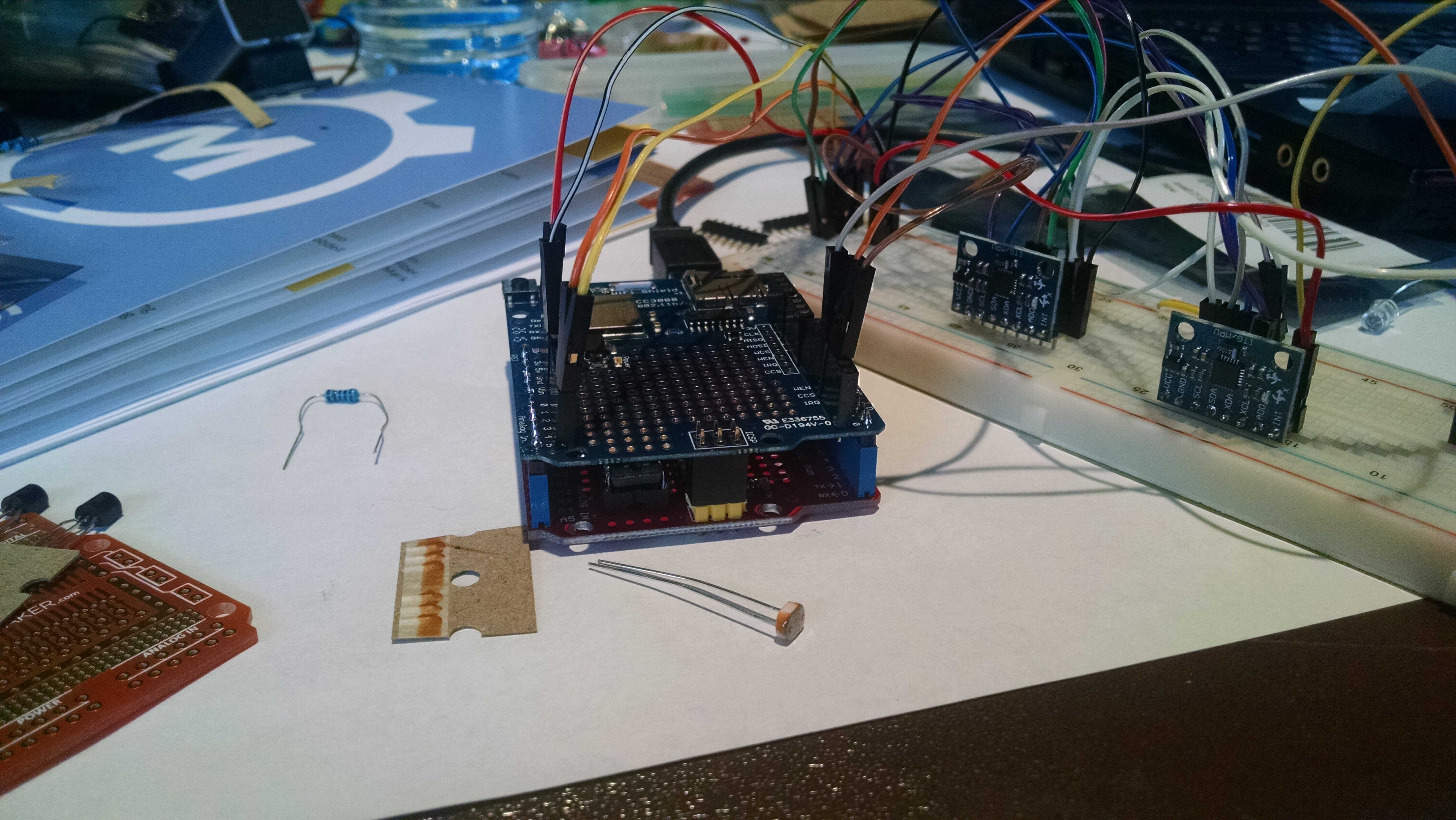
FASS is made of several gyro/accelerometer sensors placed along the arm and integrated into an Arduino board and Wifi shield. The first step was to design and test the circuitry for the sensors and the connection to the board. Then deciding the practical aspect of how to wear the tech followed along with connecting all the parts together in a flexible, nonrestrictive way. One important factor to consider was that the wearer's motion is not inhibited by incorporating too many sensors or poorly designing the straps to be worn directly on the moving parts of the body. After getting motion data read by the sensors, the next step was getting the software analysis of the data. We had to interpret the gyro/accelerometer readings and draw meaningful conclusions from them. The main implementation for finding variables variables that correlated with successful attempts was an artificial neural network. The aim was to collect data from a set of sample motions and manually input their success or failed outcomes through buttons integrated integrated in the circuitry.
Challenges I ran into
Circuitry was complex and detailed. Time pressure.
Accomplishments that I'm proud of
Putting something together. We all worked hard and we made something new that we believe to be of value and have potential to make a difference.
What I learned
Circuitry is hard. But all the members of our team got a chance to try soldering and we all tried helping with different parts of the project (the coding, the designing, the building, and the testing). Preparation was key. Having a solid idea and a great team makes the whole experience a lot of fun.
What's next for Fine Adaptive Sport Support
Moving the computing from a laptop to mobile platforms like phones, adding more sensors, eventually returning more feedback including biometric sensors like temperature and heartrate as well as environmental variables. This could enable us to market to sports teams as well as amateurs. And because of its versatility, it could be used in virtually any sport. One additional potential application is in physical therapy by making the chance for improvement available to more people, especially those who cannot afford a personal physical therapist.

Log in or sign up for Devpost to join the conversation.