-
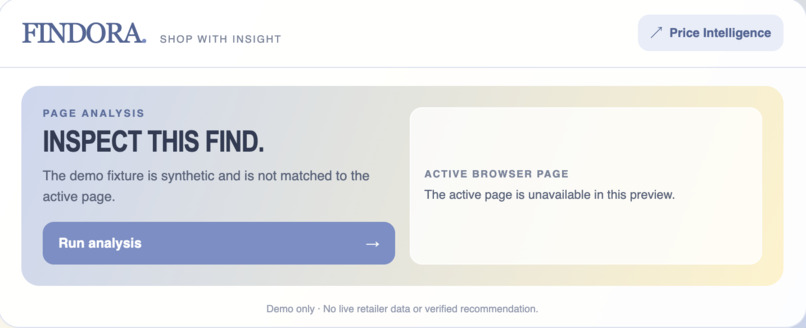
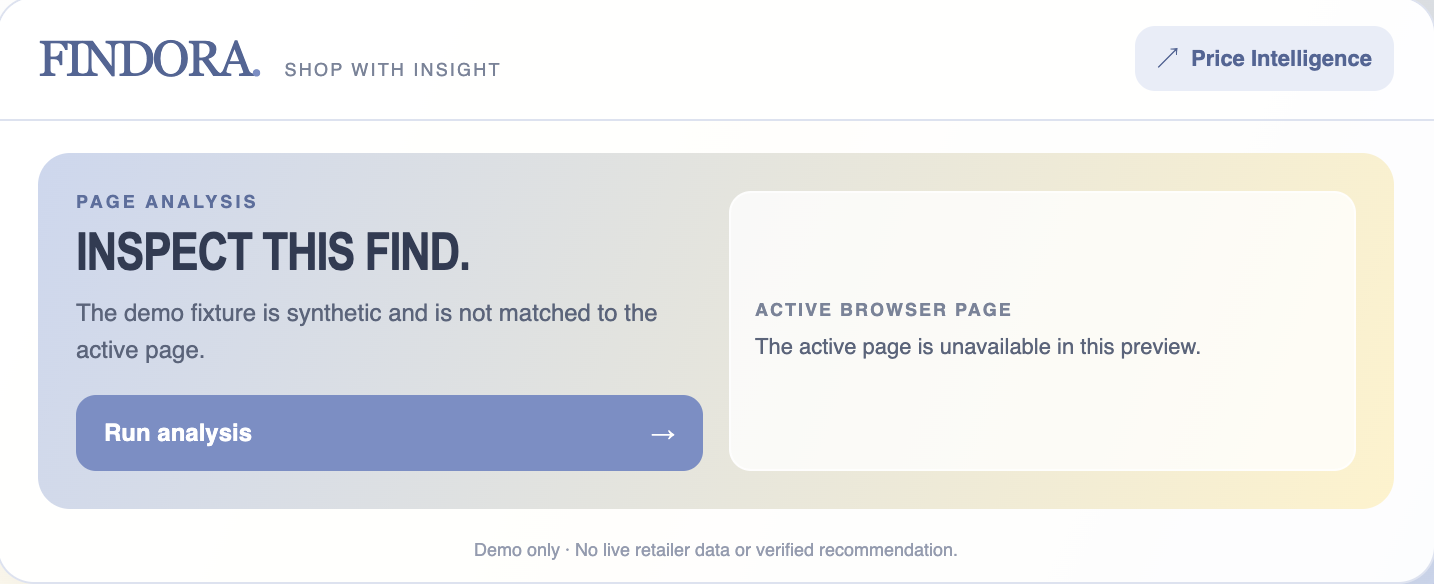
Opening page of our Chrome extension
-
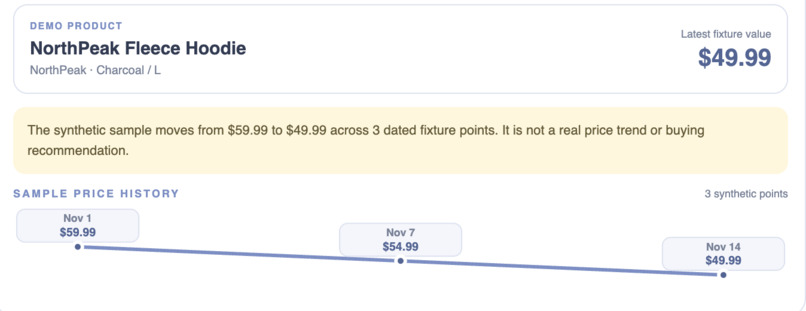
A demo analysis of Findora analyzing a URL directly in the popup
-
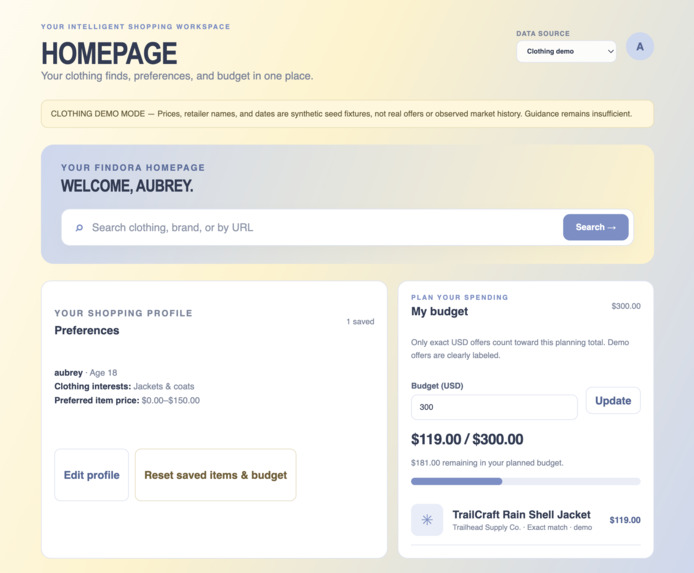
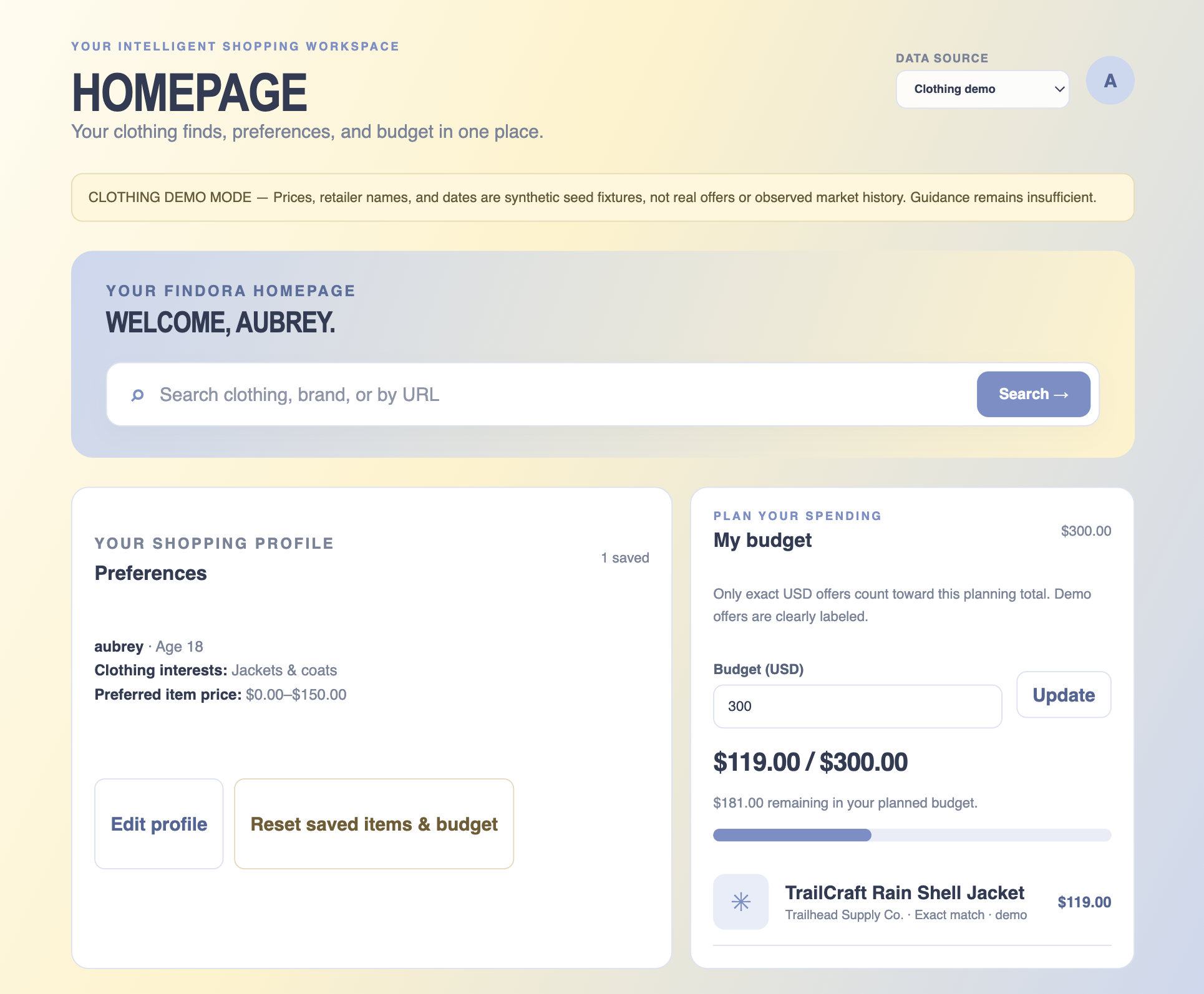
Homepage of Findora webpage
-
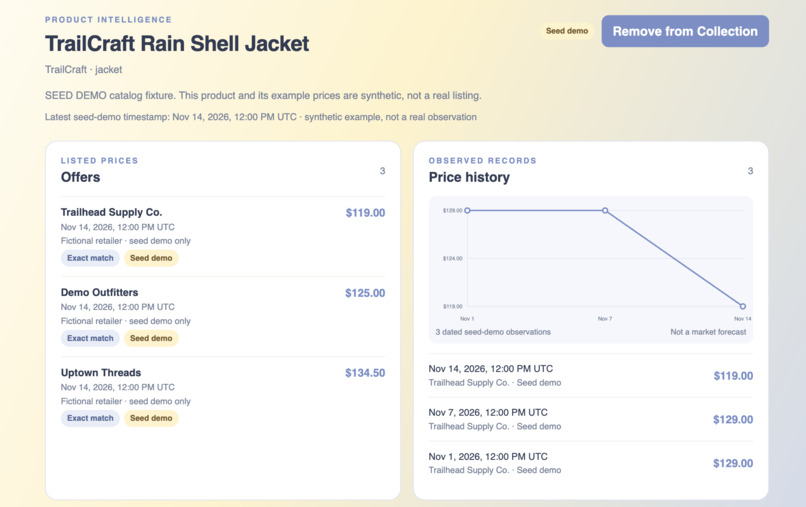
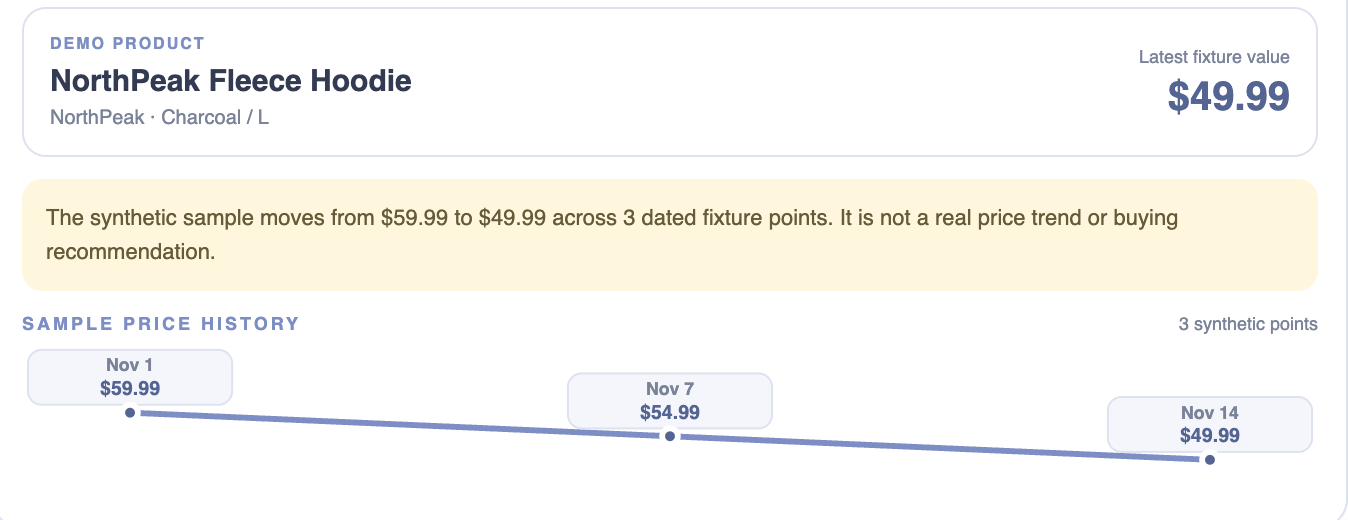
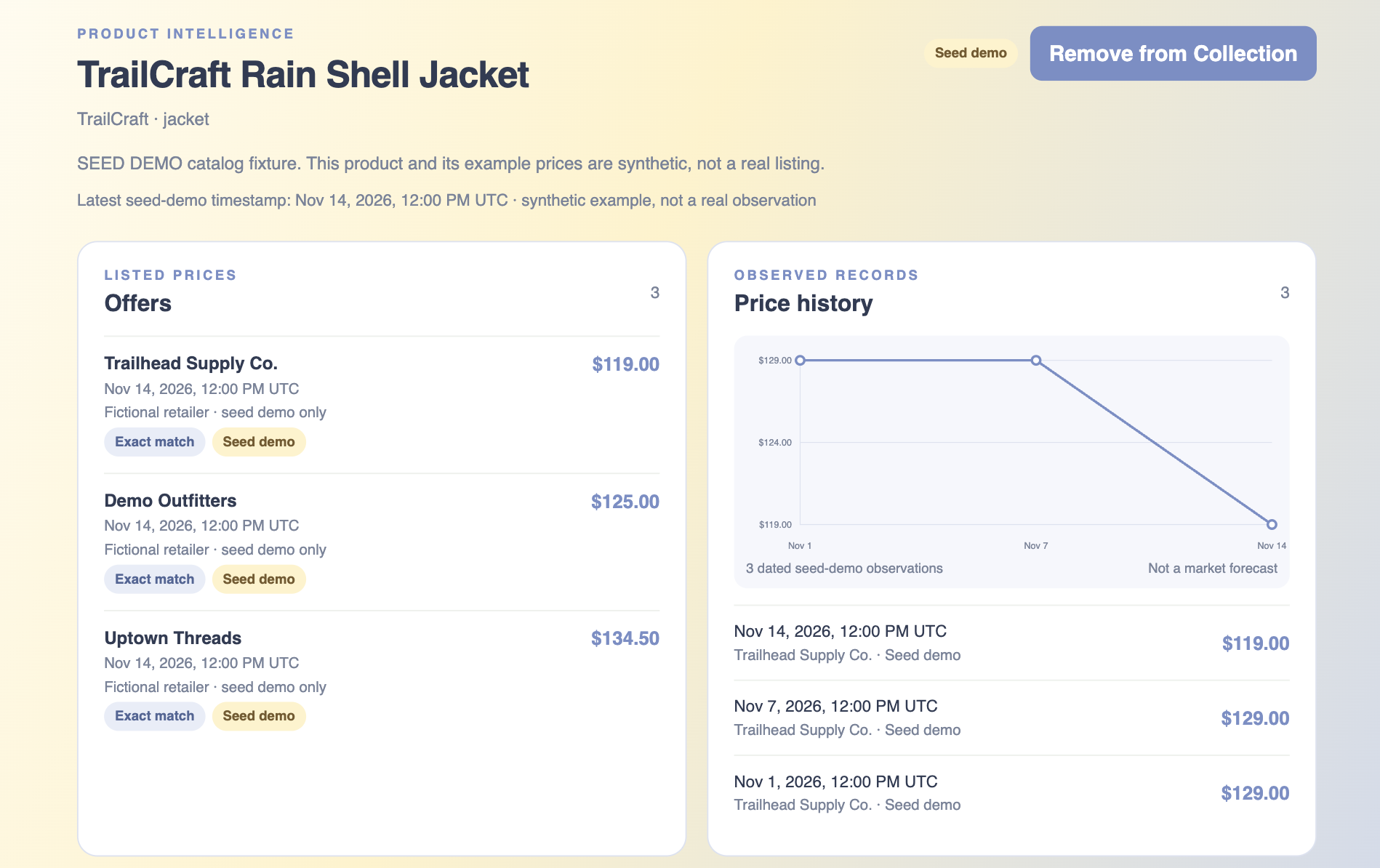
Demo Price Intelligence of item on Findora webpage
-
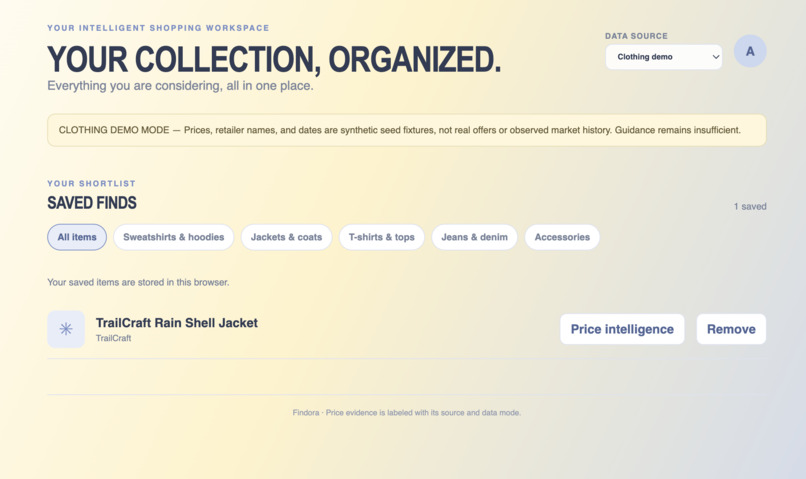
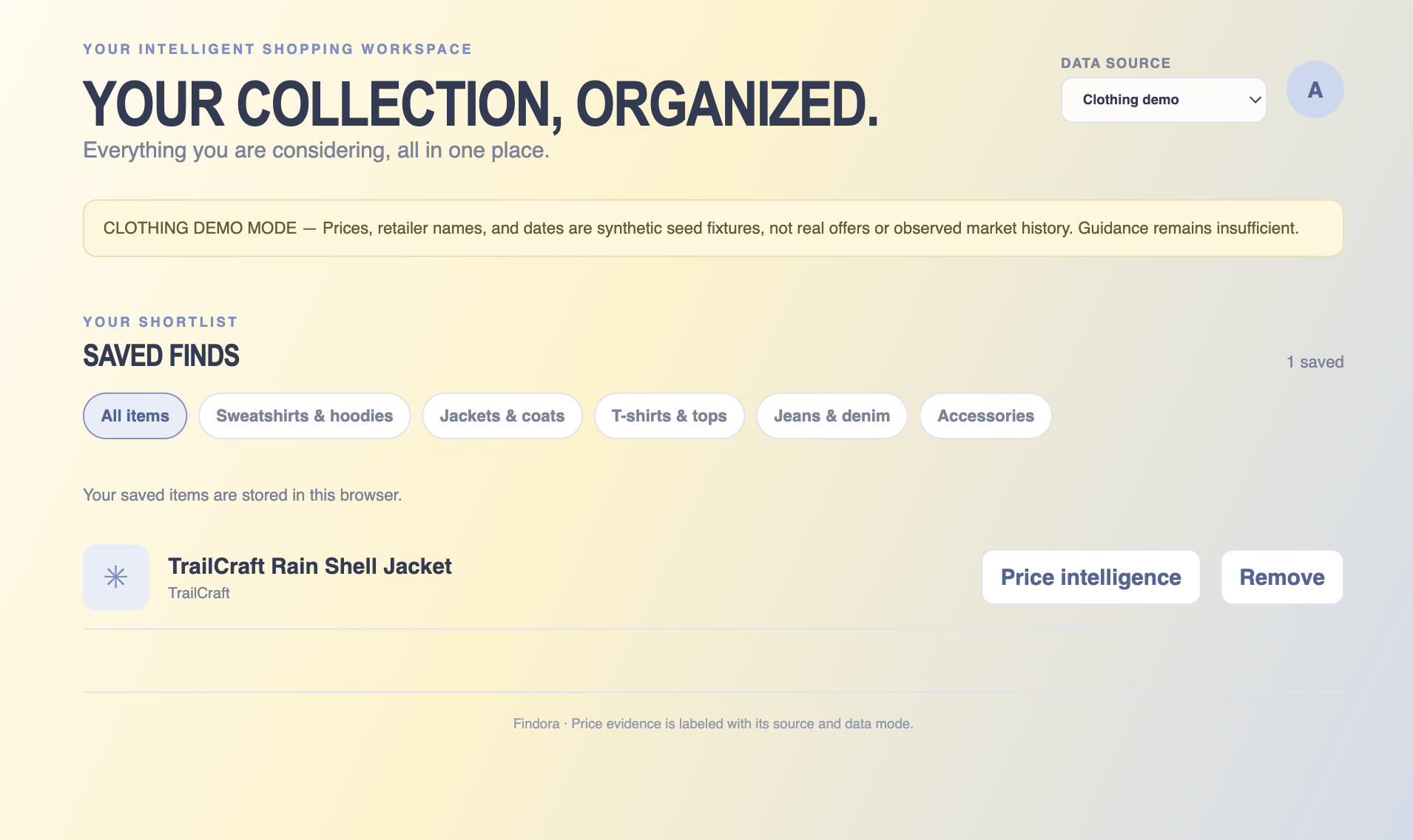
User's saved collection on Findora webpage
-
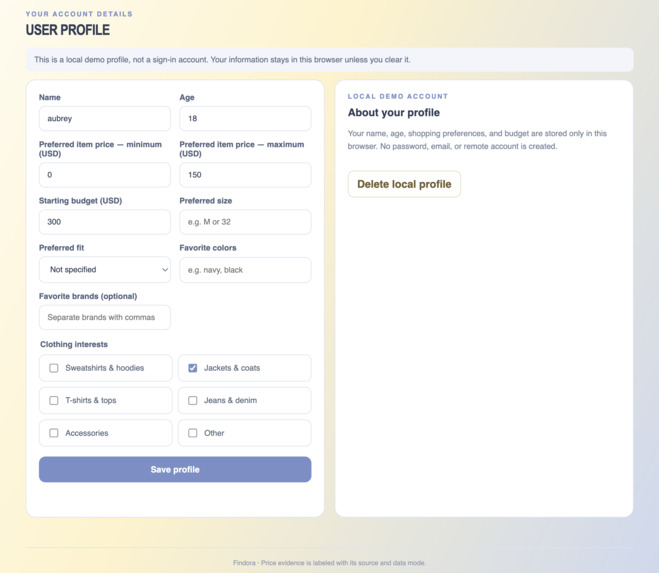
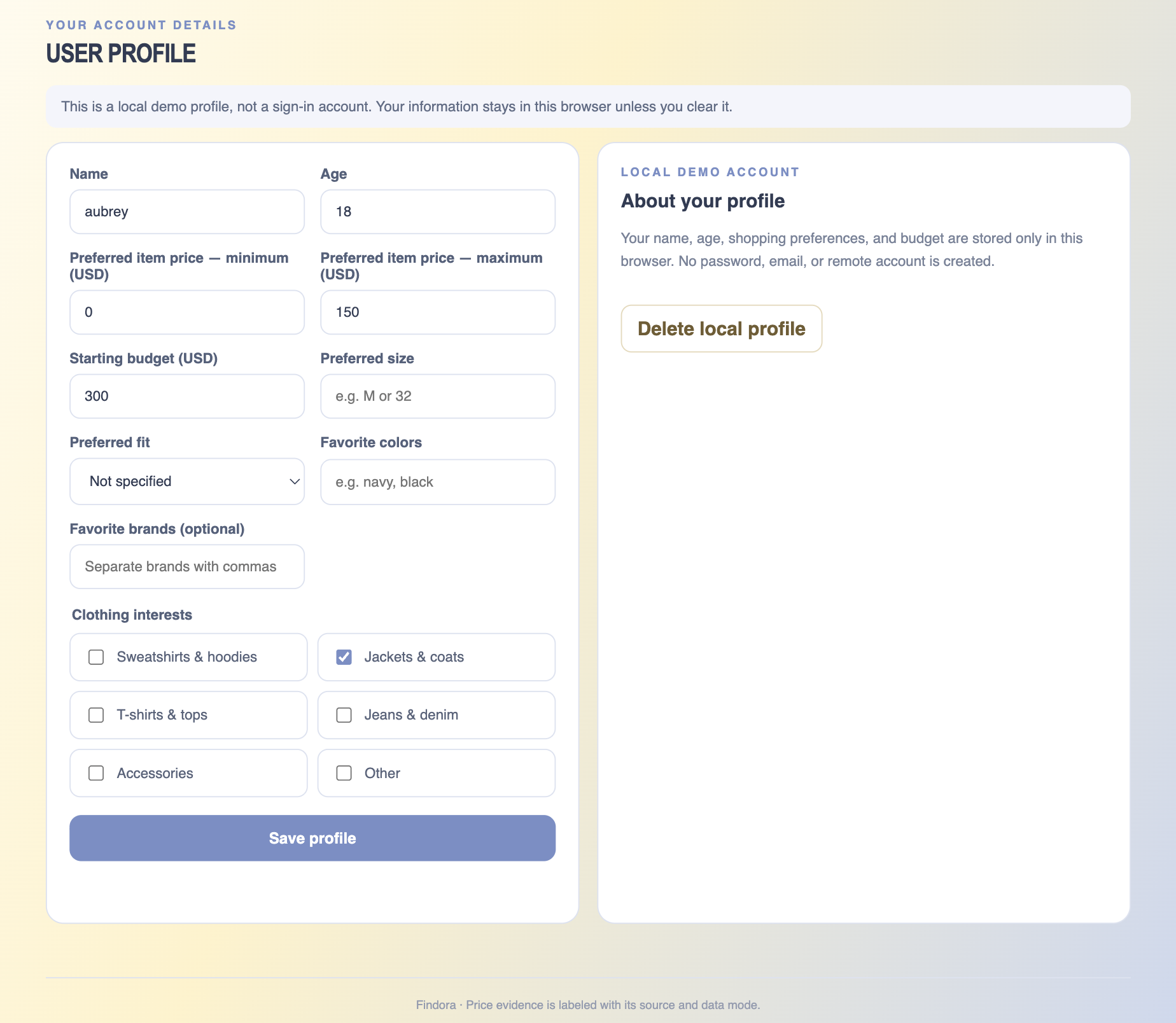
User profile on Findora webpage
Inspiration
Our team has noticed one recurring pattern over time: prices of clothes change almost every day, so consumers never know if they are paying the same price or getting a good deal. Instead of spending hours digging through the internet to find the item or price you wanted, we said "Why can't we condense it all into one interface?" We wanted a tool that would tell you if a price was actually good before you committed to buying something overpriced, or if there was an alternative online retailer where you could get the same or similar product at a discounted price, all in one interface.
What it does
Findora is a shopping assistant that helps you decide whether a price is actually good before you buy. As a Chrome extension, it analyzes the item you’re looking at and shows:
Price history - You can see whether today’s price is high or low for that item.
Reseller pricing - Compare against what the item sells for on resale markets.
Where else it’s sold - In case there is a better price elsewhere.
Price forecast - Shows whether the price is likely to rise or fall.
Inside the Findora workspace, you can also set a profile with your clothing interests and preferred price range, set a budget, and save items to compare their offers against it. This product is built around one idea: finding the right product, at the right price, at the right time.
Note: this demo runs on synthetic sample data, not live retailer offers, and Findora says when there isn’t enough data to give guidance.
How we built it
Frontend - HTML. Began with a prototype titled Dig In to help the user scour the internet to find the best deals and became Findora later. This website demo allows the user to create a personalized profile about what clothes they are looking for, save clothing items they find to a collection for later, and view our powered insights and forecasts to gauge when to buy.
Backend - Databricks and SerpAPI. We used Databricks to store and process price data of different clothing items across the internet and their changes over time in order power the forecasts implemented into our Chrome popup and our website demo. We used SerpAPI to collect product data and supplement a review snapshot into Databricks.
Chrome Extension - JavaScript and Manifest V3. The extension analyzes the page you’re on and shows its price insights in a popup. It also gives you a redirect option to go directly to the demo website and operate outside of just the Chrome popup.
Challenges we ran into
Chrome Extension - Building the popup was very difficult because of how different it operates from a normal webpage, especially with sizing. In order to combat this, we had to track down every rule affecting the popup’s size and reload the extension each time to see the result.
Merging across tools - With code split between VS Code, GitHub, and Databricks, our versions kept drifting apart and causing merge conflicts. We solved it by combining through the use of different branches in each of these tools and it kept us from overwriting each other’s work.
Accomplishments that we're proud of
One experience, two surfaces - The website and the extension share the same look and the same data, so the product feels like one tool.
A cohesive full stack - We connected an HTML frontend, a Databricks backend, and a Chrome extension, all within 24 hours, along with an actual model and analysis tool in the user interface.
Learning while building - None of us had built a Chrome extension before or used Databricks before, so this was a very big and interesting learning curve for all of us.
What we learned
Building Findora taught us how Chrome extensions actually work, from the manifest to popups to icons, and why a popup has to be sized differently from a normal webpage. Working across VS Code, GitHub, and Databricks also taught us to coordinate before coding, not after: separate branches and clear ownership of files kept us from overwriting each other’s work. Most of all, we learned that a price forecast is only as trustworthy as the data behind it, so showing uncertainty honestly matters as much as the prediction itself.
What's next for Findora?
Our first priority is replacing the synthetic sample data with live retailer and resale prices, which will let the forecasts reflect real price history and improve over time. From there, we want to expand beyond clothing to other categories and more brands, and add price-drop alerts that notify you when an item hits your budget or the forecast says it’s time to buy.
Built With
- css
- databricks
- github
- html
- javascript
- manifest-v3
- python
- serp-api
- shell
- visual-studio

