-
-
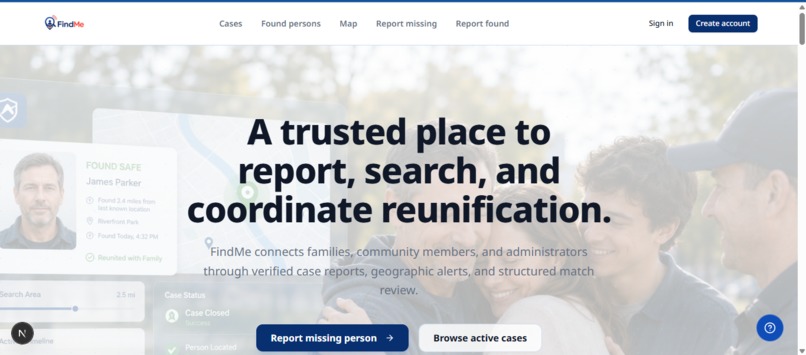
Landing page-hero-section
-
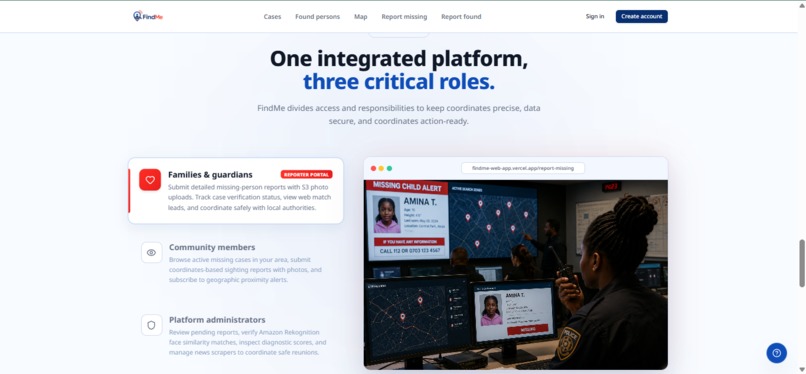
Who it serves
-
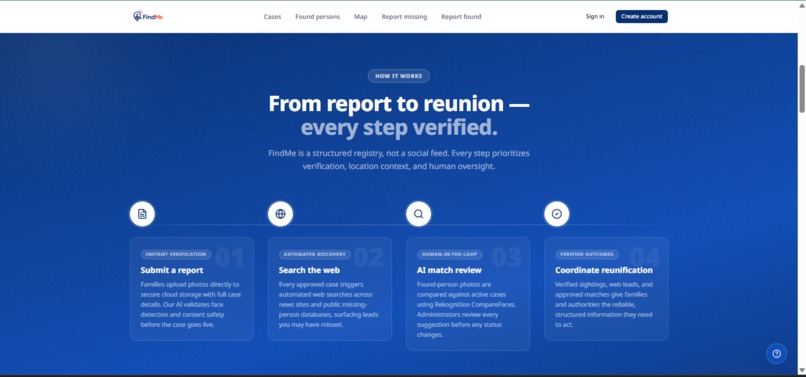
How it works
Inspiration
Across Nigeria and many parts of the world, missing-person reports are often shared through WhatsApp groups, Facebook posts, and X. These reports quickly disappear in busy feeds, become difficult to verify, and continue circulating even after a person has been found. Families are left coordinating searches across multiple disconnected platforms during the most critical hours.
We built FindMe to replace this fragmented process with a centralized, secure platform where families, communities, volunteers, and authorities can collaborate. By combining cloud infrastructure, AI-assisted matching, and location-aware reporting, FindMe helps reunite loved ones faster while reducing misinformation and duplicate reports.
What it does
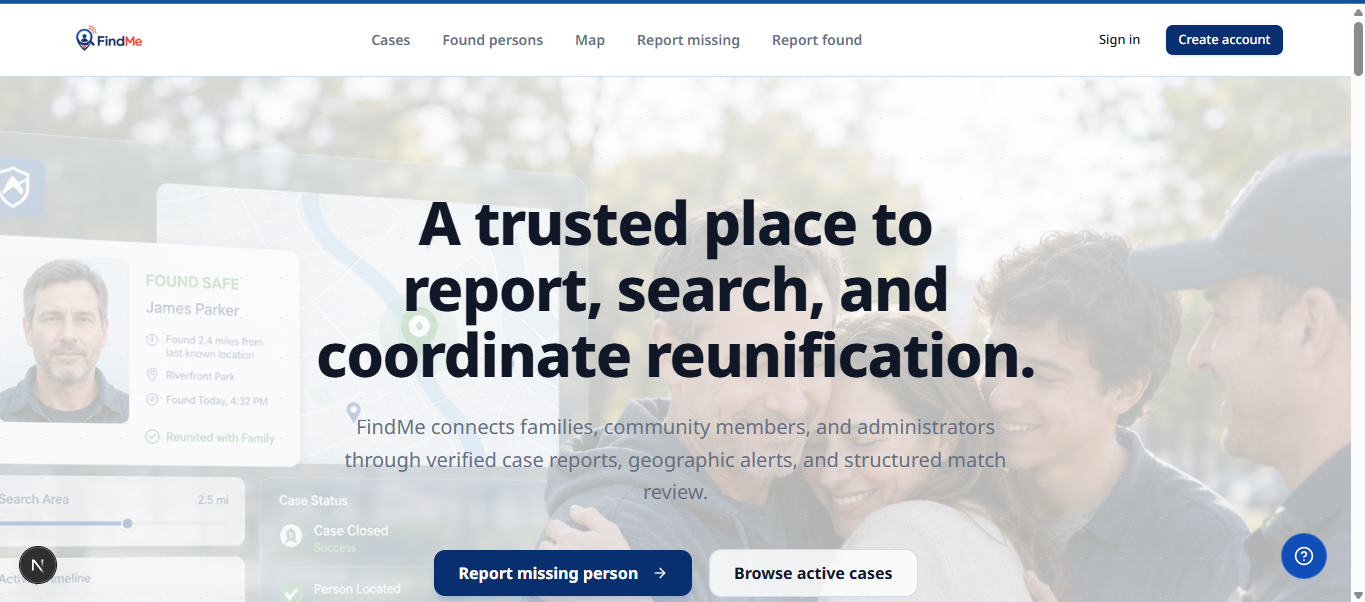
FindMe is a web platform that helps coordinate missing-person searches from the moment a case is reported until the person is reunited with their family.
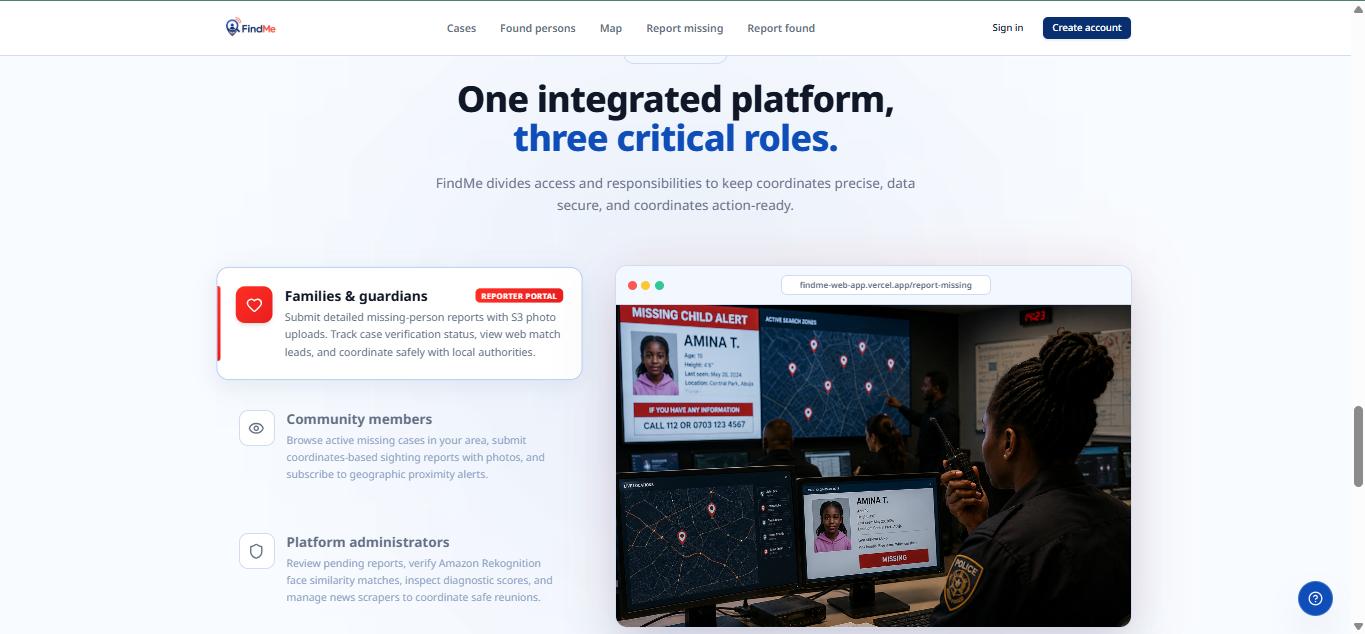
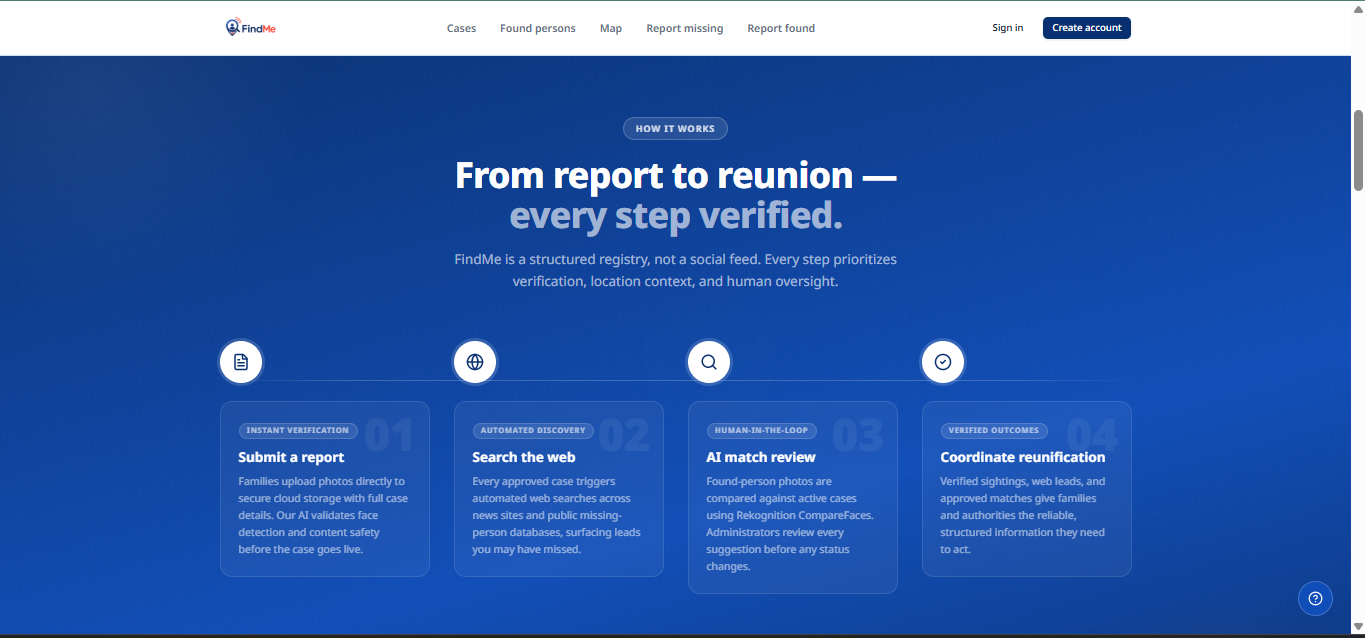
Families can create a missing-person report by providing details such as photographs, last known location, physical description, and contact information. Photos are securely stored in Amazon S3, while case information is stored in Amazon Aurora PostgreSQL.
Community members can report sightings, which appear on the case timeline and map to help build a clearer picture of where someone may have been seen.
When someone reports a found person, Amazon Rekognition compares the uploaded image against existing missing-person reports. The platform also considers age, location, and physical characteristics to generate possible matches. These suggestions are reviewed by moderators before any case status changes, helping reduce false matches.
Users can also receive notifications for cases within their selected area, share reports through WhatsApp, print QR-code flyers, and track updates as investigations progress. Administrators have access to a dashboard for reviewing reports, verifying information, monitoring AI suggestions, and viewing platform analytics.
How we built it
We built FindMe using Next.js 16 with the App Router, TypeScript, Tailwind CSS, shadcn/ui, and Framer Motion for the frontend.
Authentication is handled with NextAuth.js using role-based access for families, moderators, administrators, and community members.
The backend uses Next.js API Routes with Prisma ORM connected to Amazon Aurora PostgreSQL. Images are uploaded and stored in Amazon S3, while Amazon Rekognition is used to assist with facial similarity matching. Interactive maps are powered by Leaflet and OpenStreetMap, and the application is deployed on Vercel.
Challenges we ran into
One of the biggest challenges was designing a system that could manage sensitive information while remaining simple to use. We spent time thinking about how reports should move through the platform, how moderators should review AI suggestions, and how to avoid false matches.
Integrating Aurora PostgreSQL, Prisma, Amazon S3, and Rekognition into a single workflow also required careful planning, especially while keeping the application responsive and easy to maintain.
Accomplishments that we're proud of
We're proud of building a platform that feels like a real product rather than just a hackathon demo.
Some of our favorite achievements include integrating AWS services into a complete workflow, creating an AI-assisted moderation process that still keeps humans in control, building interactive maps and case timelines, and designing a platform that could realistically support missing-person searches at scale.
What we learned
This project gave us hands-on experience building a cloud-native application with AWS services. We learned more about designing relational databases with Prisma and Aurora PostgreSQL, managing secure media uploads with Amazon S3, integrating AI-assisted matching with Rekognition, and balancing automation with human review for a sensitive real-world use case.
What's next for FindMe
We see FindMe growing into a platform that can support organizations, NGOs, and public safety agencies around the world.
Future plans include native mobile apps, SMS and push notifications, multilingual support, stronger AI-assisted matching, partnerships with emergency response organizations, and additional tools that help families and communities respond more quickly when someone goes missing.
Built With
- amazon-aurora
- amazon-rekognition
- framer
- leaflet.js
- motion
- nextauth.js
- nextjs
- postgresql
- prisma
- typescript


Log in or sign up for Devpost to join the conversation.