Inspiration
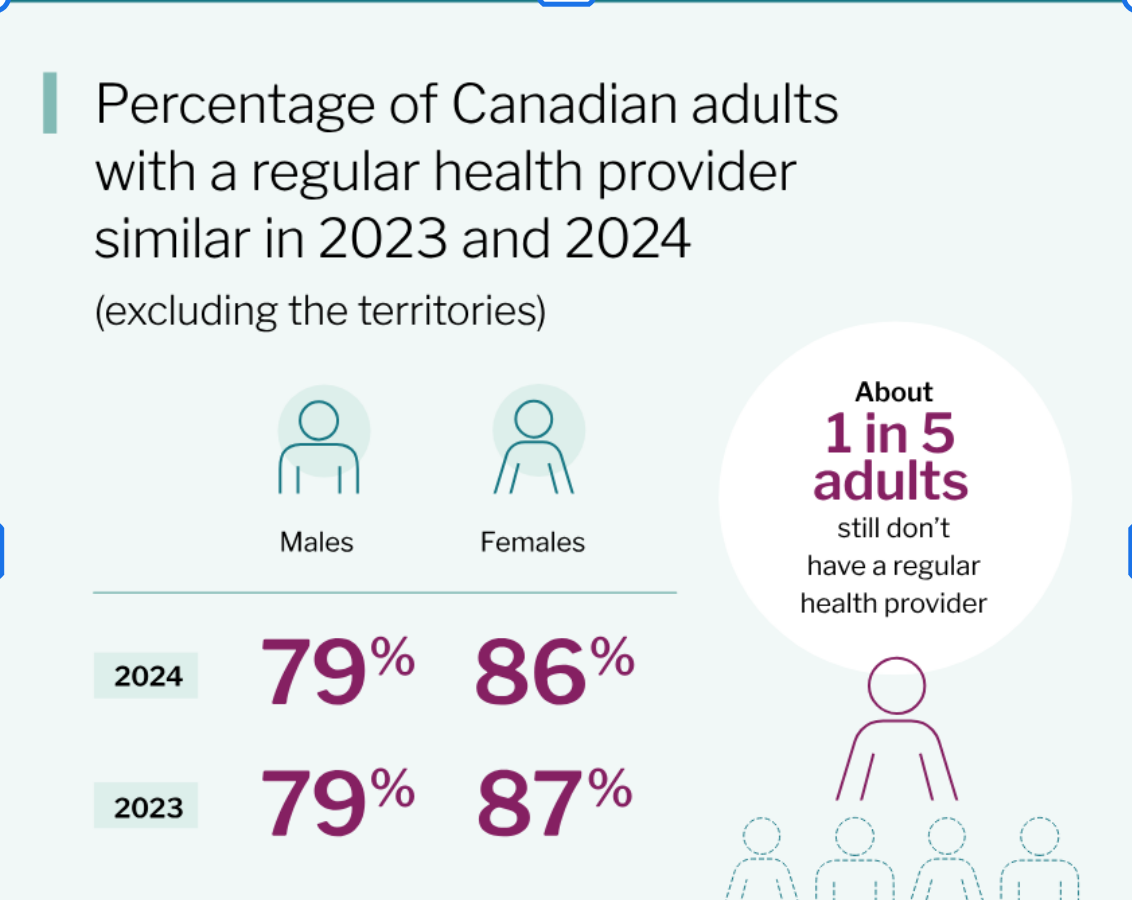
Finding a family doctor shouldn’t feel like a full-time job. Yet many patients are stuck navigating outdated registries or calling clinic after clinic just to hear the same answer. At the same time, clinics are overwhelmed by repetitive intake calls. The system is broken on both sides, and we wanted to fix the infrastructure, not just the interface.
What it does
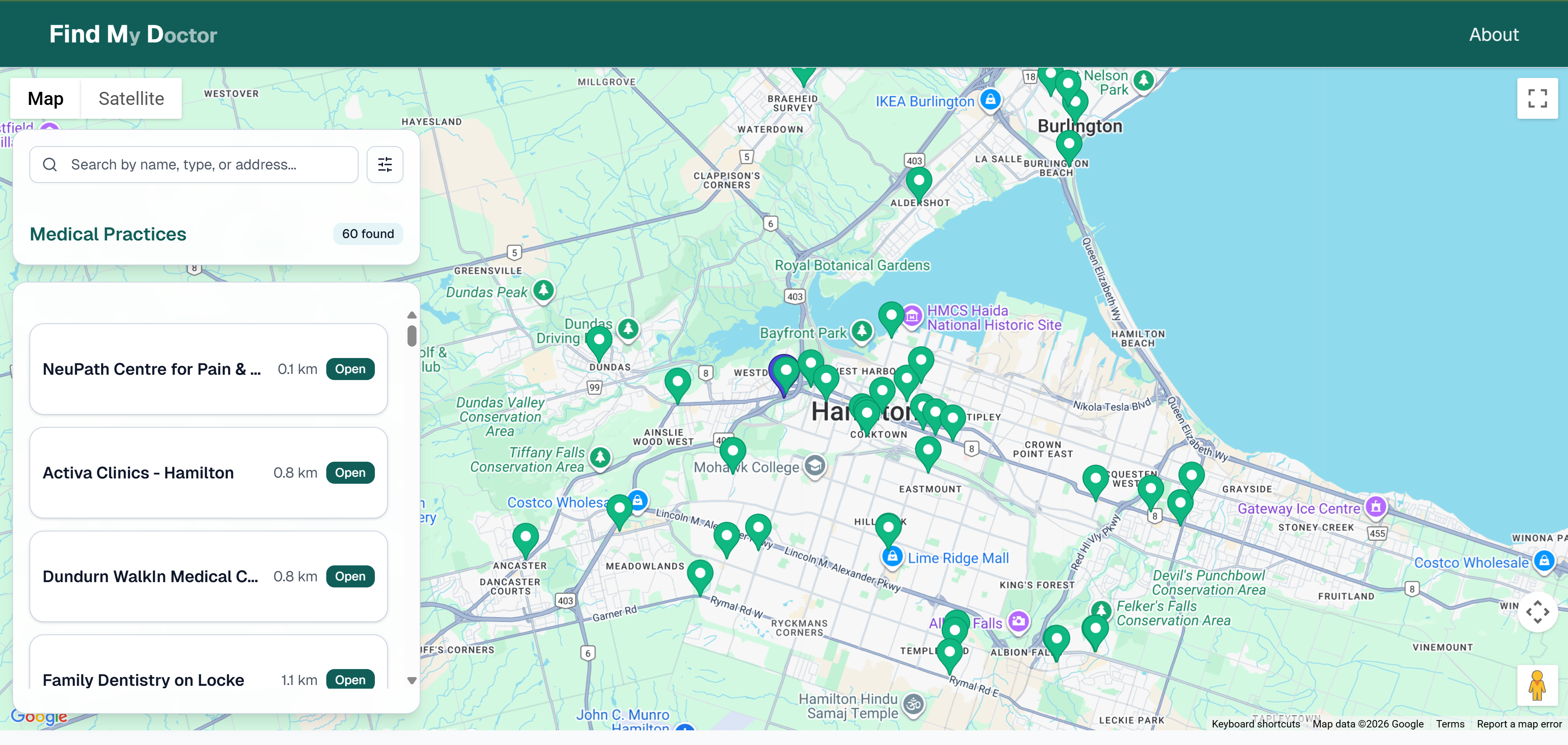
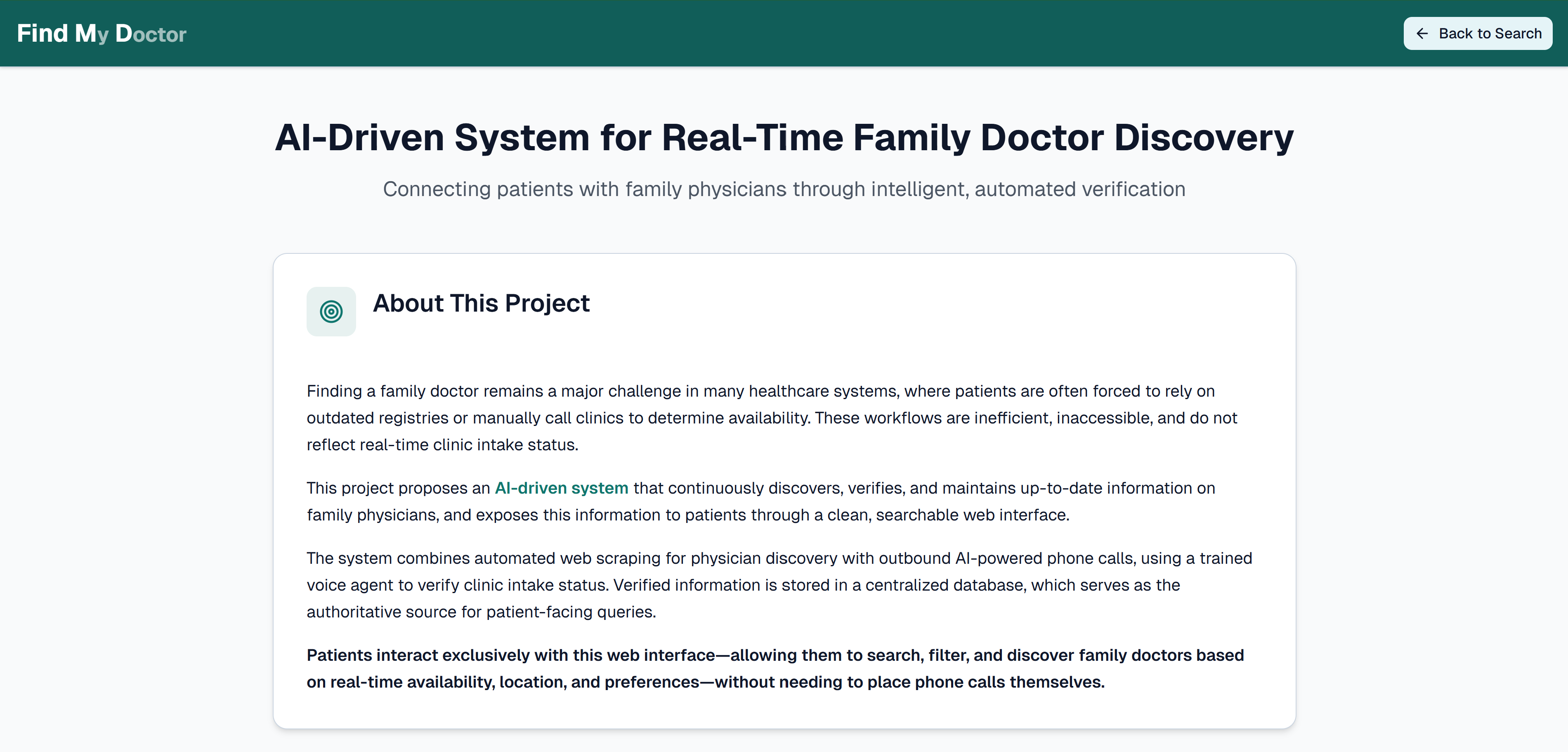
FindMD continuously discovers family doctor clinics, verifies whether they are accepting new patients using an AI voice agent, and presents this information in a clean, searchable web interface. Patients get real, up-to-date answers without needing to make a single phone call.
How we built it
We combined automated scraping of public clinic data with outbound AI phone calls that respectfully disclose automation and ask standardized intake questions. Verified responses are converted into structured data and stored in a centralized JSON database, which the web app queries in read-only mode to ensure consistency and trust.
Challenges we ran into
Human conversations are messy. Clinics respond in nuanced ways, public data is often incomplete, and healthcare workflows come with legal and ethical constraints. Designing something that was both technically robust and respectful of real-world clinics required careful tradeoffs.
Accomplishments that we’re proud of
We built a fully automated, end-to-end system that replaces cold-calling with verified data. Patients never have to guess, and clinics face fewer repetitive calls. Most importantly, the system works within real healthcare constraints rather than ignoring them.
What we learned
Fresh data matters more than perfect data. Accessibility improves when friction is removed entirely, not just redistributed. And AI is most powerful when it operates quietly in the background as infrastructure, not as a replacement for human care.
What’s next for FindMD
We want to expand coverage, support multiple languages, and improve confidence scoring for ambiguous responses. Long term, we see FindMD as shared healthcare infrastructure that helps communities connect patients to care faster and more equitably.

Log in or sign up for Devpost to join the conversation.