Inspiration
Legal advice is one of the few professional services where the people who need it most can afford it least. 77% of Americans facing a legal problem never consult a lawyer — not because they don't need help, but because a single consultation can cost $500.
We wanted to change that. Not by replacing lawyers, but by giving everyone access to the same foundation lawyers use: legal precedent.
What It Does
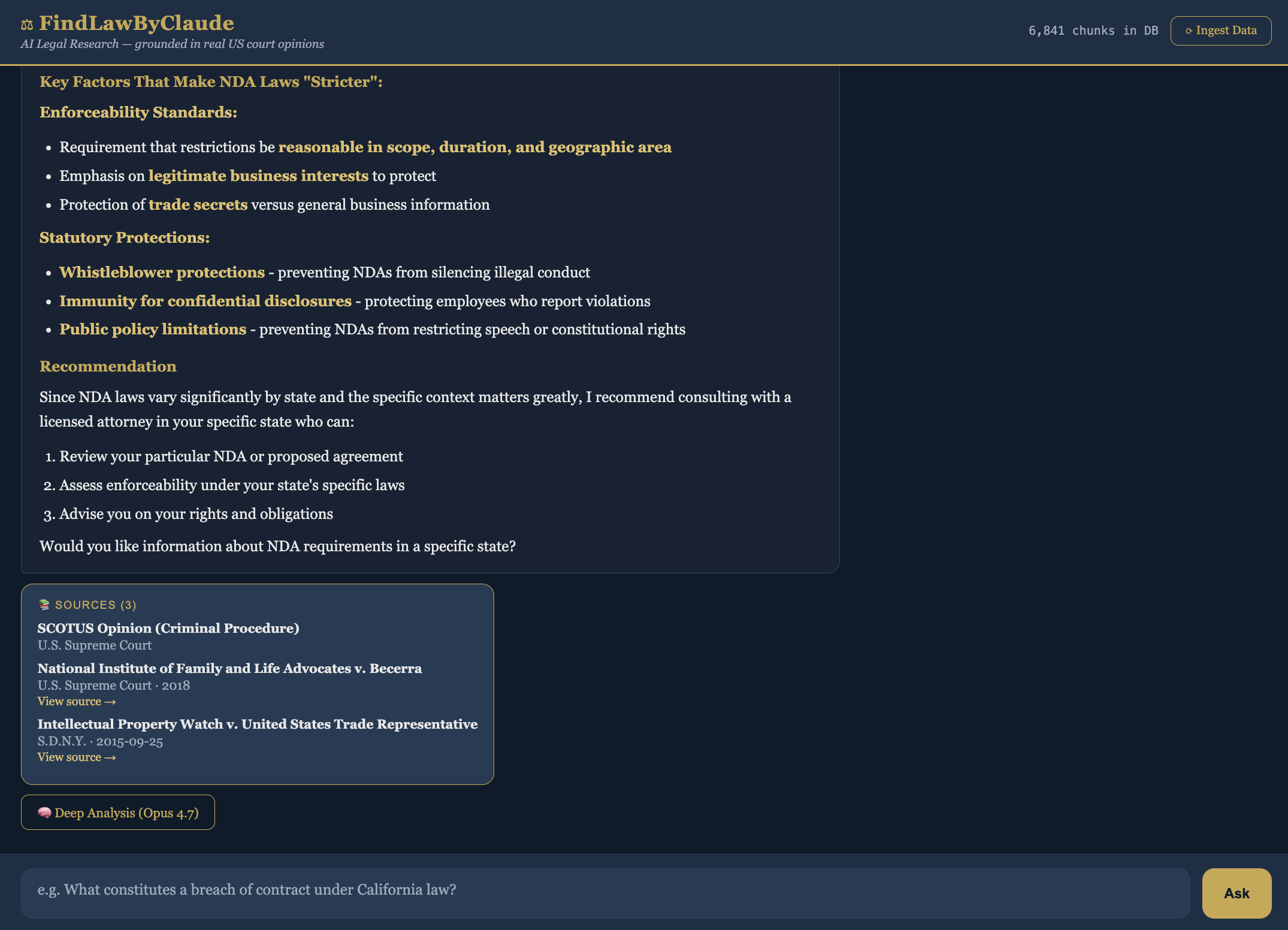
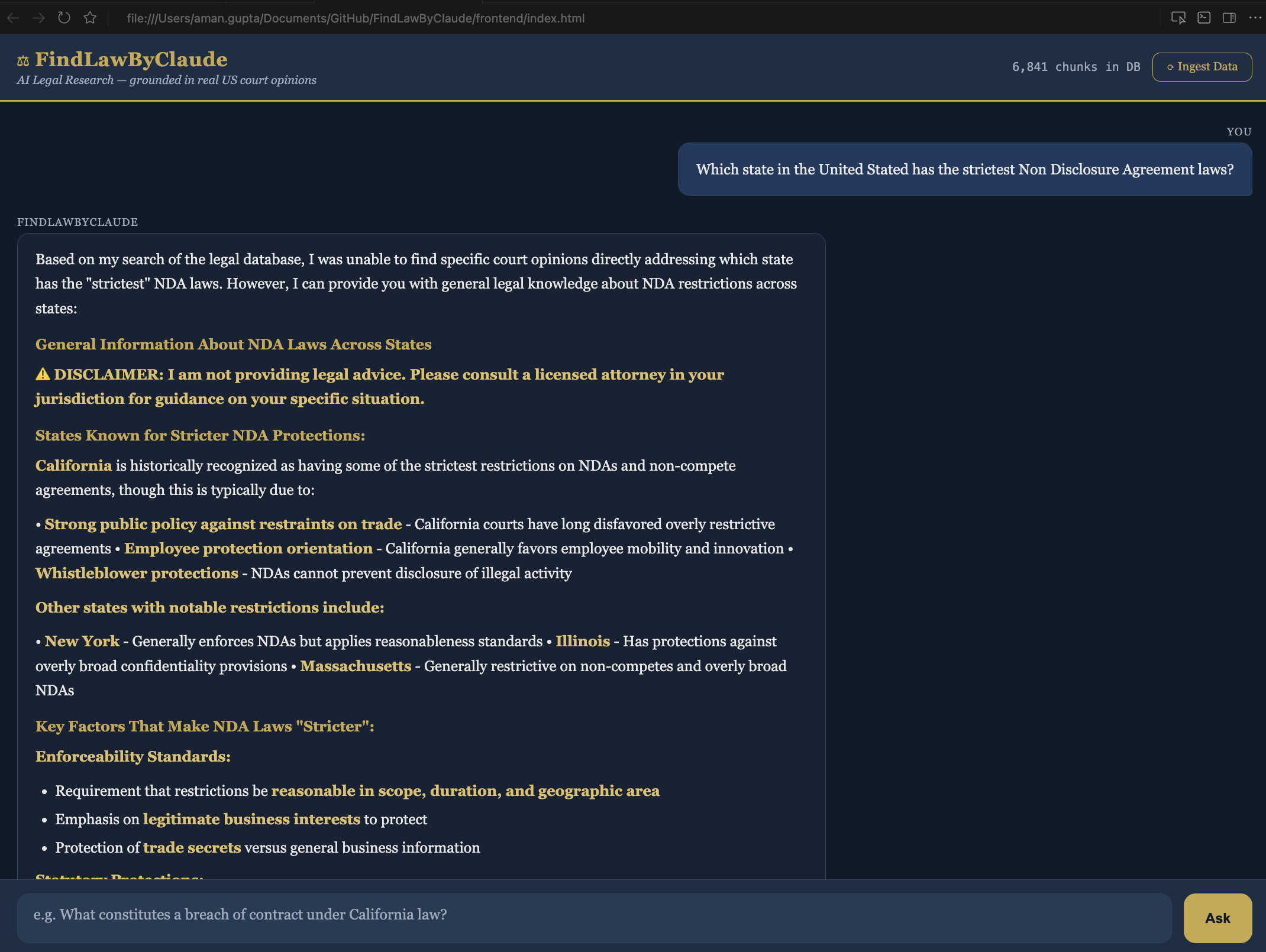
FindLaw is a conversational AI legal assistant that works like a good lawyer would in an initial consultation. Instead of immediately giving a generic answer, it:
- Asks targeted follow-up questions to understand your specific situation
- Tracks a confidence score — it won't give advice until it's confident it has enough detail
- Searches across 7 live legal databases — national and international
- Returns the actual court cases that apply to your situation, with plain-English summaries and links to the full rulings
The result: real legal guidance grounded entirely in precedent, not guesswork.
How We Built It
- AI backbone: Claude (Anthropic) — handles the conversational flow, confidence scoring, and case reasoning
- Legal databases: CourtListener, Harvard Caselaw Access Project, Oyez (SCOTUS), HUDOC (European Court of Human Rights), CURIA (EU Court of Justice), GovInfo, and the Federal Register
- Frontend: Vanilla HTML/CSS/JS — fast to build, easy to demo
- Backend: Node.js server proxying requests to the Anthropic API
The system prompts Claude to gather jurisdictional context first — country, and state if the user is in the US — before searching the relevant databases.
Challenges We Faced
Data sourcing was harder than expected. Most legal databases require registration, have CAPTCHA walls, or throttle unauthenticated requests. We had to identify which APIs were truly open and reliable under time pressure.
Scoping the AI behaviour. Getting Claude to ask just enough questions — not too few (vague advice) and not too many (frustrating UX) — required careful prompt engineering around the confidence scoring mechanism.
Time. 90 minutes is not a lot of time to build, test, and pitch a legal AI.
Accomplishments We're Proud Of
- A working confidence scoring system that mimics how a real lawyer gathers facts before giving advice
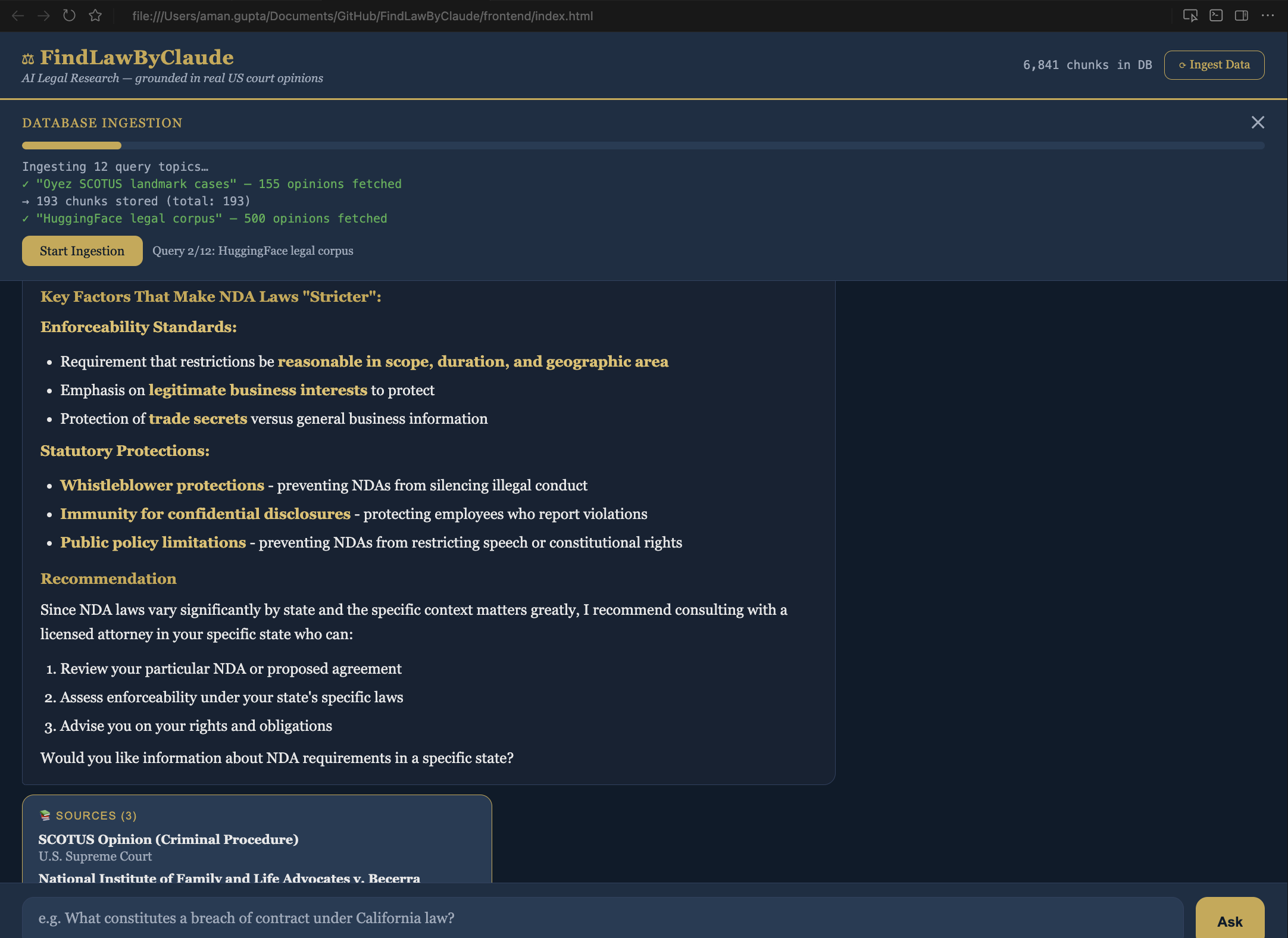
- Live integration with multiple free legal databases across US and international jurisdictions
- A clean, professional UI that feels trustworthy — important for a legal product
- Built and pitched in 90 minutes
What We Learned
Scoping fast is a superpower. We had bigger ideas — video ingestion, document upload, multi-jurisdiction comparison — and deliberately cut them to ship something that works and demos well. A focused, polished prototype beats an ambitious, broken one every time.
We also learned that legal data is surprisingly accessible when you know where to look. Millions of court decisions are public record and available via free APIs — the barrier isn't the data, it's knowing it exists.
What's Next for FindLaw
- Document upload — let users submit contracts, letters, or court notices for case-matched analysis
- Expanded international coverage — CanLII (Canada), BAILII (UK), and more
- A citator feature showing whether a cited case is still good law
- Voice input for accessibility
The foundation is built. The precedent is set. ⚖️

Log in or sign up for Devpost to join the conversation.