-
-

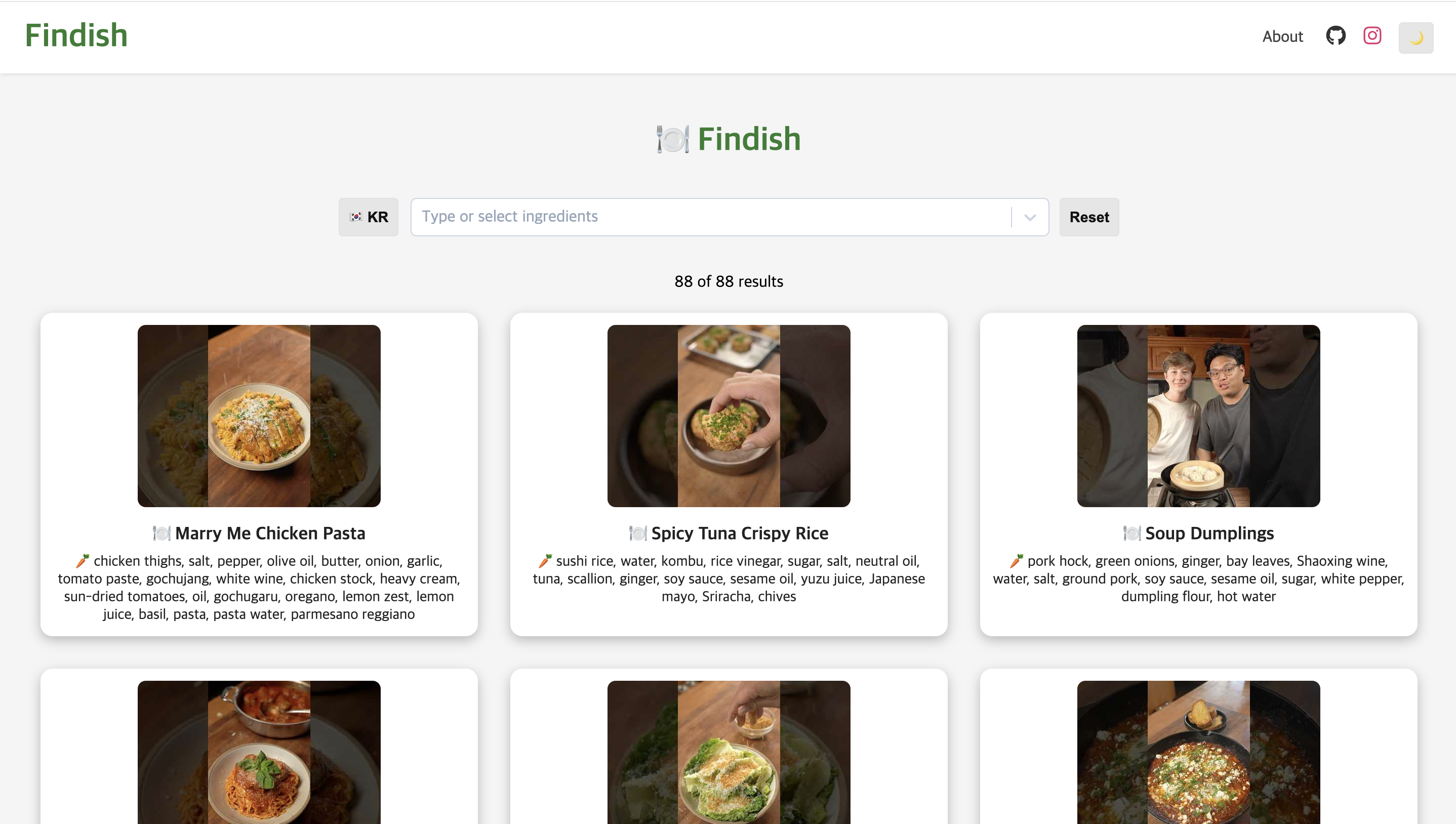
Search page
Inspiration
I’ve always loved cooking and wanted to be a chef back in the day. So, I often watch YouTube cooking videos, learn recipes, and try them out. However, I kept running into one problem—figuring out what I could cook with the ingredients I already had and this inspired me to build a service where users can search for recipes based on what they already have at home. For example, if someone searches for “egg,” the platform suggests dishes like omelets, scrambled eggs, or egg fried rice.
What it does
Findish lets users search for YouTube cooking videos based on the ingredients they have at home. It automatically extracts recipes from pinned comments, descriptions, and transcripts using Perplexity’s Sonar API, and displays the matching results in a clean, bilingual interface.
How we built it
We built the frontend with React. The backend uses a Python script that integrates Perplexity’s Sonar API, YouTube Data API, and Google’s transcript service to extract recipe data. We normalized ingredient terms and categorized them for better search accuracy. The data is stored in JSON and dynamically rendered based on selected language and ingredients.
Challenges we ran into
- Extracting meaningful recipe data from diverse YouTube sources (pinned comments, descriptions, transcripts)
- Avoiding duplicate or irrelevant content (e.g., promotional videos)
- Normalizing ingredient variations for consistent search results (minced garlic -> garlic, chopped garlic -> garlic, peeled garlic -> garlic)
Accomplishments that we're proud of
- Reduced ingredient search time from 10 seconds to 1 second
- Designed a bilingual user interface that supports both Korean and English
- Built a clean and modern frontend with React and Tailwind from scratch
- Successfully automated multi-source YouTube parsing using AI
What we learned
- How to integrate large language model APIs for data extraction
- The importance of normalization and UX clarity in search interfaces
- Working with multilingual data and building flexible UI components
- How to lead and scope an AI-powered side project effectively
What's next for Findish – MenuSearch
- Deploying the project publicly with MongoDB or Elasticsearch for scalable data handling
- Improving result ranking with semantic ingredient matching
- Adding user-uploaded videos and custom recipe creation features
- Expanding support for other languages and mobile optimization
Built With
- elasticsearch
- javascript
- react
- sonar
- vercel
- youtube


Log in or sign up for Devpost to join the conversation.