-
-
Project Title
-
What are wells?
-
How it works
-
demo 1
-
demo 2
-
demo 3
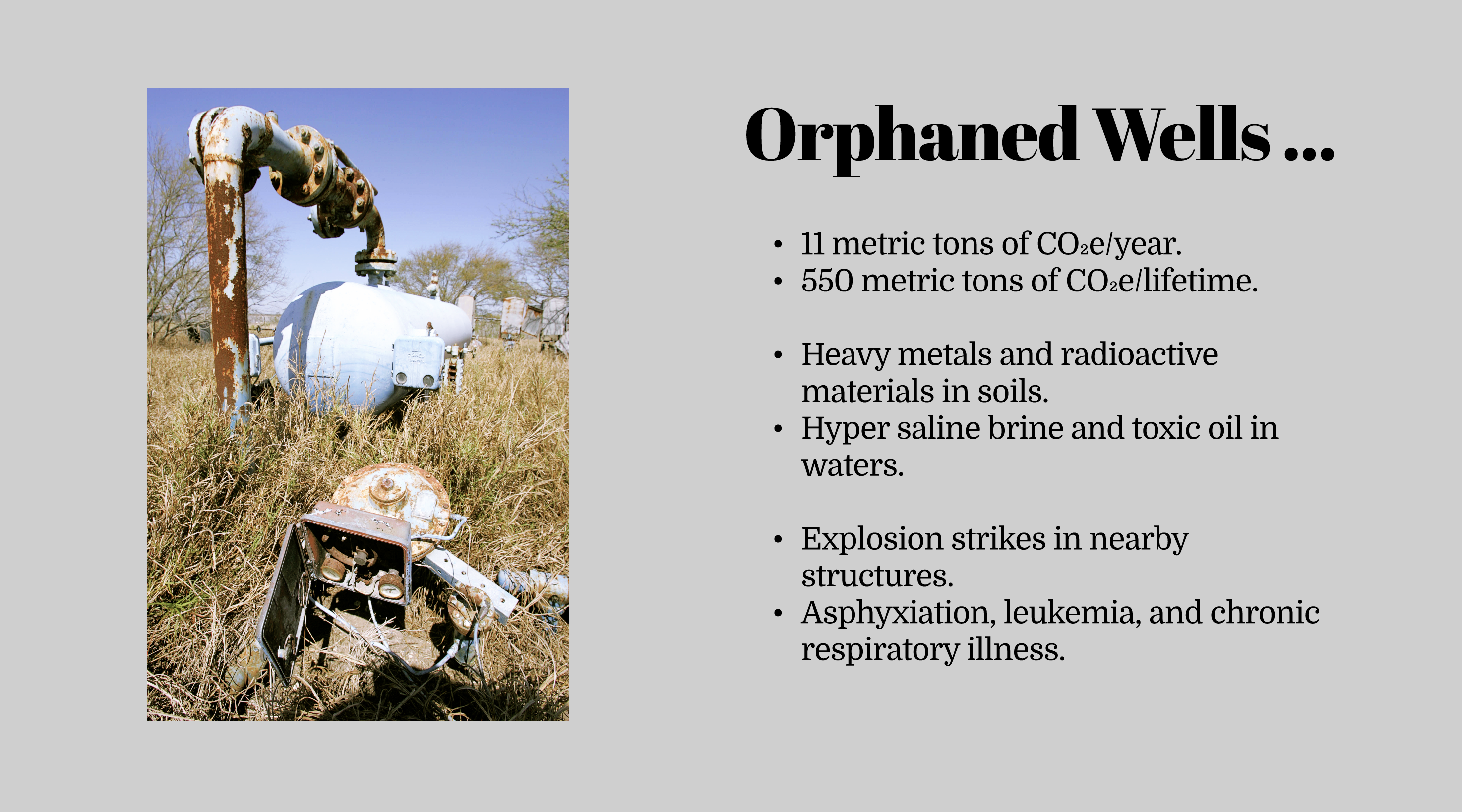
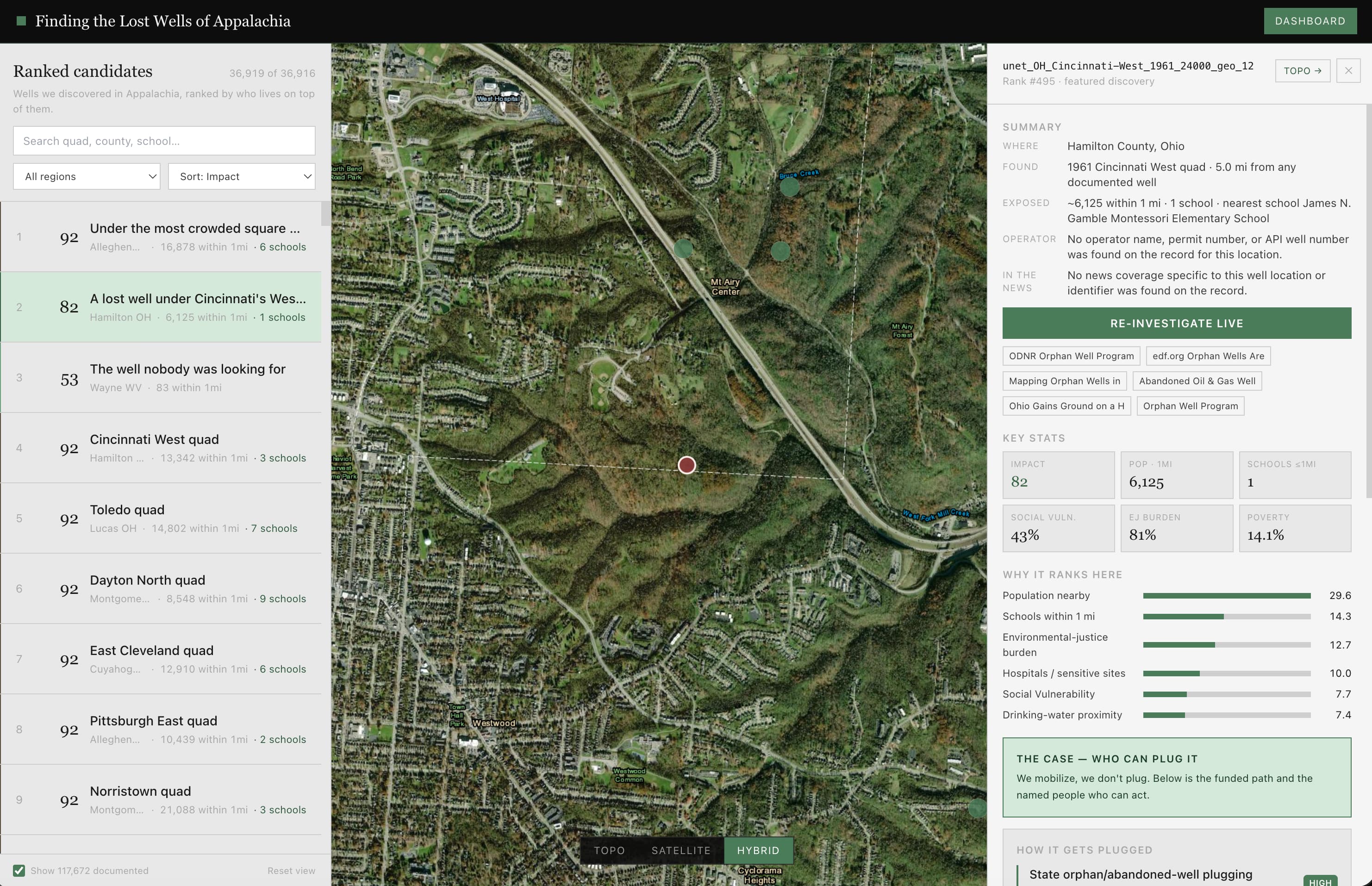
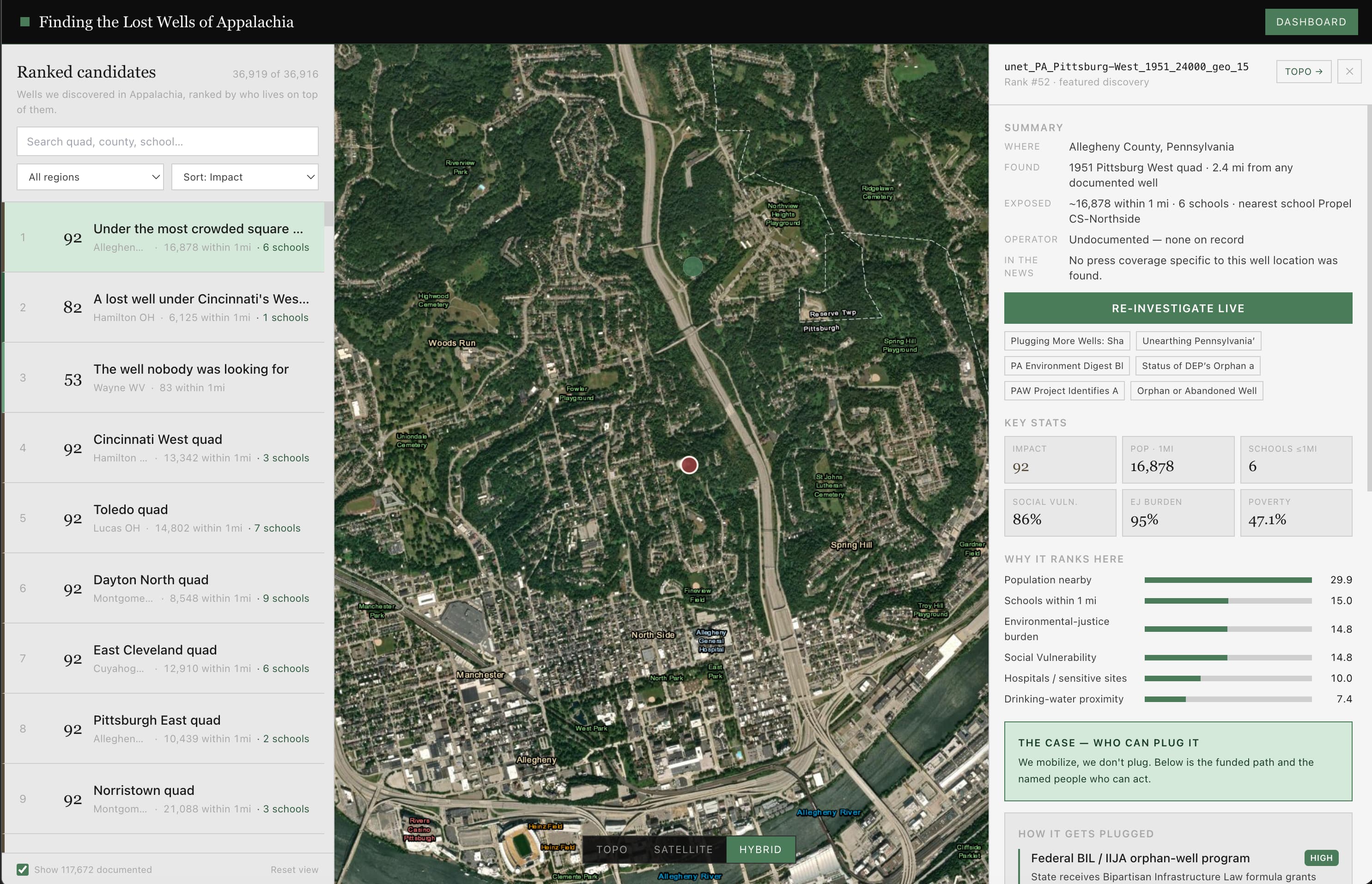
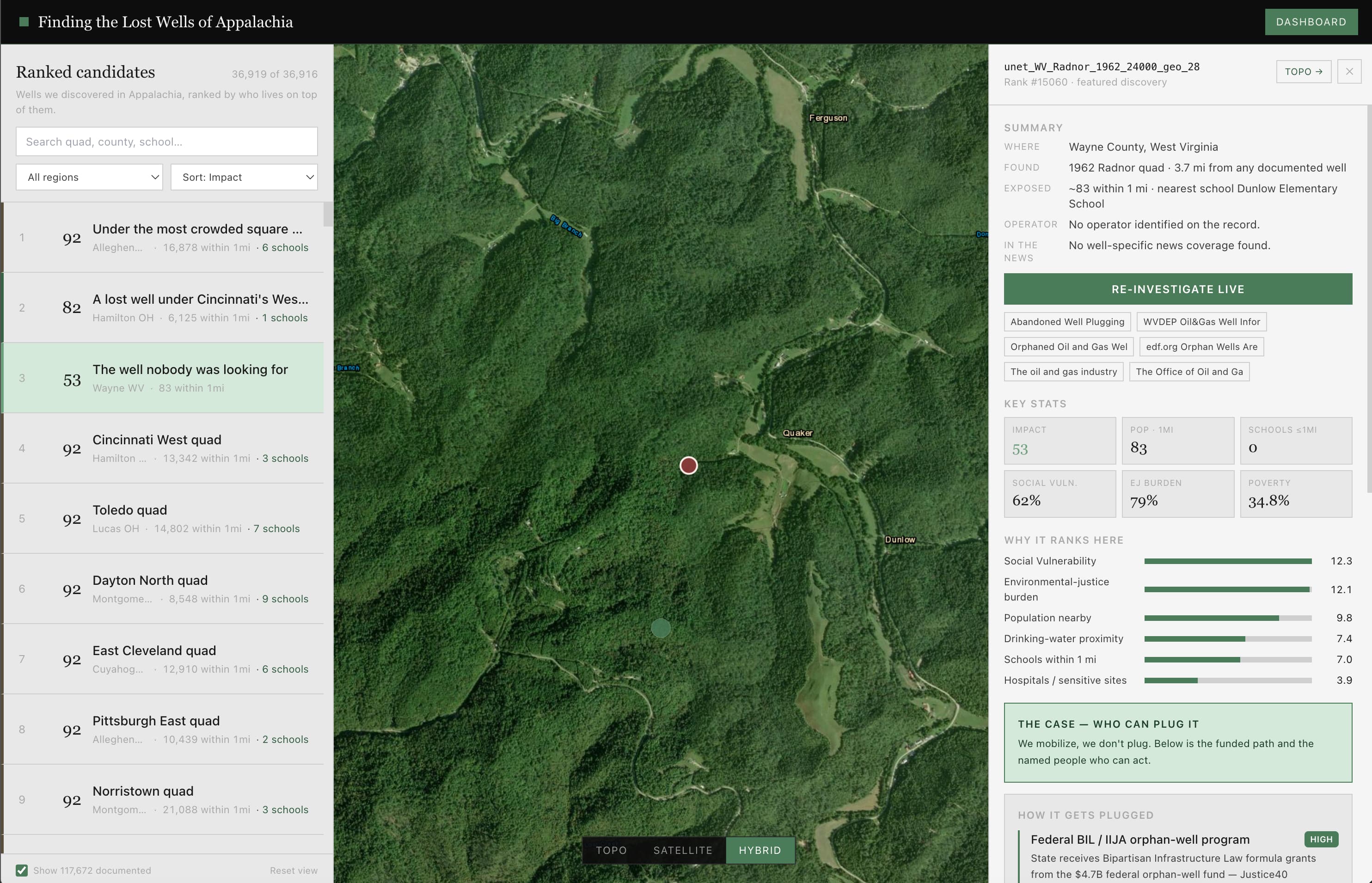
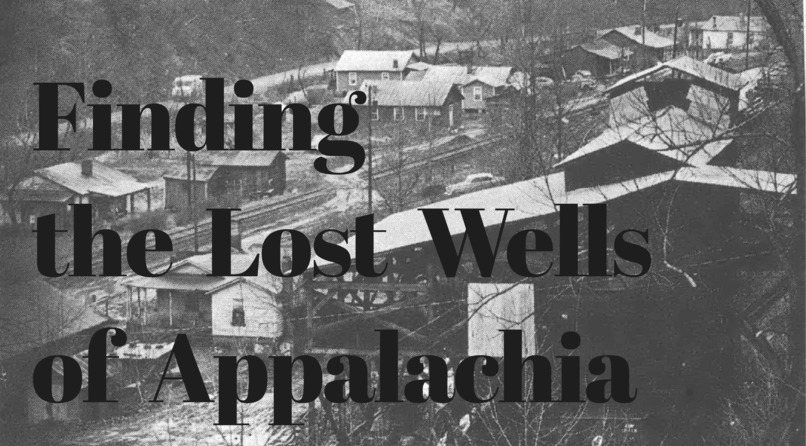
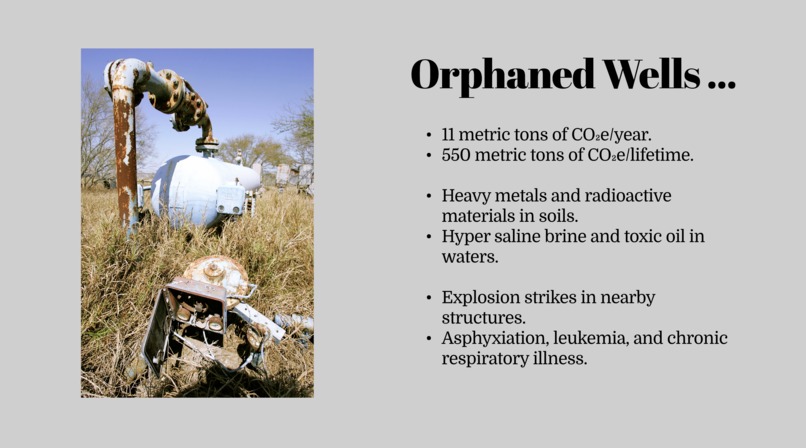
Somewhere in Appalachia, there is an oil well six feet from a family's drinking water, and another one under a school gym, but no one even knows they're there. Appalachia has a whopping estimated 800,000 undocumented orphaned wells, but only around 64,000 are on record. The forgotten ones leak methane into the air and benzene into the water of the people living on top of them, completely uncounted. What got us was the cruel irony: there is $4.7 billion in federal money waiting to plug these wells. The single thing standing in the way is that nobody knows where the wells are. We built the Lost Wells project to close that gap.
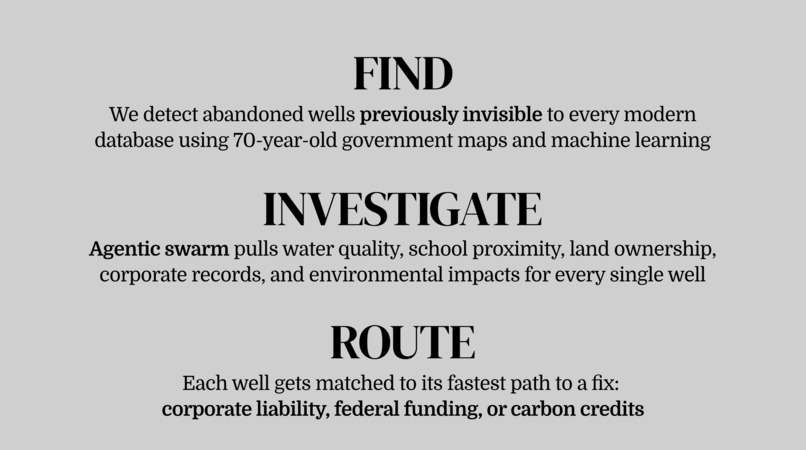
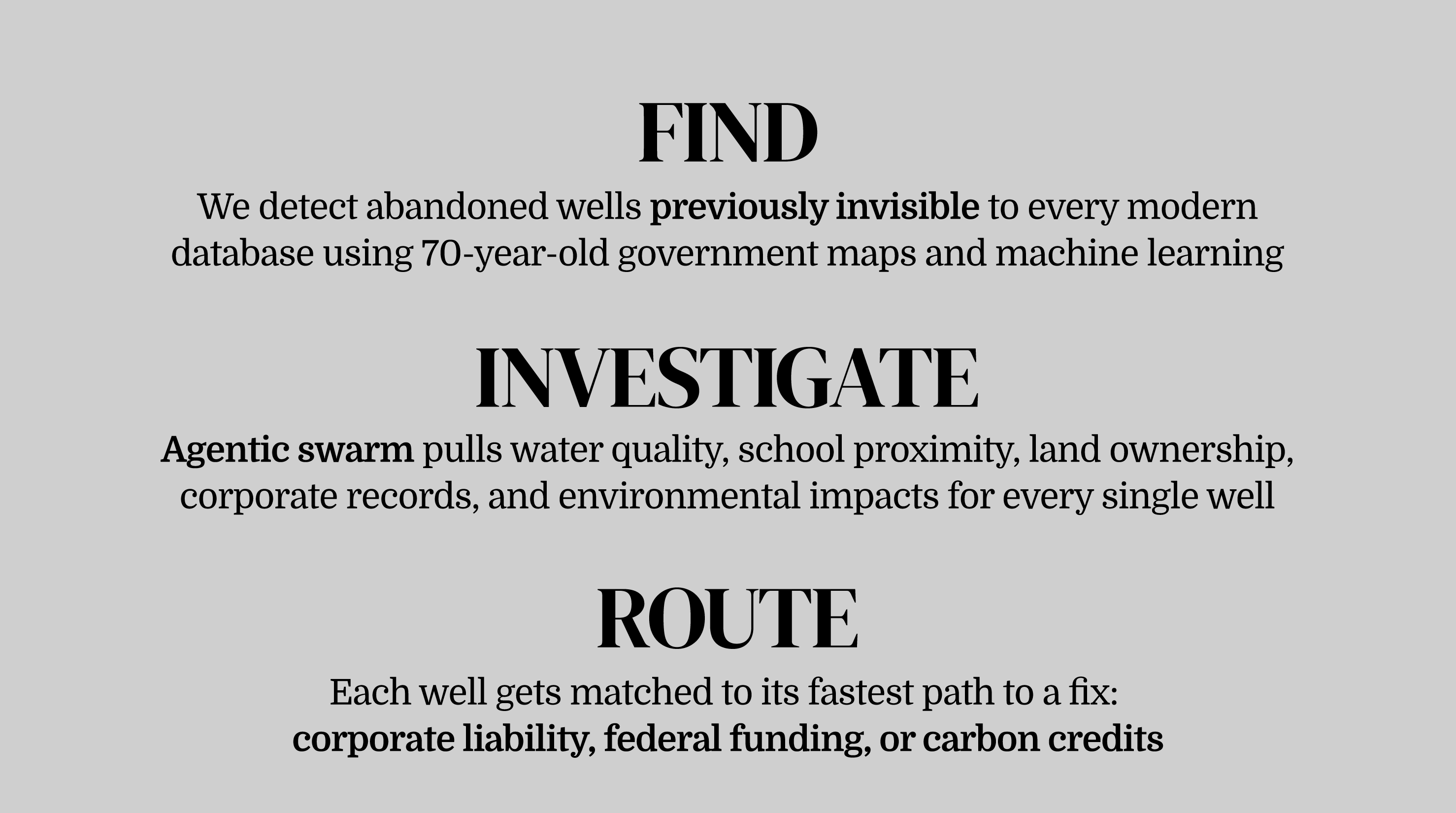
This project works in 3 sections:
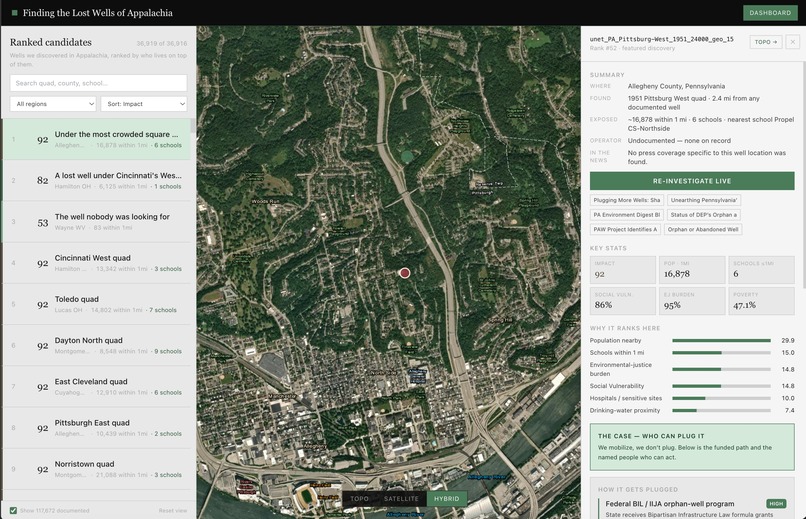
- DISCOVERY: Discovering ~40,000 never before found wells in Appalachia
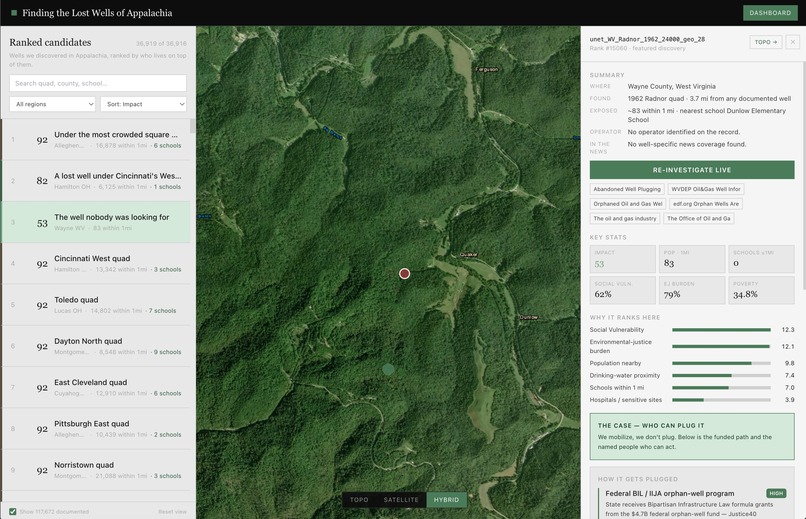
- INVESTIGATION: Cross referencing each well with statistics like proximity to residences and water sources
- ROUTING: Creating the best path towards plugging, from applying for a federal program to submitting a work order to a nearby contractor.
The new wells that were discovered in Appalachia came from a fine-tuned inference run of the UNET model that was developed by Lawrence Berkeley National Lab. This ran overnight on our Google Colab accounts on T4 GPUs.
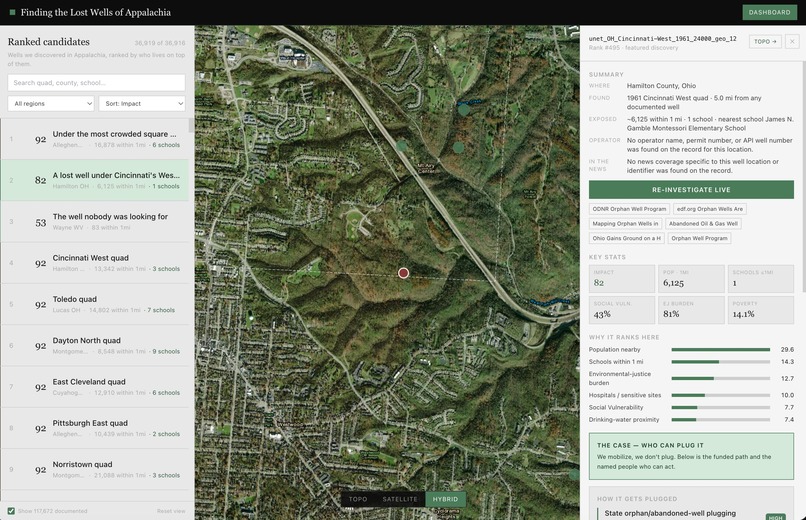
We get secondary data from quantitative sources like water quality, environmental impact, and if wells are near schools/residences/hospitals.
We setup an algorithm that weights all these factors and ranks all the wells. We filter by this ranking and choose the most problematic wells to investigate further (subset due to time and money issues).
On this subset of wells, we investigate who owns the land they sit on through pinging an ArcGIS API (that is annoyingly rate limited). After that we unleash our custom agent swarm to research as much as possible on each well, finding things like who mined the original hole, who has the rights to plug it up, what is the red tape, etc.
Once this is done, we have created a whole narrative around each well, from the impact it has to its surroundings to its history and lore. We leverage this story to plug the hole in one of three main ways:
- Apply/submit the well to a federal or state funded plugging program.
- Incentivize the plug with carbon credits
- Submit a work order to a nearby contractor that can be funded by local programs or your local politicians (which our platform finds for you).
There is around 1 billion dollars available to plug wells in America right now, with another few billion coming in the next decade. The resources are here, but someone needs to bridge the gap. That's where we come in.
Built With
- browserbase
- claude
- codex
- gemini
- geopandas
- langraph
- maplibre
- next.js
- pydantic
- pytest
- python
- sqlite
- typescript


Log in or sign up for Devpost to join the conversation.