-
 GIF
GIF
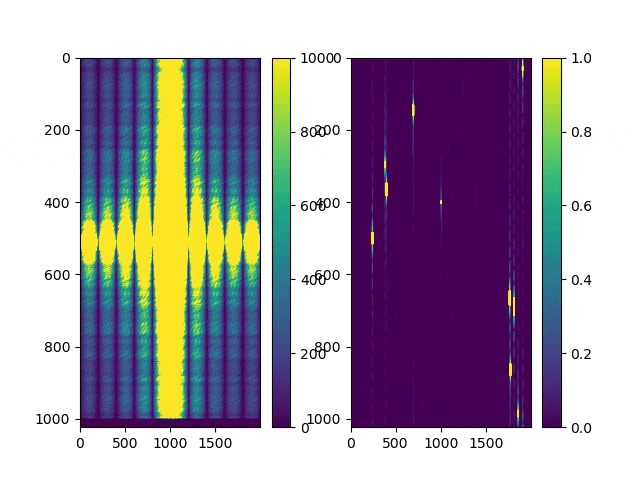
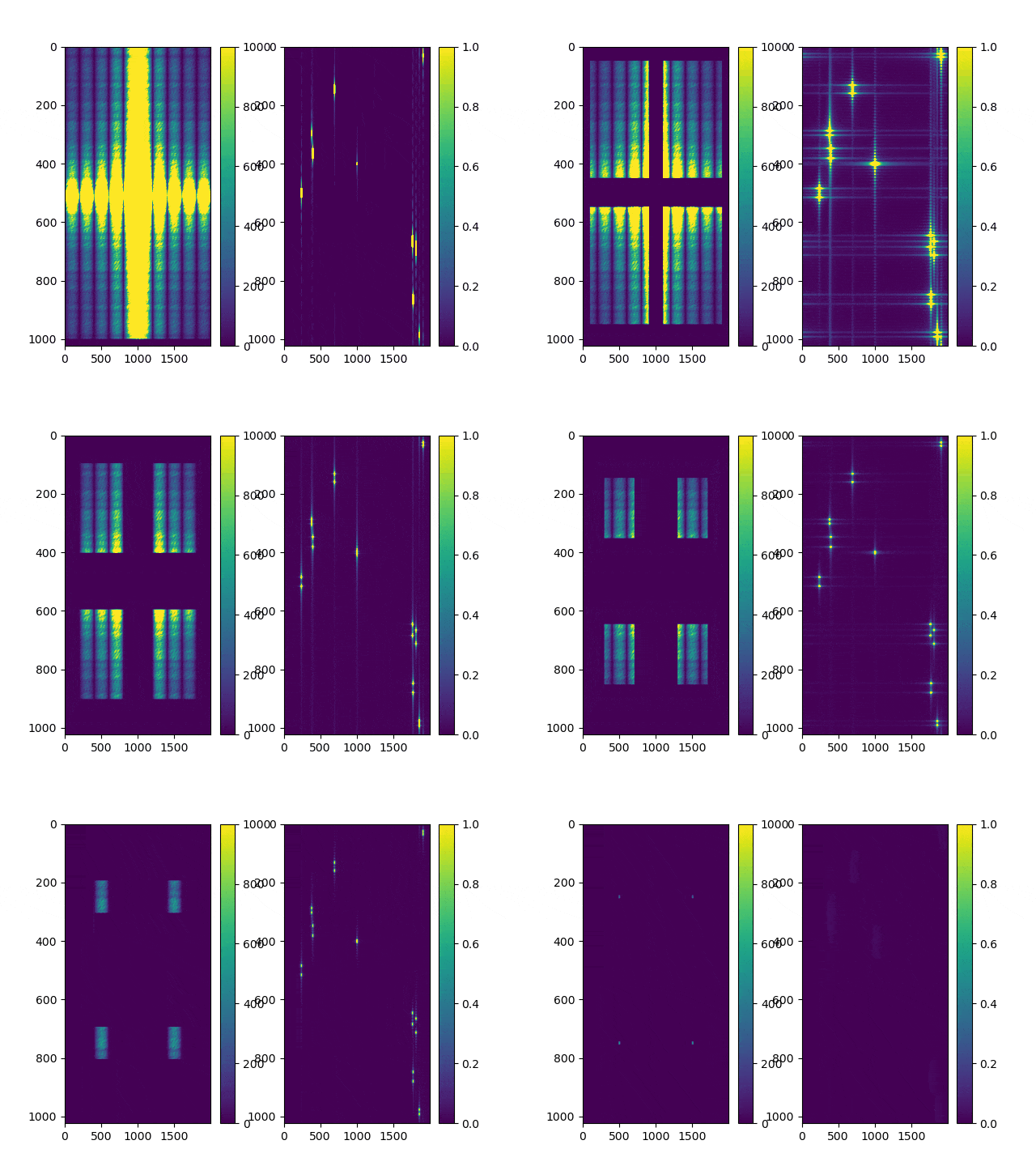
Pure radio frequency interference simulation. Left panel in Fourier space, right panel in map space. Increasing mask decreases RFI signal.
-
 GIF
GIF
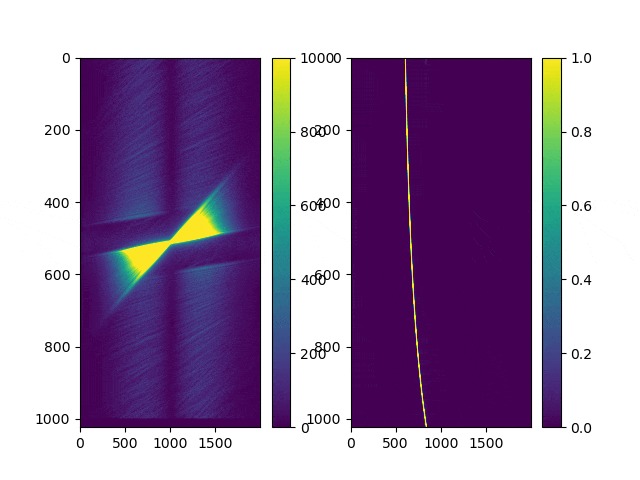
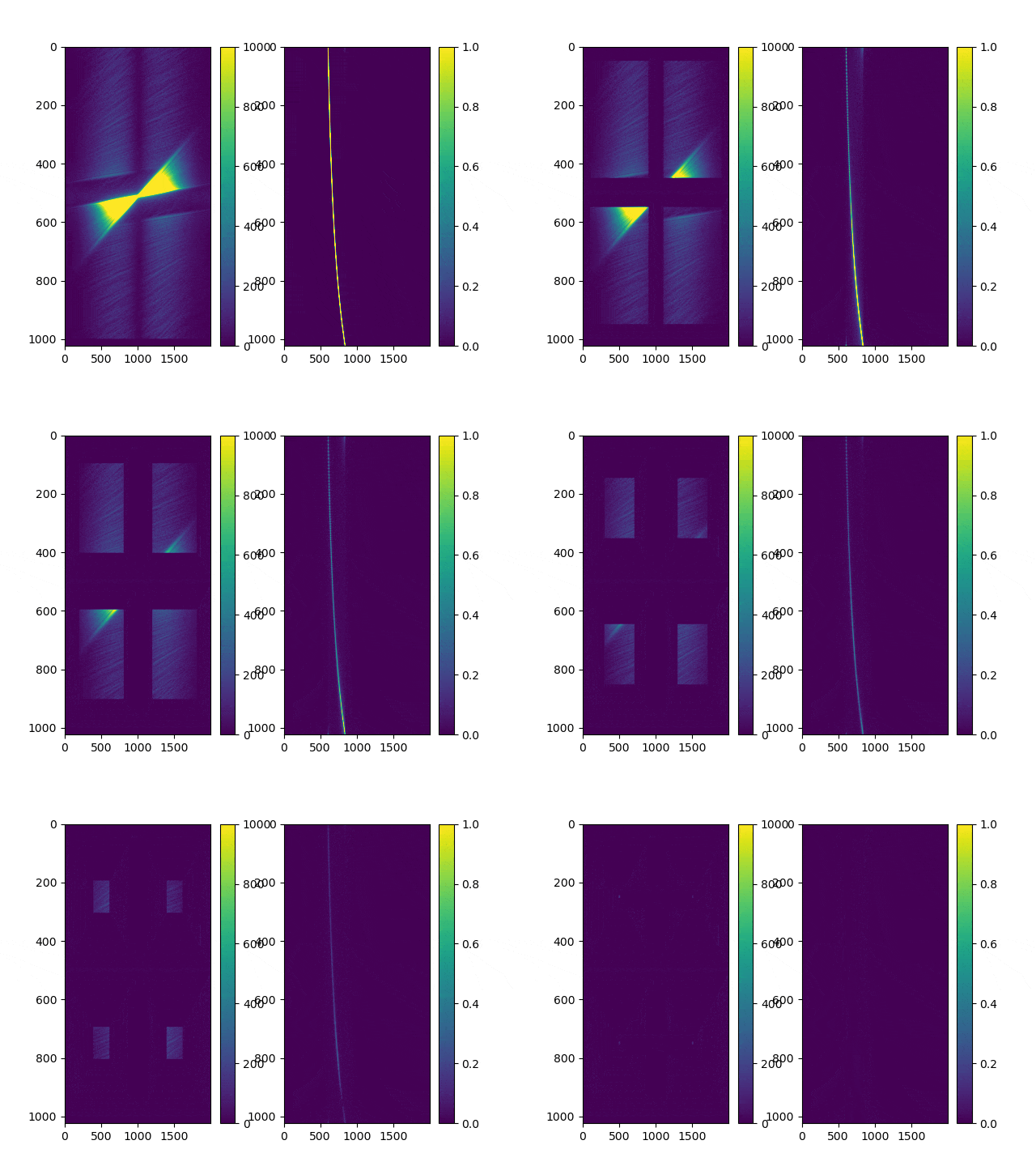
Pure fast radio burst simulation. Left panel in Fourier space shows the signal we want to retain during masking.
-
 GIF
GIF
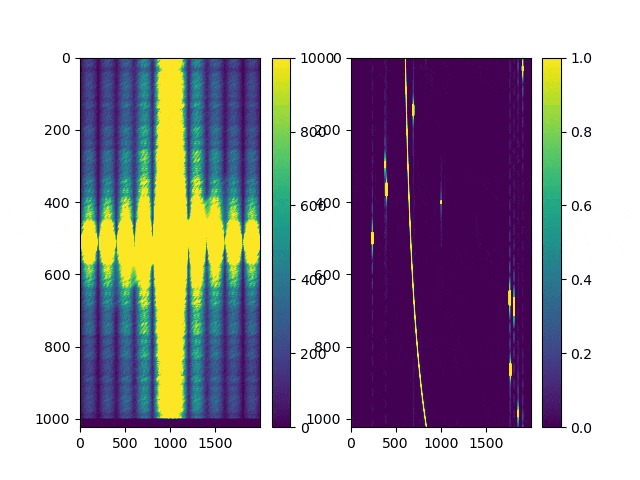
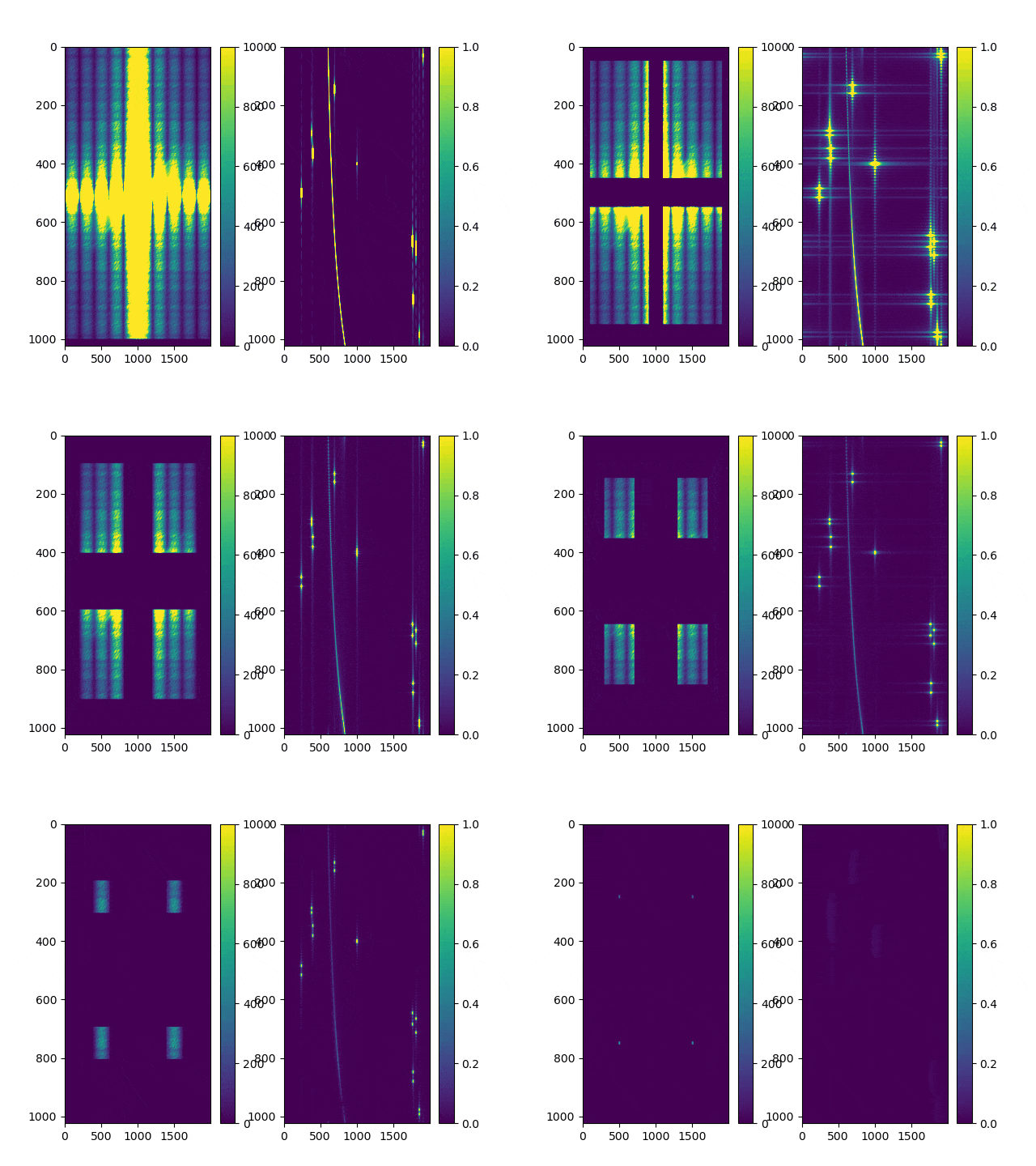
Fast radio burst and RFI signal, increasing masking increases the signal of the FRB compared the the RFI, and reduces the noise.
-
 GIF
GIF
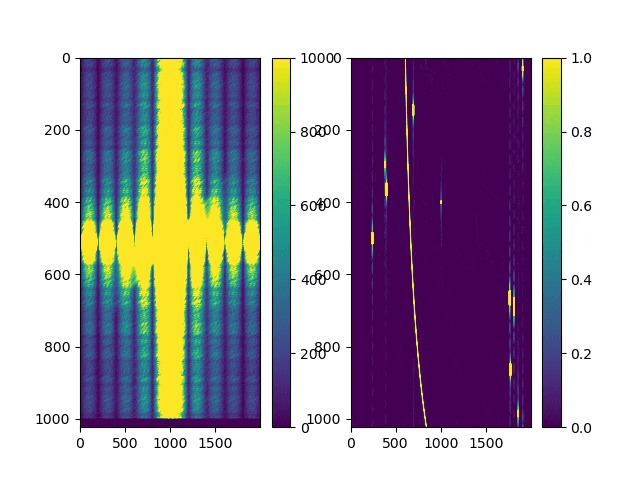
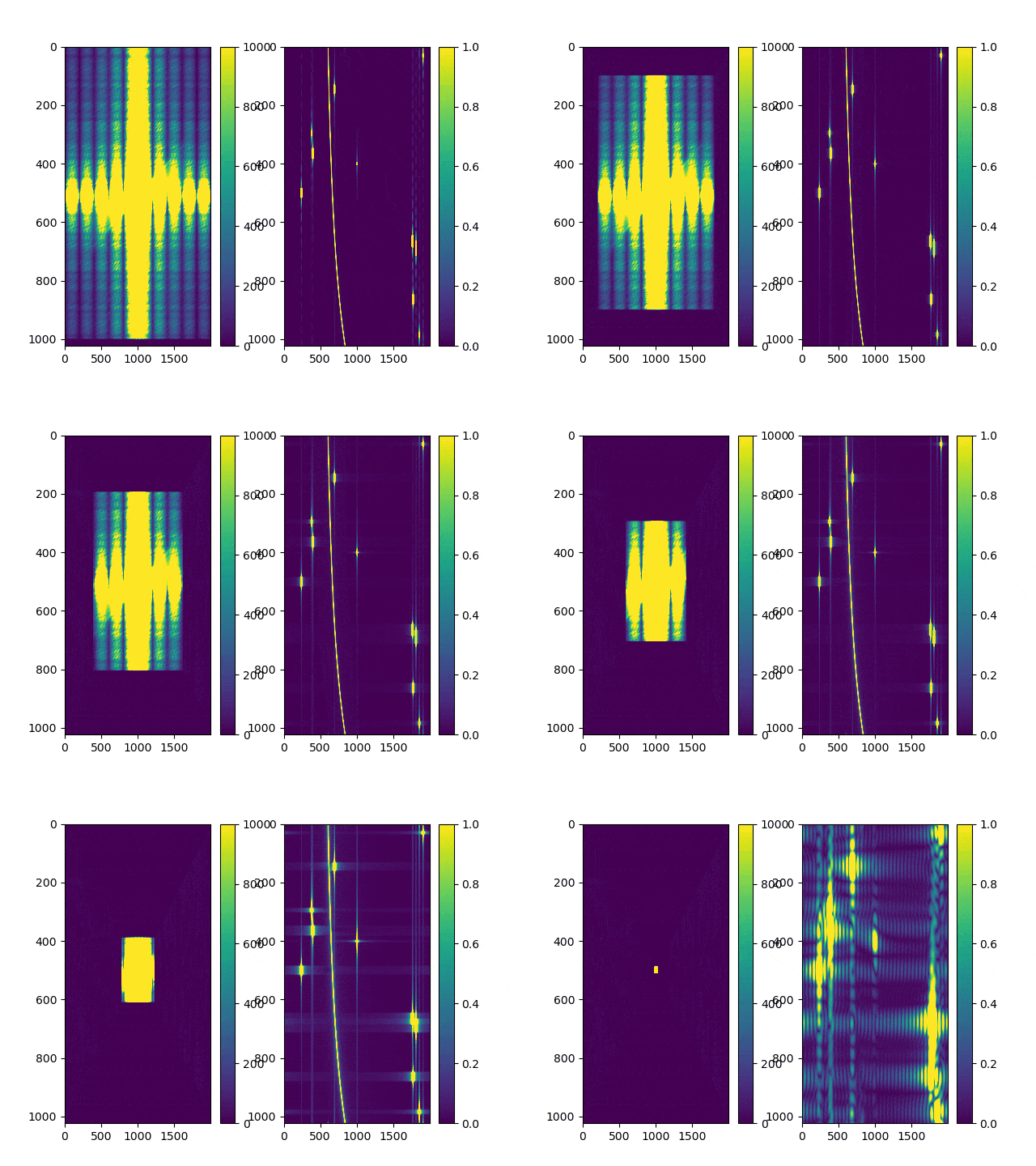
Similar to figure 4 with different masking method. Different masking routines can optimize cutting RFI while keeping signal.
-
 GIF
GIF
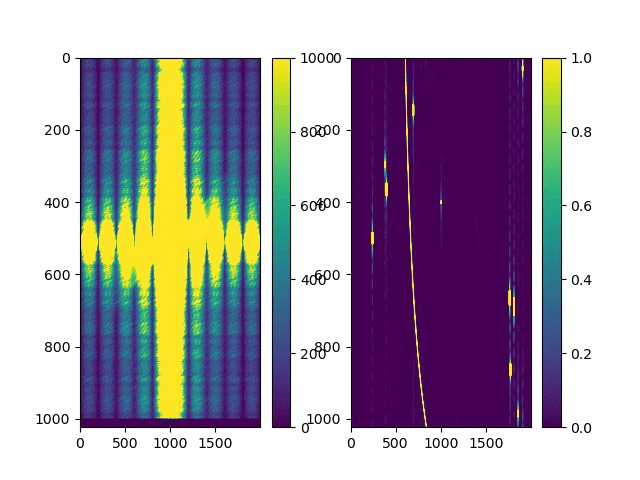
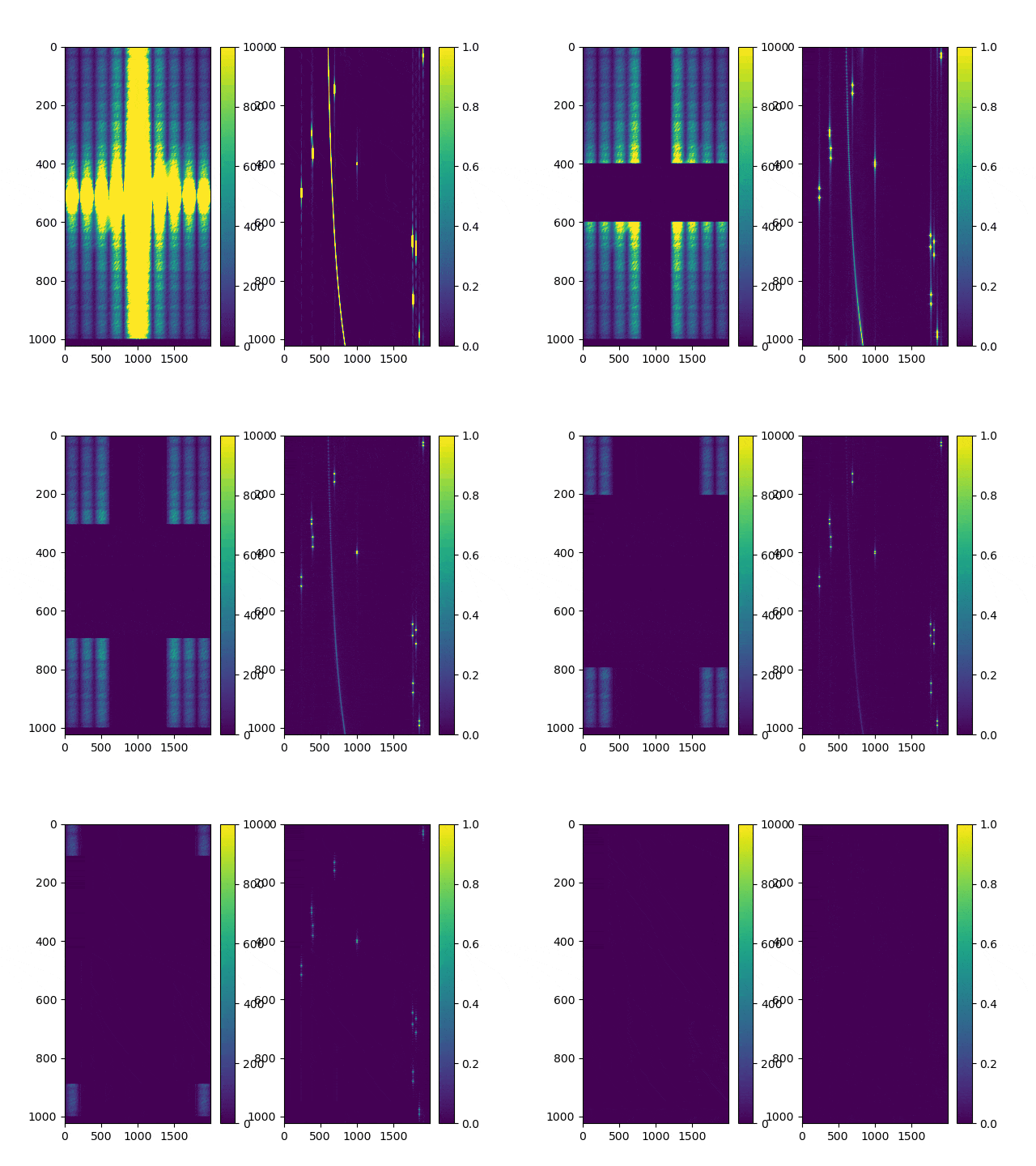
Same as Figure 5 with a mask increasing from the outside. Other more optimal masks could be designed in the future.
-
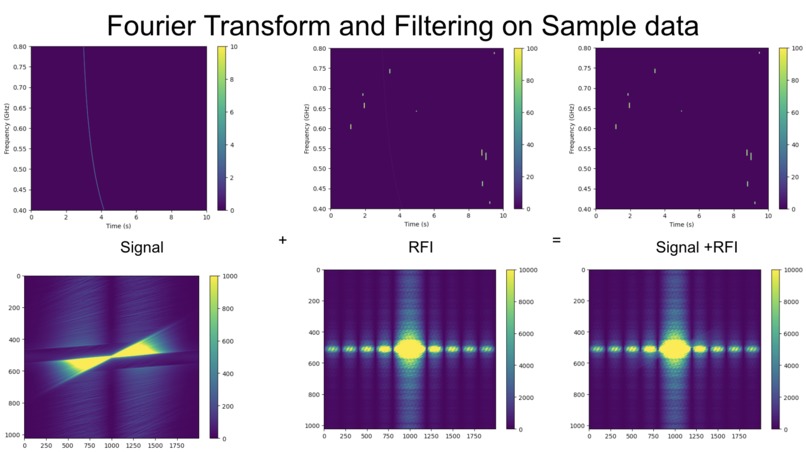
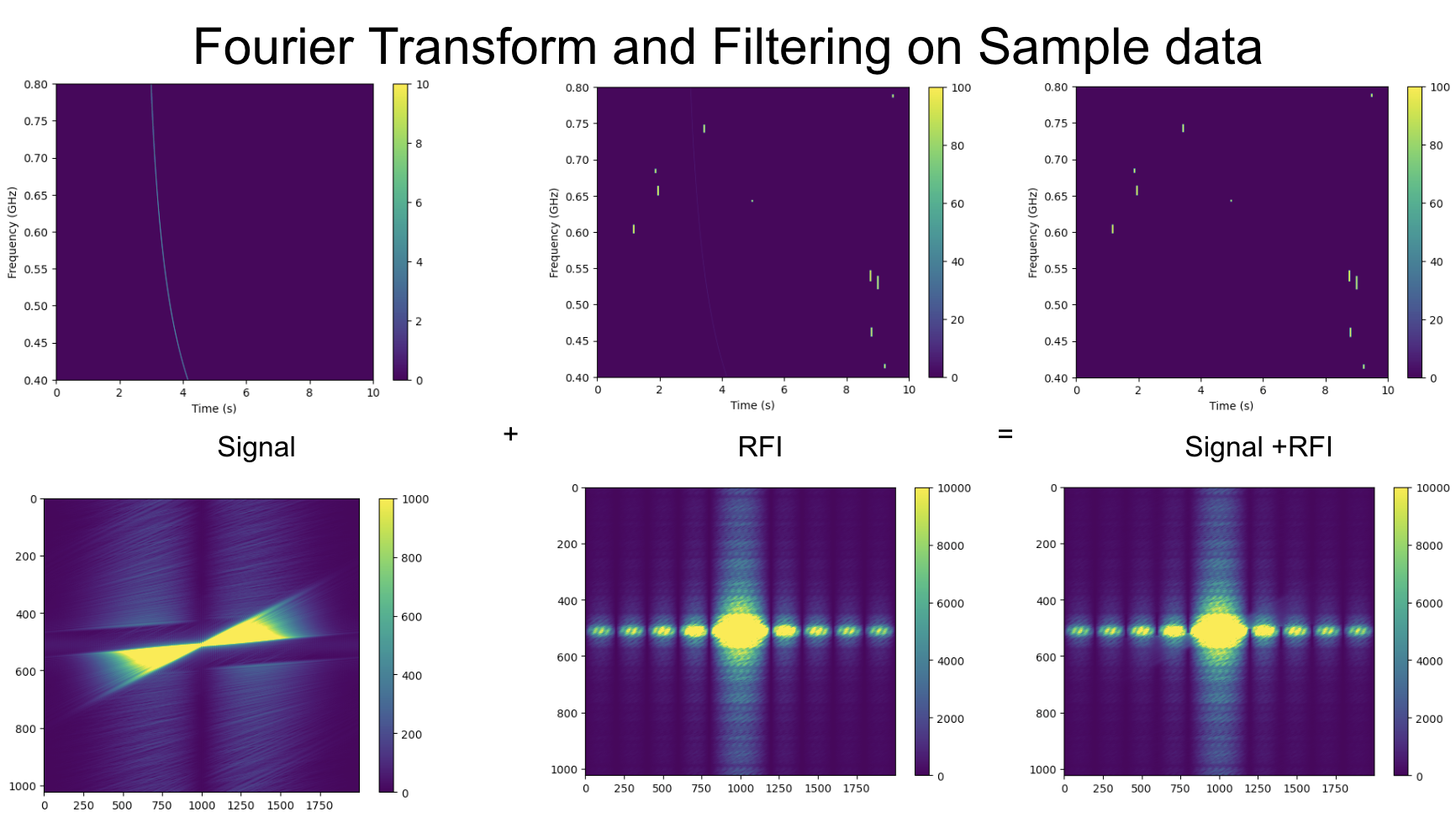
Top panels show data, bottom show Fourier transform of the data. Note that RFI completely hides the signal before any masking.
-
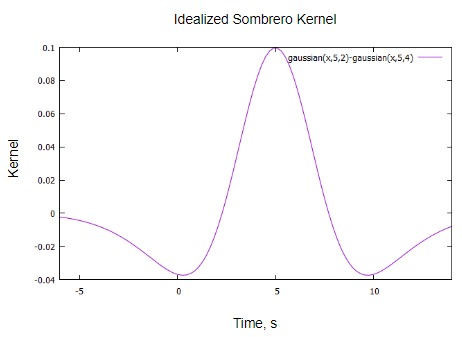
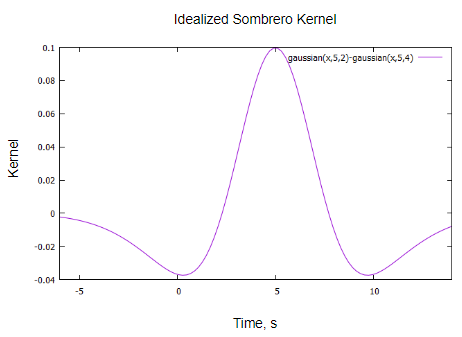
The sombrero kernel integrates to zero, to avoid biasing the fitting function towards high-power regions.
-
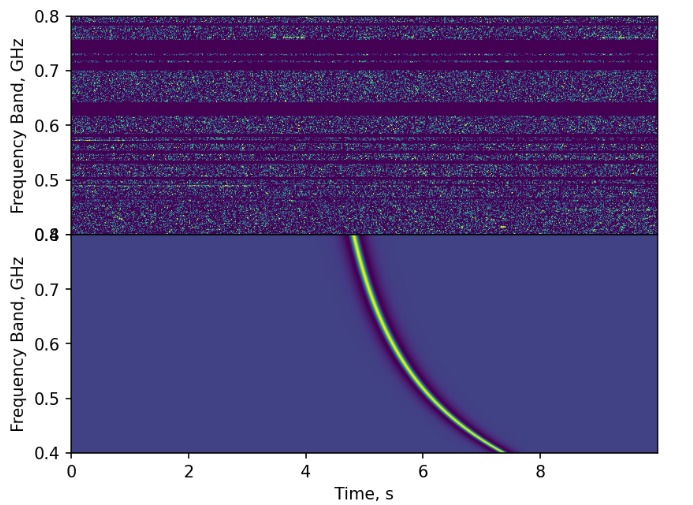
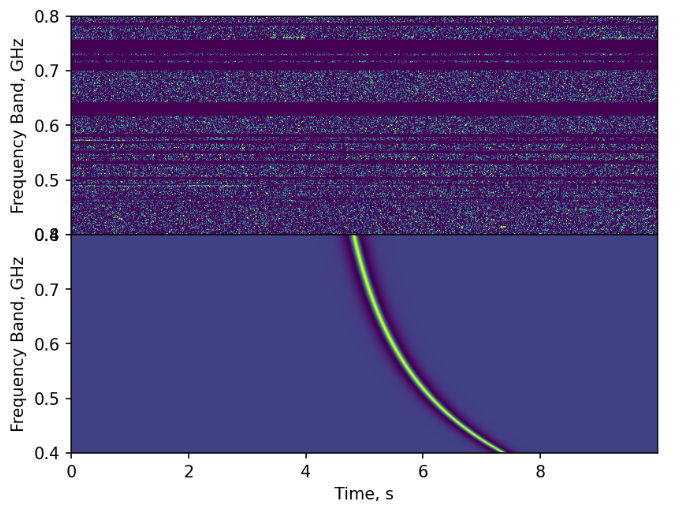
Using the sombrero kernel to extract a weak FRB from noisy real world data.
What it does
The code has 3 main parts. The first generates realistic FRB and RFI signals on which to test the data analysis techniques. The second uses the power of the Fourier transform to go to Fourier space to mask strong RFI and increase the signal-to-noise of the data. The third performs a convolution with the Sombrero kernel and uses the Gini algorithm to optimally detect the FRB signal even with residual RFI.
How we built it
We started by creating code to generate physically realistic FRB signals, as well as RFI added to the signal. We then explored the data in Fourier space and realized that the RFI and data look very dissimilar in Fourier space, and that this might be useful as a means to mask and reduce the RFI signal. We spent some time researching image analysis techniques to find signals of a known shape.
Challenges we ran into
The Fourier transform was not as useful as we had hoped it would be, so we probably spent too much time trying to get the convolutions working in that space before moving on to working more in real space and using the Fourier space exclusively for the masking.
Accomplishments that we're proud of
We are very excited we were able to test our algorithm with success on real data (not just simulations) and get reasonable results! We think this shows a lot of promise for our algorithm.
What we learned
We learned a lot about image analysis and techniques for finding particular shapes in images. We were not aware of the Gini algorithm, or this method before starting this project.
What's next for Finding Radical Blasts (FRBs)
We want to generate more optimal masks, and potentially add a machine learning component to the Gini/Sombrero kernel, to better optimize the algorithm by training on currently categorized FRBs. Currently, we use an ad-hoc weighting combining both the fit quality (evaluated using an inner product) and the Gini coefficient to determine the optimal FRB fit. We could optimize the weight put on both of these indicators by training on synthetic data. An optimized version of this method could eventually be implemented in a CHIME pipeline.


Log in or sign up for Devpost to join the conversation.