Inspiration
We built Finder to solve a real-world problem: lost items often sit in found inventories with no way to match them to their owners. Traditional lost & found systems rely on manual descriptions, which are error-prone and slow.
We wanted to create a solution that:
- Uses AI to automatically extract attributes from photos
- Protects privacy by keeping found items hidden from the public
- Verifies ownership through security questions
- Helps users find nearby pickup locations
The result is an AI-powered matching system that intelligently connects lost items with found inventory while maintaining security and privacy.
What it does
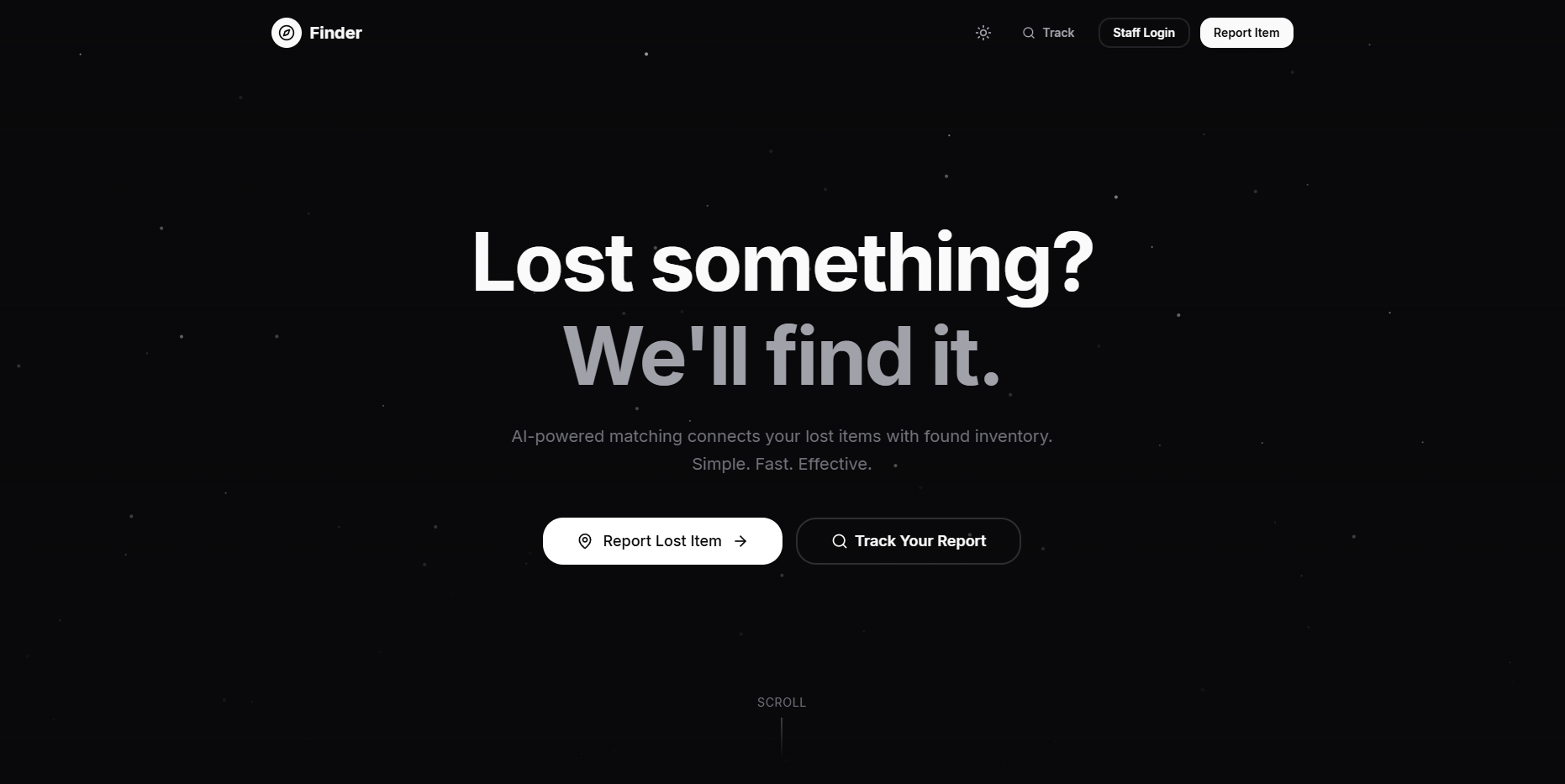
Finder is an AI-powered lost & found platform that matches lost items with found inventory through intelligent photo analysis. Here's how it works:
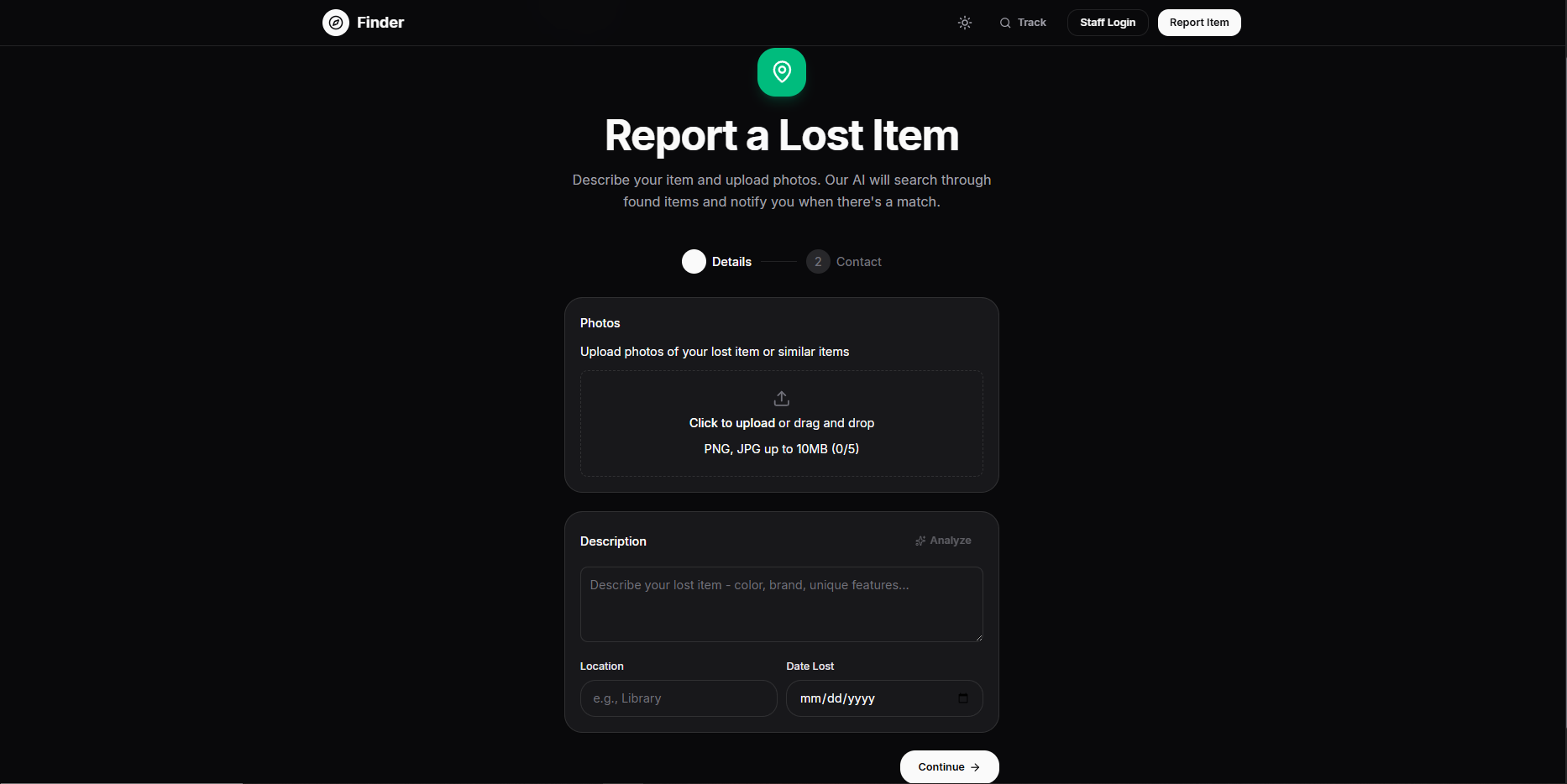
Users report lost items: Upload photos and describe what they lost. Our AI automatically extracts attributes (type, brand, color, features, etc.)
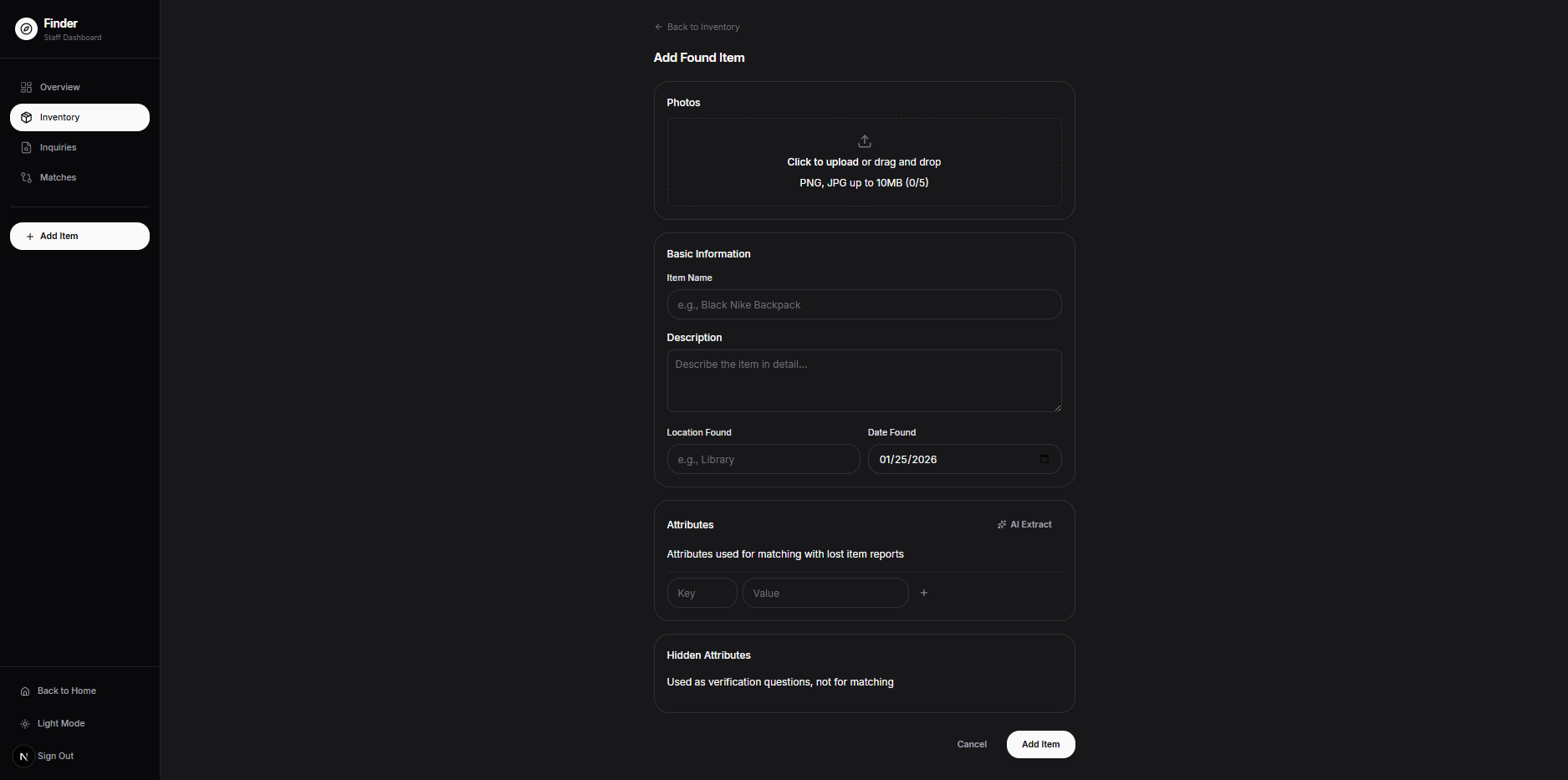
Staff manage found items: Add items to a hidden inventory. The AI extracts the same attributes for matching.
Intelligent matching: Our weighted algorithm compares attributes and finds potential matches with confidence scores.
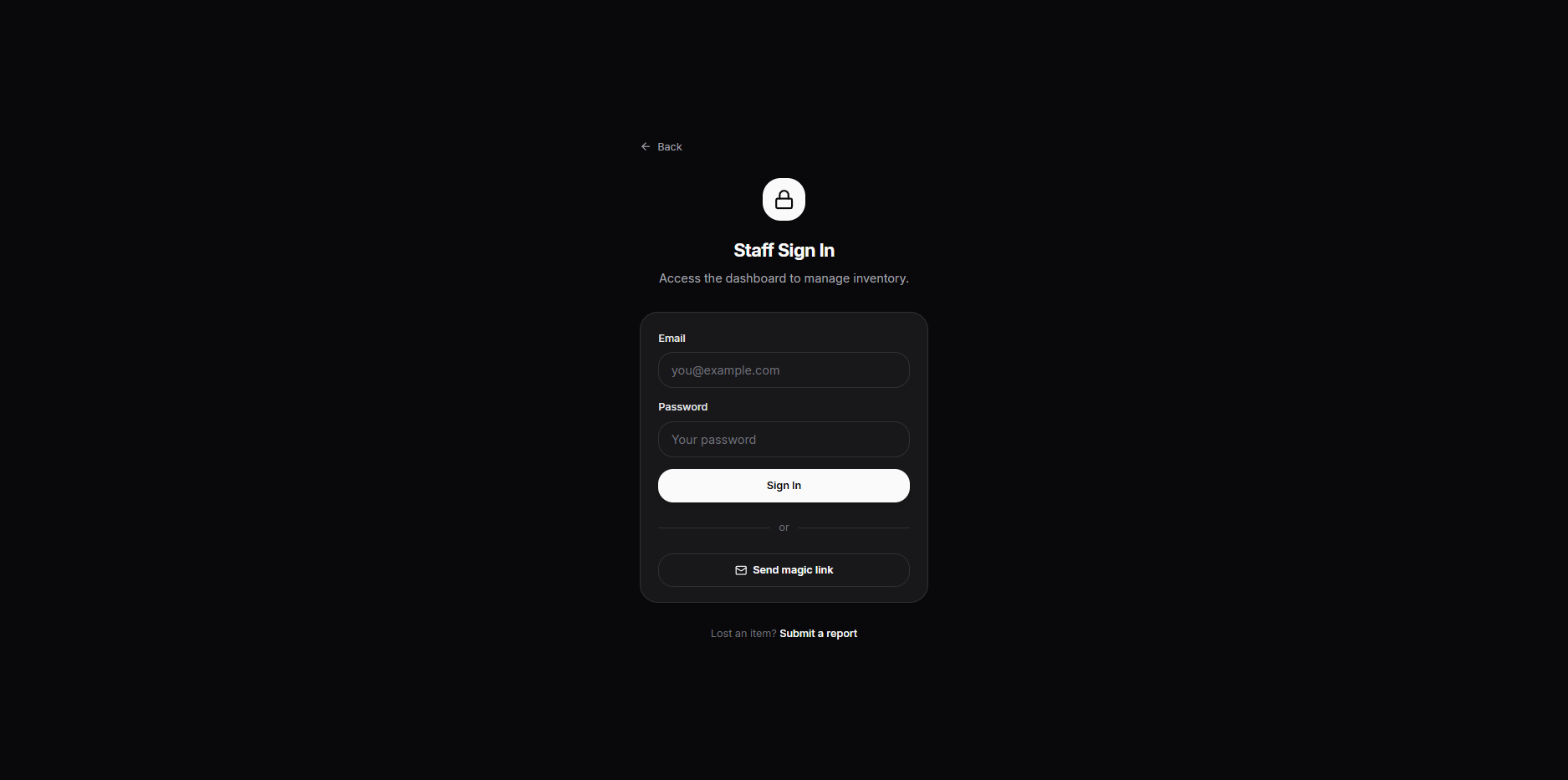
Verification system: When a match is found, users answer security questions based on hidden attributes to prove ownership.
Location finder: Users can find nearby Walmart and Canada Post pickup locations using Google Maps integration.
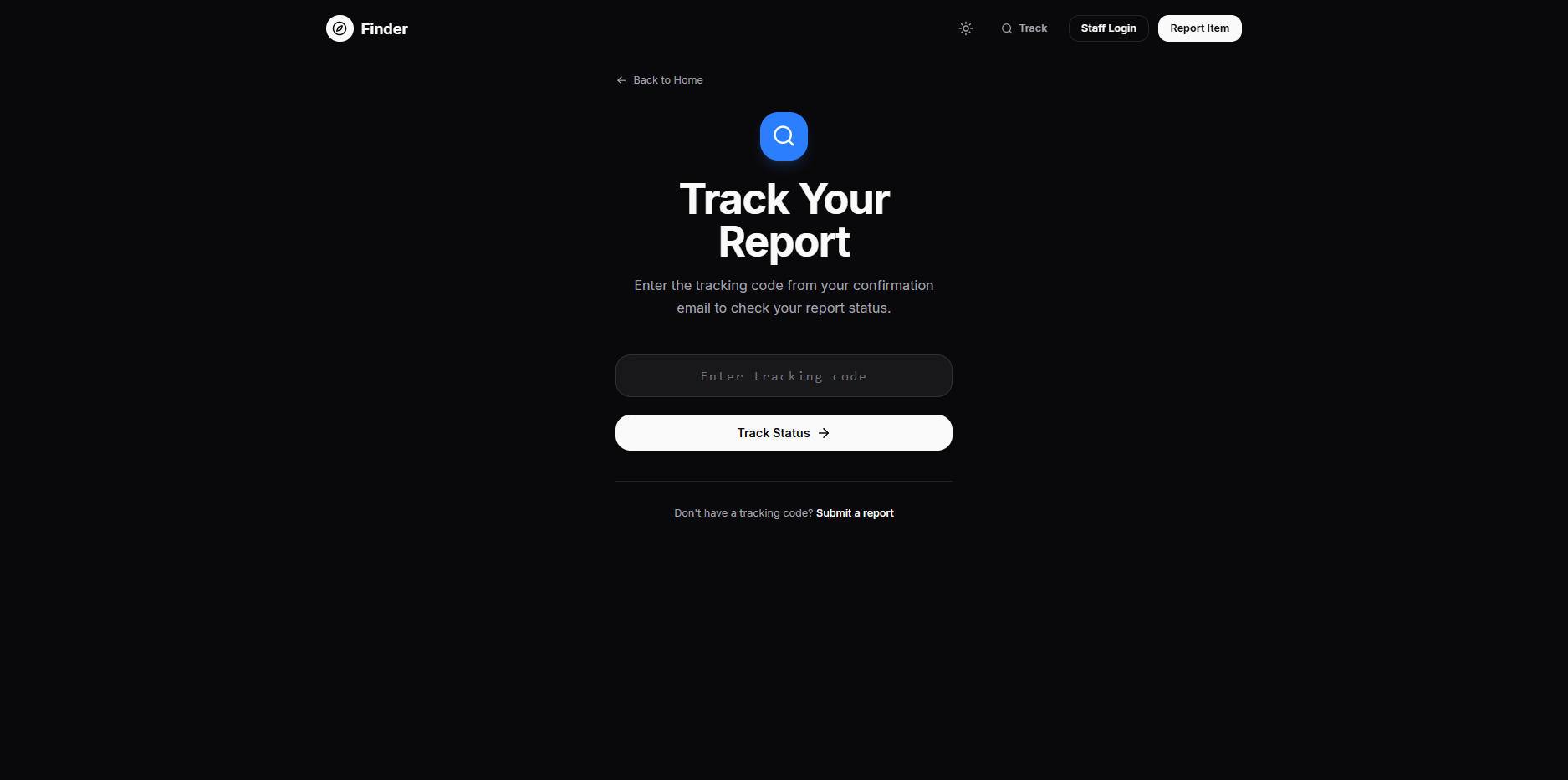
Real-time tracking: Users receive tracking tokens to monitor their inquiry status throughout the process.
The system ensures privacy by keeping found items hidden from the public and only showing matches to verified staff members.
How we built it
Tech Stack:
- Frontend: Next.js 16 with React 19, TypeScript, and Tailwind CSS 4
- Backend: Next.js API routes with server-side logic
- Database: Supabase PostgreSQL with Row Level Security
- Storage: Supabase Storage for images
- AI: OpenRouter API (Gemini 2.0 Flash, Claude Sonnet 4.5)
- Maps: Google Maps JavaScript API with Places API
- Email: Resend for tracking code delivery
Key Components:
AI Attribute Extraction: Integrated OpenRouter to analyze uploaded images and extract structured attributes automatically
Weighted Matching Algorithm: Developed a scoring system:
- Type: 25% (must match)
- Brand: 15%
- Color: 15%
- Distinguishing features: 20%
- Contents: 10%
- Size/Material: 15%
Verification Workflow: Built a fraud prevention system using hidden attribute questions
Location Services: Integrated Google Maps Places API to find real Walmart and Canada Post locations based on user's current location
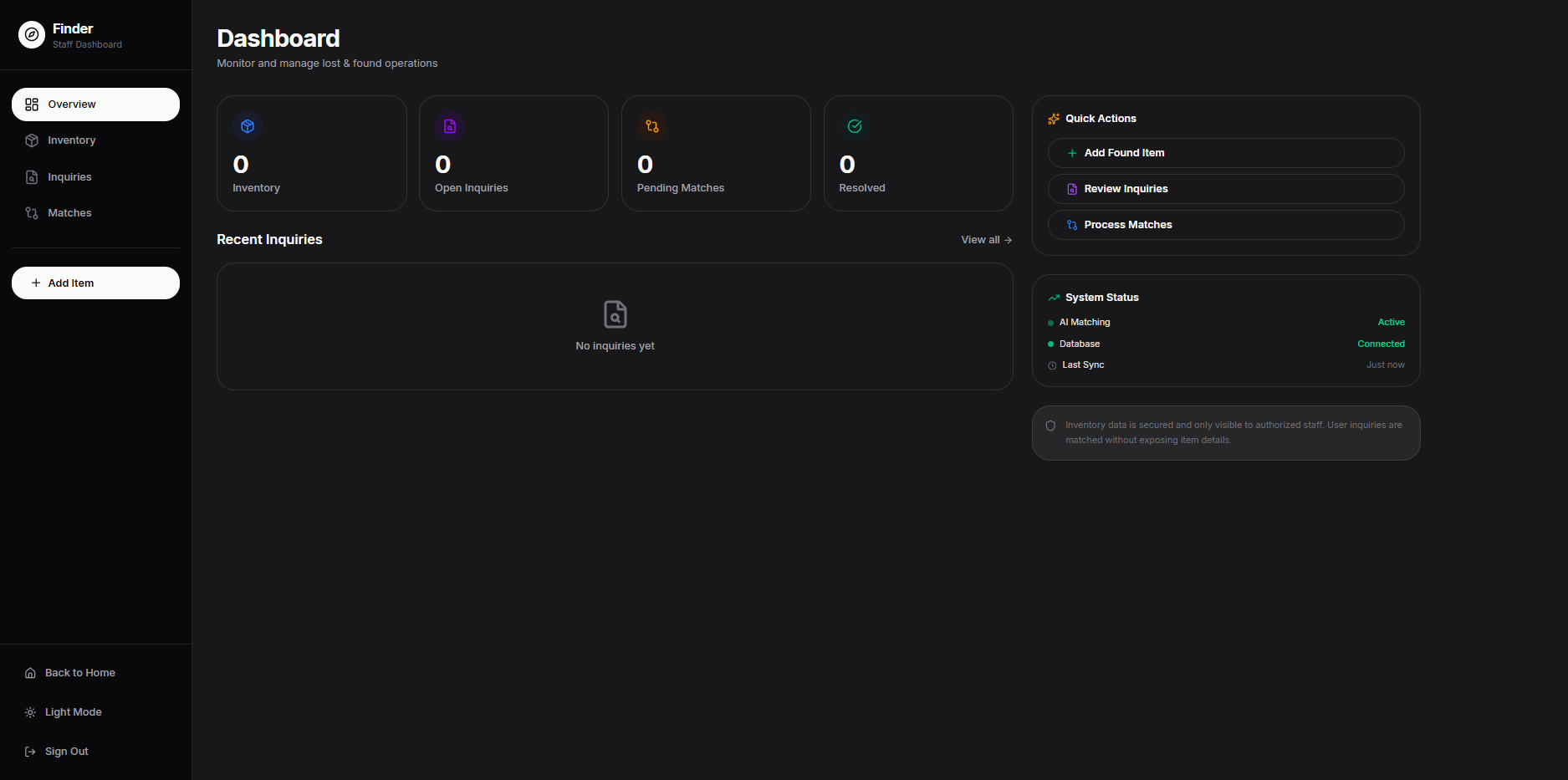
Staff Dashboard: Created a comprehensive admin interface for managing inventory, reviewing matches, and approving claims
Real-time Updates: Implemented status tracking with email notifications
Challenges we ran into
AI Model Selection: Balancing cost, accuracy, and speed. We tested multiple models through OpenRouter and settled on Claude Sonnet 4.5 for accuracy, with Gemini 2.0 Flash as a free alternative
Image Processing: Handling various image formats, sizes, and qualities. We implemented client-side compression and server-side validation
Matching Accuracy: Fine-tuning the weighted algorithm to reduce false positives while catching true matches. We iterated on the scoring weights based on testing
Privacy vs Usability: Keeping found items hidden while allowing effective matching required careful design of the verification workflow
Google Maps Integration: Learning the Places API and handling location permissions, API key management, and fallback scenarios when the API isn't available
Real-time Updates: Ensuring the dashboard reflects new matches and status changes without constant refreshing
Accomplishments that we're proud of
Complete end-to-end system: Built a fully functional lost & found platform from scratch in 24 hours
AI integration: Successfully integrated multiple AI models through OpenRouter for accurate image analysis
Privacy-first design: Implemented a system that keeps found items hidden while still enabling effective matching
Beautiful UI: Created a modern, responsive interface with dark/light mode support and smooth animations
Location services: Integrated Google Maps with real-time location finding for Walmart and Canada Post locations
Weighted matching algorithm: Developed a sophisticated scoring system that balances multiple attributes for accurate matching
Fraud prevention: Built a verification system using hidden attribute questions to prevent false claims
Full-stack implementation: Successfully combined frontend, backend, database, AI, and third-party APIs into a cohesive system
What we learned
AI Vision Models: Working with OpenRouter to access multiple AI models (Gemini 2.0 Flash, Claude Sonnet 4.5) for image analysis and attribute extraction
Weighted Matching Algorithms: Designing a scoring system that prioritizes critical attributes while allowing flexibility
Privacy-First Design: Keeping found items hidden and using verification questions to prevent fraud
Google Maps Integration: Implementing location services with Places API to find real store locations
Next.js App Router: Building with server components, API routes, and client-side interactivity
Supabase: Managing authentication, database, and file storage all in one platform
API Integration: Working with multiple third-party services (OpenRouter, Google Maps, Resend) and handling API keys, rate limits, and error cases
Full-Stack Development: Combining frontend, backend, database, and external services into a cohesive application
What's next for Finder
Mobile app: Develop native iOS and Android apps for better mobile experience
SMS notifications: Add SMS alerts in addition to email notifications
Multi-language support: Expand to support multiple languages for international use
Advanced AI features: Implement image similarity search and better attribute extraction
Analytics dashboard: Add insights and statistics for staff to track matching success rates
Integration with more retailers: Expand location finder to include more pickup locations beyond Walmart and Canada Post
Machine learning improvements: Train custom models on lost & found data to improve matching accuracy
Community features: Allow users to report found items directly through the platform
Blockchain verification: Explore blockchain for immutable tracking of item ownership transfers
Built With
- api
- css
- framermotion
- maps
- next.js
- openrouter
- places
- postgresql
- react
- resend
- supabase
- tailwind
- typescript

Log in or sign up for Devpost to join the conversation.