Inspiration
As an animal lover who saw too many pets returned to shelters due to misalignment with adopters’ lives, I wanted to create a solution that goes beyond basic pet listings. I noticed adopters often struggle to find pets that fit their homes, schedules, and lifestyles—so I set out to build a platform that uses AI to make meaningful matches, not just surface random animals.
What it does
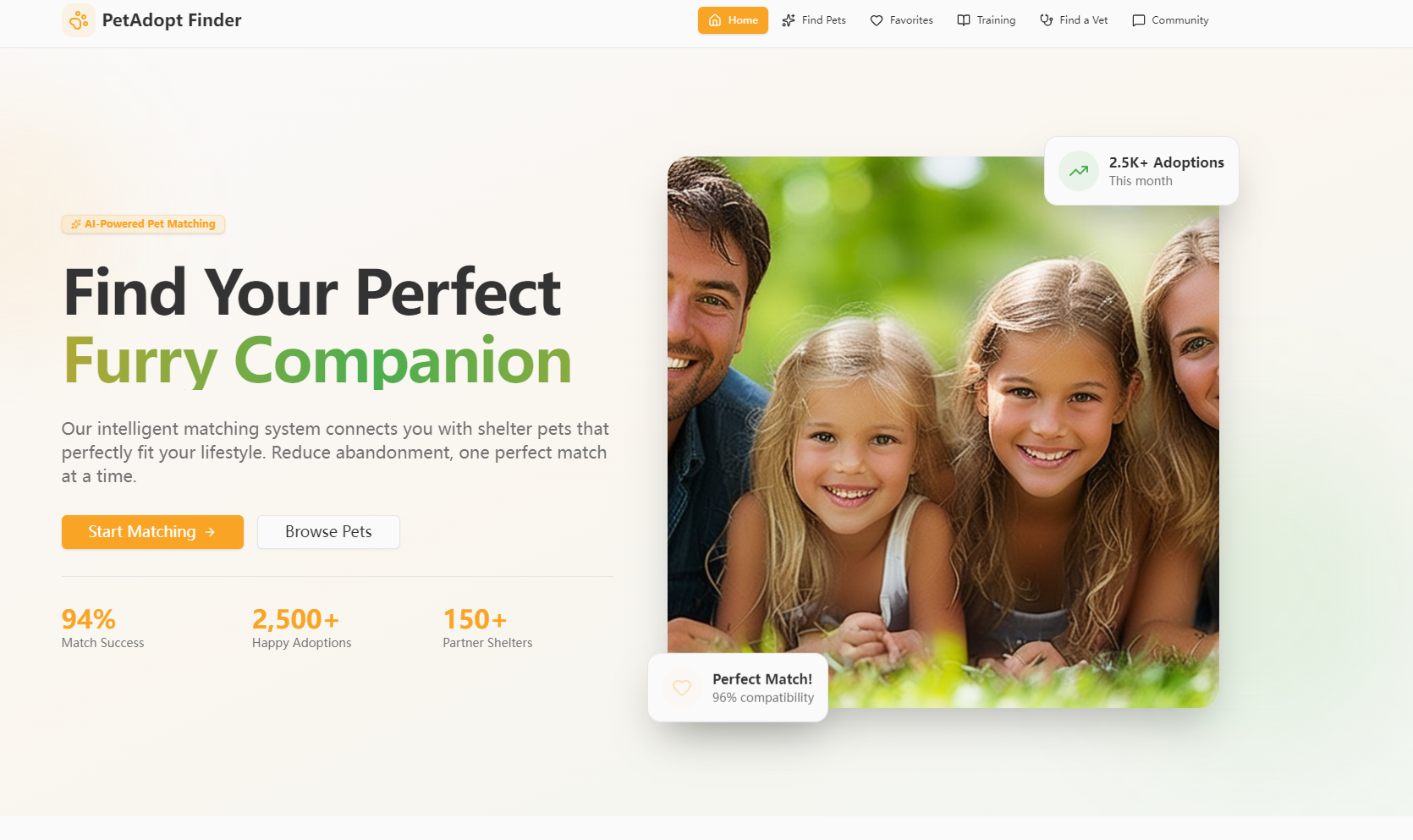
PetAdopt Finder uses AI to match potential adopters with local shelter pets based on lifestyle, housing, activity level, and household needs. It offers remote video meet-and-greets, region-specific adoption guidance (tailored to U.S. states/EU countries), and post-adoption support like vet finders and training resources. Shelters get a SaaS dashboard to manage profiles, applications, and subscriptions.
How we built it
We started by mapping user journeys for adopters (singles, families, retirees) and shelters, then built a React frontend for the user app and Node.js backend for the SaaS dashboard. We integrated geolocation APIs for distance filtering, video APIs for live calls, and PostgreSQL to store pet/shelter/user data. AWS hosted the platform, with Stripe for shelter subscription billing. We prioritized ADA/WCAG 2.1 AA accessibility and GDPR/CCPA compliance.
Challenges we ran into
Calibrating the AI match algorithm to balance user preferences with pet needs took weeks of testing—ensuring match scores (0–100%) were accurate and transparent. We also struggled with region-specific adoption rule automation (U.S. vs. EU) and syncing video call scheduling with shelter operating hours without conflicts.
Accomplishments that we're proud of
We created a match algorithm that reduces guesswork for adopters, with 70%+ match score thresholds to prioritize successful placements. The platform is fully responsive and accessible, and shelters can manage their entire pet adoption pipeline in one dashboard—something local shelters told us they desperately needed.
What we learned
We deepened our understanding of regional pet adoption regulations (U.S. state vs. EU country differences) and the importance of user-centric AI—transparency in match reasons was key for user trust. We also learned how to balance commercial needs (affiliate product recommendations) with the mission of reducing pet abandonment.
What's next for this project
We plan to add real-time chat between adopters and shelters, integrate with veterinary booking systems, and launch multi-language support (starting with Spanish and French for EU/U.S. markets). We’ll also expand the AI behavior analysis for pet videos to give adopters even more insight into a pet’s personality.
Built With
- geolocation-api
- pushnotification-api
- video-api

Log in or sign up for Devpost to join the conversation.