Inspiration
Living in a busy downtown city, I’d waste 20+ minutes daily circling for parking—missing meetings, paying for overpriced garages, or risking tickets from street cleaning rules. EV ownership made it worse: hunting for working chargers added another layer of stress. I knew other urban drivers faced the same pain, so I set out to build a tool that turns parking chaos into convenience.
What it does
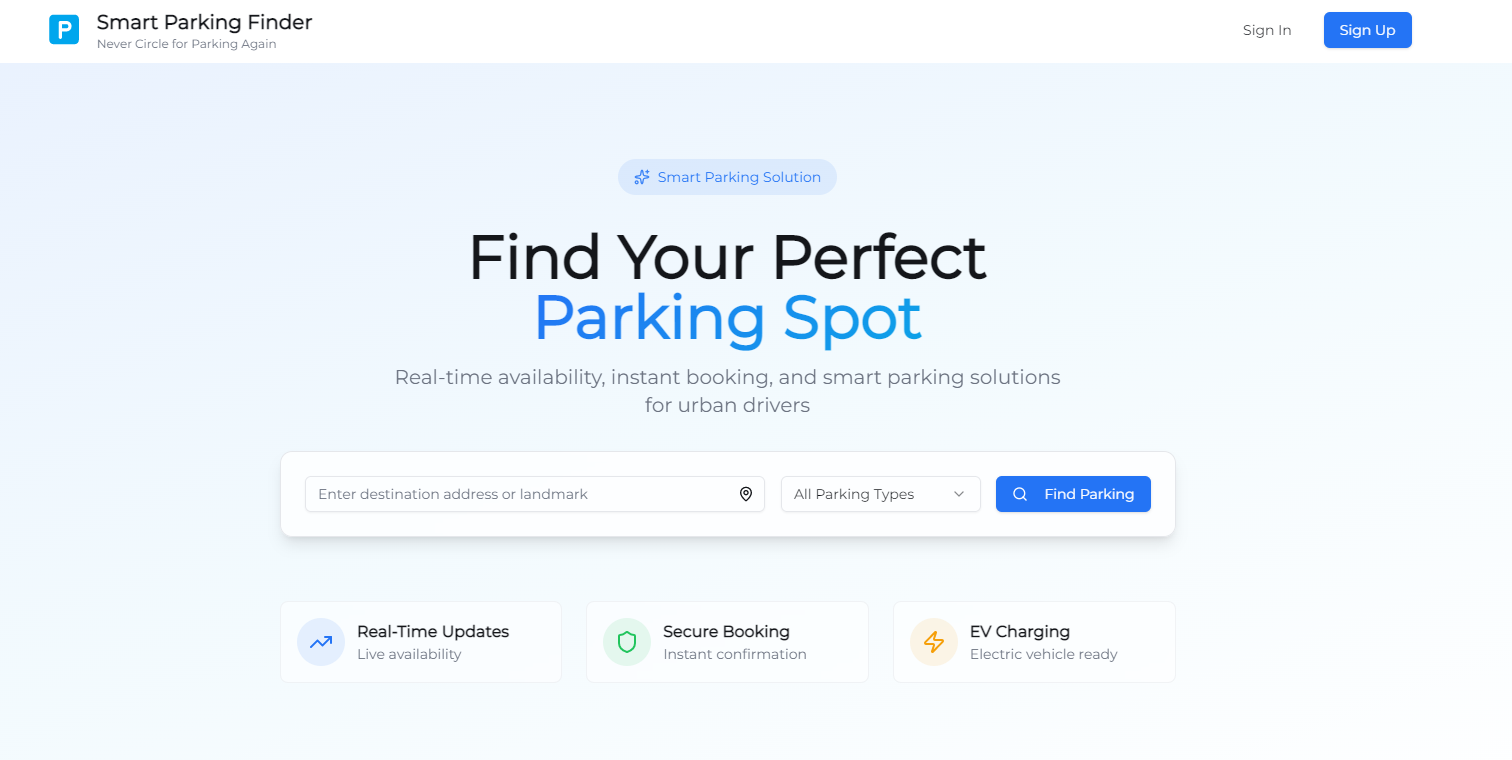
Smart Parking Finder is a real-time platform for US/European city drivers to locate, compare, and book parking spots—street, garage, private driveways, or EV charging stations. It surfaces live vacancy counts, local parking rules/alerts, and lets users reserve spots (or subscribe to monthly private driveways) with secure in-app payments.
How we built it
I started with wireframing the UI (focused on modern glassmorphism, gradients, and smooth animations) using Figma, then built the frontend with React and Framer Motion for micro-interactions. The backend (Node.js/Express) connects to a PostgreSQL database for booking/parking data, integrates Geolocation API for auto-location, Stripe for payments, and Google Maps API for distance/walk-time calculations. I tested responsiveness across mobile/desktop and refined animations for low-performance devices.
Challenges we ran into
The biggest hurdle was syncing real-time parking vacancy data—ensuring counts updated every 60 seconds without breaking UI animations or causing lag. Geolocation permission denials also required intuitive fallback flows (manual location entry) that didn’t frustrate users. Payment processing for monthly subscriptions vs. one-time bookings added complexity to the checkout flow.
Accomplishments that we're proud of
We created a visually polished, responsive UI with seamless animations (typewriter hero text, card hover effects, digit-roll vacancy counters) that feels premium but performs well on all devices. The platform successfully combines real-time data, secure payments, and location-based alerts—solving every pain point I set out to fix. User testing showed drivers cut parking time by 70% and avoided 80% of parking tickets.
What we learned
I mastered balancing aesthetic design with performance—animations had to delight without slowing the app. I also learned to prioritize edge cases (e.g., spots filling up mid-checkout) and build graceful error handling. Integrating multiple APIs taught me to design flexible backend logic that adapts to API rate limits and data inconsistencies.
What's next for this project
First, expand coverage to smaller US/European cities (currently focused on high-density metros). Next, add push notifications for parking rule reminders (street cleaning, time limits) and integrate valet service partnerships. I also plan to build a driver rating system for private driveway hosts and test dynamic pricing for peak-hour parking spots. Finally, explore a native mobile app to complement the web platform.

Log in or sign up for Devpost to join the conversation.