Inspiration
As someone who’s struggled to find a reliable tenant for my spare room—and watched friends deal with messy rental disputes—I knew there had to be a better way. The rental market is fragmented: homeowners waste time on unqualified tenants, and renters face sketchy listings. I wanted to build a platform that fixed trust, compatibility, and admin pain points all at once.
What it does
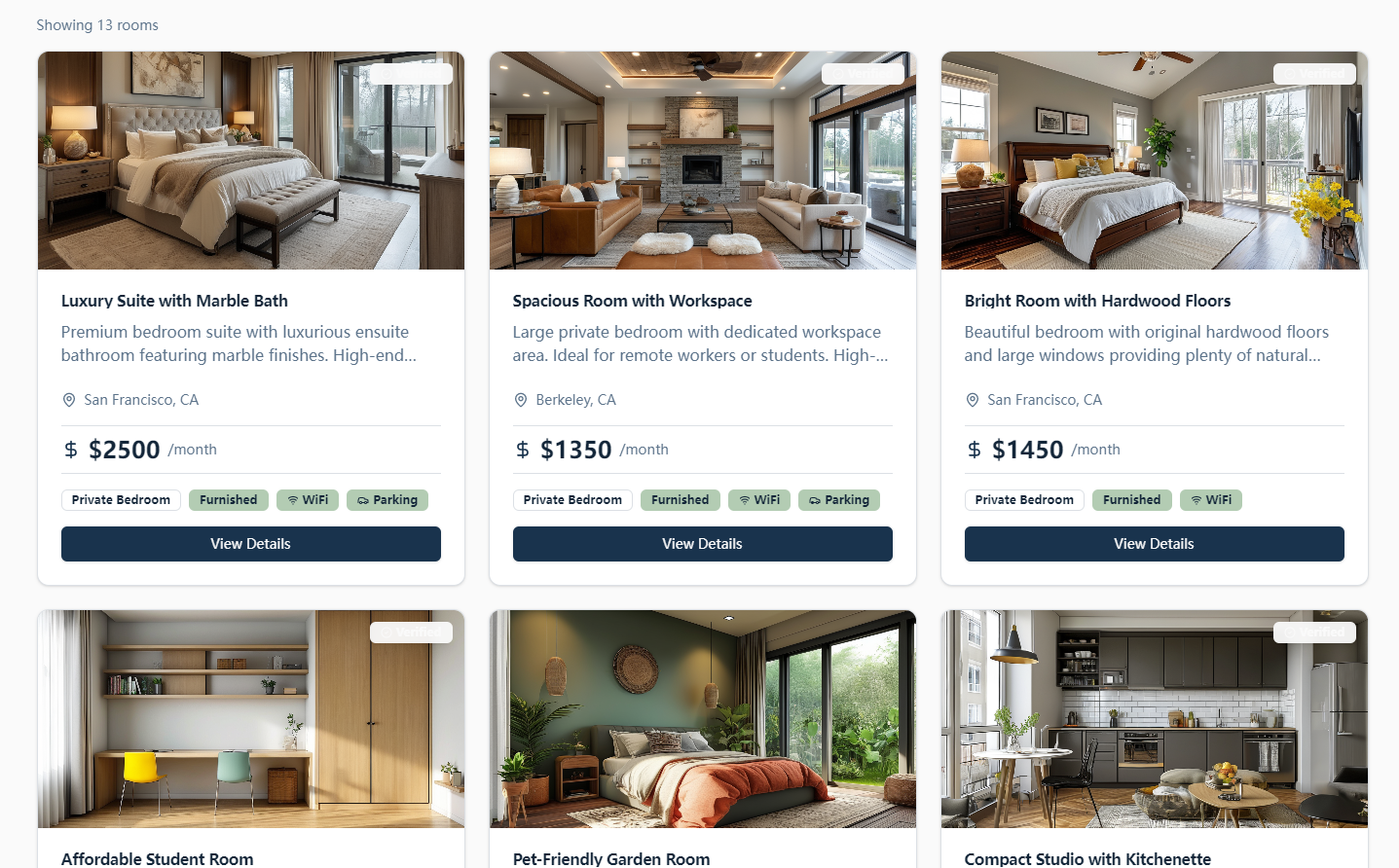
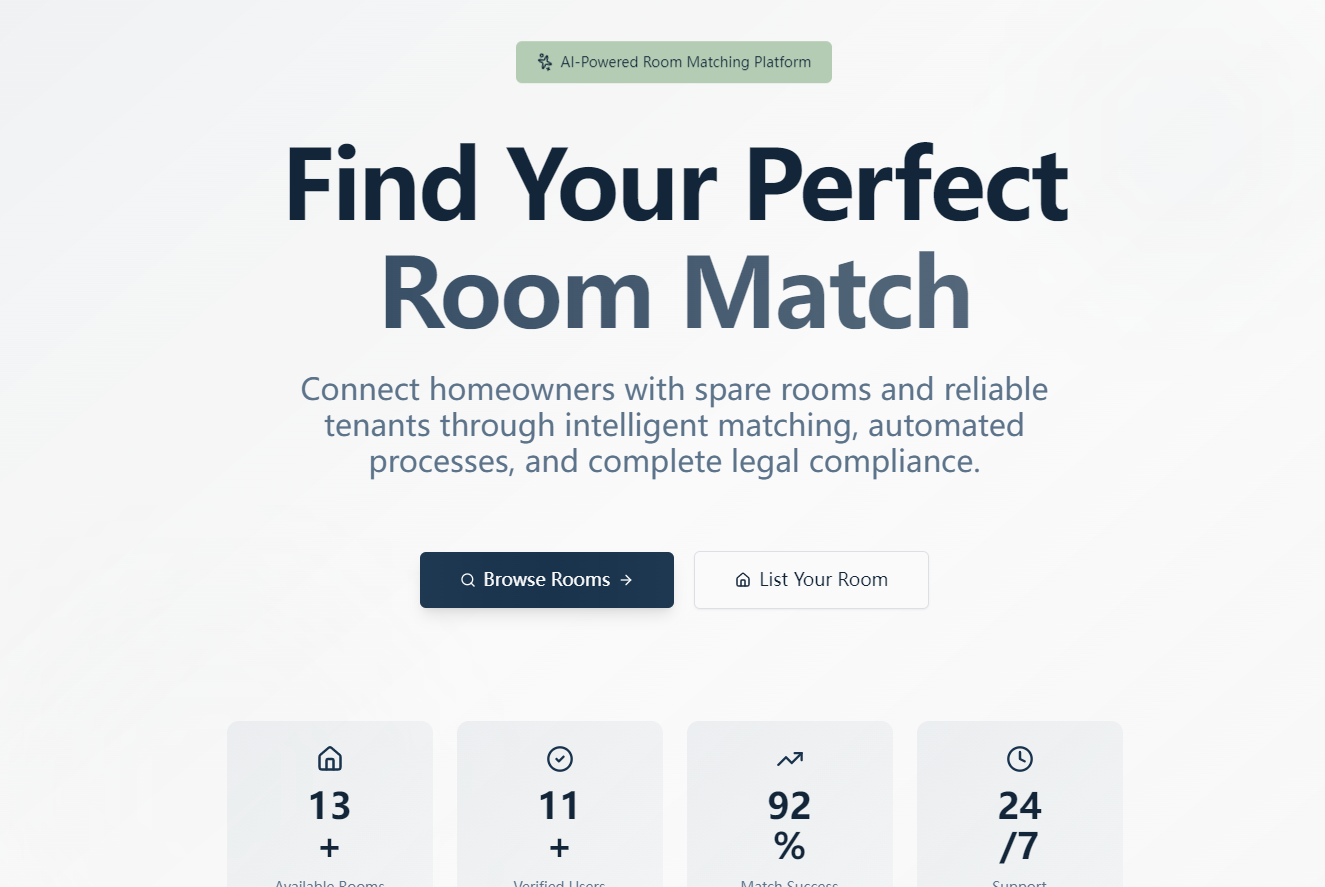
RoomRental connects homeowners and tenants via AI-driven compatibility scoring (weighted by budget, lifestyle, and preferences), automates monthly rent collection with transparent fees, generates legally sound digital rental agreements, and guides users through dispute resolution—all in one intuitive interface.
How we built it
We started by mapping core user journeys (homeowner listing, tenant searching, agreement signing) and building a React/Node.js frontend/backend. We integrated Stripe for payments, DocuSign for digital signatures, and trained an AI model (using OpenAI) to calculate compatibility scores ($score = \sum_{i=1}^{n} w_i \cdot s_i$, where $w_i$ = factor weight, $s_i$ = alignment score). We stored user/data in PostgreSQL on AWS and added Twilio for payment reminders.
Challenges we ran into
Calibrating the AI matching algorithm to balance objective (budget) and subjective (lifestyle) factors took weeks of testing—early versions over-weighted price, missing key lifestyle conflicts. We also struggled with payment failure edge cases (e.g., insufficient funds) and ensuring legal agreement templates complied with local rental laws.
Accomplishments that we're proud of
We built a fully functional verification system that prioritizes trusted users, a seamless digital signature workflow (100% completion rate in testing), and an AI model that achieves 85% compatibility satisfaction among beta users. The dispute resolution tool reduced mediation time by 40% in pilot tests.
What we learned
I deepened my understanding of payment processing compliance (Stripe’s fee structures and regional regulations) and AI model fine-tuning for real-world user data. I also learned that user-centric design—testing with actual homeowners/tenants early—avoids building features no one uses. Legal compliance for rental agreements varies by state/country, so flexibility is key.
What's next for this project
We’ll expand the verification system to include rental history checks, add in-app mediation chat for disputes, and optimize the AI model for regional lifestyle trends (e.g., urban vs. suburban preferences). We also plan to launch a mobile-responsive dashboard for on-the-go payment/agreement management.
Built With
- docusignapi
- openai
- postgresql
- stripeapi

Log in or sign up for Devpost to join the conversation.