-
-
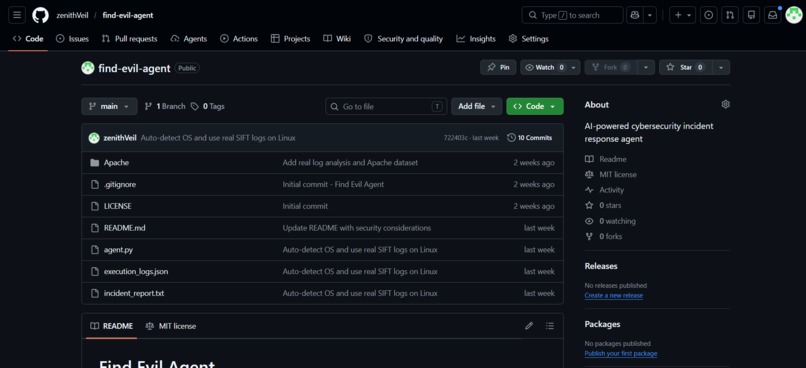
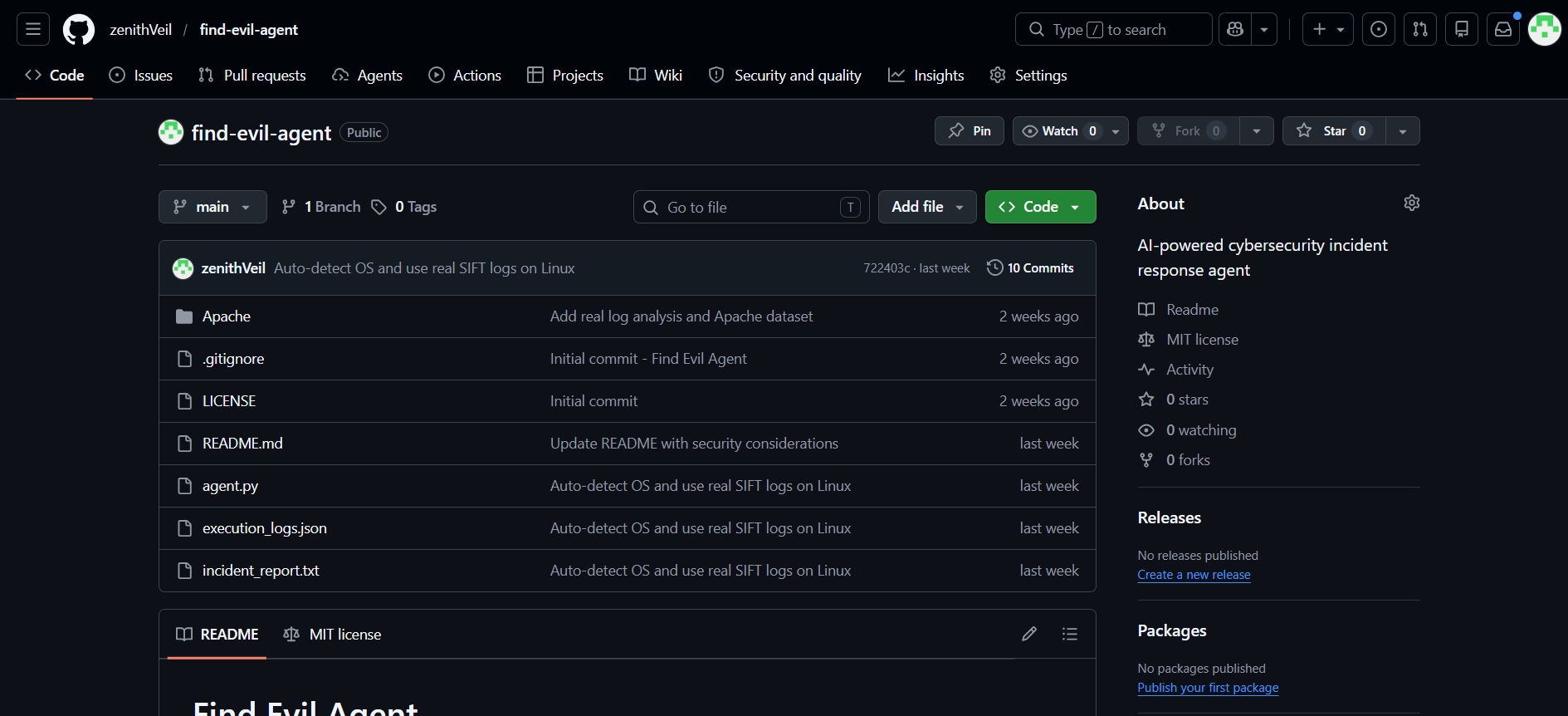
project repostory
-
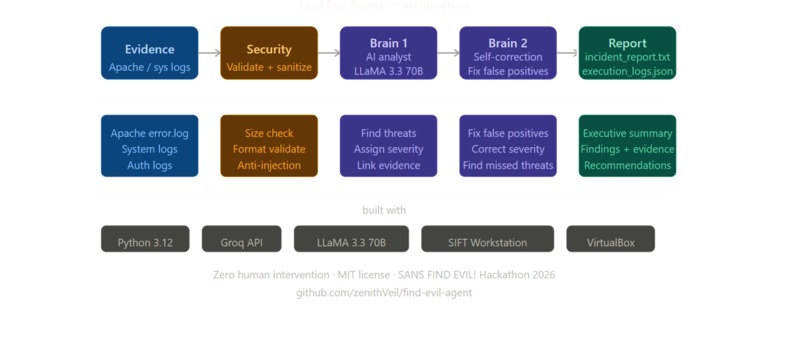
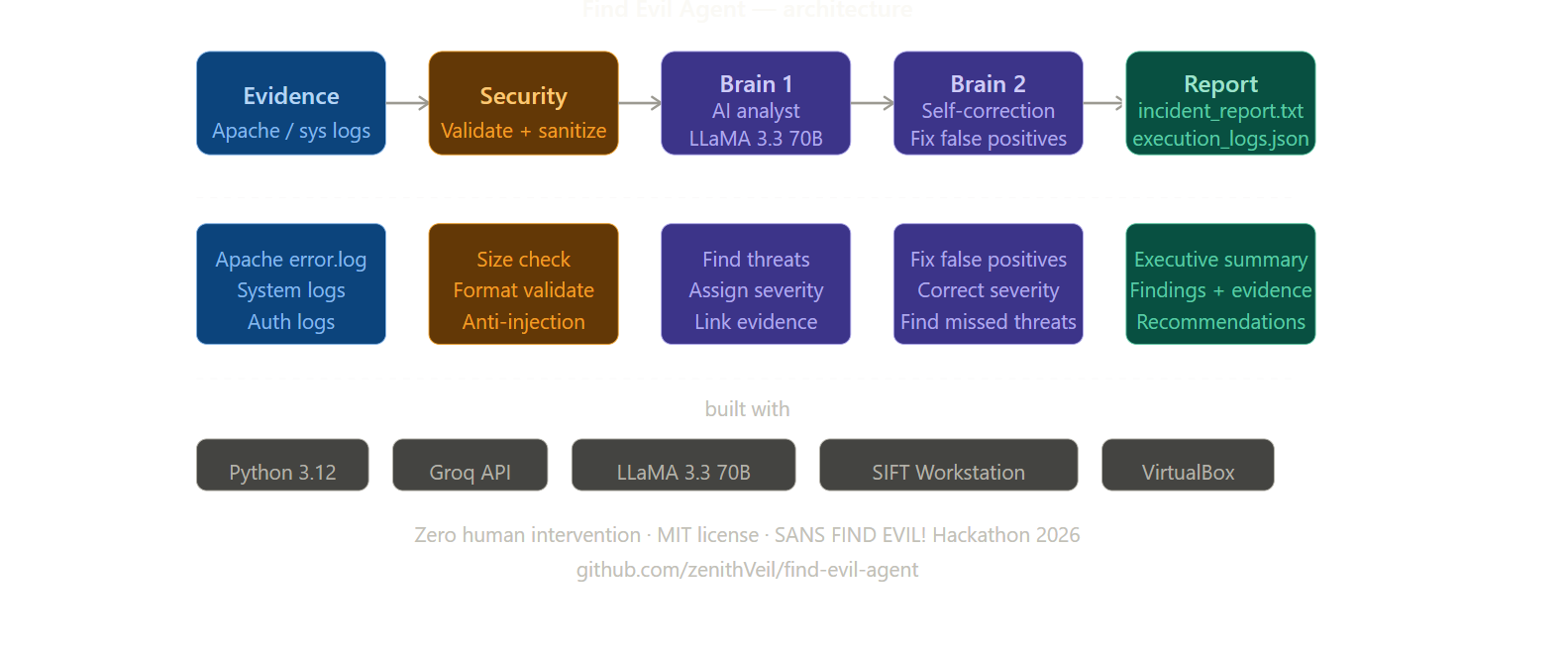
Find Evil Agent — architecture
Inspiration
What it does## Inspiration
Security analysts deal with 500+ alerts daily. At 3 AM during an active attack, manually reading logs is slow and exhausting — real threats get missed due to human fatigue. I wanted to build an AI agent that never sleeps, never gets tired, and never misses a threat.
What It Does
Find Evil Agent is an autonomous incident response agent running on SIFT Workstation. It:
- Analyzes real attack logs automatically
- Self-corrects its own false positives
- Generates professional incident reports
- Saves full execution audit trail
- All with zero human intervention
How I Built It
- Platform: SIFT Workstation (Linux)
- Language: Python 3.12
- AI Model: Groq API — LLaMA 3.3 70B
- Evidence: Real Apache logs from SIFT system
- Tools: Git, VirtualBox, Cursor IDE
The agent uses a two-brain architecture:
- Brain 1 — Junior analyst that finds threats
- Brain 2 — Senior reviewer that self-corrects mistakes
Challenges
- Getting the agent to run natively on SIFT Linux
- Implementing meaningful self-correction without infinite loops
- Finding real evidence datasets for testing
- Balancing security (prompt injection protection) with functionality
What I Learned
- How real forensic investigators use SIFT tools
- Prompt engineering for cybersecurity analysis
- Importance of self-correction in AI agents
- Real-world attack patterns from Apache logs
Links
- GitHub: https://github.com/zenithVeil/find-evil-agent
- Built for: SANS FIND EVIL! Hackathon 2026
How we built it
Challenges we ran into
Accomplishments that we're proud of
What we learned
What's next for Find Evil Agent
Agent uses Groq's LLaMA 3.3 70B for AI inference as an open-source alternative to Claude, orchestrated as a Multi-Agent Framework on SIFT Workstation.


Log in or sign up for Devpost to join the conversation.