-
-
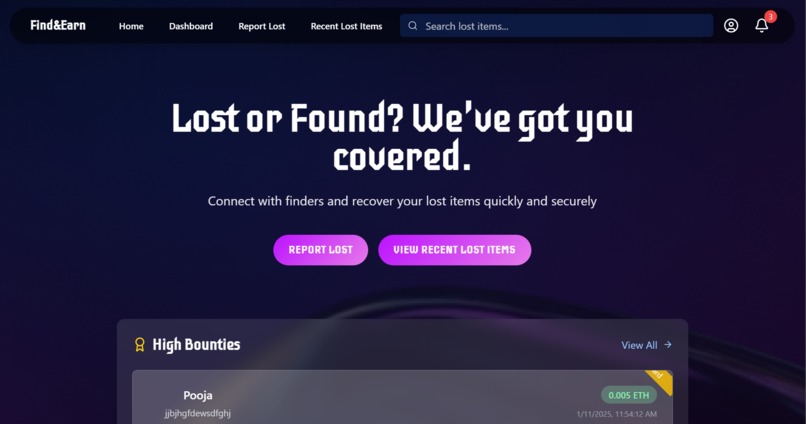
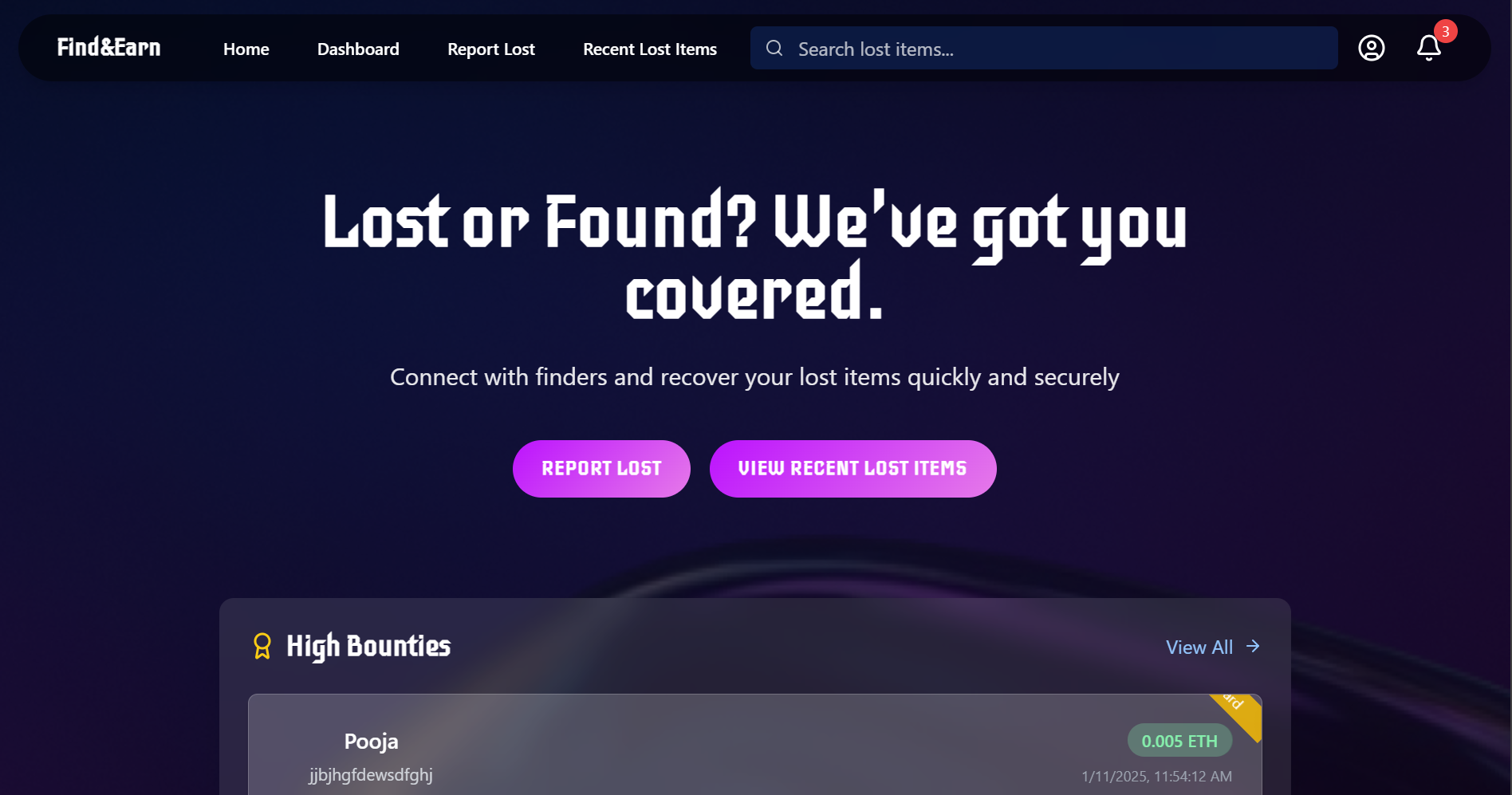
landing page
-
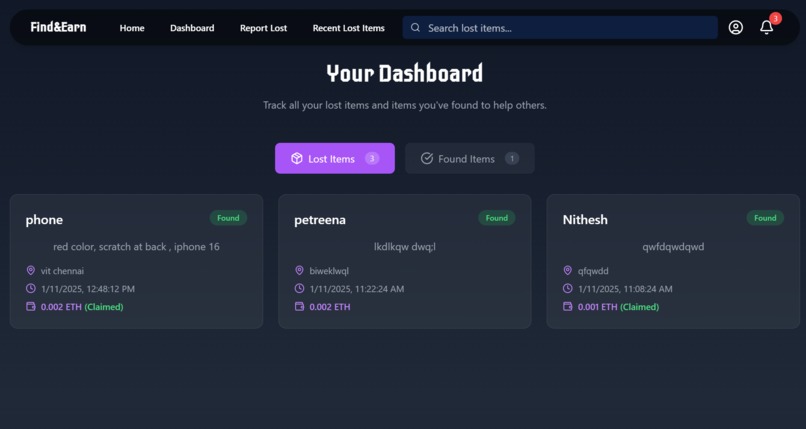
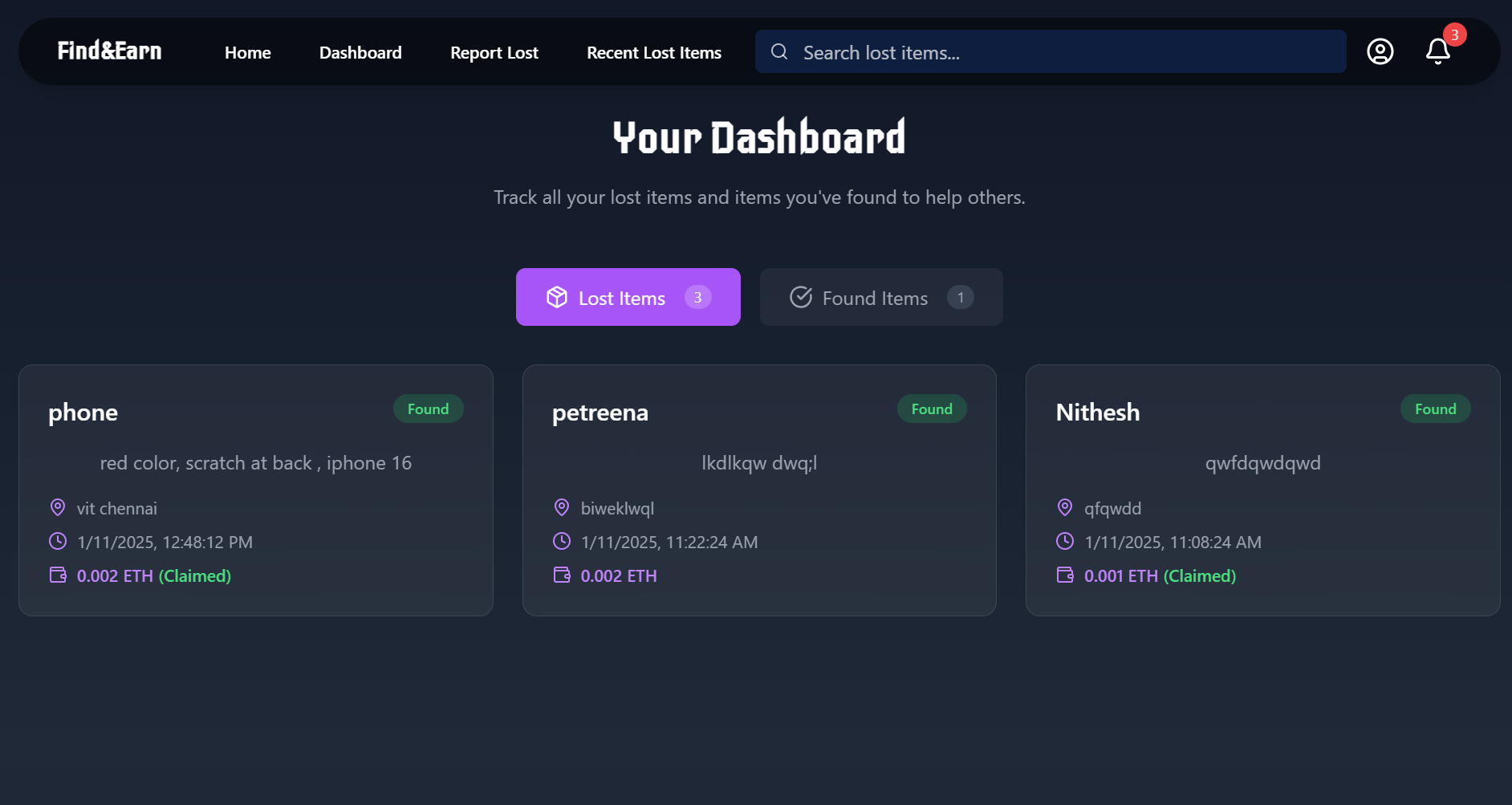
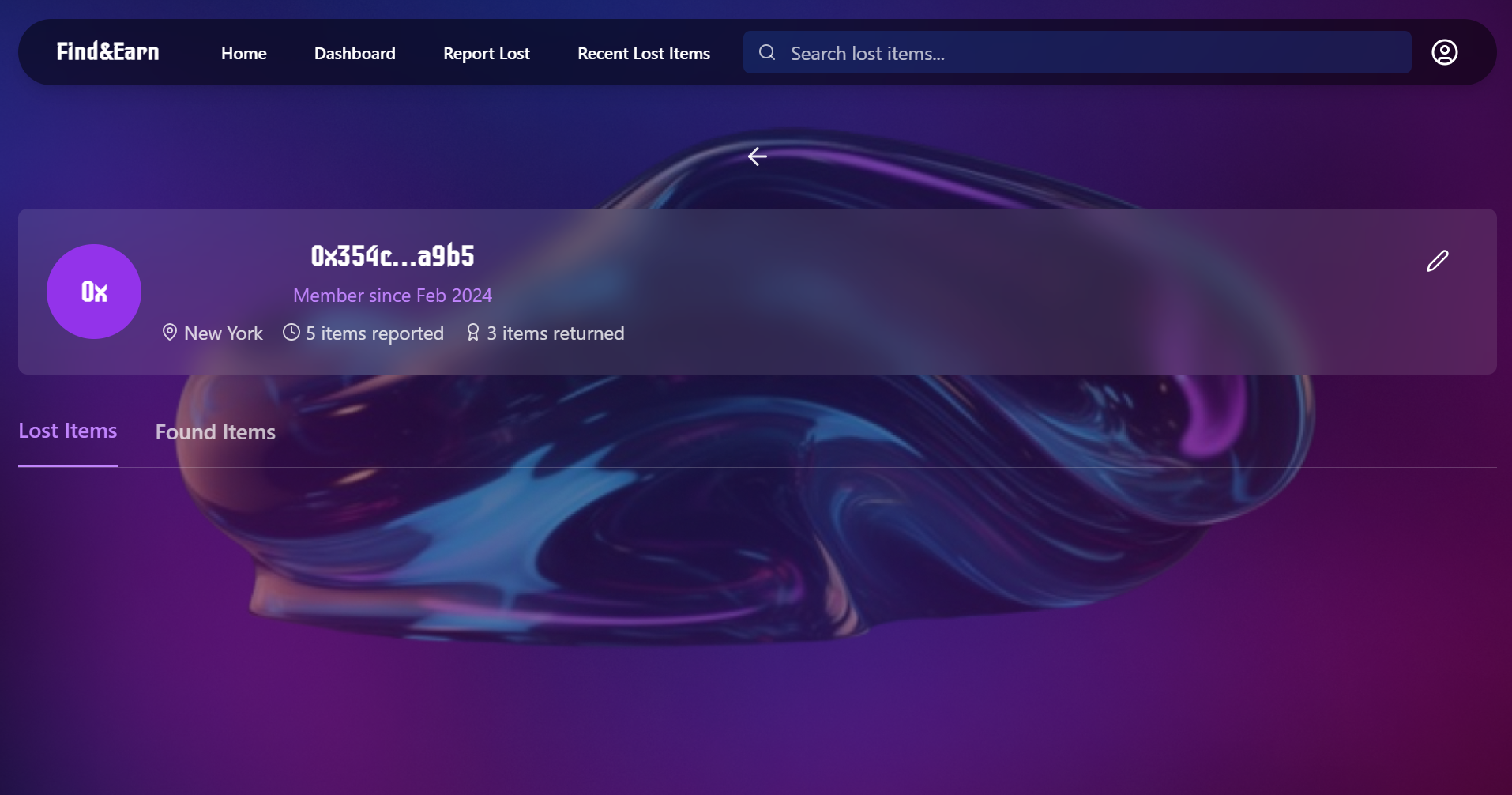
user dashboard lost and found details
-
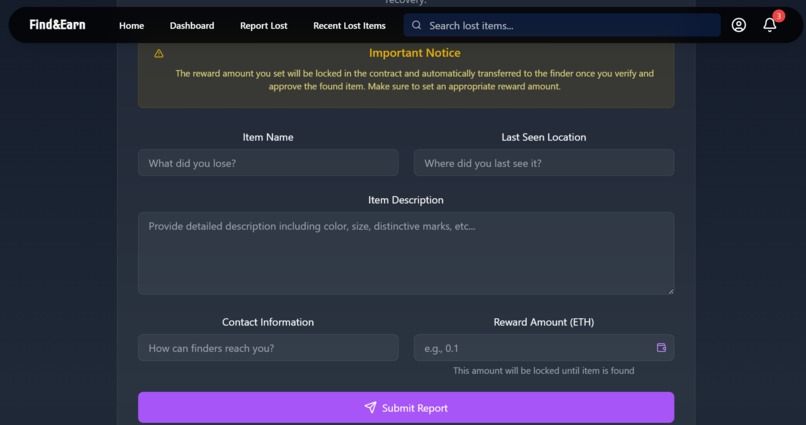
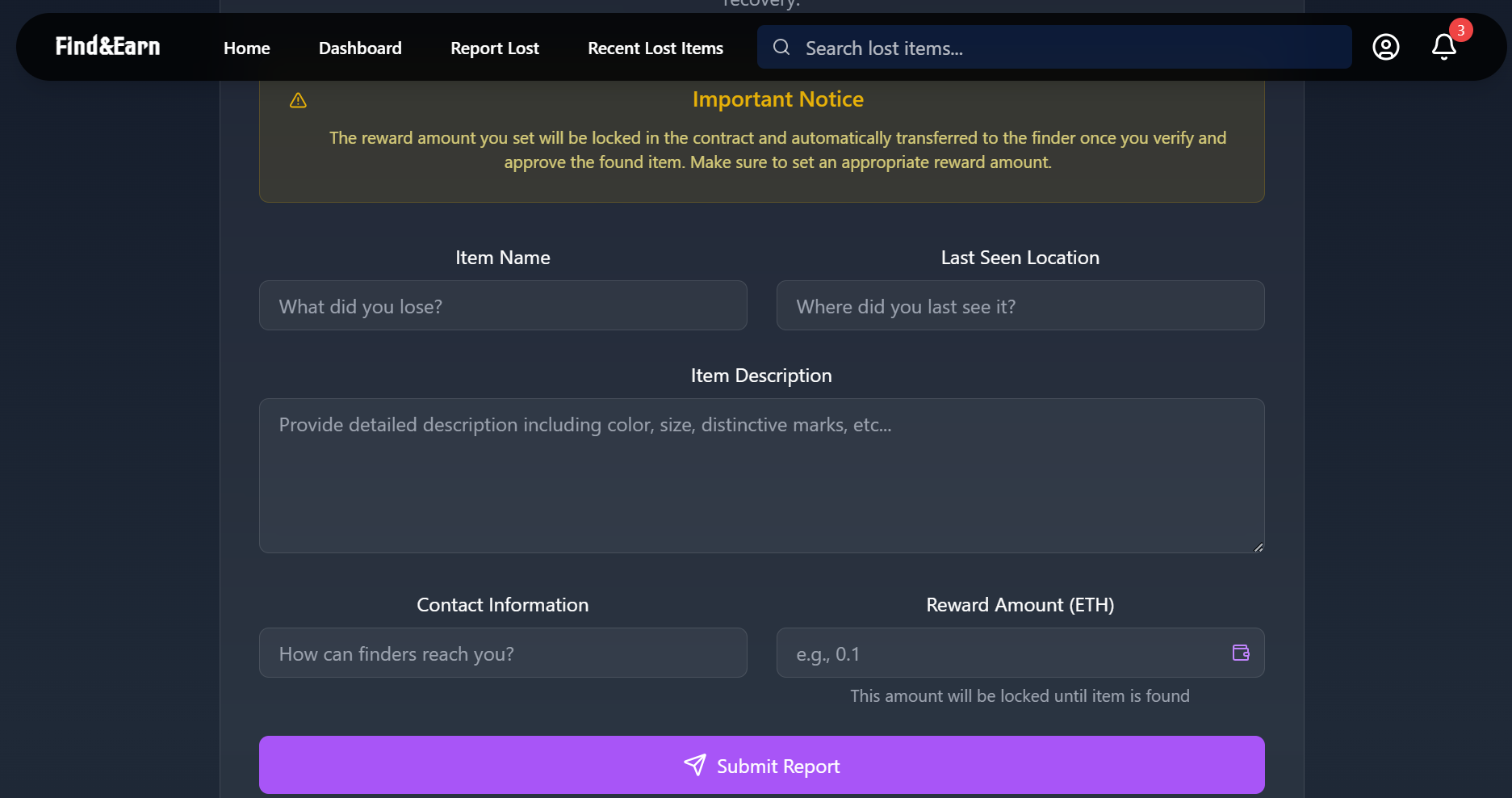
lost item submission page
-
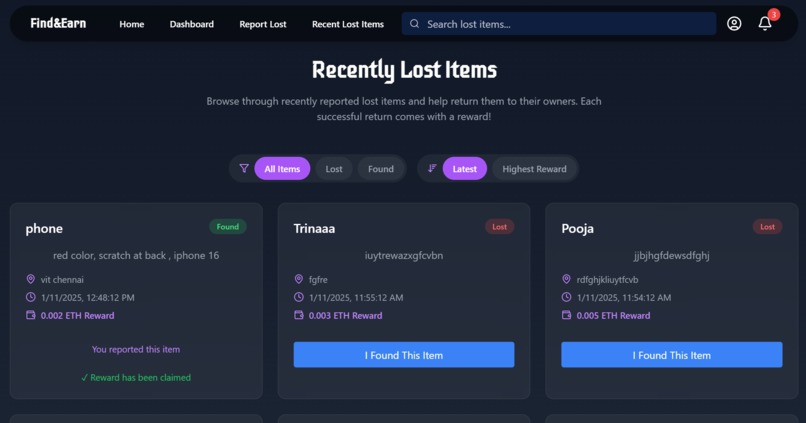
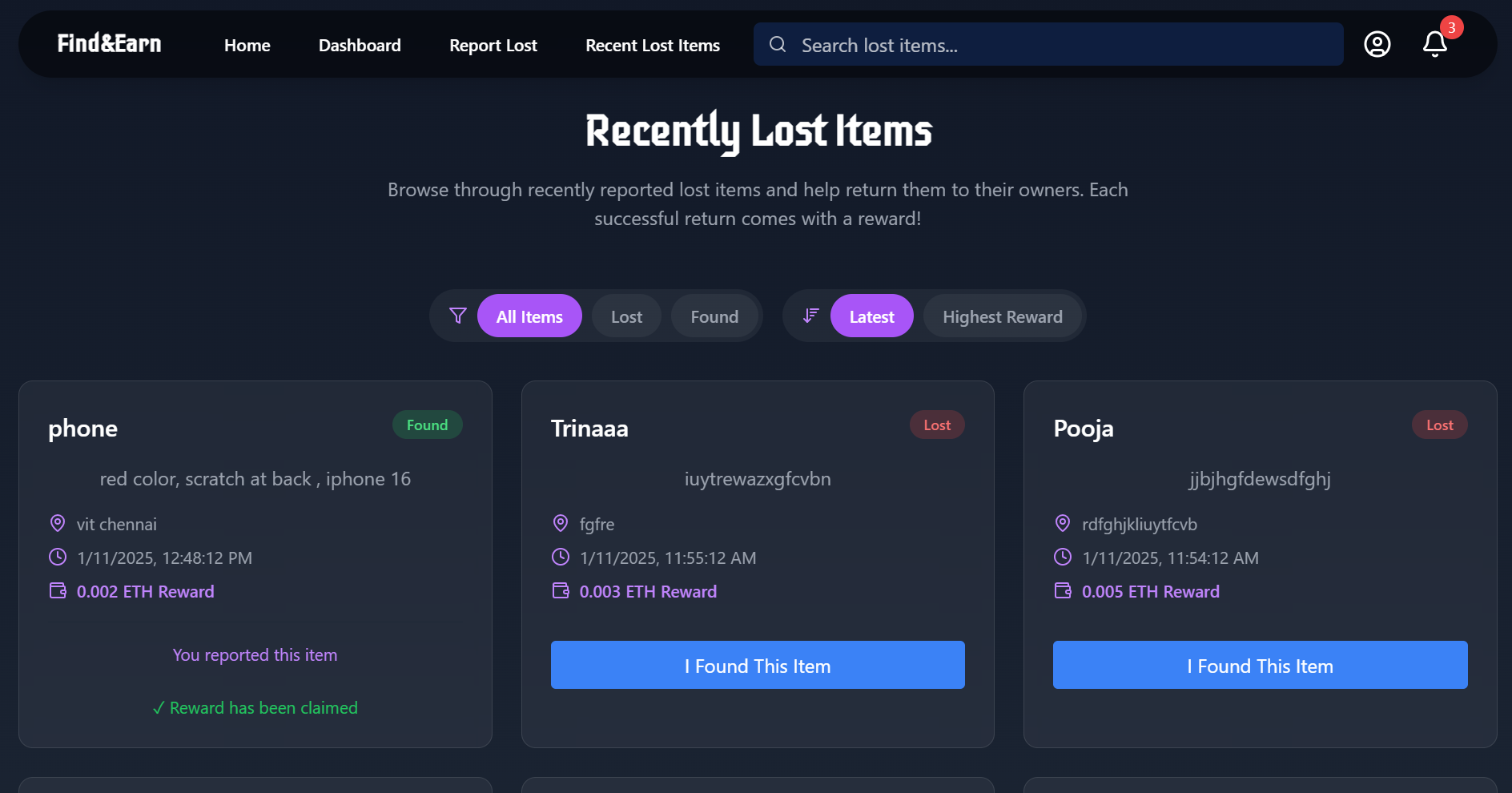
lost items page for bounty hunters
-
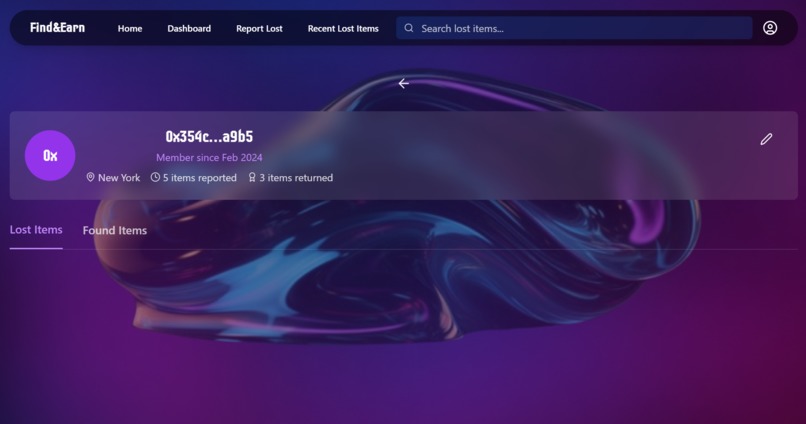
dashboard
-
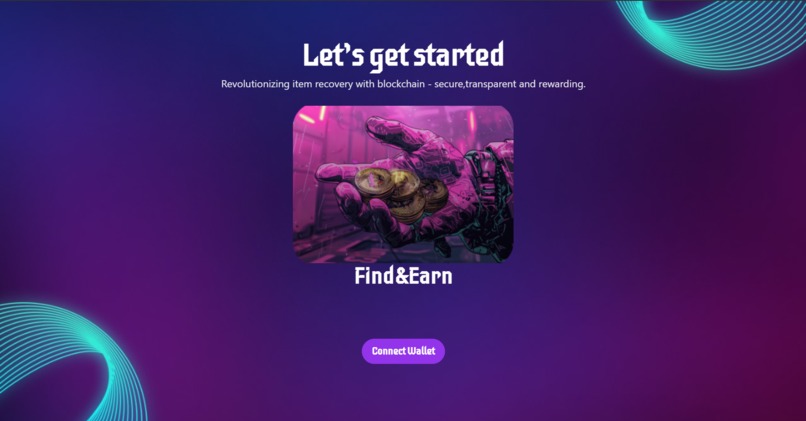
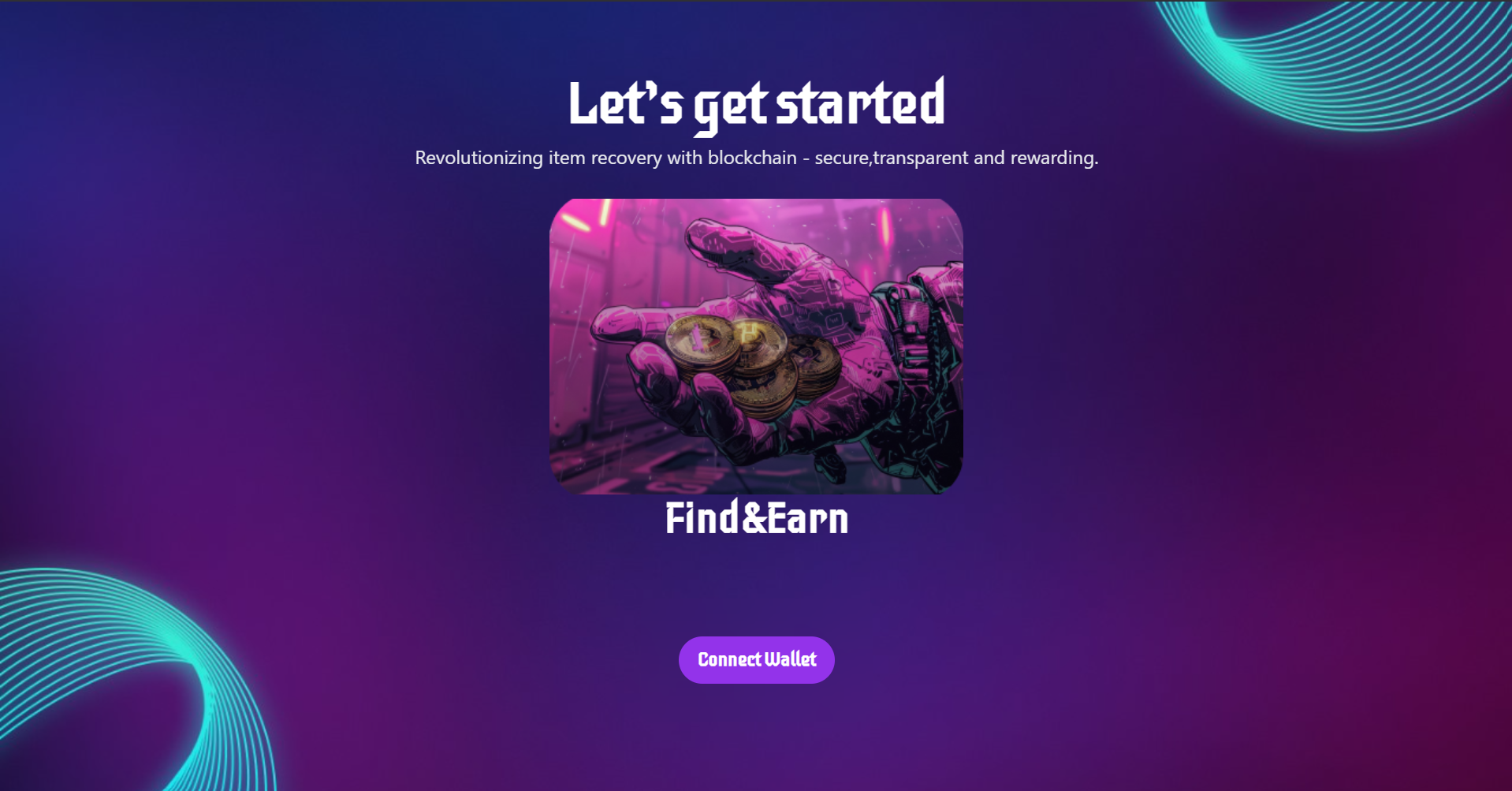
wallet connection page
Inspiration 🌟 The idea of a Lost and Found platform stemmed from the simple, yet often frustrating, experience of losing personal belongings and the difficulty in retrieving them. What inspired us even further was imagining a gamified approach where people in the community could actively engage in helping others find lost items, making the process interactive and rewarding.
Imagine turning an ordinary search for lost items into a game-like experience, where users could earn points or badges for contributing to the platform. This would not only solve real problems but also build a sense of community and purpose.
What We Learned 📚 Building this project taught us several key lessons:
Community-driven Solutions: A problem like finding lost items becomes solvable when a large number of people actively participate. Blockchain Transparency: By leveraging blockchain technology, we ensured transparency and immutability, building trust among users. Gamification Principles: Creating a sense of achievement through badges, points, or rewards encourages active participation and keeps users engaged. User Experience Matters: Simplicity in design, combined with rewarding interactions, greatly enhances user satisfaction. How We Built It 🛠️ Frontend:
We used React.js, Next.js, and TailwindCSS to build an interactive and user-friendly interface. The dashboard displays lost and found items, along with a leaderboard showcasing top contributors. Backend:
Built with Solidity for the Ethereum blockchain. Users can report lost or found items, and the smart contract ensures transparency in matching items. Gamification:
Reward System: Users earn points for successfully finding and reporting items. Leaderboard: A public leaderboard displays top contributors in the community. Badges: Special badges are awarded for milestones like helping with 10 successful matches. Deployment:
The contract is deployed on the Sepolia Test Network for testing. Frontend hosted using Vercel for fast and reliable access. Challenges We Faced 🚧
Ensuring Accurate Matches Matching lost and found items required precise comparison of descriptions and locations. We used string hashing and comparison in the smart contract to ensure accuracy.
User Engagement Making the platform exciting for users was challenging. By incorporating gamification, we solved this problem effectively, but it required careful design to avoid over-complicating the experience.
Blockchain Complexity As blockchain developers, managing gas fees, optimizing smart contract logic, and ensuring security were all significant hurdles.
The Gamified Twist 🎮 The highlight of the project is the gamified experience:
Be the Hero of Your Community: Anyone can contribute by helping locate lost items. Earn Rewards: Users collect points for every successful match they participate in. These points can later be exchanged for real-world rewards or donated to charity. Community Leaderboard: Encourages friendly competition among users while fostering collaboration. Conclusion 🏁 The Lost and Found Gamified Platform transforms a mundane task into an engaging activity that strengthens community ties. By blending blockchain transparency with gamification, we created a platform that not only solves real-world problems but also incentivizes people to help each other.
We're excited about the future possibilities of expanding this project, such as incorporating AI for better matching or integrating cross-platform rewards.


Log in or sign up for Devpost to join the conversation.