-
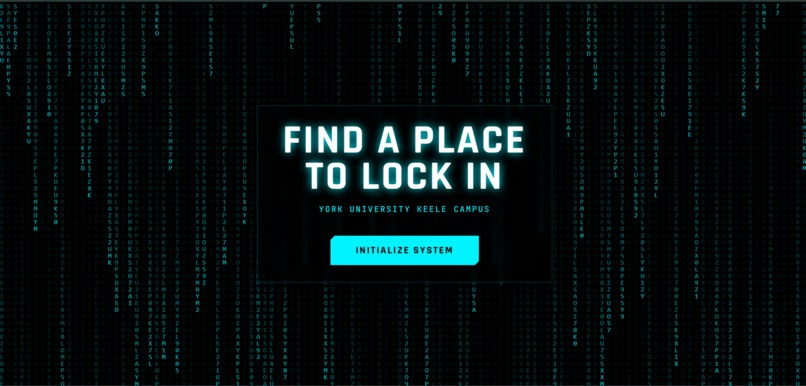
Landing Page
-
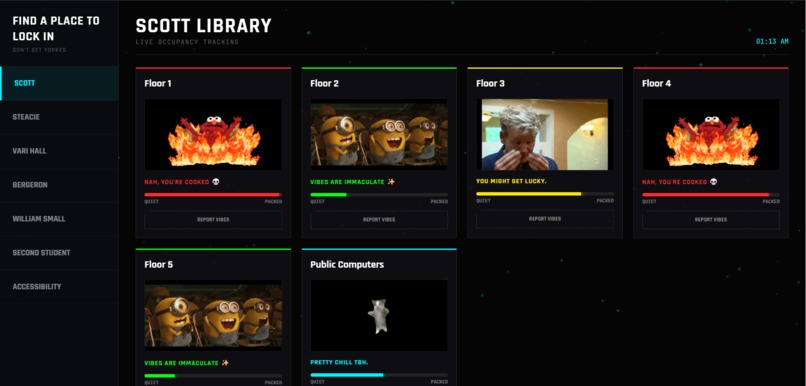
Main Page
-
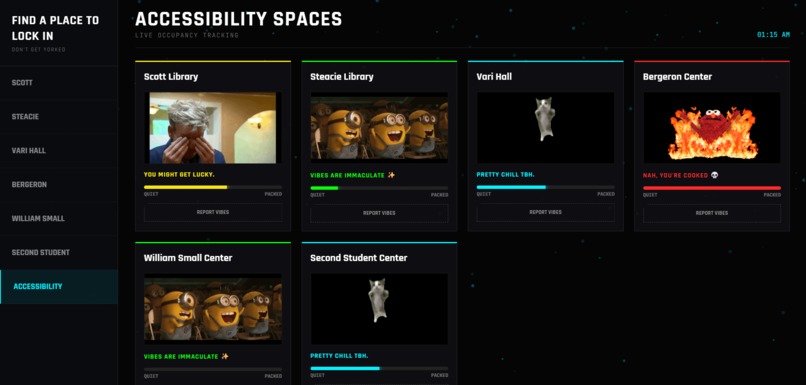
Different Sub Section
-
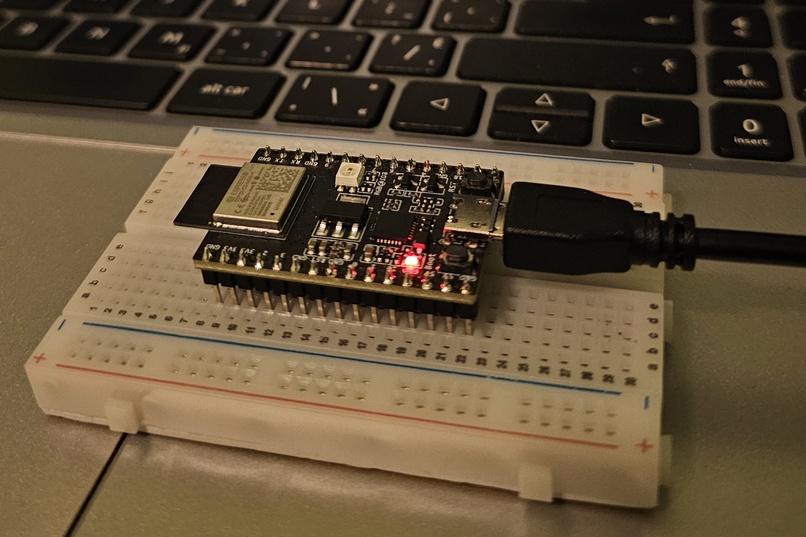
ESP32 Hardware


Inspiration
The idea for “Find a Place to Lock In” came from a simple problem: spending more time searching for a study spot than actually studying. At university, I often walk around trying to find a place where I can focus, but crowded and noisy spaces make it hard to get anything done.
I also noticed a flaw in my own behavior. Even when quiet spots might exist—like upper library floors or hidden corners—I don’t check them because I assume they’re already full. This lack of information leads to wasted time and missed chances to focus.
What it does
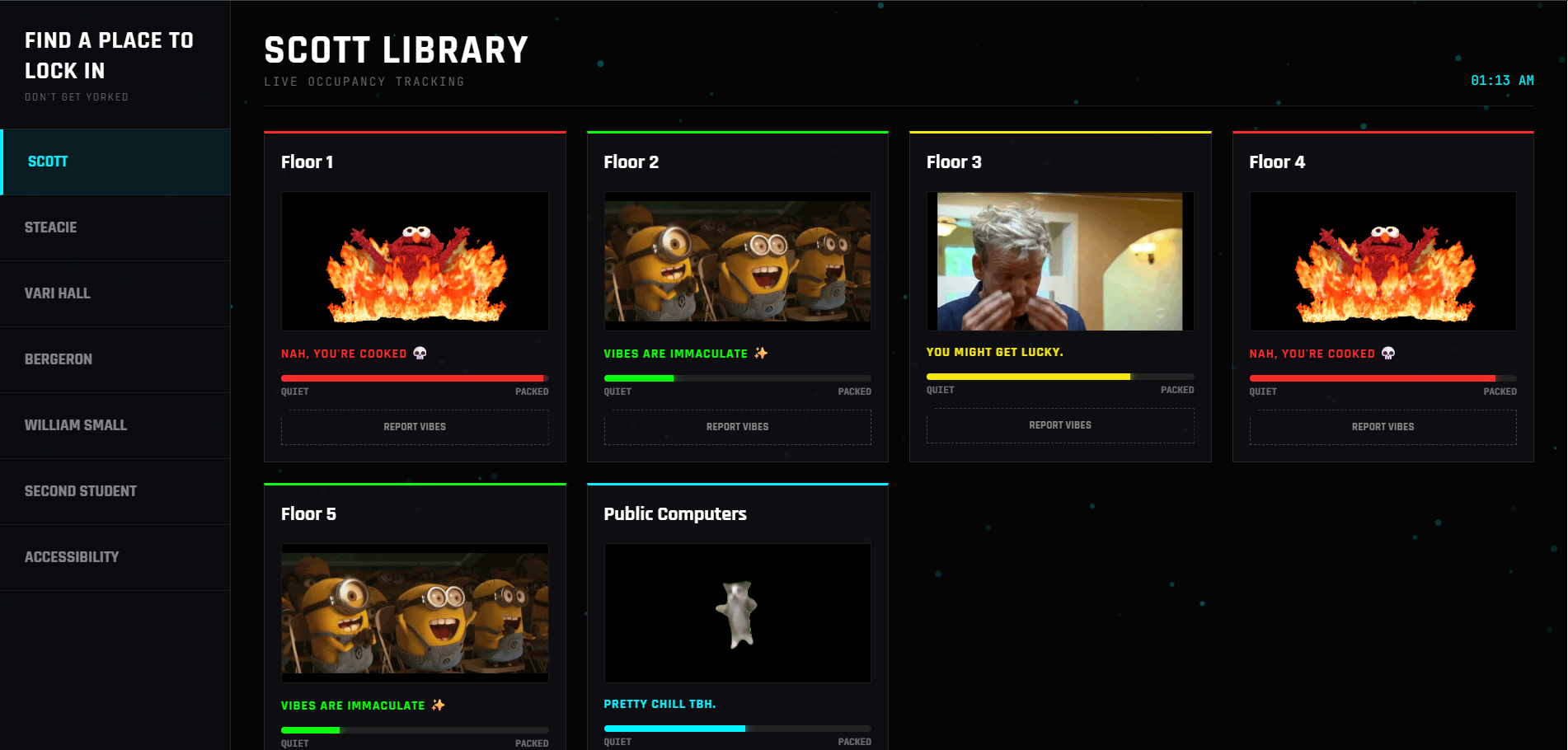
Find a Place to Lock In is a real-time, crowd-sourced radar for university study spaces that helps students skip wandering and find open spots during peak hours. It shows live occupancy at popular hubs like Scott Library, Vari Hall, and the Student Centre, translates the data into student-friendly and engaging terms and lets students update noise levels instantly using ESP32 voting buttons, keeping the dashboard fresh for everyone.
How i built it
The Website (Frontend): We used standard web tools (HTML, CSS, and JavaScript) to build the dashboard. We wanted it to feel like a video game, so we added a "Matrix" digital rain animation on the landing page and floating bubbles on the main screen. The site updates instantly without needing to reload.
Backend: We wrote a simple Java program to keeps track of the "score" (crowd level) for every study spot. When someone votes, the Java program updates the numbers and tells the website to change the colors from Green (Quiet) to Red (Busy).
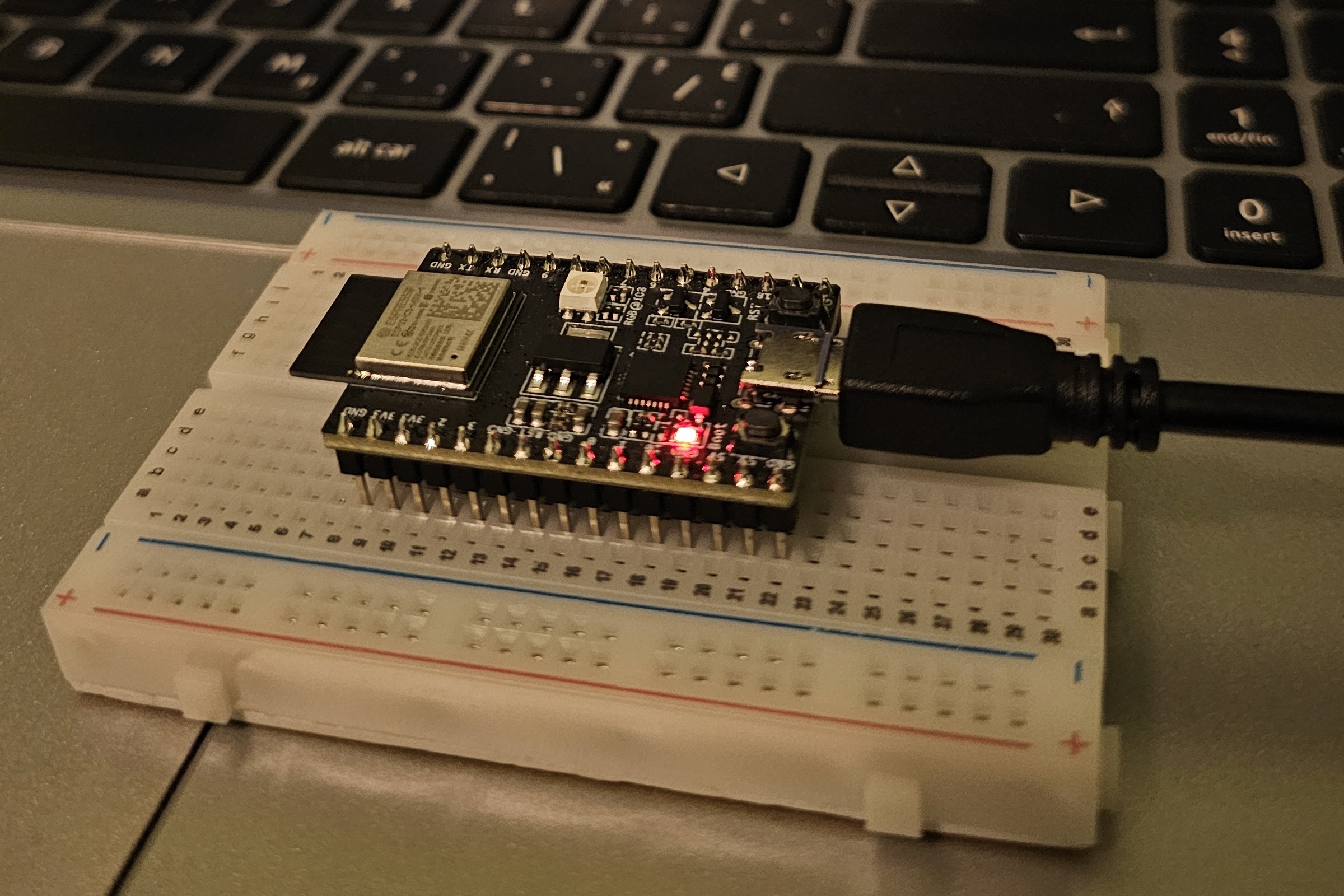
The Physical Button (Hardware) To enable easy, high-volume real-time voting, we use an ESP32 microcontroller. Connected via Wi-Fi, it serves as a physical remote for the system, allowing students to update occupancy and noise levels instantly, rather than just submitting votes online.
Challenges i ran into
My main challenge was the frontend, as I had no prior experience in designing interfaces, so making it visually presentable was difficult. Another challenge was coding on the ESP32 development board, which I had never worked with before in Arduino IDE.
Accomplishments that i am proud of
I successfully built a fully functional, real-time, crowd-sourced system for tracking study space occupancy. The integration of ESP32 physical voting buttons with the web dashboard works seamlessly, and the frontend despite being my first attempt it turned out visually clear and user-friendly.
What i learned
I gained hands-on experience with frontend development, learning how to design a functional and visually clear interface from scratch. I also learned to program and integrate the ESP32 microcontroller, understanding how hardware and software can work together in real time.
What's next for FIND A PLACE TO LOCK IN !!
The next step is to fully implement and deploy the system across campus, making it accessible to all students. By doing so, we can help everyone quickly find available study spaces, reduce wandering during peak hours, and create a smoother, more productive campus experience.

Log in or sign up for Devpost to join the conversation.