-
-
VS
-
VS
-
Product
-
Product
-
Product
-
Product
-
VS
-
Prototype
-
Prototype
-
Prototype
Inspiration
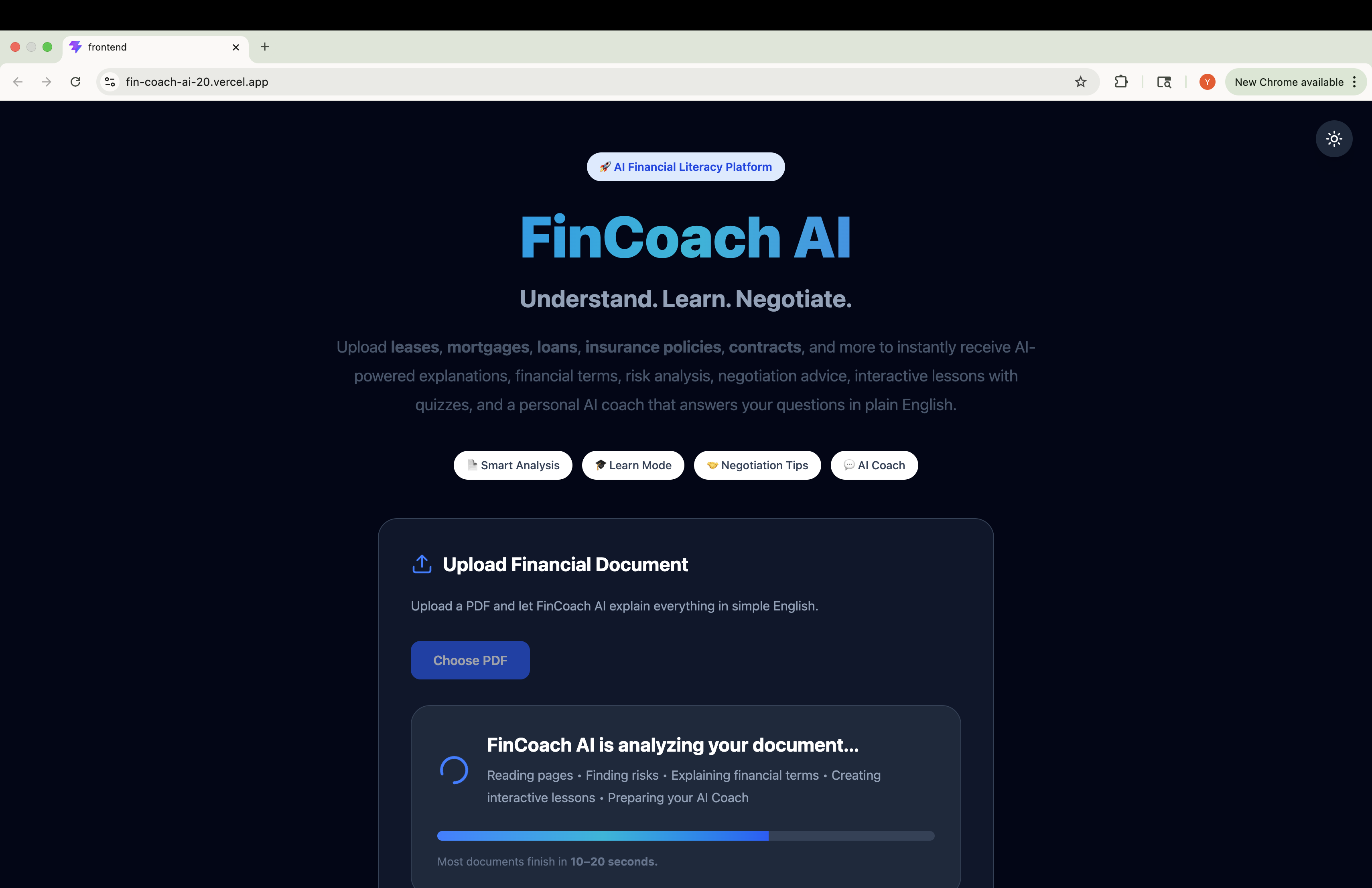
Financial documents are everywhere, but understanding them shouldn't require a law degree or a financial advisor. Leases, loan agreements, credit card statements, and other documents often contain complicated terminology and important clauses that are easy to overlook. We were inspired by how often people are expected to make important financial decisions without actually understanding the documents in front of them. We wanted to build something that doesn't just summarize a document, but actually helps people understand it, identify potential risks, and learn from it. That idea became FinCoach: an AI-powered financial literacy tool that puts a personal financial coach alongside every document.
What it does
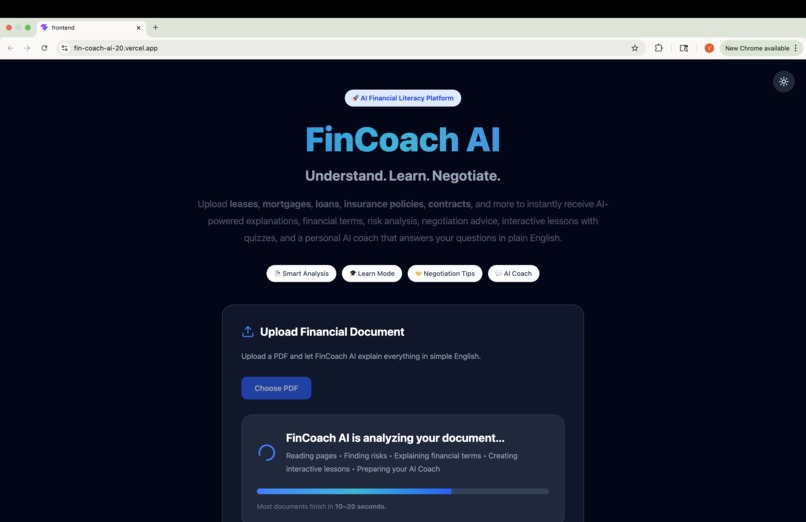
FinCoach lets users upload financial documents such as leases, loan agreements, and credit card statements. After analyzing the document, FinCoach provides:
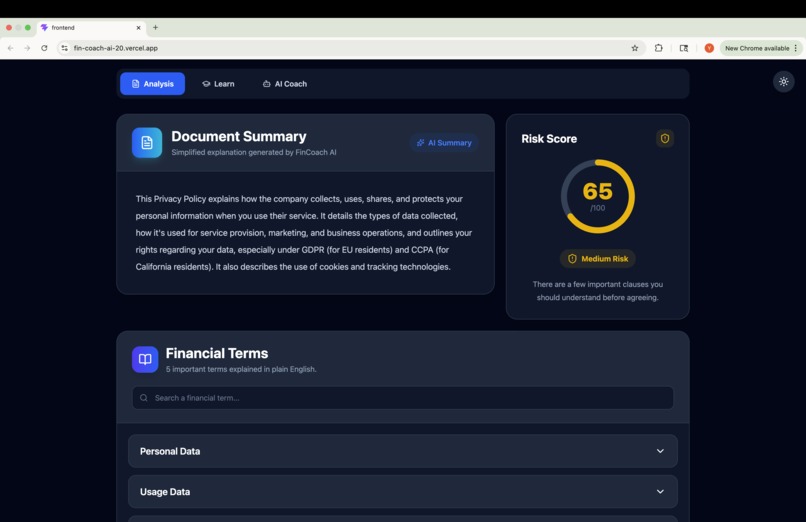
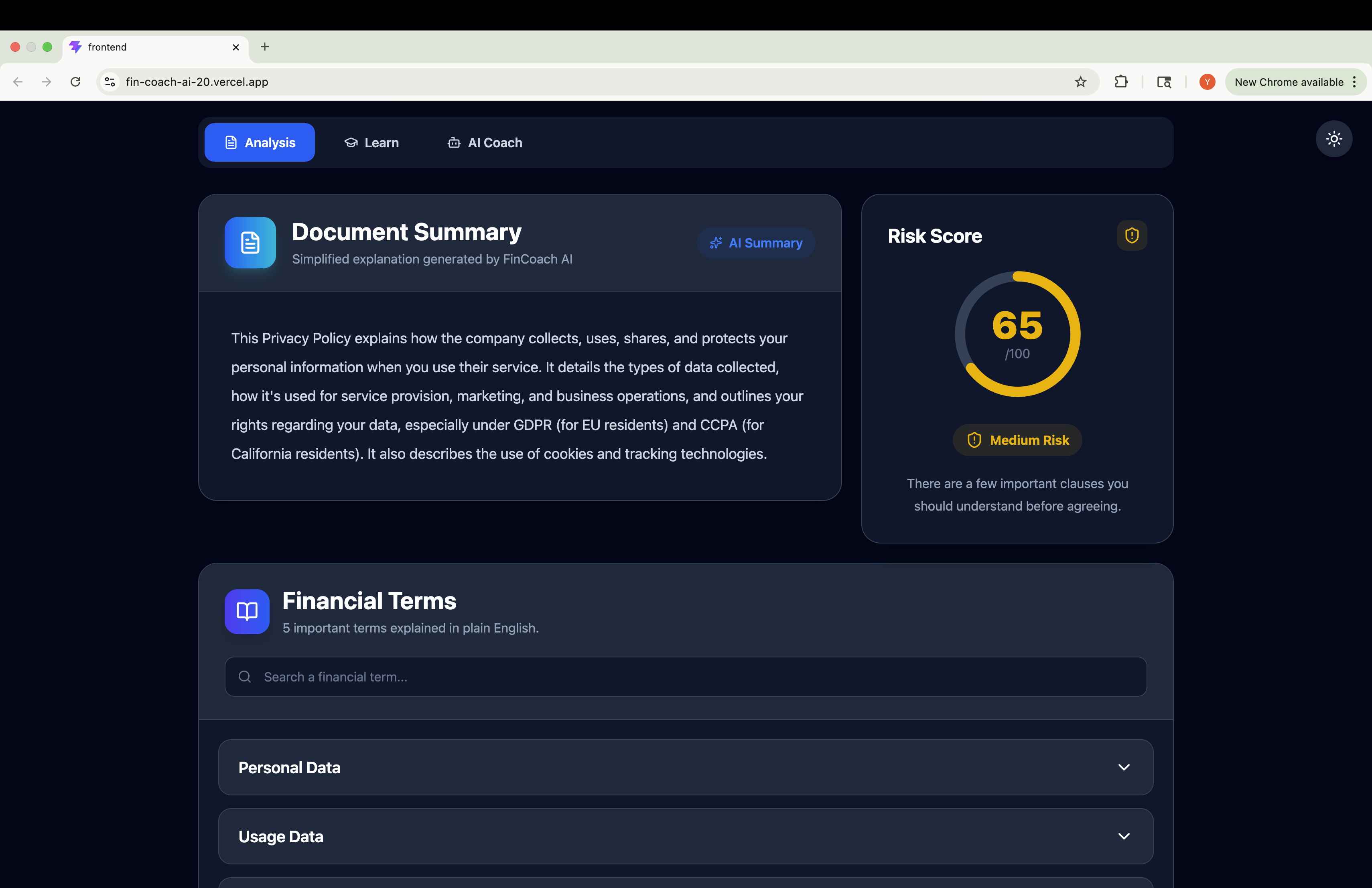
- Plain-language summaries of complicated documents
- Risk insights that highlight potentially important or easy-to-miss clauses
- Key financial terms from the document that users should understand
- Negotiation guidance based on the terms of the document
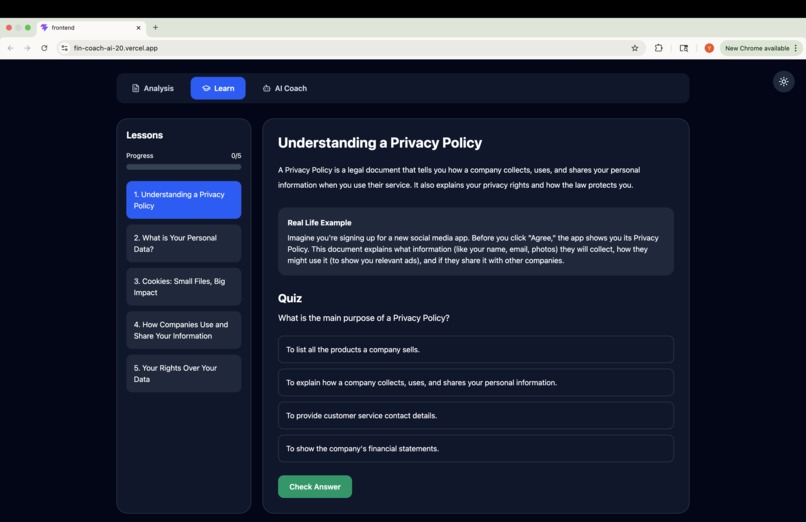
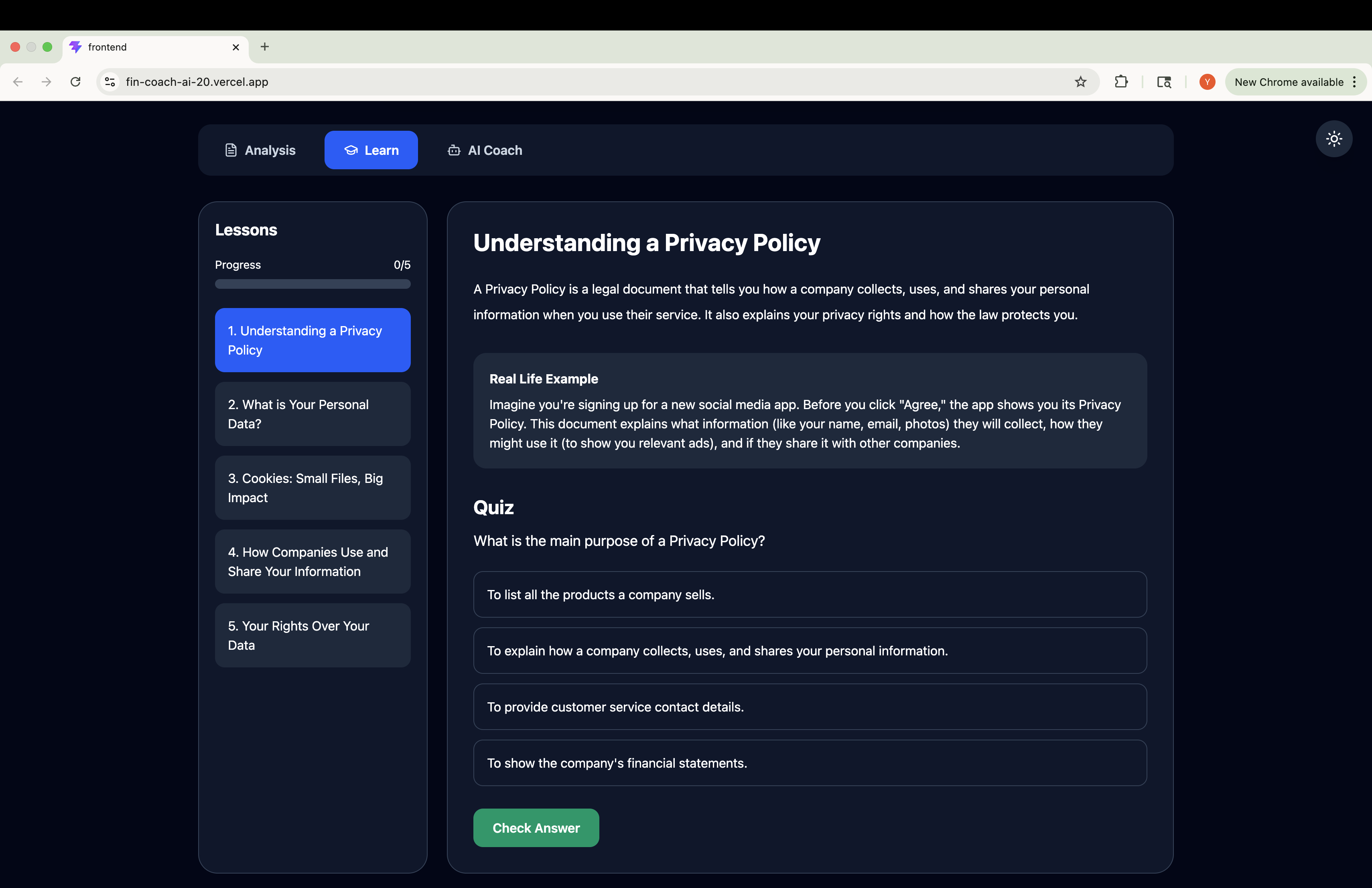
- Personalized quizzes that help users learn and retain financial concepts
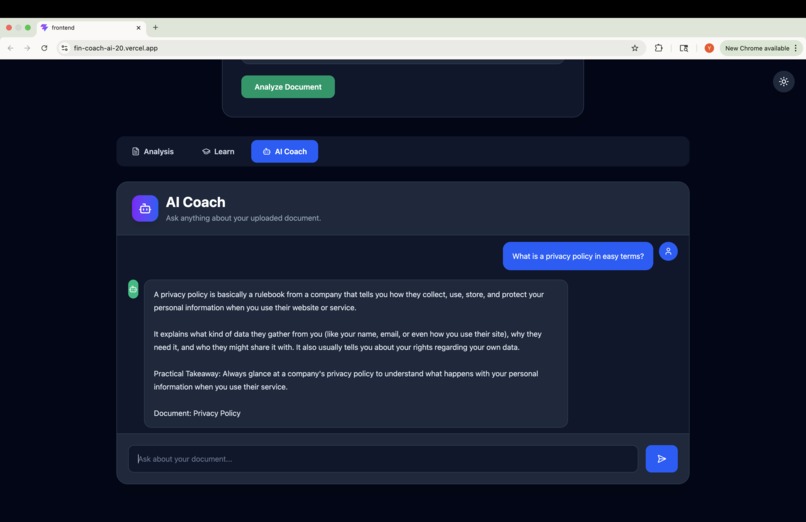
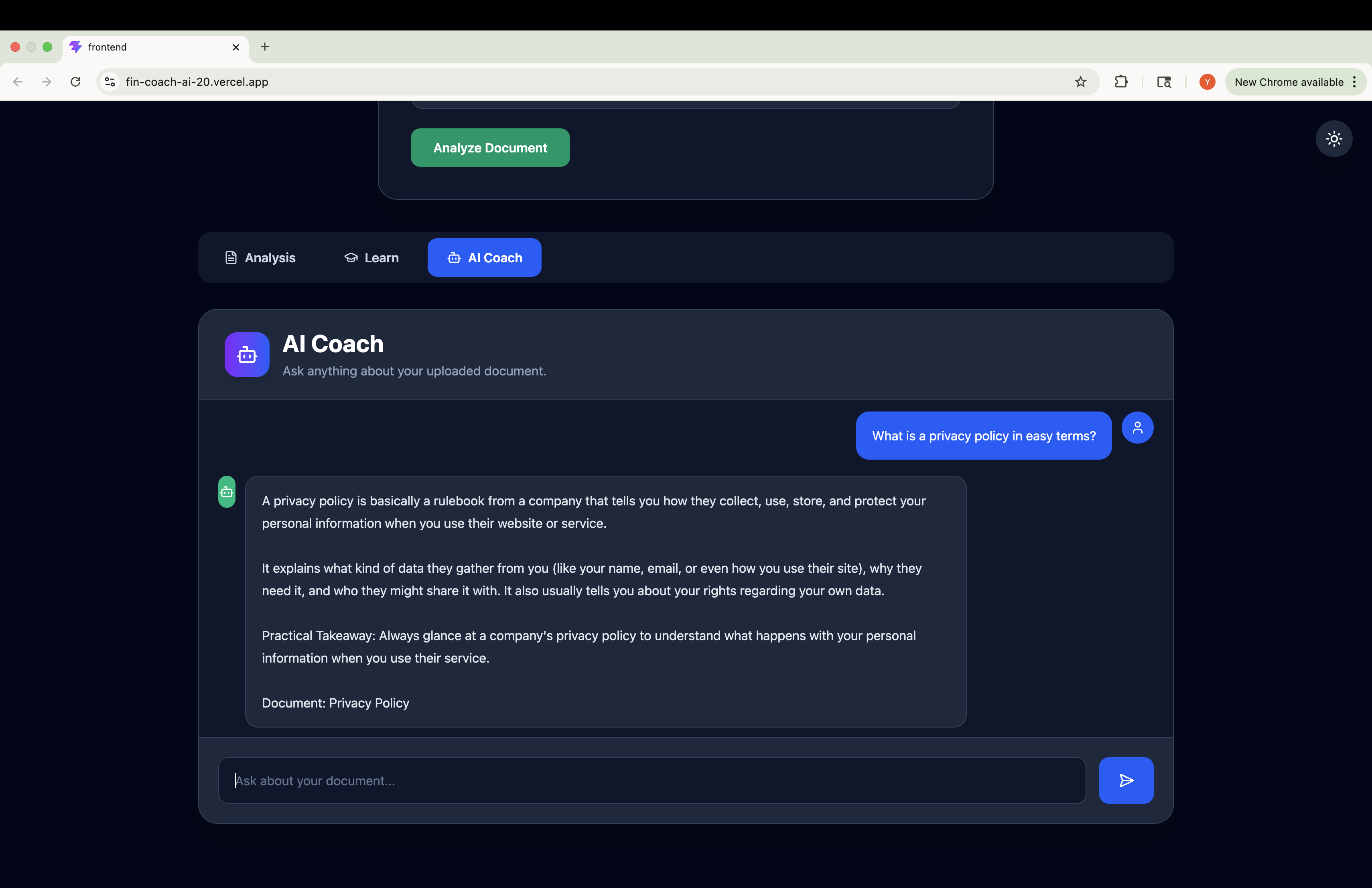
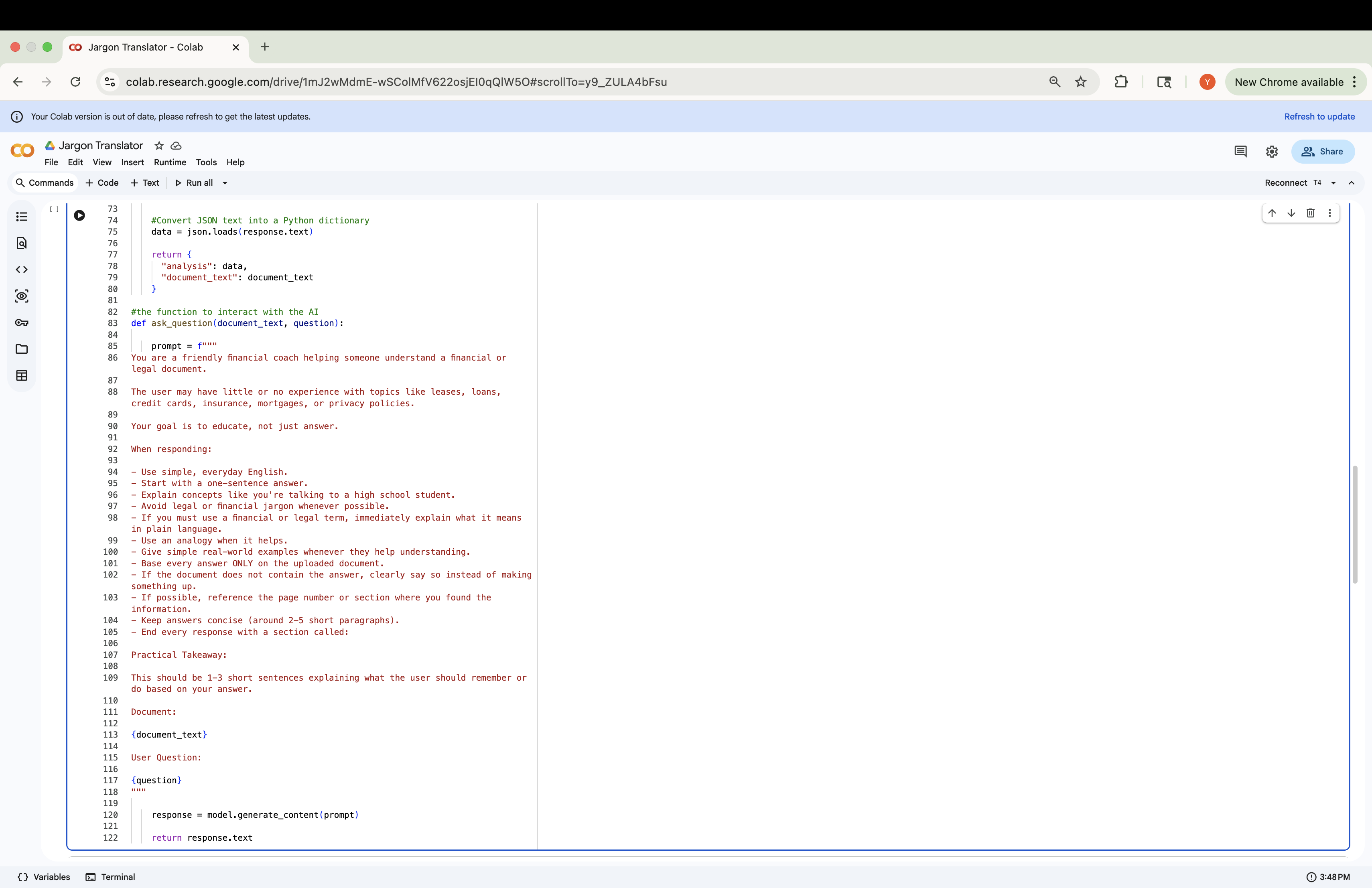
- An AI financial coach that answers questions about the uploaded document
For example, after uploading a rental agreement, a user could ask the AI coach for the exact lease start and end dates or ask it to explain a complicated clause in simpler language. Instead of simply telling users what a document says, FinCoach helps them understand what it means and become more financially literate in the process.
How we built it
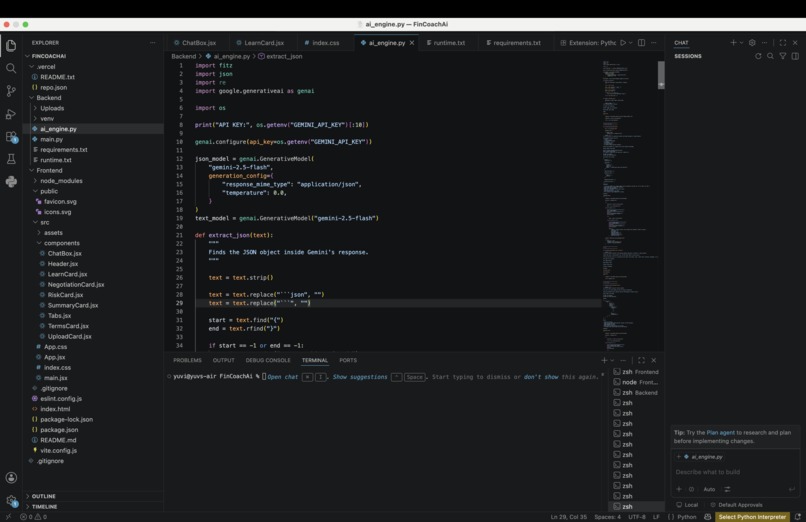
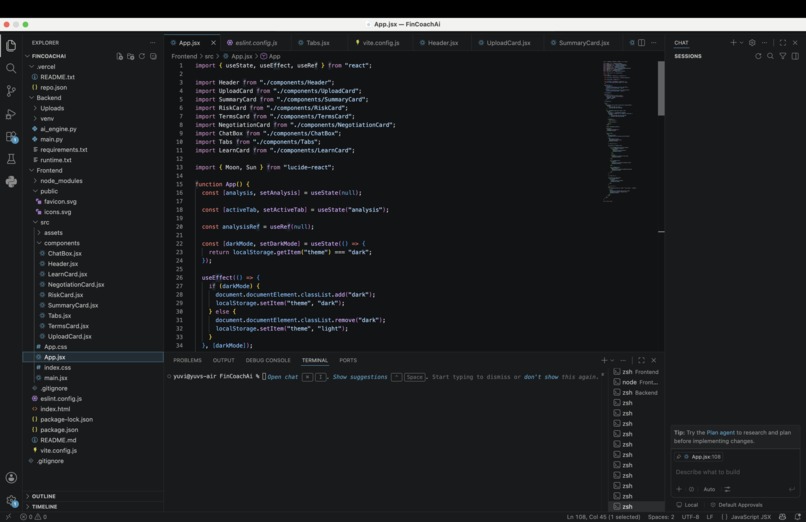
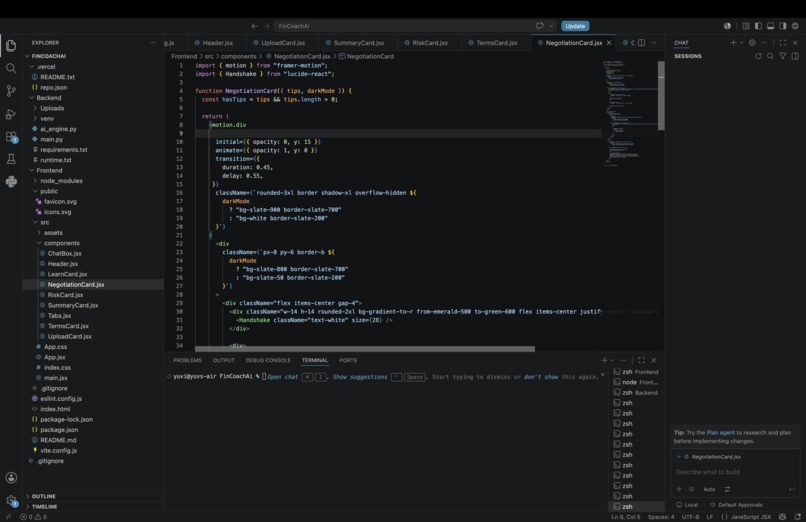
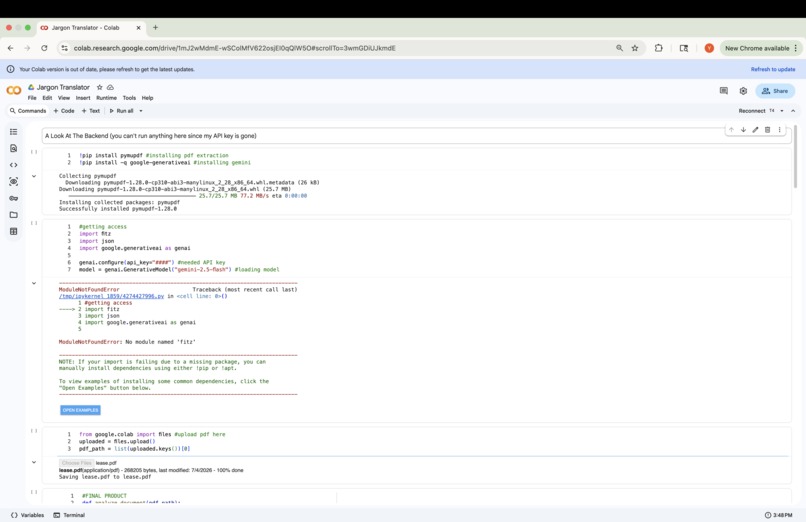
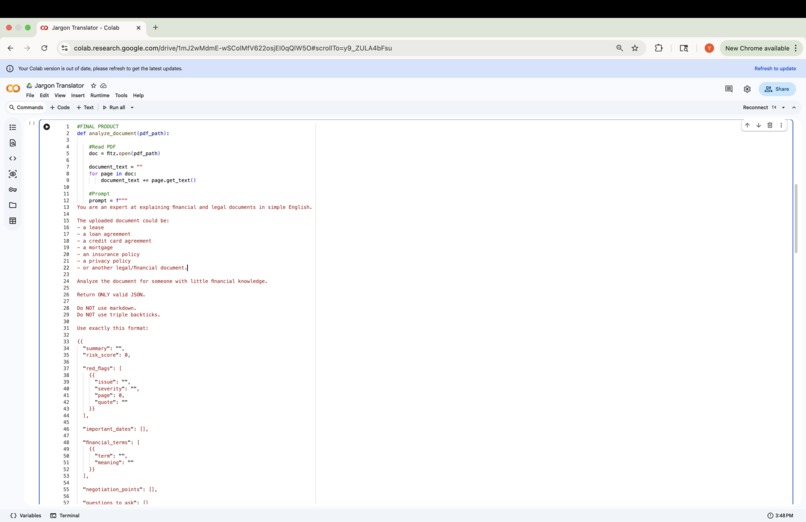
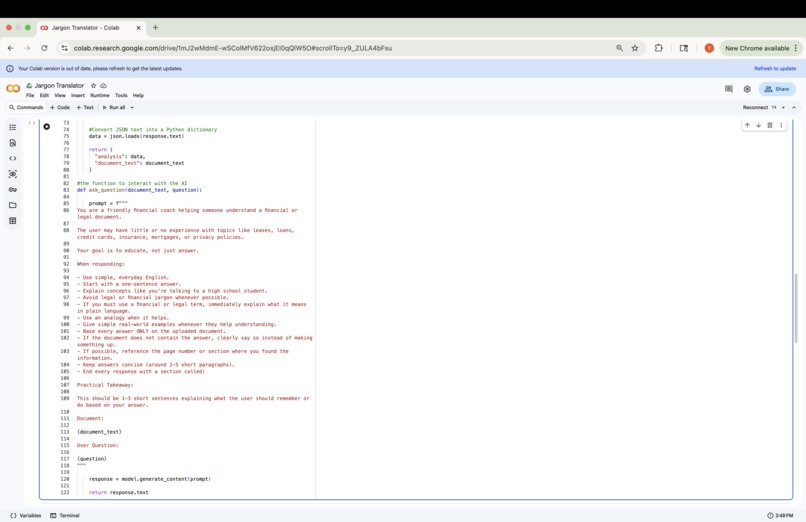
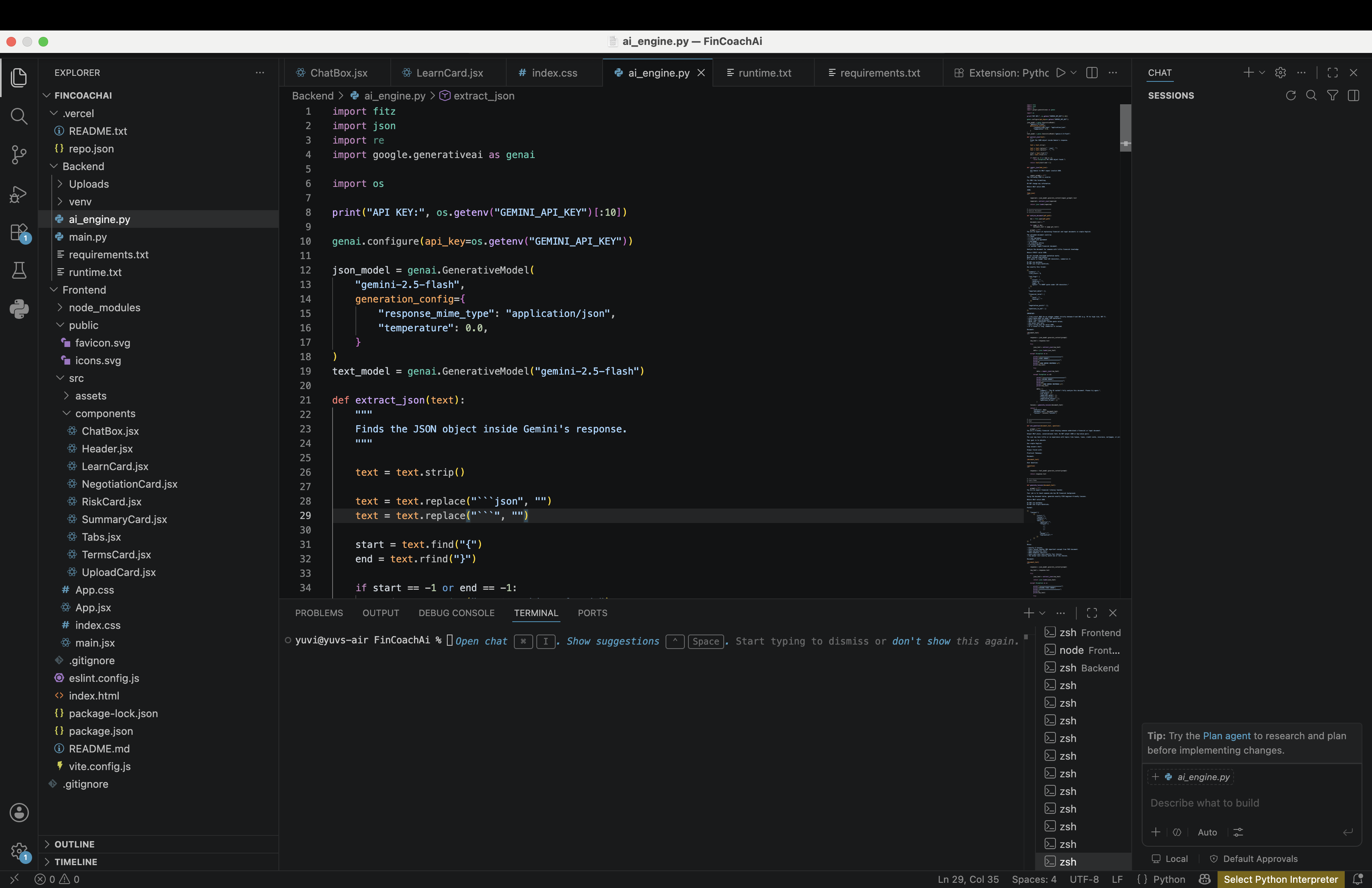
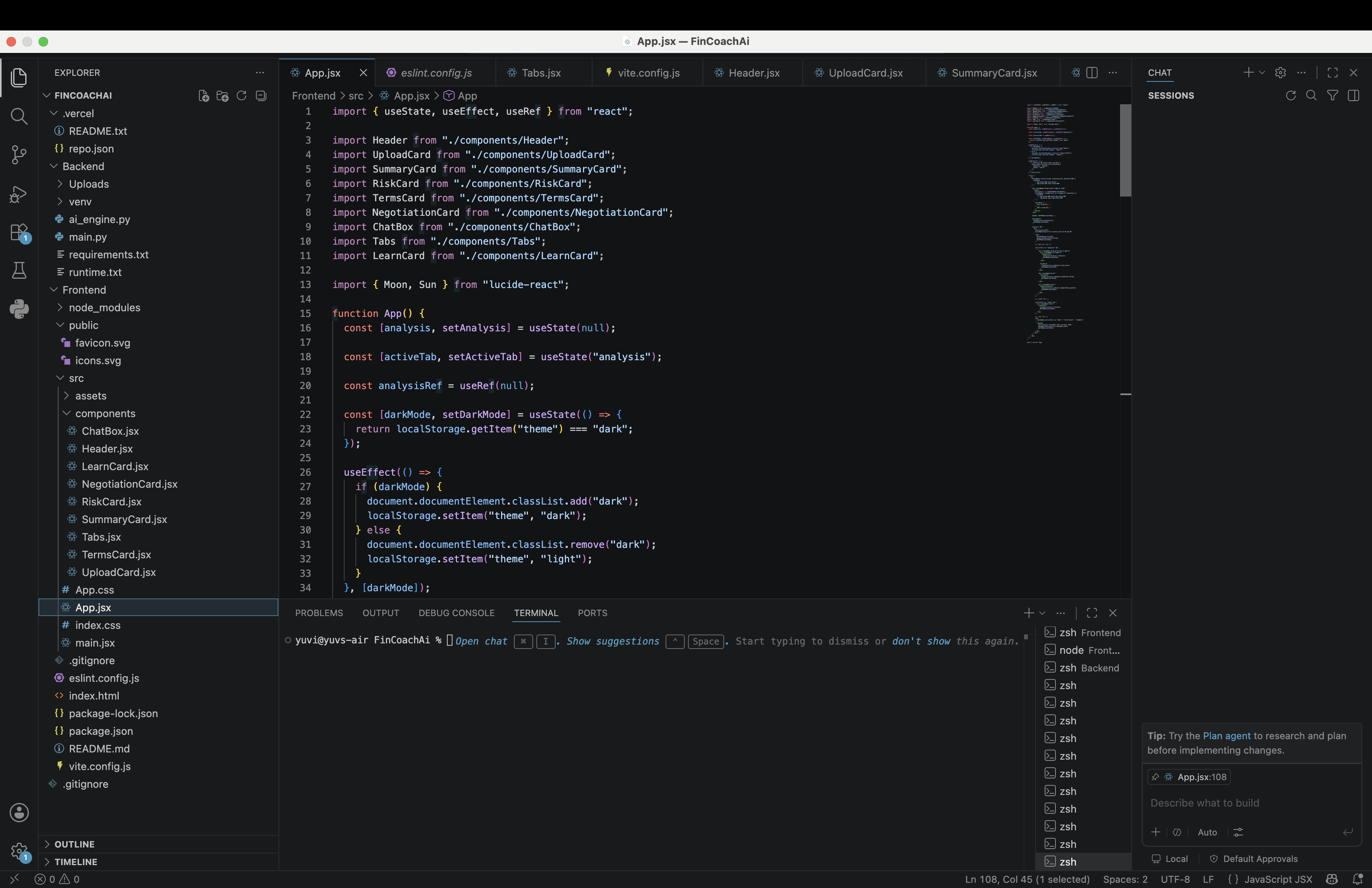
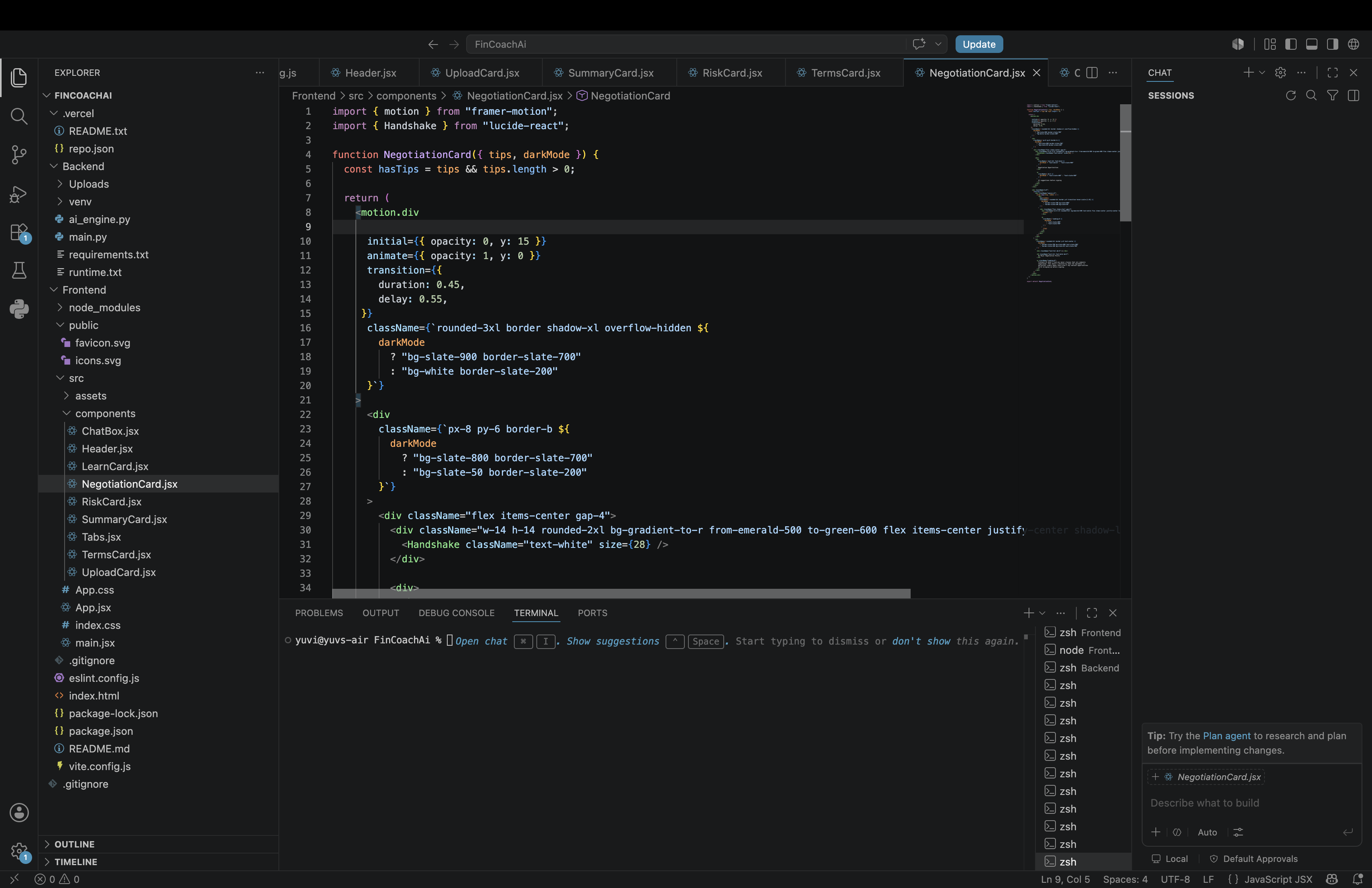
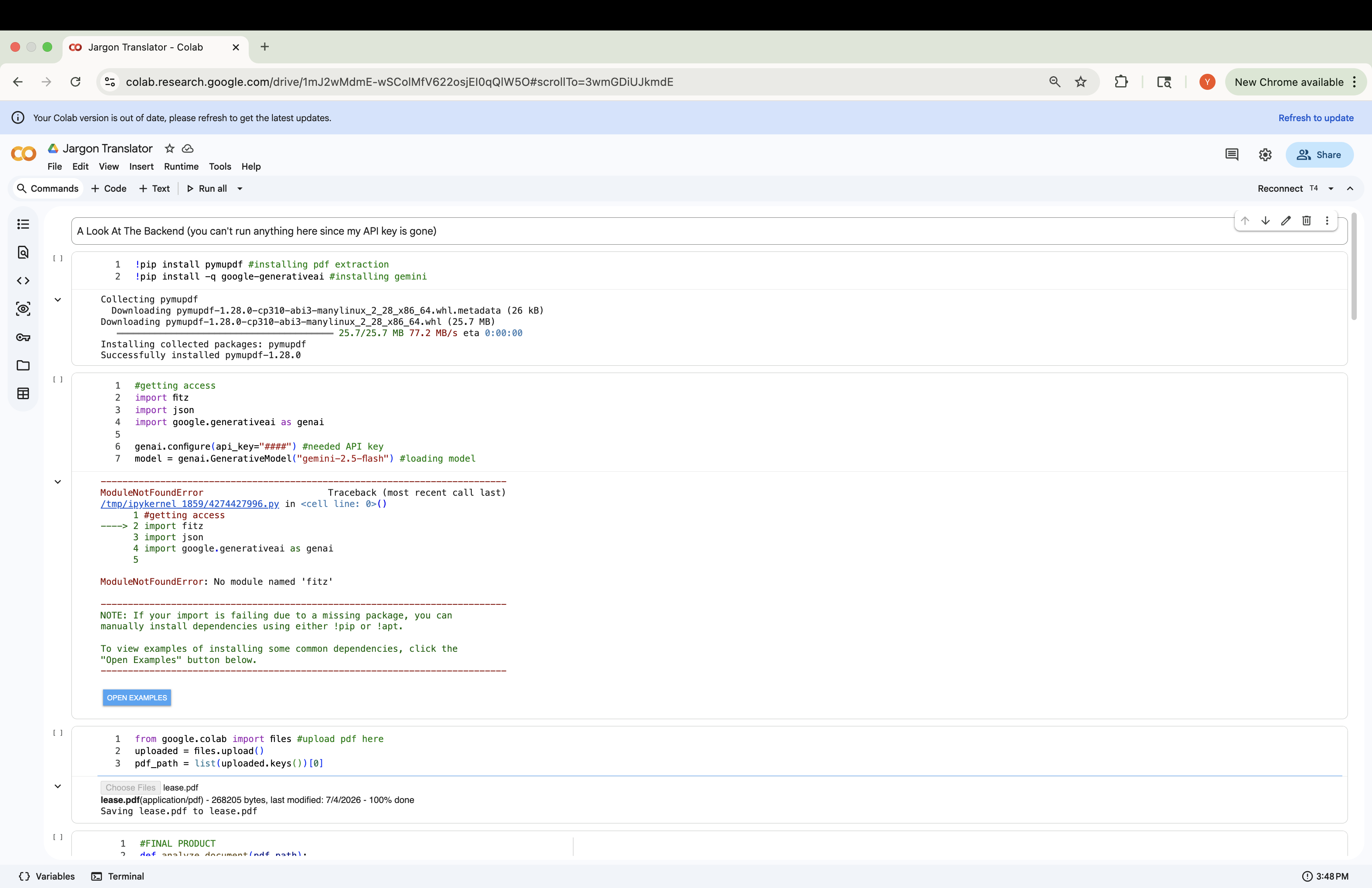
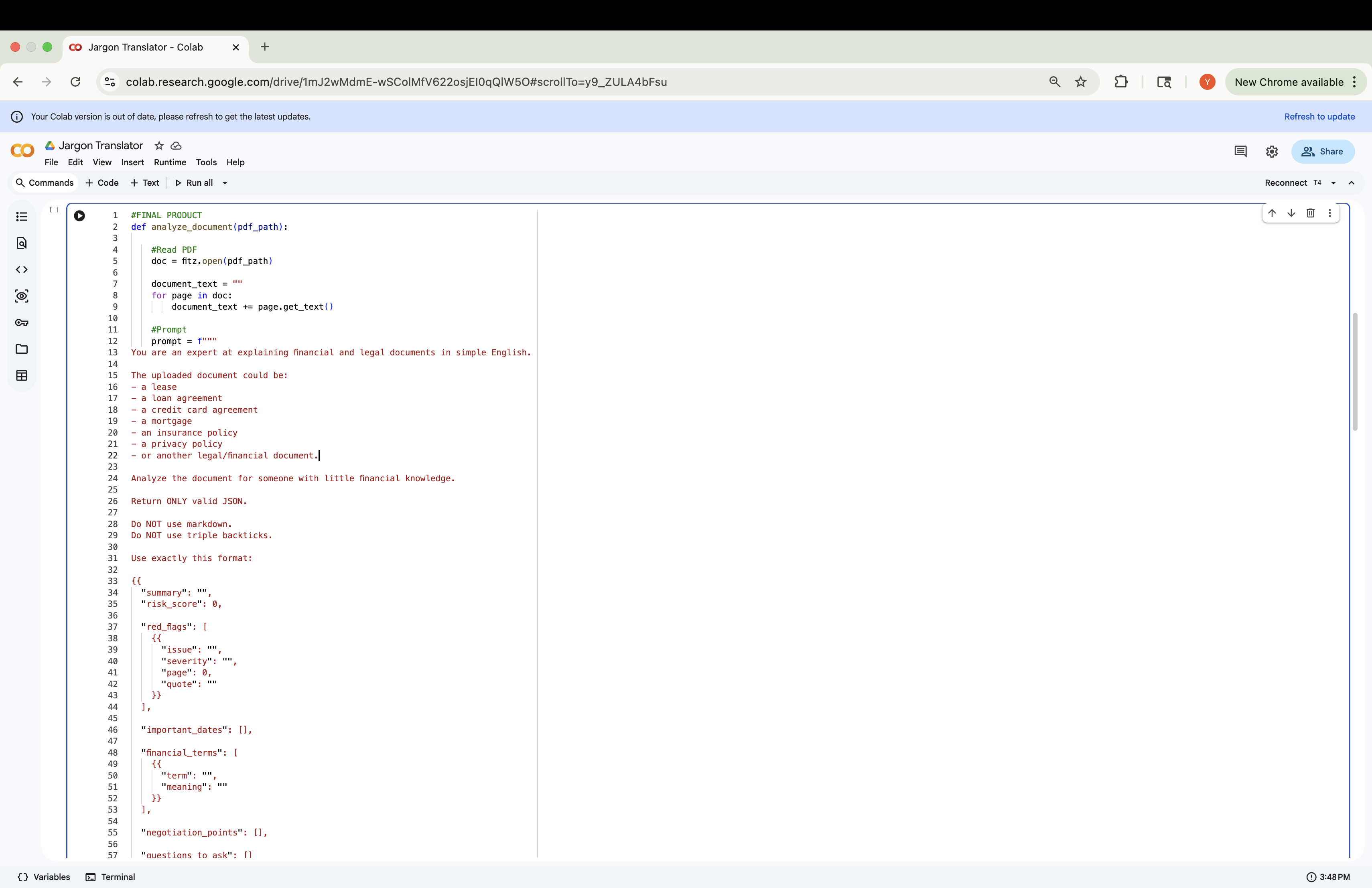
We started by prototyping our document-analysis system in Google Colab, where we experimented with prompts and tested different ways of extracting important information from financial documents. Once we had refined our approach, we built a FastAPI backend that connects the application to Google's Gemini 2.5 Flash API. Gemini analyzes uploaded documents, identifies important clauses and concepts, generates summaries and risk insights, and powers the AI coach. We built the frontend using React and JavaScript, focusing on making the experience simple enough that someone could upload a document and immediately understand the results. The application is organized around the user's document, with the summary, risks, financial terms, negotiation guidance, learning materials, and AI coach all connected to the same document context.
Challenges we ran into
One of our biggest challenges was getting AI-generated results to be both useful and structured. Financial documents can vary widely, so we had to refine our prompts and extraction logic to identify the information users actually care about consistently. We also had to think carefully about how to present complicated information without overwhelming the user. A technically accurate response isn't necessarily helpful if it's still filled with jargon, so we focused on turning complex information into clear, actionable explanations. Another challenge was building a reliable demo experience while working with an external AI API. We added local state and fallback behavior to the frontend so the application could continue providing a smooth experience if there were temporary network issues.
Accomplishments that we're proud of
We're proud that we built more than just an AI document summarizer. FinCoach combines document analysis, financial education, risk awareness, and an interactive AI coach into one platform. We're especially proud of the Learning feature. Instead of users uploading a document, reading a summary, and forgetting what they learned, FinCoach generates personalized quizzes from the actual document. This turns every document into an opportunity to build financial literacy. We're also proud of how quickly we went from an initial prototype in Google Colab to a working full-stack application with a React frontend, FastAPI backend, and Gemini-powered AI system.
What we learned
We learned that building an AI application is about much more than simply connecting an API to a website. The quality of the output depends heavily on prompt design, information structure, user experience, and how the AI's results are presented. We also learned the importance of designing around the user's actual problem. Our goal wasn't to make the most complicated AI system possible; it was to make financial documents easier to understand. That meant constantly asking ourselves whether each feature actually made the user's experience clearer and more useful. Most importantly, we learned how AI can be used not just to provide answers, but to teach people how to understand the information themselves.
What's next for Fincoach AI
Our next step is to expand FinCoach beyond individual users and make it useful for organizations that deal with financial documents at scale. Tenant organizations, credit counselors, nonprofits, and legal-aid organizations could use FinCoach to help more people understand their documents without having to manually review every document from scratch. We also want to improve document accuracy, expand the types of documents FinCoach can analyze, and make the learning experience more personalized over time. Ultimately, our goal is simple: financial documents shouldn't require a law degree to understand. FinCoach is here to make them accessible to everyone.
Built With
- fastapi
- framermotion
- github
- googlecolab
- googlegemini
- javascript
- lucidereact
- pymupdf
- python
- react
- render
- tailwind-css
- vercel
- visual-studio
- vite


Log in or sign up for Devpost to join the conversation.