-
-
VS
-
VS
-
VS
-
VS
-
VS
-
VS
-
VS
-
VS
-
VS
-
Render
-
Vercel
Inspiration
We were inspired by how many people have to sign important financial documents without actually knowing what they're agreeing to. Whether it's a lease, a loan agreement, or a credit card contract, these documents are usually filled with complicated legal and financial terms that can be difficult to understand. Because of this, many people end up skimming through them or signing without reading everything, which can lead to hidden fees, unexpected penalties, or other costly mistakes. This is especially common among young adults who are dealing with these types of documents for the first time. According to the TIAA Institute-GFLEC Personal Finance Index, Gen Z correctly answered only 38% of basic financial literacy questions, the lowest of any generation, and according to Bank of America, 42% of Gen Z live paycheck to paycheck. Seeing these statistics made us realize how valuable a tool like FinCoach could be. We wanted to create something that helps people understand financial documents before they sign them, instead of after they've already made a mistake.
What it does
FinCoach helps people understand complicated financial documents by turning them into clear, easy-to-read summaries. Users can upload documents such as leases, loan agreements, or credit card statements, and within seconds, the AI analyzes them and highlights the most important information. Along with a plain-language summary, the app explains important financial terms, gives the document a risk score based on how easy it is to misunderstand, and provides negotiation tips that users can use before signing. If users still have questions, they can talk to the built-in AI chatbot, which answers questions using the uploaded document as context. For example, someone could ask what utilities they're responsible for in a lease or whether there are any hidden fees they should know about. We also designed FinCoach for organizations such as tenant unions, small brokerages, and credit counseling nonprofits, allowing multiple users to work together under a shared enterprise account.
How we built it
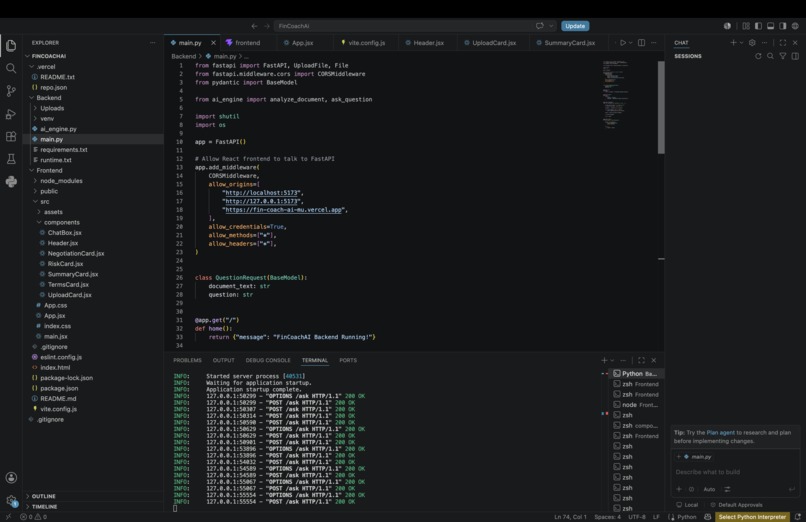
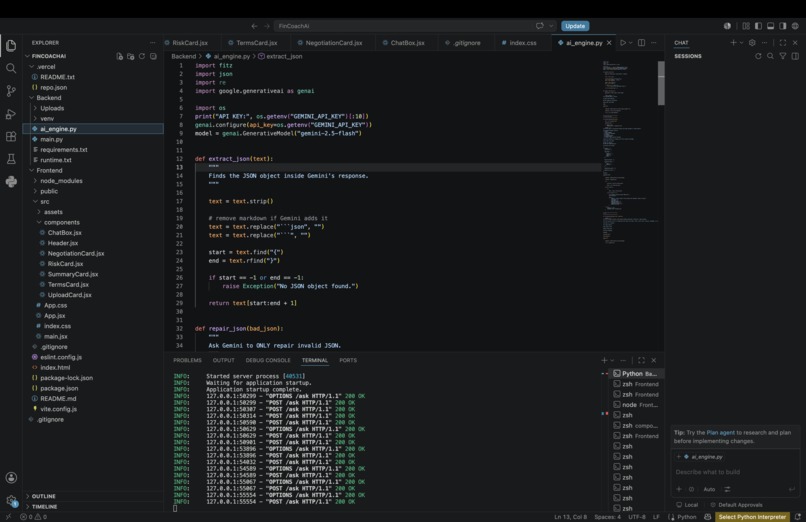
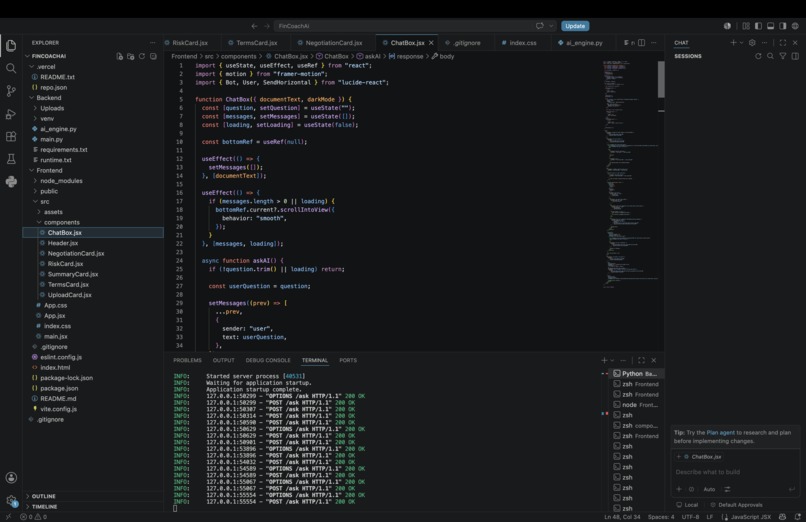
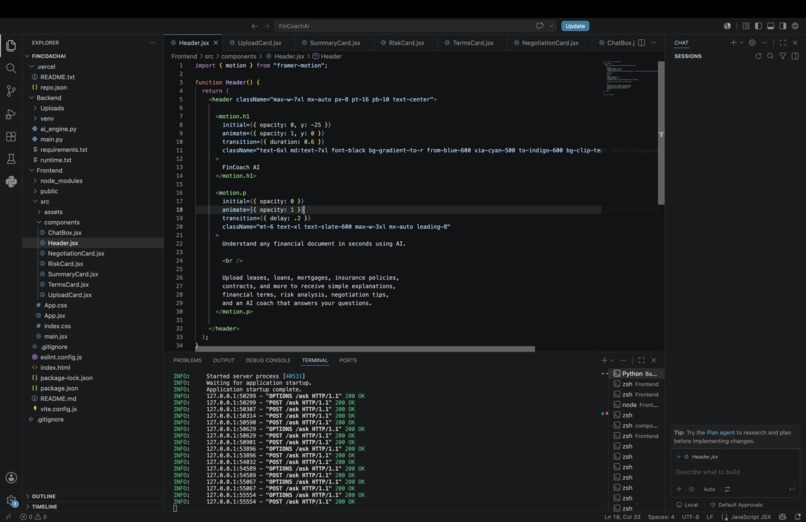
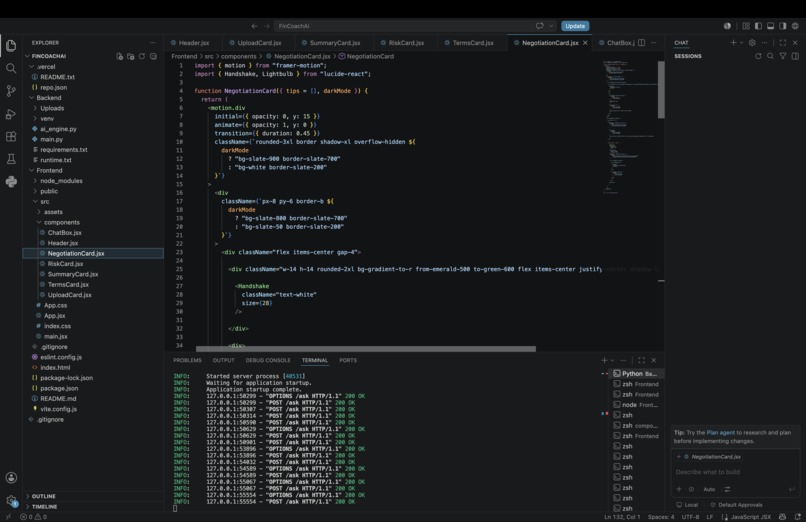
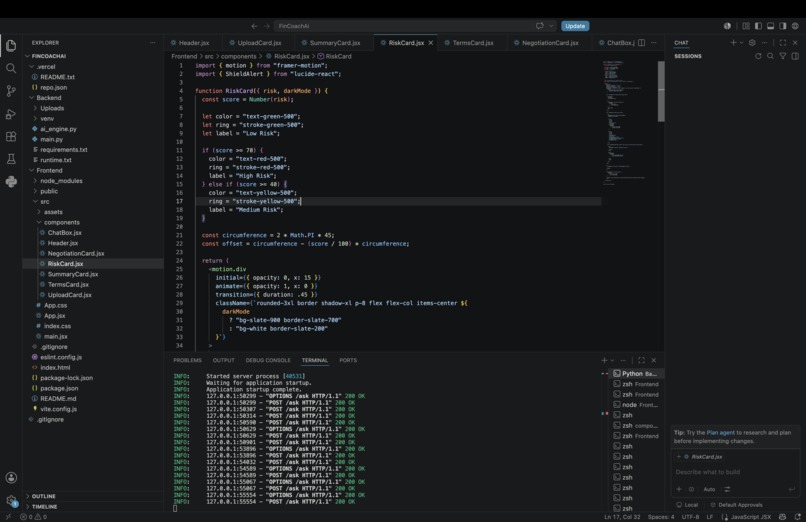
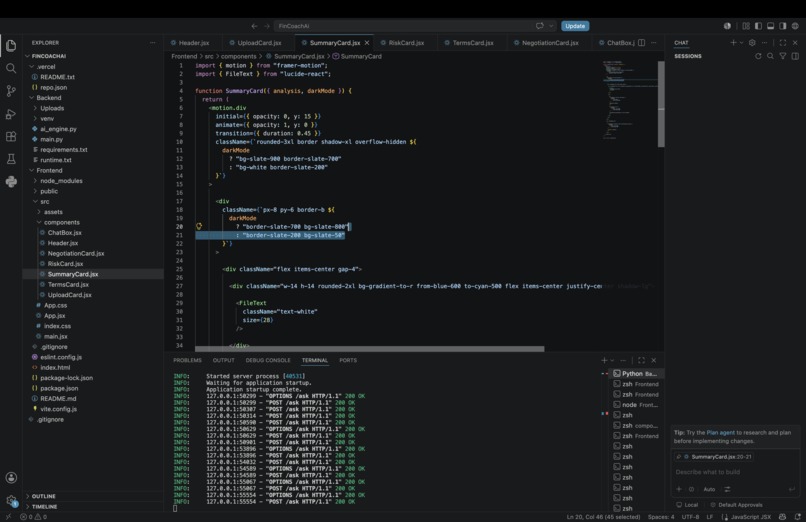
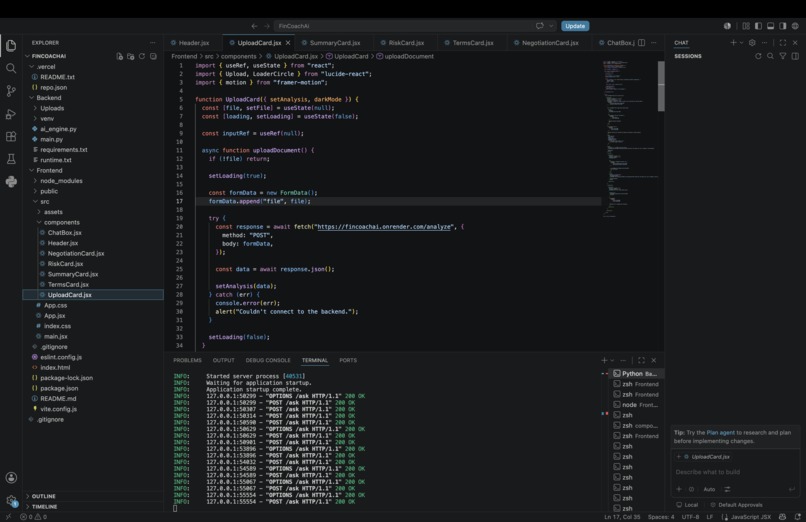
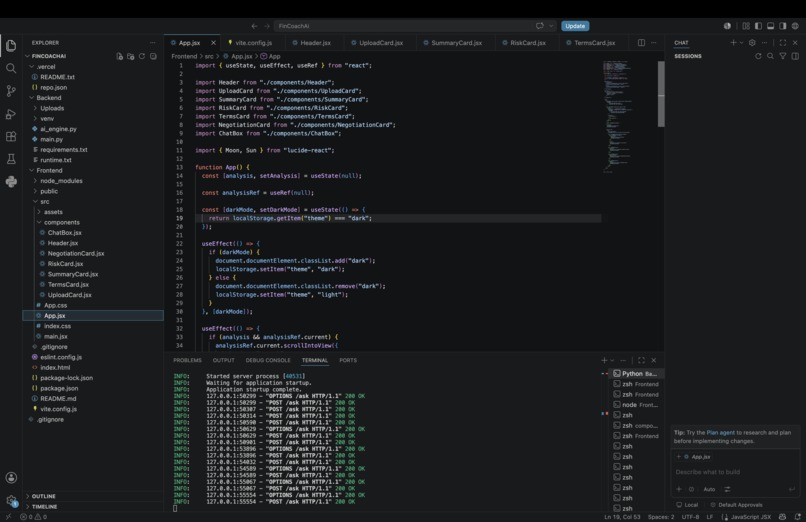
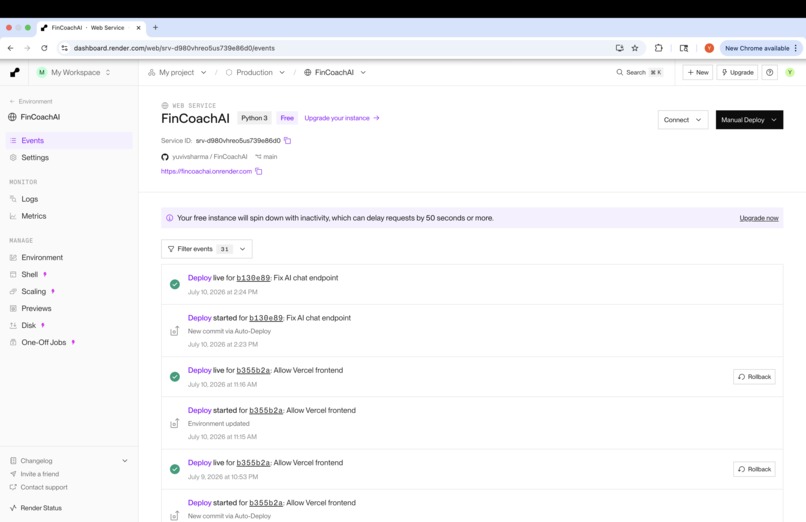
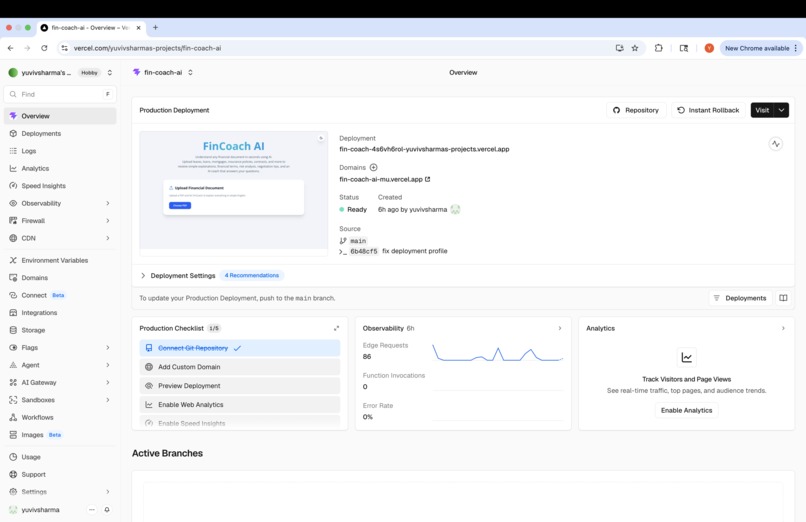
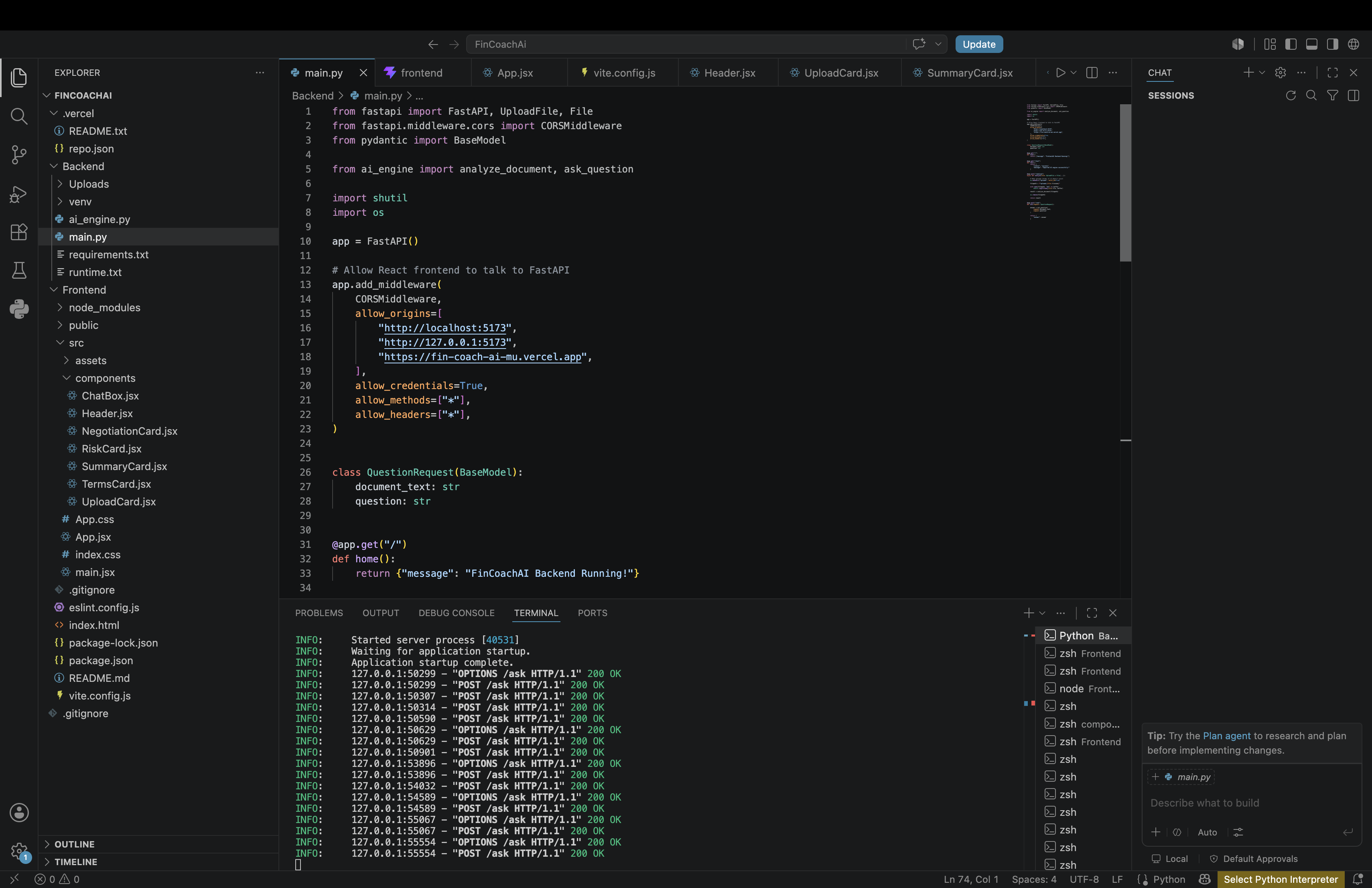
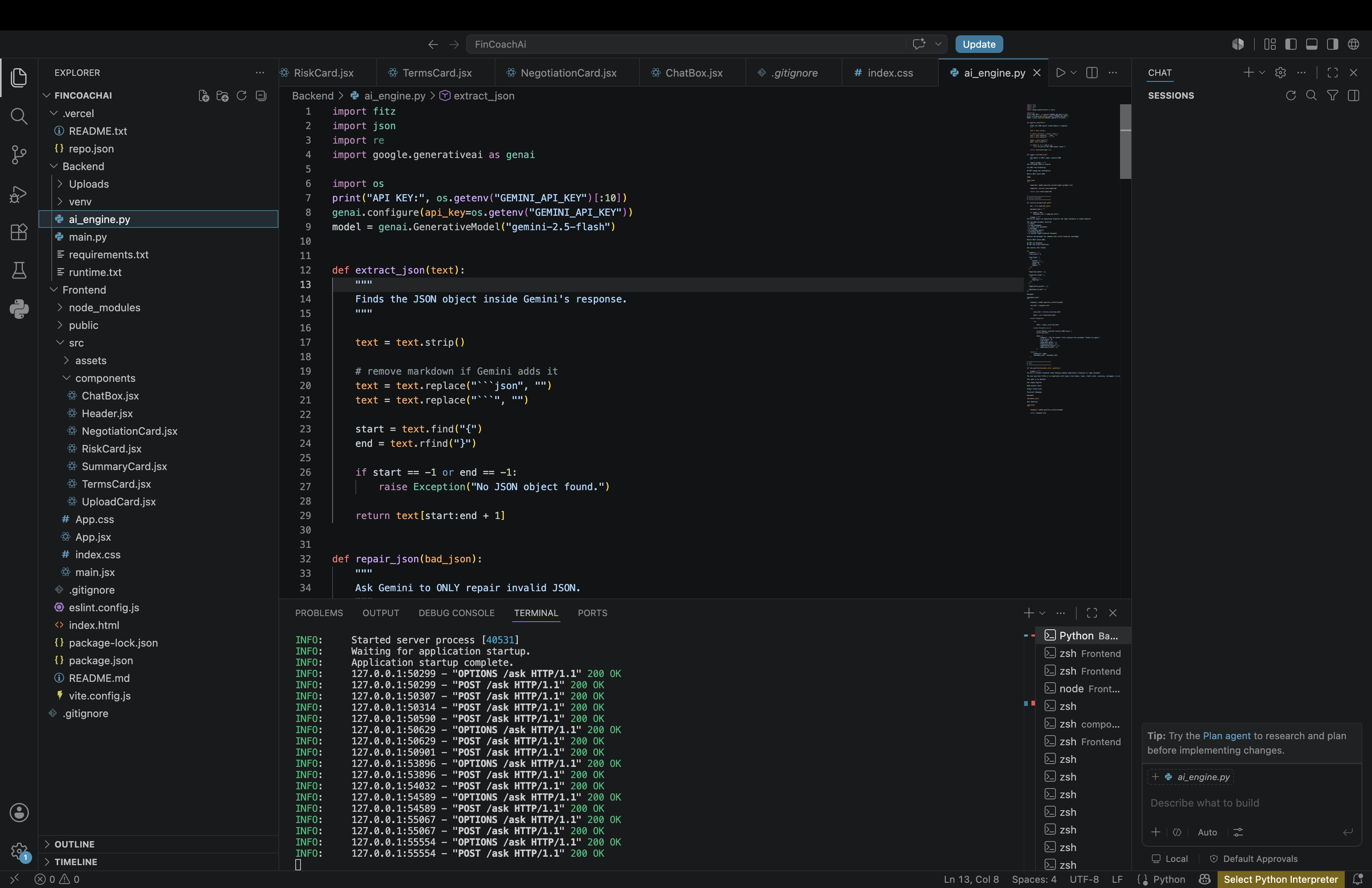
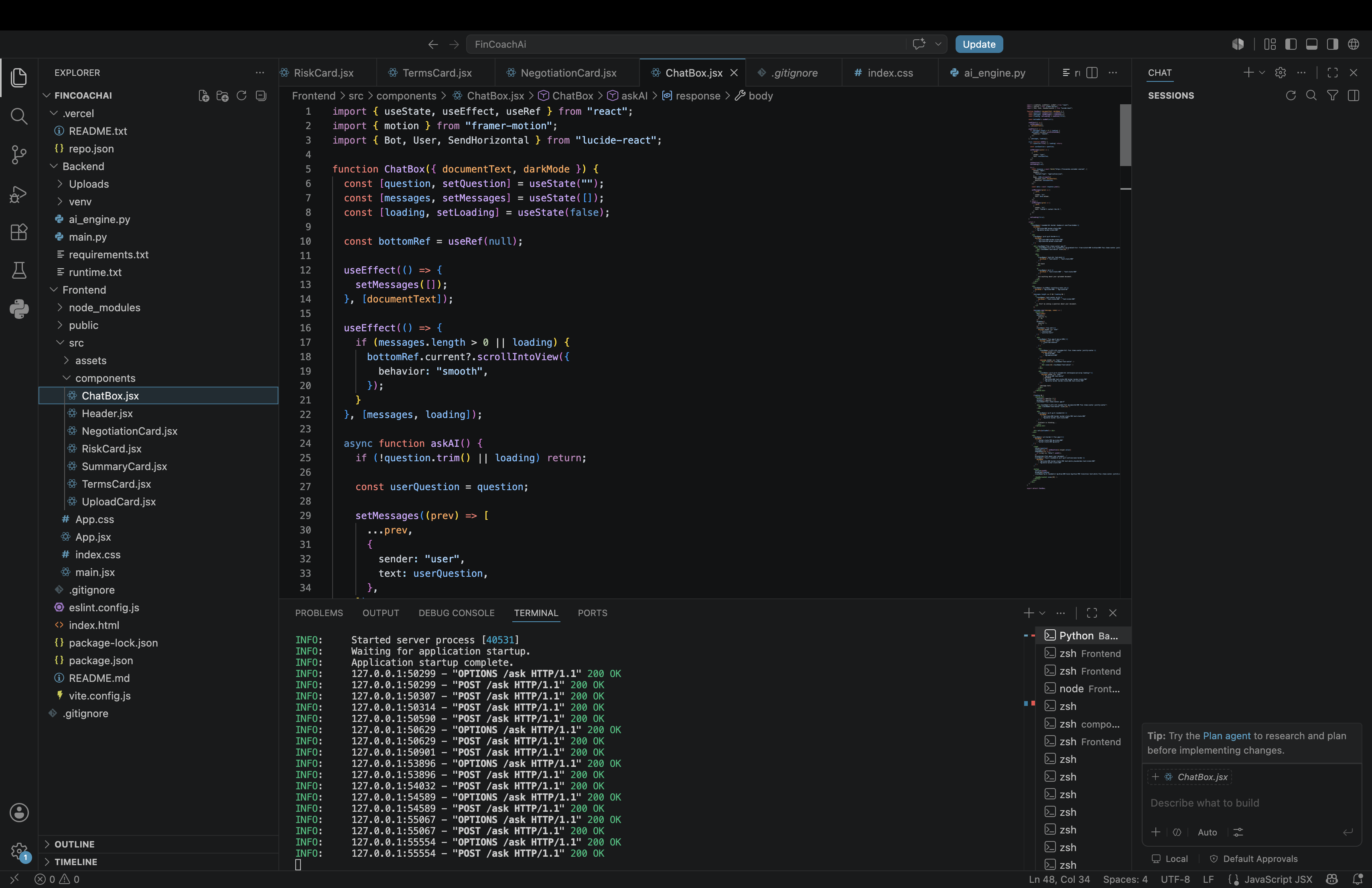
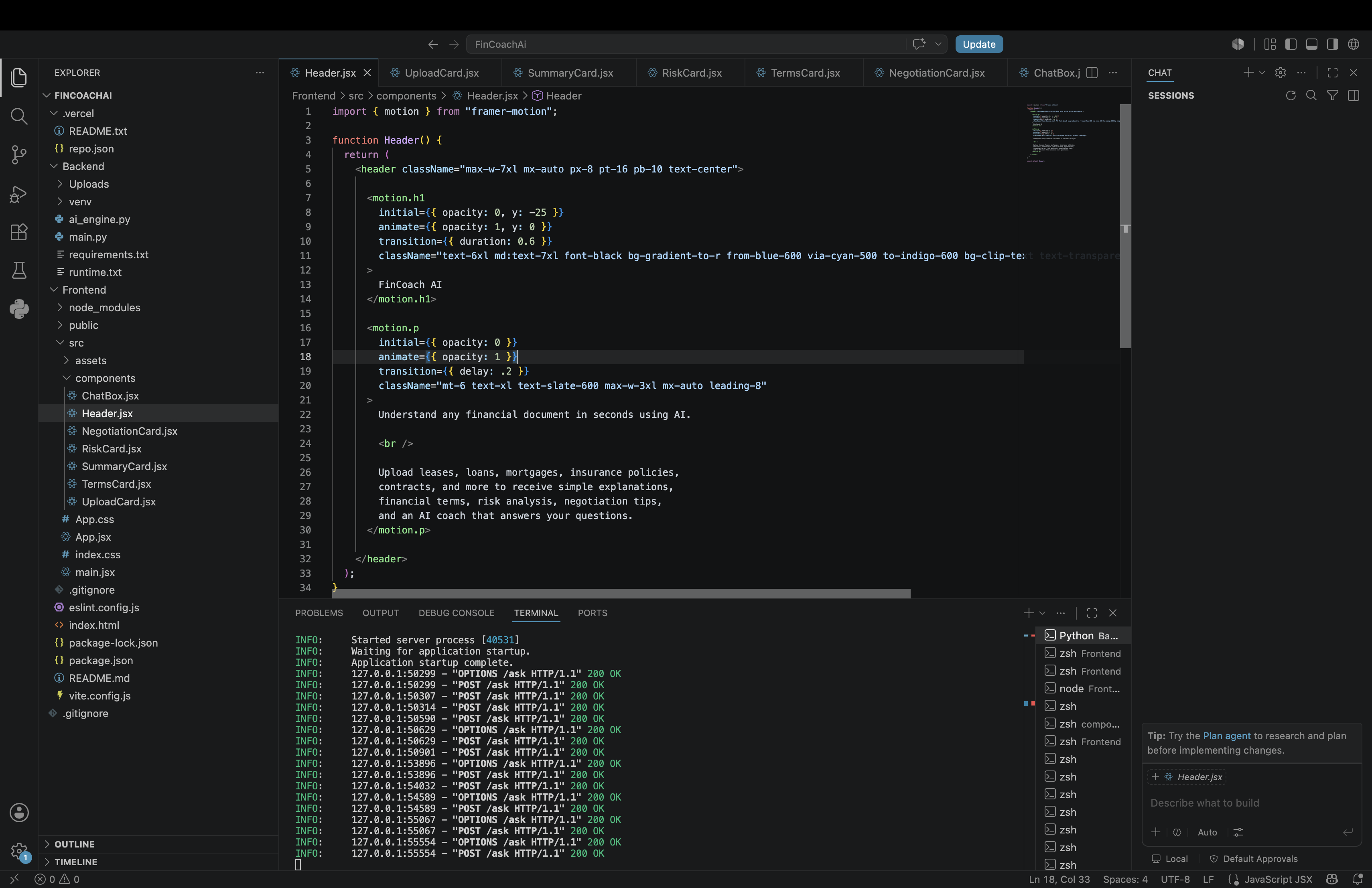
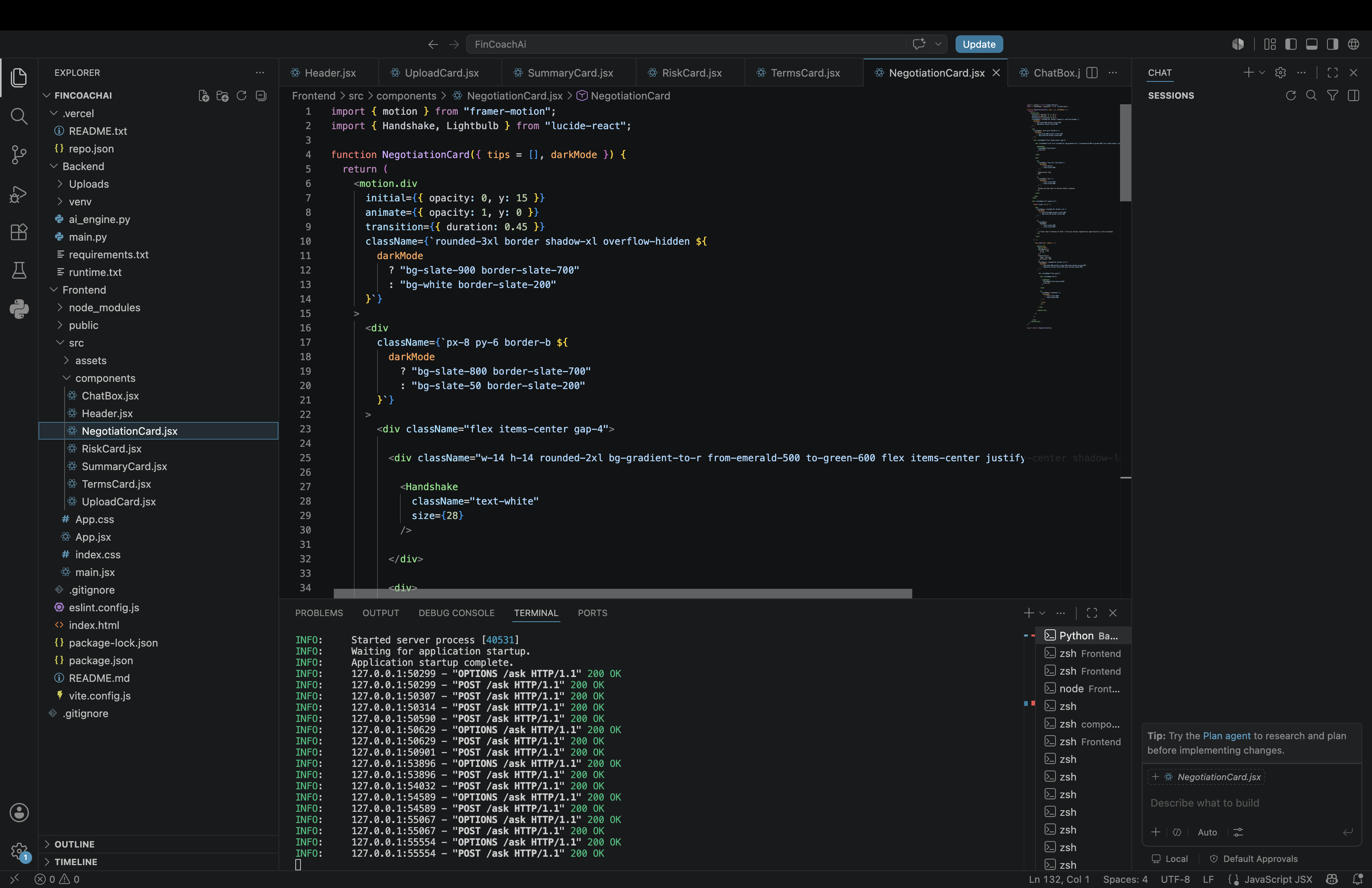
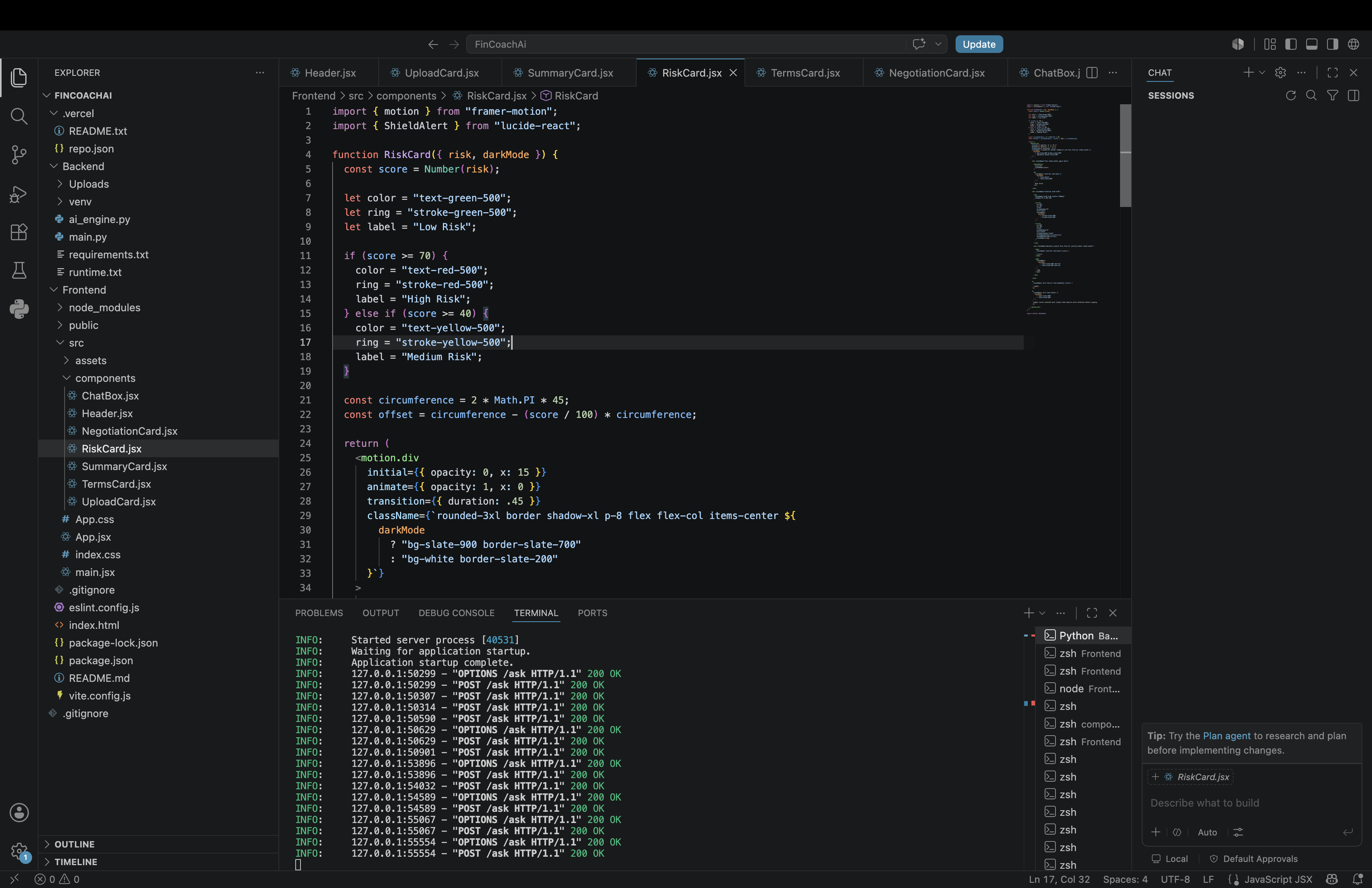
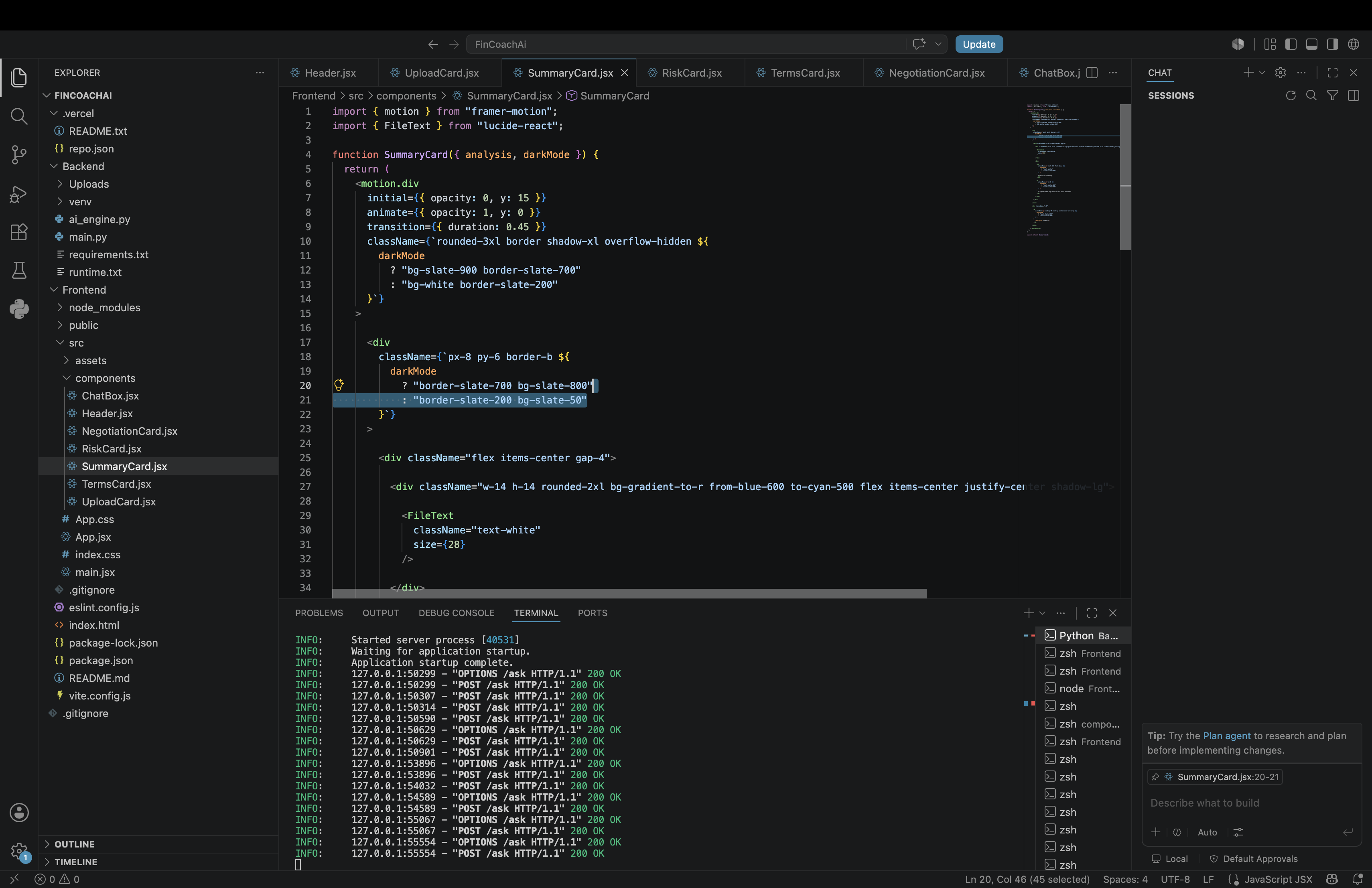
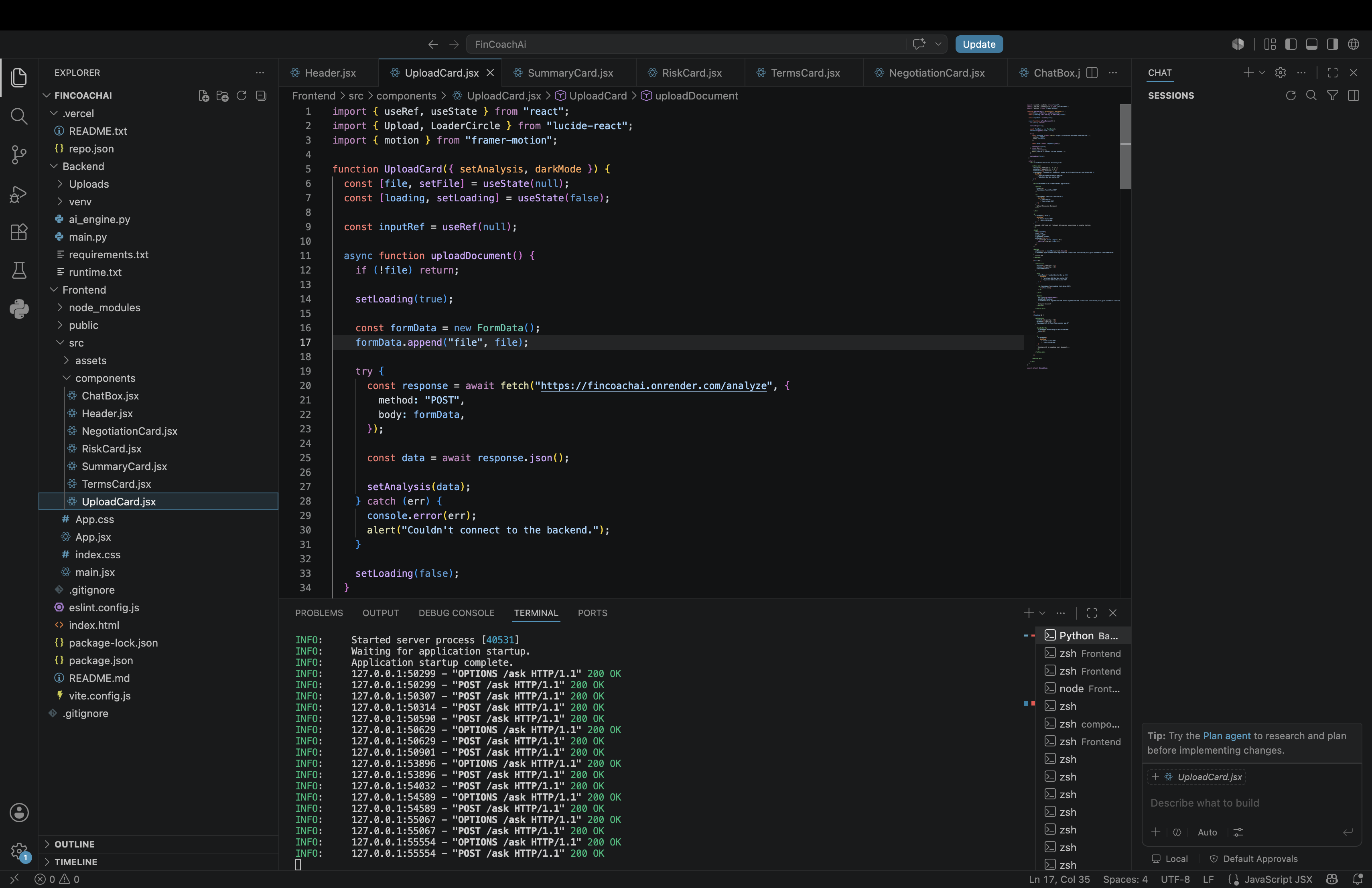
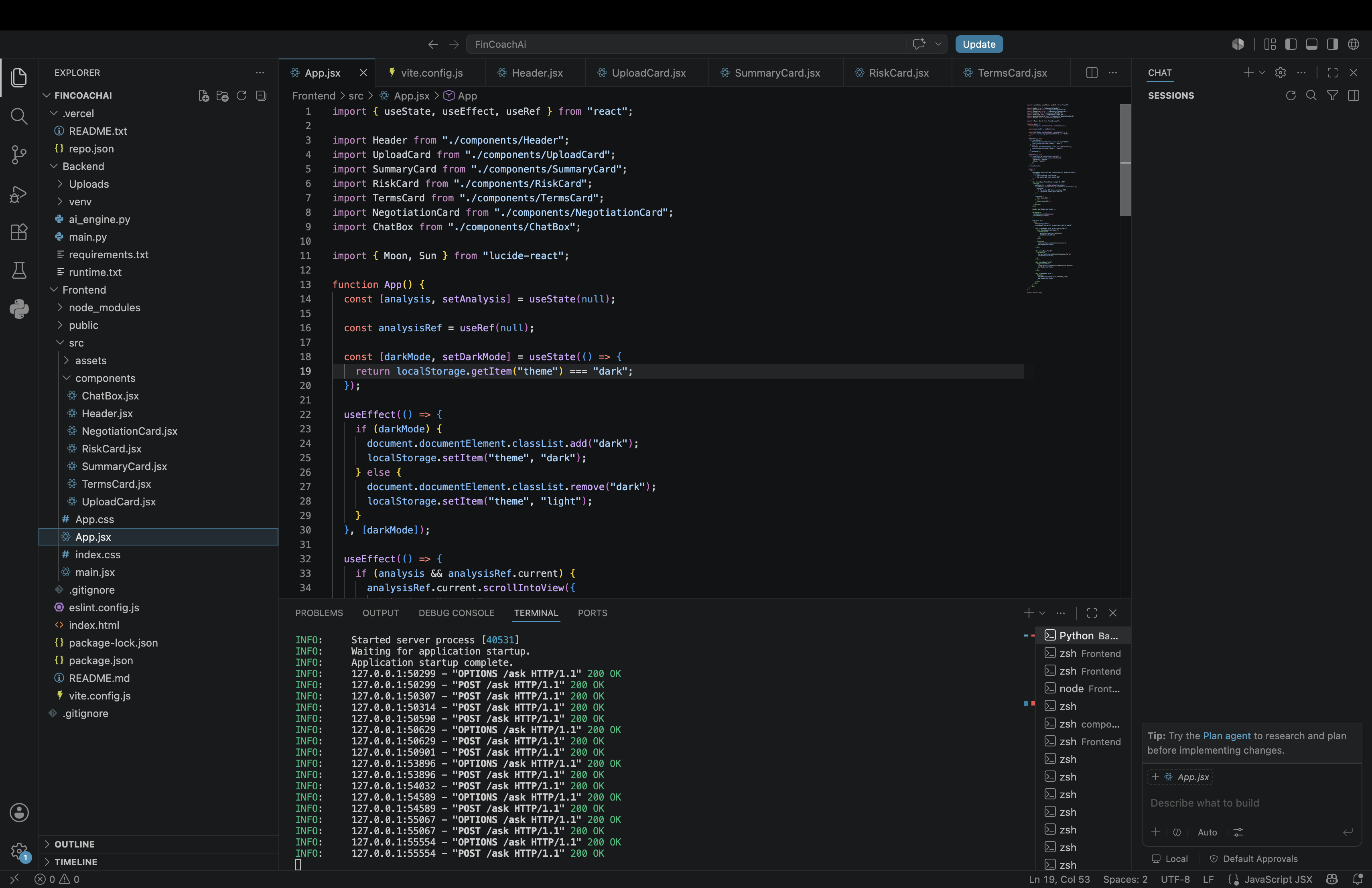
We started building FinCoach in Google Colab, where we experimented with different prompts and figured out the best way for the AI to extract useful information from financial documents. Once we were happy with the results, we moved everything to a FastAPI backend that handles document uploads and sends them to Google's Gemini 2.5 Flash model for analysis. We chose Gemini Flash because it offers a great balance between speed, accuracy, and cost, allowing us to process documents for only about four cents each while still producing reliable results. On the frontend, we built the application using React and focused on creating a clean interface that anyone could use without needing instructions. Everything a user needs, including the summary, financial terms, risk score, negotiation tips, and chatbot, is displayed in one place. We also added local state fallbacks so the app continues working smoothly even if the internet connection becomes unstable during a demonstration.
Challenges we ran into
One of the biggest challenges we faced was dealing with the wide variety of document layouts. Financial documents often include multiple columns, tables, small print, and formatting that make it difficult for AI to consistently understand the information in the correct order. We also spent a lot of time reducing AI hallucinations because accuracy is extremely important when people are making financial decisions. To solve this, we refined our prompts so the chatbot stays focused on the uploaded document instead of relying on outside knowledge. Another challenge was making sure the interface stayed simple, even though we were presenting several different types of information at once. Finding a layout that was both informative and easy to navigate took several rounds of testing and redesign.
Accomplishments that we're proud of
We're most proud of creating a tool that can take something as confusing as a financial contract and make it understandable in just a few seconds. Instead of only generating a summary, FinCoach helps users learn what unfamiliar terms mean, identifies potential risks, suggests negotiation strategies, and allows users to ask follow-up questions through an AI chatbot. We also feel good about designing a business model that keeps the platform accessible while still being sustainable through individual subscriptions and enterprise plans for organizations. Finally, we're proud that the technology behind FinCoach is efficient enough to keep AI processing costs low, making it possible to continue scaling the platform as more users join.
What we learned
Working on FinCoach taught us that financial literacy isn't just about education; it's also about accessibility. Even when information is available, it often isn't written in a way that most people can easily understand. We also learned how important it is to build AI systems that people can trust, especially when they involve financial decisions. Choosing Gemini 2.5 Flash showed us that it's possible to build a powerful AI application without making it expensive to operate. While researching our target audience, we also learned more about the people who could benefit most from FinCoach. For example, over 70 million Americans participate in the gig economy, and according to the Commonwealth, between 70% and 80% of gig workers have less than $1,000 in emergency savings. Those statistics reminded us that helping someone avoid even one costly mistake can make a real difference.
What's next for FinCoach
We're excited to continue improving FinCoach beyond the hackathon. Our next goal is to support even more types of financial documents while making our summaries, risk detection, and AI responses even more accurate. We also want to continue improving the chatbot so users can ask more detailed questions and receive clear, reliable answers based entirely on their documents. On the business side, we plan to grow through search engine optimization, Google Ads, social media, Reddit communities, and partnerships with organizations like tenant unions, legal aid groups, and credit counseling nonprofits. Based on our first-year projections, we estimate reaching around 5,000 users with an 11% paid conversion rate, generating approximately $35,320 in revenue while keeping operating costs low. Our long-term goal is simple: we want understanding a financial document to be as easy as asking a question, so people can make informed decisions with confidence.
Built With
- css
- fastapi
- framermotion
- geminiapi
- git
- github
- google-colab
- html
- javascript
- json
- pymupdf
- python
- react
- render
- tailwindcss
- vercel
- visual-studio
- vite


Log in or sign up for Devpost to join the conversation.