-
-
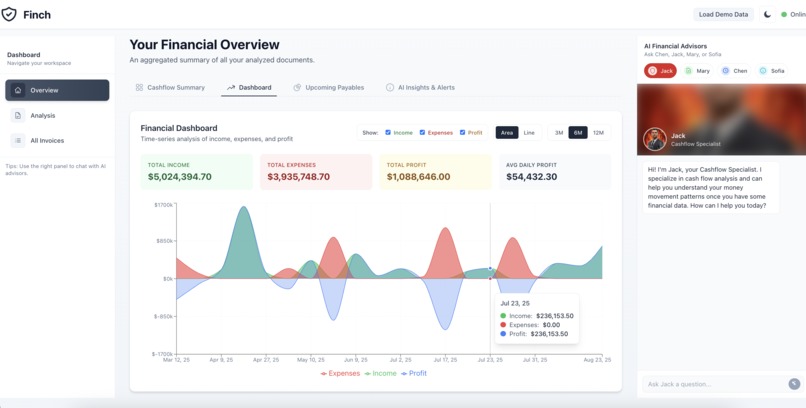
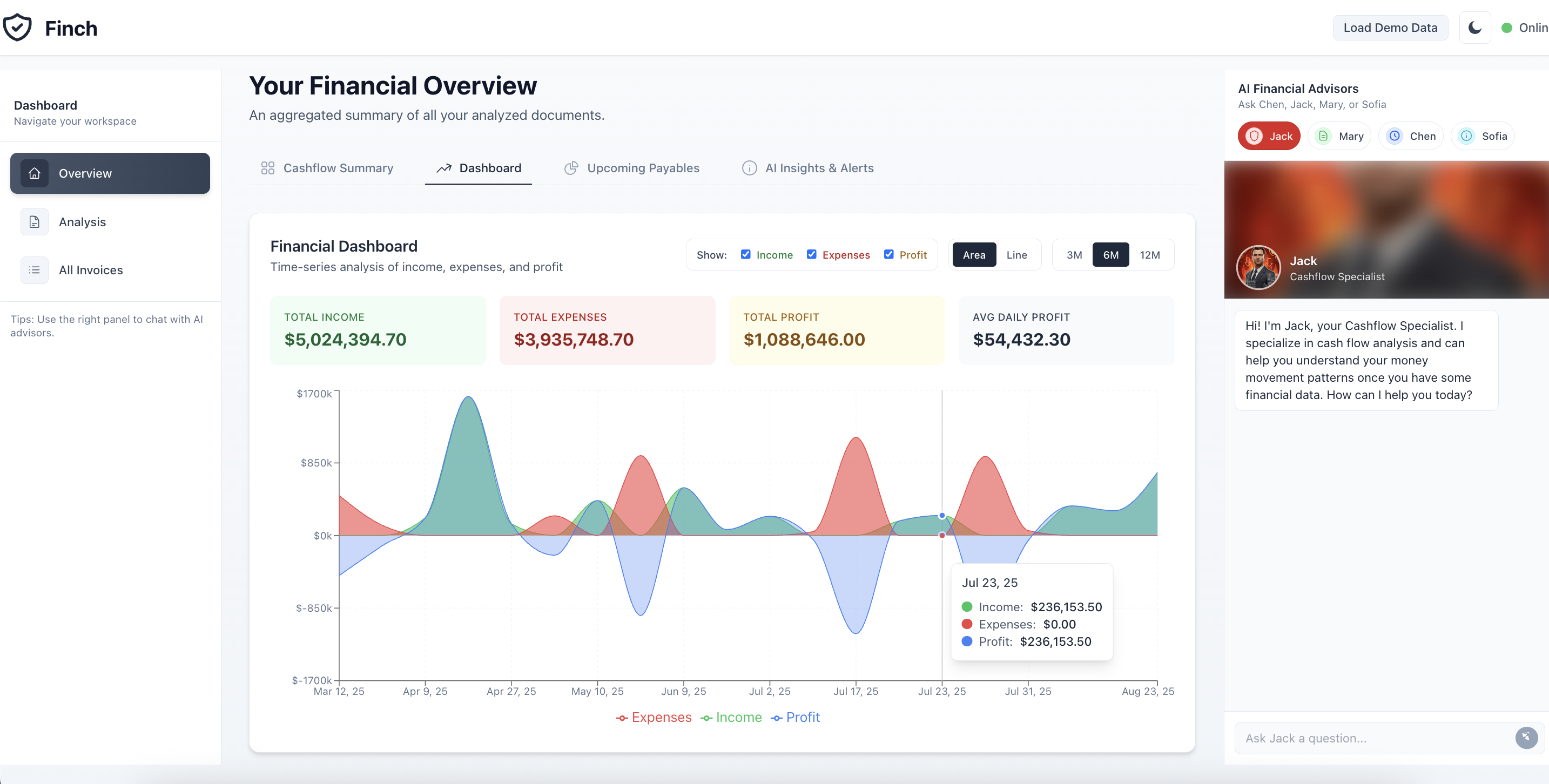
Financial Overview Dashboard (with AI Advisors)
-
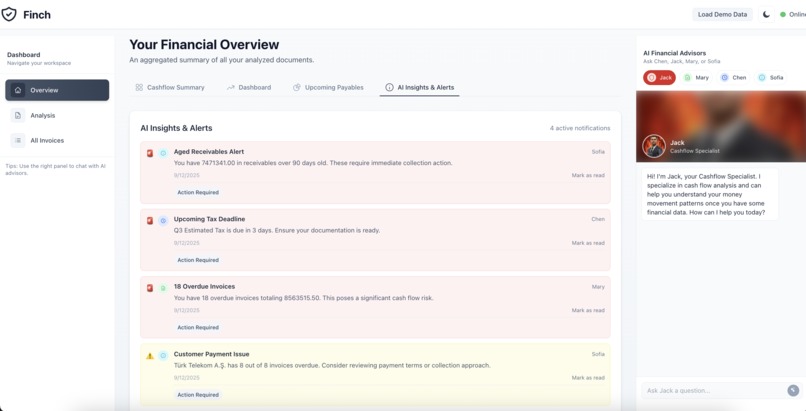
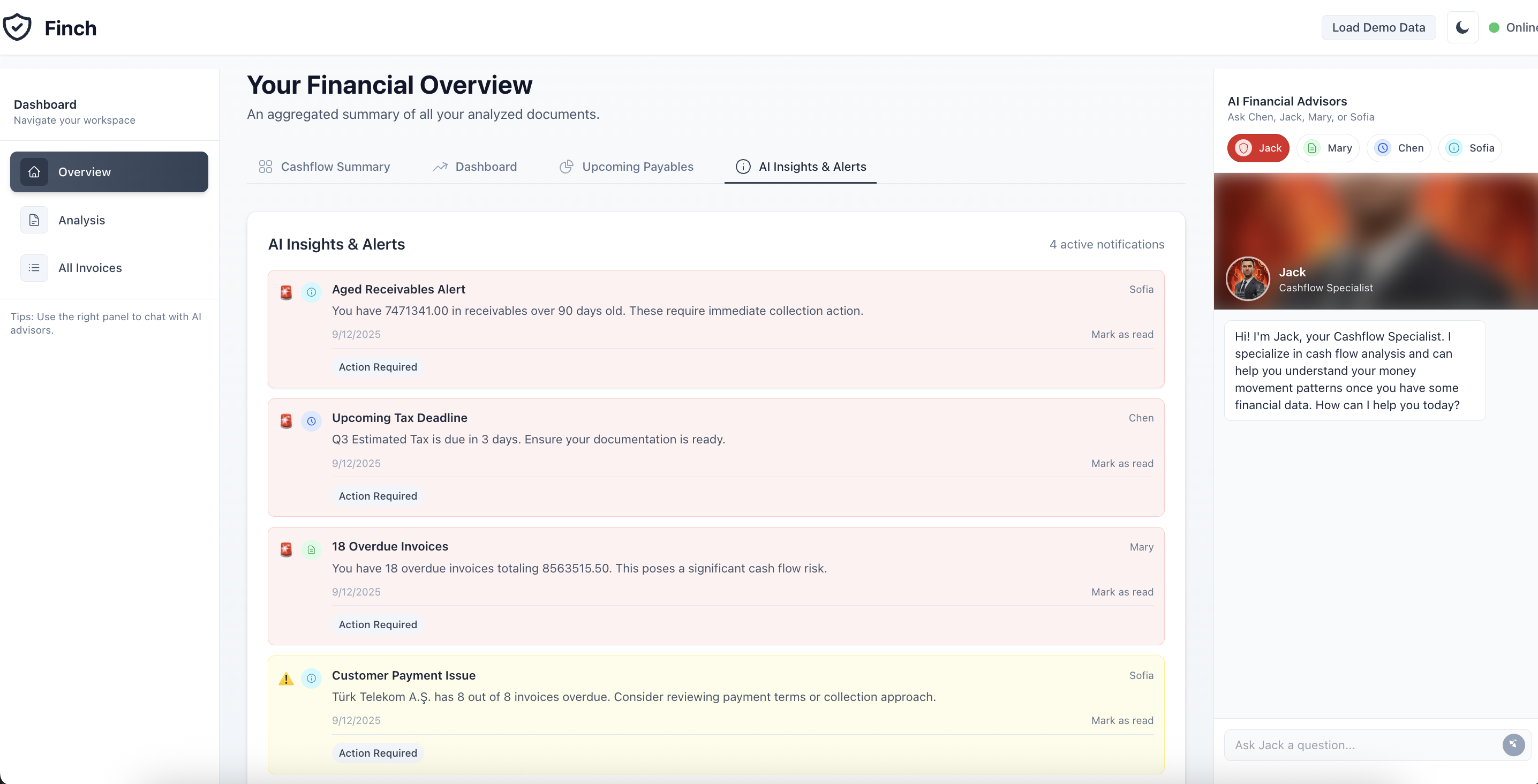
Financial Overview Insights & Alerts
-
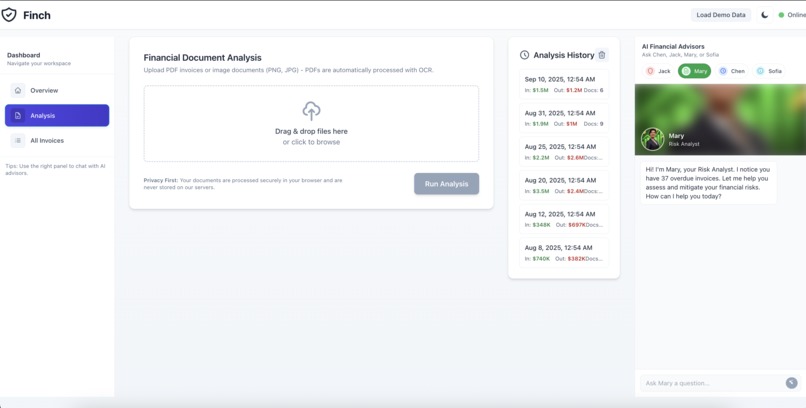
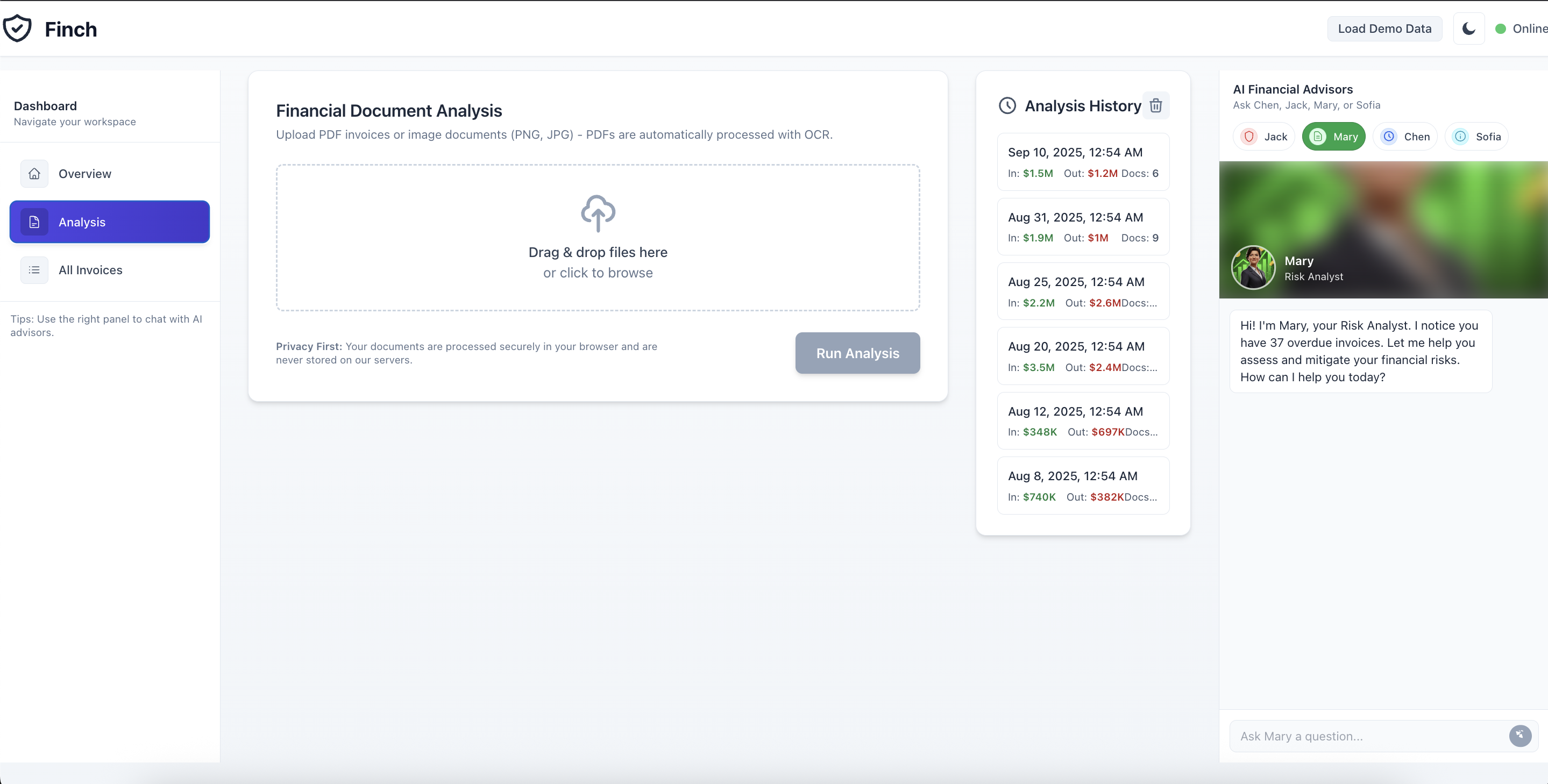
Financial Document Analysis (Invoice PDF Upload)
-
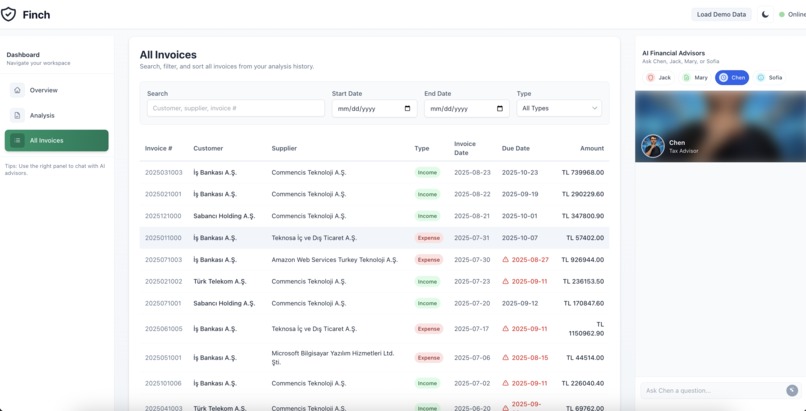
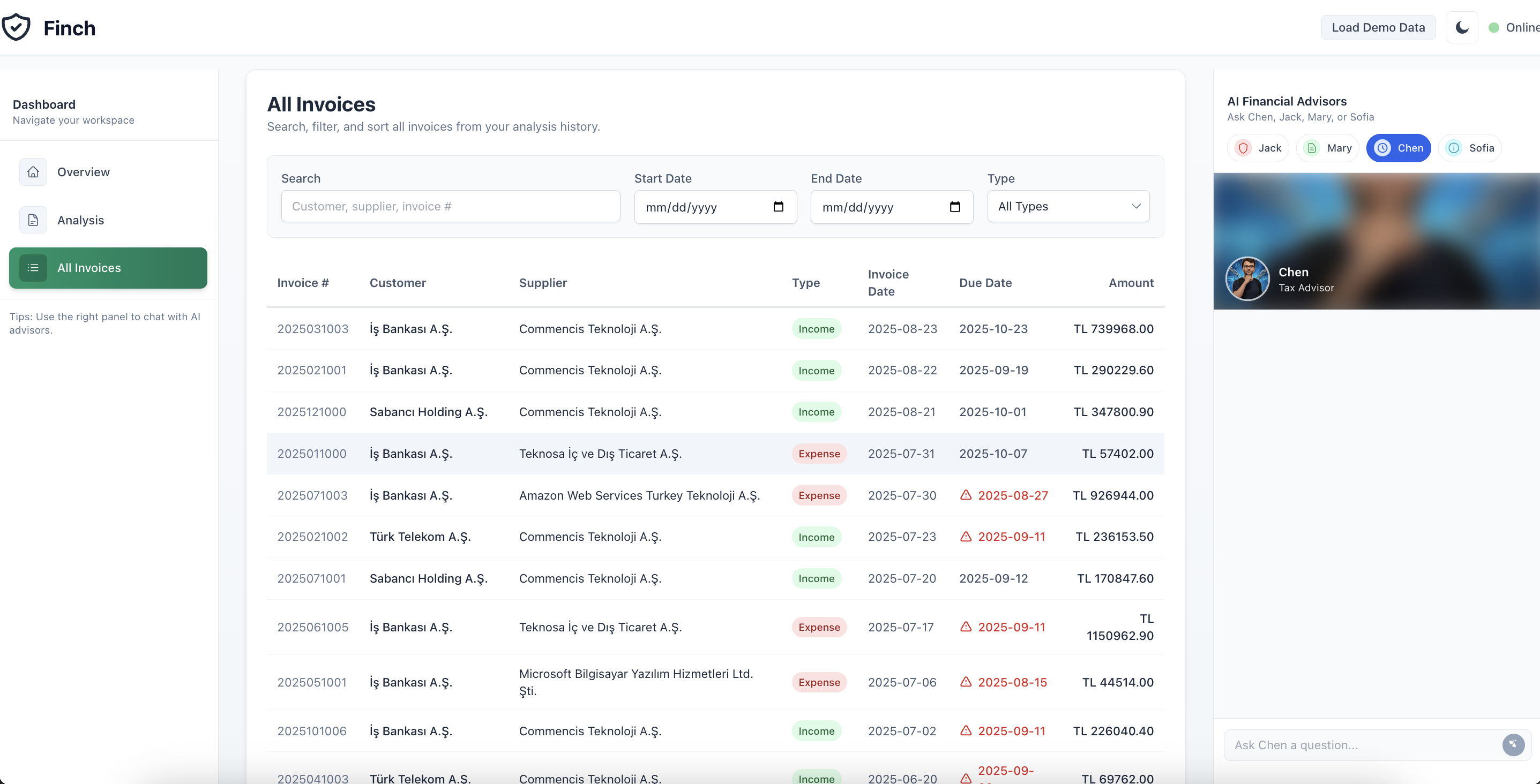
All Invoices
Finch: Privacy-First SME Finance Copilot
🌟 Inspiration
Small businesses crave CFO-level guidance, but they hesitate to upload sensitive financial statements to remote clouds. With Finch, we wanted to show that it’s possible to deliver rich, CFO-like insight without compromising privacy.
Although we built Finch on OpenRouter for fast iteration and flexible access to models, the architecture was deliberately designed to prove it can run locally as well. The inspiration was clear: give SMEs confidence that their financial data can remain theirs.
🛠 How We Built It
Personas With Real SME Roles
We created four advisors, each modeled after real-world SME responsibilities and behaviors:
- Jack (Cashflow) — a pragmatic and numbers-driven voice, monitoring inflows and outflows to keep liquidity in check.
- Mary (Risk) — cautious and detail-oriented, constantly assessing vulnerabilities and worst-case scenarios.
- Chen (Tax) — disciplined and rule-focused, reminding users about compliance and deadlines.
- Sofia (Collections) — proactive and sometimes assertive, encouraging follow-ups on overdue payments.
Together, they form a multi-faceted financial team where each persona doesn’t just cover a function, but also embodies a behavior style that makes guidance feel more human.
Document Analysis
- PDF.js extracts text from structured statements.
- Tesseract.js handles OCR for scanned invoices.
- For the demo, model calls run through OpenRouter, but fallback paths and state handling were designed to illustrate how everything could run entirely on-device for stronger data sovereignty.
Core Financial Features
- Cashflow Summary Visualizes income vs. expenses and computes net flow:
$$ \text{Net Cashflow} = \text{Income} - \text{Expenses} $$
Unpaid Invoices Flags upcoming payables and overdue items.
Tax Deadlines Syncs online when possible, but stays useful offline with cached or mock data.
📚 What We Learned
- Privacy-first AI is realistic. Even while using OpenRouter for inference, combining local OCR, parsing, and structured prompts showed a clear path to a fully offline solution.
- Personas with roles + behaviors enhance adoption. Users connect more when advisors not only cover specific responsibilities but also behave differently, echoing real SME team dynamics.
- Schema-driven prompting ensures reliability. Structured outputs keep charts and tables consistent.
⚡ Challenges Faced
- Balancing model size and latency. Even via OpenRouter, we had to think about what would run feasibly on smaller devices if taken local.
- OCR accuracy. Invoices with wildly different layouts required fallback logic and retries.
- Optional sync. Designing tax updates to gracefully degrade offline demanded robust state management.
💡 Closing Thoughts
Building Finch taught us that financial analysis doesn’t have to come at the cost of privacy. Even though we used OpenRouter for development, Finch’s architecture shows that:
- local-first processing,
- personas with distinct roles and behaviors, and
- incremental sync
can combine to give millions of SMEs CFO-level advice without uploading a single bank statement to the cloud.
Built With
- gpt-oss
- node.js
- openai
- openrouter
- react
- recharts
- tesseract
- typescript
- vite


Log in or sign up for Devpost to join the conversation.