Inspiration
The startup Finch identified a key problem in the internship application space: existing tools either automated applications without improving quality, or required too much manual effort to tailor each submission. While Finch's core idea focused on improving interview outcomes through AI, they needed a significantly better user interface to make the product genuinely usable and effective.
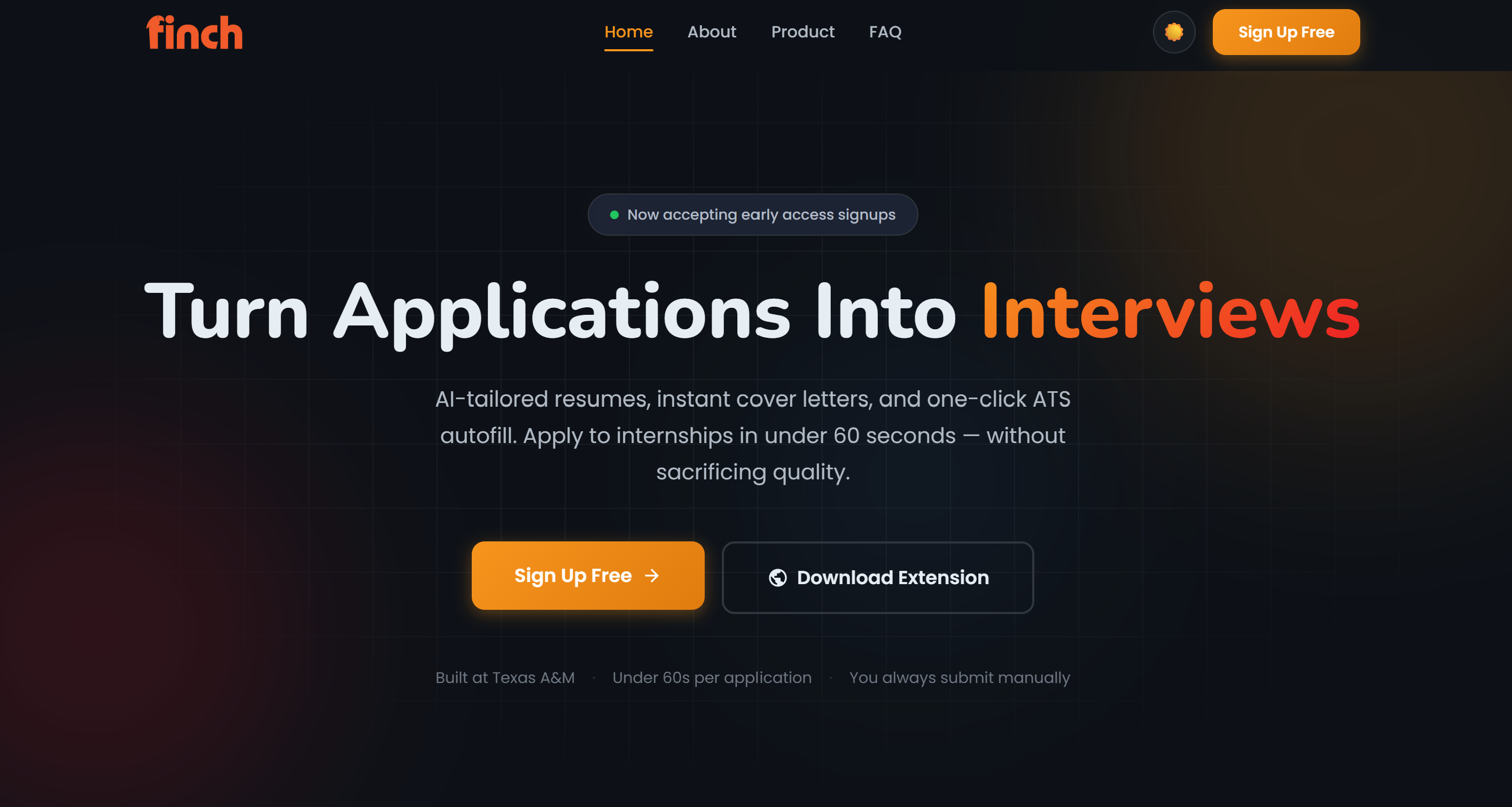
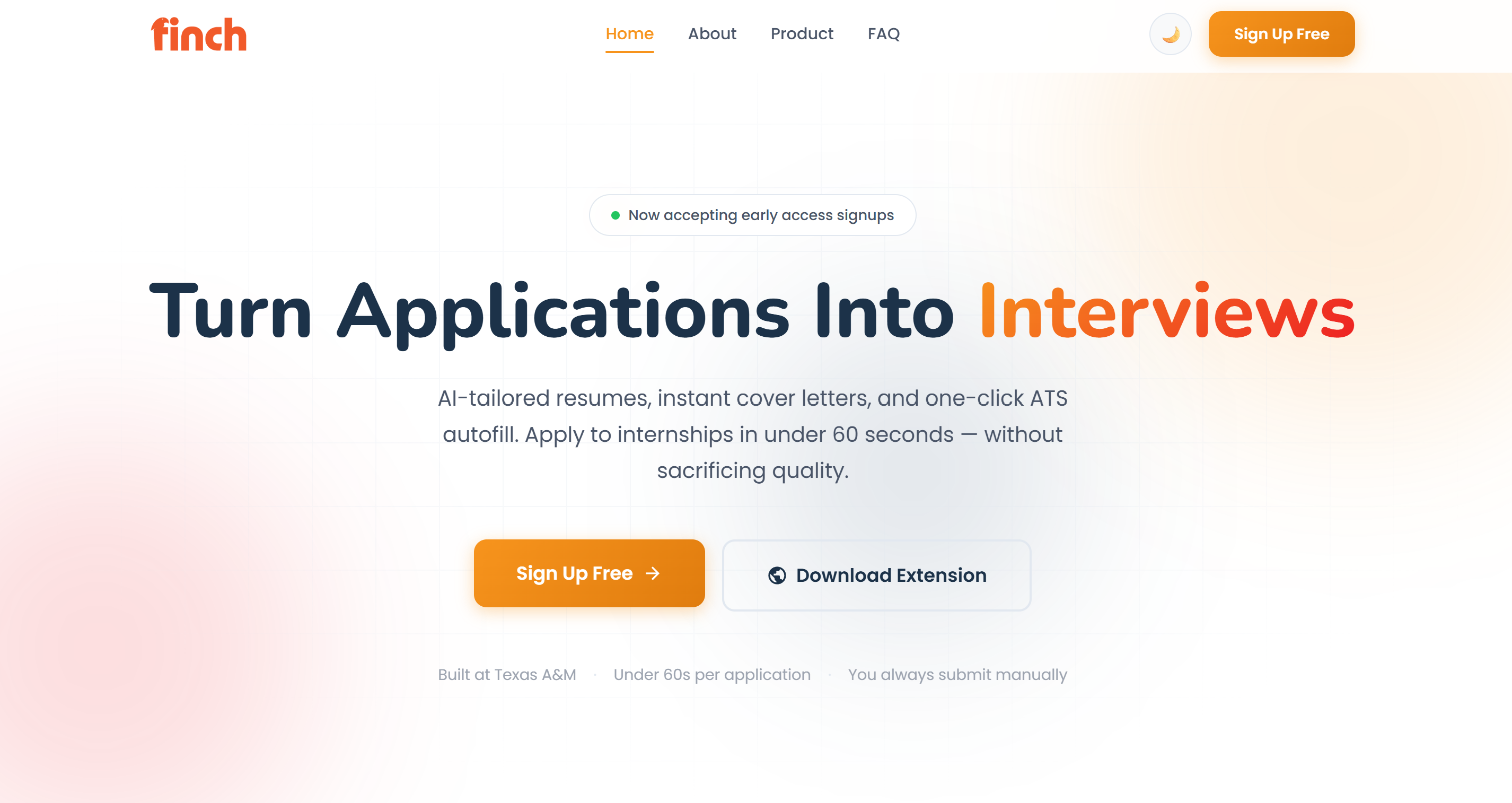
Our team focused specifically on solving this problem by designing and building the frontend experience. We didn't build the underlying AI systems; instead, our mission was to create a clean, modern, and intuitive interface that empowers users to interact with Finch’s powerful functionality in a simple and efficient way.
What it does
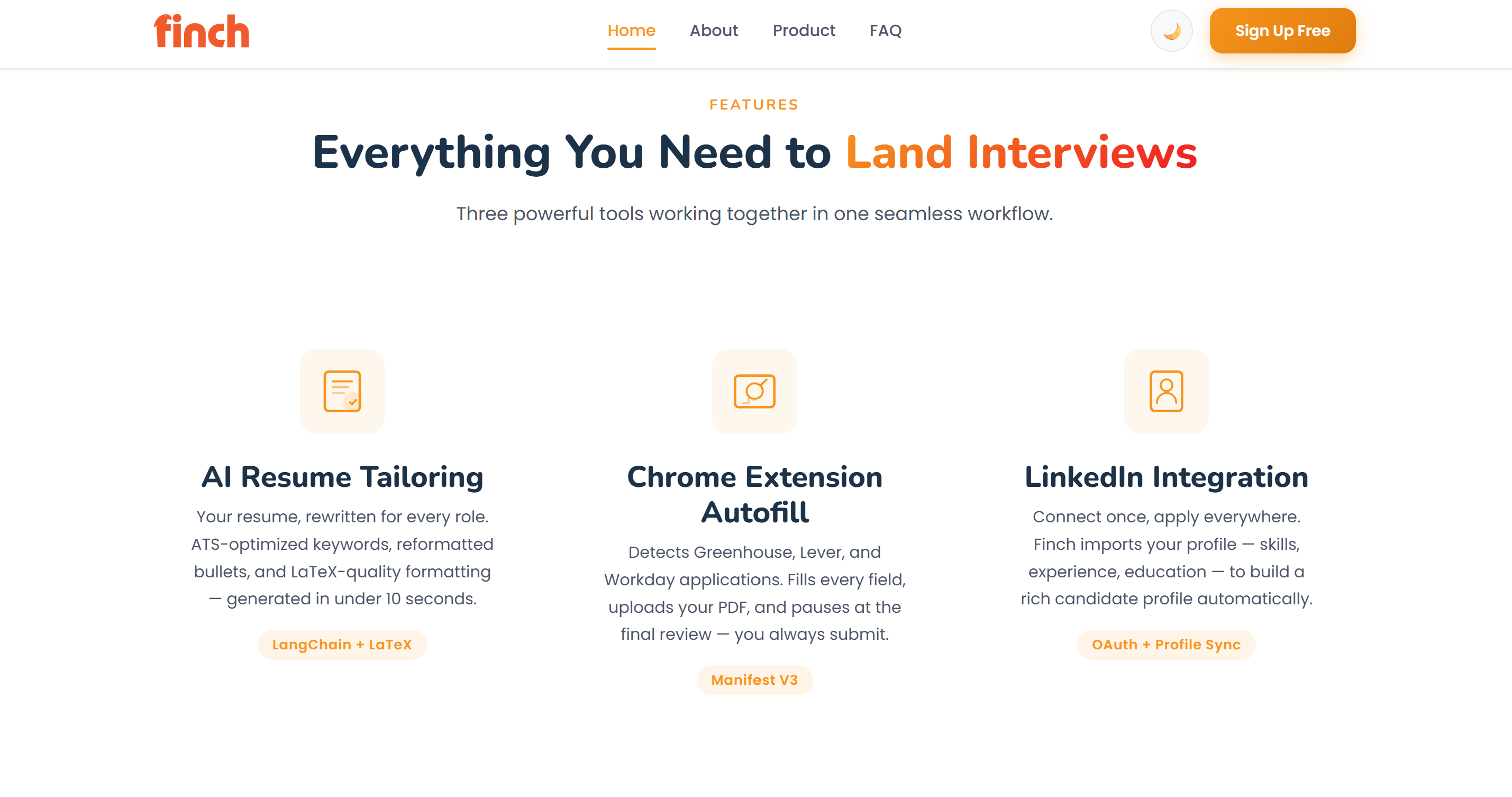
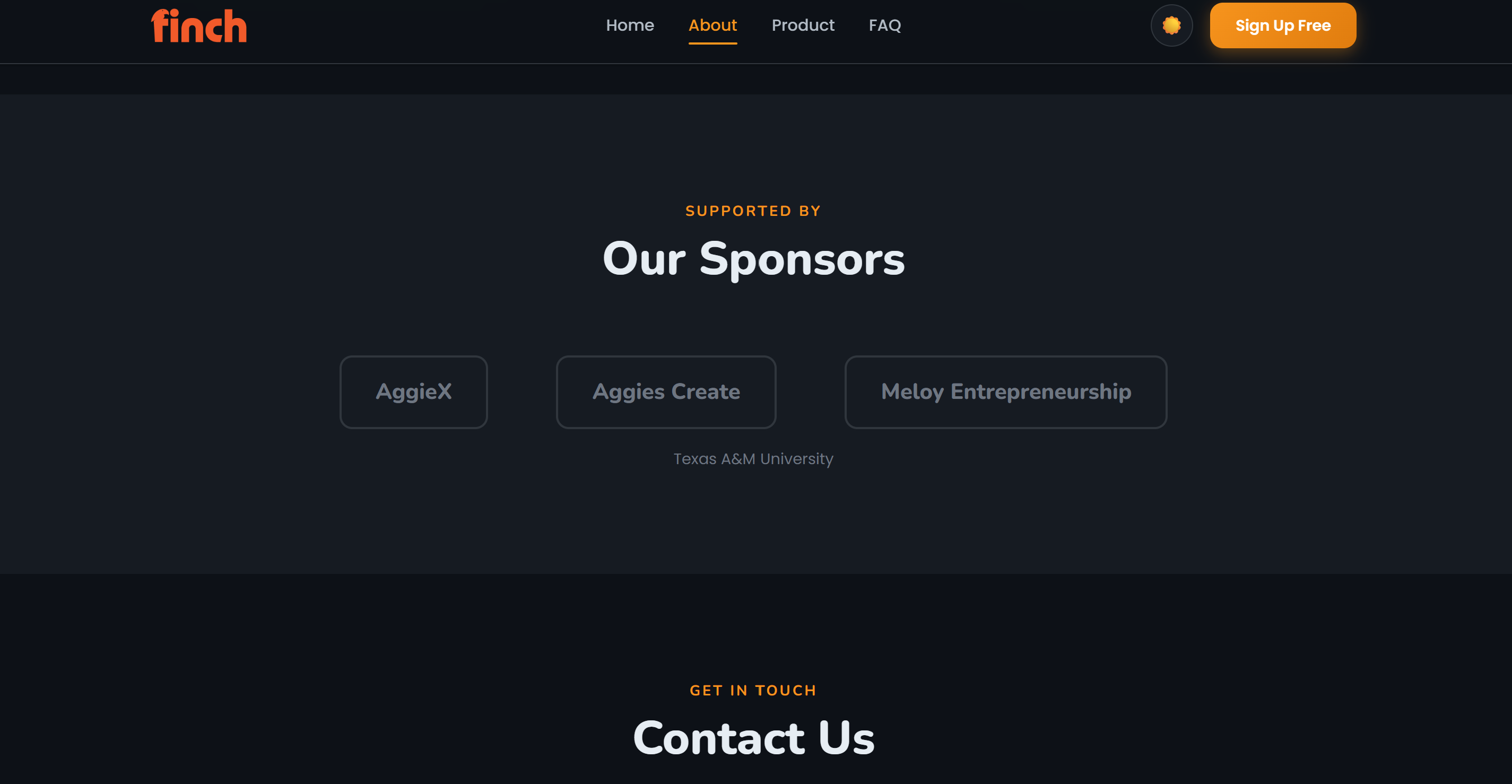
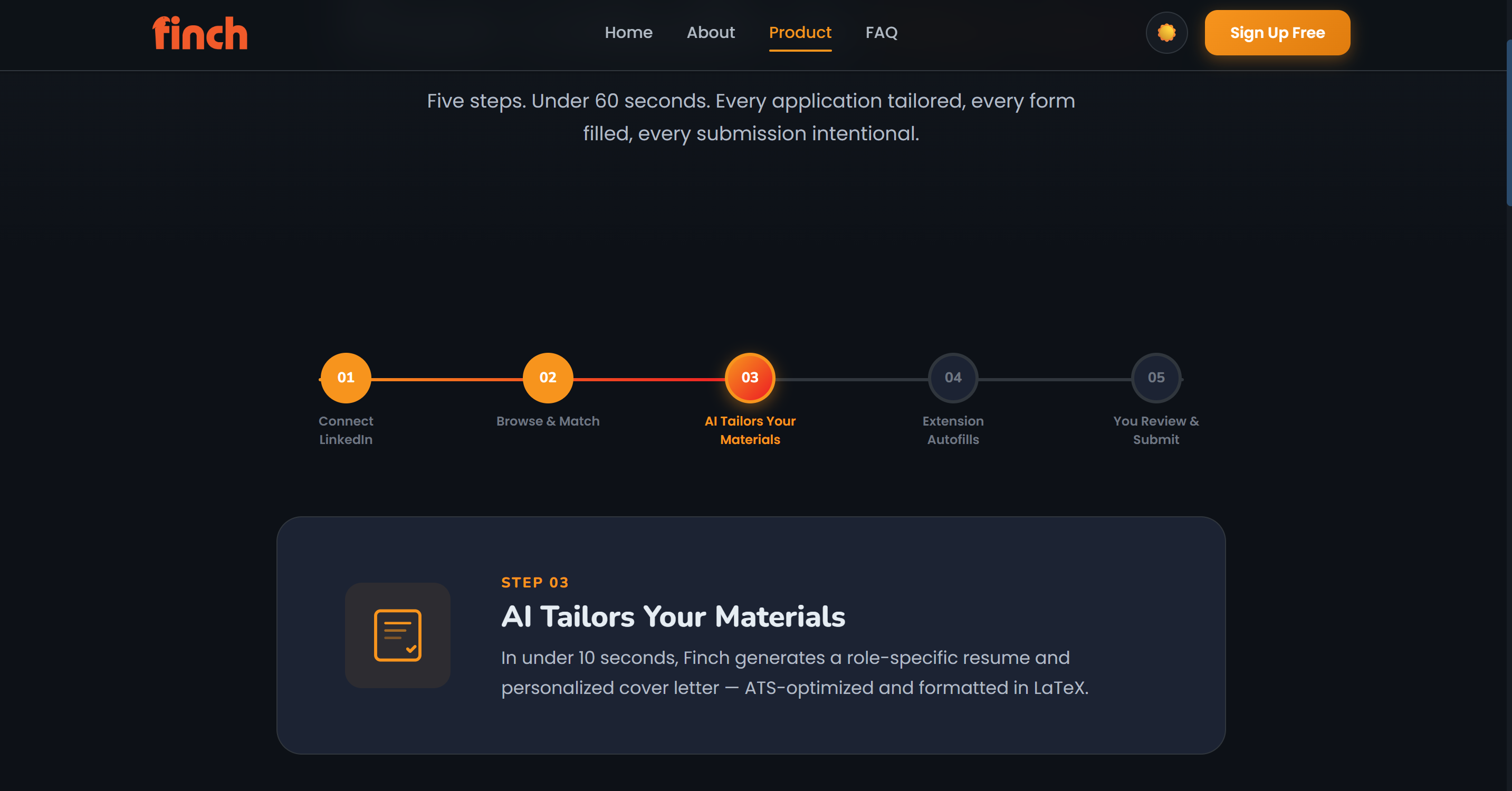
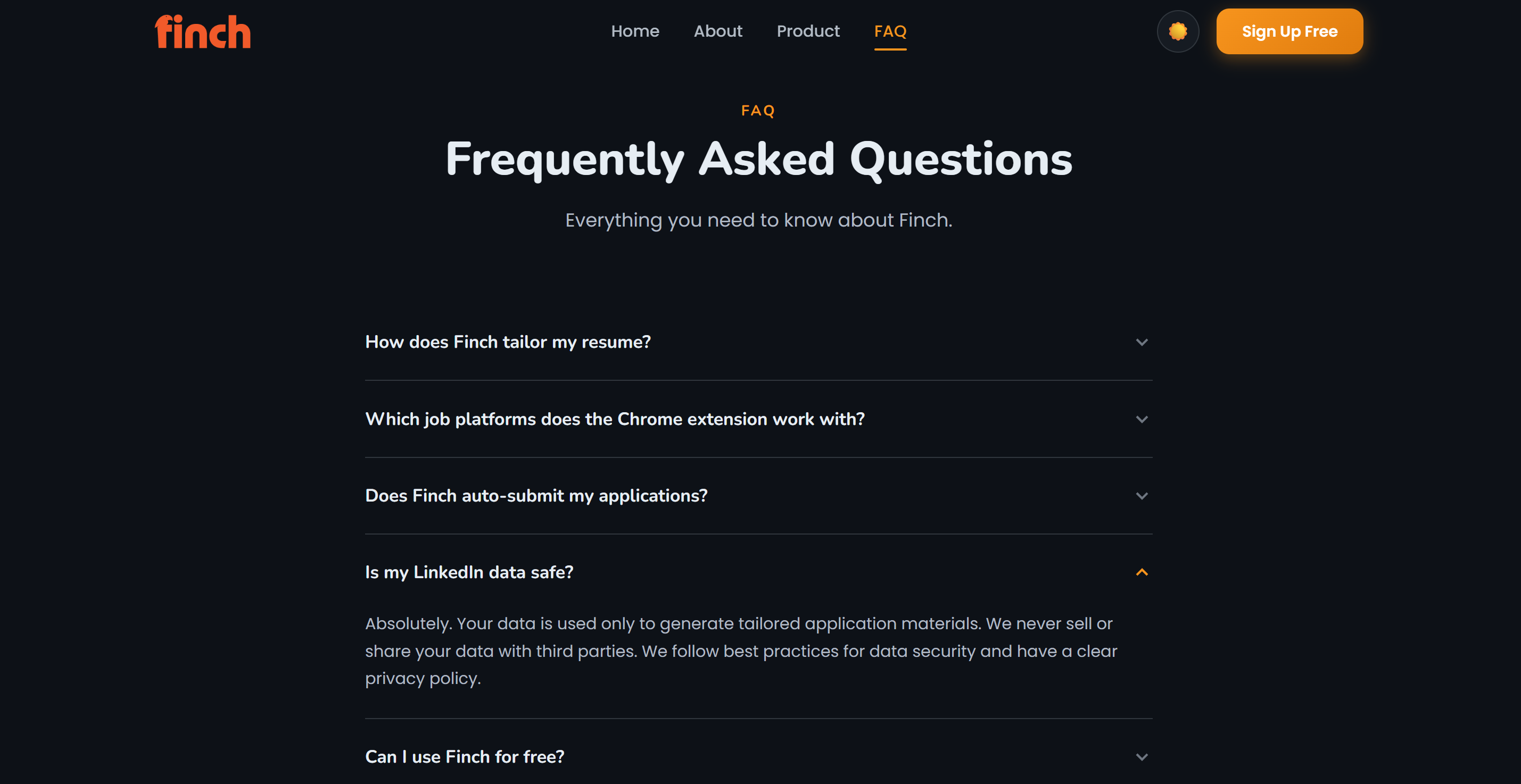
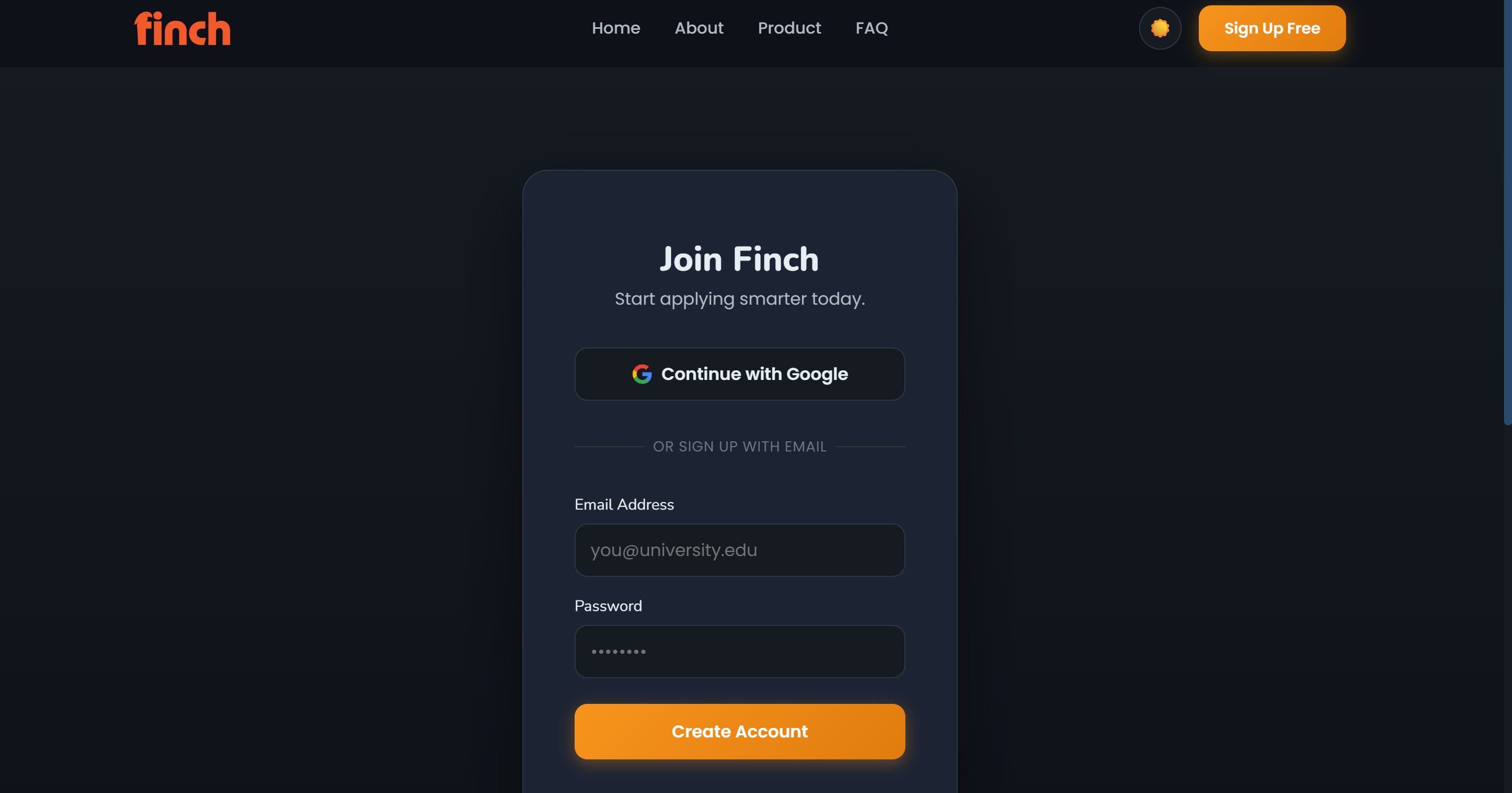
We built the complete frontend web dashboard for Finch.
The resulting interface allows users to seamlessly input their candidate profile, paste job descriptions, and view generated, tailored resumes and cover letters in a clear, structured format. Our primary goal was to make the experience feel incredibly smooth and frictionless, enabling users to move from initial input to final output without any confusion or roadblocks.
How we built it
We approached this project entirely as a sophisticated frontend engineering challenge.
- Architecture: The dashboard was built using React with a robust component-based architecture to gracefully handle dynamic user input and output.
- Styling: We utilized Tailwind CSS to design a sleek, modern, and fully responsive interface with consistent, accessible styling.
- Integration: We implemented robust API calls to seamlessly connect our frontend to Finch’s existing backend and AI systems. This included carefully handling asynchronous data fetching and elegantly rendering the AI's results in the UI.
Challenges we ran into
- Asynchronous Workflows: One of the main hurdles was elegantly handling asynchronous API responses. Since the backend AI processing takes time, we had to design thoughtful loading states that kept the interface feeling responsive, engaging, and user-friendly while they waited.
- Data Formatting: Another significant challenge was displaying the generated content properly. The raw text returned from the backend API needed to be carefully parsed and formatted into clean, highly readable resumes and cover letters on the frontend.
What we learned
We learned just how critical frontend design is in making complex, AI-driven systems actually usable. Even with the most powerful backend functionality in the world, the overall user experience completely depends on how clearly and efficiently the interface presents information.
Technically, we leveled up our skills and gained invaluable experience with advanced React state management, seamless API integration, and designing intuitive UI/UX around complex asynchronous workflows.
What's next for Finch
From a frontend engineering perspective, the next logical step would be improving integration tightly with real job application platforms. This could include:
- Building a dedicated browser extension to autofill applications.
- Continually refining and enhancing the interface to eliminate any remaining friction from the application process.
The ultimate goal is to continue polishing the user experience so that interacting with Finch always feels simple, lightning-fast, and deeply intuitive.
Built With
- css3
- html5
- javascript
- latex
- react
- tailwind-css

Log in or sign up for Devpost to join the conversation.