-
-
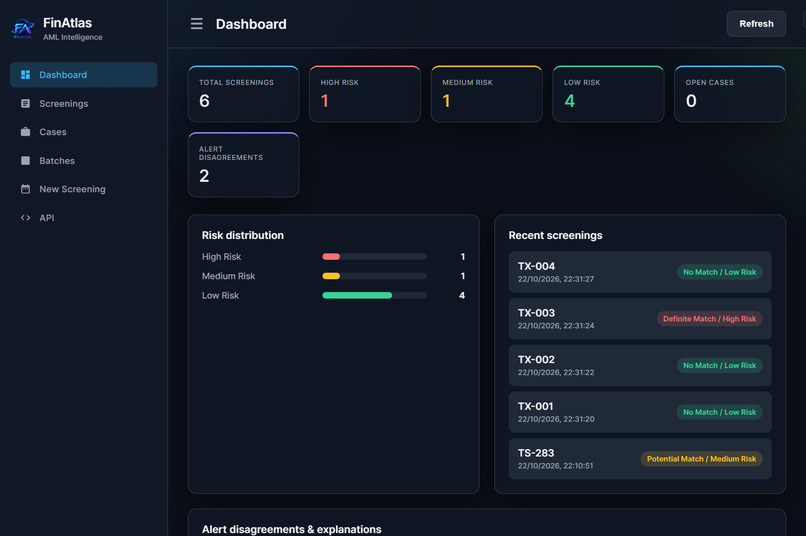
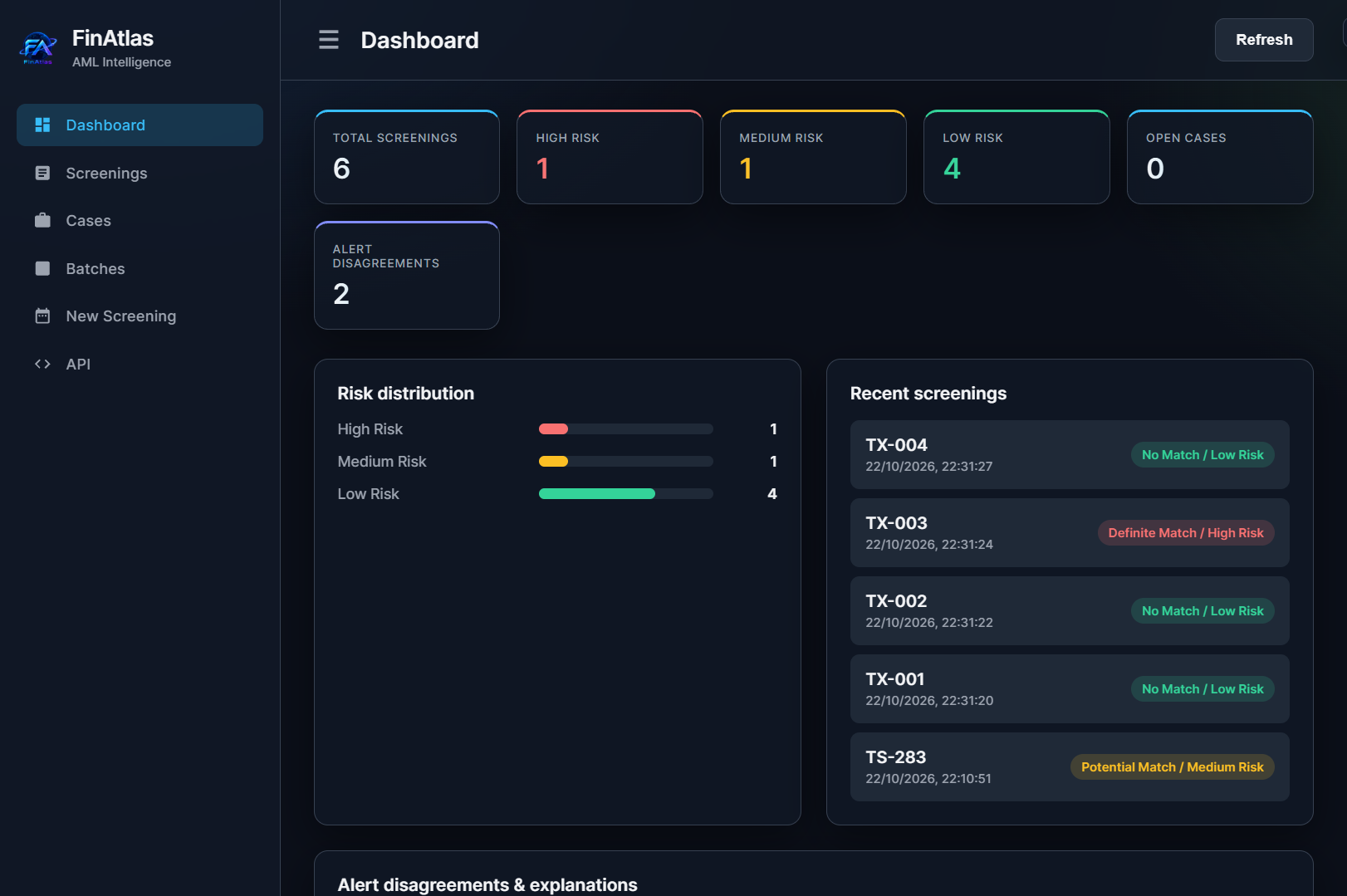
Dashboard Screen
-
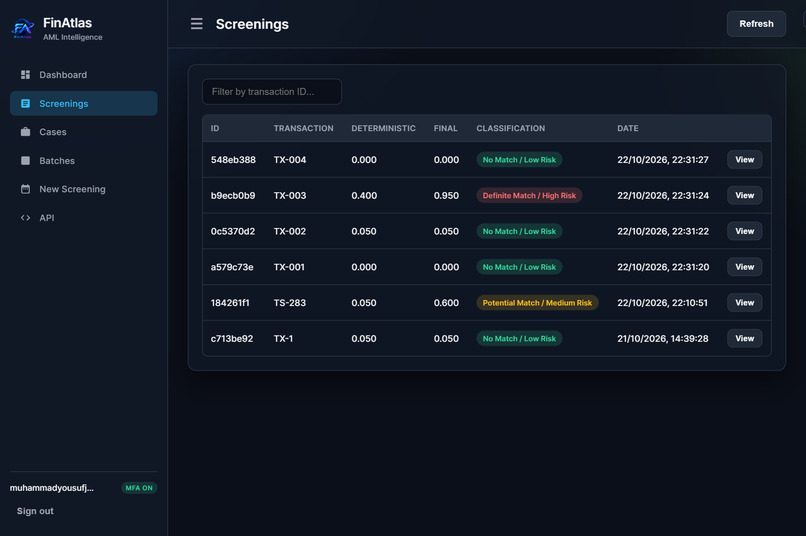
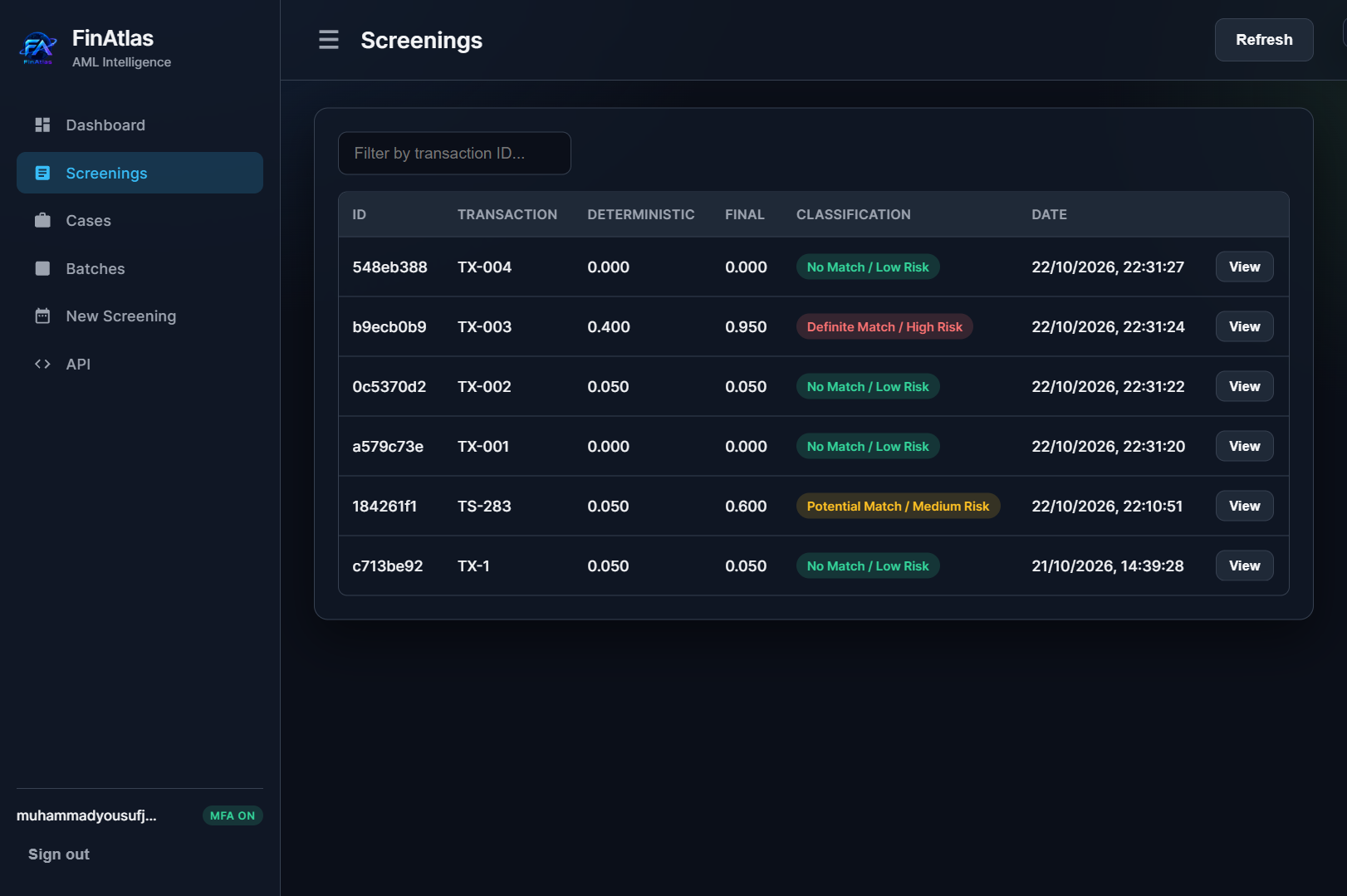
Previous Screenings
-
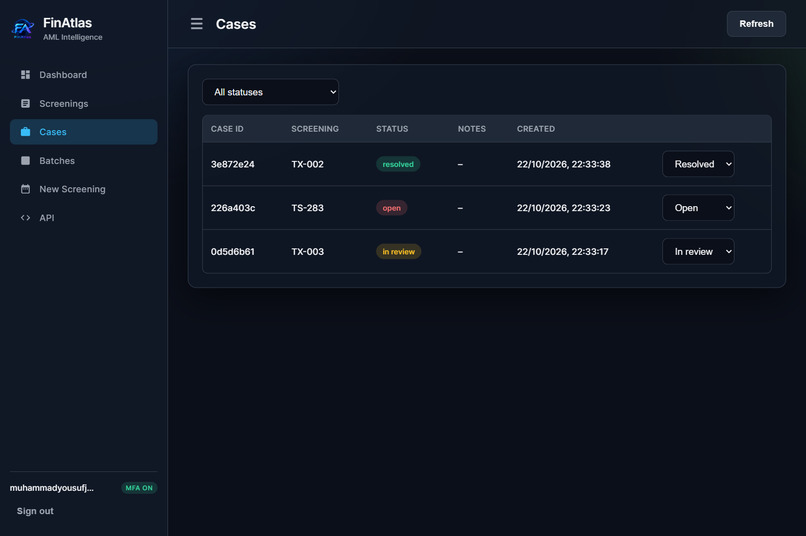
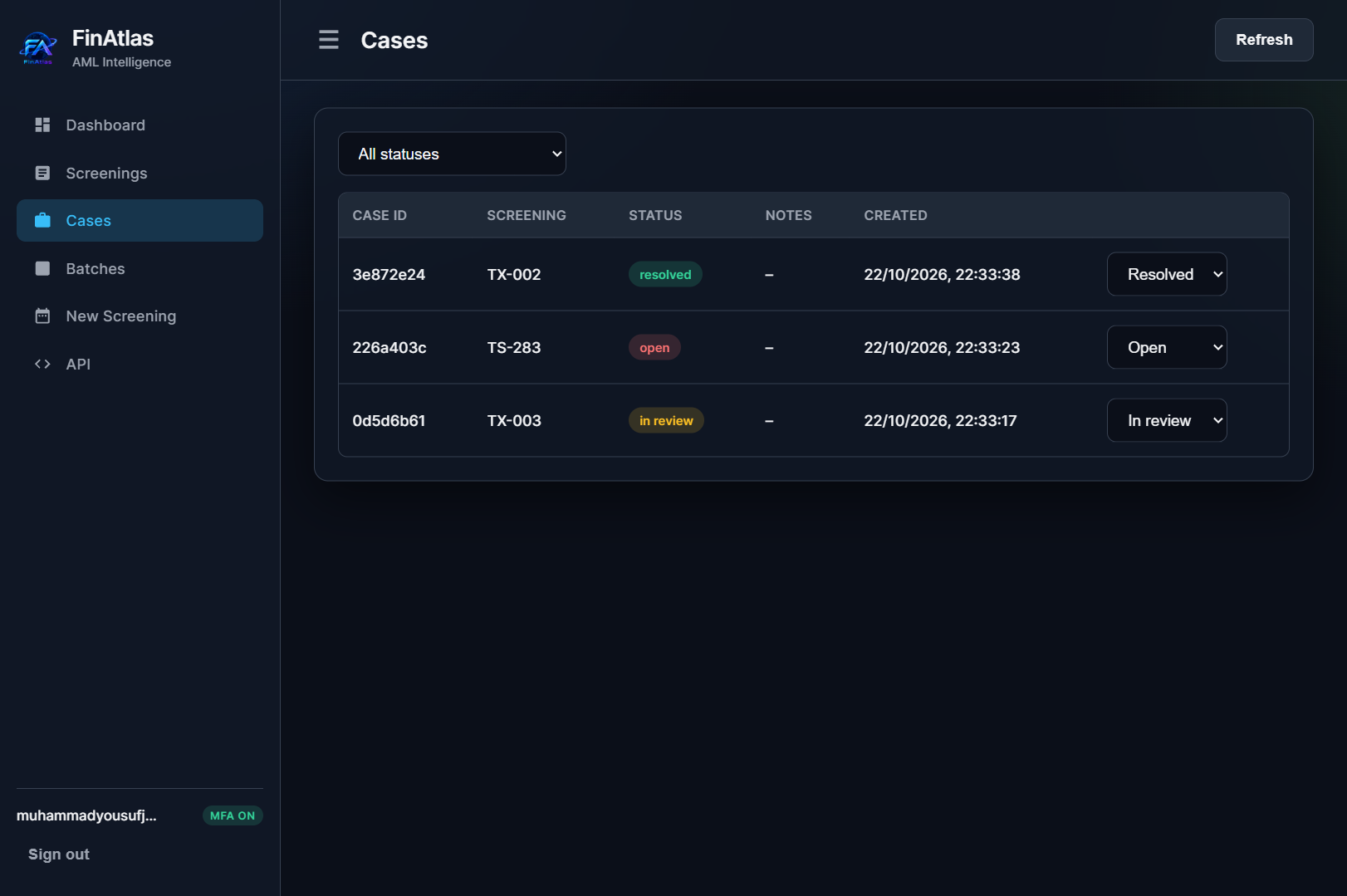
Cases
-
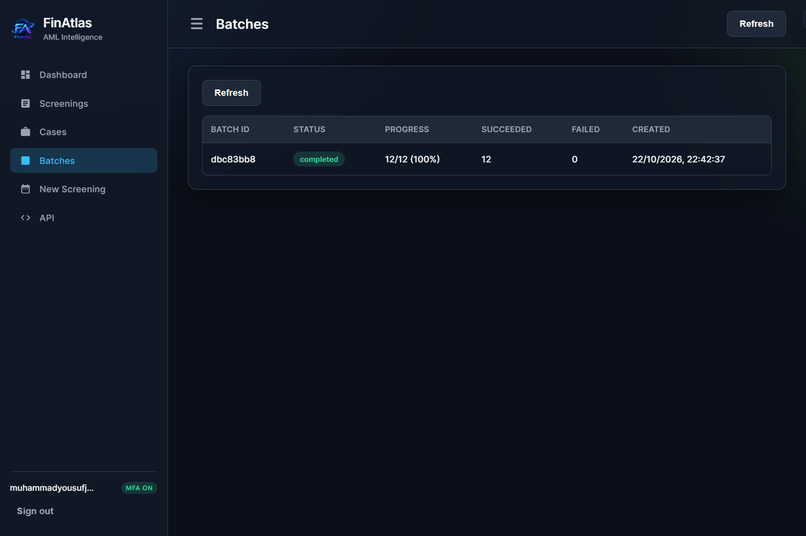
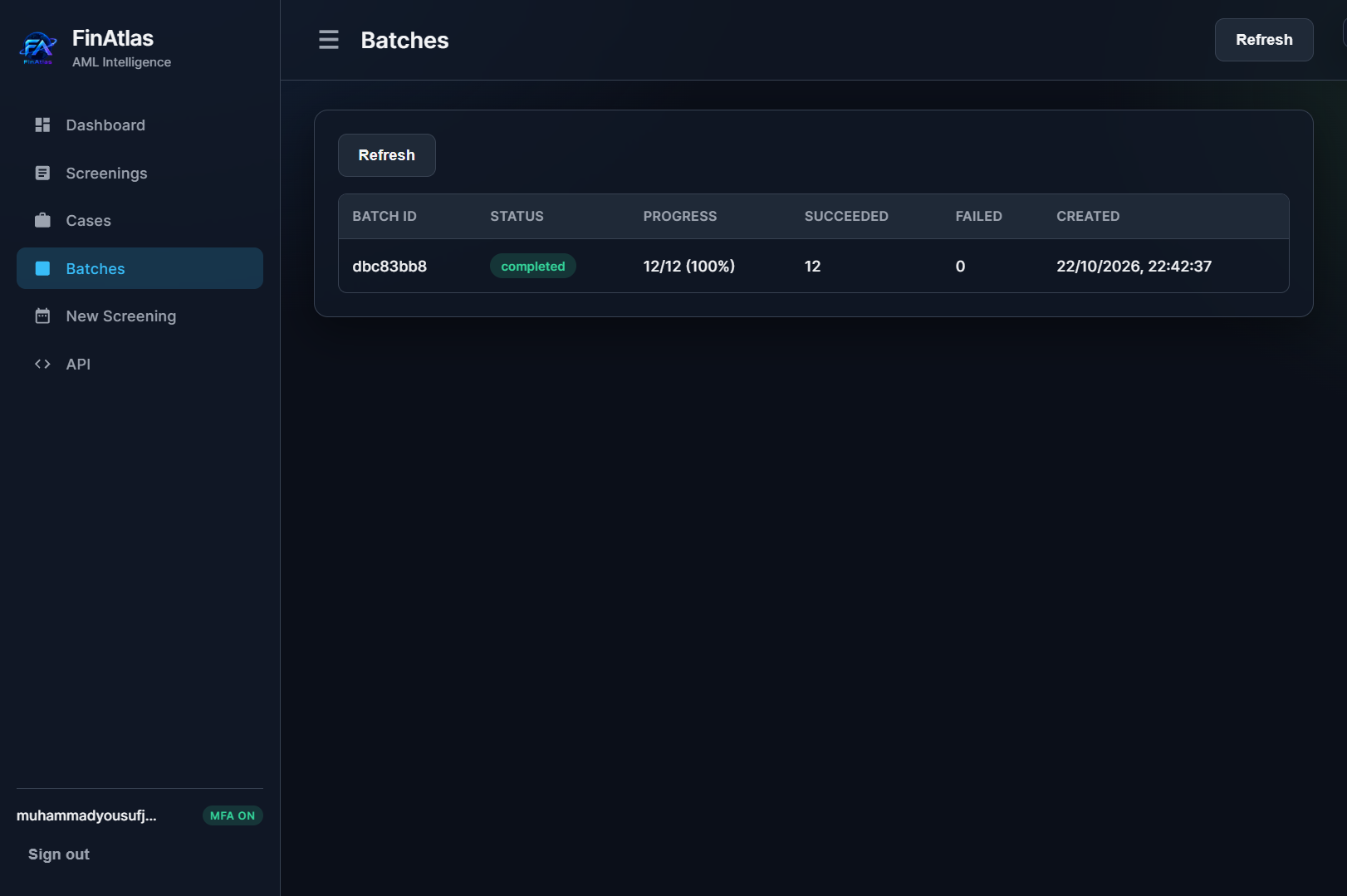
Batches Processed
-
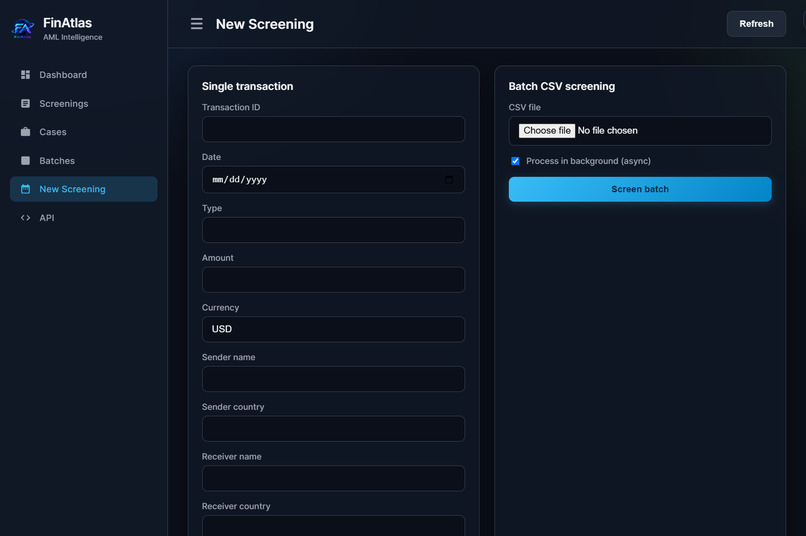
New screening
-
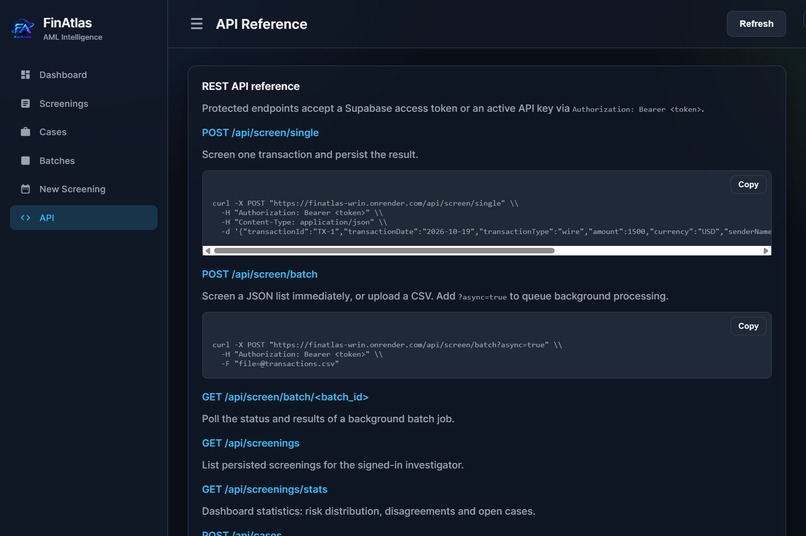
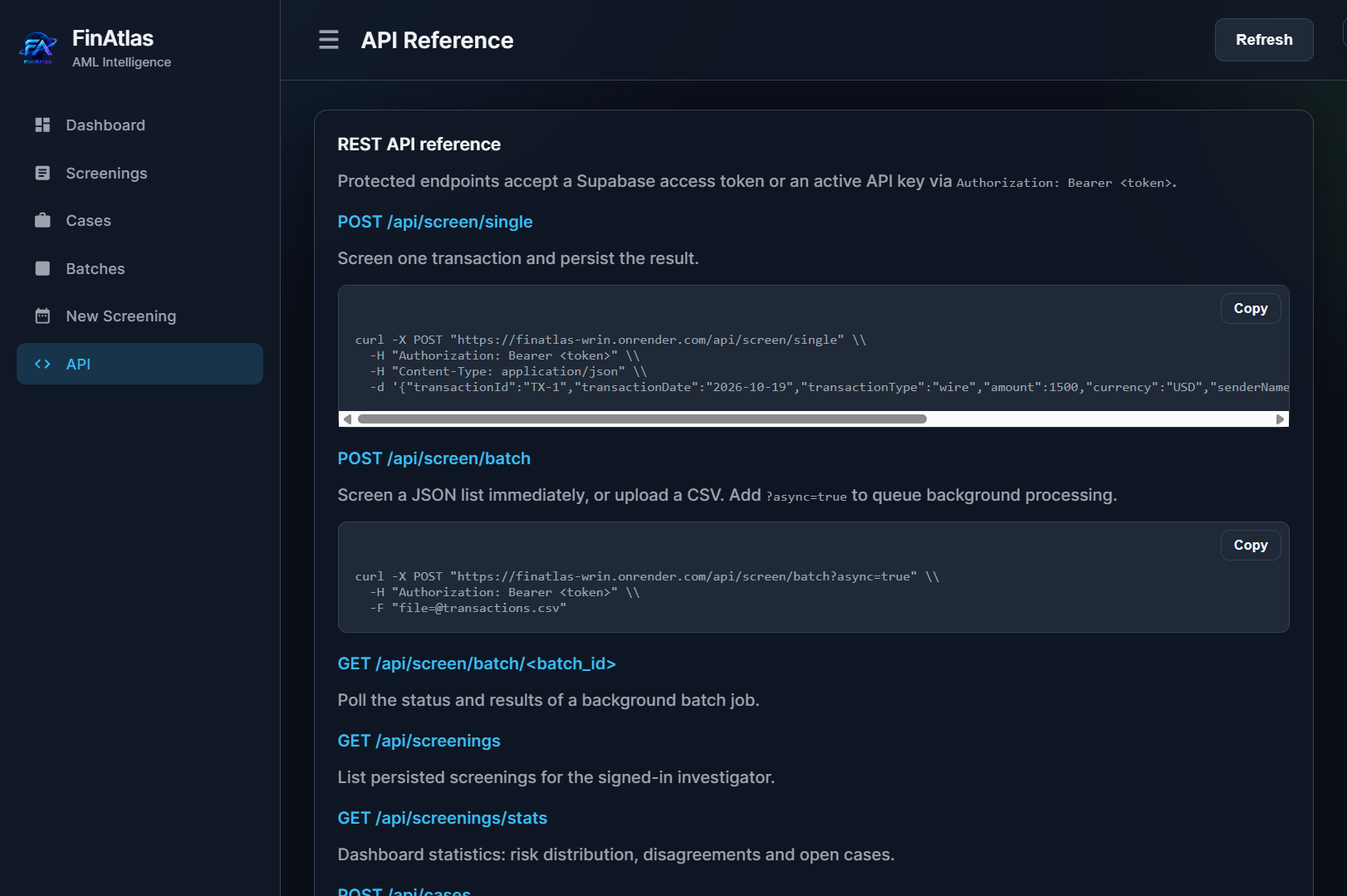
API details
-
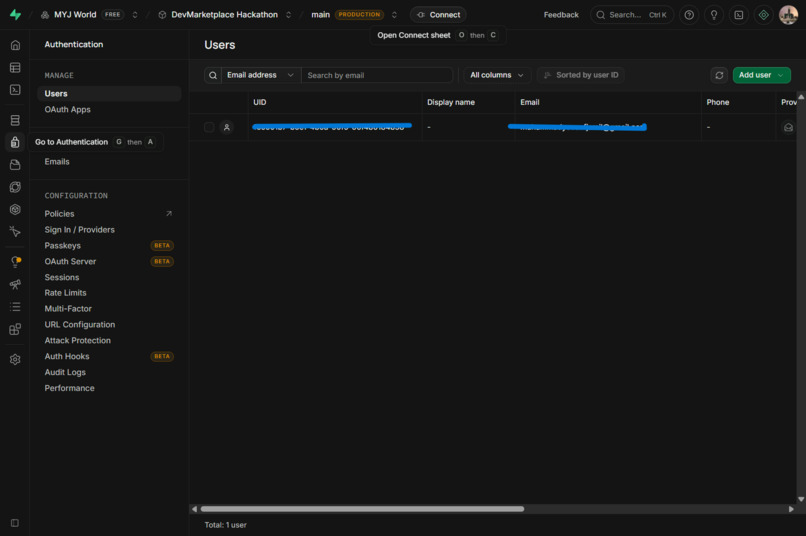
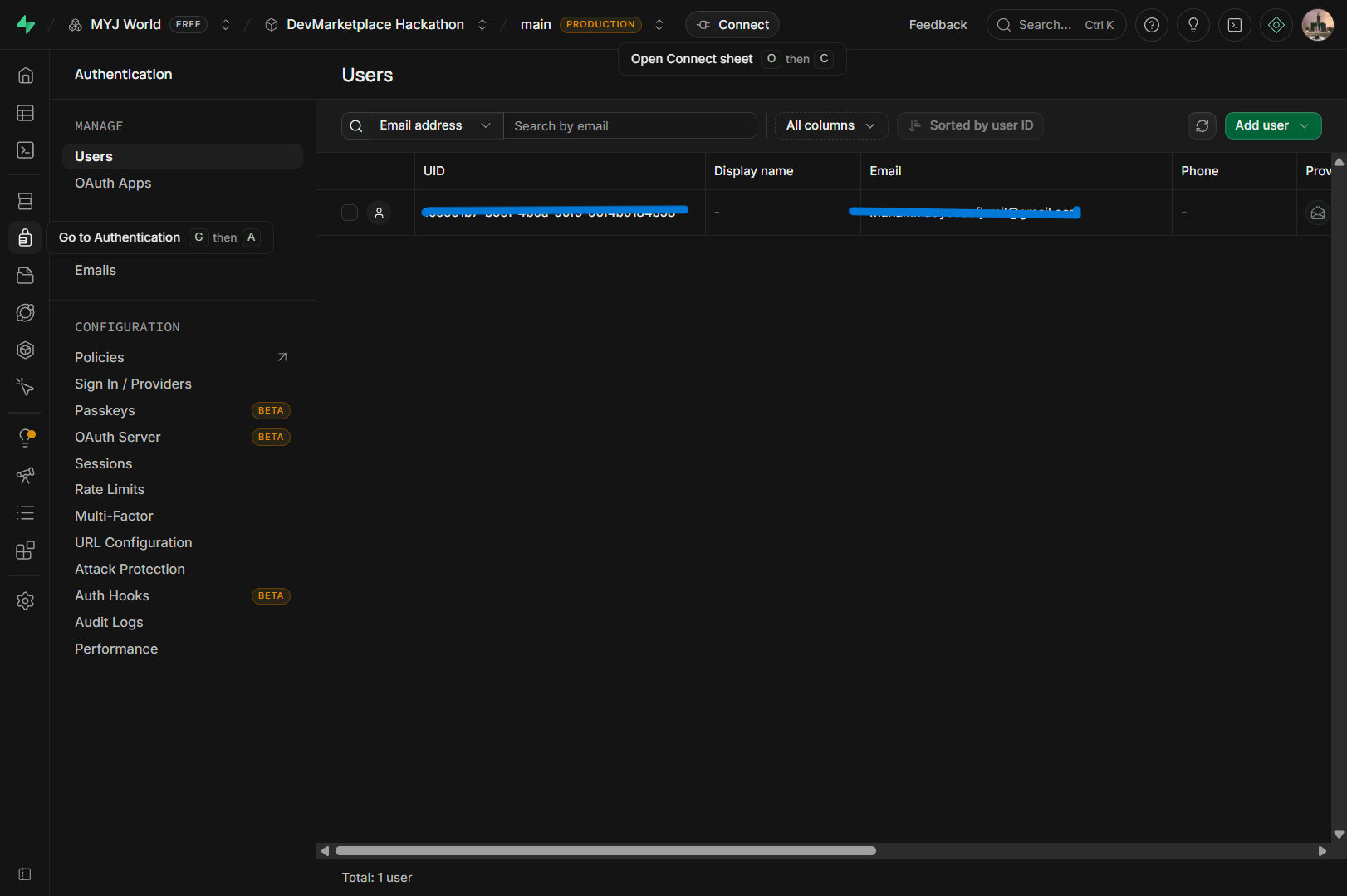
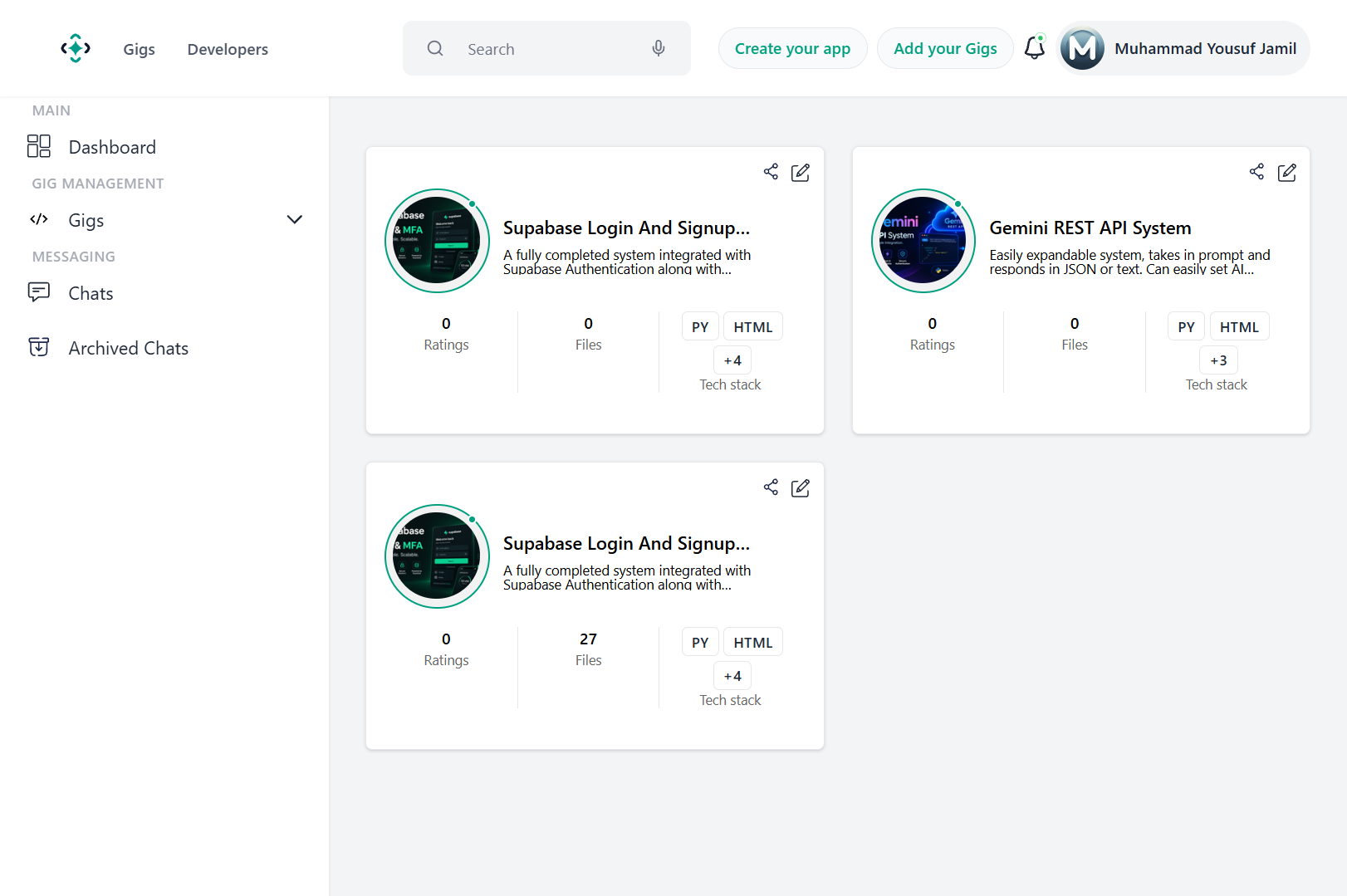
Supabase Auth System
-
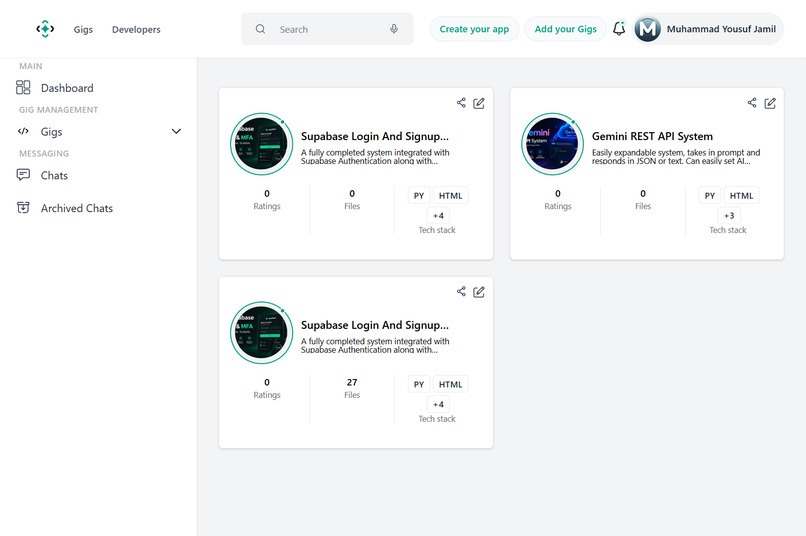
DevMarketplace Gigs Published
-
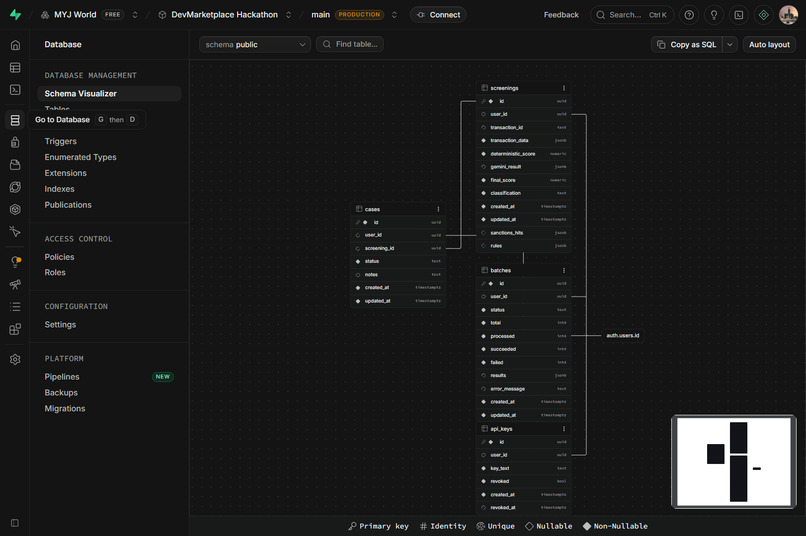
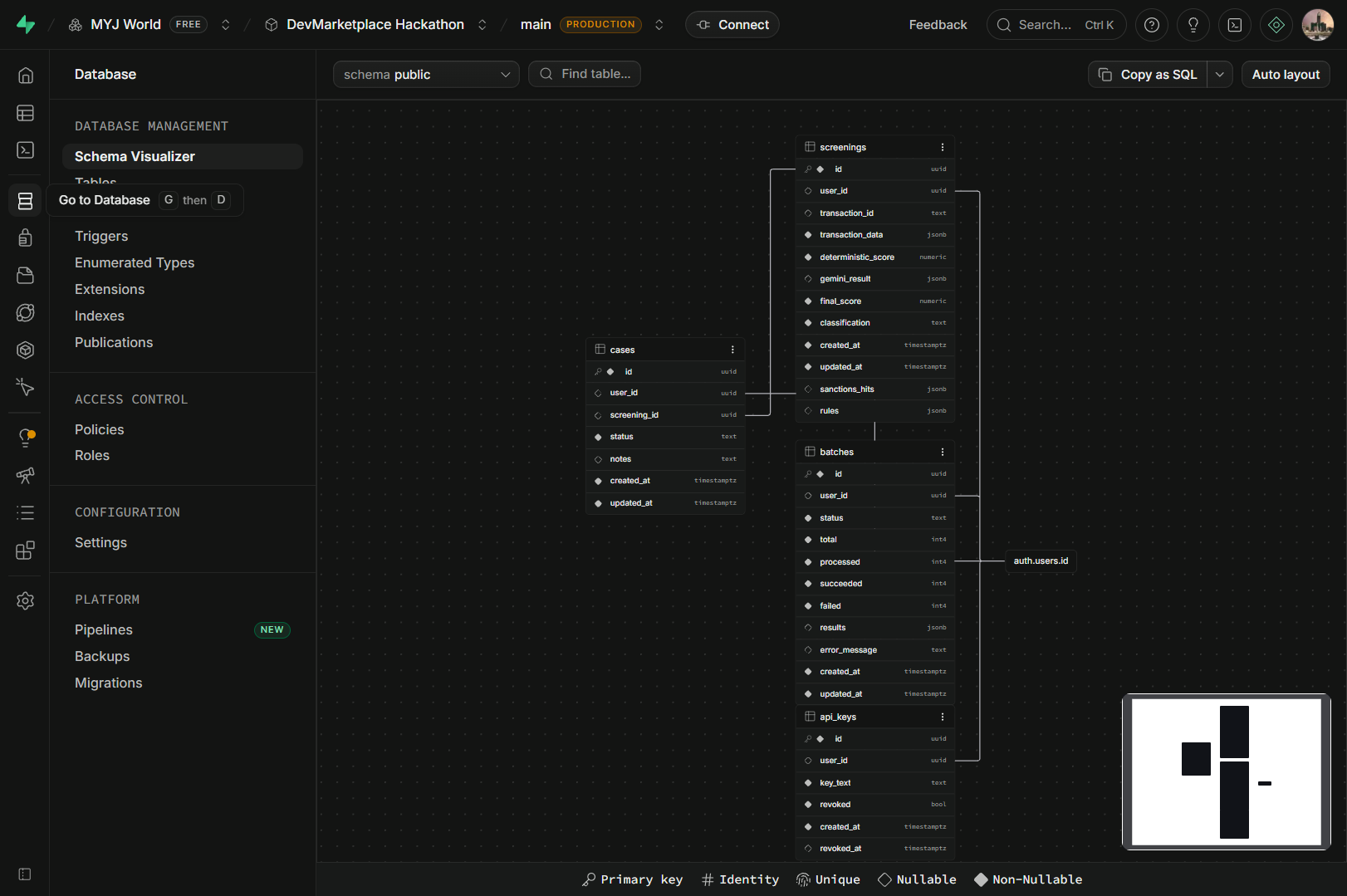
Supabase Tables
-
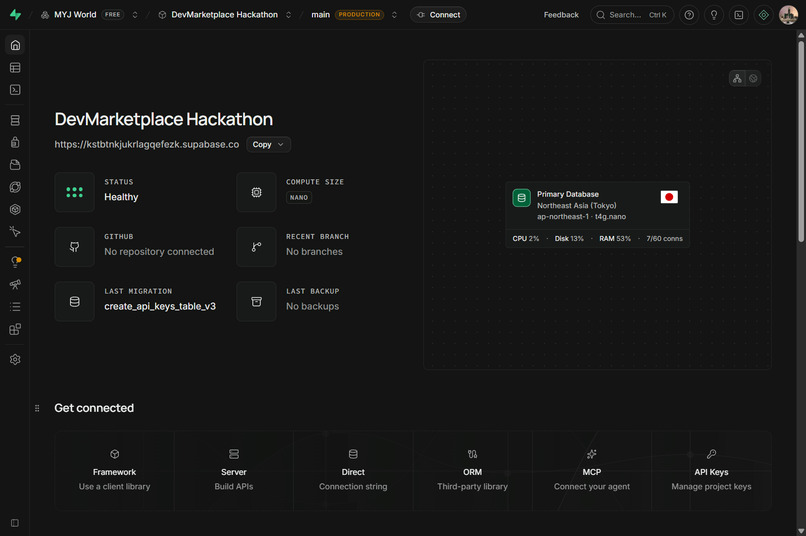
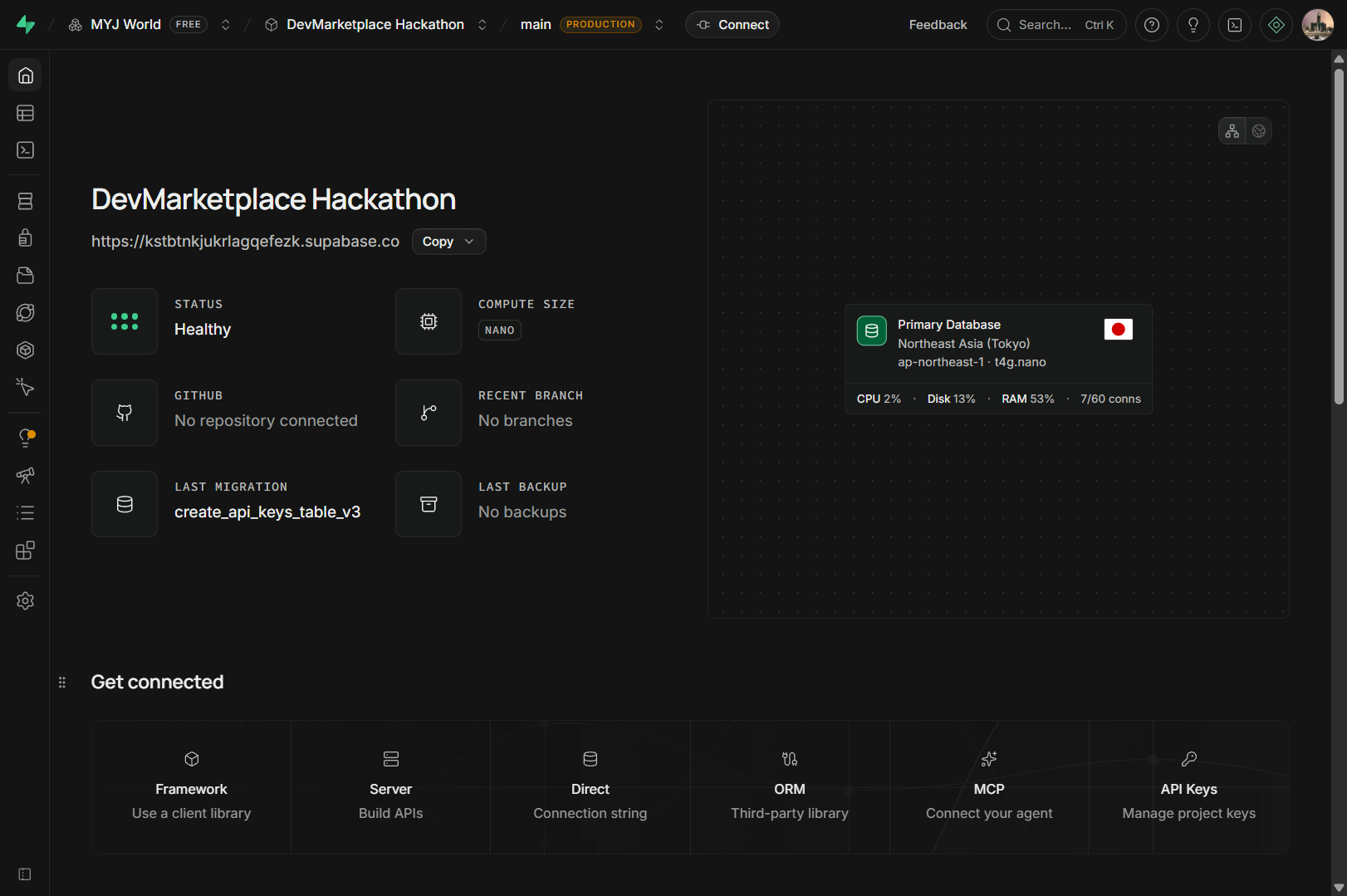
Supabase Project Page

Inspiration
The idea for FinAtlas came from Yousuf's father, who suggested exploring how AI could help address money laundering in the financial sector. We saw an opportunity to turn that idea into a practical prototype: a system that could screen transactions, identify potential risks, and help investigators work through large volumes of financial data more efficiently.
Traditional rule-based screening is useful for known risk indicators, but it can also generate false positives and miss unusual patterns. We wanted to explore how deterministic screening and AI could complement each other rather than relying entirely on either approach.
The challenge was to go beyond describing this idea and actually prove its feasibility by building a working prototype using DevMarketplace.
What It Does
FinAtlas is an AI-powered anti-money laundering (AML) screening platform built to identify potentially suspicious transactions and help investigators prioritise their reviews.
Its main capabilities include:
- Sanctions screening: Deterministic name matching against locally maintained UN Security Council, EU, and OFAC sanctions lists.
- Risk scoring: A transparent scoring engine that considers sanctions matches, transaction amounts, and high-risk jurisdictions.
- Gemini AI analysis: Every successful screening requires a Gemini assessment. The model evaluates transaction context, identifies unusual patterns, and provides explanations for its findings.
- Combined scoring: The deterministic score establishes the baseline, while an AI-detected unusual pattern adds a further risk adjustment. The combined score is capped at 1.0.
- Batch screening: Screen transactions through CSV uploads or JSON requests, with support for asynchronous batch processing.
- Investigation workflow: Review screening results, inspect AI reasoning, monitor risk distributions, and create cases for manual investigation.
- API access: Integrate screening into other applications using REST endpoints and individually managed API keys.
Importantly, an automated assessment is not a final verdict. Investigators can create a case for any transaction, even when the system does not flag it.
How We Built It
FinAtlas was developed by a two-person team for the NED × DevMarketplace Hackathon, held from 19–22 October 2026.
DevMarketplace was central to the challenge: we used the platform to build the full working prototype, turning the initial concept into a deployed application rather than stopping at a pitch, design, or proof of concept on paper.
We used Python and Flask for the backend, HTML, CSS, and vanilla JavaScript for the frontend, Supabase for authentication and persistent storage, and the Gemini REST API for AI-powered analysis. The application is deployed on Render and accessible through a browser.
One of our main design decisions was to combine a deterministic scoring engine with AI analysis. The deterministic engine provides a consistent, explainable baseline, while Gemini evaluates transaction context and determines whether an unusual pattern warrants additional risk. This gives us a more structured screening workflow than simply sending transaction data to a chatbot and displaying its response.
We also implemented individual and batch screening, persistent screening history, dashboard statistics, case management, and API key creation, revocation, and rotation.
The objective was to demonstrate that the idea could work as an integrated application, with a usable interface, backend processing, AI analysis, persistent data, and programmatic access.
For more technical detail, our SPEC.md documents the scoring methodology, sanctions data sources, API endpoints, database design, security considerations, and planned improvements.
What We Learned
Building FinAtlas helped us explore how AI can complement conventional financial risk screening, how to integrate a hosted model into a backend workflow, and how to structure a web application around authentication, persistent records, and API access.
We also learned that identifying a potential risk is only one part of an AML workflow. Explainability, data quality, false-positive handling, and the ability to investigate individual transactions are equally important.
Most importantly, the project let us move from an idea to a working, deployed prototype. It gave us an opportunity to test the concept in practice and identify what would be needed to take it further.
FinAtlas is a prototype rather than a production-ready compliance system. Future improvements could include automatically updated sanctions lists, broader jurisdiction and financial data sources, more advanced transaction-network analysis, stronger evaluation against labelled datasets, and eventually training or fine-tuning a specialised AML model.
Our goal is to demonstrate how deterministic screening and AI-assisted analysis can work together to help investigators focus their attention where it may be needed most.
Built With
- anti-money-laundering
- api
- artificial-intelligence
- css
- fintech
- flask
- gemini
- gemini-api
- html
- javascript
- machine-learning
- pandas
- postgresql
- python
- rest
- rest-api
- supabase

Log in or sign up for Devpost to join the conversation.