-
-
Finacial-Assistant
Inspiration
We wanted to build a simple AI-powered solution that helps people understand where their money goes and provides practical ways to save more.
What it does
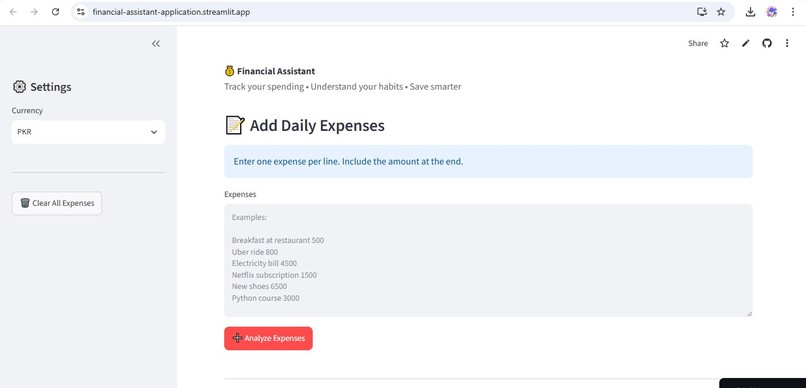
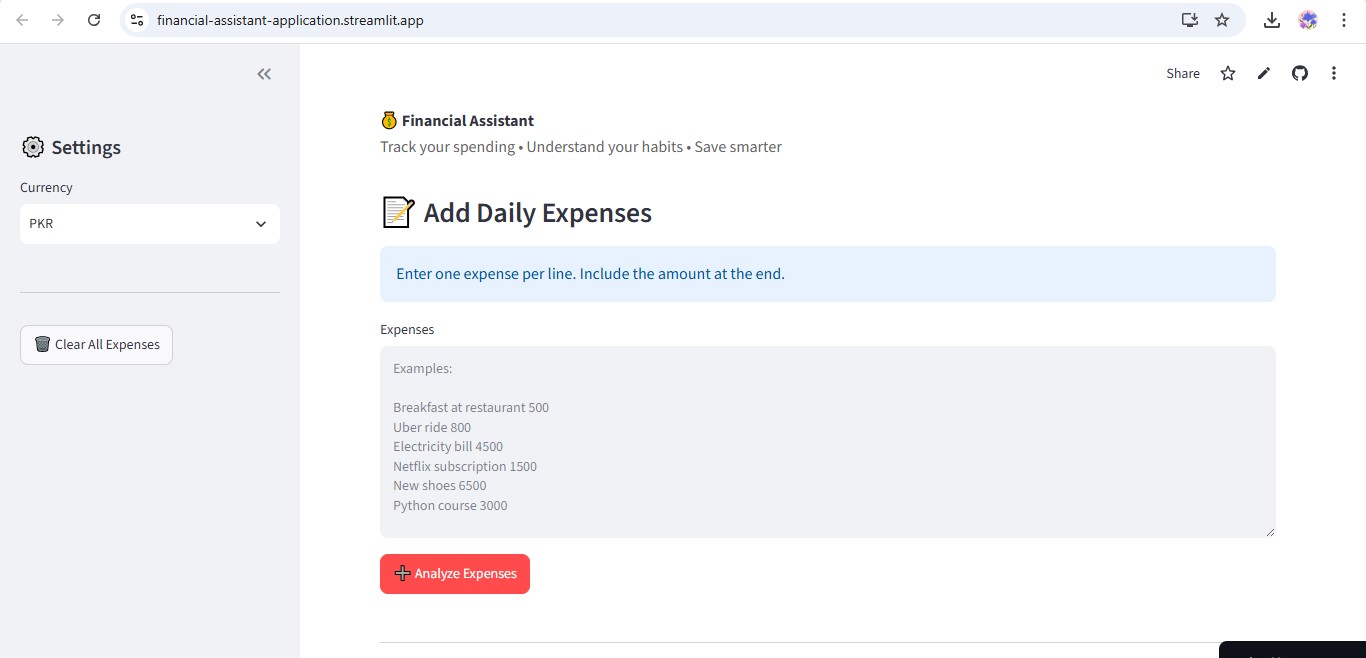
Financial Assistant takes daily expenses as text, automatically categorizes them using Machine Learning, analyzes spending patterns, and uses Generative AI to provide personalized money-saving strategies.
How we built it
We built the application using Python and Streamlit. Scikit-learn with TF-IDF and Logistic Regression handles expense categorization, while Pandas performs financial analysis and the Groq LLM generates personalized recommendations.
Challenges we ran into
The main challenges were accurately categorizing natural-language expenses, handling different expense formats, integrating the ML pipeline with the LLM, and securely managing the Groq API key during deployment.
Accomplishments that we're proud of
We successfully combined Machine Learning, data analysis, and Generative AI into a single practical application that turns raw expense descriptions into actionable financial insights.
What we learned
We learned how to integrate an ML classification pipeline with a Streamlit interface, process unstructured text, connect an LLM API, manage secrets, and deploy an AI-powered application.
What's next for Financial Assistant
We plan to add user accounts, persistent expense history, income and budget tracking, savings goals, monthly reports, improved ML models, spending alerts, and more advanced financial insights.
Built With
- genai
- machine-learning
- python
- scikit-learn
- streamlit


Log in or sign up for Devpost to join the conversation.