Inspiration
I noticed that most investment apps focus on what to buy, but few help people understand their own risk tolerance. During market crashes, people panic-sell because they don't know themselves—they don't understand if they're actually comfortable with volatility. I wanted to create a free, educational tool that helps anyone understand their investment personality without selling products or giving biased advice.
What it does
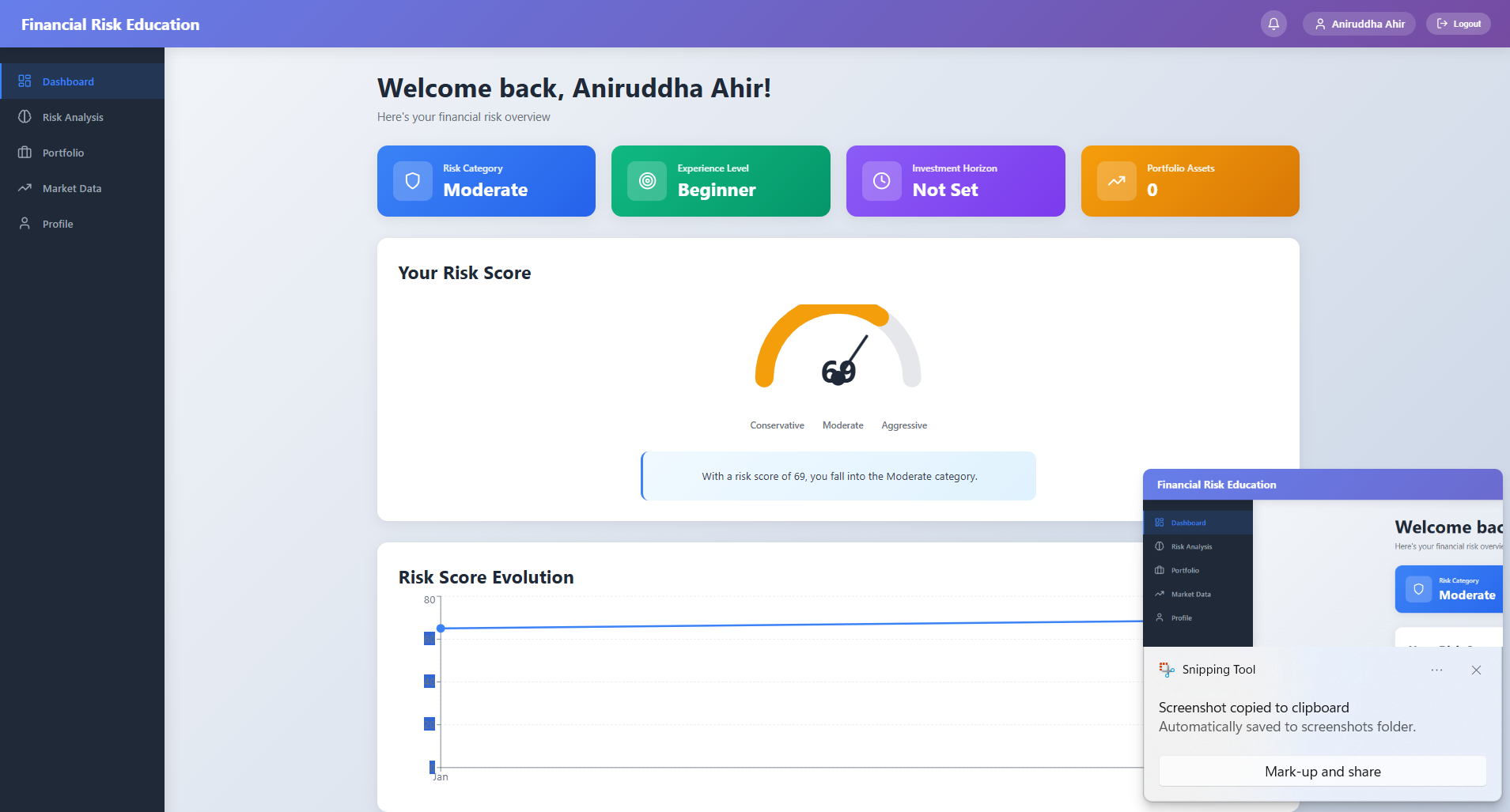
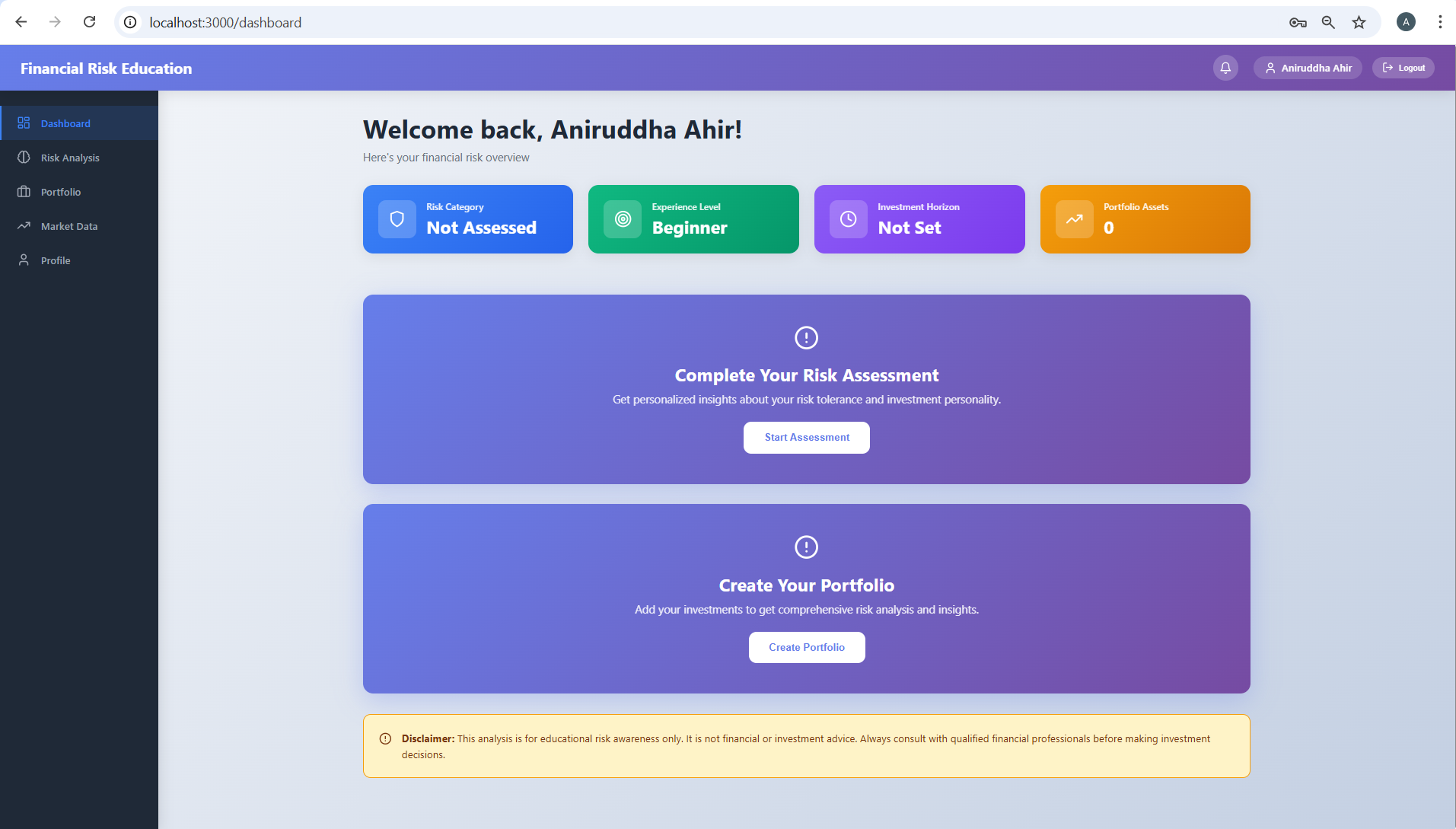
The platform educates users about their financial risk through :-
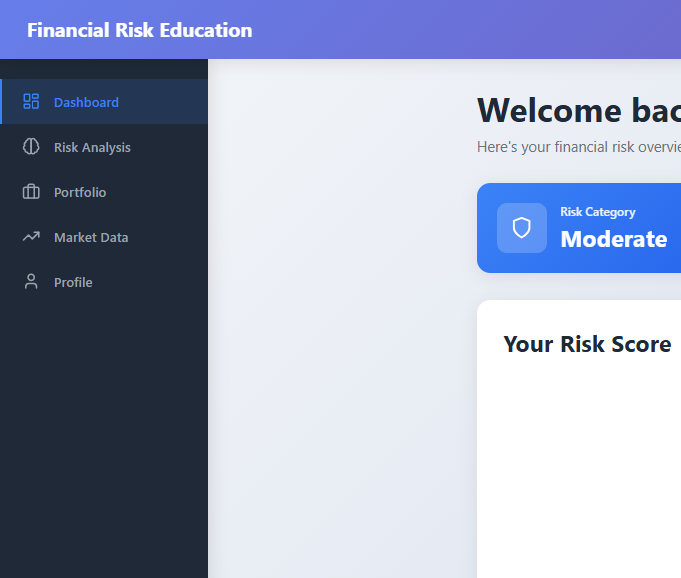
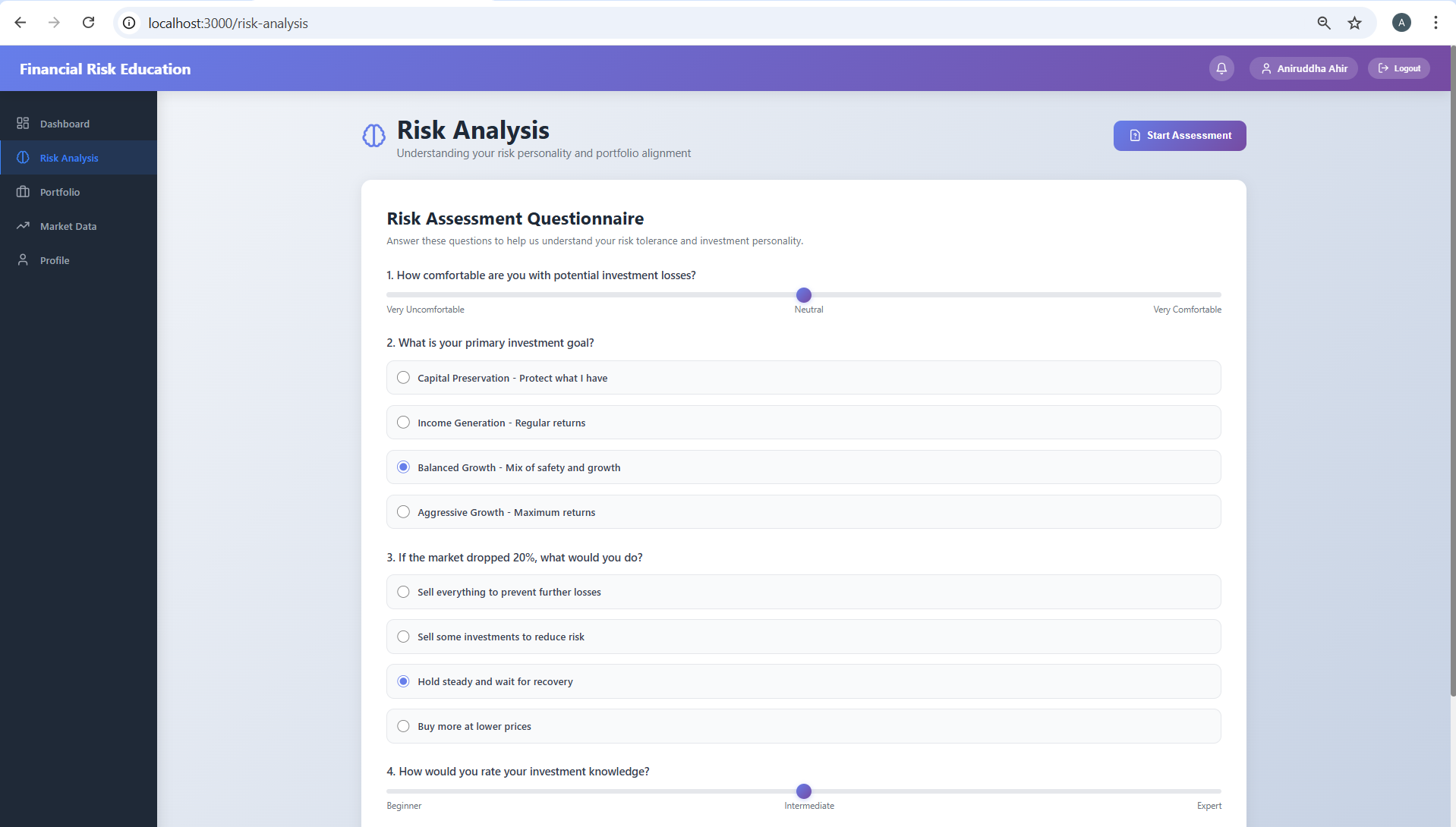
- Risk Assessment Quiz - Analyzes your comfort with losses, goals, and market reactions.
- AI Personality Analysis - Uses Openai to explain your risk psychology in plain English.
- Portfolio Risk Calculator - Shows if your investments match your actual comfort level.
- Behavioral Bias Detection - Identifies emotional patterns that could hurt your decisions.
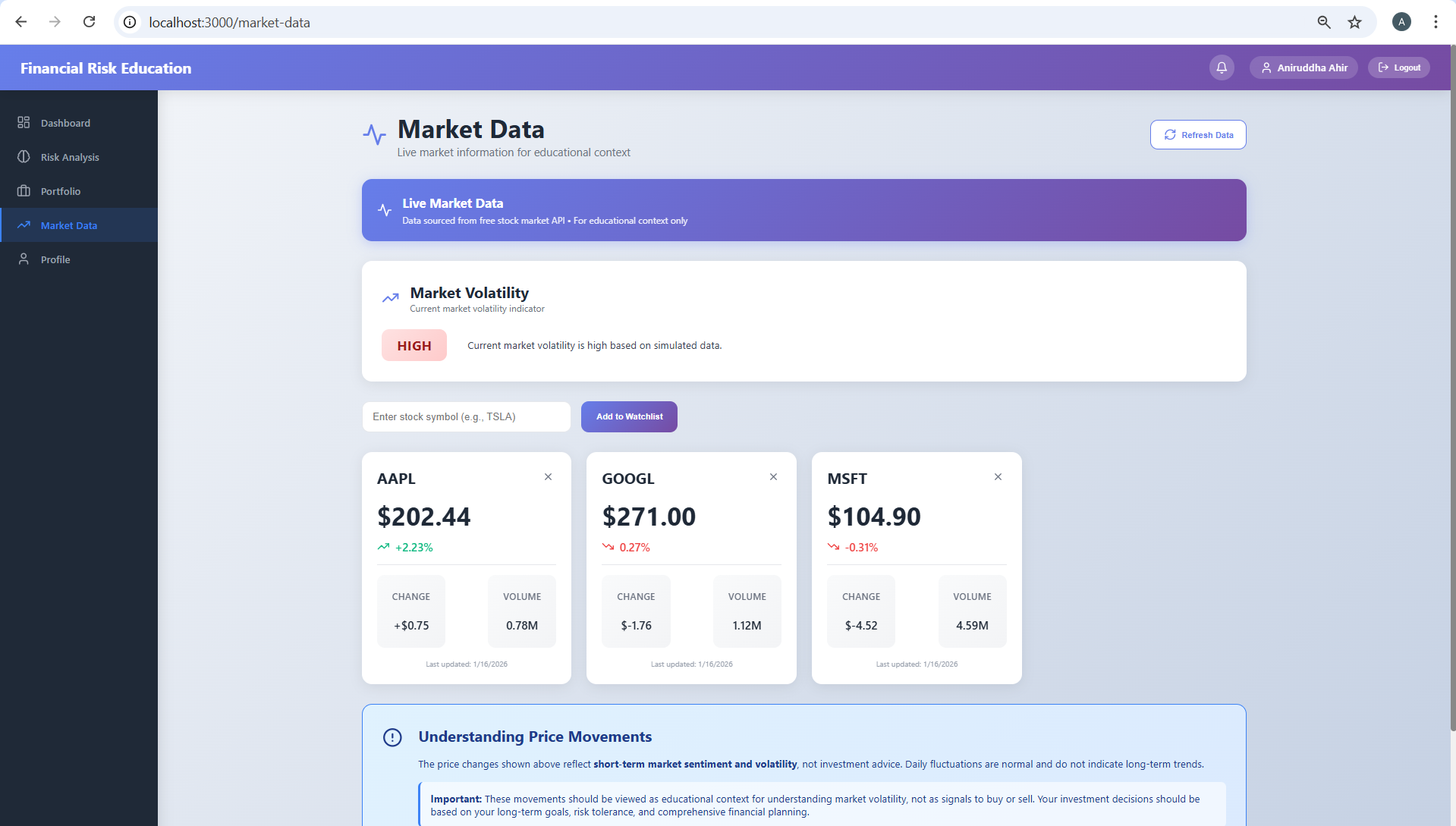
- Live Market Context - Provides educational stock data (not trading signals).
- Stress Scenarios - Simulates how your portfolio might behave during market crashes.
How we built it
MERN STACK BASED APPLICATION :-
- Frontend: React.js with 40+ components, animated charts, responsive design.
- Backend: Node.js + Express API with 20+ endpoints.
- Database: MongoDB for storing user profiles, portfolios, and risk assessments.
- AI: Openai GPT-4 API for behavioral analysis and personality interpretation.
- Market Data: Alpha Vantage API for live stock prices and volatility.
Challenges we ran into
- Openai Consistency - GPT-4 sometimes returned inconsistent JSON. Fixed with strict prompt engineering and response validation.
- Portfolio Validation - Users could add assets that didn't sum to 100%. Added real-time validation on both frontend and backend.
- API Rate Limits - Free stock APIs limit 5 calls/minute. Implemented caching and request batching.
- Risk Algorithm Tuning - Initial scores were too extreme. Calibrated weights through testing to get realistic distributions.
- State Management - React prop drilling got messy. Switched to Context API for global state.
Accomplishments that we're proud of
Built a complete full-stack MERN application from scratch :-
- Created an AI-powered risk education system that's actually useful.
- Implemented complex financial algorithms (Shannon's Diversity Index, weighted scoring).
- Designed 40+ React components with smooth animations.
- Integrated two external APIs (OpenAI + Market Data) seamlessly.
- Made financial education accessible - completely free, no hidden agendas.
- Maintained ethical standards - clear disclaimers, no investment advice.
What we learned
- Full-stack MERN development with real-world complexity.
- API integration and prompt engineering with Openai.
- Database schema design with MongoDB relationships.
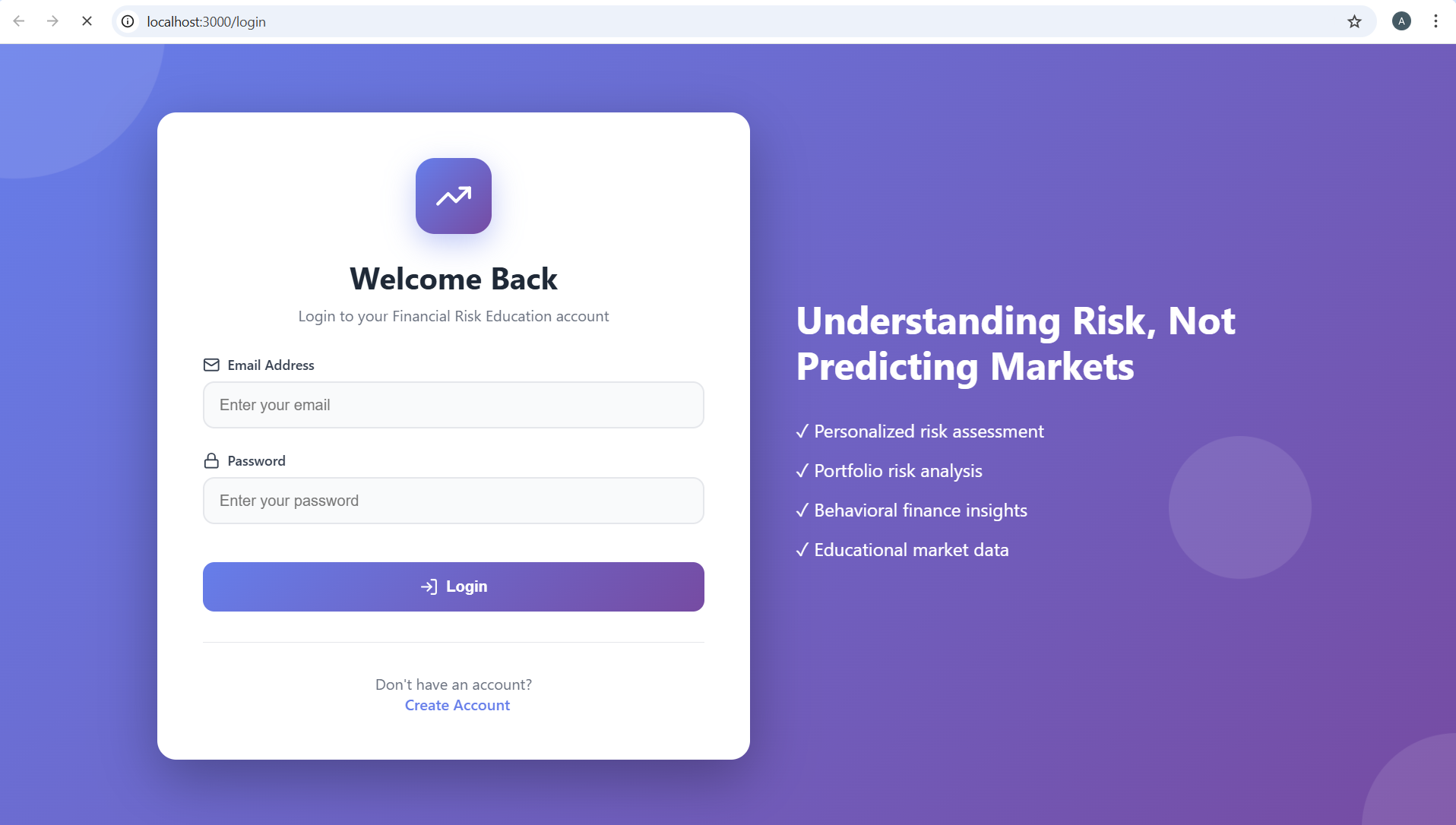
- JWT authentication and security best practices.
- React state management and Context API.
What's next for Financial Risk Education Platform
Short-term :-
- Historical Tracking - Show how risk tolerance changes over time.
- Peer Benchmarking - Compare your profile to similar users (anonymized).
- Educational Content - Interactive tutorials on behavioral finance.
- PDF Reports - Downloadable risk assessment summaries.
Long-term :-
- Machine Learning - Predict risk tolerance changes based on behavior patterns.
- Mobile App - React Native version with push notifications.
- Advanced Scenarios - More stress testing options (recession, inflation, sector crashes).
- Goal Planning - Connect risk tolerance to specific financial goals.
- Community Features - Anonymous discussion forums for risk education.
After This , One More Advance Feature :- Risk Education Certification - Users complete modules and earn a certificate in financial risk awareness—making financial literacy a badge of honor.

Log in or sign up for Devpost to join the conversation.