-
-
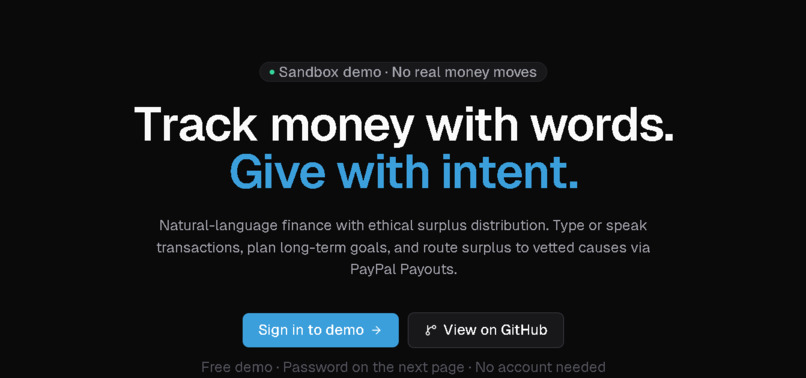
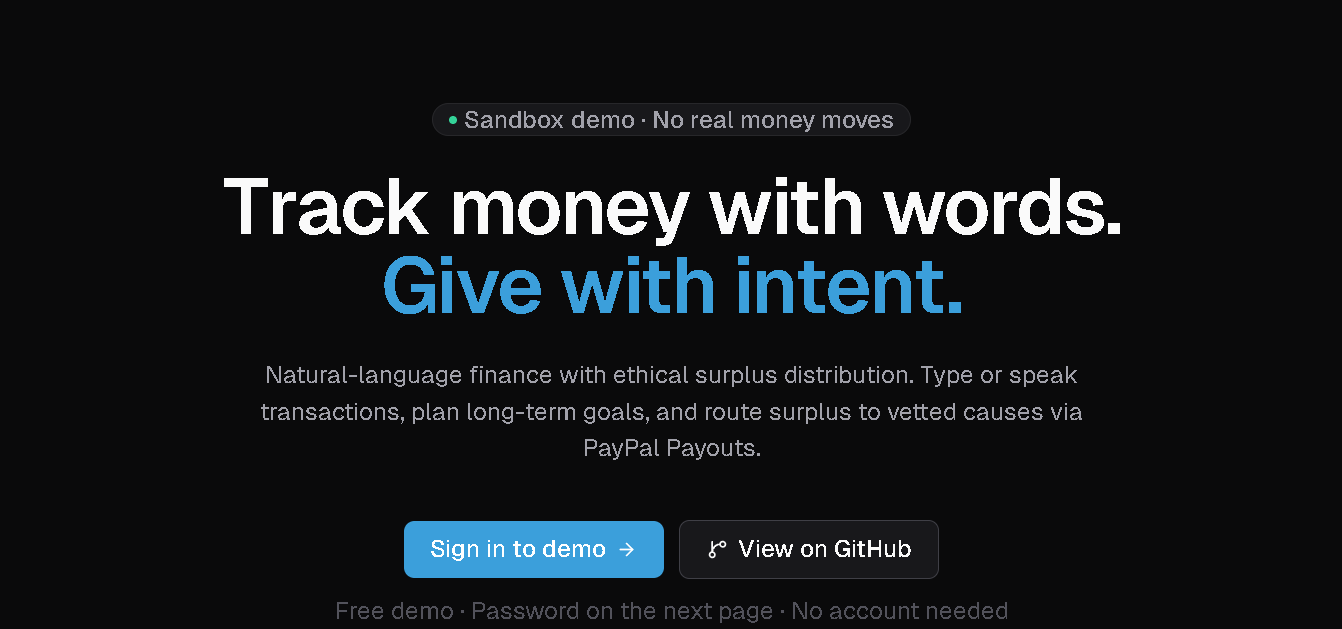
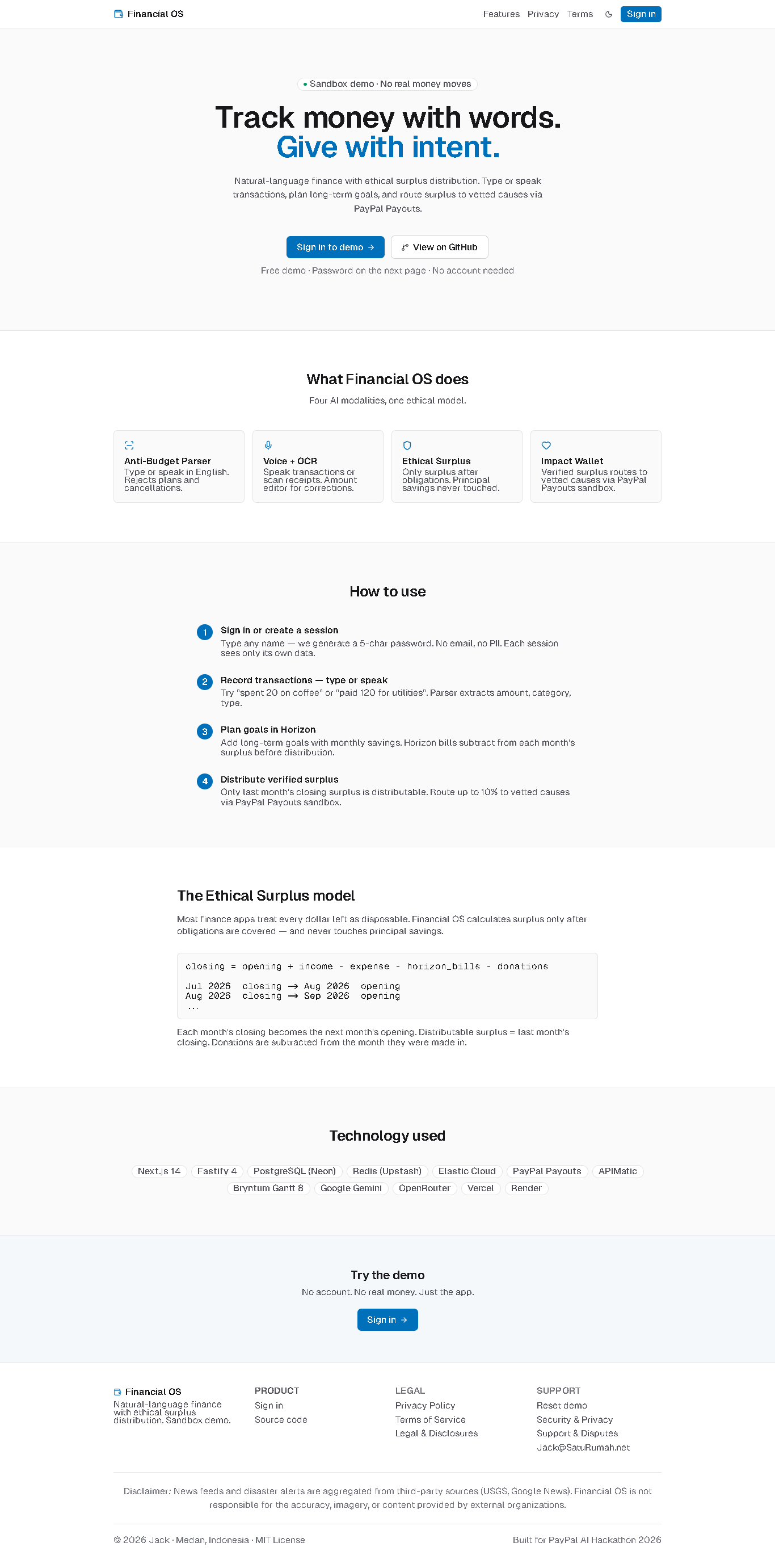
FOS - INDEX PAGE MINIMAL
-
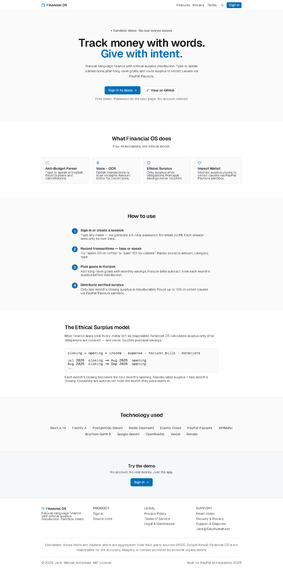
FOS- Index Page In Light Mode
-
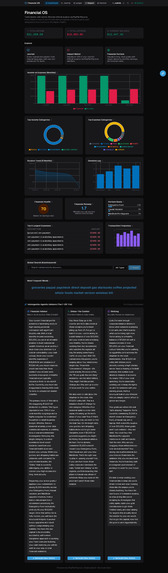
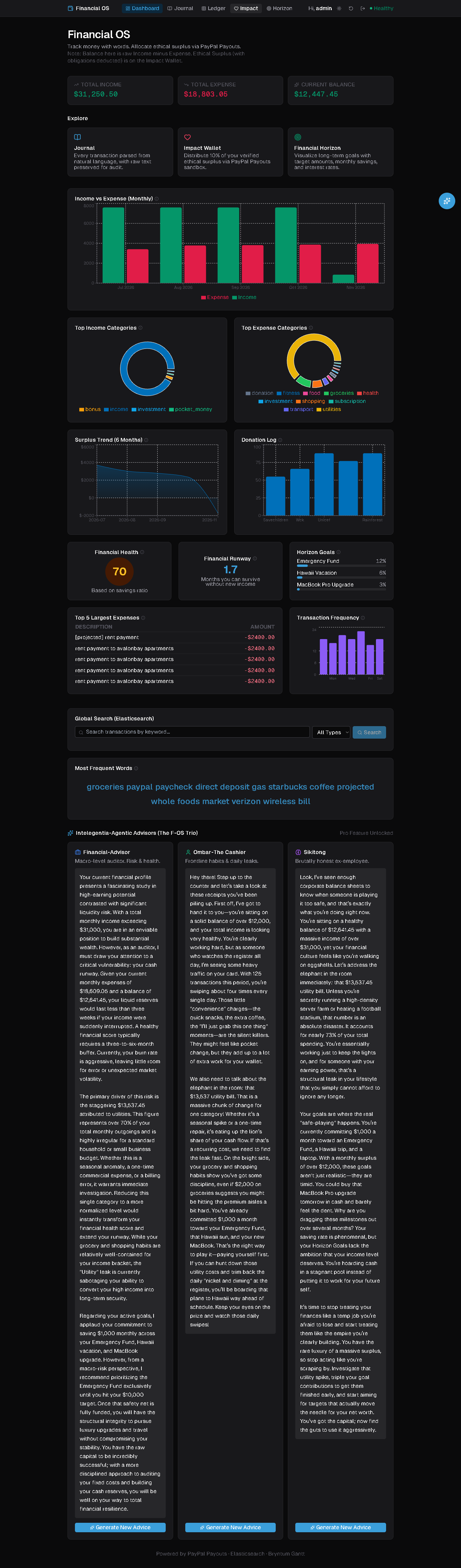
FOS- Dashboard page after login for Admin
-
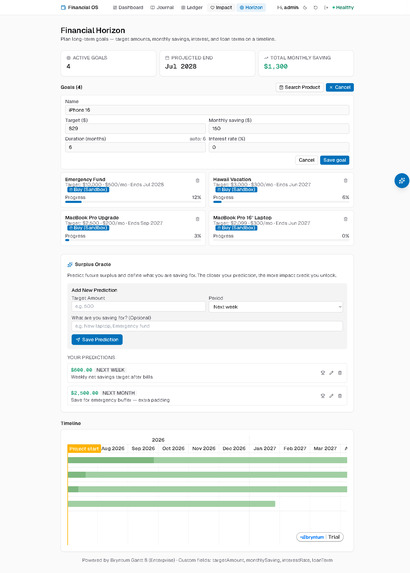
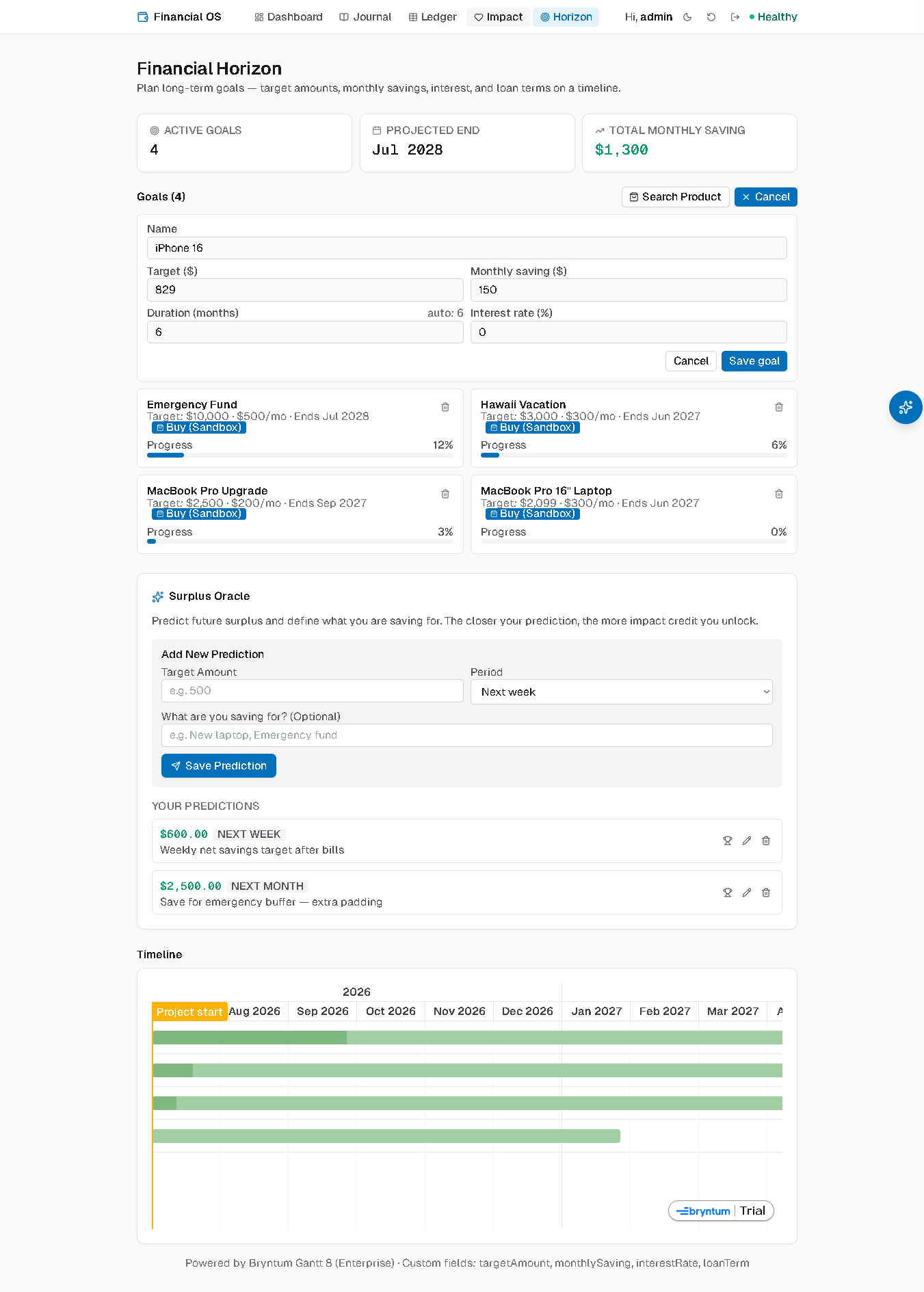
FOS-Horizon and Oracle Pages In Light Mode
-
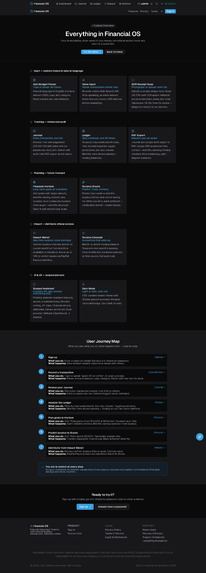
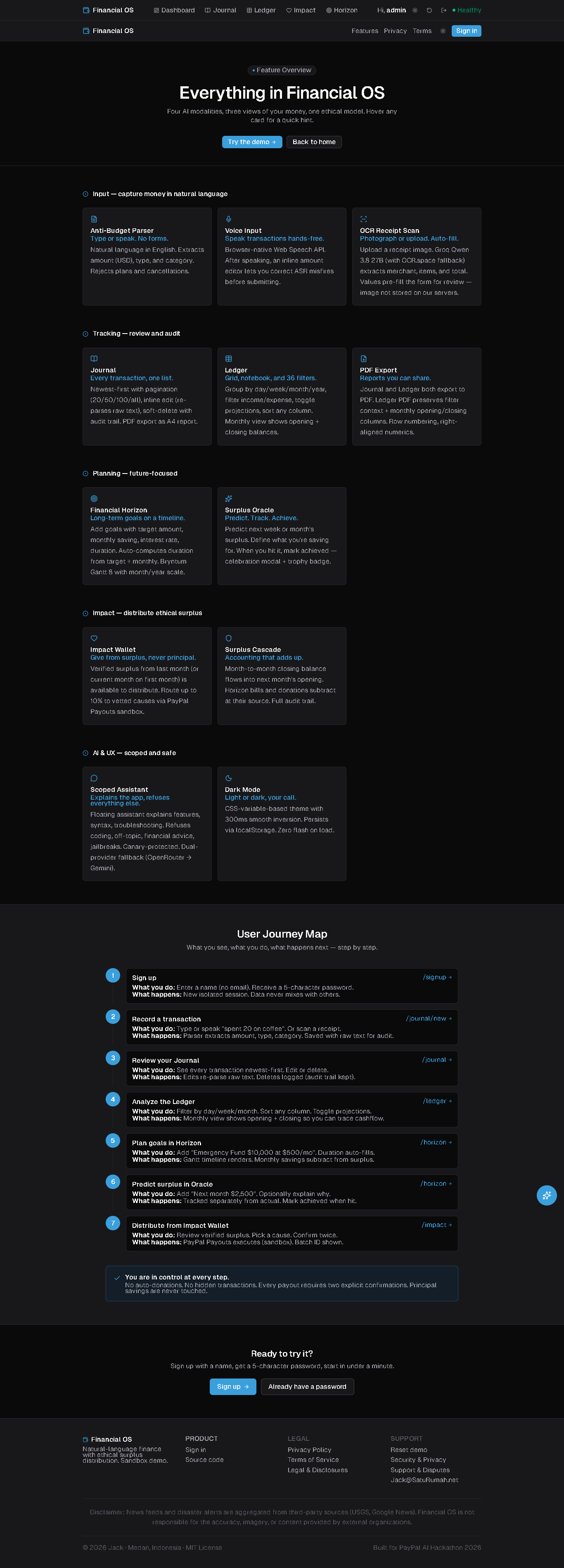
FOS-Features & How to use
-
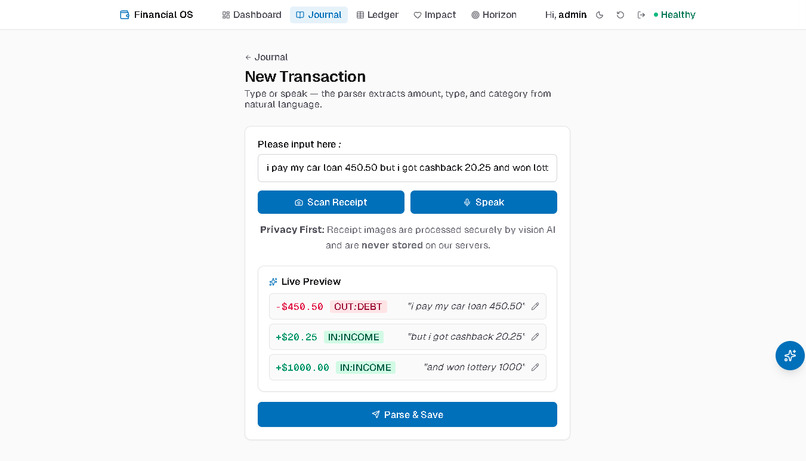
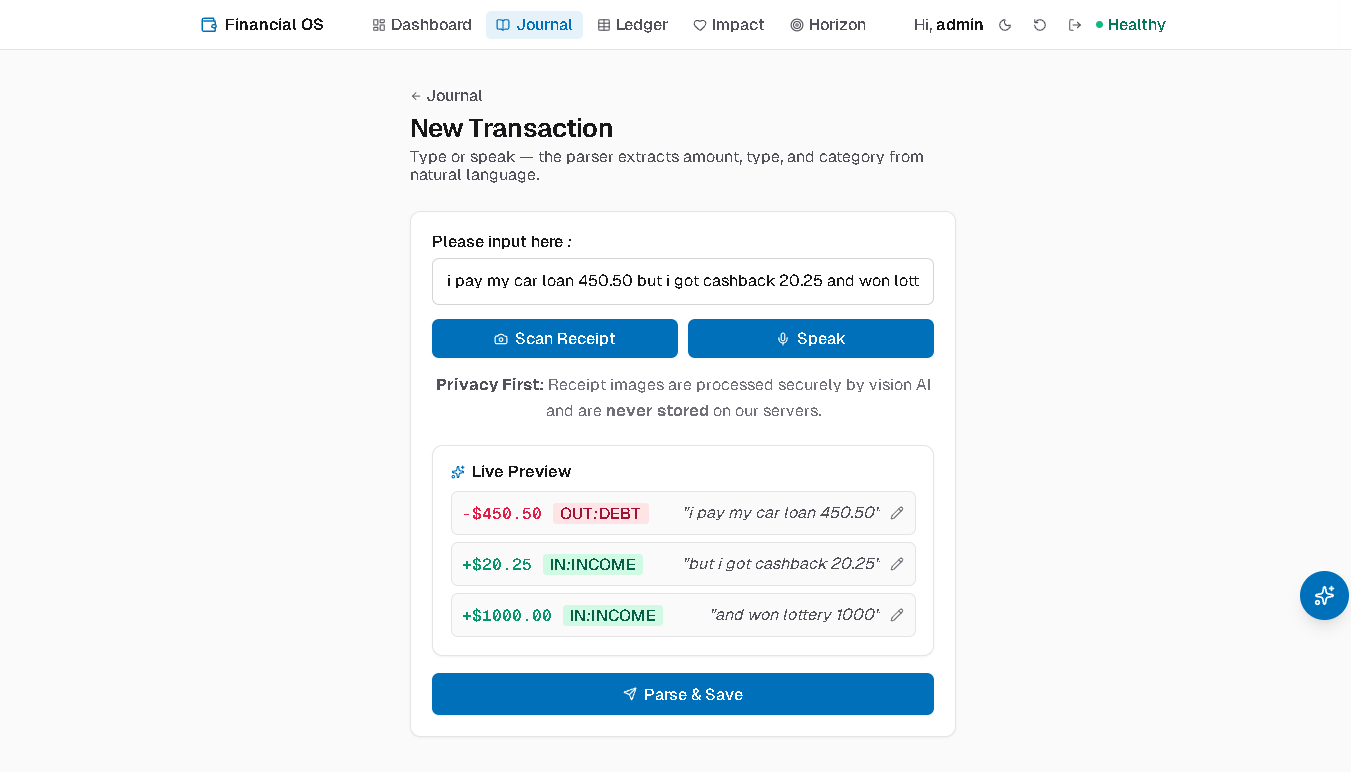
FOS-Input Data with Text , Voice & Capture Receipt in Light Mode
-
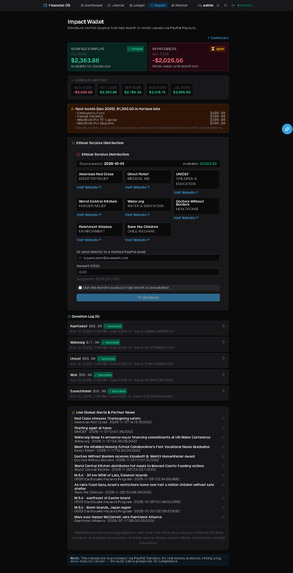
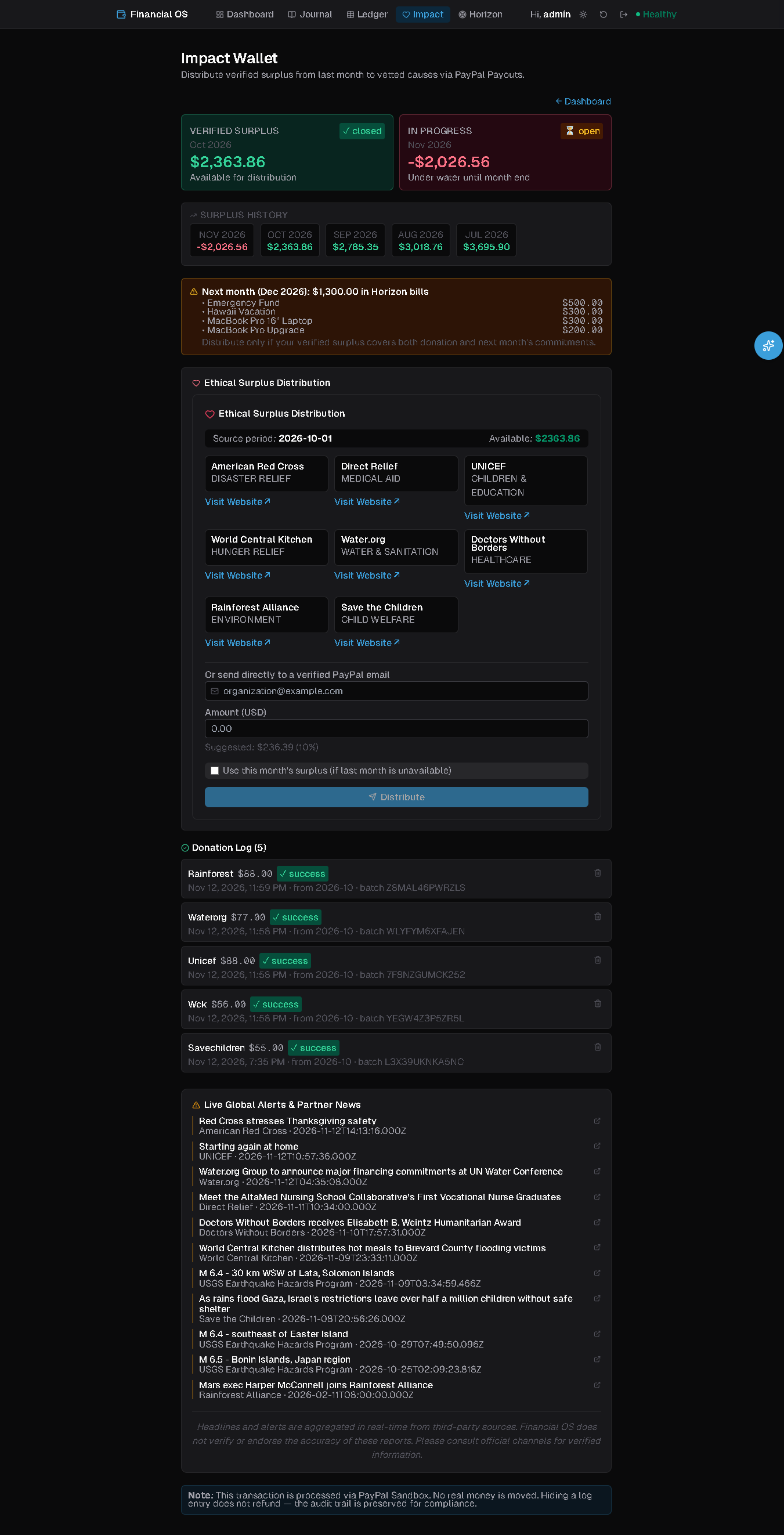
FOS- Impact Pages for Donations and News Feed
-
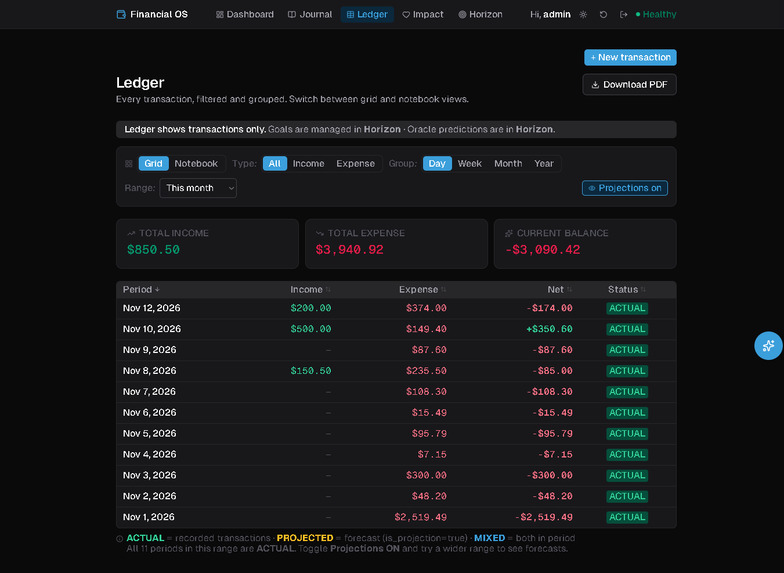
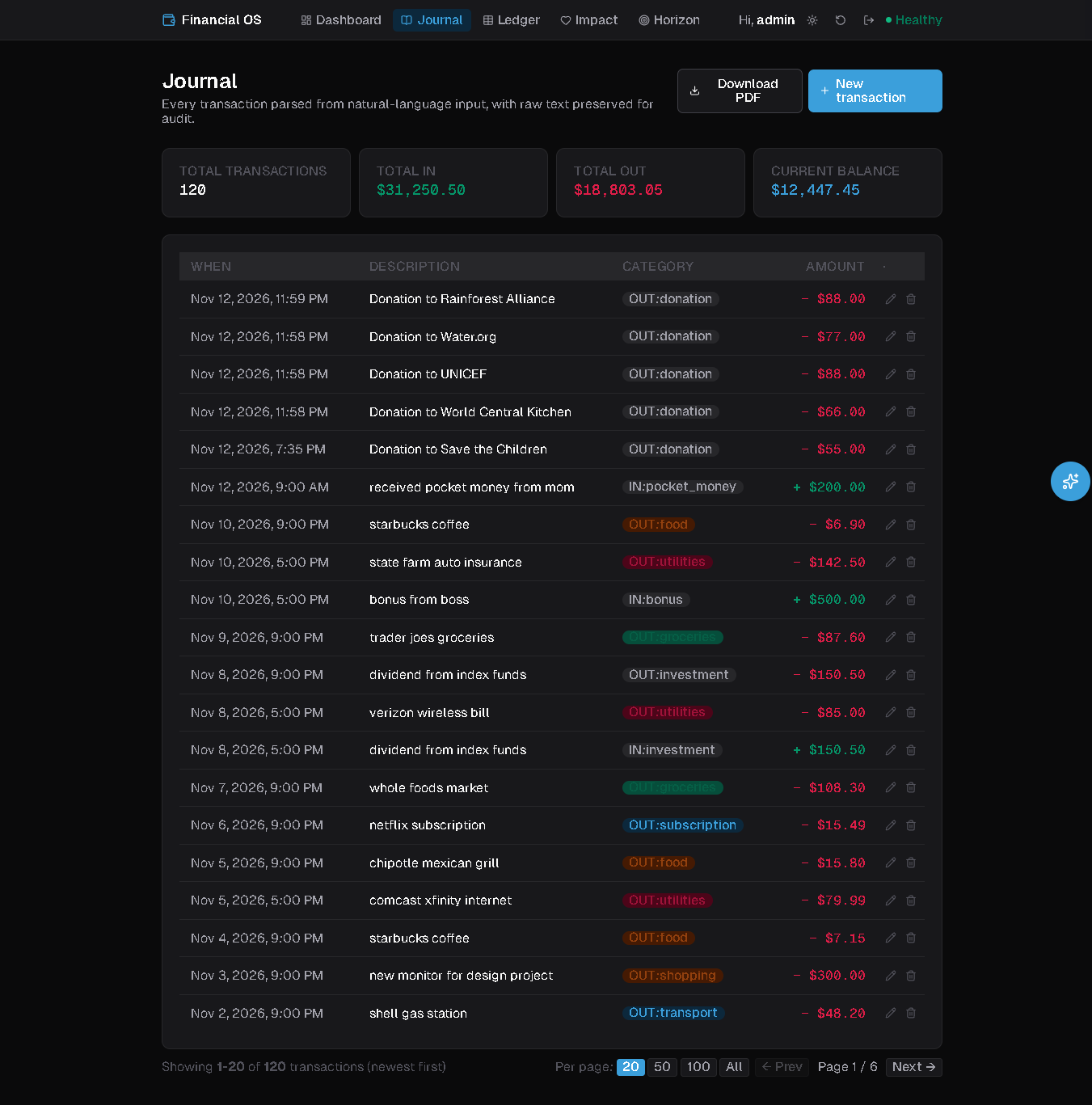
FOS- Journal Page
-
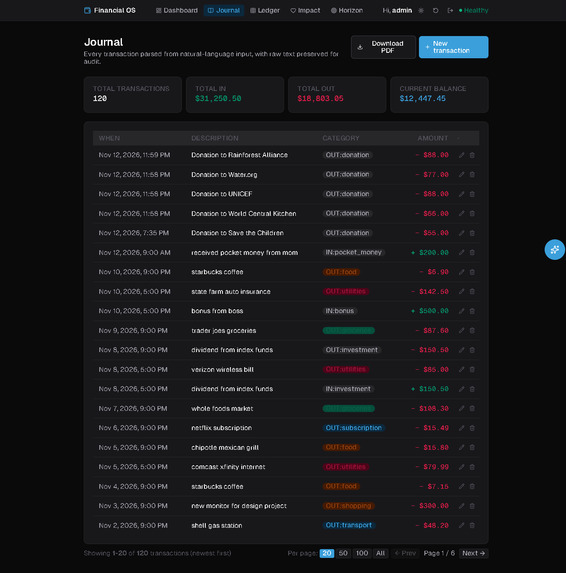
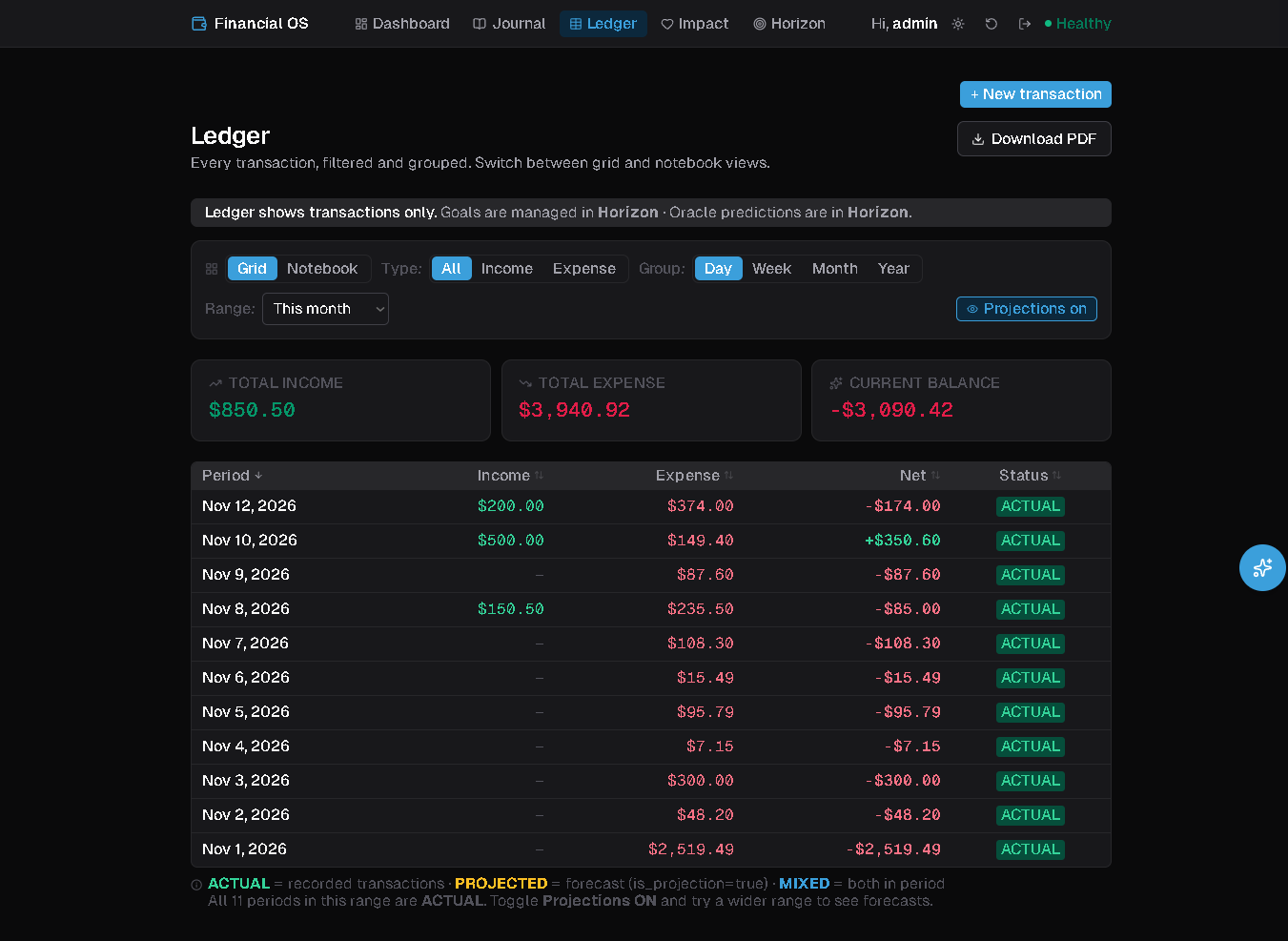
FOS- Ledger Page
-
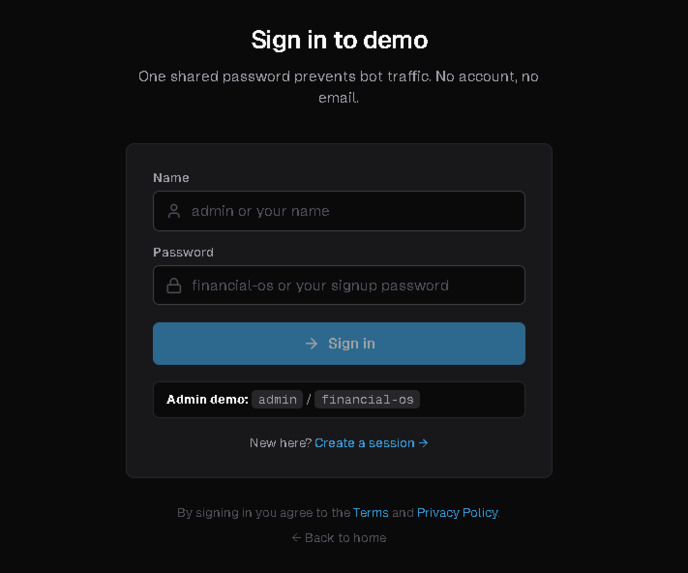
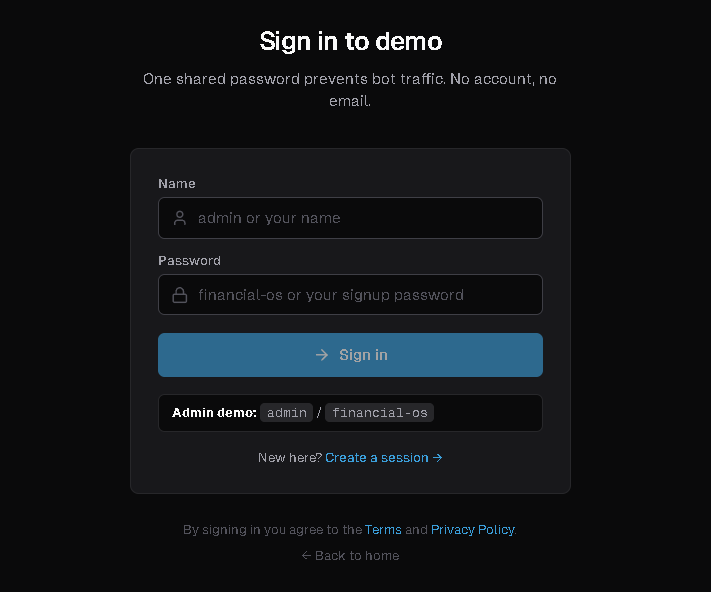
FOS- Login Page
-
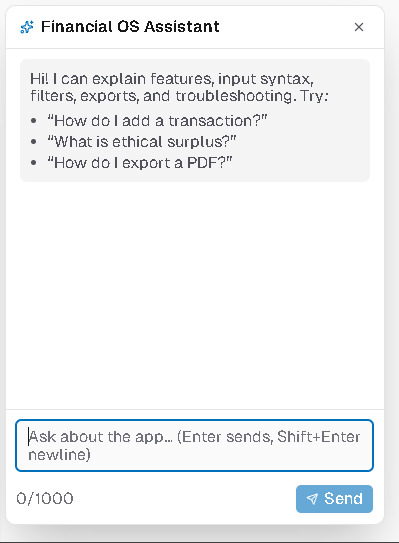
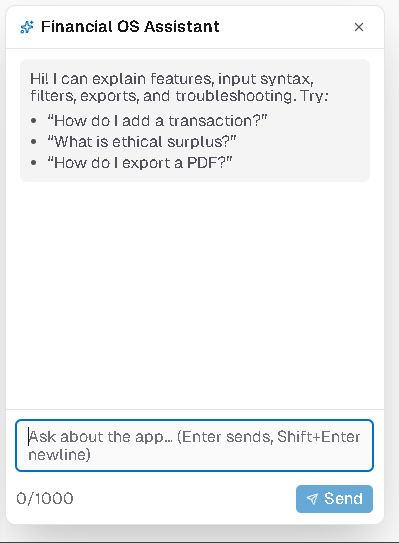
FOS-Assistant in Light Mode
💡 The Inspiration
The modern fintech paradigm is fundamentally flawed. Traditional apps treat every dollar as disposable income, pushing guilt-driven, automated donations that jeopardize financial safety, or encouraging reckless spending.
We set out to engineer a paradigm shift. Financial OS was born from a radical premise: What if a finance app actually respected your financial boundaries? This led to the invention of the Ethical Surplus Model—a mathematically rigorous approach where only the capital safely isolated after fulfilling all obligations (rent, bills, emergency buffers) and protecting principal savings can be allocated to social impact.
🚀 What it does
Financial OS obliterates the friction of manual bookkeeping. We built a zero-friction, multimodal AI ingestion engine that allows users to track finances via natural language, voice commands, or by simply snapping a photo of a receipt.
But we go far beyond basic tracking:
- The Ethical Surplus Engine: A proprietary cascading algorithm that dynamically calculates the "safe-to-donate" surplus month-over-month, mathematically guaranteeing a user never gives away money they need for survival.
- The F-OS Trio (Agentic Advisors): A gamified, Easter-Egg feature unlocked after 100 transactions. Our AI transforms into three distinct personas—Financial-Advisor (Macro Analyst), Ombar-The Cashier (Street-Smart Frontliner), and Sikitong (Brutally Honest Insider)—to deliver hyper-personalized financial audits.
- PayPal Impact Routing: Seamlessly route a suggested 10% of your verified surplus to vetted global causes via PayPal Payouts, protected by a strict two-step, human-in-the-loop confirmation.
🛠️ How we built it
We engineered a decoupled, enterprise-grade architecture designed for high throughput, strict security, and analytical querying:
- Frontend: Next.js 14 (App Router) on Vercel, styled with Tailwind CSS for a frictionless, Stripe-inspired UI. We integrated Bryntum Gantt 8 for long-term financial horizon planning, and the Channel3 API for real-world product anchoring (allowing users to search actual market items to set realistic goals).
- Backend: Fastify 4 (TypeScript strict ESM) deployed on Render, utilizing Neon PostgreSQL for row-level multi-tenancy, and Upstash Redis for blazing-fast caching.
- AI & Orchestration: Astropods MCP orchestrates our autonomous agent workflows and dynamic category fallbacks. OpenRouter (Gemini) powers the scoped F-OS Assistant, while Groq (Qwen 3.8 27B) handles receipt vision.
- Data & Search: Elastic Cloud powers our semantic search and NLP word-cloud aggregations.
- Payments: PayPal Payouts REST API v1, deeply integrated via an APIMatic-generated TypeScript SDK.
🧗 Challenges we ran into
- Breaking the Serverless Timeout Ceiling: Vercel's strict serverless execution cap (10s) frequently killed our heavy Vision OCR requests. We bypassed this by extending our Next.js API route
maxDurationto 60s, combined with a client-side pre-warm strategy to eliminate Render cold starts. - The React State Batching Trap: Mobile browsers dropped final words in Voice STT due to asynchronous React state batching. We engineered a synchronous
useRefmirror and a custom deduplication algorithm to guarantee zero data loss. - CSP vs. Canvas Rendering: Our own strict Content Security Policy (CSP) was silently blocking canvas image rendering via
blob:URLs. We engineered a workaround usingFileReaderto parse receipts securely without violating our zero-trust security headers. - Atomic Financial Transactions: To guarantee ledger integrity, we built an atomic
BEGIN/COMMIT/ROLLBACKSQL wrapper. If a database write fails after a PayPal Payout initiates, the system safely rolls back to prevent orphaned transactions.
🏆 Accomplishments we're proud of
- Security-First AI: The F-OS Assistant is protected by a Canary String. If a malicious user attempts a prompt injection and the LLM leaks the canary, the backend instantly drops the response with a 500 error and triggers an alert.
- Zero-Trust Multi-Tenancy: We retrofitted our entire database layer with
WHERE session_id = $1row-level isolation across all repository functions. Hackathon judges can test the app simultaneously without data cross-contamination. - Deep Sponsor Synergy: We didn't just slap APIs on; we built around them. Elastic aggregates our NLP data for Word Clouds, Bryntum drives our Gantt charts, APIMatic generated our PayPal SDK, Channel3 anchors our financial goals to real products, and Astropods powers our autonomous F-OS Trio.
🧠 What we learned
Building an AI-powered financial OS taught us profound lessons about system design:
- The Myth of Fully Autonomous Finance: LLMs are probabilistic, but money is strictly deterministic. We learned that true innovation isn't about letting AI move money autonomously; it's about building a system where AI advises, but deterministic code executes. Human-in-the-loop is not a feature—it's a mathematical necessity.
- Context-Aware State Isolation: When dealing with financial data, a "stateless" frontend is a myth. We learned to architect our React components using a strict ref-based mirror to ensure that every user keystroke and voice dictation is captured synchronously, bridging the gap between user intent and database execution.
- Designing for Trust: Trust is engineered through transparency. By using Canary strings, strict CSPs, and open-source APIMatic SDKs, we learned that security isn't an afterthought; it's the primary UX.
⏭️ What's next for Financial OS
- Transition PayPal Payouts from Sandbox to Live mode (production-ready).
- Implement Neon Object Storage for permanent, privacy-first receipt archiving.
- Introduce CSV bulk-import via standard banking protocols (OFX) for enterprise users.
Built With
- apimatic
- astropods
- bryntum
- channel3
- elasticsearch
- fastify
- gemini
- groq
- neon
- next.js
- ocr-space
- openrouter
- paypal
- paypal-payouts
- postgresql
- recharts
- redis
- render
- tailwind-css
- typescript
- upstash
- vercel
- vitest.
- web-speech-api

