Inspiration
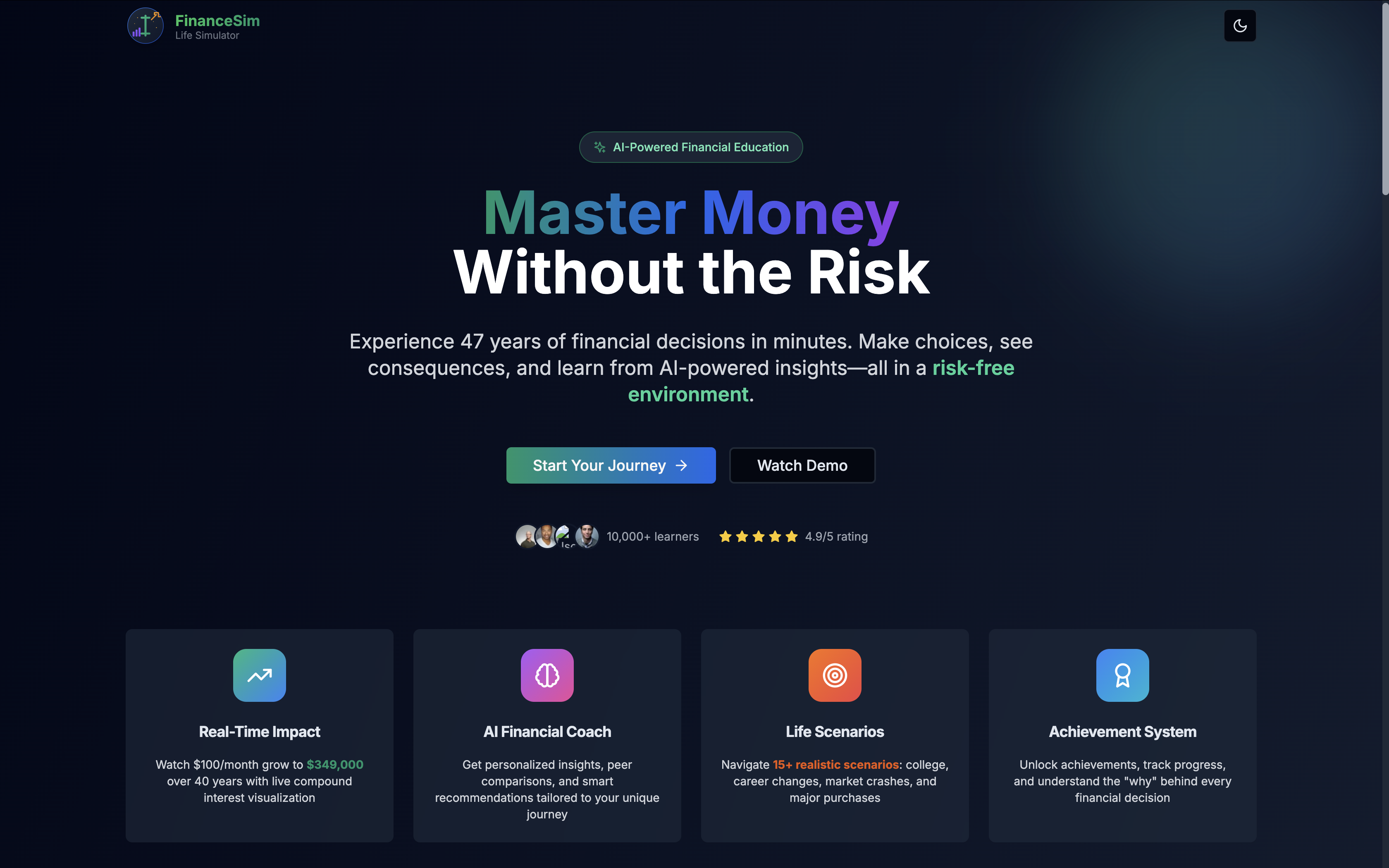
Financial literacy is a crisis affecting millions globally. Despite money decisions shaping our entire lives, most people learn financial skills through costly mistakes rather than education. Traditional finance education is often theoretical, boring, and disconnected from real-world application. We were inspired by the "Hack the Economy" challenge to create something that makes financial education accessible, engaging, and practical for everyone—regardless of their economic background.
What it does
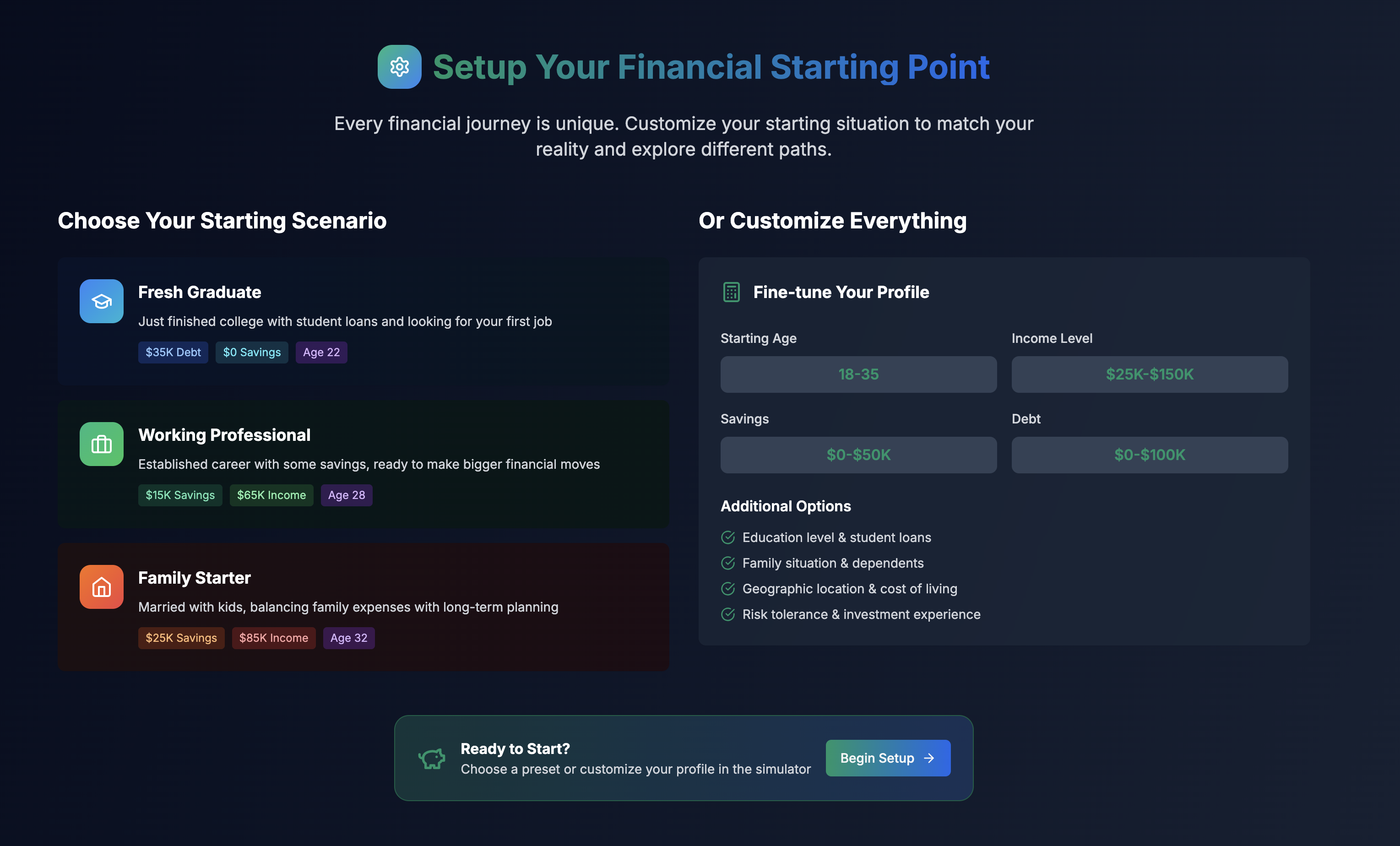
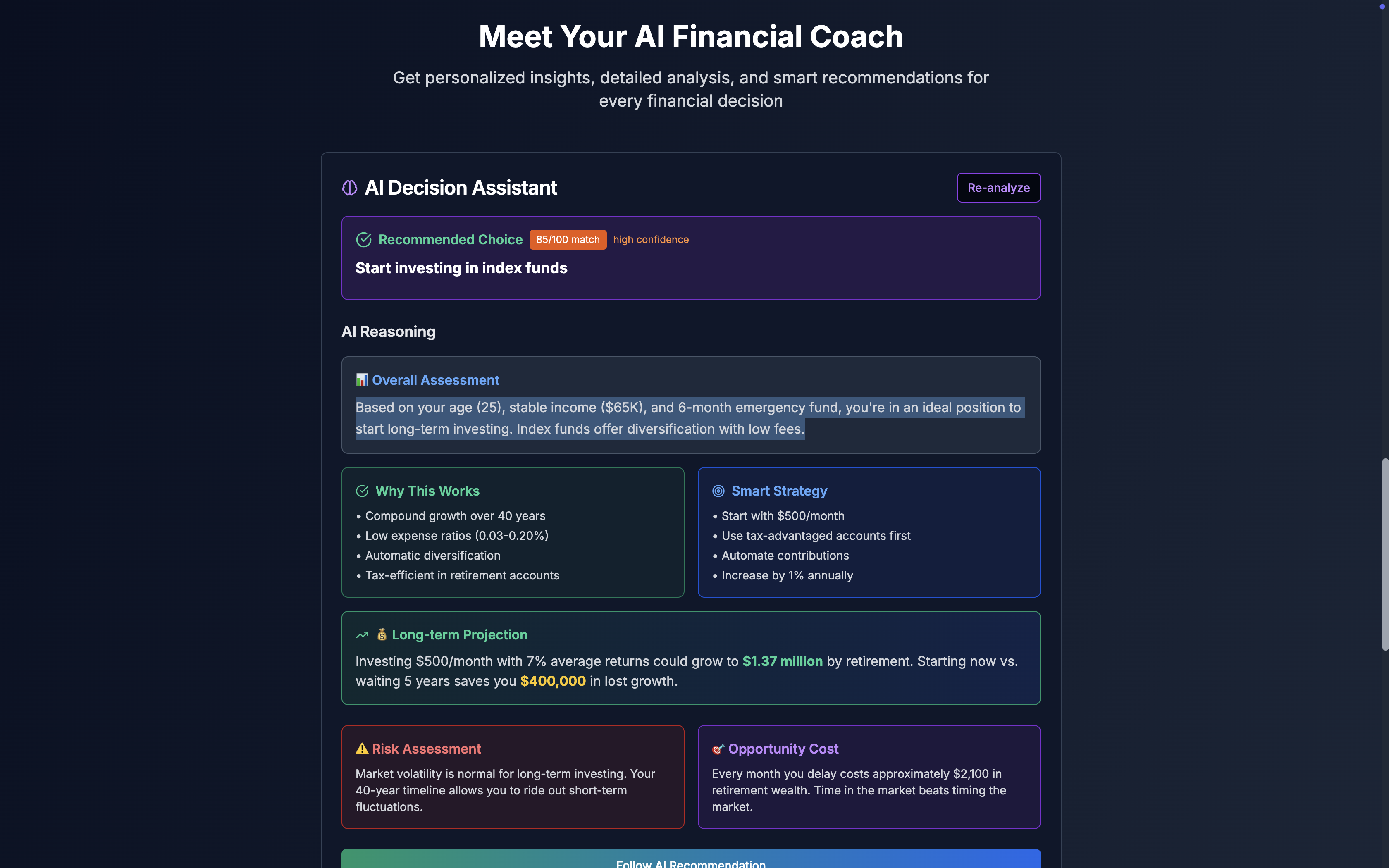
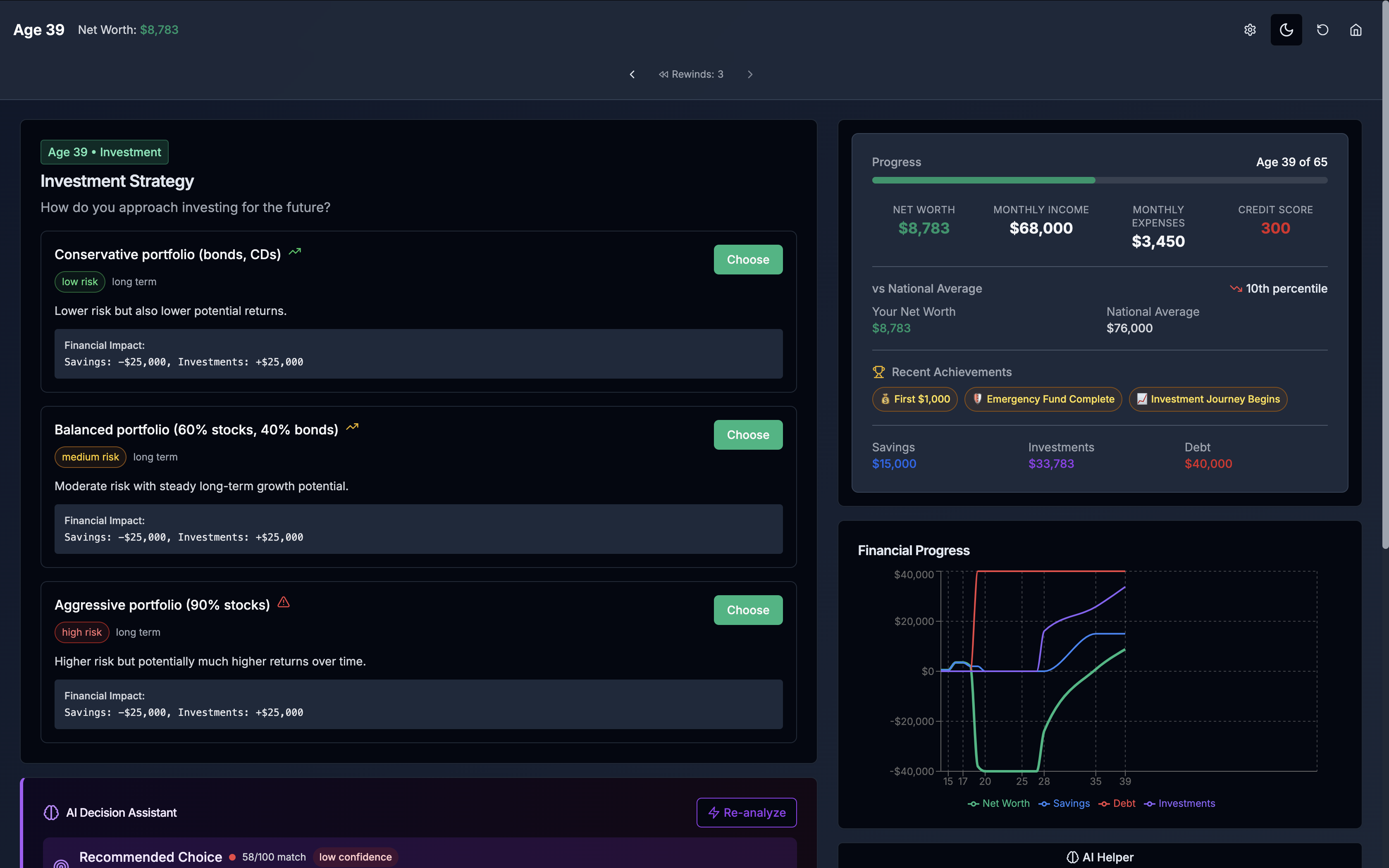
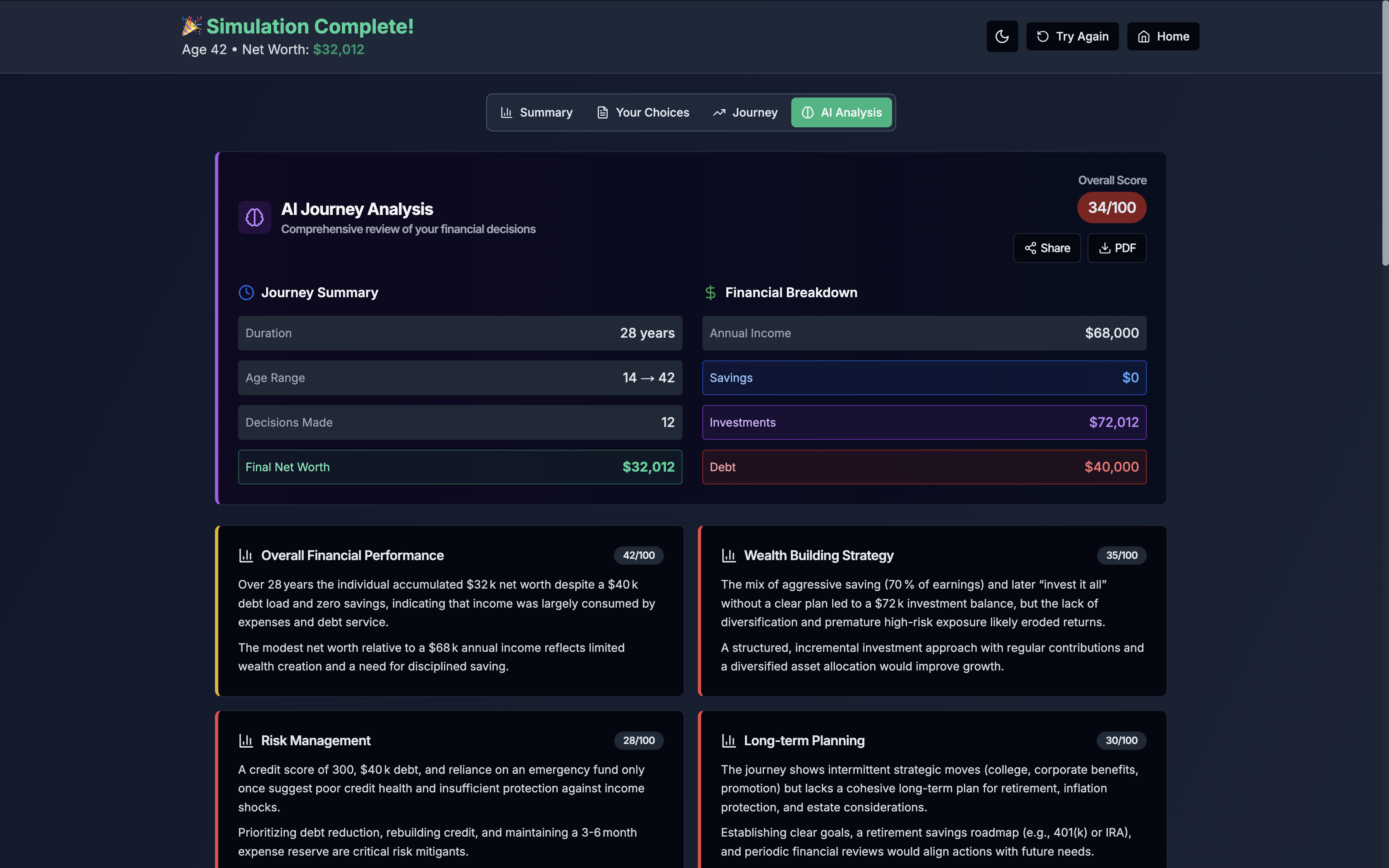
Financial Life Simulator is an interactive web game that lets users practice 40+ years of financial decisions in just minutes. Players start at age 18 and navigate through realistic life scenarios: choosing between college and trade school, deciding whether to rent or buy, managing market crashes, and building retirement wealth. The game features AI-powered coaching that explains the "why" behind each decision, real-time charts showing compound interest in action, and achievement tracking that gamifies learning. Users can see how $100/month investments grow to $349,000 over decades, learn debt management strategies, and understand the long-term impact of lifestyle choices—all without real-world financial risk.
How we built it
We built the simulator using Next.js 15 with React and TypeScript for a robust, scalable foundation. The frontend uses Tailwind CSS and shadcn/ui components for a mobile-first, accessible design. Financial calculations are powered by custom algorithms that model compound interest, debt accumulation, and market volatility. We integrated multiple AI providers (OpenAI(GPT0SS 120B) and Google) for personalized coaching and insights. Recharts provides interactive data visualizations, while Zustand manages complex game state. The entire application is optimized for mobile devices and deployed on Vercel for instant global access.
Challenges we ran into
The biggest challenge was balancing educational accuracy with engaging gameplay. We needed financial models complex enough to be realistic but simple enough to understand quickly. Creating age-appropriate scenarios that feel authentic required extensive research into real-world financial milestones and challenges. Making the interface work seamlessly across all devices—from phones to desktops—required careful responsive design considerations. We also faced the challenge of making AI coaching feel personal and helpful rather than generic, requiring fine-tuning of prompts and fallback systems for when APIs are unavailable.
Accomplishments that we're proud of
We created a truly accessible financial education tool that works on any device with internet access. The AI coaching system provides personalized insights that adapt to each user's decisions and financial situation. Our mobile-first design ensures the app works perfectly on smartphones, making financial education available to users regardless of their device capabilities. The real-time financial modeling accurately demonstrates complex concepts like compound interest and debt snowballing. Most importantly, we built something that can genuinely help people make better financial decisions and potentially improve their economic outcomes.
What we learned
We learned that effective financial education requires both emotional engagement and intellectual understanding. Users need to feel the impact of their decisions, not just understand them theoretically. We discovered the importance of progressive disclosure—introducing complex concepts gradually rather than overwhelming users with information. Building for true mobile accessibility taught us about touch targets, readable typography, and efficient information architecture. We also learned how AI can enhance education when used thoughtfully, providing personalized guidance that scales to thousands of users while maintaining relevance.
What's next for Financial Life Simulator
We plan to expand the scenario library with more diverse life paths and economic situations. Adding multiplayer features would allow families to plan finances together and friends to compare strategies. Integration with real market data could provide dynamic scenarios based on current economic conditions. We want to partner with schools and financial institutions to create structured curricula around the simulator. Long-term, we envision building a comprehensive financial literacy platform with community features, expert content, and impact measurement tools to track how the simulator improves users' real-world financial decisions.
Built With
- css3
- es6+
- google-gemini
- gptoss-120b
- groqapi
- html5
- javascript
- next.js15
- react-18
- recharts
- shadcn/ui
- tailwind-css
- typescript
- vercel
- zustand

Log in or sign up for Devpost to join the conversation.