The Story of FinanceAl
Inspiration
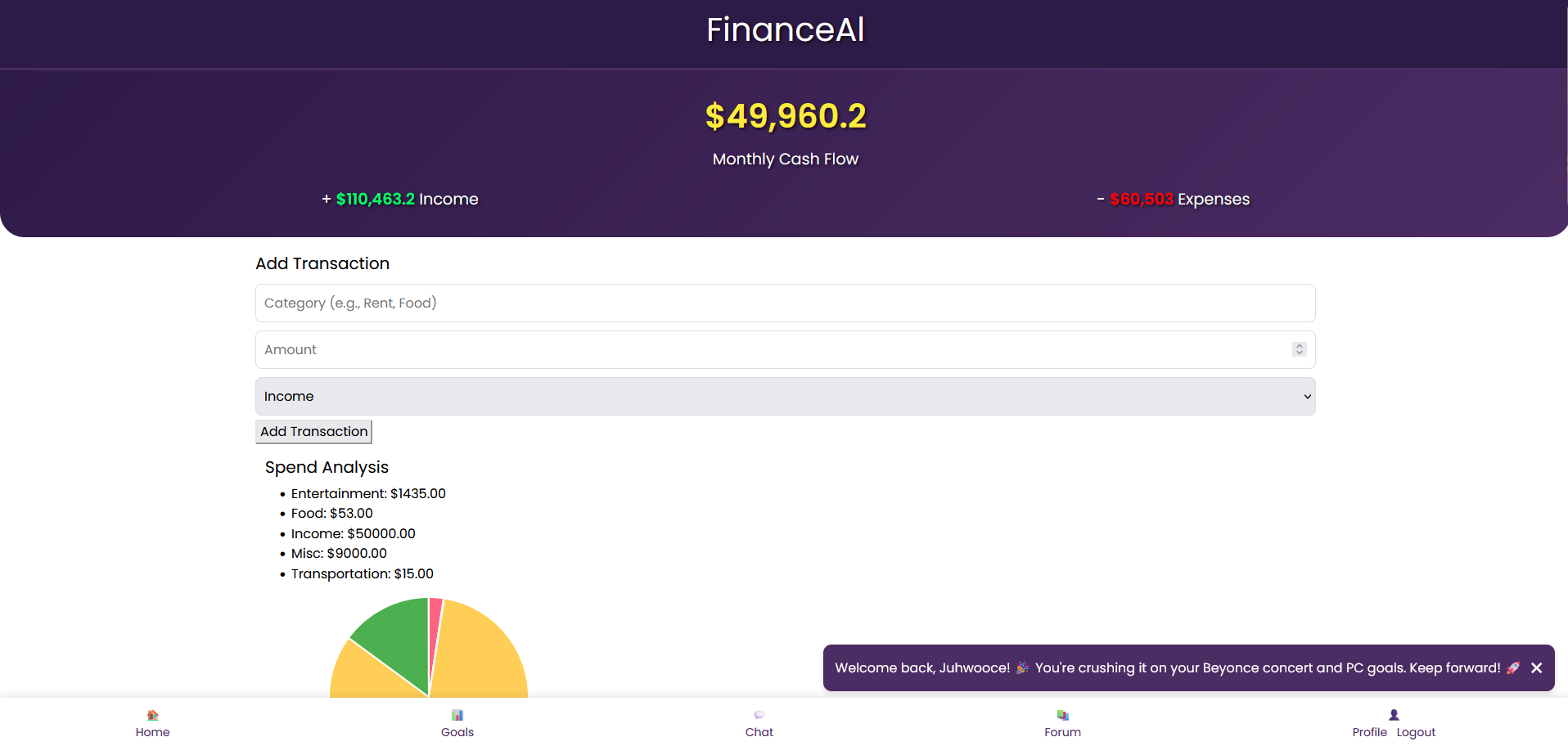
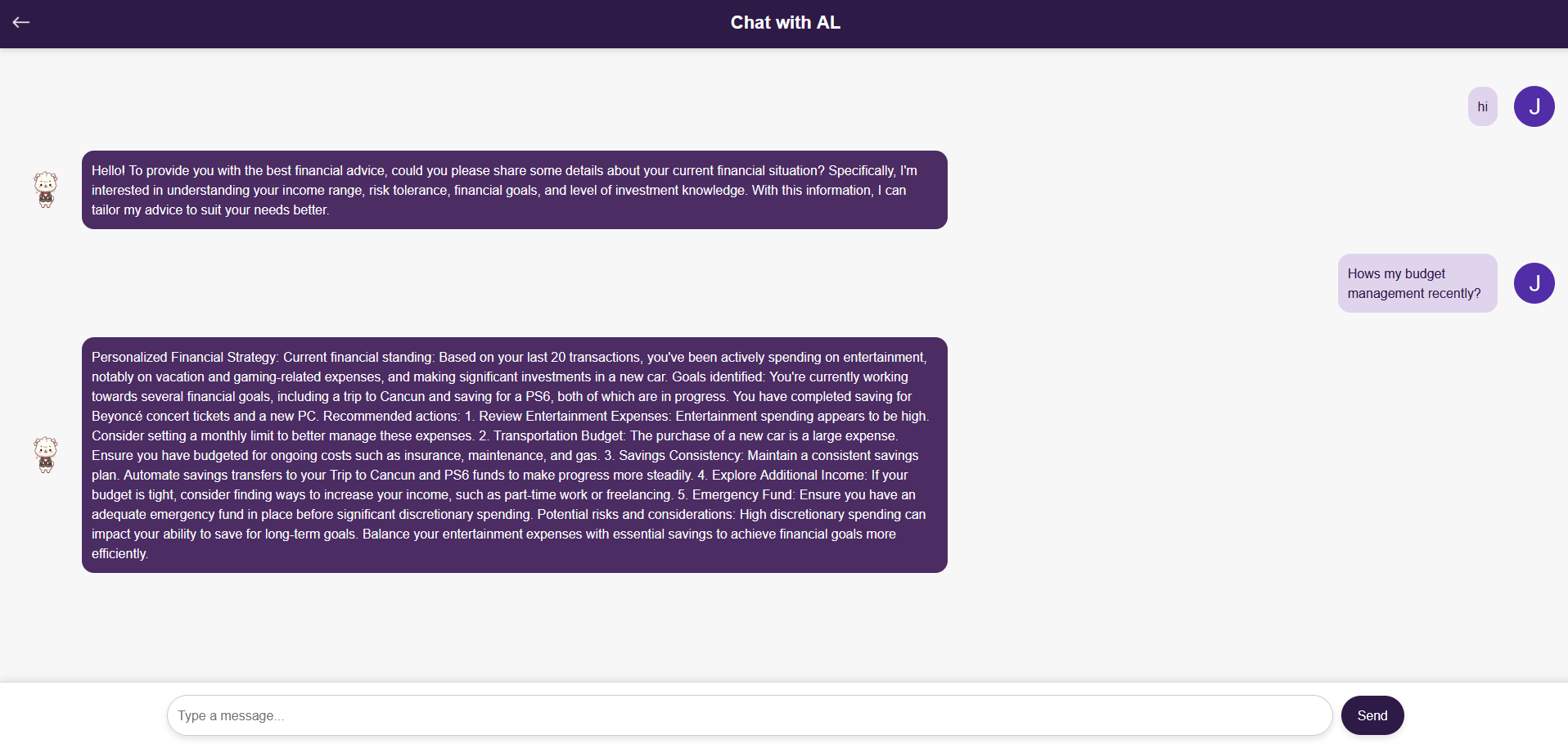
Finance is a part of everyday life, but managing transactions, tracking expenses, and staying financially aware can be a daunting task. The inspiration for FinanceAl came from the desire to create an intuitive AI-powered financial assistant—a tool that doesn’t just track spending but also provides smart insights to help users make informed financial decisions.
https://docs.google.com/presentation/d/1cmk6WHp3eJkw-oifsLiqczR8Q-RpsZ3Y2r3dkIO_X4c/edit?usp=sharing
The idea was sparked by the increasing role of AI in personal finance. Many budgeting tools exist, but few integrate AI to offer real-time, personalized insights. FinanceAl was built to bridge that gap, offering a seamless and intelligent experience for financial tracking.
The Journey
Friday: Laying the Foundation
The hackathon kicked off, and the first step was to establish a strong foundation for FinanceAl. The focus was on setting up the initial site structure, database, and OpenAI API integration.
- Setting up the Flask backend to handle user authentication, transaction storage, and AI-driven insights.
- Configuring the PostgreSQL database and linking it with Flask-SQLAlchemy.
- Connecting OpenAI’s API to allow FinanceAl to provide smart financial insights based on user transactions.
By the end of the day, the fundamental pieces were in place, allowing for smooth backend operations and API interactions.
Saturday: The Big Push
Saturday was the most intense development day. The goal was to complete FinanceAl’s core functionality and refine the user experience.
- Expanding the AI features: OpenAI was used to categorize transactions and provide financial insights.
- Enhancing the UI/UX: A clean, modern interface was designed using Bootstrap with smooth transitions and a dark mode feature.
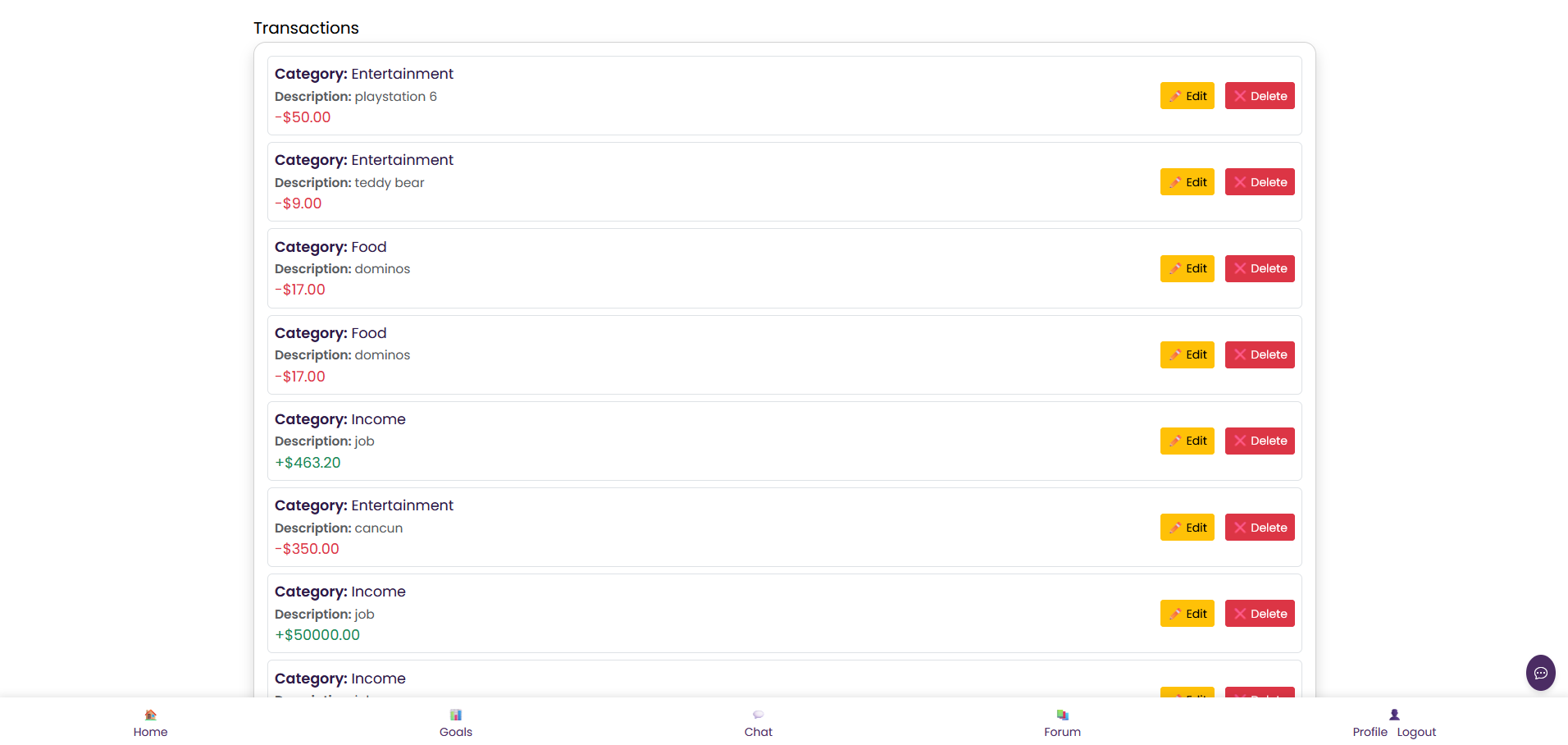
- Implementing transaction management: Users could add, edit, and delete transactions, with AI-generated categories and spending analysis.
- Debugging API issues: Connecting Flask with OpenAI’s API required careful handling of responses and error management.
It was a day filled with problem-solving. UI/UX struggles, debugging backend logic, and ensuring smooth API performance took up most of the time, but by the end of the day, FinanceAl was functioning as envisioned.
Sunday: Final Touches and Deployment
With no additional features planned for Sunday, the focus shifted to final optimizations, bug fixes, and deployment.
- Polishing the UI: Fine-tuning elements to ensure a seamless experience.
- Optimizing API calls to make sure AI insights were fast and accurate.
- Testing and debugging: Ensuring transactions were properly logged, categorized, and displayed.
- Hosting considerations: The project was prepared for deployment on InMotion Hosting, with plans for future expansion.
By the time the submission deadline arrived, FinanceAl was complete, and the project stood as a testament to the power of AI-assisted financial management.
Lessons Learned
Building FinanceAl was an insightful experience. Key takeaways included:
- The importance of structured API integration, especially when working with AI-powered tools.
- The need for a well-thought-out UI/UX, as financial applications must be intuitive and visually appealing.
- Debugging and problem-solving skills, especially when working under time constraints.
- Deployment challenges and the considerations for self-hosting a financial application.
Final Thoughts
FinanceAl started as an idea and quickly evolved into a fully functional AI-powered financial assistant. What began as a challenge to build an intuitive finance tracker turned into an exploration of AI’s role in personal finance management. While the hackathon may have ended, the potential for FinanceAl is just beginning. Future improvements, expanded features, and better AI-powered insights could take this project even further.
For now, FinanceAl stands as a representation of what’s possible with passion, innovation, and AI-driven finance. 🚀

Log in or sign up for Devpost to join the conversation.