Inspiration
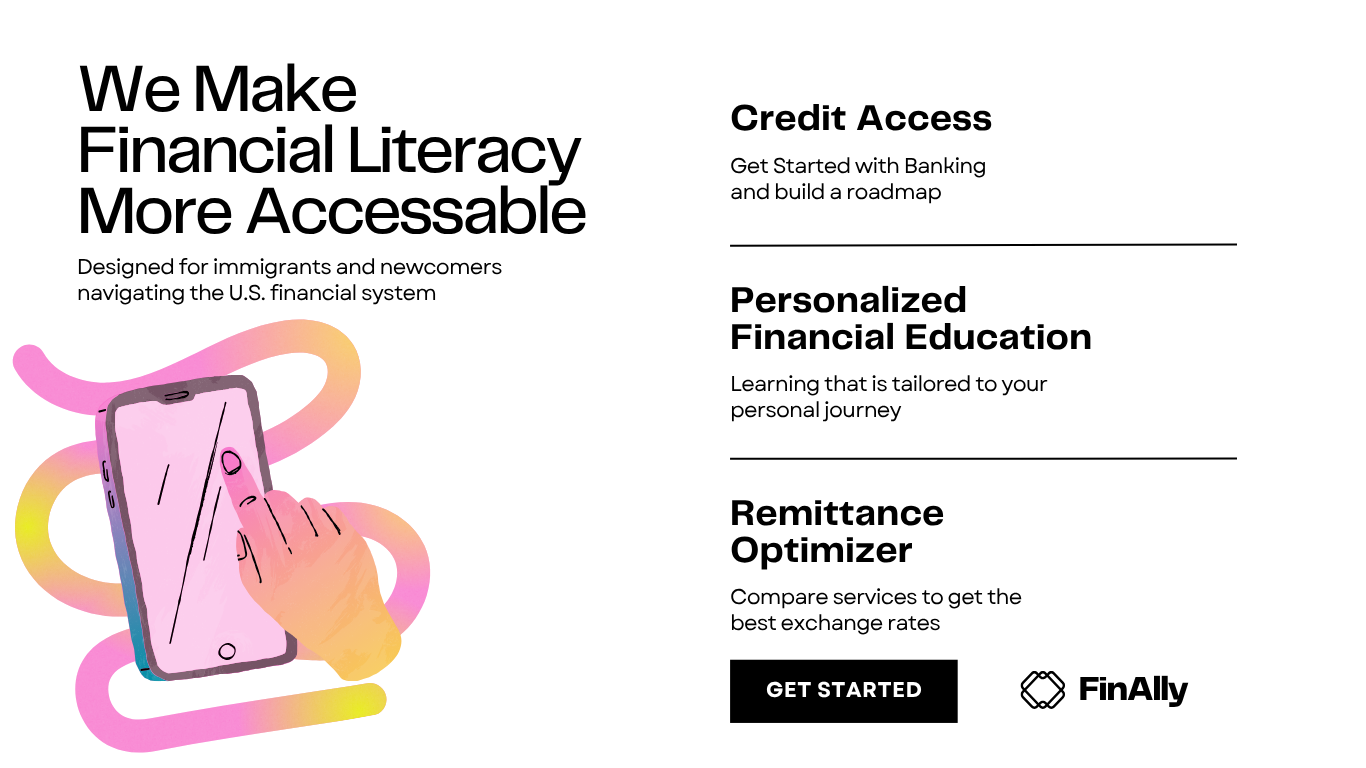
FinAlly is an AI financial assistant that helps immigrants navigate the U.S. financial system. It specializes in personalized counsel, curated around each user’s individual experience. People that immigrate to the US come from different backgrounds, work unique jobs, and have a wide range of experiences. As a newcomer it’s incredibly difficult to traverse the banking system, an extremely integral part of the assimilation process, without the proper information.
What it does
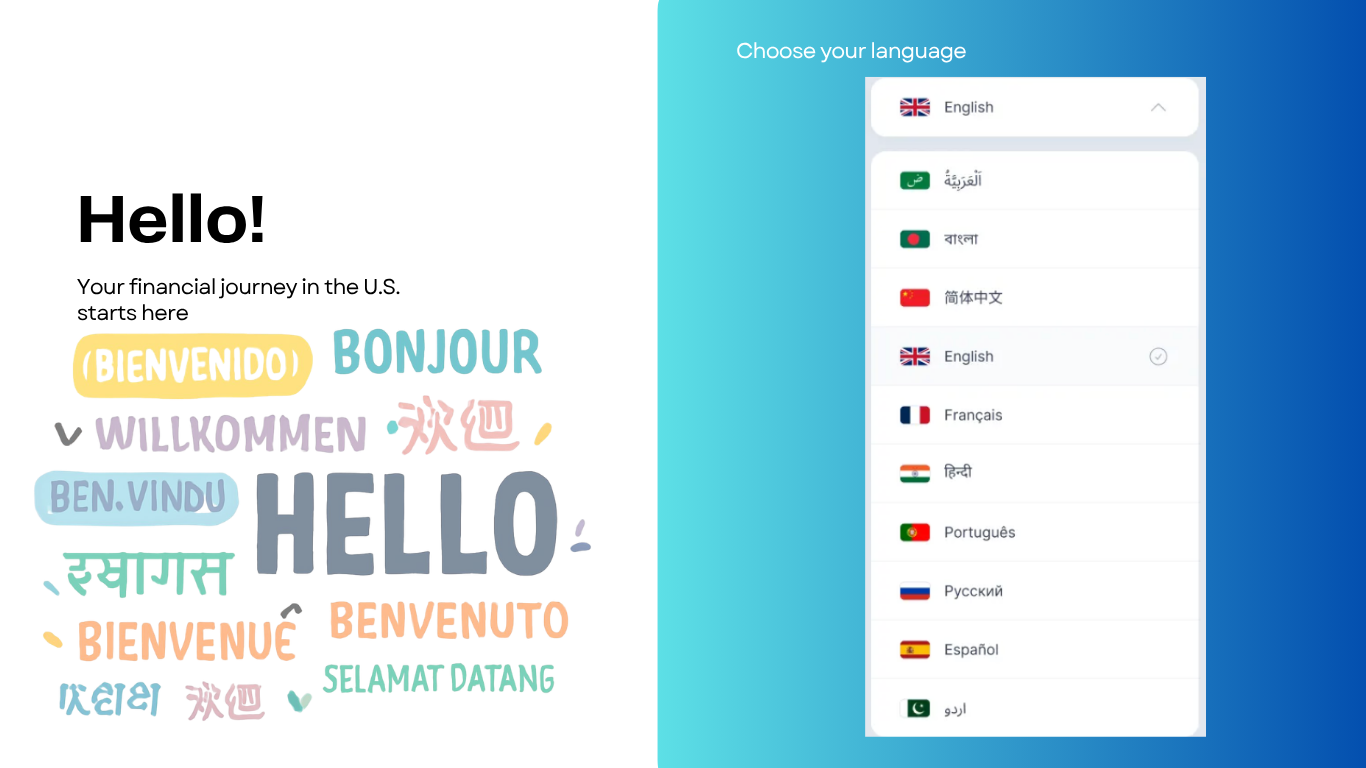
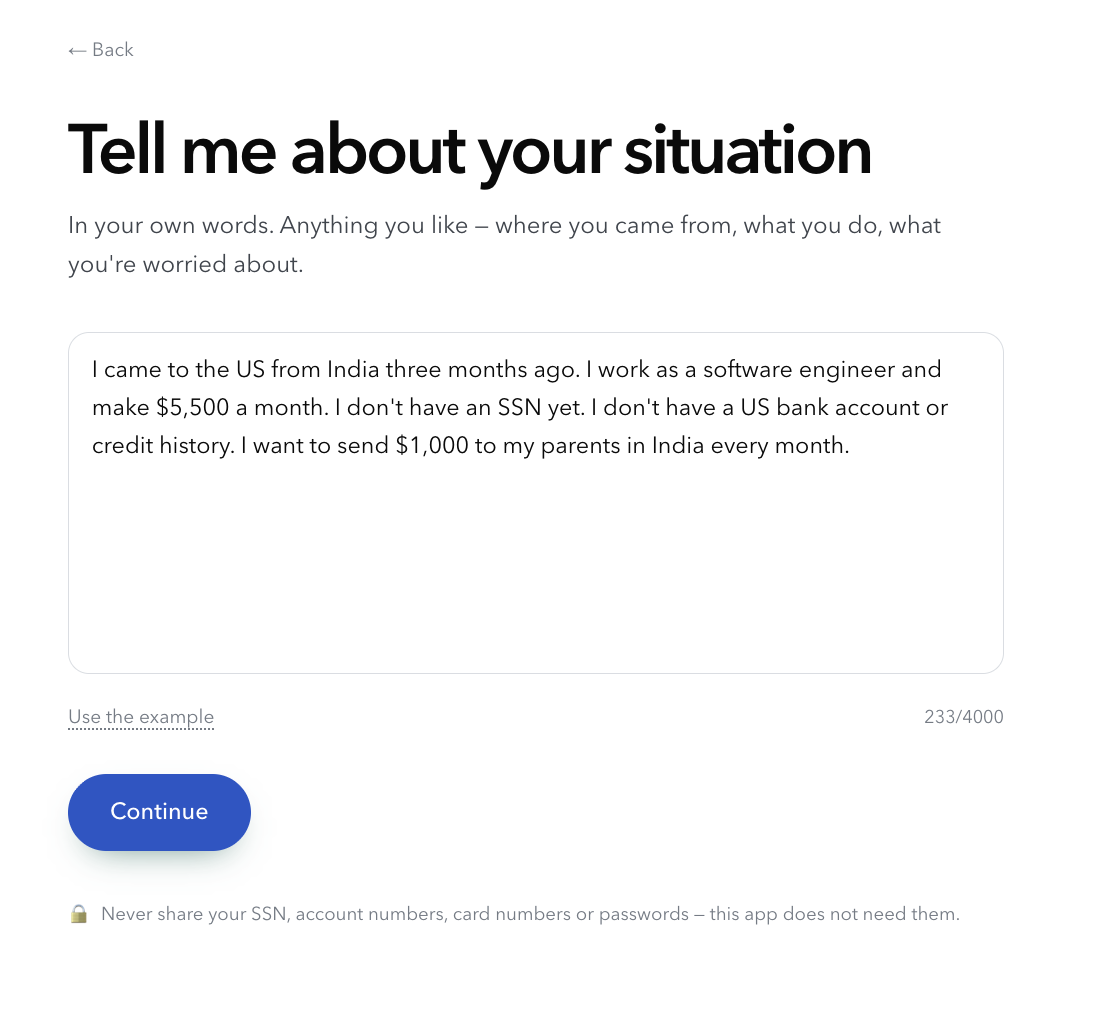
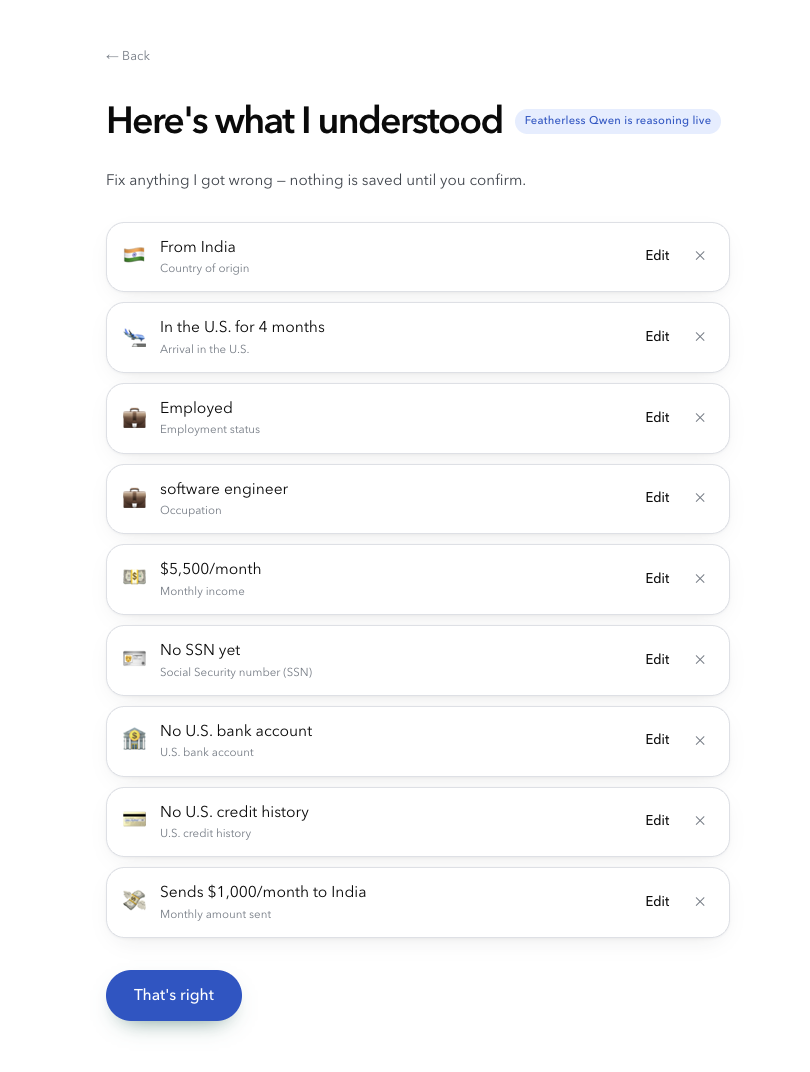
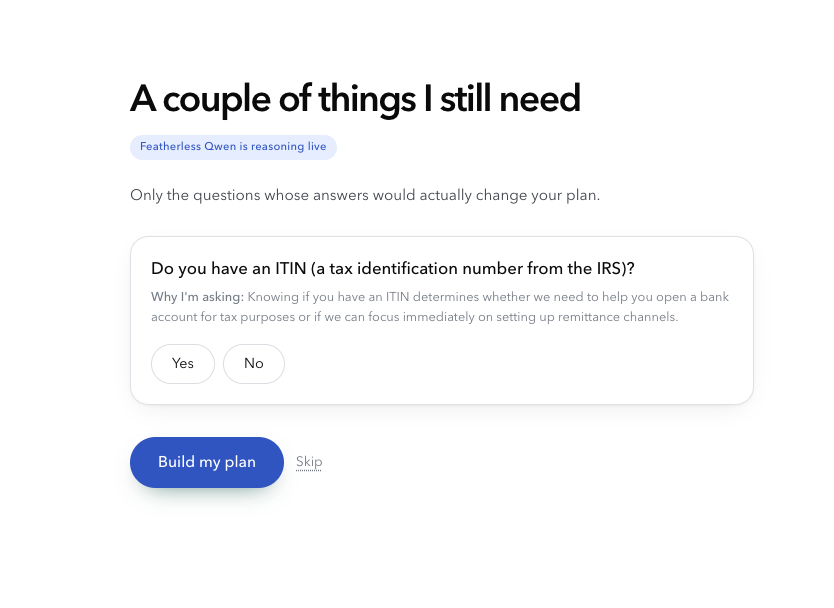
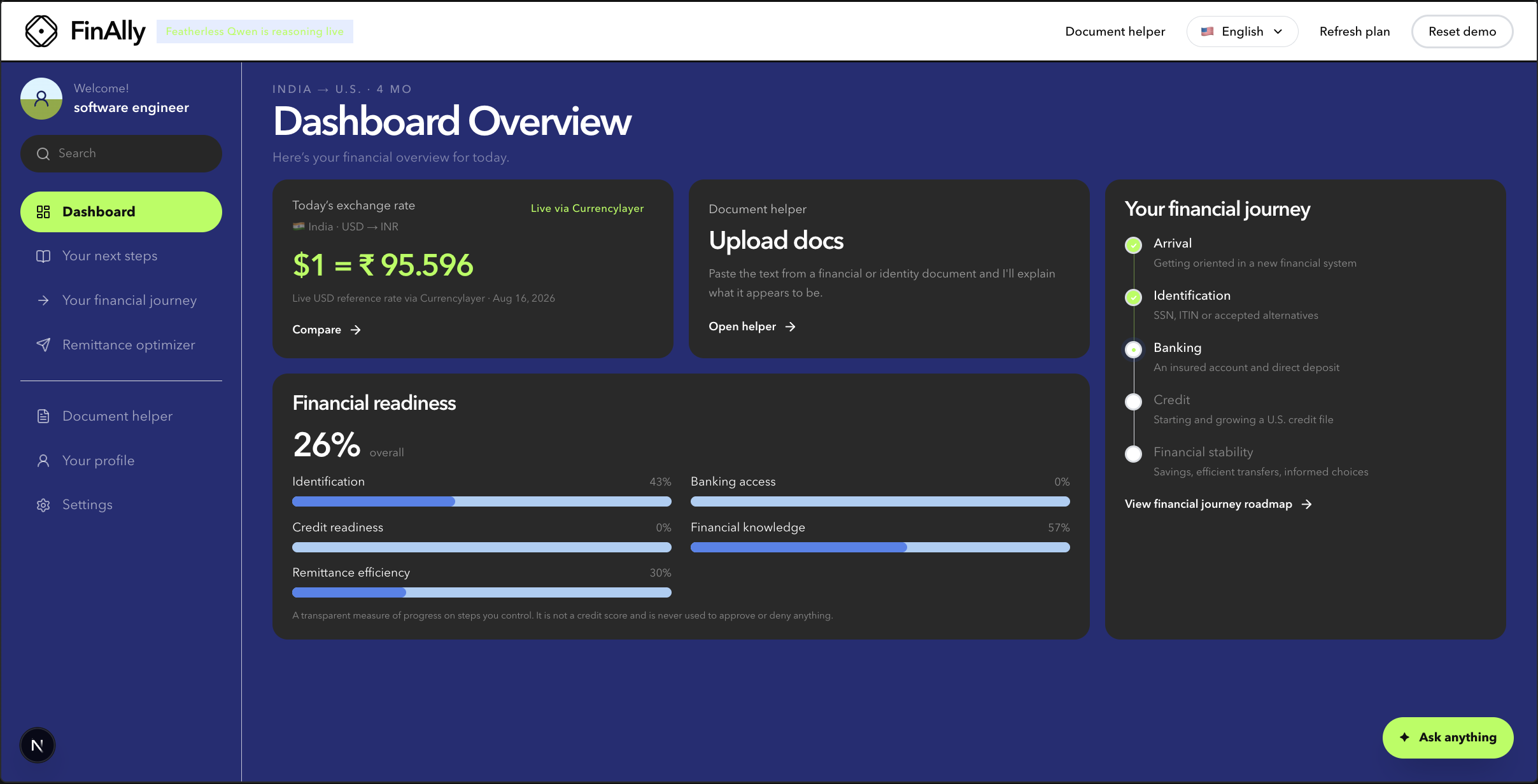
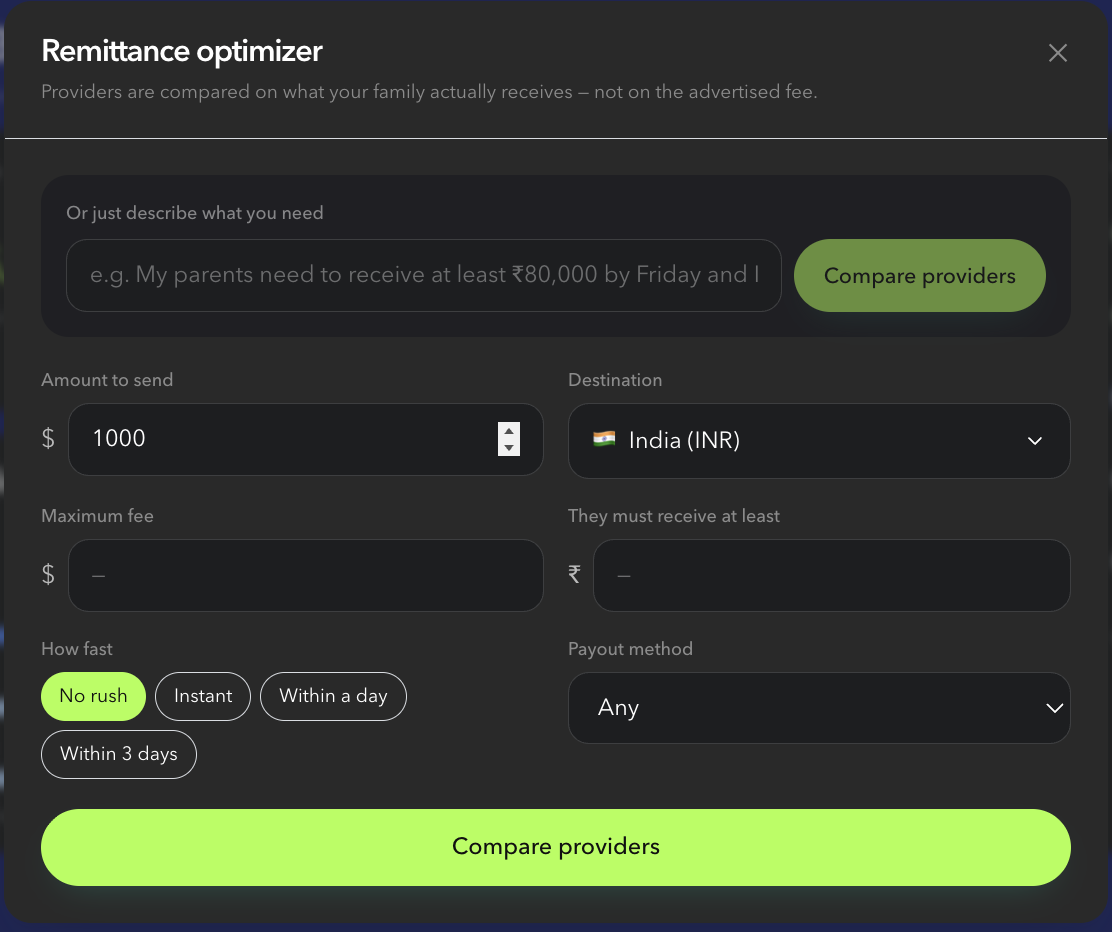
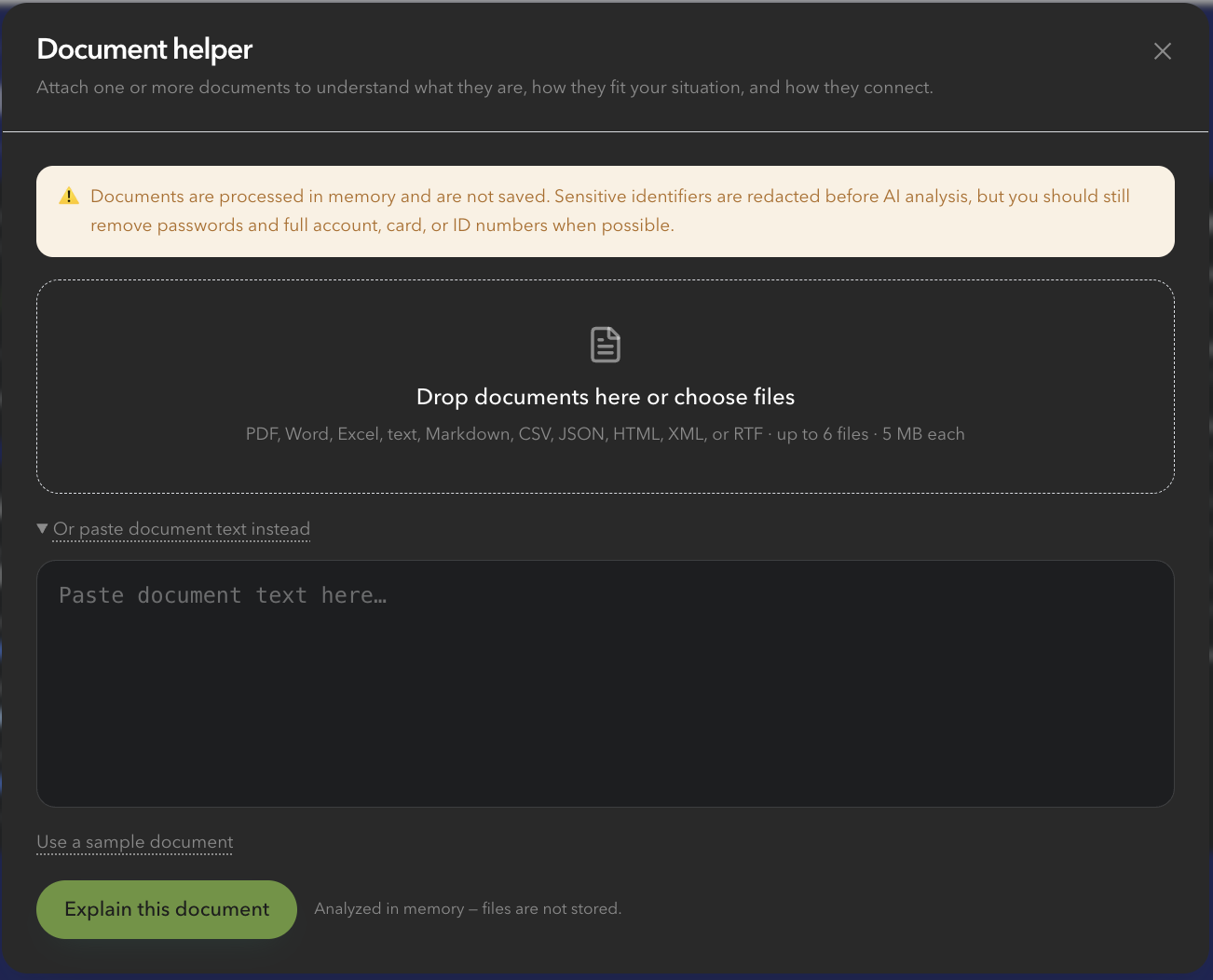
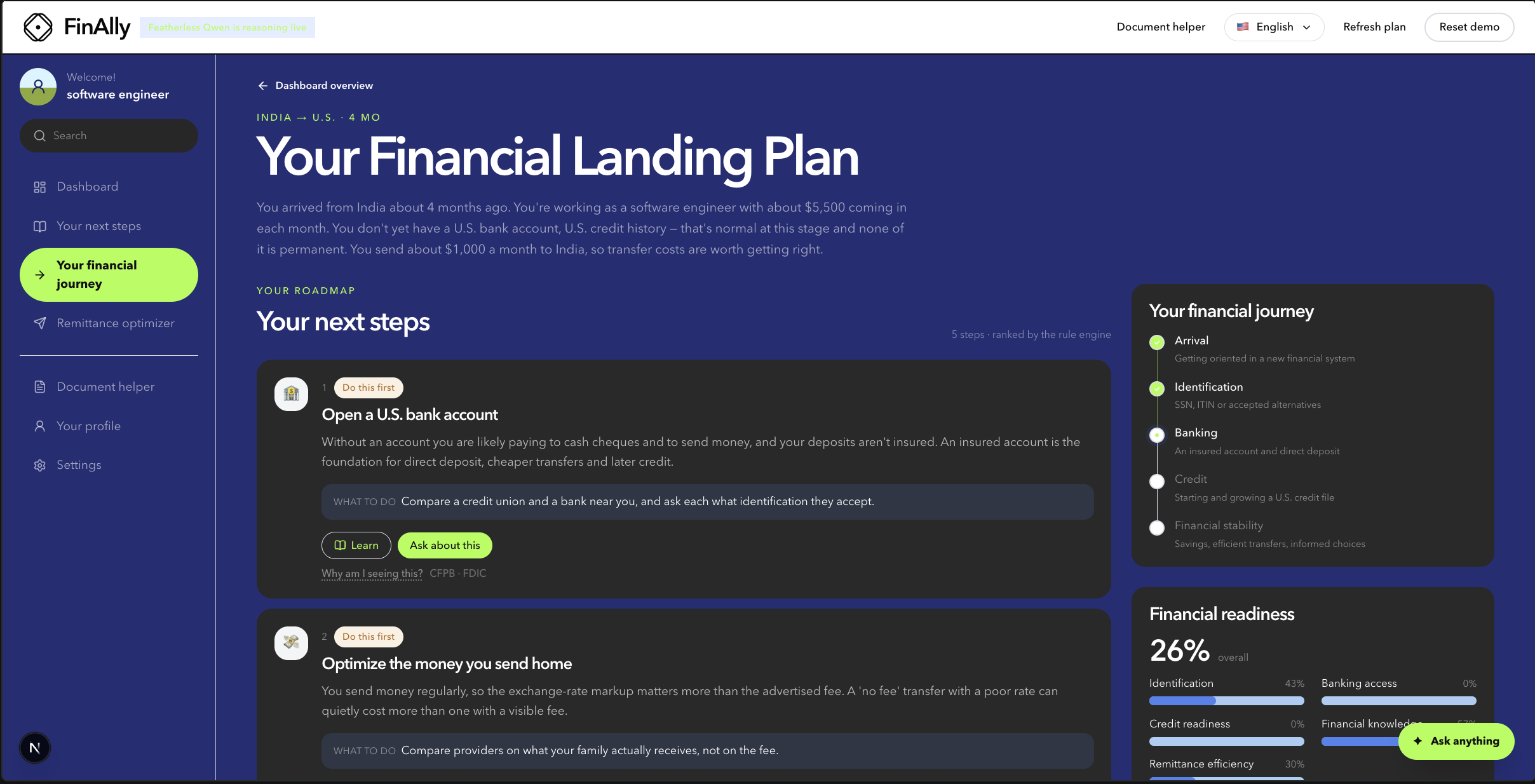
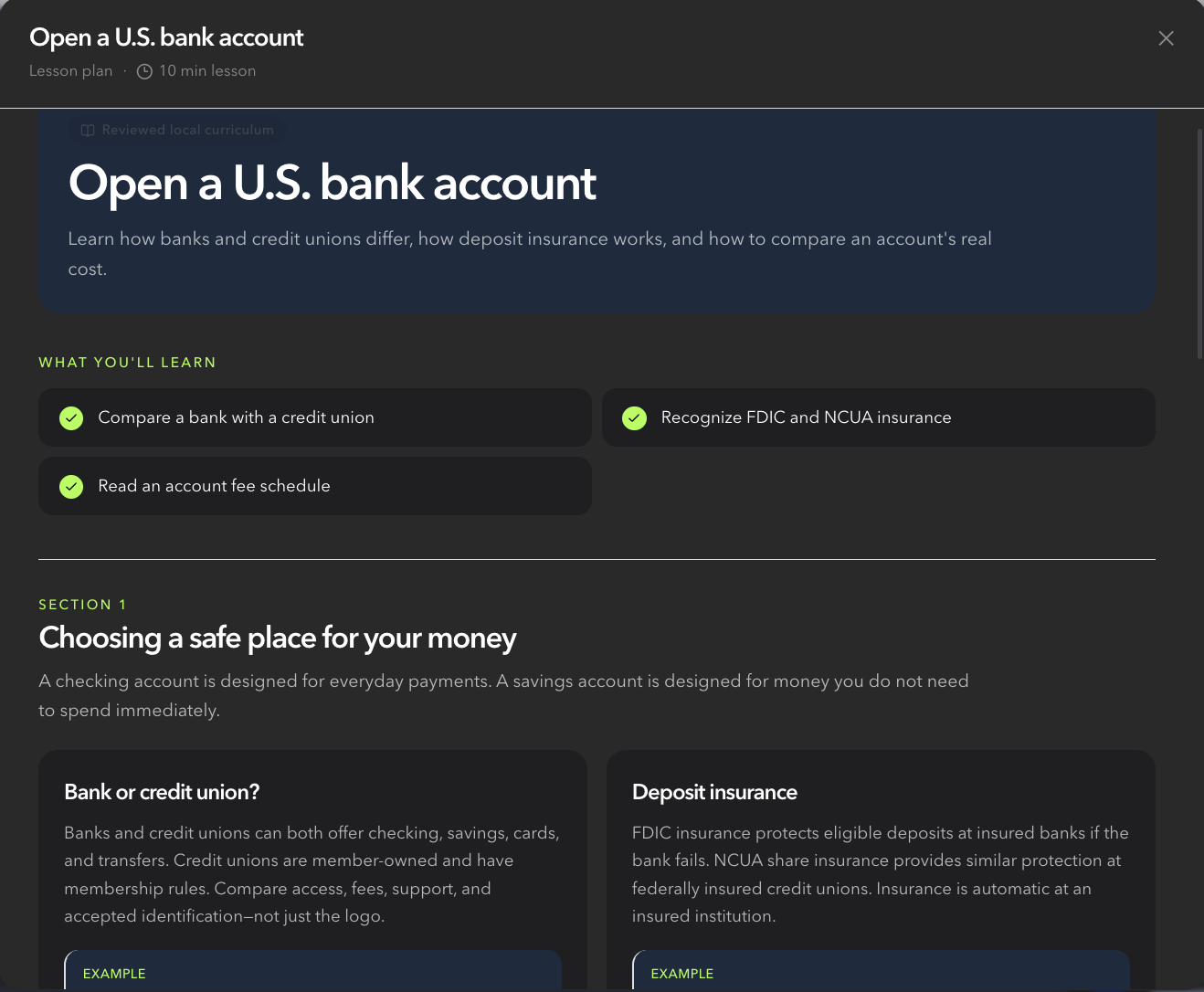
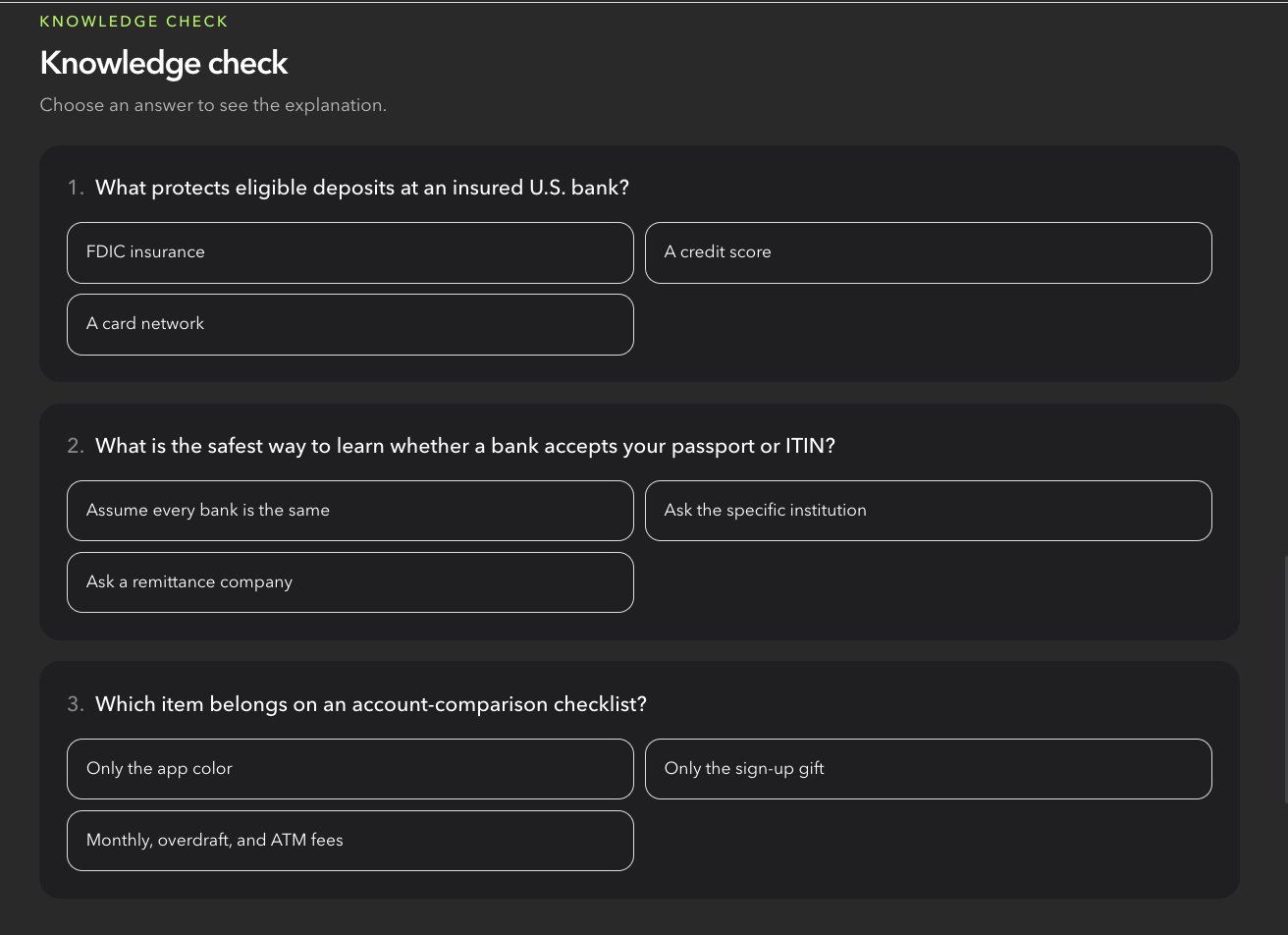
FinAlly starts by learning about the user. At the start of the onboarding process, the user in their own words describes their situation and answers questions about where they came from, how long they have been in the U.S., their employment, identification, banking situation, credit history, and remittance plans. The app then converts this conversion into a personalized profile, while also filling in any knowledge gaps through follow up questions. Once it understands the user’s situation it generates a personalized financial roadmap to help them easily acclimate to systems in the US. As FinAlly currently supports the 10 most spoken languages, the user can learn and interact with the app in the language they are most comfortable with. A vital component of a new immigrant experience is sending remittance money to their home country. With many services it is hard for a newcomer to pick the right service for them. As such, our remittance feature prioritizes the amount received in the home country and suggests the best services though an Wise api call. The user can pick the best option based on maximum acceptable fee, recipient payout, delivery speed, payout method. The home dashboard also displays the exchange rate using Currencylayer api to compare the U.S. dollar with the user’s home country currency. For an immigrant, it’s also extremely difficult to keep up with legal documents, and also understand them as English might not be their first language. So FinAlly also has a dedicated Document Helper which lets users attach one or several documents or paste text. The app determines whether the attached documents are related. Related documents receive a combined explanation showing how they connect. Unrelated documents are explained individually. Files are parsed in memory and are not stored by the document helper. Sensitive values are redacted before content is sent for model-based analysis. The main goal of FinAlly is to educate our users as well. So the user roadmap also has a Learn feature for each step of their journey. Each lesson contains learning objectives, plain-language explanations, realistic examples, and an interactive quiz. English lessons use a reviewed local curriculum. For other supported languages, Featherless adapts the lesson into the selected language while staying within the reviewed curriculum and source material. FinAlly uses a RAG based financial retrieval system built from reviewed summaries of official sources such as National Credit Union Administration, Internal Revenue Service, and U.S. Citizenship and Immigration Services.
How we built it
Qwen/Qwen3.8-27B (via Featherless API): Powers the core conversational intelligence, multilingual adaptations, and document reasoning. It is strictly constrained using structured JSON outputs to bridge the conversational interface with our deterministic state machine.
Wise Comparison API & Currencylayer: The Wise API pulls live cross-border transfer data (fees, speed, payout) to power the remittance recommendation engine. Currencylayer provides baseline U.S. dollar to home-currency exchange rates.
Curated RAG System: Utilizes BM25-style lexical retrieval and profile-aware reranking to pull context from a curated registry of approved sources (NCUA, IRS, USCIS, CFPB, FDIC). This grounds the Learn module's text generation, ensuring the AI strictly adheres to reviewed curriculum material when adapting English lessons into the user's native language.
Next.js & FastAPI: Next.js manages the client-side rendering and server route handlers. FastAPI manages the backend, processing asynchronous service lifecycles and evaluating the deterministic financial-roadmap rule engine.
Challenges we ran into
The largest architectural challenge was making sure that AI output affected a real product state rather than simply outputting text. A conventional onboarding form was lengthy and boring. On the other hand, asking too few questions could produce an unreliable or cookie cutter plan. The source collection is primarily English, while many users ask questions in other languages. For the document helper, each document type requires different extraction behavior and validation. Multiple-file uploads also require reasoning about relationships between documents.
Accomplishments that we're proud of
FinAlly uses CurrencyLayer to compare the U.S. dollar with the currency associated with the user’s home country. The Remittance Optimizer helps users evaluate international money-transfer services by comparing different services though Wise api. The Document Helper lets users attach one or several documents and explains them individually and how they connect to each other. The “Ask anything” assistant supports conversational financial questions.
What we learned
- Next.js, TypeScript, Tailwind CSS 4
What's next for FinAlly
- Partnering with educators, immigration lawyers, and financial experts to curate the lesson plans
- Having dedicated video with each lesson in multiple languages
- Scaling the infrastructure to transition the project from a localized hackathon demo to a fully deployed, production-ready application
Built With
- css
- currencylayer
- fastapi
- featherless
- next.js
- python
- qwen
- react
- sqlite
- tailwind
- typescript
- wiseapi
