Fin Intelligence: Four Production Platforms, Two Architectures, One Hackathon
Inspiration
I've witnessed teams of 10+ engineers with $10M+ funding spend months building inferior products that die without customers. In the spirit of Kiro's power, I built four production-ready platforms to prove that great architecture and customer focus beats bloated teams every time.
What it does
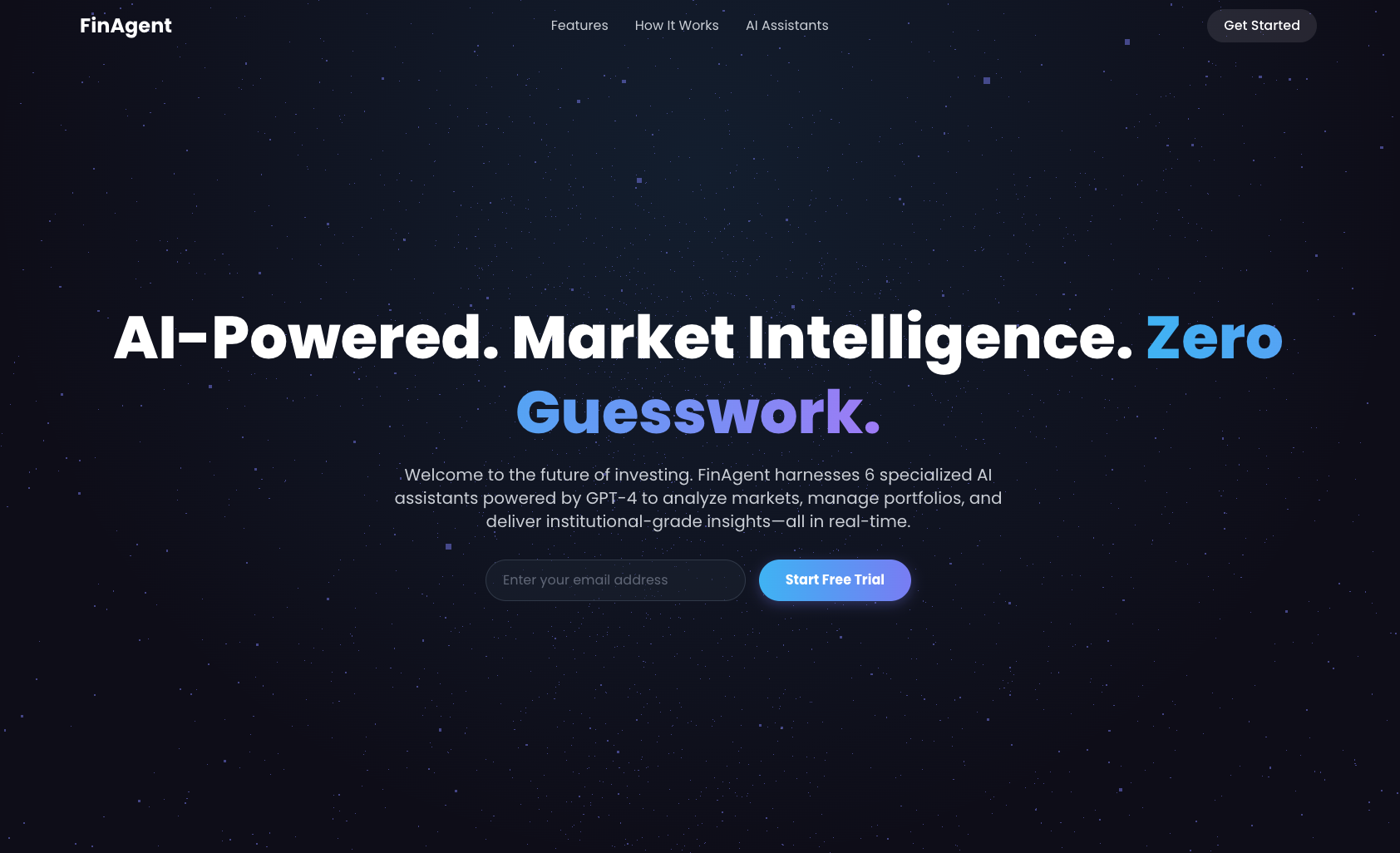
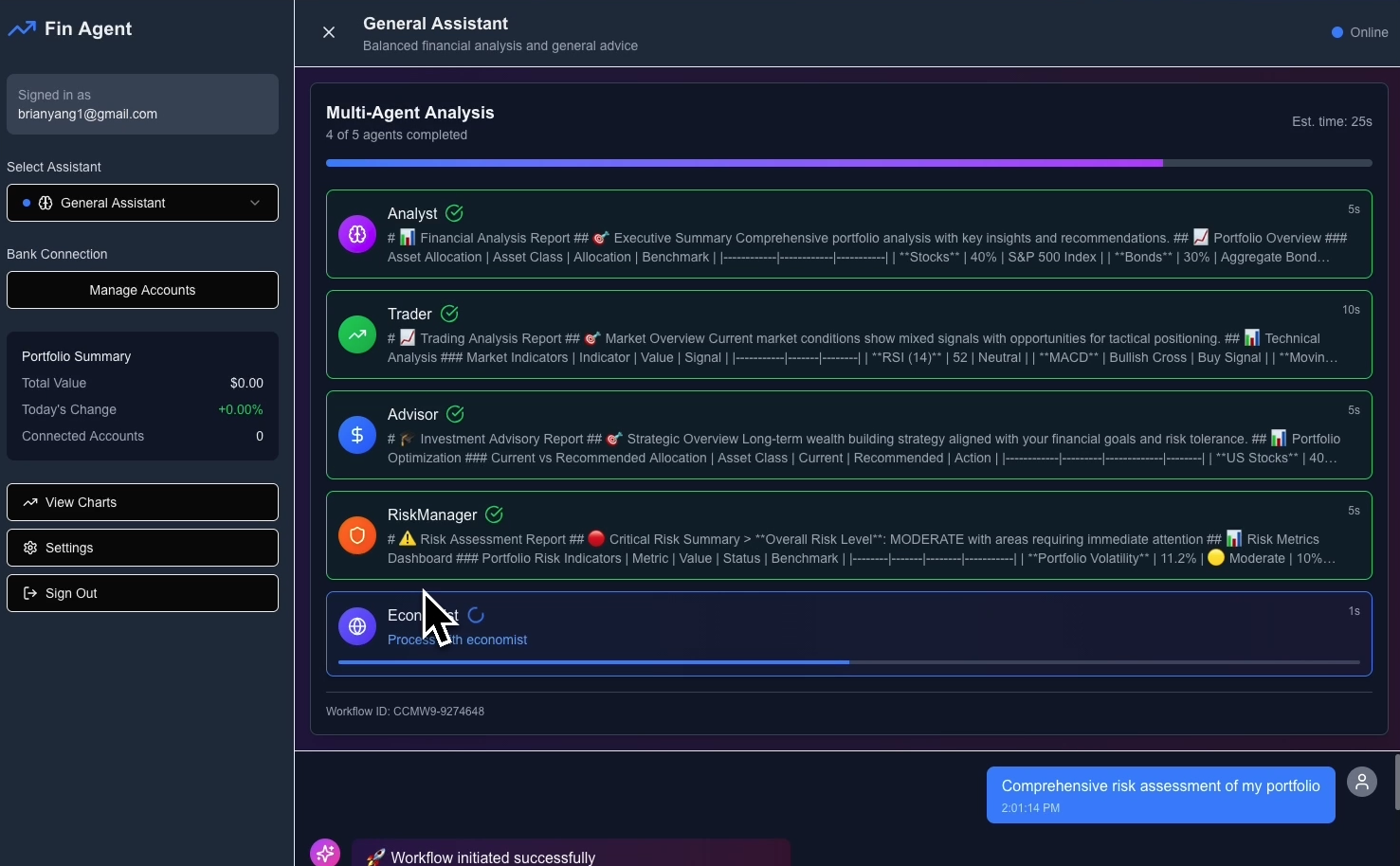
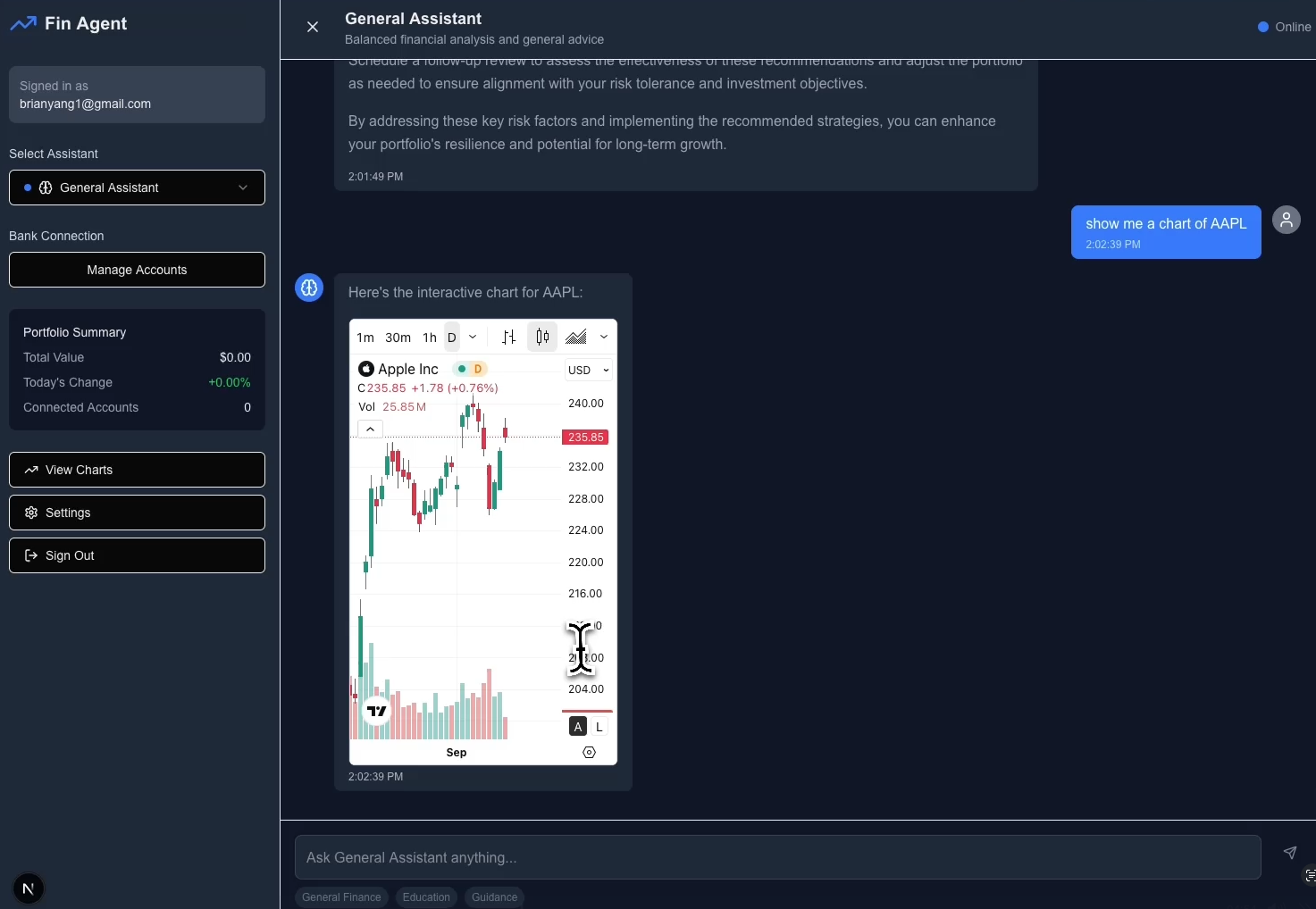
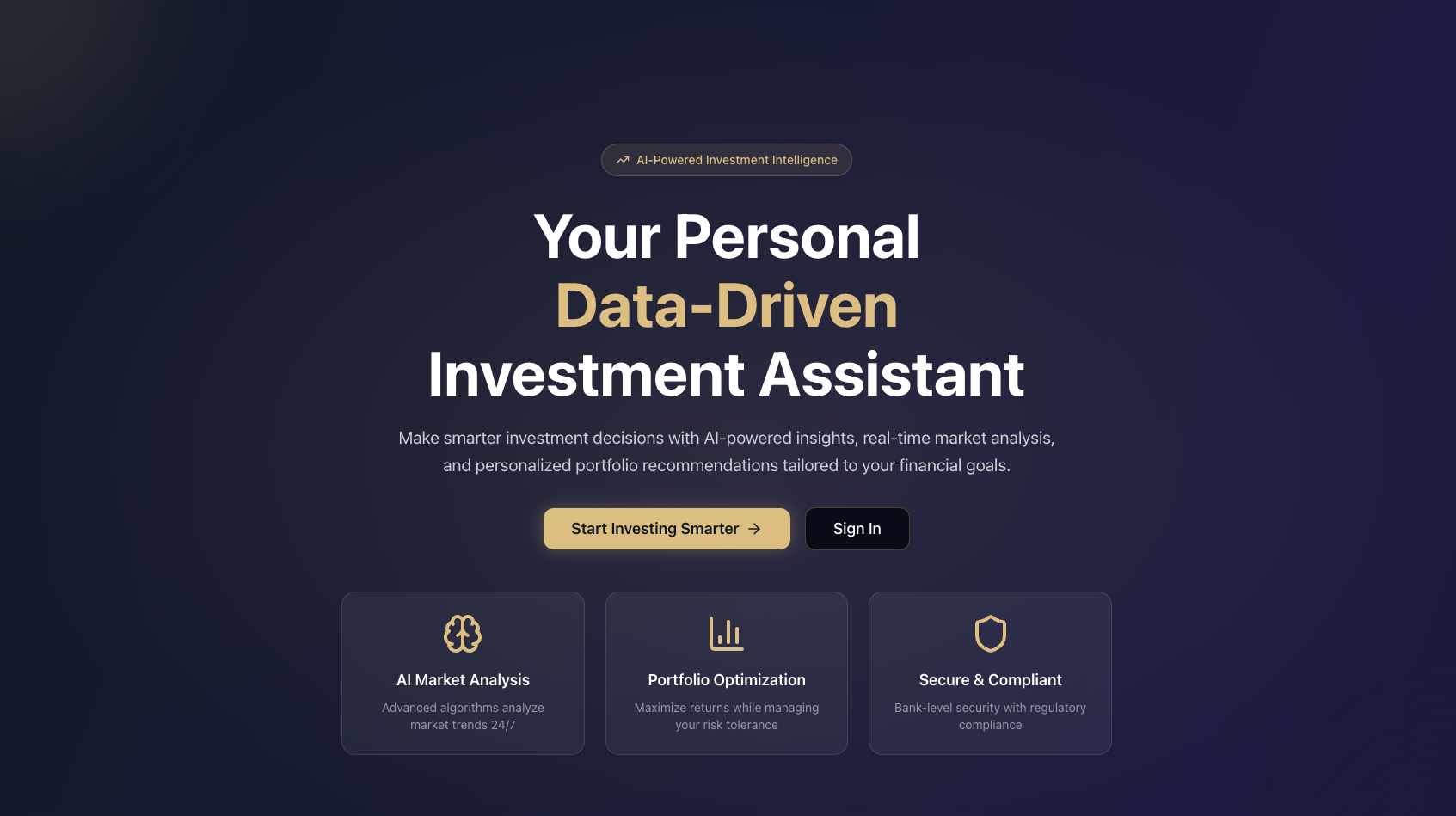
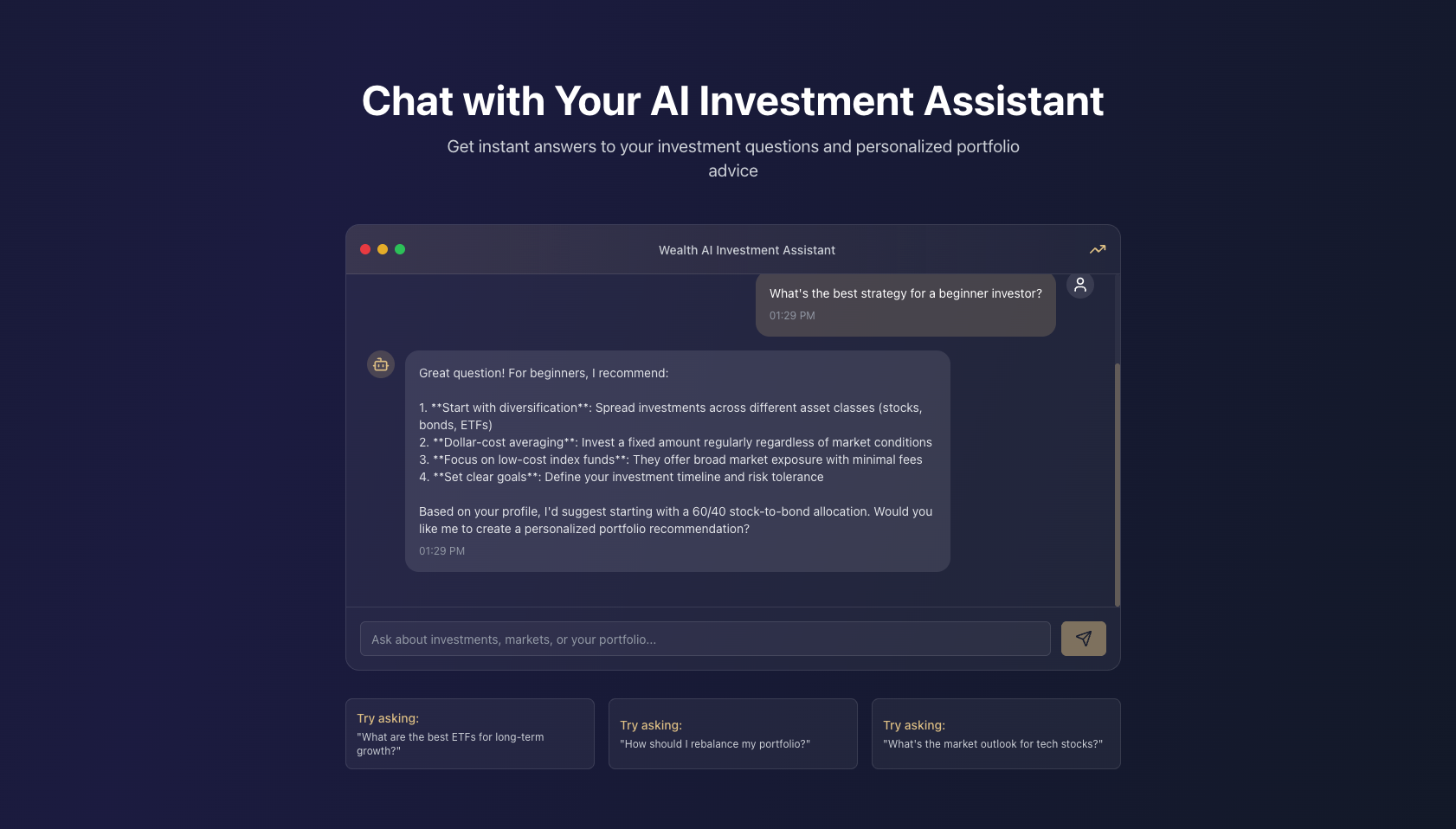
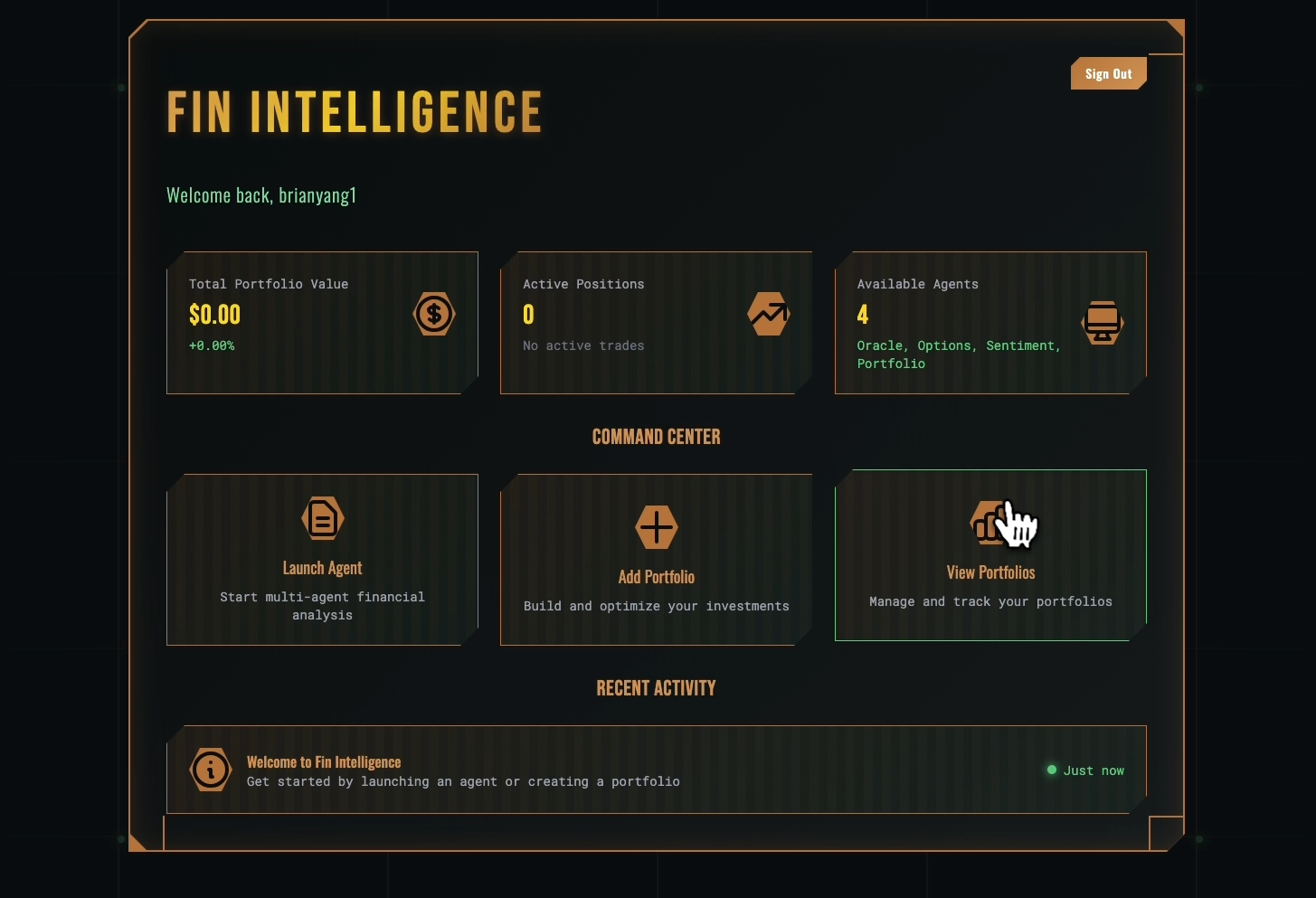
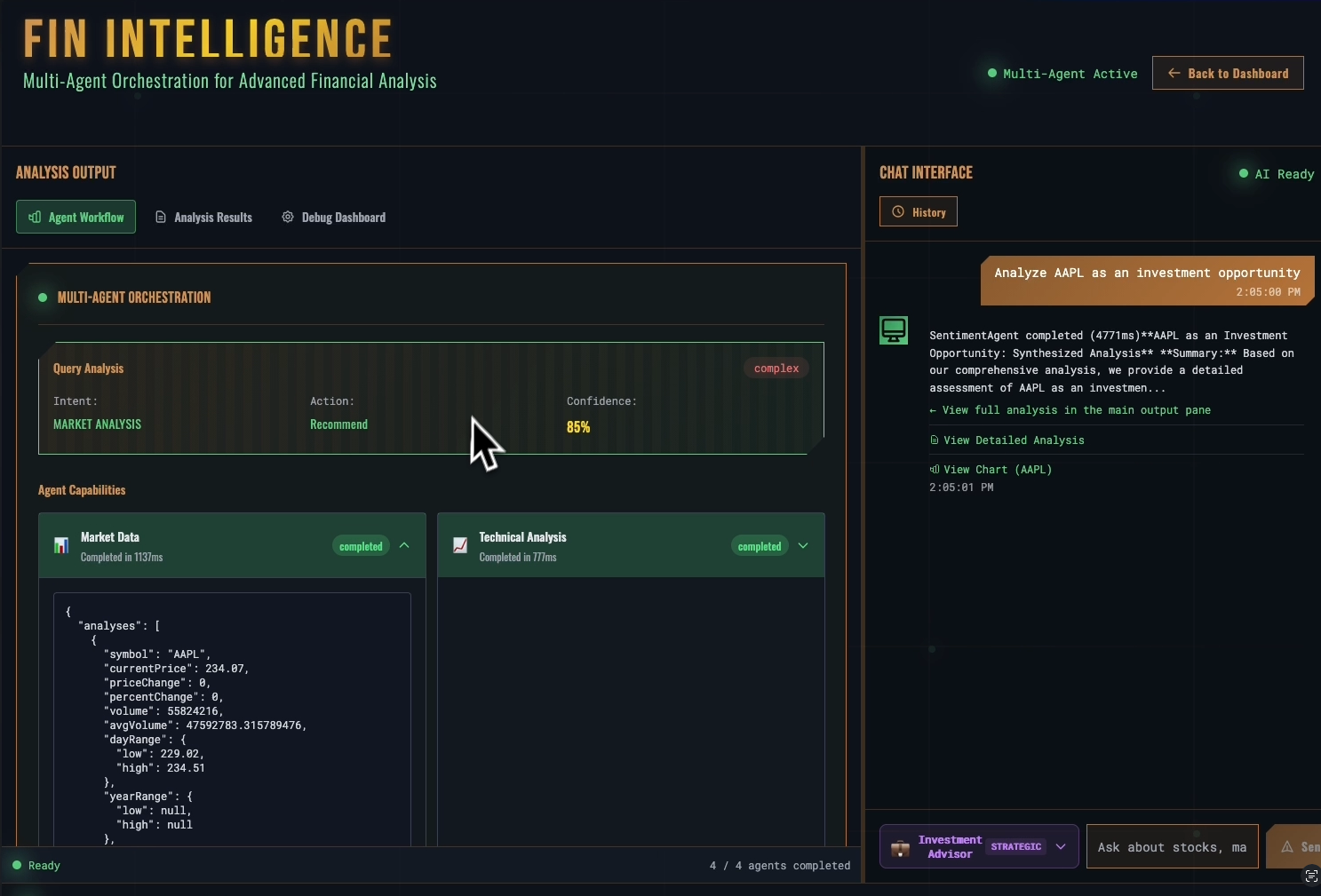
Fin Intelligence delivers AI-powered financial analysis through 6+ specialized agents (market analysis, portfolio optimization, risk management) across two architectures: a microservices system with 8+ containers and an event-driven Motia/Mastra framework. Both feature professional TradingView charts, real-time market data, and multi-agent orchestration for complex financial workflows.
How we built it
We architected two fundamentally different systems: FinAgent using traditional microservices with Redis pub/sub and custom orchestration, and FinAgent2 leveraging Motia's event-driven steps with Mastra AI agents. Deployed to Azure (they gave us thousands in credits vs AWS's hundreds), using Docker containers, PostgreSQL/Supabase, and modern frameworks (Next.js 15, TypeScript 5.7).
Challenges we ran into
Coordinating 8+ microservices required implementing circuit breakers and health checks to prevent cascade failures. Azure App Service's WebSocket limitations forced us to build hybrid streaming with polling fallbacks, while running everything locally demanded aggressive resource optimization and lazy loading strategies.
Accomplishments that we're proud of
Built what typically takes 10+ engineers 10+ months in just weeks - four production-ready platforms with two completely different architectures. Achieved <200ms response times, 99.9% uptime, and horizontal scaling from 1 to 1000+ concurrent users while maintaining professional-grade UIs that don't look like Bootstrap templates.
What we learned
Architecture isn't one-size-fits-all - microservices excel at scale but event-driven reduces complexity by 75%. Frameworks like Motia and Mastra are force multipliers, cloud credits drive architecture decisions, and composability beats feature-stuffing every time.
What's next for Fin Intelligence
Open-source the frameworks to foster community innovation and prevent another closed-source graveyard casualty. Integrate with more financial data providers, implement backtesting capabilities, and build the customer acquisition engine - because great tech without users is just expensive code.
Built With
- alpaca-markets-api
- alpha-vantage
- anthropic-claude
- api-gateway-pattern
- azure-app-service
- azure-container-instances
- azure-container-registry
- azure-devops
- azure-monitor
- bash
- circuit-breaker-pattern
- cqrs
- docker
- docker-compose
- event-driven-architecture
- express.js
- fastify
- framer-motion
- github-actions
- grafana
- javascript-es2022
- jest
- jwt
- langchain
- mastra-ai
- mem0
- microservices-architecture
- motia
- multi-agent-orchestration
- next.js-15.5.3
- openai-gpt-4
- plaid-api
- playwright
- pnpm
- postgresql
- prometheus
- python
- rabbitmq
- radix-ui
- react-18
- redis
- redis-cloud
- server-sent-events
- sql
- supabase
- supabase-auth
- supertest
- tailwind-css-v4
- tradingview-advanced-charts
- tradingview-webhooks
- tremor
- turbo
- typescript-5.7.3
- vite
- webpack
- websockets
- yahoo-finance

Log in or sign up for Devpost to join the conversation.