-
-
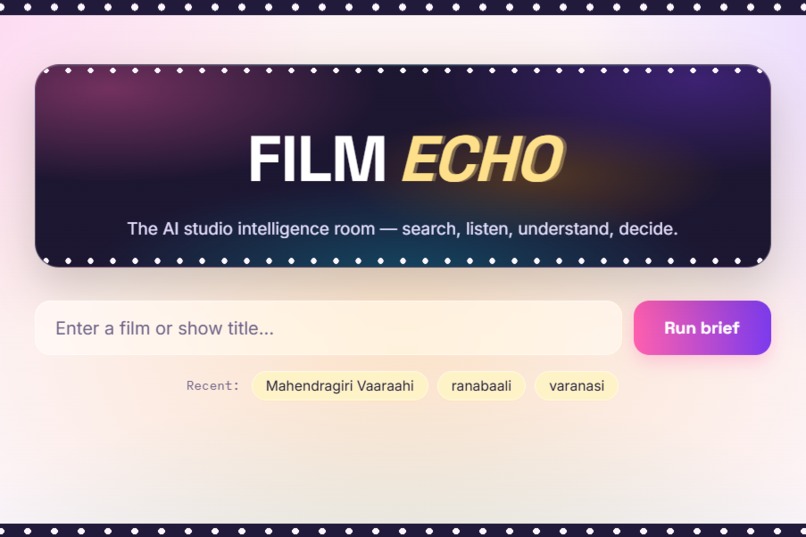
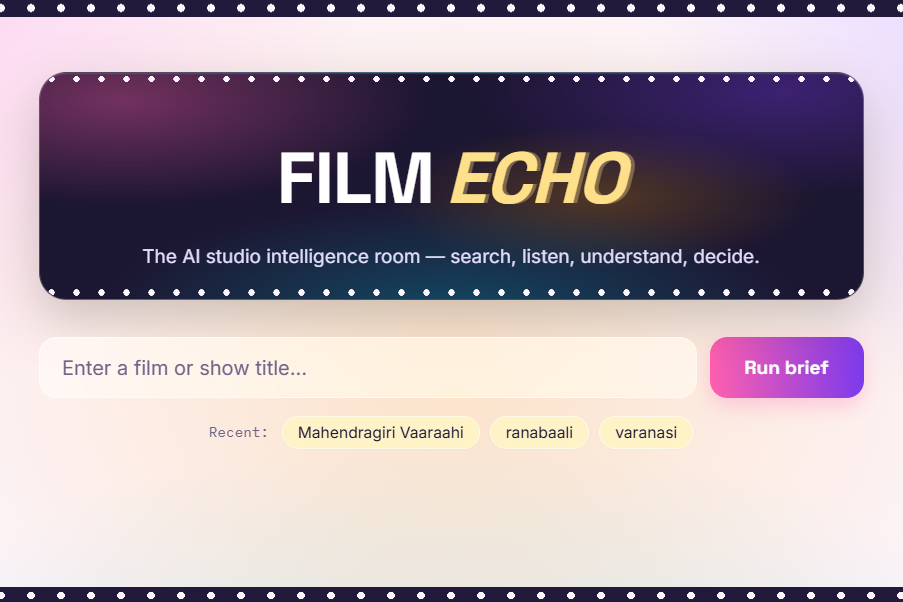
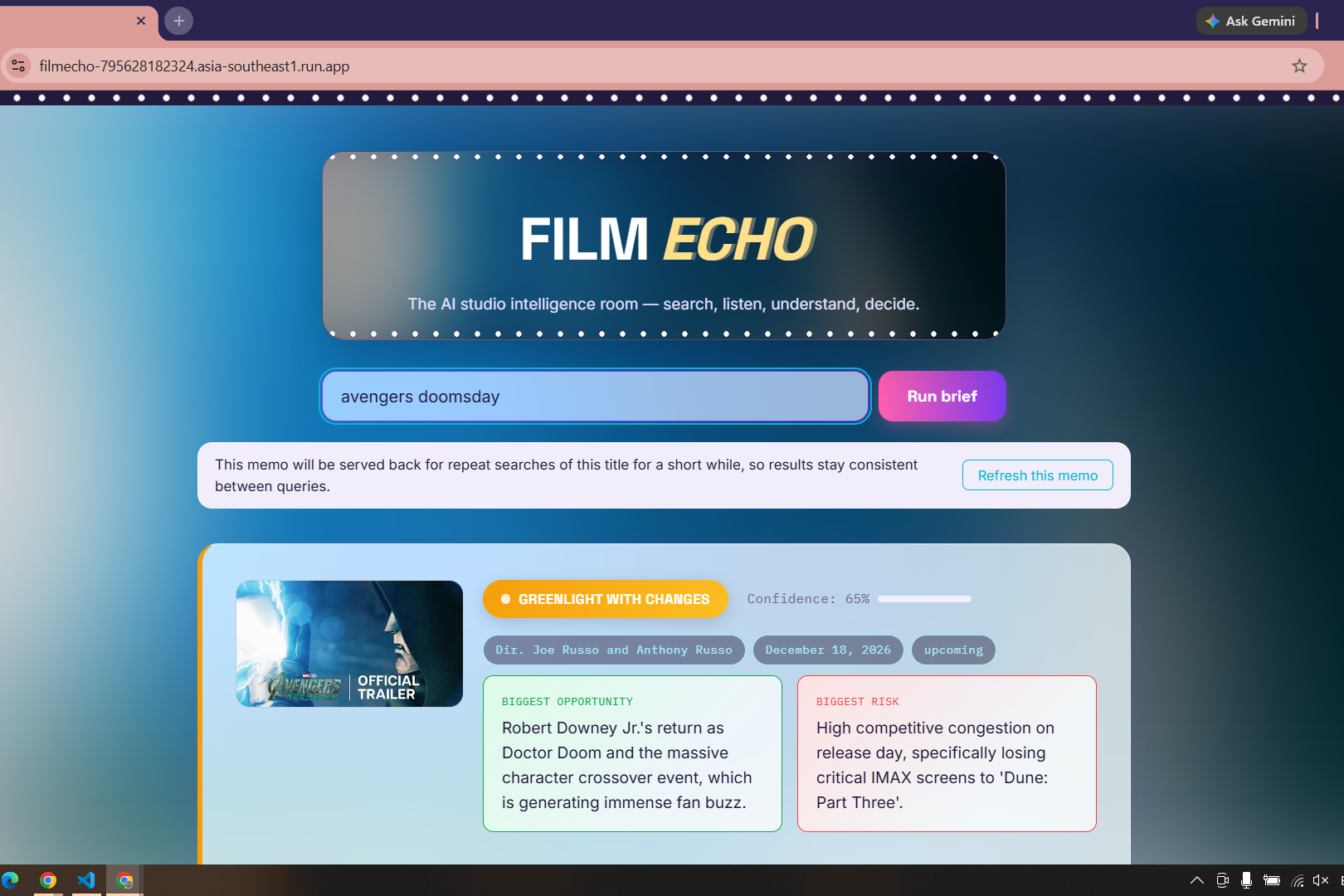
1. Home Page
-
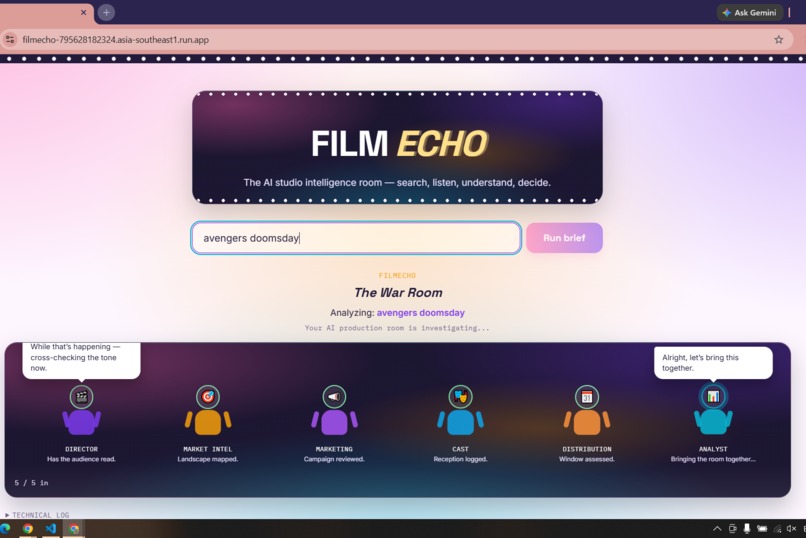
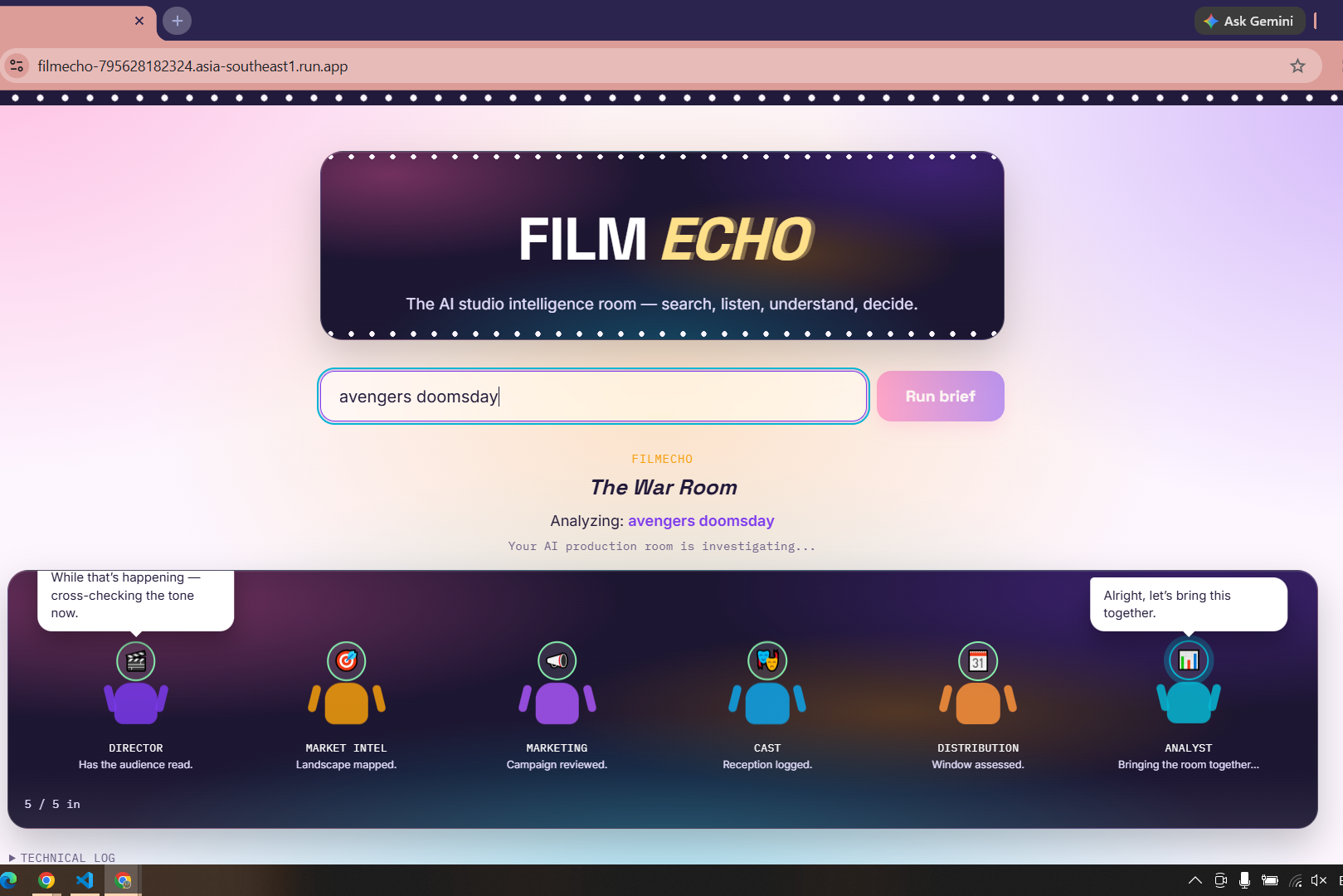
2. Search Initialize
-
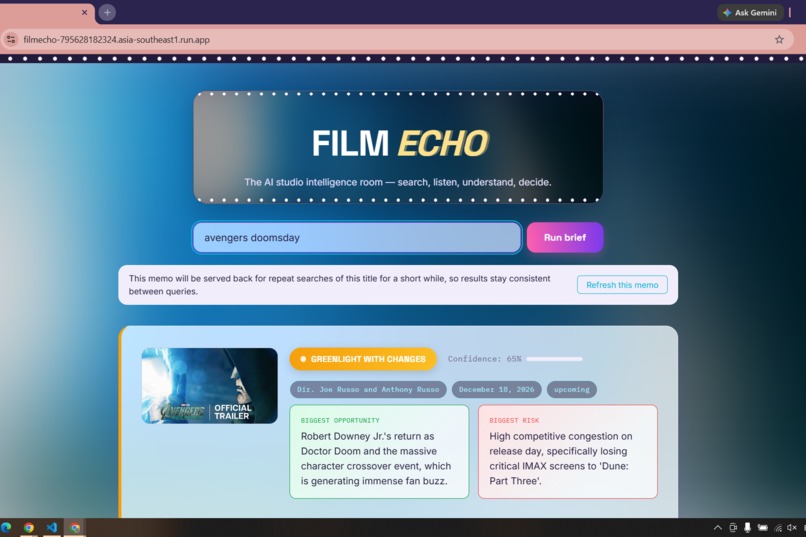
3. Overview
-
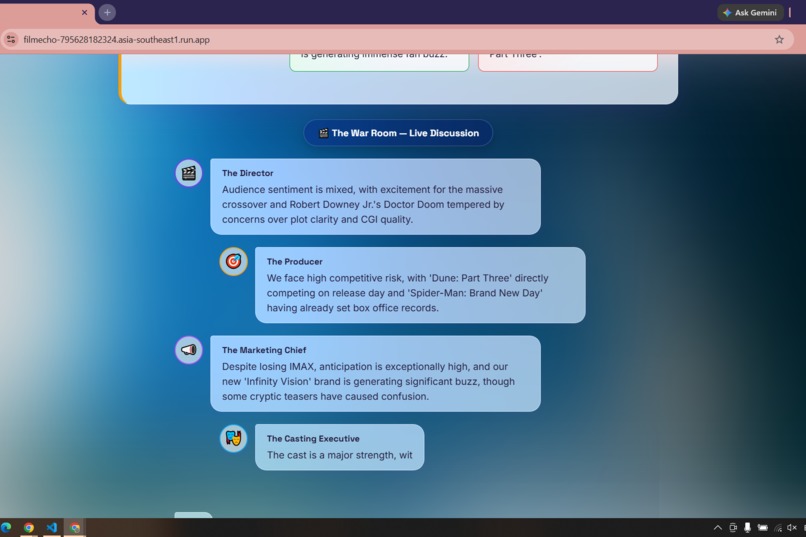
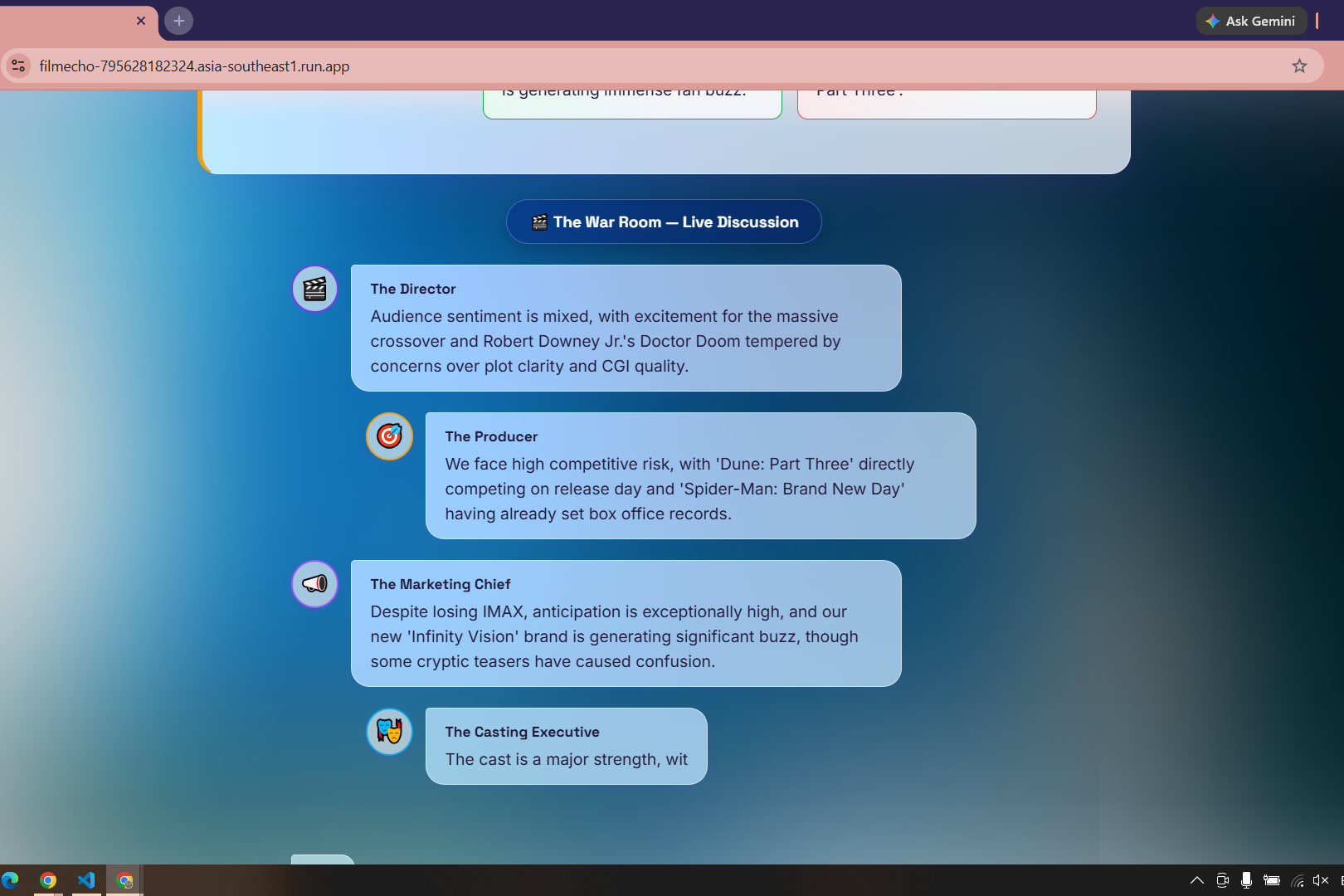
4. War Room
-
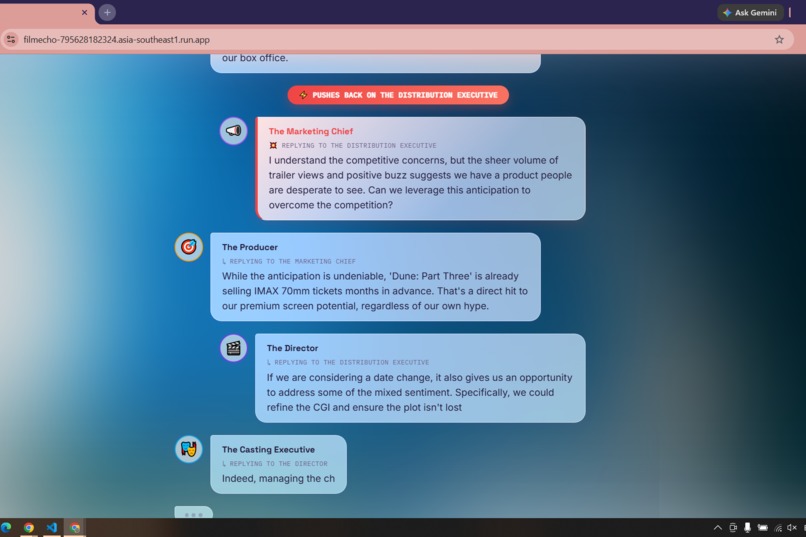
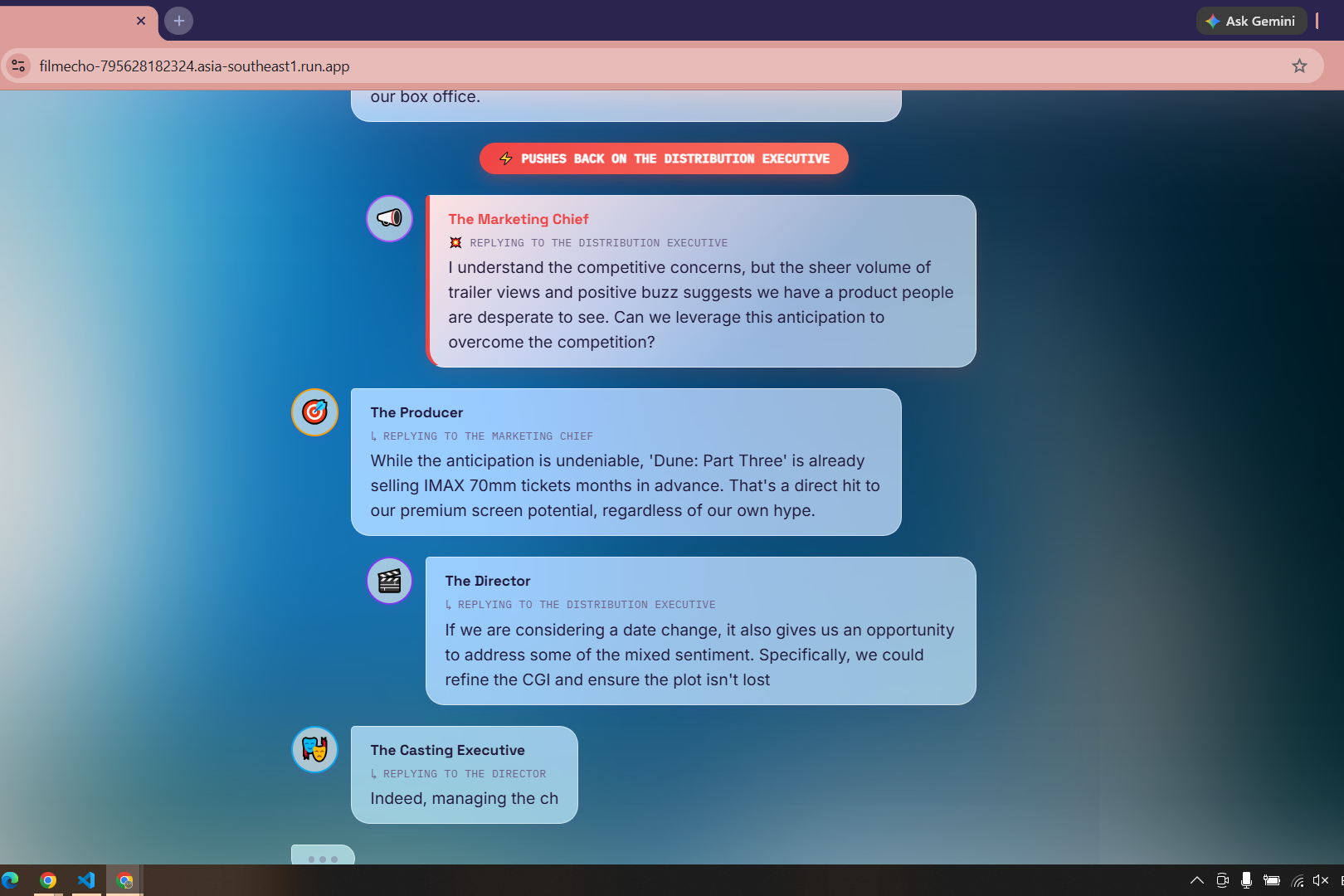
5. Agents Opinions
-
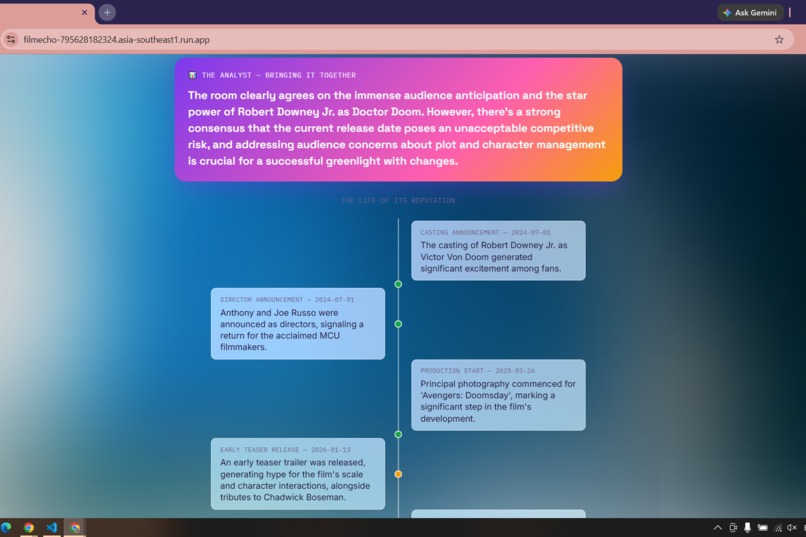
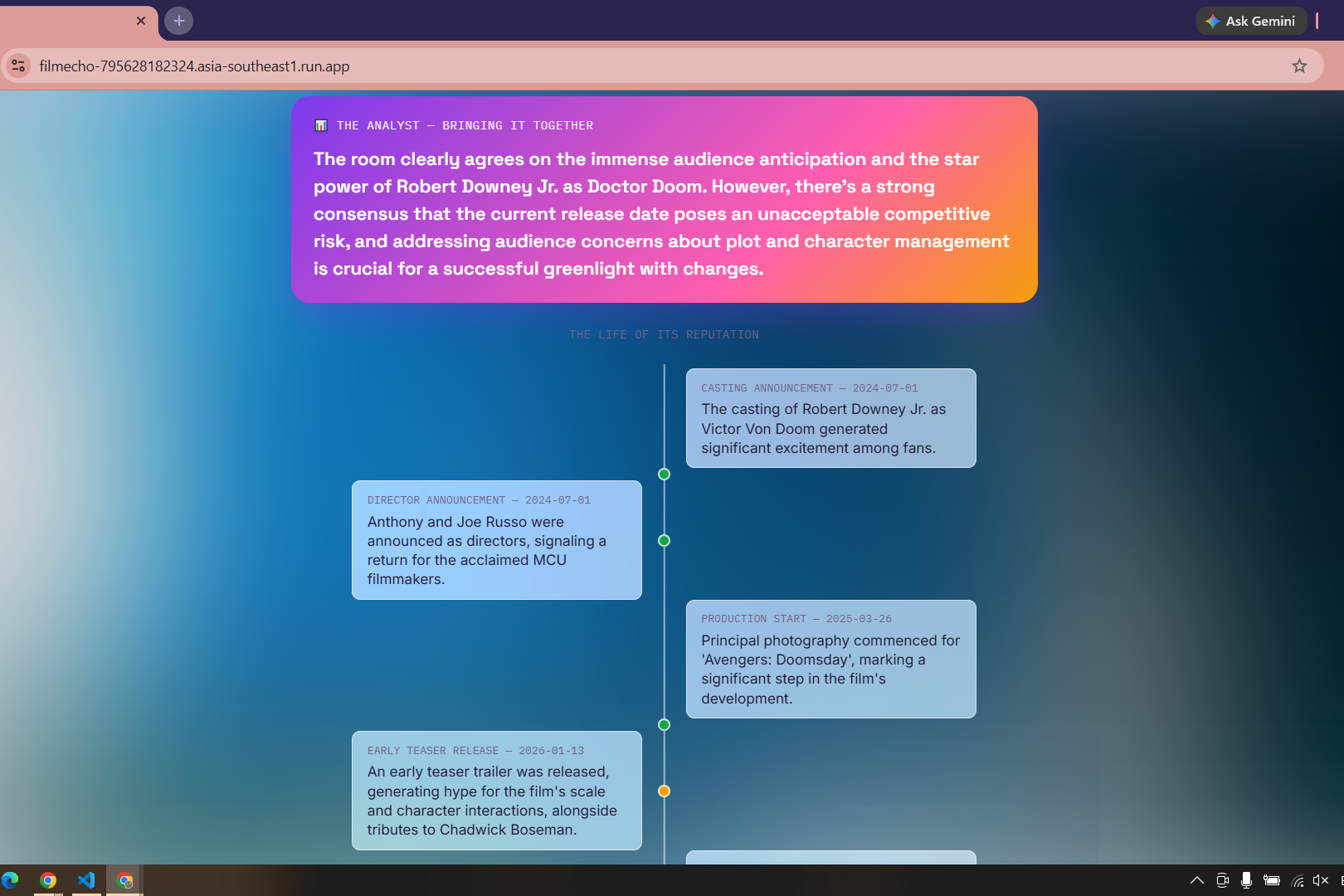
6. Analyst
-
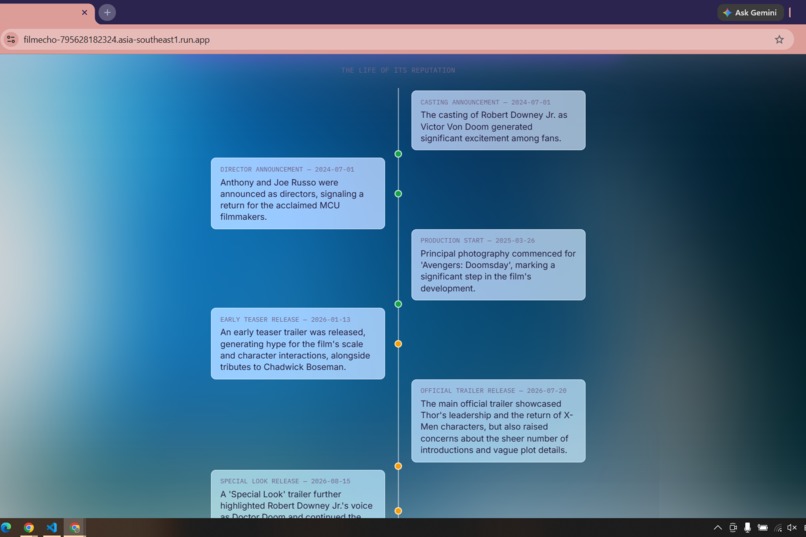
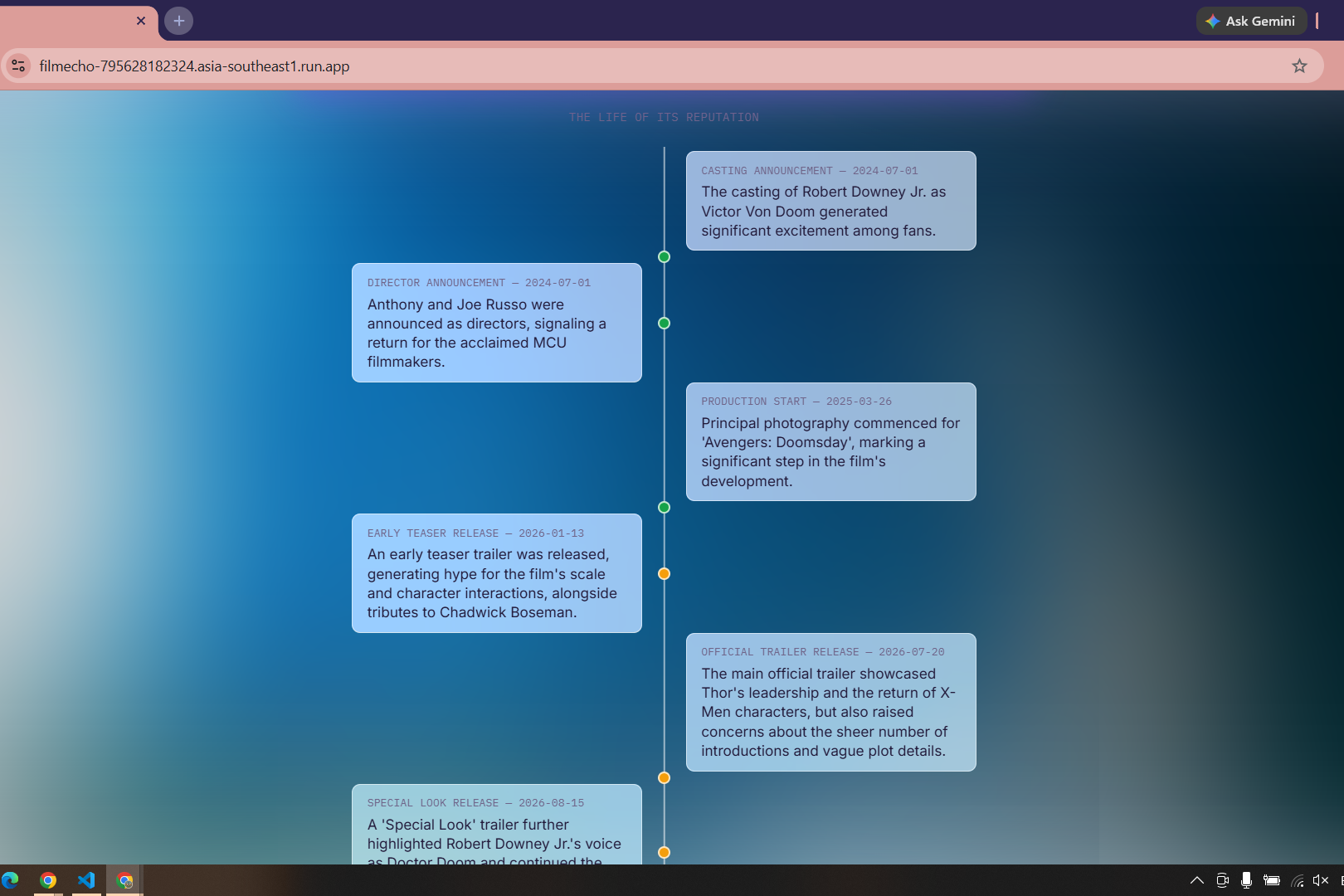
7. Timeline
-
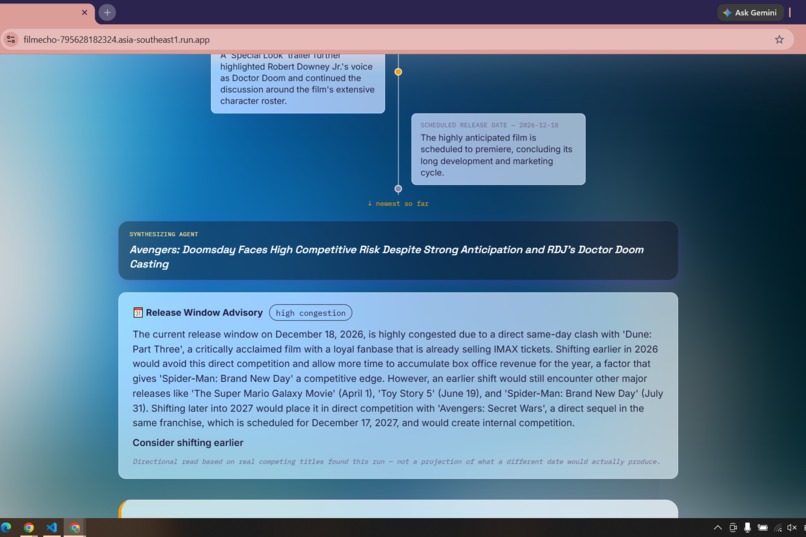
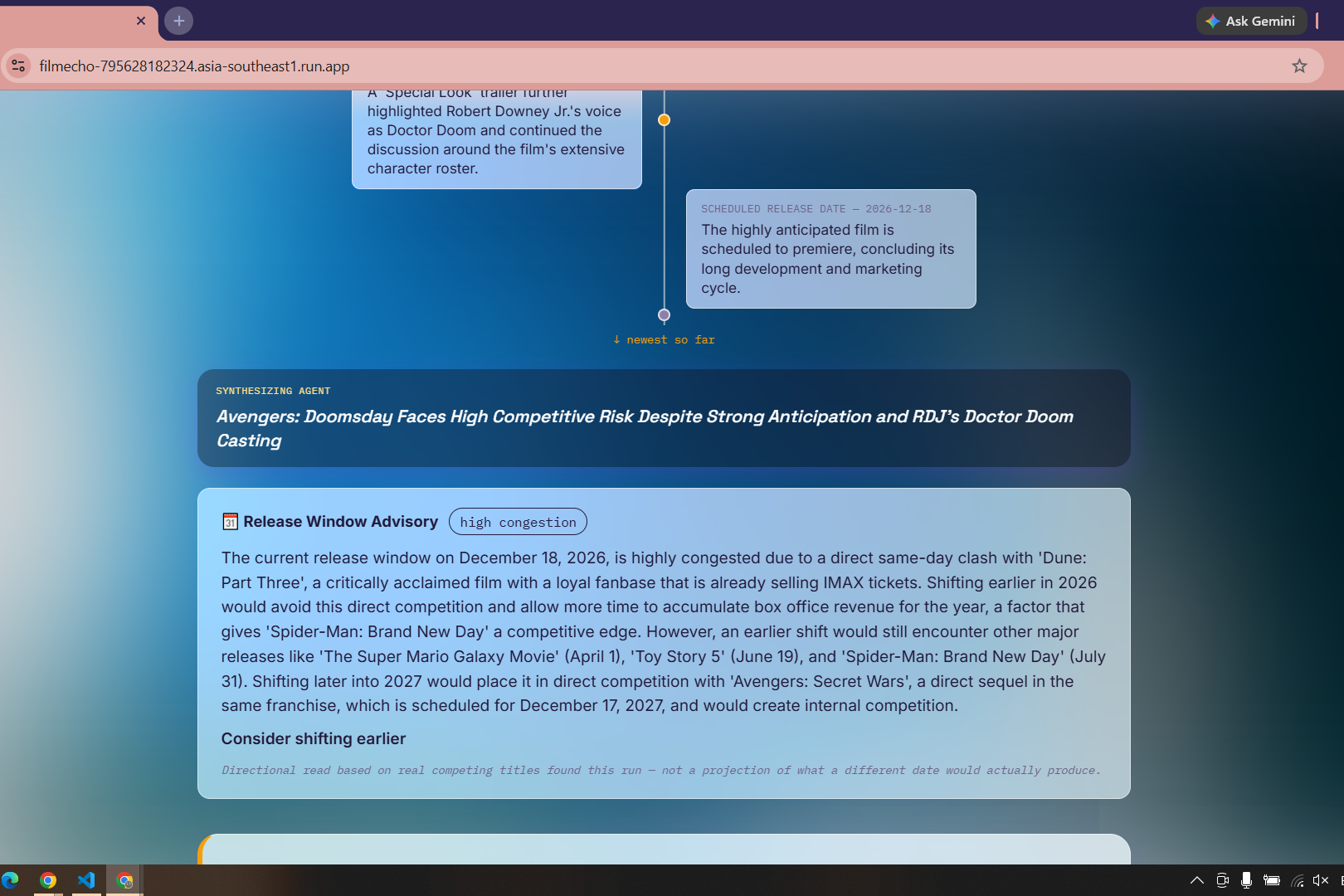
8. Synthesizing Agents Information & Advisory
-
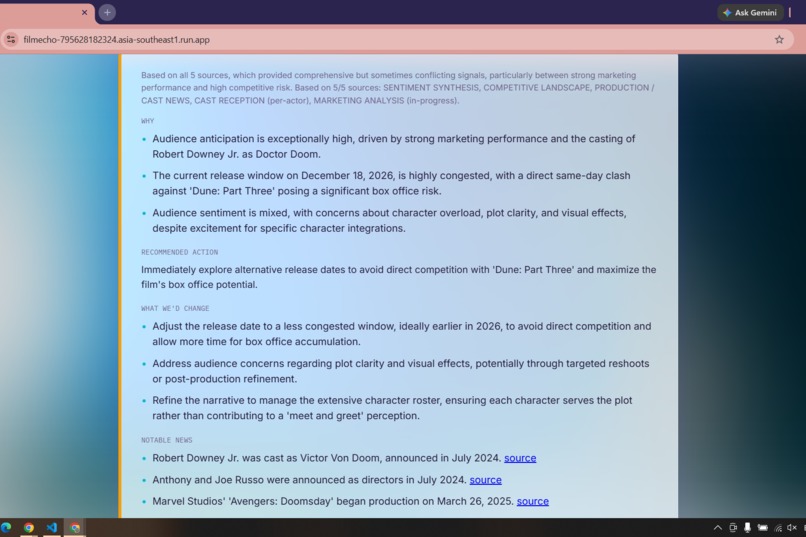
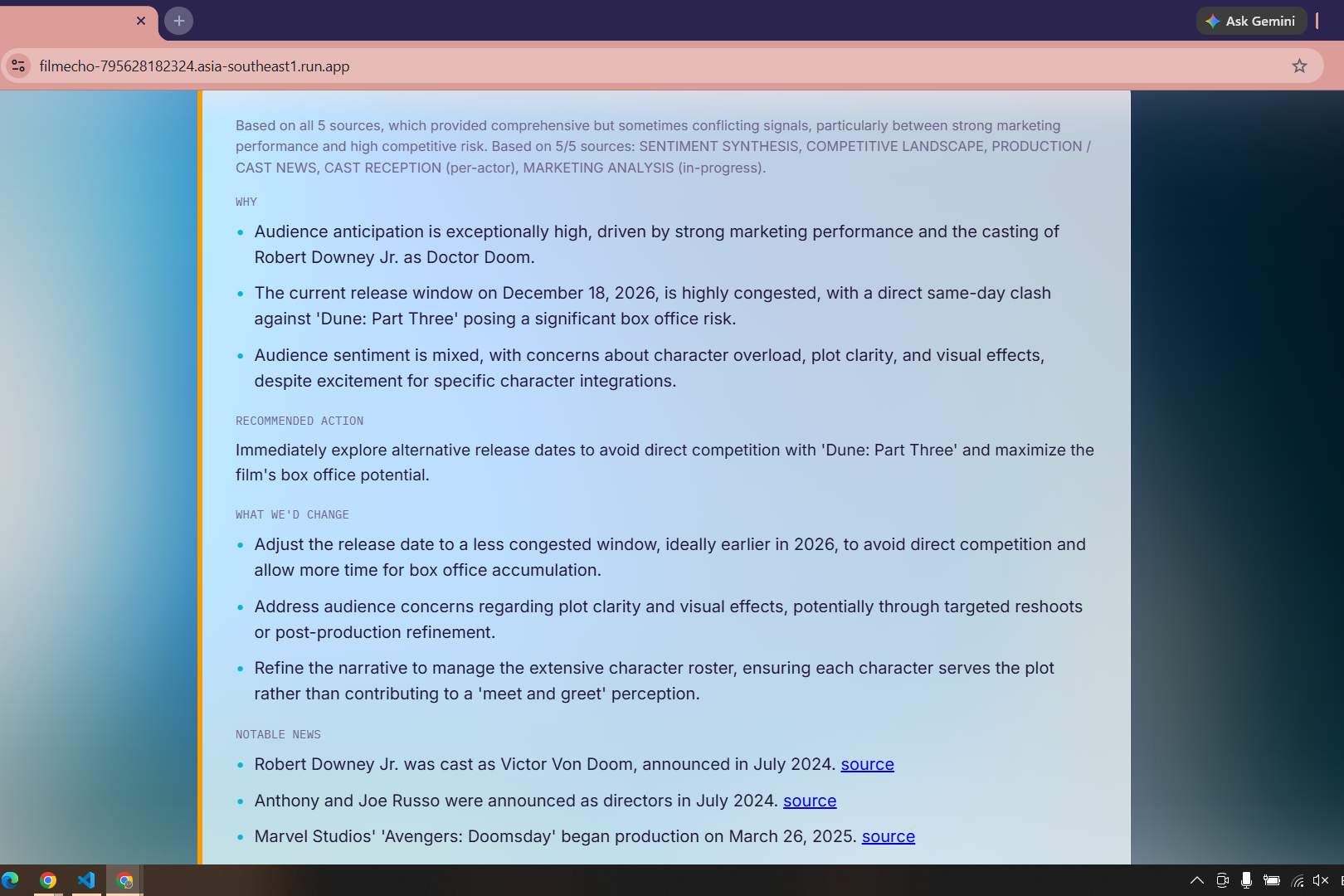
9. News & Recommendation
-
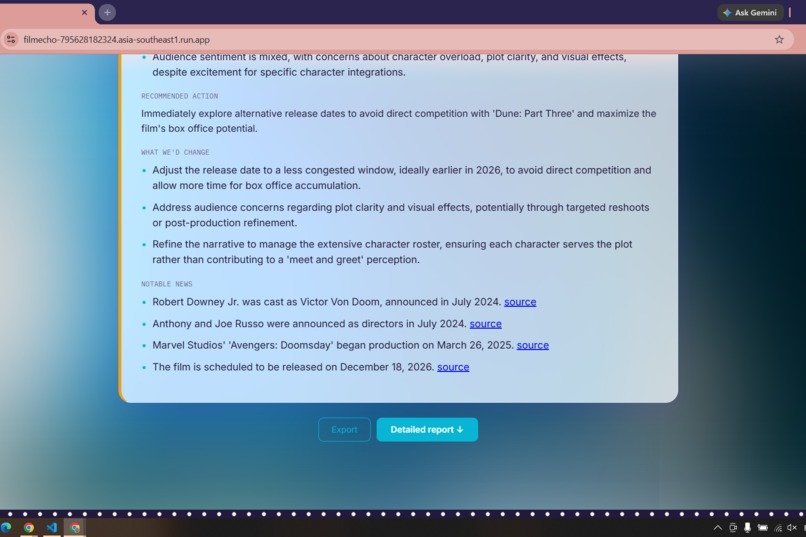
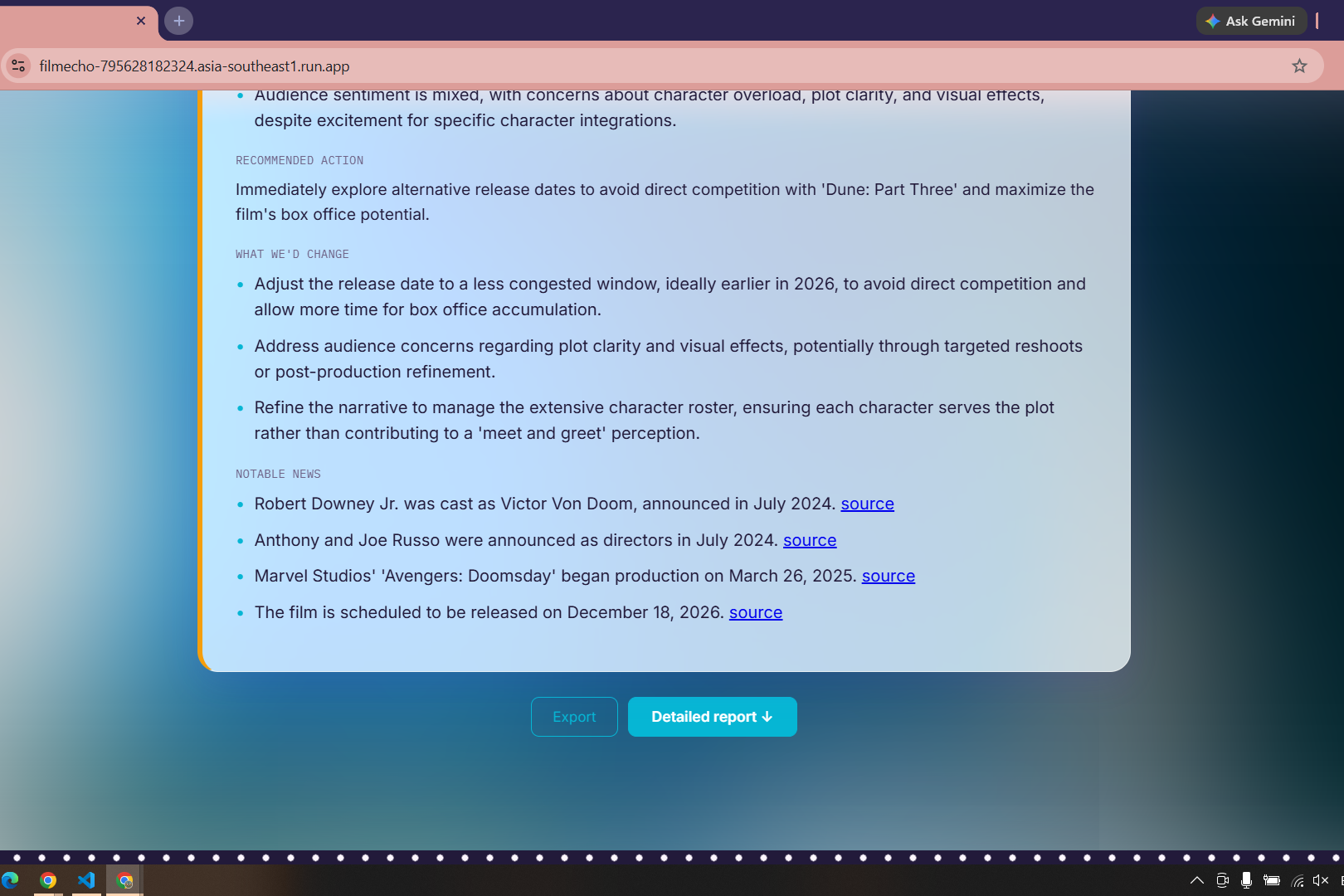
10. Detailed Report & Export as a PDF
-
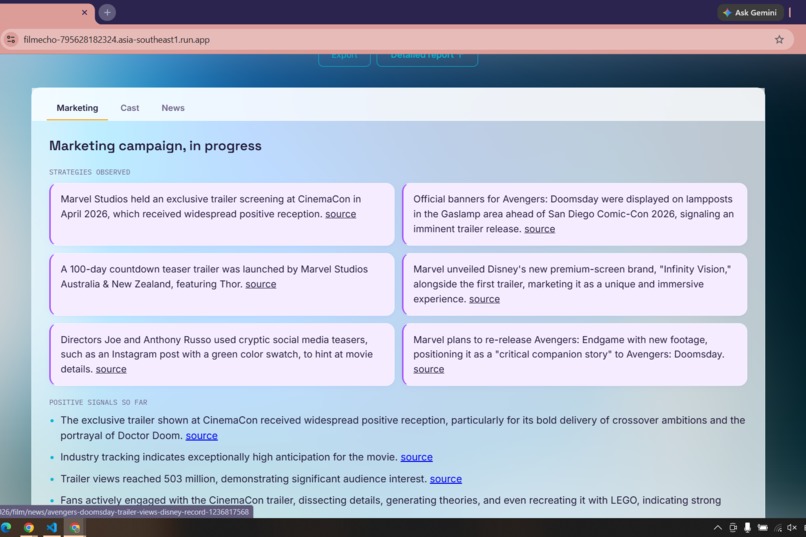
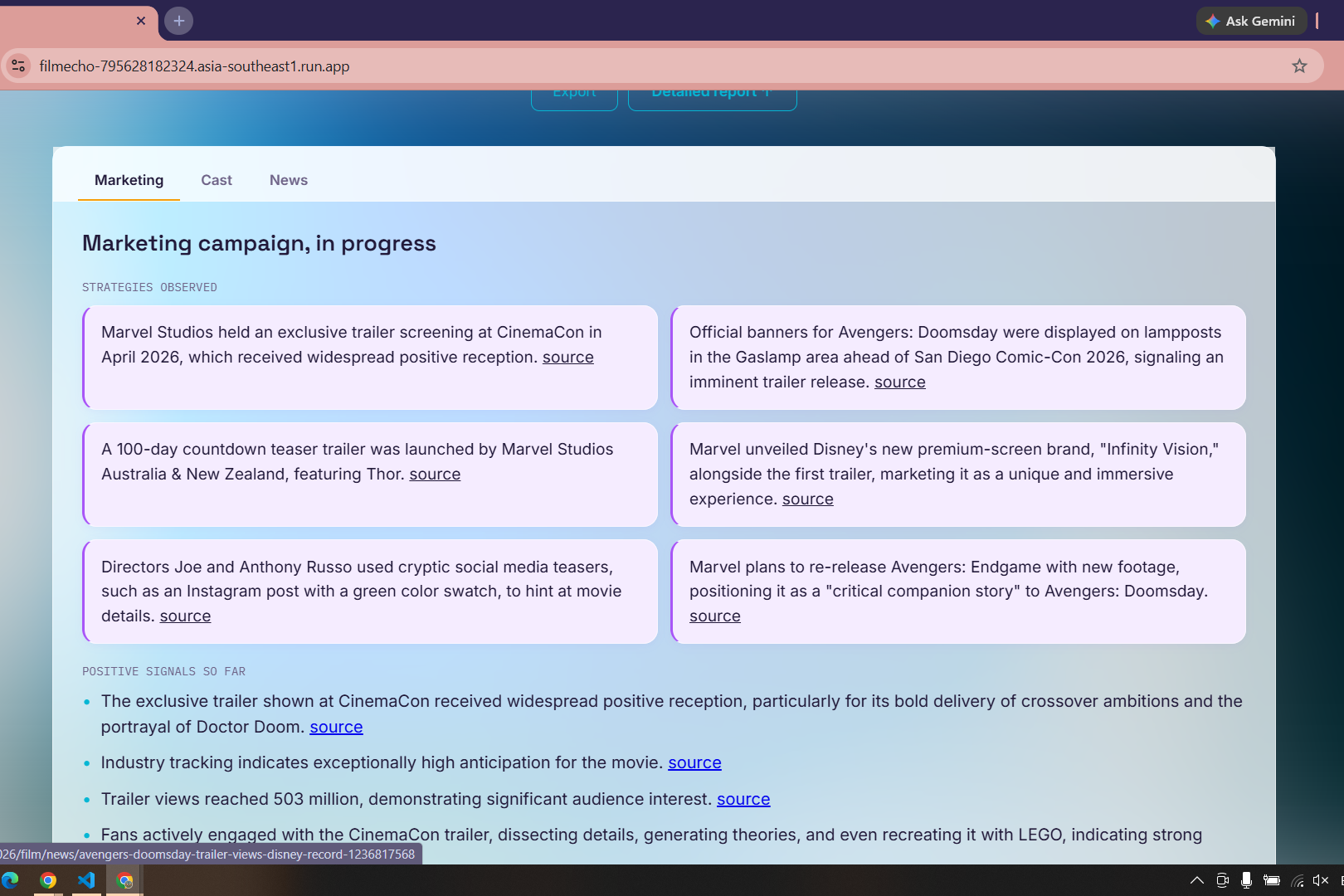
11. Marketing
-
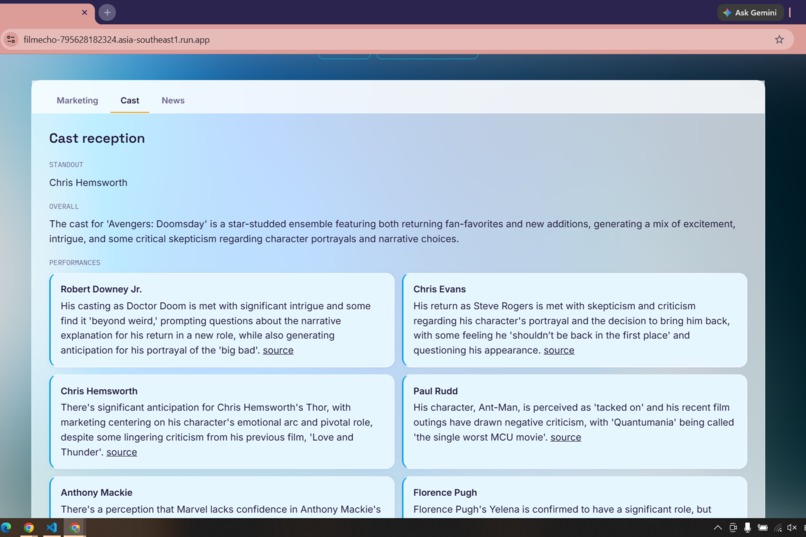
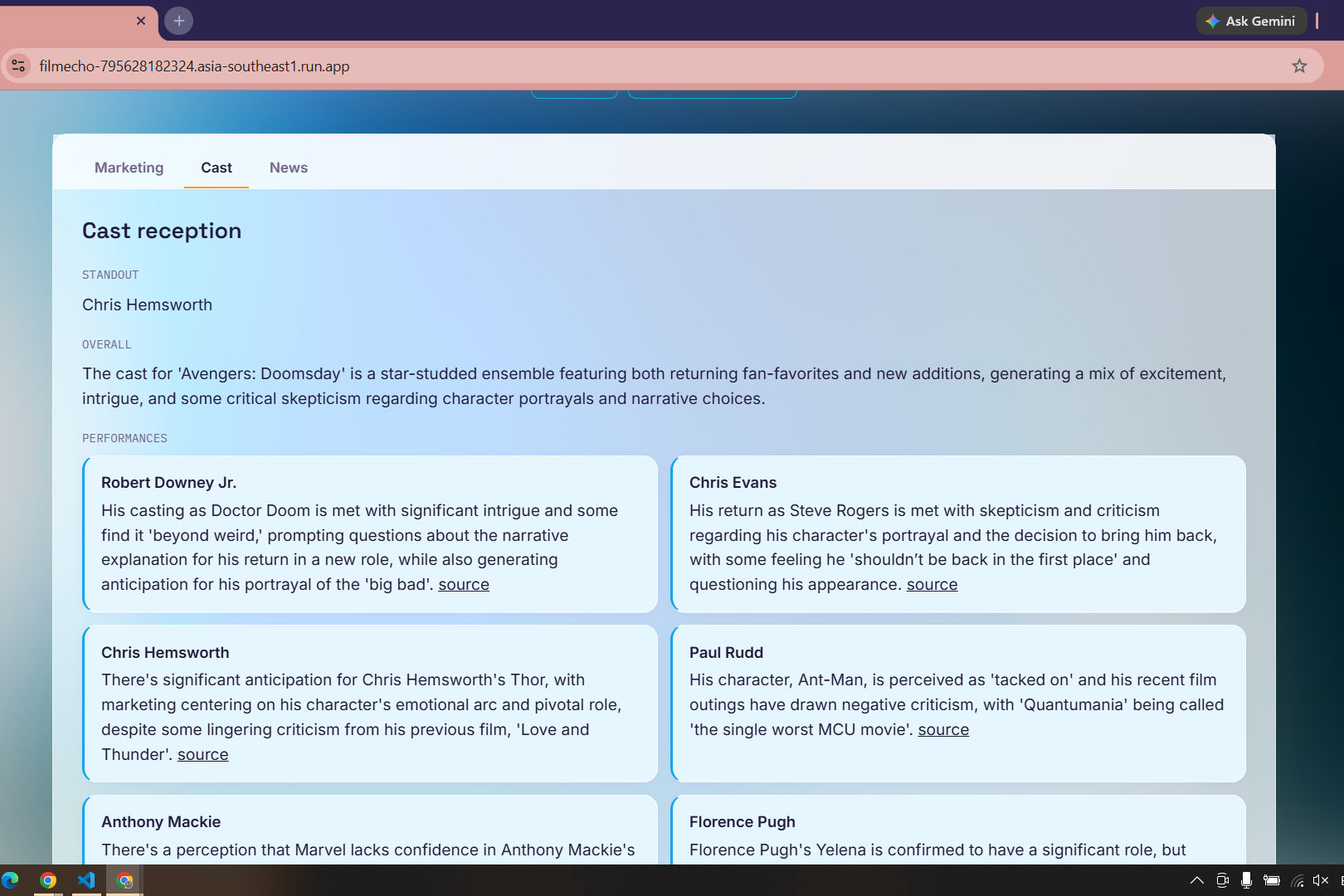
12. Cast
-
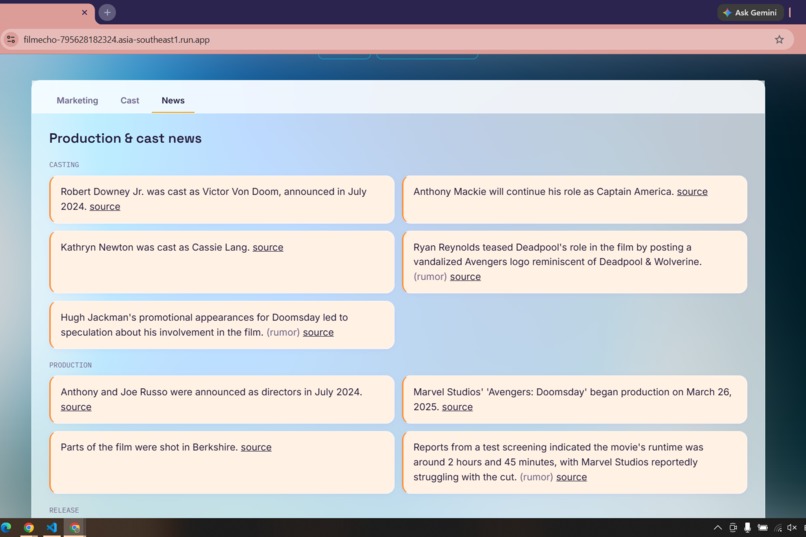
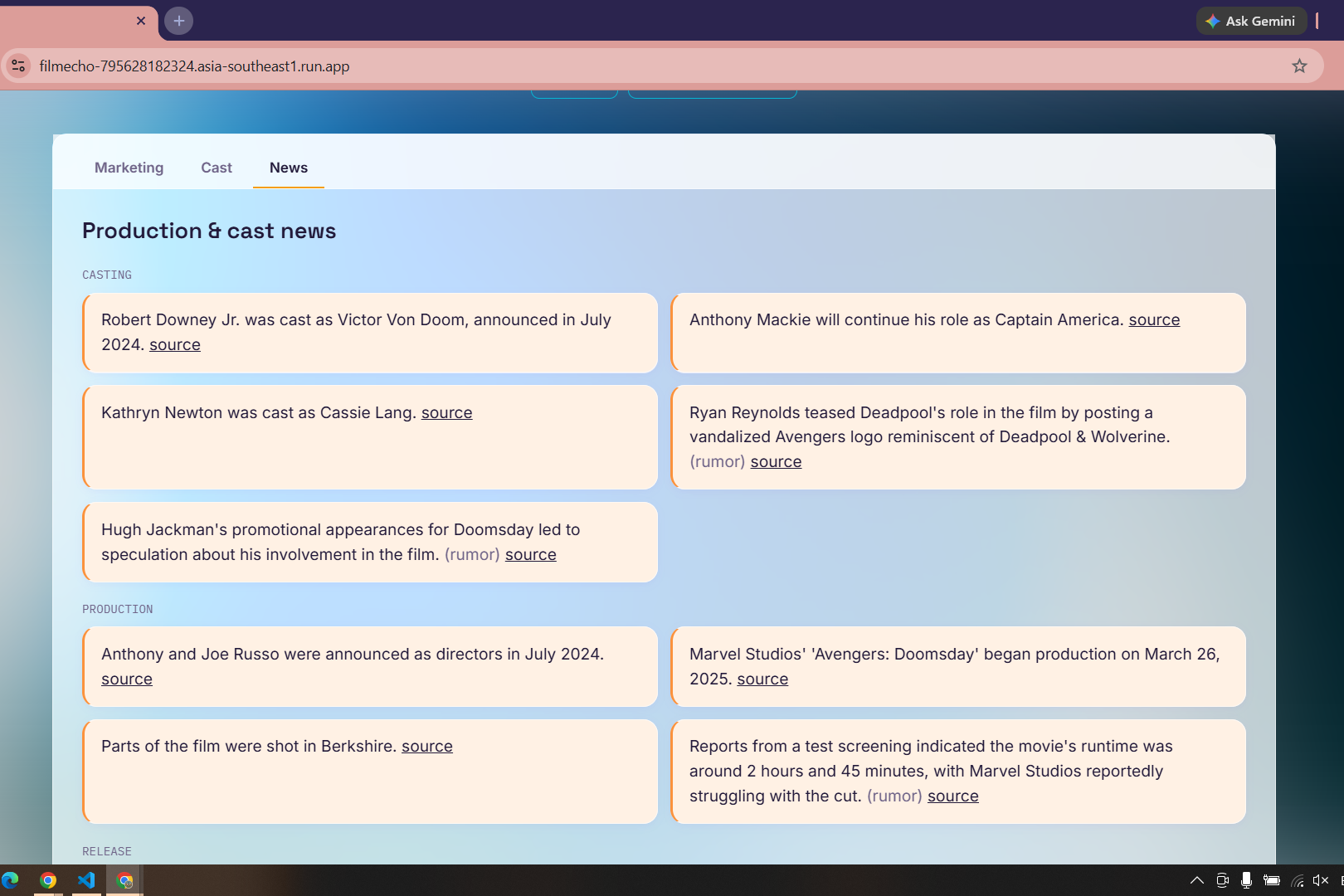
13. News
-
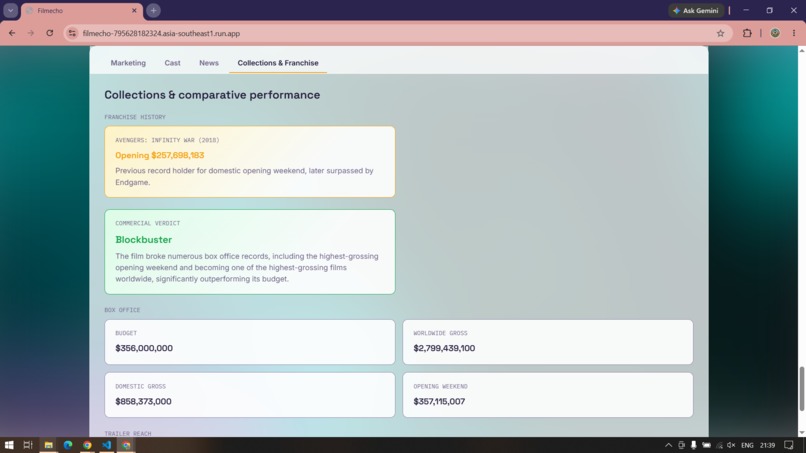
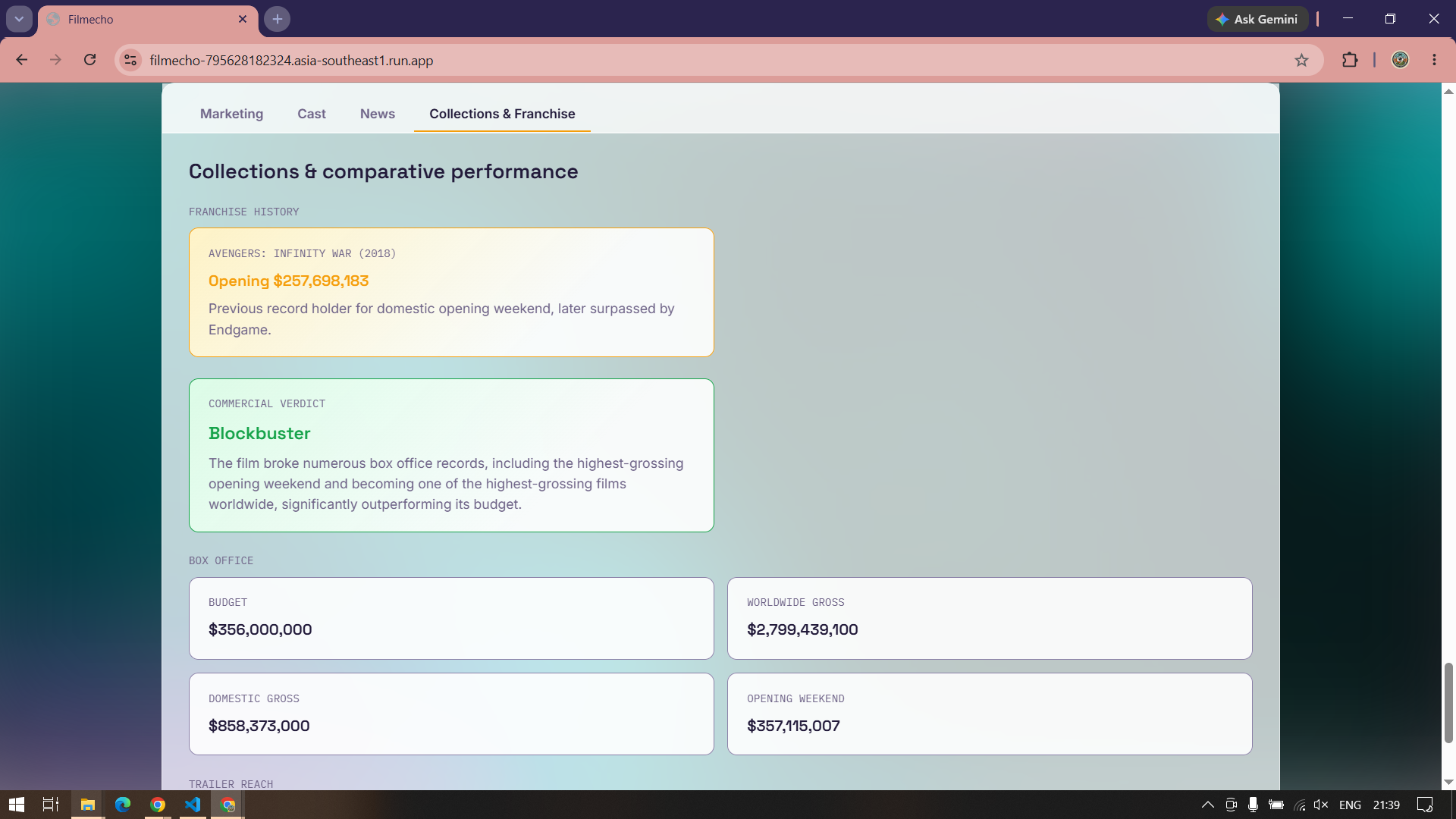
14. For released movies, Collections & Franchise
Inspiration
Every movie and series leaves behind signals.
A trailer drops in Mumbai, and thousands react within minutes. A Korean drama begins building global momentum. A Spanish series suddenly explodes online. A Japanese film finds an unexpected international audience. A blockbuster enters a crowded release window. A small independent production quietly generates extraordinary word-of-mouth.
The entertainment world is constantly talking.
But those signals are scattered everywhere—across news, trailers, audience reactions, cast discussions, marketing campaigns, competitor announcements, franchise history, and countless conversations happening simultaneously across the internet.
The problem isn't a lack of information. It's that there is no single room where all those signals can come together and make sense.
So we asked:
What if every movie and series in the world had its own AI-powered intelligence room?
Not limited by country. Not limited by language. Not limited to one entertainment industry.
That idea became FilmECHO—a global entertainment intelligence system that listens to the digital echoes surrounding movies and series and transforms them into actionable decisions.
Because every story released into the world creates an echo.
FilmECHO is built to understand it.
What it does
FilmECHO takes a movie or series title and transforms fragmented signals into an evidence-grounded entertainment intelligence briefing.
Instead of investigating everything one step at a time, FilmECHO explores multiple dimensions of a title in parallel:
- 🌐 Web and audience sentiment
- ▶️ Trailer and YouTube signals
- 📰 News and production developments
- ⭐ Cast perception
- 📣 Marketing momentum
- 🥊 Competition and release-window intelligence
- 🎞️ Franchise and historical context
The intelligence flows through the system like this:
Title → Parallel Intelligence → Evidence Synthesis → War Room → Decision
The result is a Greenlight Memo that brings together the recommendation, confidence, biggest opportunities, biggest risks, and suggested next steps.
⚔️ The War Room
Real entertainment decisions are rarely made from one perspective.
So FilmECHO brings multiple specialized perspectives into a shared War Room—including creative, production, marketing, casting, distribution, and analytical viewpoints.
They work from the intelligence gathered by the system to challenge assumptions, expose trade-offs, and debate the decision.
Because sometimes the most valuable intelligence isn't agreement.
It's discovering what intelligent perspectives disagree about before the decision is made.
How we built it
FilmECHO is built as an agentic, parallel intelligence pipeline.
We combined:
- Gemini for reasoning and intelligence synthesis
- Google ADK for orchestrating agentic workflows
- Parallel for parallel research and intelligence gathering
- YouTube Data API for trailer discovery and audience signals
- FastAPI for backend orchestration
- Pydantic for structured, schema-enforced outputs
- Server-Sent Events (SSE) for live pipeline progress
- ReportLab for generating exportable intelligence reports
- Docker + Google Cloud Run for deployment
Rather than treating AI as a paragraph generator sitting at the end of an application, we designed FilmECHO as a structured intelligence pipeline:
Research → Structure → Validate → Synthesize → Debate → Decide
Each stage produces structured intelligence that can be validated and built upon by the next.
Challenges we ran into
Turning parallel research into one coherent decision
Gathering information from multiple sources was only the beginning.
Different sources can produce incomplete, noisy, or contradictory signals. Our challenge was transforming multiple simultaneous investigations into one meaningful, evidence-grounded briefing without losing important differences between perspectives.
Avoiding the "multiple chatbots" problem
We didn't want FilmECHO to be several AI personas simply giving unrelated opinions.
The challenge was making the War Room feel like a genuine decision environment—where specialized perspectives work from shared intelligence, challenge assumptions, and reveal meaningful trade-offs.
Making AI trustworthy
AI can sound extremely confident even when the underlying evidence is weak.
We learned that confidence alone cannot be treated as intelligence.
So we built structured outputs and deterministic guardrails to identify weak or insufficient evidence.
Sometimes the smartest answer isn't GREENLIGHT.
Sometimes it isn't PASS.
Sometimes it's:
INSUFFICIENT DATA.
For a decision-making system, knowing when not to pretend is intelligence too.
Accomplishments that we're proud of
We're proud that we didn't build another interface where you ask AI a question and wait for a paragraph.
We built something closer to an entertainment intelligence machine.
Give FilmECHO a title, and the system begins pulling apart the question from multiple angles. Signals that normally live in separate corners of the internet—audience reaction, trailers, news, cast perception, marketing momentum, competition, and history—become part of one investigation.
But the moment we're most proud of comes after the research.
The War Room.
Most AI systems are designed to eliminate disagreement and produce one polished answer. We deliberately went the other way.
That is what makes FilmECHO feel different to us.
We didn't build AI agents to agree faster. We built them to make disagreement useful.
And when that debate ends, the goal isn't another wall of AI-generated text.
It's clarity.
A decision-maker should be able to walk away knowing not only what the recommendation is, but what could make that recommendation wrong.
What we learned
The biggest surprise was that finding information was never the hardest part.
Making sense of conflicting information was.
The internet rarely gives you one clean answer about a movie or series.
One signal says the trailer is exploding.
Another suggests the competition is brutal.
Audience excitement is high, but news around production raises questions.
The cast generates attention, but attention doesn't always mean demand.
We learned that intelligence is not:
More data = better decisions
It's closer to:
The right signals + the right context + the right questions = better decisions
We also learned that agentic AI becomes much more interesting when every agent is allowed to have a purpose.
A system where six agents repeat the same conclusion isn't intelligent collaboration.
A system where different perspectives expose each other's blind spots is.
And perhaps our most important lesson:
A confident AI answer is easy. A trustworthy AI system is much harder.
That's why FilmECHO cares about structure, evidence, uncertainty, and knowing when the signals simply aren't strong enough to support a decision.
Sometimes intelligence means making a call.
Sometimes intelligence means saying:
We don't know yet.
What's next for FilmECHO
Today, FilmECHO investigates the echoes surrounding a title.
Next, we want it to remember them.
Imagine opening FilmECHO and seeing not just what people are saying about a movie or series today—but how the story around it has changed.
When did excitement begin?
What caused sentiment to shift?
Which trailer changed the conversation?
When did a competitor become a threat?
Which signals were early warnings—and which were noise?
That's where we're going next.
From a snapshot of entertainment intelligence...
...to a living memory of it.
We want FilmECHO to evolve into a system that continuously watches how the world responds to stories as they move through their lifecycle.
Not just:
"What do the signals say right now?"
But:
"Where is this story going?"
The future we imagine is a living global entertainment intelligence layer—one that can follow movies and series across markets, audiences, releases, and changing conversations.
Because stories don't stand still after they're released into the world.
The conversation around them evolves.
And FilmECHO is just getting started learning how to listen. 🎬

Log in or sign up for Devpost to join the conversation.