Inspiration
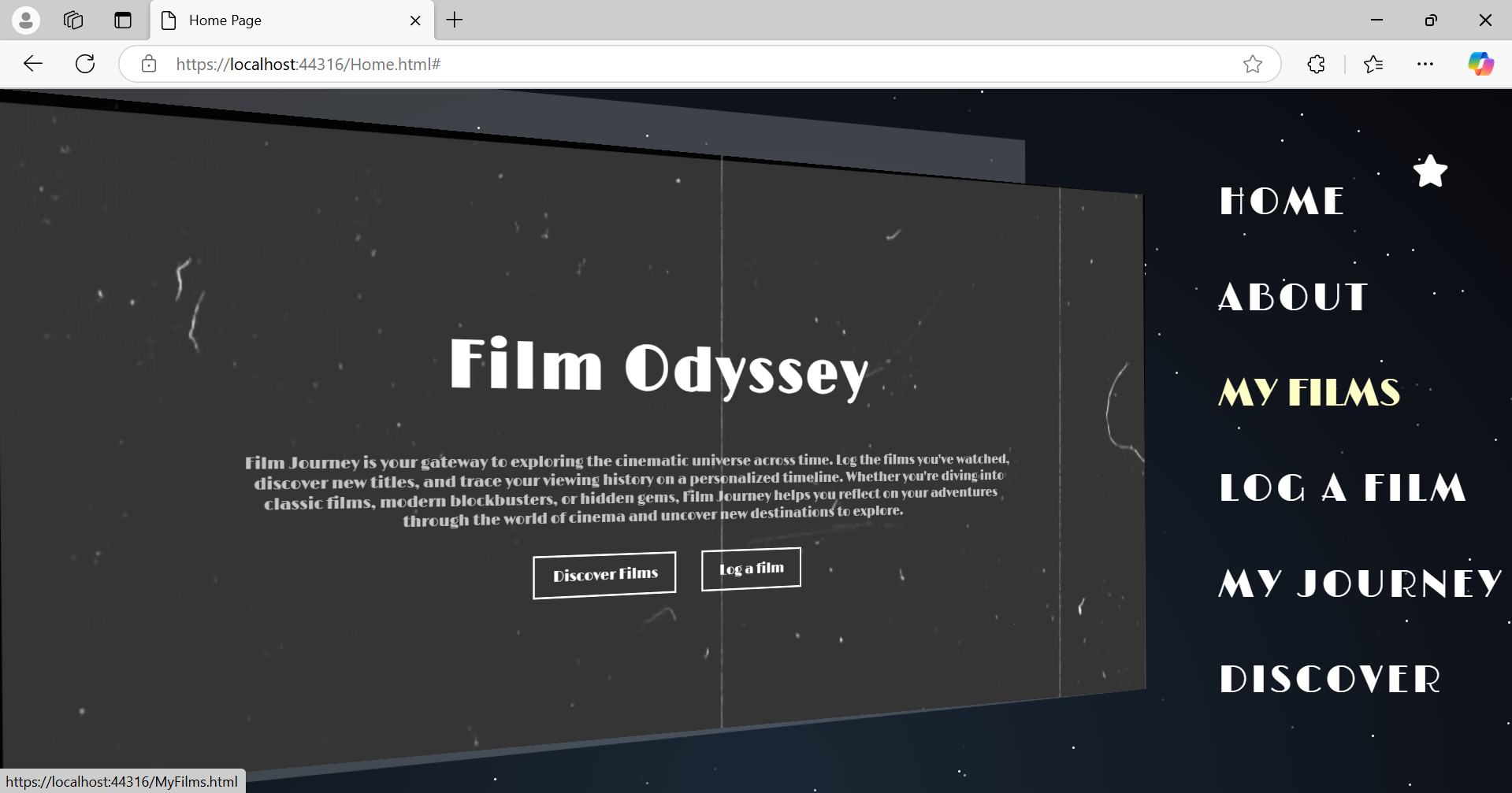
Our inspiration came from how movies have the power to transport you to different times, worlds, and realities. Films let you experience the past, present, and future in ways that feel deeply immersive. Think of it as traveling through time, where each movie is a portal to a new era or universe. Platforms like Letterboxd inspired us because they allow users to log their films, but we wanted to push that concept further by introducing a time-traveling journey through cinema, where each logged movie is a step into a different time.
What it does
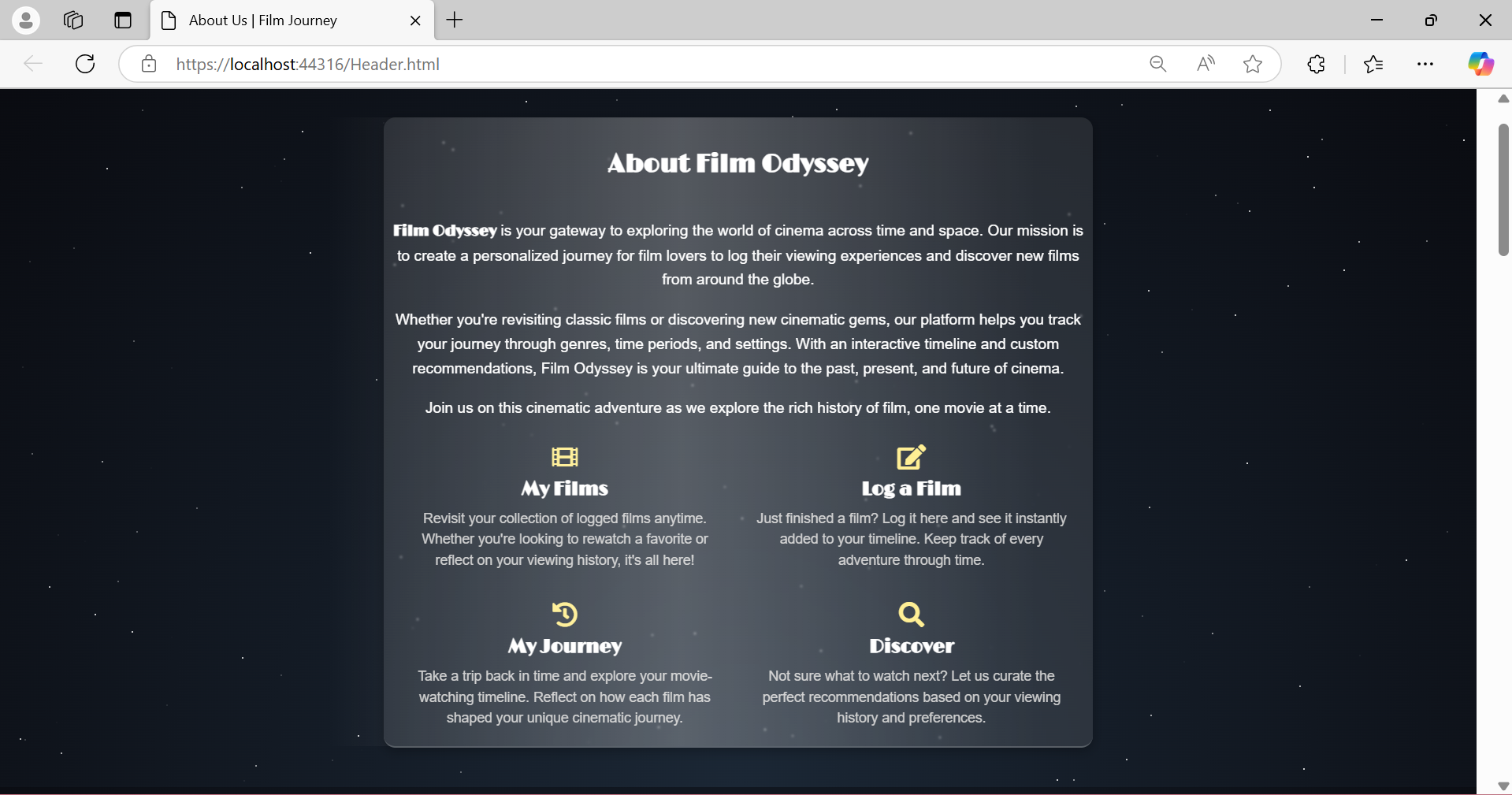
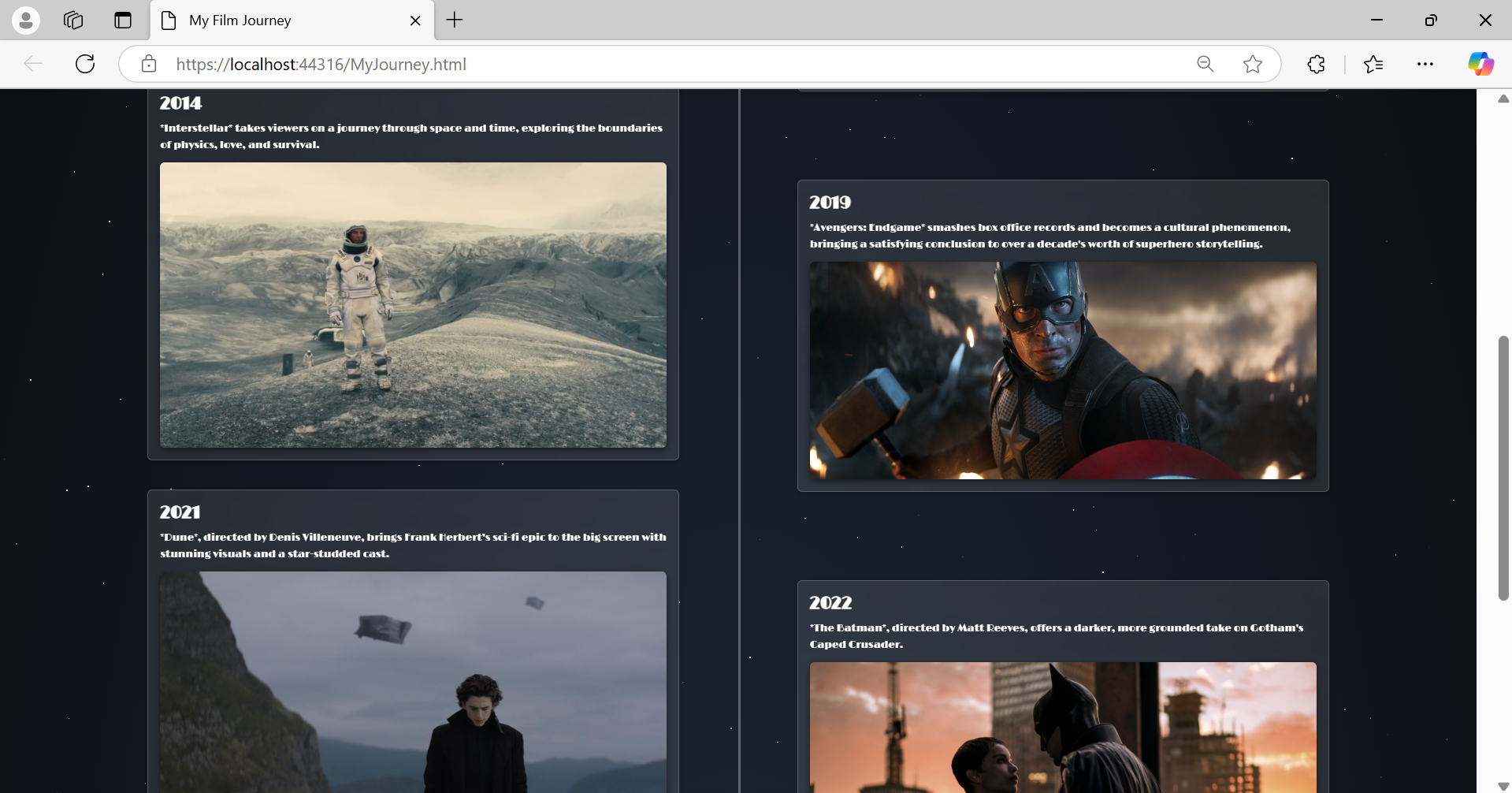
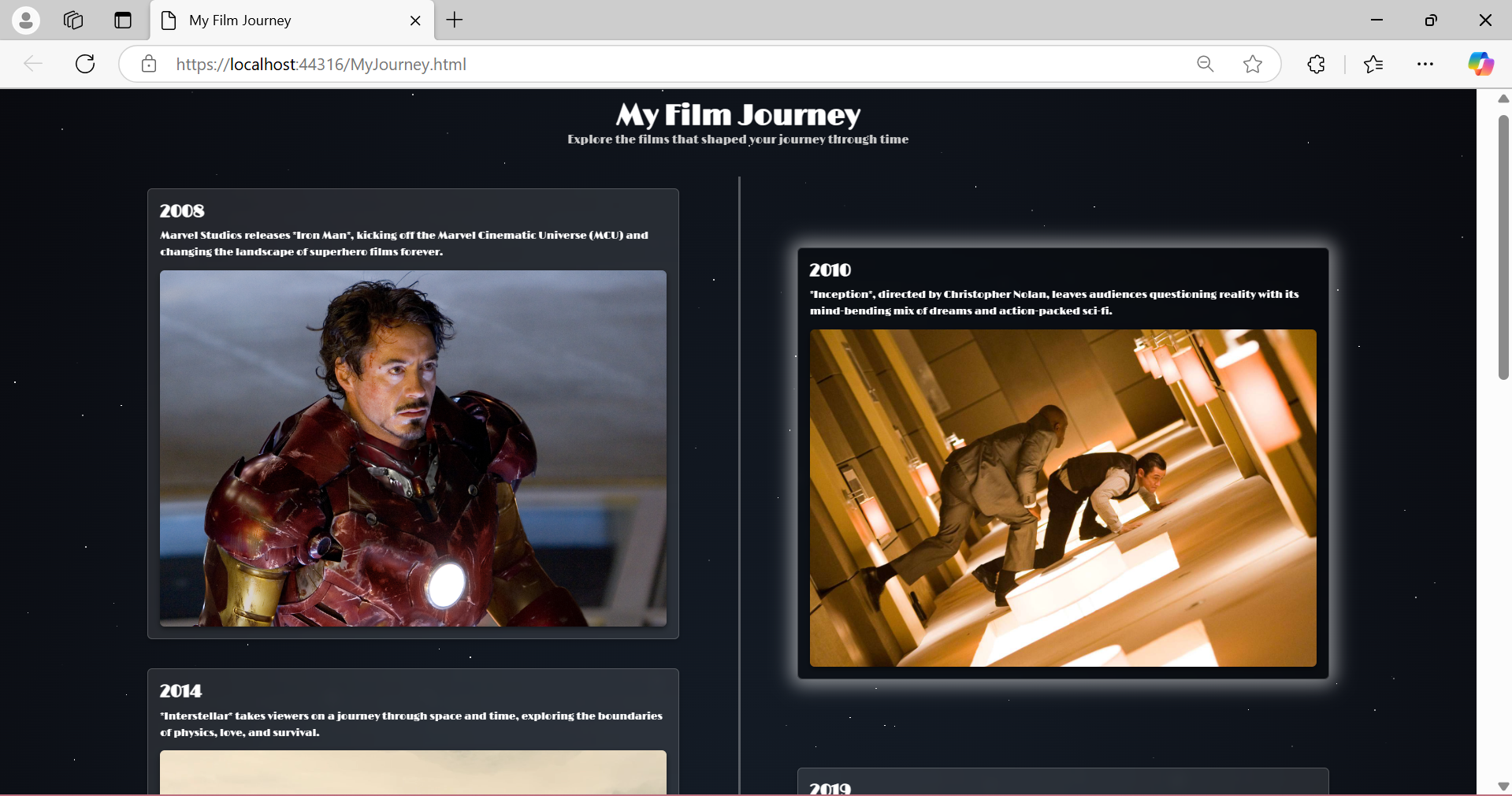
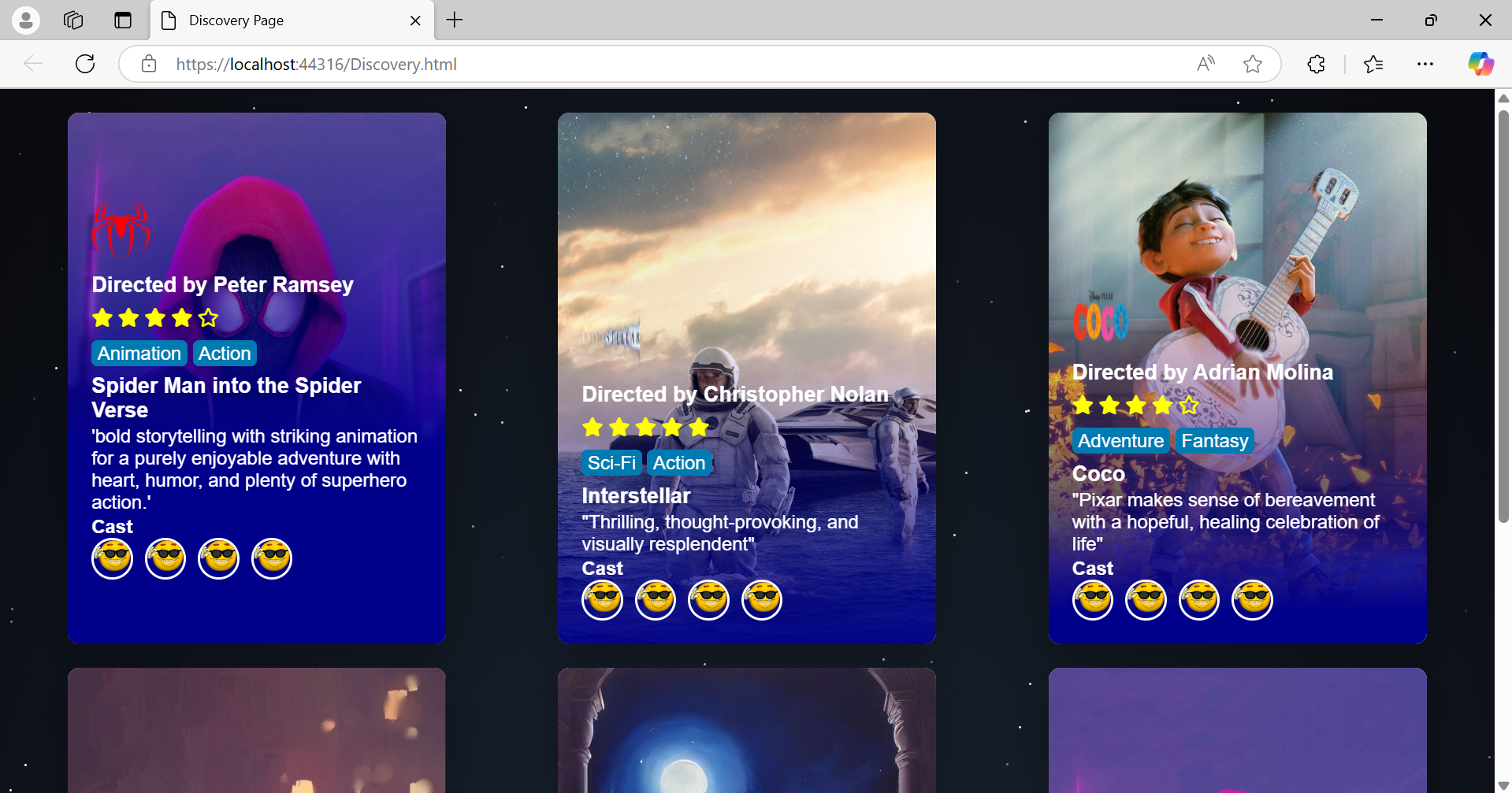
Our website is designed to let users log the films they watch, track their journey through time, and discover new movies. After watching a film, users can add it to their timeline, creating a visual representation of their movie-watching history. The My Journey feature serves as a personal timeline of films, where users can revisit the movies they’ve watched in the past. Additionally, the Discover feature offers curated recommendations, guiding users to explore new films that fit their preferences, allowing them to continue their cinematic time-traveling adventure.
How we built it
We built Film Odyssey using a combo of front-end and back-end tech, with a focus on AI-powered recommendations. On the back end, we used FastAPI for the API, connected to a SQL database that stores user info and logs of all the movies users input. We integrated OMDB API, an open-source version of the IMDb API, to pull movie data such as titles, descriptions, and ratings. To imrpove the experience, we trained two AI models that power the recommendation engine. These models help generate personalised movie recommendations based on the user’s logged films. Additionally, we implemented AI to improve the user experience by ensuring that movie titles are accurate when inputting data and providing smart autocomplete suggestions. We also experimented with Google’s Sound Interpreter for voice input, after testing multiple other services including OpenAI’s Whisper. Although we encountered some challenges, such as difficulties with implementing Auth0 for authentication, we successfully blended our AI models and normalised the data to ensure smooth recs and movie logging.
Challenges we ran into
One of the biggest challenges we faced was that each team member was comfortable with different programming languages and frameworks. When it came time to merge our work, we realised that some of the code wasn’t compatible, which led to confusion and wasted time. We had to make a tough decision to standardise on one person’s setup and rebuild parts of the project from there. It was a stressful situation, but it taught us the importance of communication and collaboration when working with a diverse team of diff skills.
Accomplishments that we're proud of
As an individual, I’ve learned so much from my teammates during this project. Working alongside people who know different programming languages than I do was a great learning experience. They were patient enough to explain their methods, and through these hours of teamwork, I started to gain a good understanding of a new language. It’s a skill I’m excited to continue developing, and I’m proud of the progress I’ve made thanks to my team.
What we learned
Throughout this project, we learned the importance of collaboration and communication in a team setting. Each of us brought different technical skills to the table, and we had to merge our knowledge to create a unified web page. Working with different tools, frameworks, and languages was a challenge, but it helped us expand our understanding of how front-end and back-end systems work together. We also learned the value of user experience, understanding that the design and functionality need to be intuitive to create a seamless experience for users who are logging films or discovering new ones.
What's next for Film Odyssey
Looking ahead, we see Film Odyssey expanding with even more interactive features. We could hope to involve a social aspect where users can share their film journeys and recommendations with friends. Additionally, we plan to refine the recommendation engine, making it smarter and more personalised by incorporating user preferences and reviews. We also see potential in incorporating data visualisation, allowing users to see trends in the types of films they watch, such as genres, directors, or time periods they tend to explore. Ultimately, we want Film Odyssey to become a loyal reliable platform for all film lovers to explore the world of cinema, past, present, and future.
Built With
- ai
- chatgpt
- css
- fastapi
- html5
- javascript
- openai
- poetry
- python
- react
- rest
- sentiment-analysis-online
- sql
- tailwind
- yaml


Log in or sign up for Devpost to join the conversation.