-
-
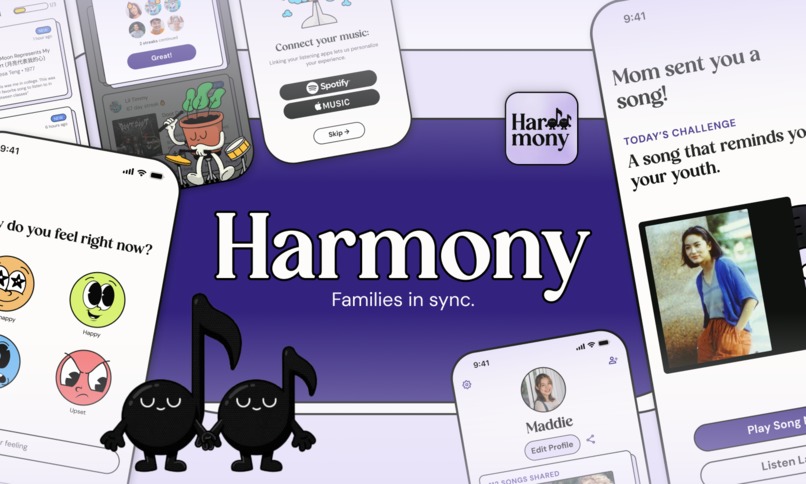
Harmony: Families in sync
-
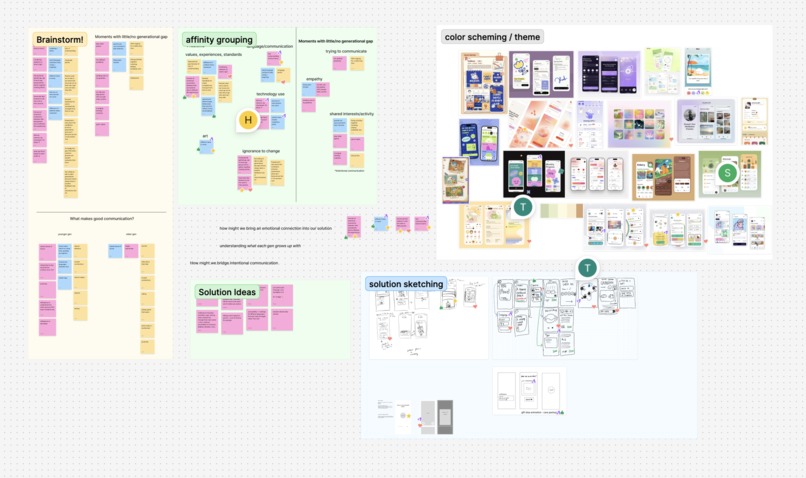
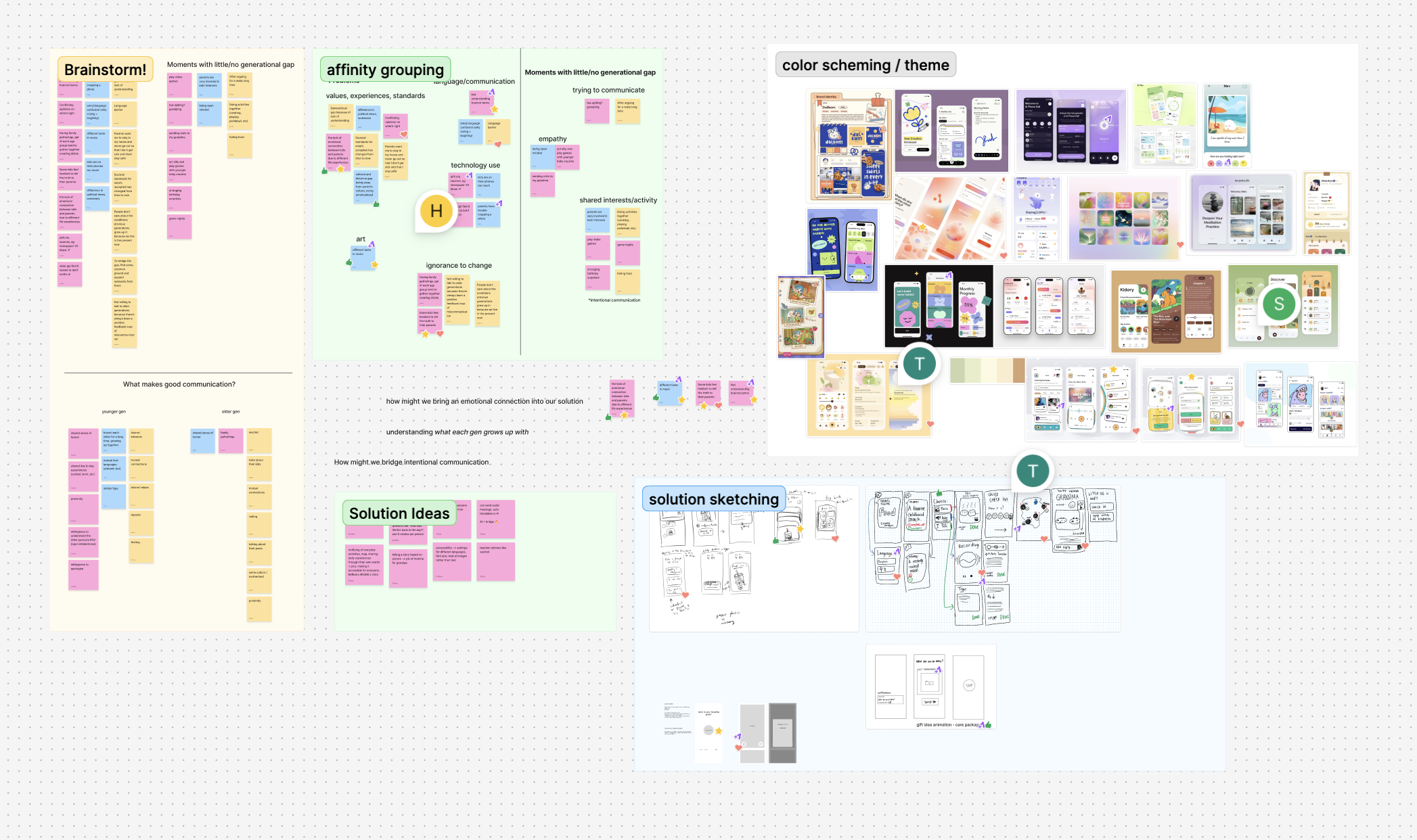
Problem space brainstorming, initial ideation, moodboarding
-
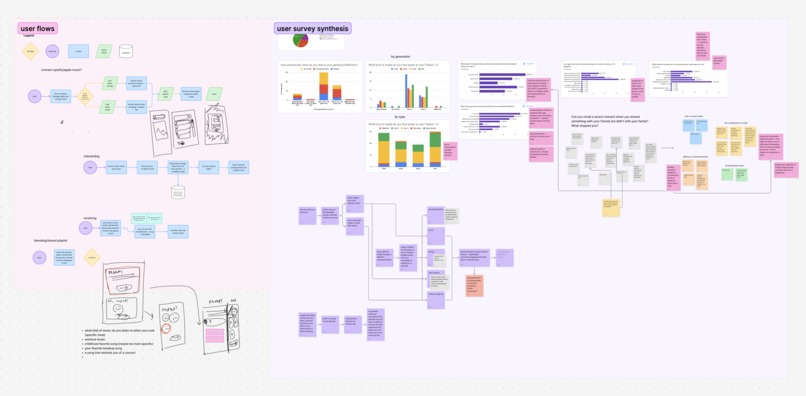
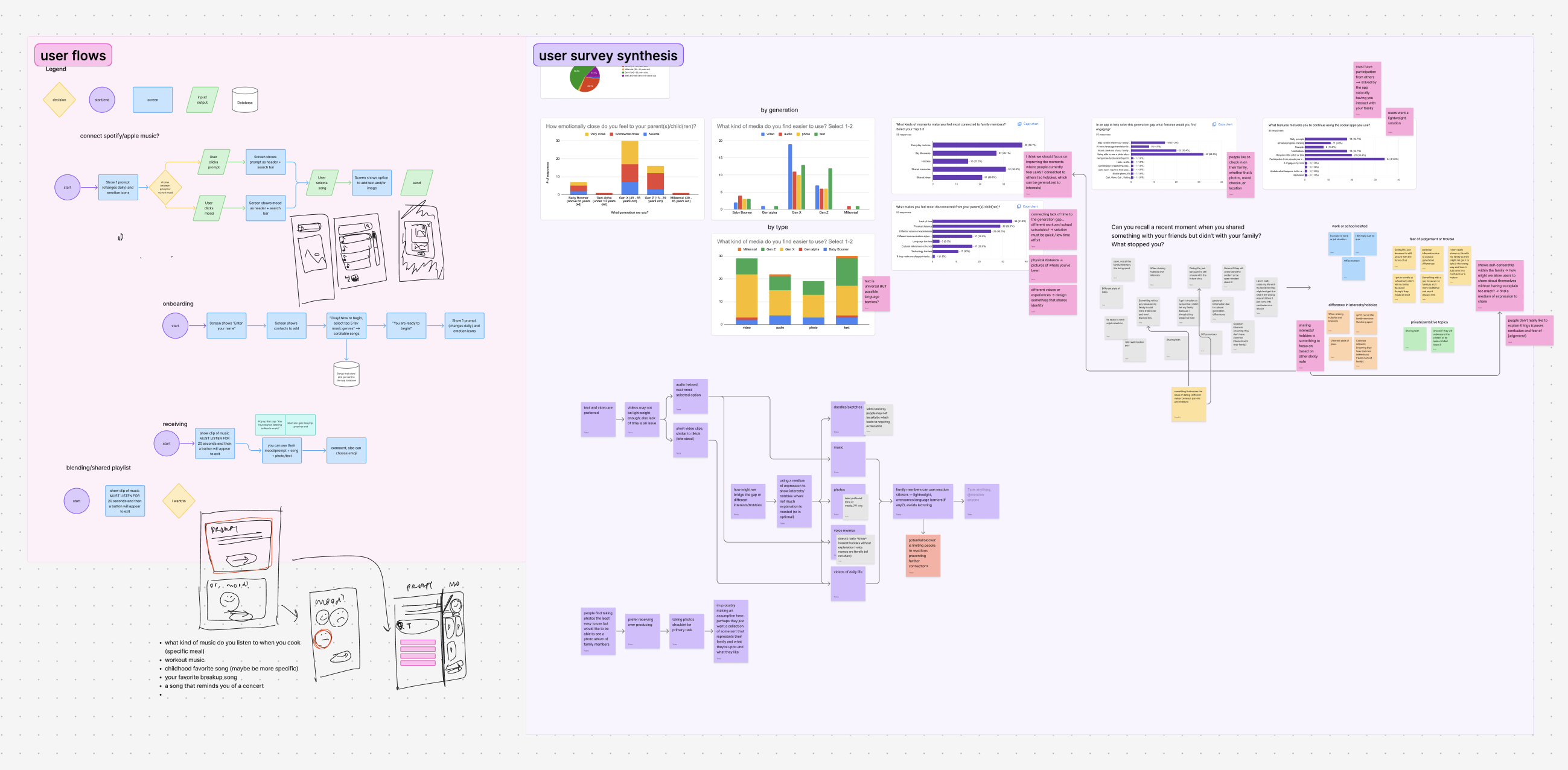
User survey synthesis, user flows
-
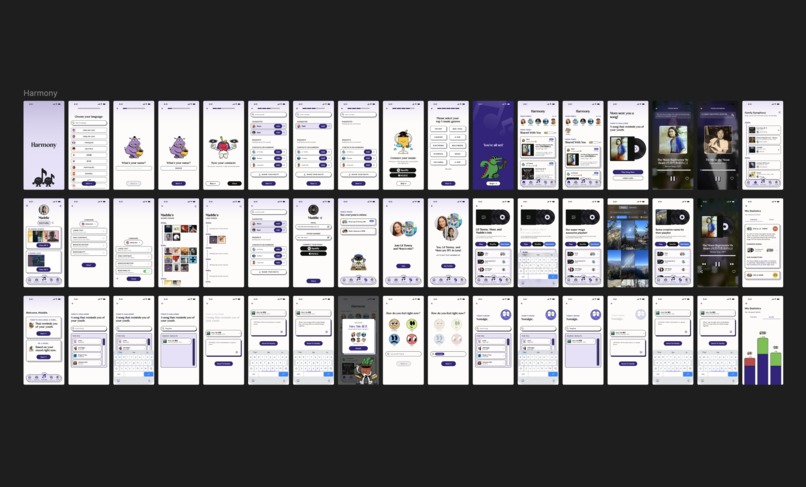
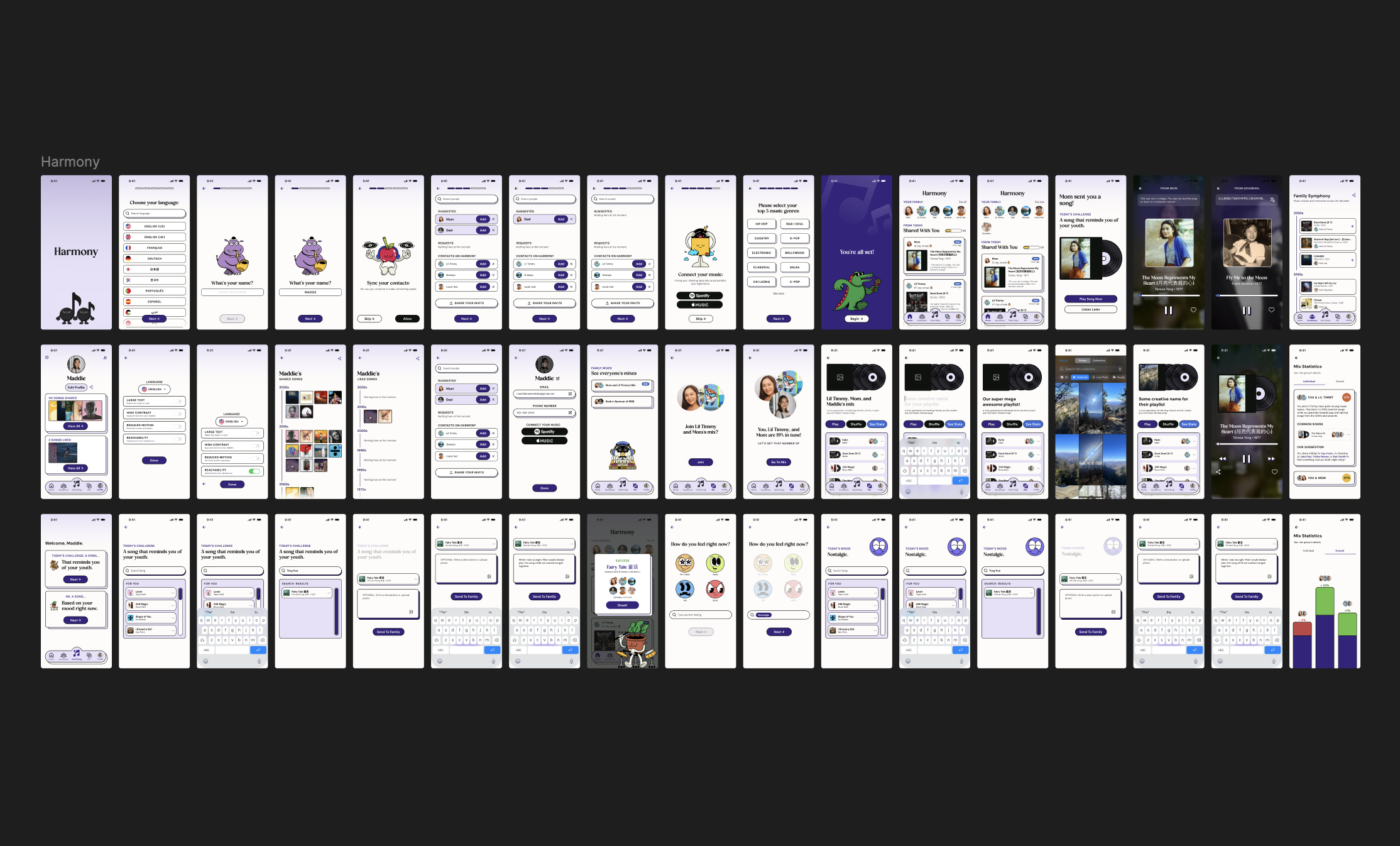
All high-fidelity screens
Prototype link: Link
A video demo with a maximum of 3 minutes: Link
Responses to questions about the user research and design thinking process
Describe your project (Max 150 words)
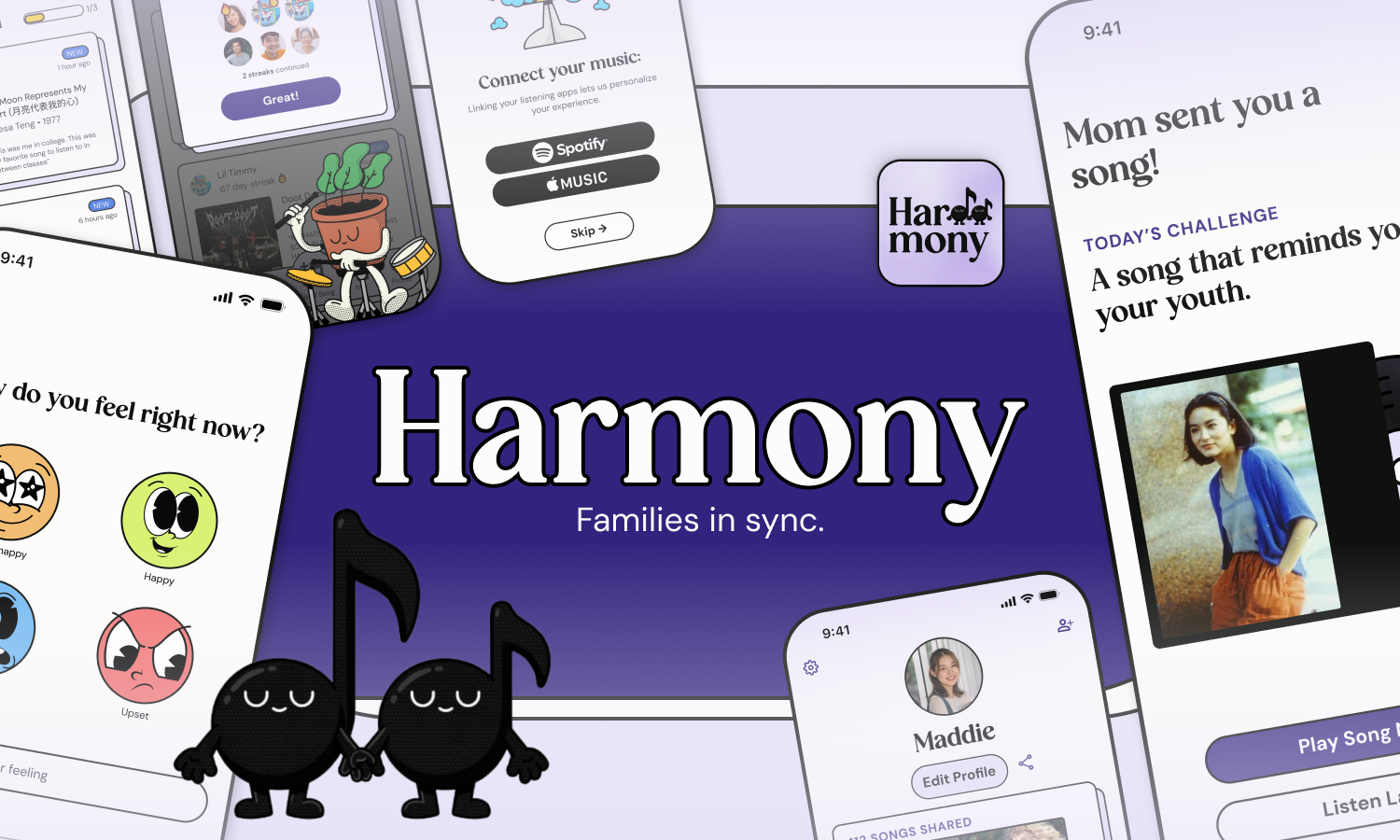
Grandma listens to old Chinese songs, Gen Alpha brother only wants brainrot songs, and you love Laufey. Music evolves over generations, whether as a medium of communication or self-expression. You’d share Spotify playlists with Gen Z friends, but how about your Gen X mother? Harmony is a mobile app that bridges generational gaps through music, helping family members understand one another’s life experiences beyond mere words and pictures. Designed for families facing language barriers, long distances, fear of judgment, or difficulty with verbal communication, Harmony uses music as a lightweight, emotionally safe medium for connection, open and accessible to all ages. Share songs through daily prompts / select music reflecting your current mood. Built-in AI text translation helps family members understand shared notes across languages. Harmony also features a family “symphony,” a playlist categorized by decades to visualize generational stories, along with personalized mixes that highlight shared taste.
Describe your research process and findings. If you conducted any surveys or interviews, please include the survey form and/or interview questions here. If you conducted secondary research by pulling from online sources, please include a link to your sources. (Max 500 words)
Primary Research: We conducted a Google Form survey with 8 questions asking for moments when people feel emotionally close to their family members of different generations, what causes an emotional disconnect, and what specific kinds of features would make an app appealing. We received 55 responses from every generation: Gen Alpha, Z, Millennial, X, and Baby Boomers. We brainstormed like crazy through affinity mapping with FigJam and sticky notes, reflecting on the moments that make us feel disconnected versus connected with our family members of different generations.
Key findings:
- Photos are not necessarily accessible across all generations. In our survey, only 32.7% of respondents selected “Photo” as a kind of media that’s easy to use, compared to Text, Audio, and Video, which all received a greater number of responses.
- Participation from people we know (aka family members) strongly motivates users to continue using pre-existing social media apps. ~62% of respondents selected this option, the most voted option.
- Hobbies / shared interests make family members LEAST connected to each other, compared to other factors (only 27.3% voted this option). This was something we wanted to focus on– finding a way to .
- From our open-ended question, many people do not confide in family members of different generations due to verbal miscommunication and fear of judgement. How might we allow users to share about themselves without having to overexplain too much?
From these findings, we noticed that our initial idea - sharing images and videos of daily life snippets - is not the most effective solution to bridging generational gaps. We also noticed that this idea is a little too broad when it comes to a specific kind of generational gap we are to solve. Thus, we had to pivot our direction and move on to…
Secondary Research: According to this research paper from the University of Arkansas, "Music holds a powerful place in childhood memories, serving as a bridge between generations, emotions, and experiences." We realized that in our personal experiences connecting with family members of different generations, music does hold a strong, yet often forgotten significance. We understand that the primary research survey does not comprise music specifically, but we still included important aspects from our key findings into our solution. Echoing the third key finding, hobbies or shared interests are honed in - specifically music. Overall, our research led us to refine both the problem and the solution we are addressing. While our initial idea of sharing daily-life media felt intuitive, primary research showed that accessibility and motivation vary widely across generations, and that shared hobbies are not naturally acting as a bridge on their own. By pairing these findings with secondary research highlighting music’s deep emotional and intergenerational power, we identified music as a more focused and meaningful entry point for connection. Grounded in real user behavior and supported by research, our direction shifts toward using music not just as a hobby, but as an emotional catalyst that can naturally invite participation, memory-sharing, and conversation across generations.
Describe your most important design decisions. What research findings and/or user testing results led you to make these decisions? (Max 500 words)
- Simplicity > complex interactions:
- Our first idea was too broad - we wanted to make a new BeReal for family members
- We noticed through our primary research survey that pictures and videos do not necessarily bridge the generational gap
- Many ideas popped up while brainstorming, like fancy card carousels or decorating music vinyls with stickers. We scraped them and narrowed our focus because we did not want to overwhelm our users, especially those who already have trouble navigating technology.
- Reducing friction:
- Originally, songs sent by other family members would play automatically when users opened the app, urging the user to listen to the song before going through other parts of the app as they wish. We realized that this creates friction and a feeling of being trapped for the users, so we omitted this to give users control over when to listen, reducing pressure and encouraging more mindful engagement with shared music stories
- Encouraging return:
- Motivating statistics: We wanted users to feel as if they were achieving something as we reasoned this would increase retention rate, and motivate users to continue coming back. We included statistics such as how much closer in percentage family members’ mixes increased in similarity, as well as each individual pair.
- Streak counter: To encourage users by showcasing their return streak to the app. We did this by including a streak counter regarding how many consecutive days songs were shared. Consistent engagement with our app results in more song-based stories and memories being shared among family members, leading to a deeper understanding of each other and bridging the generational gap one song at a time.
- Designing for accessibility:
- Since we were designing for users of all generations, making sure our designs were intuitive and accessible was a must
- Our color palette and UI passes WCAG AAA accessibility and contrast standards
- Consistency in color palette - primary and secondary purple hues that do not strain the eyes.
- Different language options
- More accessibility options within the settings page, where users can toggle things like large text, high contrast, reduced motion, and reachability
- Large fonts and spacings to prevent over crowding the page visually
- Design System:
- The shade lavender: Evokes nostalgia and tranquility. We used a dark and light lavender hue as our primary accent colors with the goal to evoke a sense of calmness and prevent overwhelm
- Outlines and rounded corners: This is to add a sense of friendliness and playfulness to the user experience. On top of this, we also added cartoon images in a playful retro style
If applicable, describe how you utilized AI in your design process in detail. Please explain where AI fit into your workflow, which tools you used, and the specific purpose AI served at that stage. Include a concrete example of how AI influenced a design decision. (Max 500 words)
We utilized AI to streamline our user research process, specifically when making our user survey. AI helped narrow down our user survey questions that would best help us uncover pain points when designing for the prompt and respective audiences. This improved our timeline by allowing us to distribute the survey earlier and give participants more time to respond. As a result, we were able to gather richer insights (55 survey participants!), synthesize responses quicker, and move into ideation and designing in Figma sooner.
In addition to using AI in our user research process, we also incorporated it into some core features of our app, including generating the summary for each mix’s characteristics, the descriptions in the mix statistics, and translating shared notes. We wanted to leverage some of its automation capabilities to provide more personalized verbiage throughout the app. Essentially, while the matching of music might be through a matching algorithm, the recommendations and surrounding descriptive text would be generated by letting the AI understand the matches, each family member’s music characteristics, and the background of the use case.
Built With
- figma


Log in or sign up for Devpost to join the conversation.