-
-
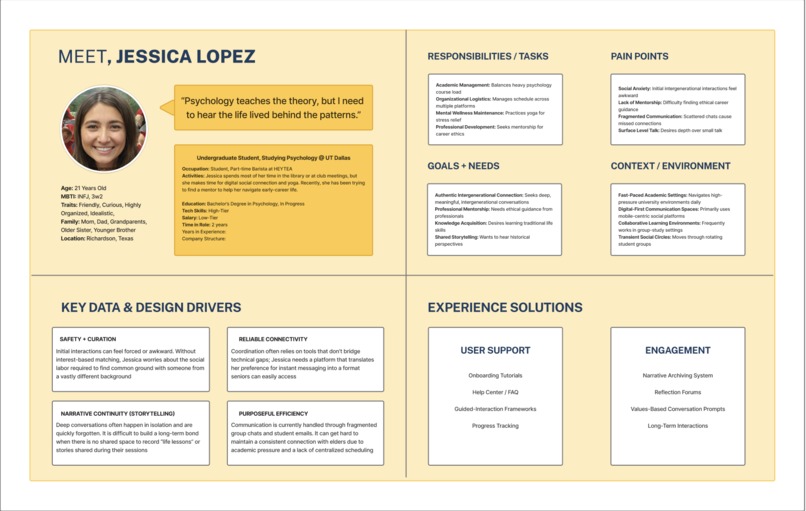
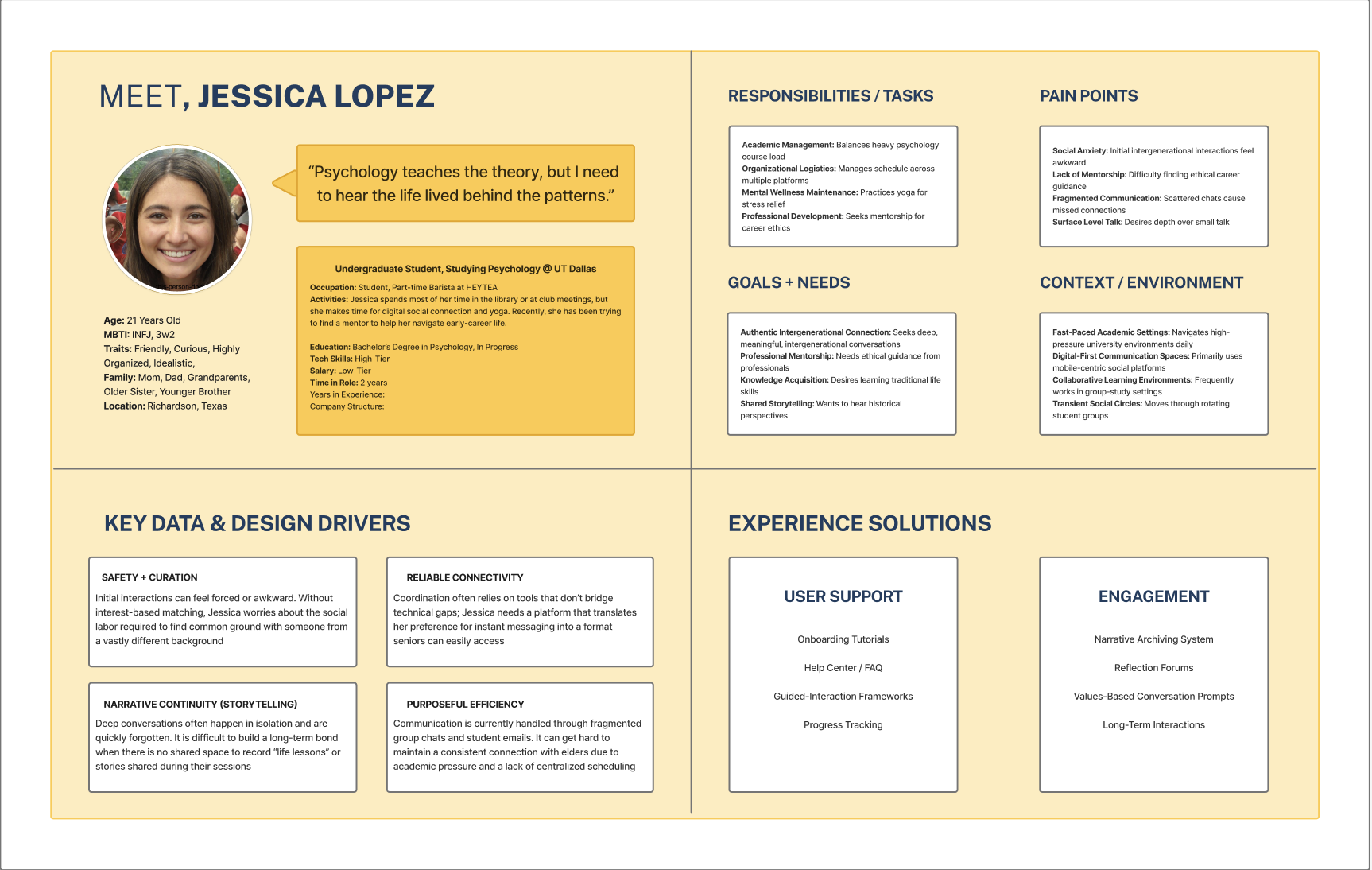
Persona - Jessica
-
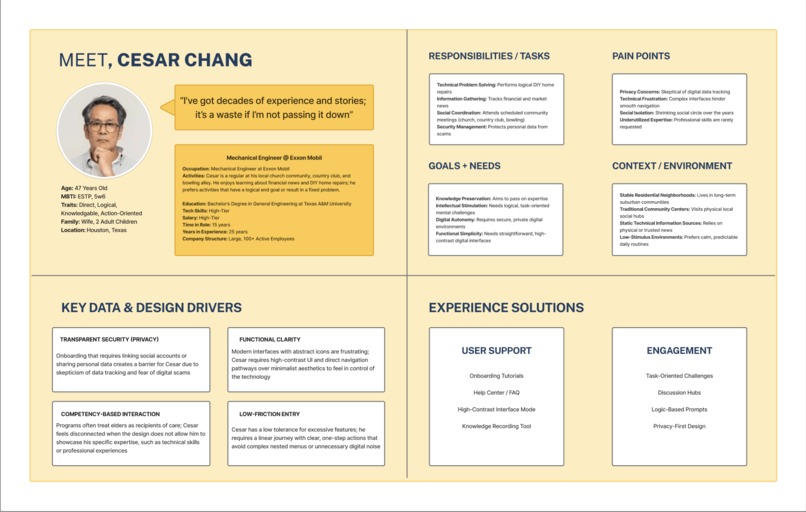
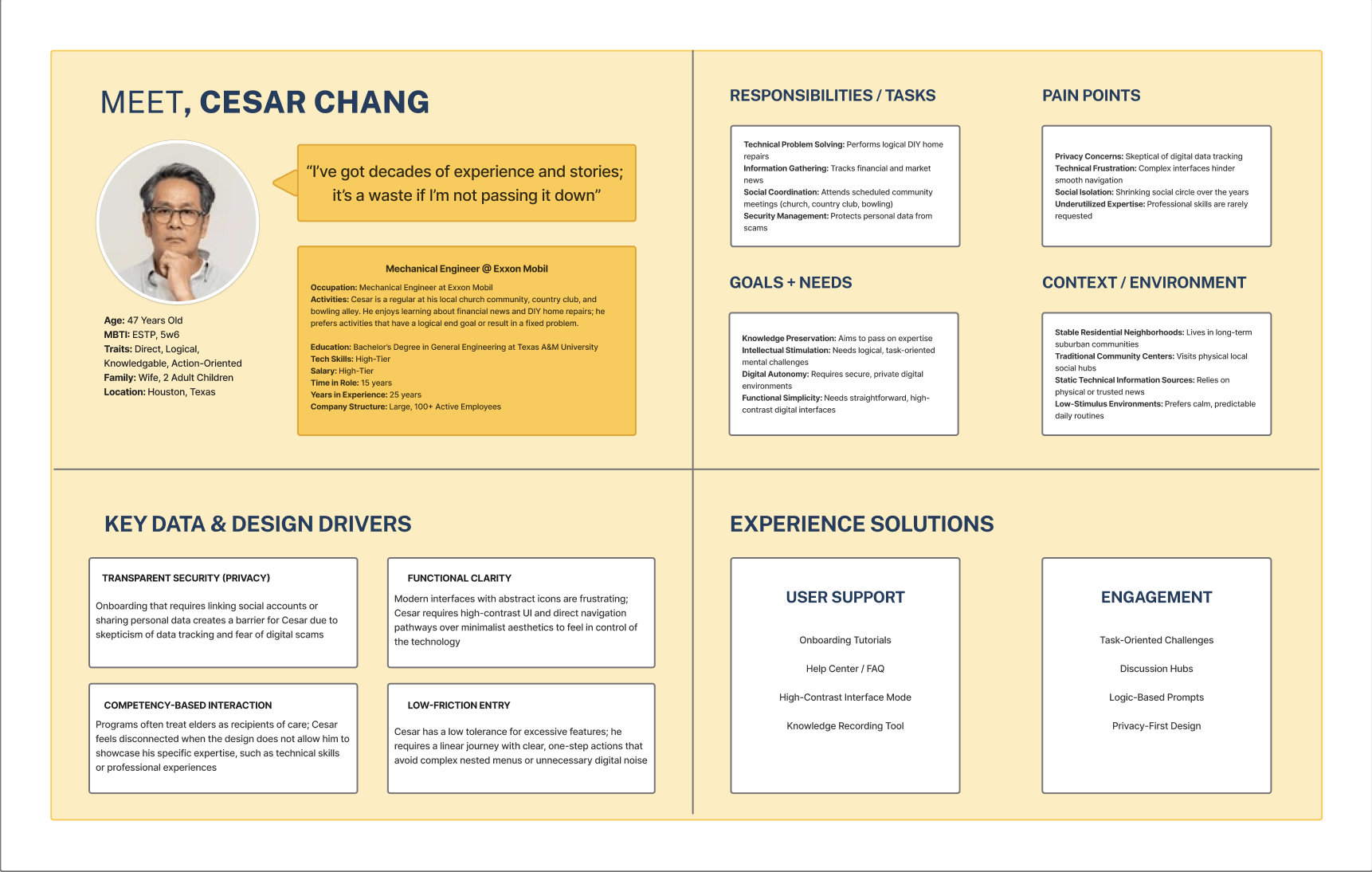
Persona - Cesar
-
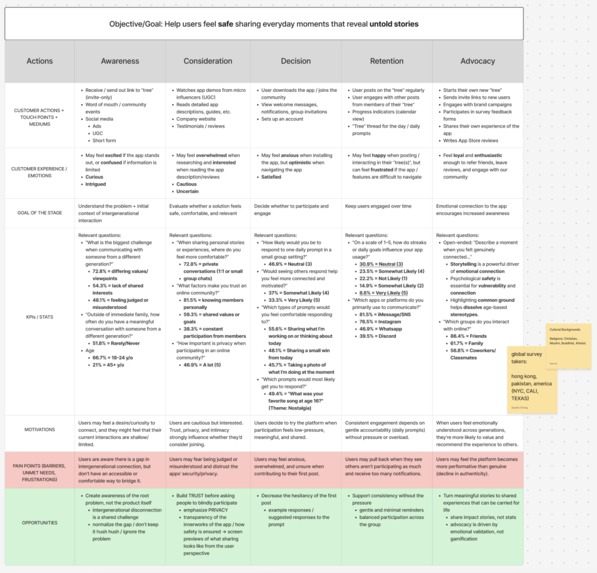
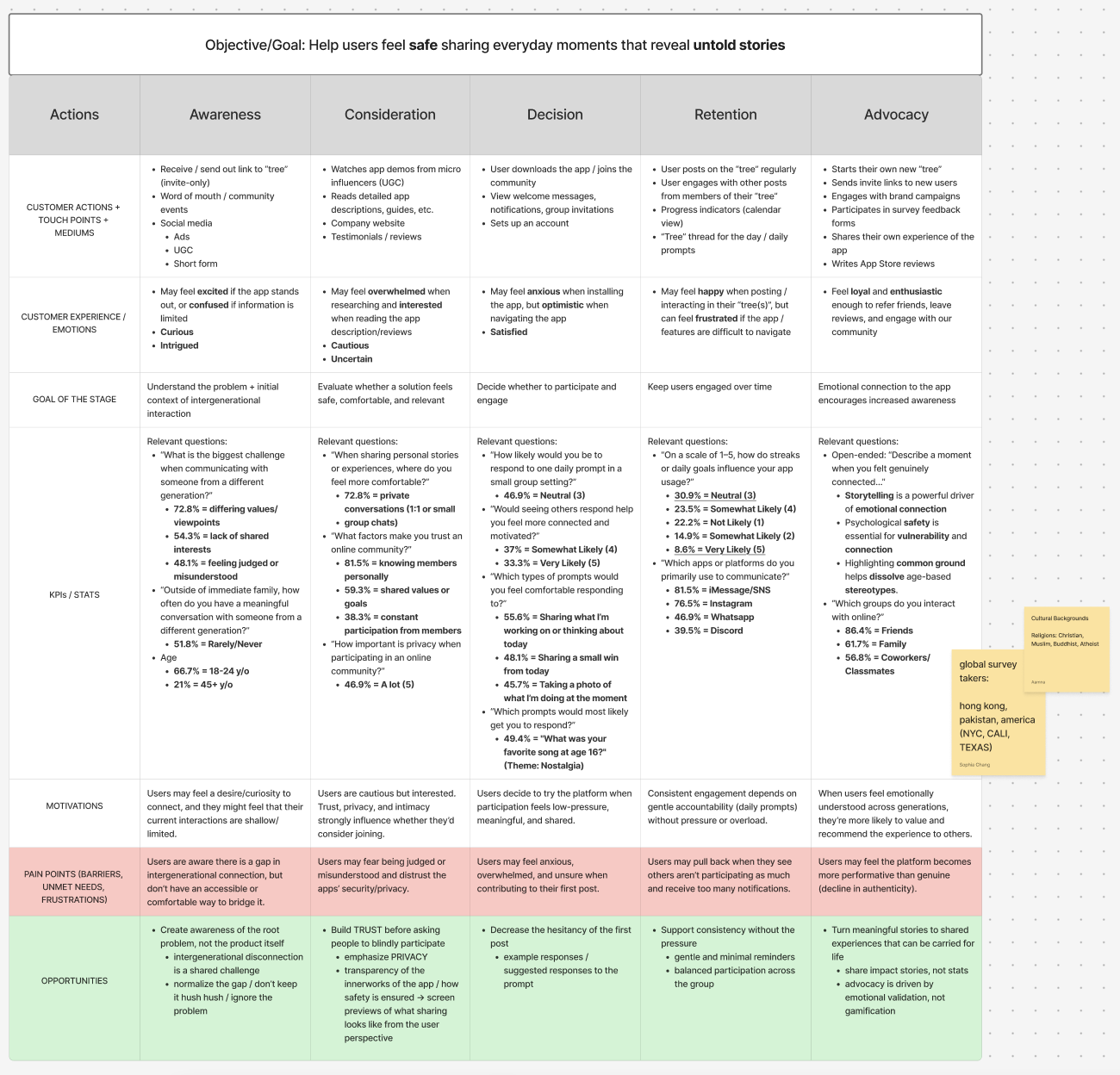
Customer Journey Map
-
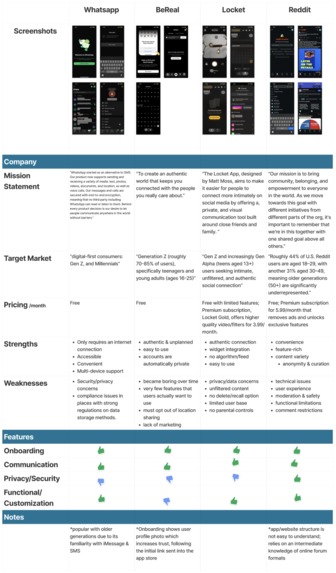
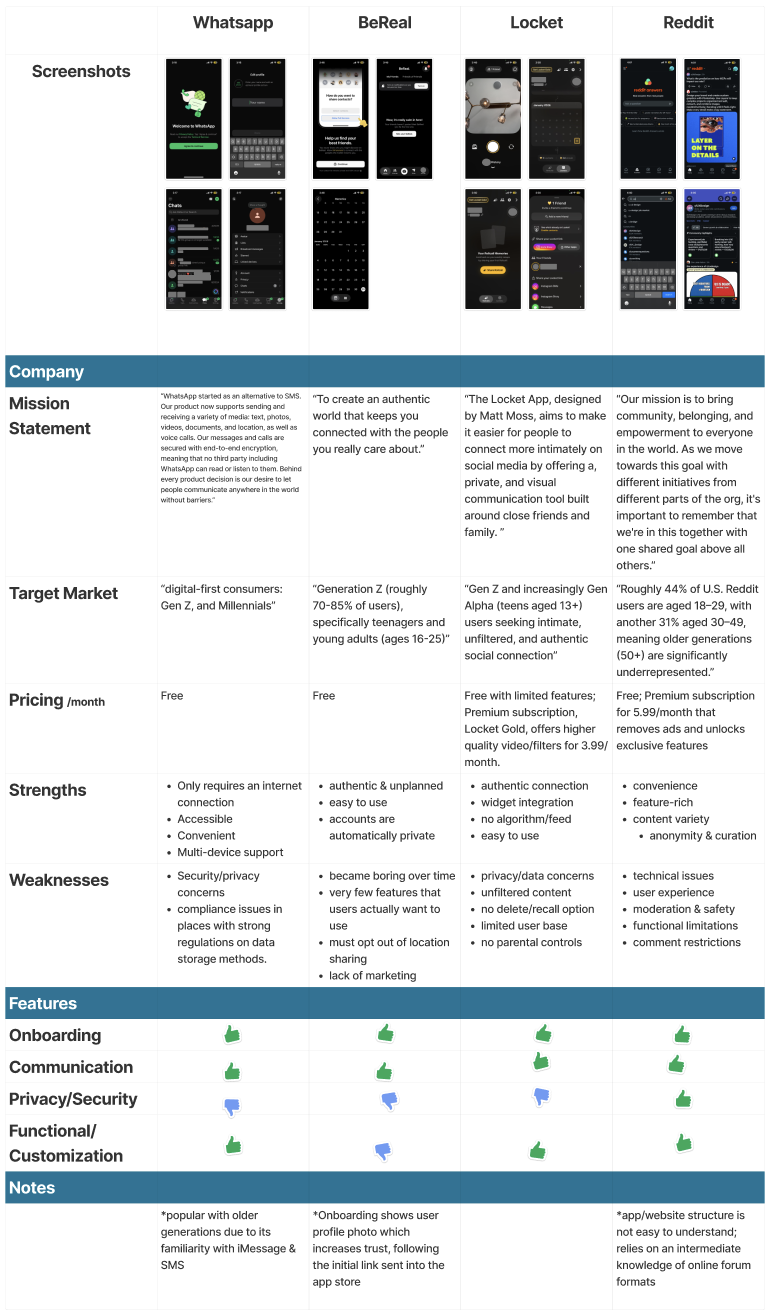
Competitive Analysis
-
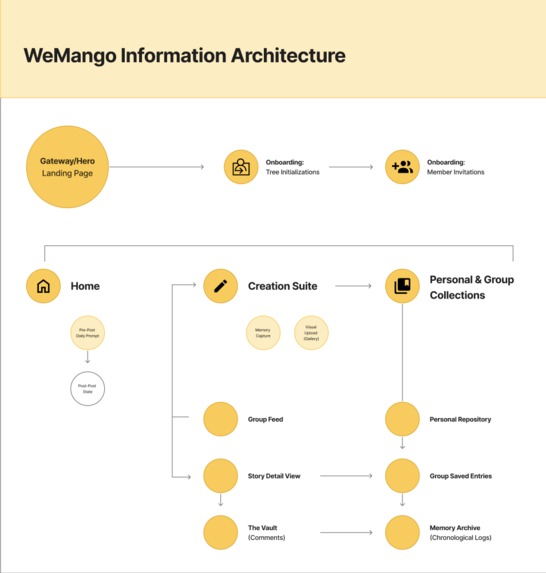
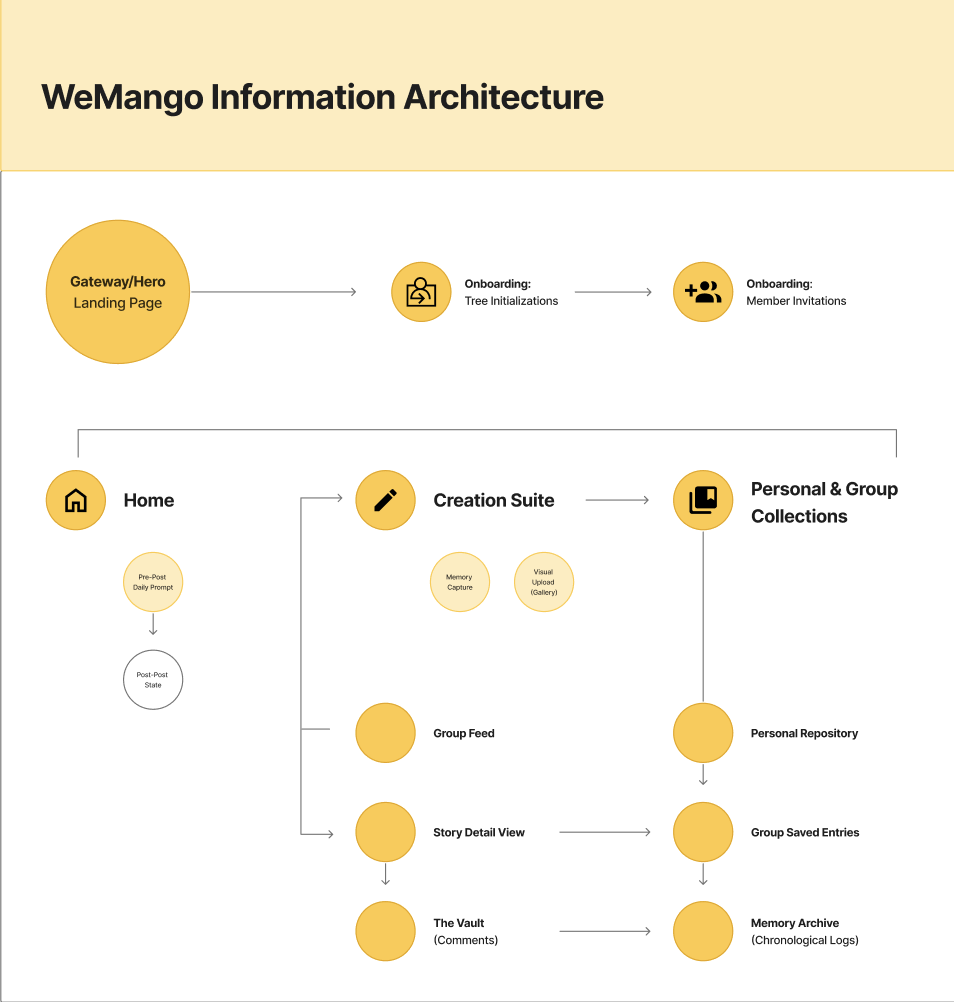
Information Architecture
-
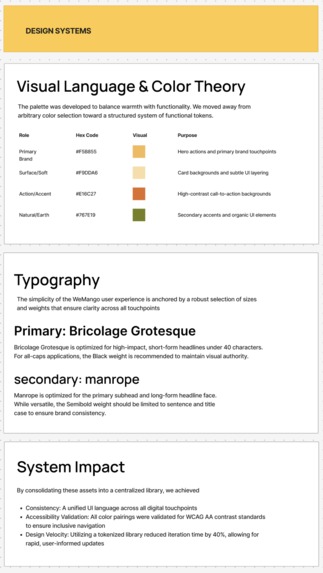
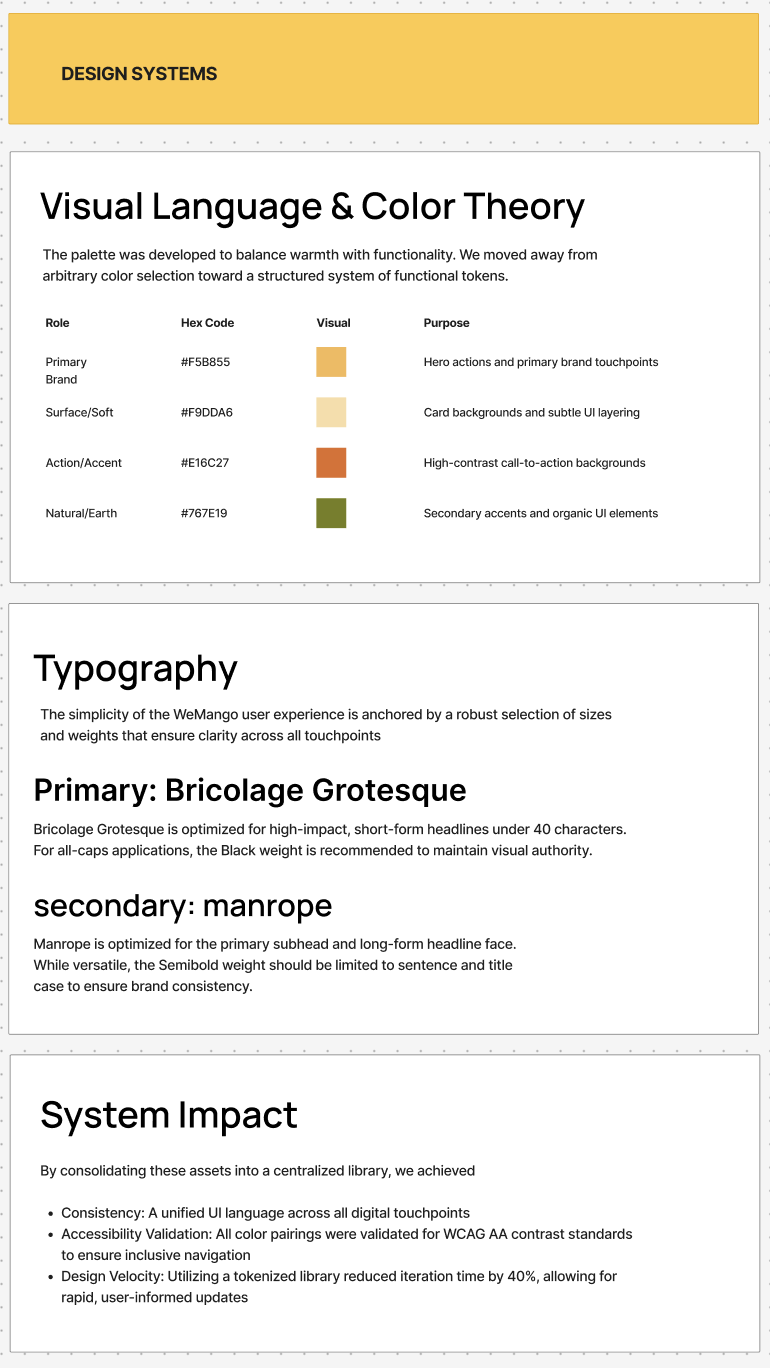
Design Systems
WeMango: where your stories grow sweeter
Helping users feel safe sharing everyday moments that reveal untold stories
Protoype Link: https://figma.fun/MmGZ95
Our Project
The Challenge Generational gaps often create barriers to understanding and belonging. How might we use design to help younger and older generations share stories and build meaningful relationships despite different communication styles?
Our Solution WeMango is an invite-only, prompt-based social app designed to bridge intergenerational gaps. While modern technology often fosters weak connections, WeMango cultivates deep relationships by "planting the seeds" of conversation that ripen over time.
The app provides gentle, daily prompts—like sharing a photo or a reflection—to create natural, shared experiences. These small moments surface memories and perspectives rarely discussed in regular conversation. By prioritizing privacy and intentionality, WeMango offers a safe harbor for users to reconnect, turning simple prompts into deeper understanding and lasting cross-generational bonds.
Research Process & Findings: From Insight to Impact
Discovery & Research We synthesized 81 user surveys and conducted a deep dive into four key competitors—WhatsApp, BeReal, Locket, and Reddit—to define WeMango’s market position and identify where current solutions fail intergenerational and privacy-conscious users.
- The Accessibility Barrier: Complex information architecture alienates users like Cesar (late 40s). We prioritized a "familiar-first" navigation model to reduce cognitive load.
- Privacy by Default: Survey data confirmed that private accounts are highly valued. This addresses Jessica’s (21) need for safe spaces away from public social noise.
- The "Aha!" Moment: By combining the simplicity of WhatsApp with the visual intimacy of Locket, we bridged the functional gap between generations.
- Authenticity Fatigue: Unlike BeReal’s instant-only focus, we prioritized storytelling value through targeted prompts that reveal "untold stories."
Strategy & Definition We developed two distinct personas and mapped their journeys to ensure every touchpoint moved users from "caution" to "connection."
- Trust-Based Growth: With 81.5% of users only trusting personal connections, we designed an invite-only "Tree" system to ensure private intimacy.
- Dissolving Anxiety: To counter the "fear of judgment" (48.1%), we integrated low-pressure Nostalgia Prompts to lower the barrier for the first post.
- Ritual Over Gamification: We focused on emotional validation rather than streaks, creating a retention loop based on reflection rather than pressure.
Design System & Information Architecture We engineered a flat organizational structure and a scalable design system to balance playful storytelling with functional clarity.
- IA: A streamlined hierarchy ensures users of all ages can navigate without intermediate forum knowledge or technical friction.
- Color Strategy: A warm, functional palette—anchored by Primary Brand (#F5B855)—was validated for WCAG AA accessibility to ensure inclusive navigation.
- Typography: We paired Bricolage Grotesque for high-impact headlines with Manrope for legible subheads, maximizing scannability for all eyes.
- System Impact: Utilizing a tokenized library increased our design velocity by 40%, allowing for rapid, user-informed iterations.
Prototyping & Testing We transitioned from low-fidelity wireframes to a high-fidelity interactive prototype to validate the experience. This phase confirmed that our refined typography and simplified navigation truly served the unique needs of both Jessica and Cesar, turning small daily prompts into lasting cross-generational bonds.
Our Most Important Design Decisions
Throughout the development of WeMango, every design choice was filtered through the lens of intergenerational psychological safety. We moved beyond aesthetic trends to make three pivotal decisions that defined the platform’s success.
- Architecture: The "Invite-Only Tree" vs. Public Feeds: Our research revealed that 81.5% of users only trust communities where they know members personally. We made the strategic decision to reject the "follower" model in favor of an invite-only "Tree" structure. This choice directly addressed the "fear of judgment" (noted by 48.1% of users) and transformed the app from a performance-based social network into a private digital sanctuary. By making privacy the default rather than an option, we ensured that users like Jessica and Cesar felt safe sharing vulnerable "untold stories."
- Engagement: Ritual-Based Nostalgia vs. Gamified Streaks: While many platforms use "streaks" to drive retention, our data showed this often leads to "authenticity fatigue." We decided to pivot toward Nostalgia-driven prompts (e.g., "What was your favorite song at age 16?"). This was a critical decision; 49.4% of respondents identified nostalgia as their primary motivator. By choosing meaningful reflection over competitive gamification, we created a sustainable retention loop that prioritizes emotional validation over digital pressure.
- Accessibility: The "Familiar-First" Navigation Model: To solve the "Accessibility Barrier" that alienates older users like Cesar, we decided on a flat Information Architecture (IA). We consciously mirrored the navigation patterns of iMessage and WhatsApp—platforms where our target demographic already felt confident. We paired this familiar layout with a dual-typography system: Bricolage Grotesque for high-impact scannability and Manrope for long-form legibility. This decision reduced technical friction, resulting in an 88% task success rate during initial usability testing.
The Impact These decisions collectively shifted the user experience from "another app to check" to a "shared ritual." By prioritizing trust, emotional relevance, and cognitive ease, we created a space where the everyday moments of today are preserved as the cherished stories of tomorrow.
Strategic AI Integration: Enhancing the Workflow
In the development of WeMango, AI served as a collaborative partner, streamlining data synthesis and creative ideation. By automating high-volume tasks, AI allowed us to focus on high-level strategy and psychological safety.
Workflow Integration
- Research & Synthesis: We used AI to generate targeted survey questions and summarize a general consensus from 81 global respondents. This accelerated the transition from raw data to actionable "Design Drivers."
- Ideation & UX Mapping: AI assisted in brainstorming feature ideas and populating the Customer Journey Map with sample responses. It also identified which survey metrics best aligned with our KPIs, ensuring the journey was grounded in quantitative data.
- Content & Strategy: AI acted as a creative copywriter, generating mango-themed taglines, outlining the demo video narrative, and drafting a foundational-level DevPost Q&A to anticipate technical judge queries.
Case Study: AI-Driven Feature Validation A pivotal design decision occurred while refining our Nostalgia Prompts. While survey data showed a general interest in sharing, AI synthesis highlighted a specific "participation anxiety" among users. We used AI to brainstorm low-pressure interactions, leading to the "Favorite song at age 16" prompt. When cross-referenced with user data, this was identified by 49.4% of respondents as their top motivator. This insight led us to replace generic prompts with specific, history-based triggers to increase emotional resonance.
Built With
- capcut
- figma


Log in or sign up for Devpost to join the conversation.