-
-
Overview
-
Leveling Up in Lingo Odyssey
-
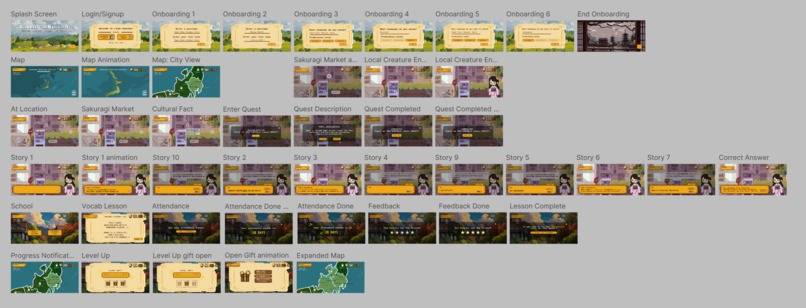
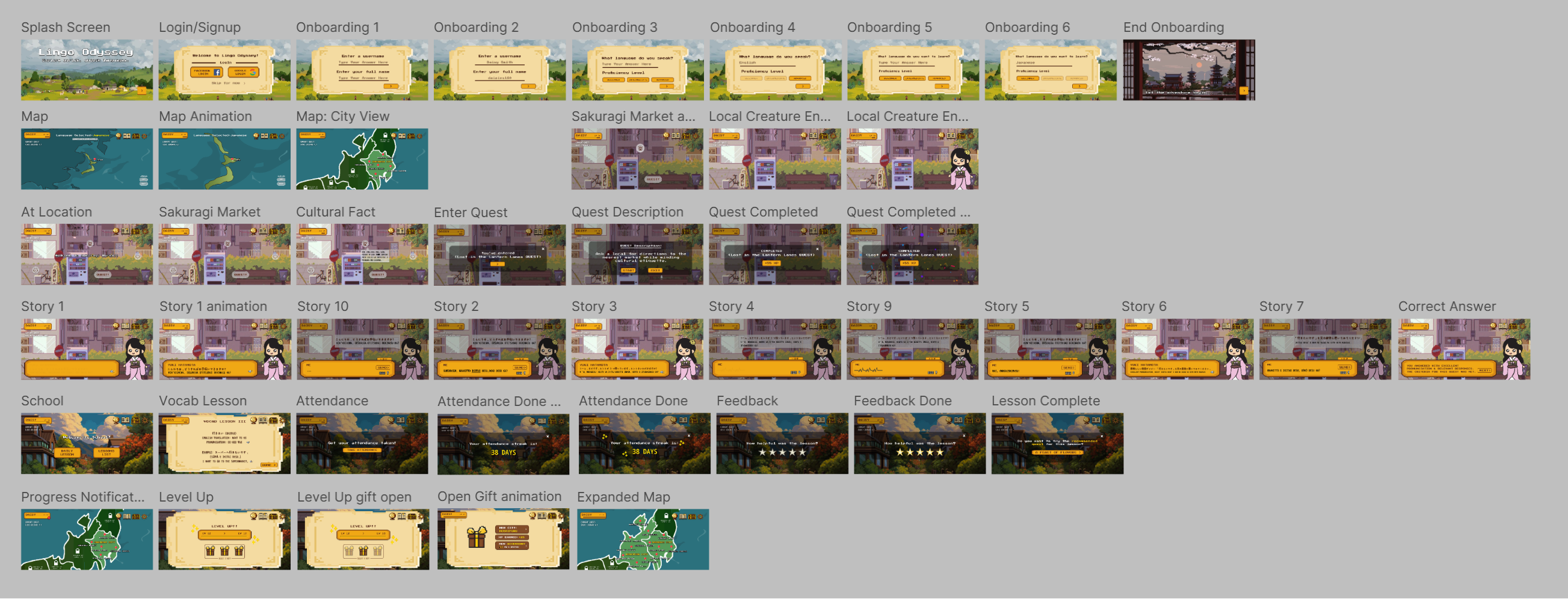
Figma Screens (46 Total)
Prototype link (Please submit a link to a playable prototype, not a link to your design file)
Describe your project (max 150 words)
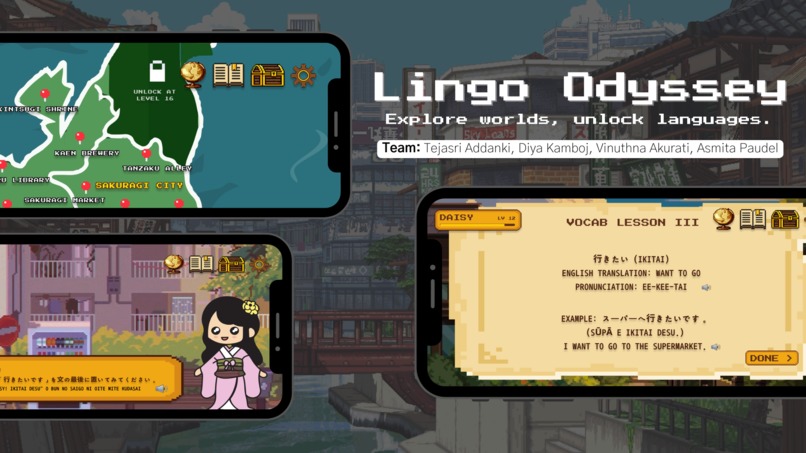
Our project is an AI-driven, open-world language-learning app designed to make language learning more immersive and engaging. Users navigate an interactive world map, exploring cities to find quests where they can engage in real-time conversations with AI-powered NPCs (Non-player Characters). Unlike traditional language-learning apps, our approach emphasizes adaptive learning paths and real-world scenarios—such as ordering food or asking for directions—making the experience both educational and engaging. The app also incorporates XP-based progression and a community feature to foster engagement and social learning. By integrating AI with an open-world environment, we provide a dynamic, intuitive, and effective way to learn languages. However, rather than replacing essential language skills, our AI enhances the learning process by providing real-time feedback, personalized guidance, and interactive scenarios that encourage active communication, critical thinking, and cultural understanding.
Describe your research process and findings. If you conducted any surveys or interviews, please include the survey form and/or interview questions here. If you conducted secondary research by pulling from online sources, please include a link to your sources. (Max 500 words)
We conducted a combination of surveys, secondary research, and personal interviews to understand user preferences and pain points in language learning. Our goal was to design an app that addresses the gaps in existing platforms while creating an engaging and immersive learning experience.
KEY FINDINGS FROM SURVEY:
- Engagement is a Major Barrier – 70.6% of respondents expressed interest in a gamified approach.
- Conversational Practice is Crucial – 82% of users preferred interactive dialogues over static lessons.
- Gamification Drives Retention – 74% found game-like features motivating, particularly quizzes, * quests, and interactive story-based games.
- Cultural Immersion Enhances Learning – About 35% rated cultural learning as highly important, with interests in food, music, and traditions.
- Voice Recognition Matters – 61.1% rated pronunciation practice as essential, emphasizing the need for AI-driven voice feedback.
- Frustrations with Existing apps - Users disliked constant notifications, slow progression, excessive repetition, and gamification that felt more like a distraction than an effective learning tool.
ADDITIONAL INSIGHTS FROM USER FEEDBACK:
- Duolingo is widely used (66.7% of respondents), but many users felt it was too slow, repetitive, or overly gamified without effective language retention.
- Most users (94.4%) learn languages out of personal interest, rather than for work or travel.
- Multiplayer mode is highly desired (82%), allowing friends to challenge each other in language-learning activities.
- Users prefer accessible, ad-free options, with some requesting disability-friendly features and local dialect insights.
SECONDARY RESEARCH: We analyzed competitors like Duolingo, Babbel, and Rosetta Stone, identifying lack of real-world interaction and limited conversational fluency as major weaknesses. Studies from the Computer-Assisted Language Learning Journal highlight that context-based, interactive learning improves retention and confidence, reinforcing our approach.
USEFUL LINKS:
Describe your most important design decisions. What research findings and/or user testing results led you to make these decisions? (Max 500 words)
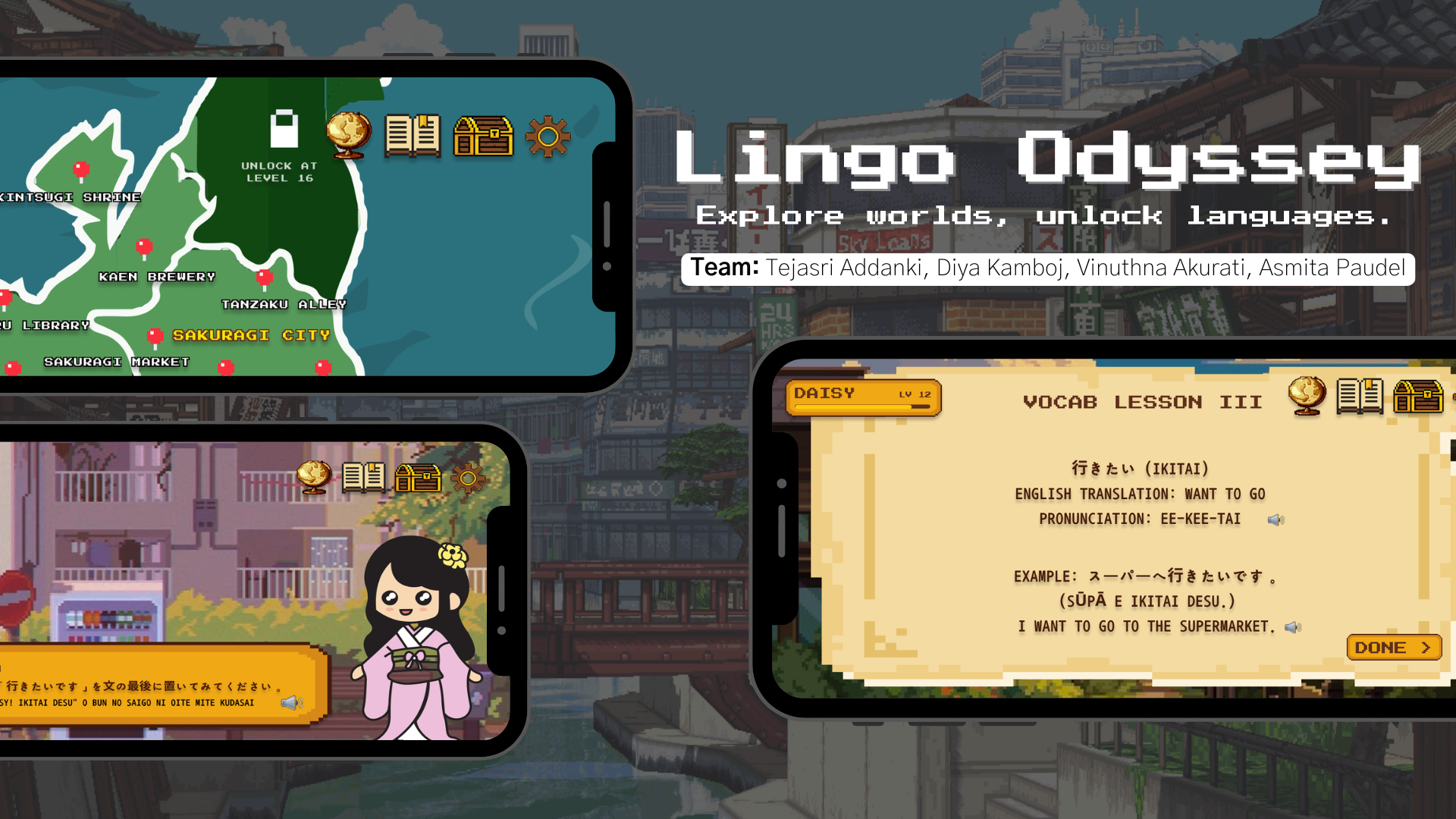
Open-World Exploration: One of our most important design decisions was using open-world exploration as the foundation for our learning experience. Our research revealed that many users find traditional, structured lessons to be rigid and boring. To address this, we created a map-based system that lets learners explore cities, engage with AI-driven NPCs, and complete quests to practice their language skills. Players can visit locations like a ‘School’ to build their vocabulary, but learning doesn’t stop there. Instead of passively memorizing words or grammar rules, players gain knowledge through contextual experiences – ordering food at a café, asking for directions, or negotiating at a market. As users progress, they unlock new locations and quests, keeping the learning dynamic and exciting. Studies show game-based learning improves memory retention and fluency by encouraging experimentation, repetition, and real-time feedback.
AI-powered NPC Conversations: A key feature of our app is the AI-driven quest paths and dynamic NPC interactions. In our survey, 82% of participants expressed a desire for more real-world conversational practice, which is often lacking in current apps. During Lingo Odyssey’s quests, NPCs adapt to user needs by personalizing quest difficulty based on their proficiency level and past conversations. Instead of following pre-scripted storylines, the AI adapts to users’ spoken or written replies. We included both speech-to-text (microphone) and typing (keyboard) options, moving away from traditional word selection banks to encourage proper pronunciation and grammar. This approach not only improves listening and speaking skills but also boosts confidence in natural language conversation through realistic dialogues. By incorporating adaptable AI responses, users engage in meaningful, contextually relevant interactions rather than repetitive exercises.
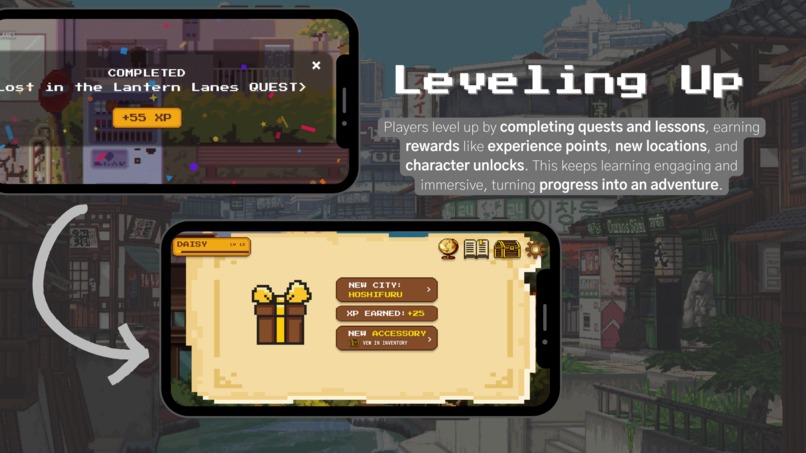
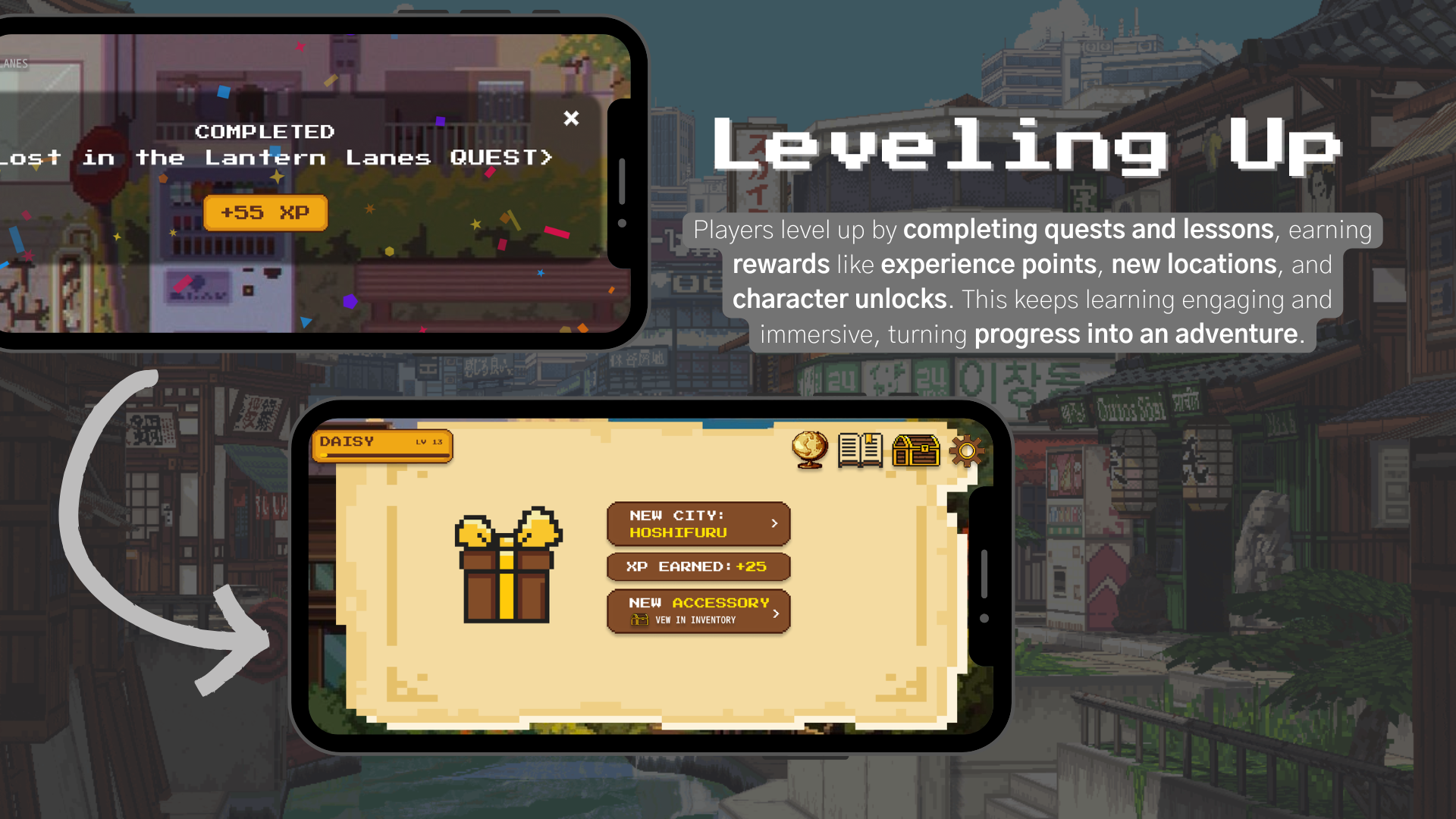
Gamification with Quests: To keep users engaged, we prioritized gamification through quests and interactive challenges. With 74% of users preferring interactive learning over traditional methods, we created engaging features like story-driven quests, cultural facts easter eggs, and in-app rewards. Users can unlock accomplishments and earn prizes for consistent learning that’s tracked through experience points. These features promote learning through play, making the experience feel more like an adventure than a chore. Additionally, users have the option to connect with other language speakers, providing opportunities for real-world practice and cultural exchange. Unlike apps with rigid structures, our open-world design lets users choose quests on a variety of topics by navigating a dynamic map – giving them the freedom to focus on their interests and make faster, personalized progress.
Cultural Integration and Pronunciation Practice: According to our results, 64% of the participants believe that pronunciation is important, and 35% believe that cultural learning is a crucial part of language acquisition. To achieve these goals, our app uses speech recognition technology that gives real-time pronunciation feedback, allowing users to establish authentic accents. In addition, we created cultural storytelling features that introduce viewers to local customs, traditions, and history through interactive content. This approach ensures that users not only understand the mechanics of a language but also its cultural importance, making their learning experience richer and more meaningful.
Built With
- figjam
- figma

Log in or sign up for Devpost to join the conversation.