-
-
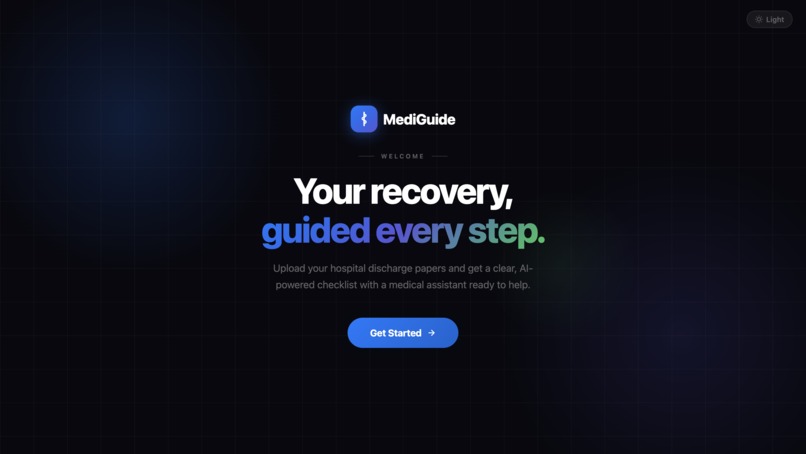
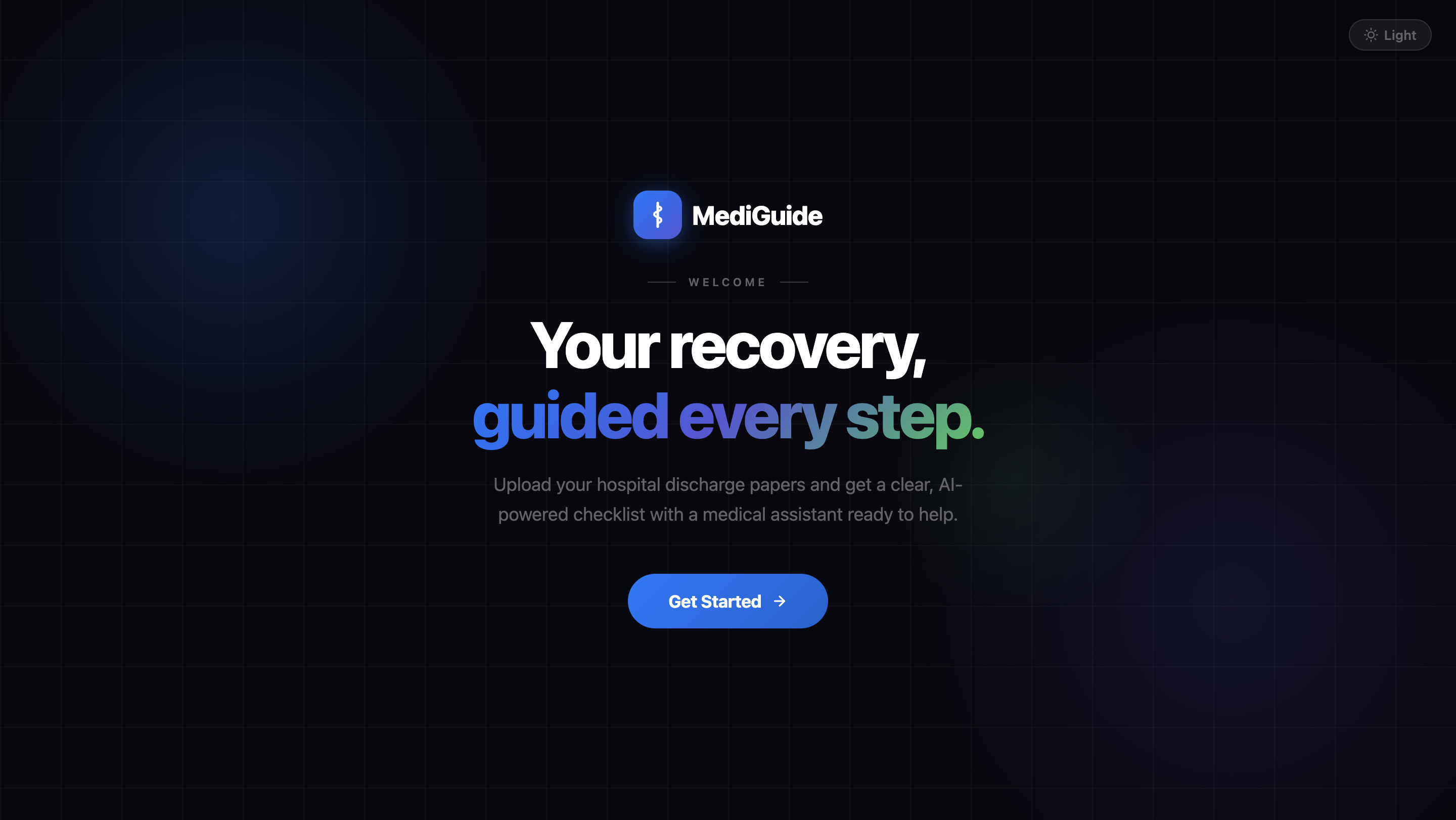
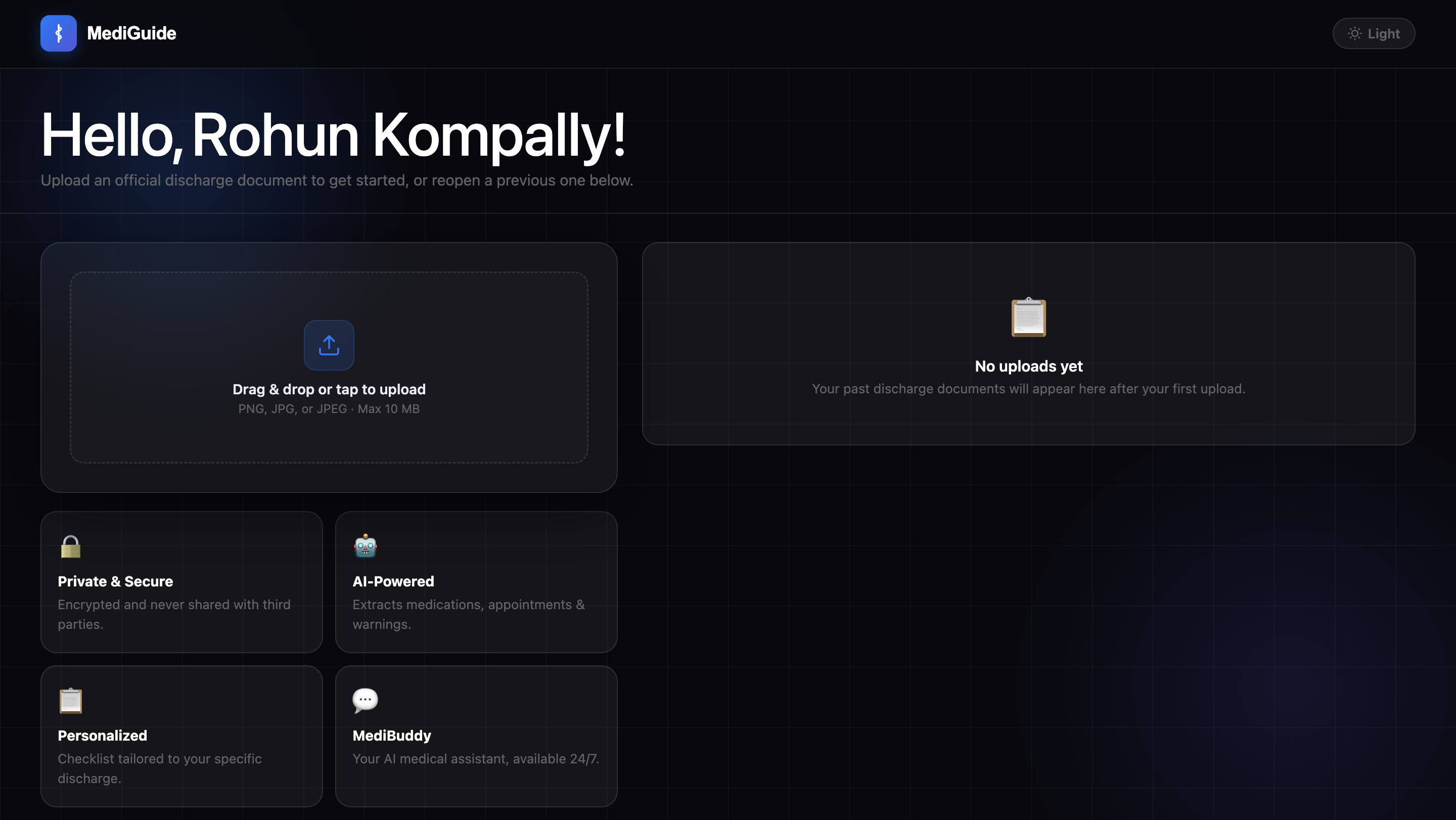
Welcome Page (dark)
-
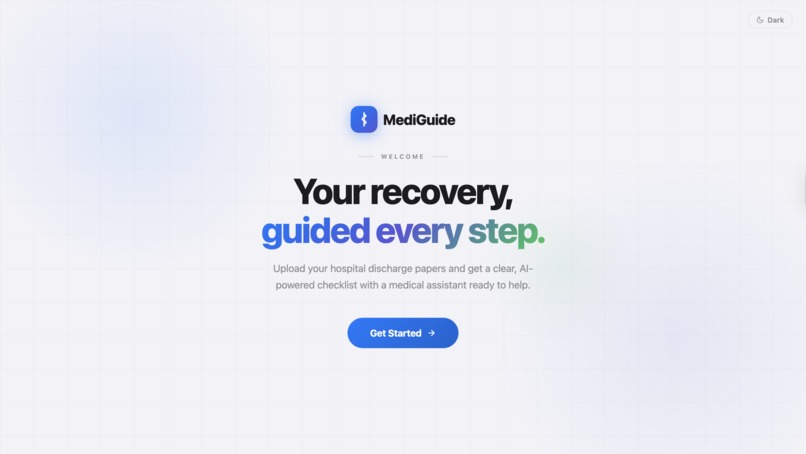
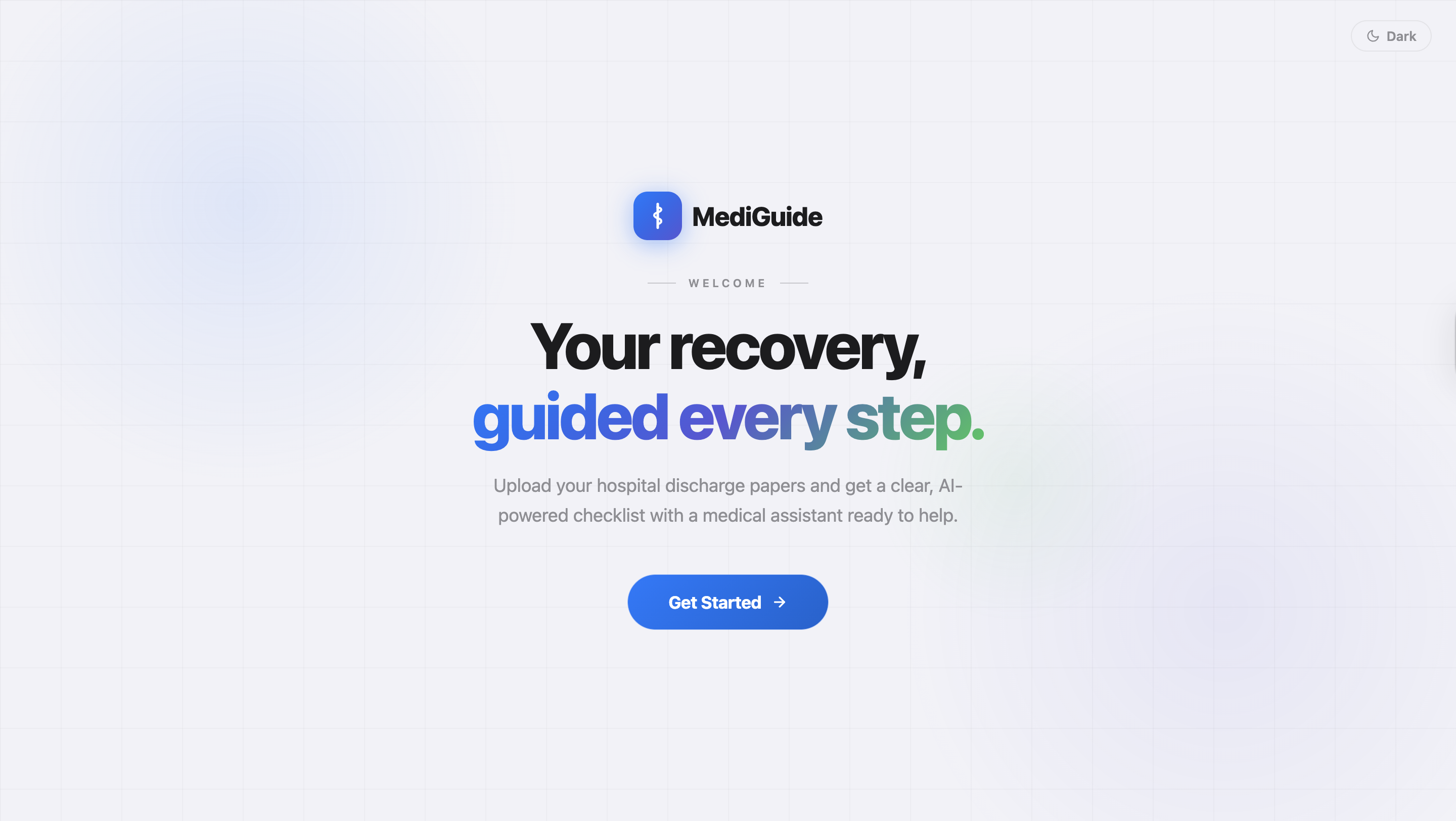
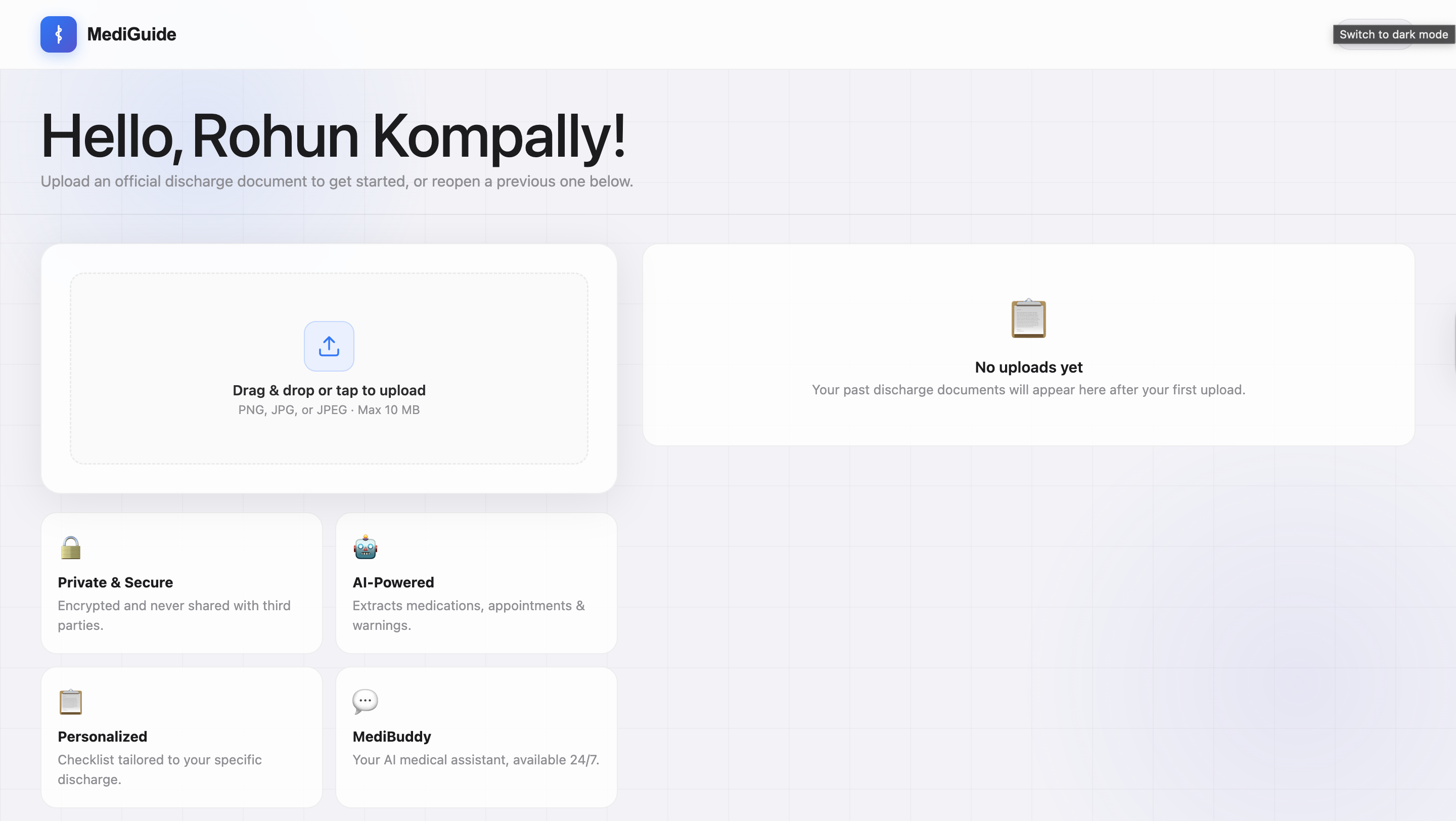
Welcome Page (light)
-
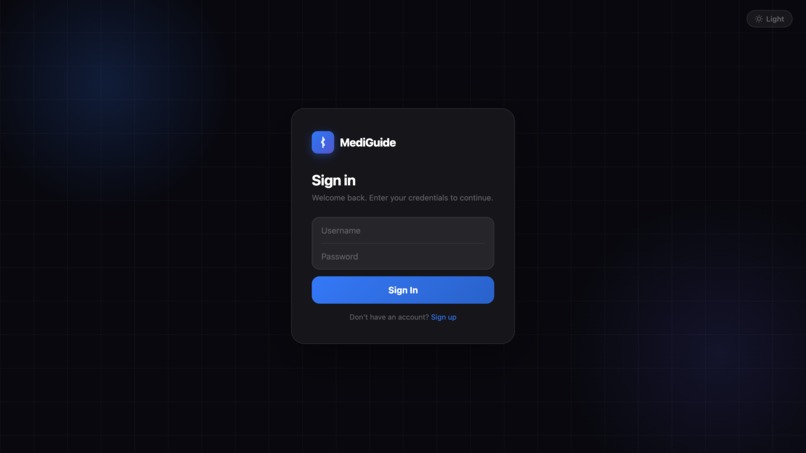
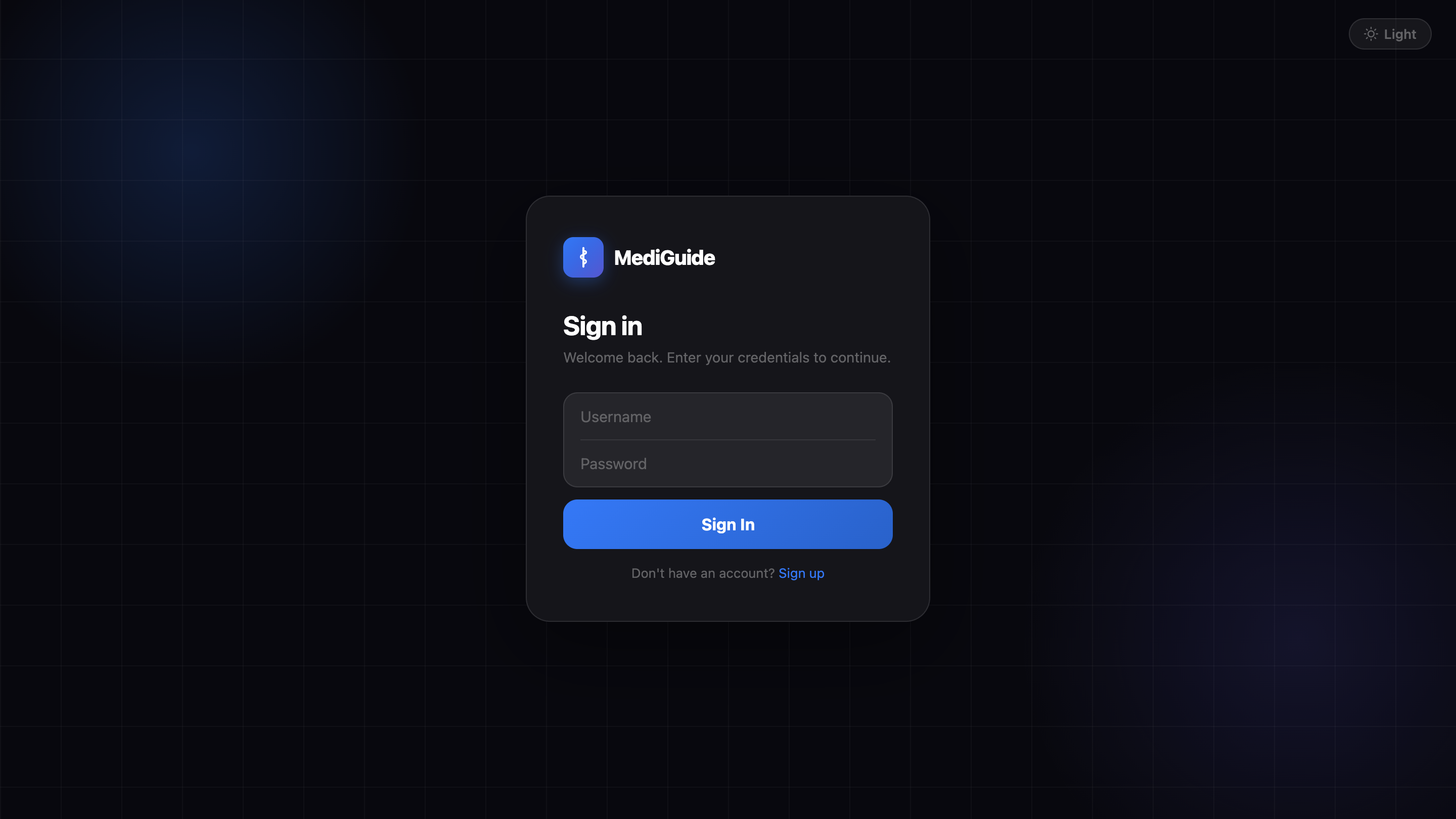
Sign-in Page (dark)
-
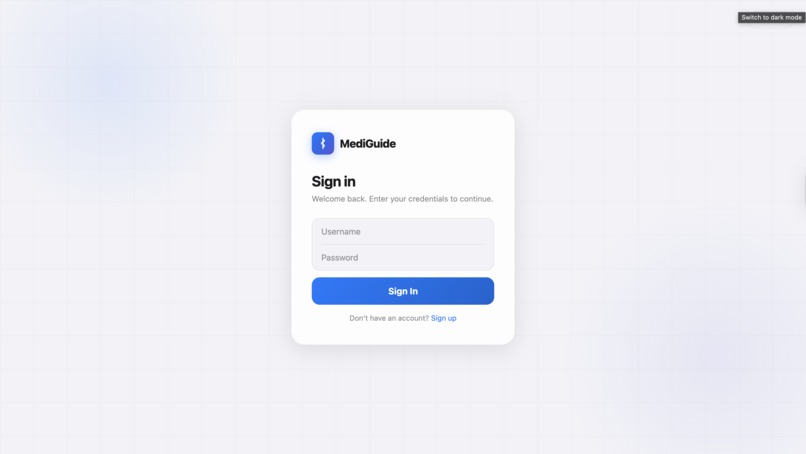
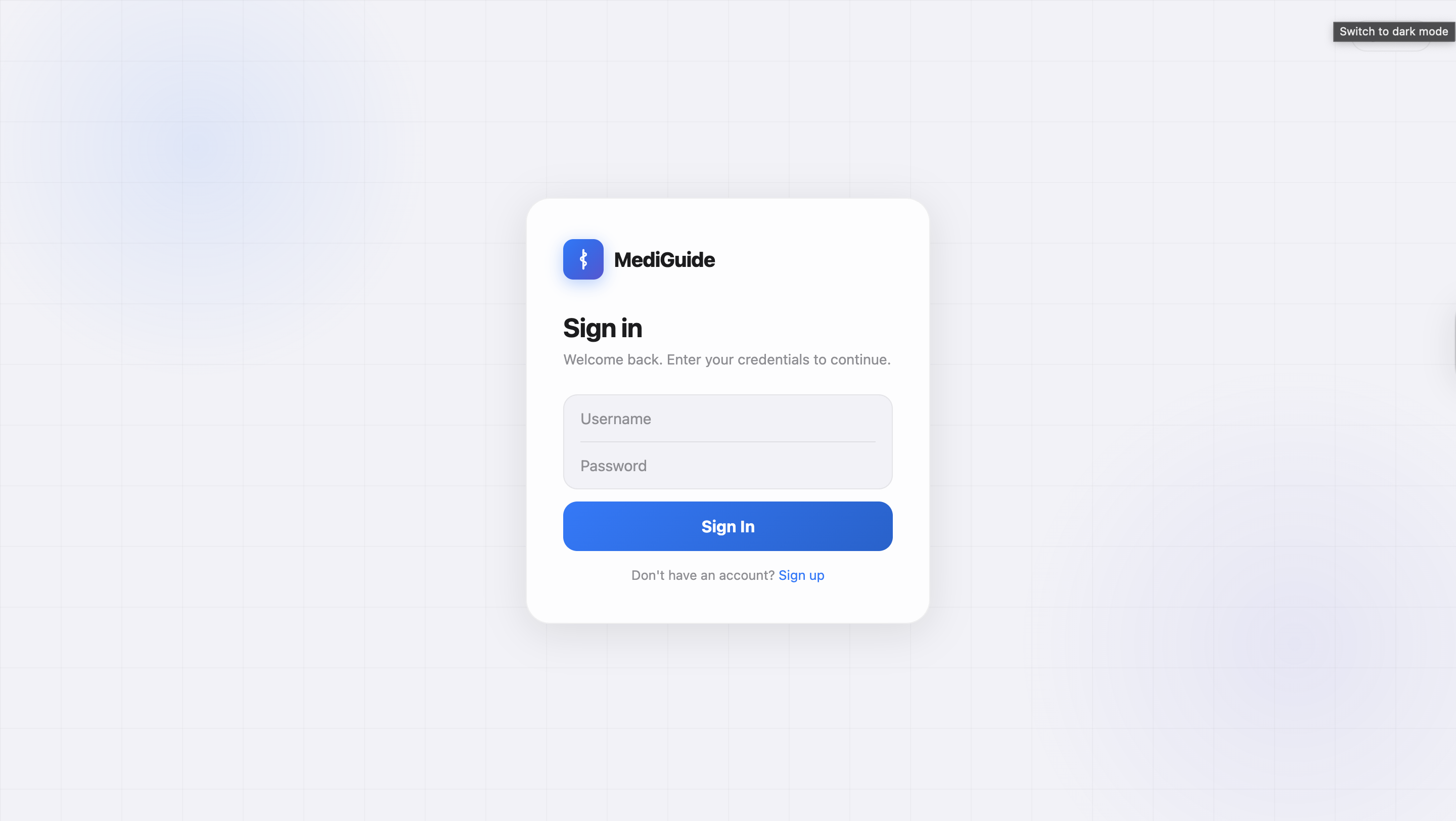
Sign-in Page (light)
-
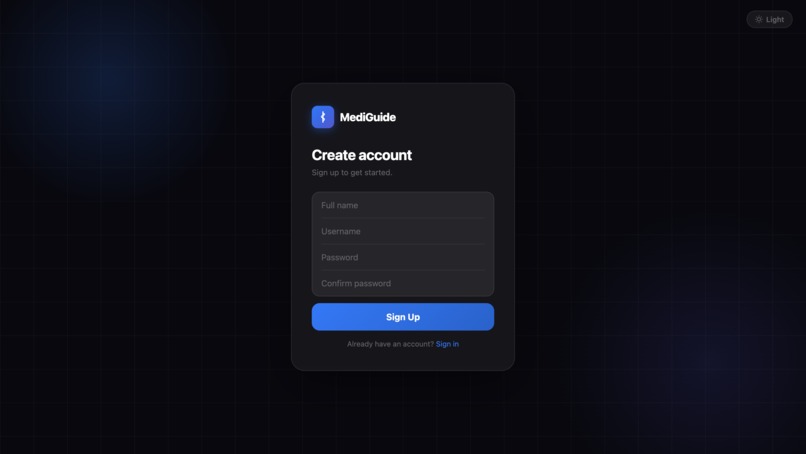
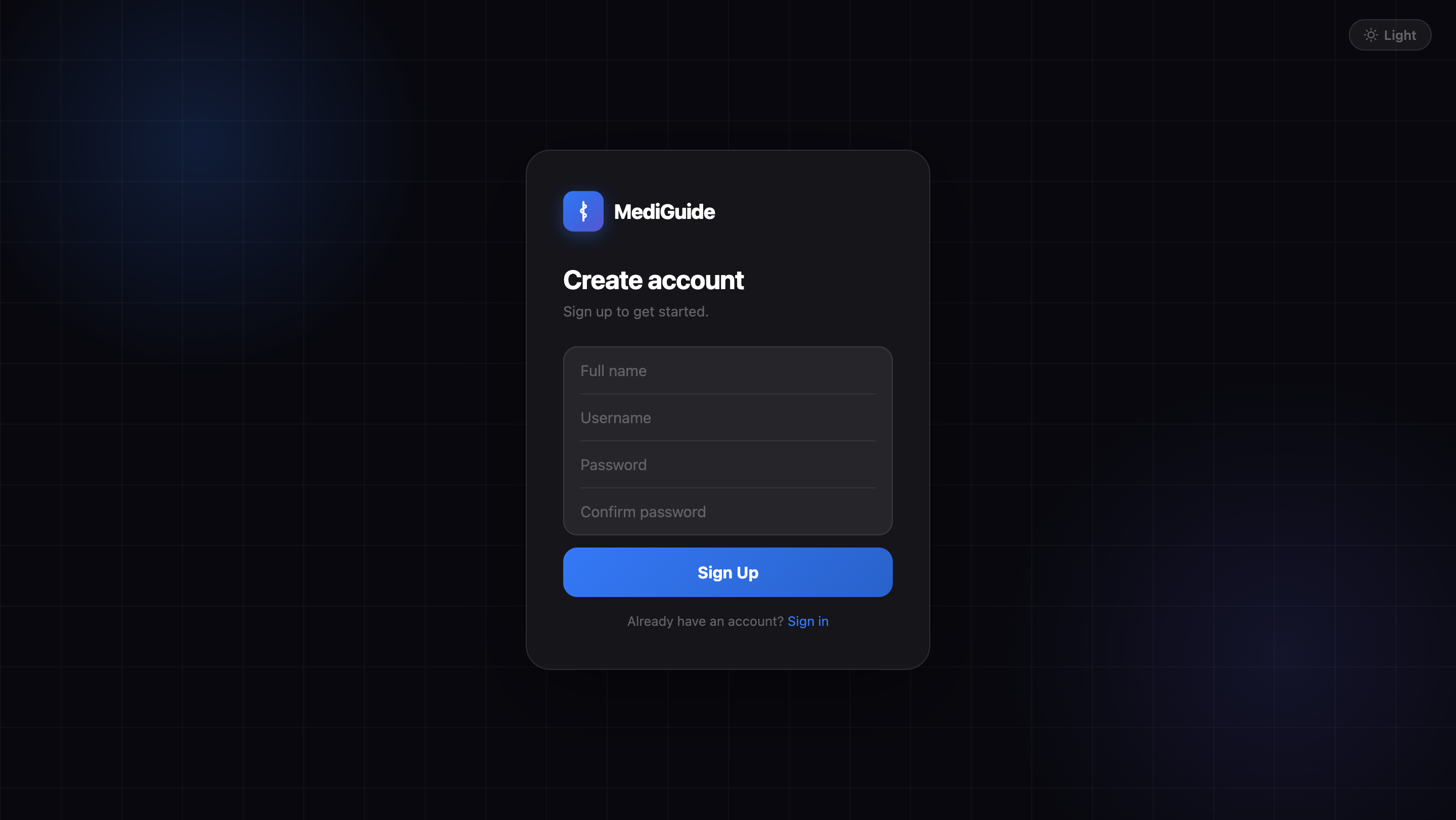
Sign-up Page (dark)
-
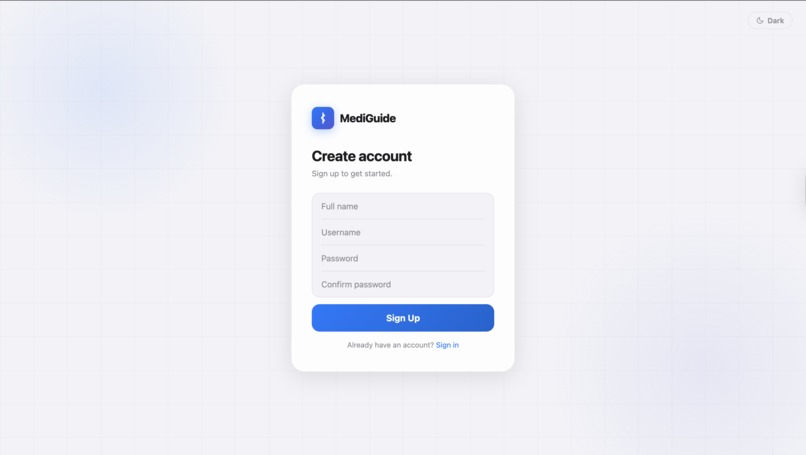
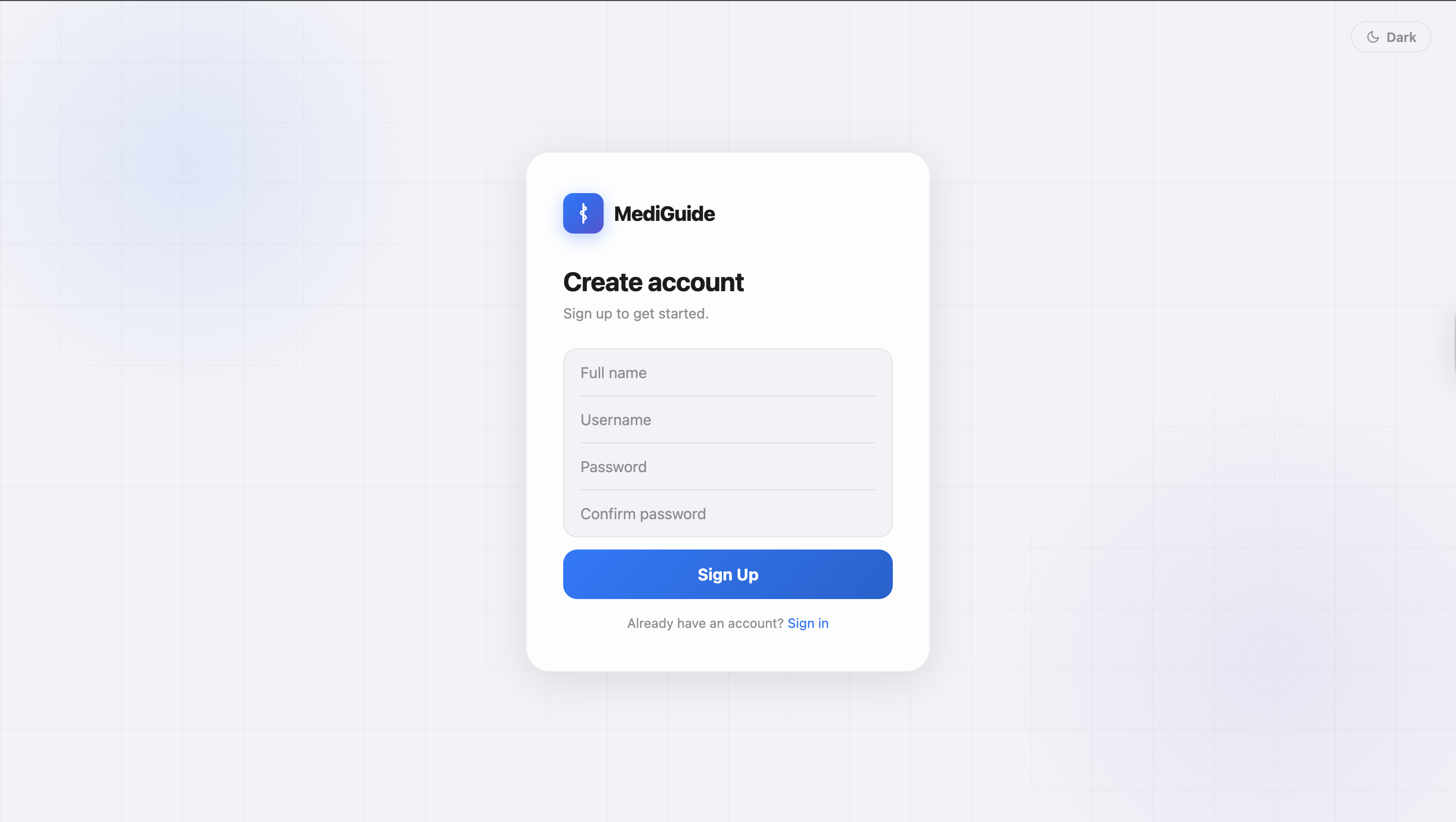
Sign-up Page (light)
-
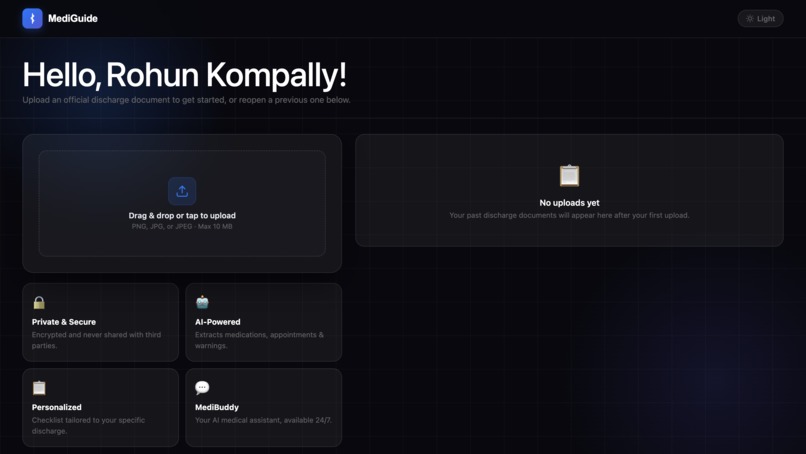
Home Page (dark)
-
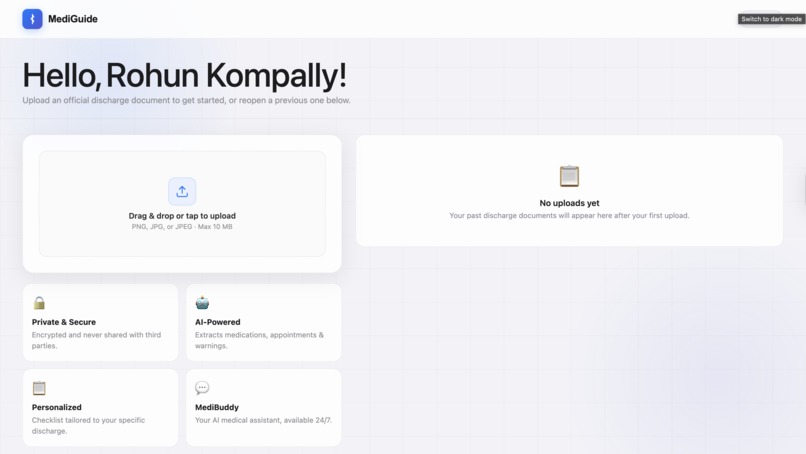
Home Page (light)
-
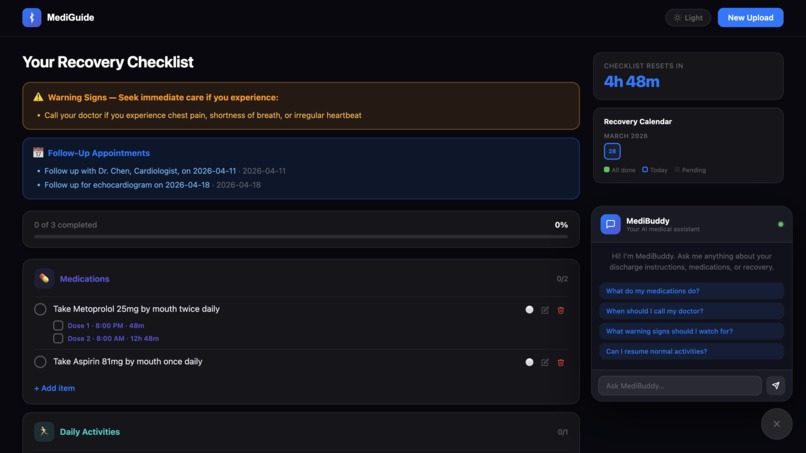
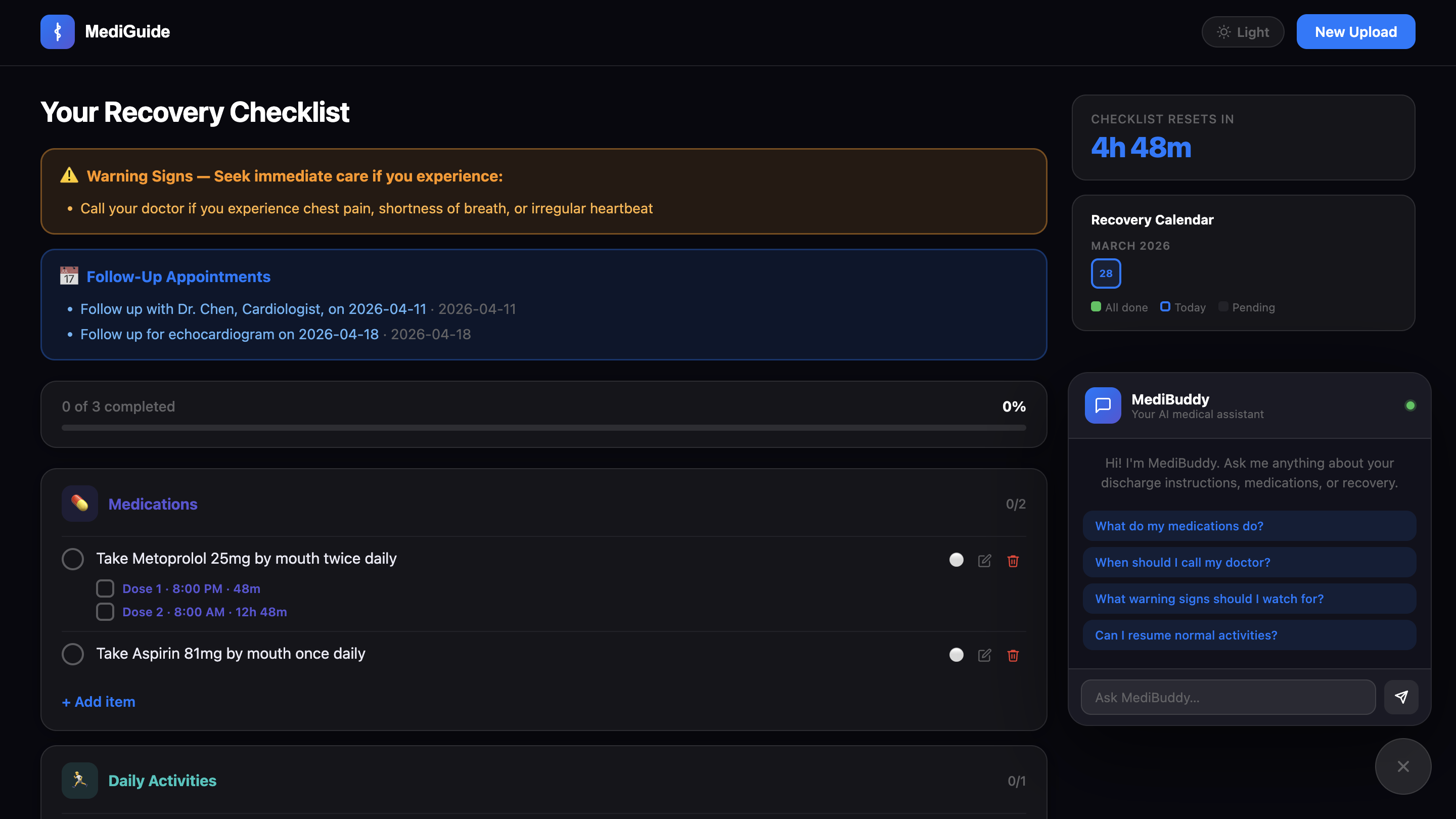
Checklist Page (dark)
-
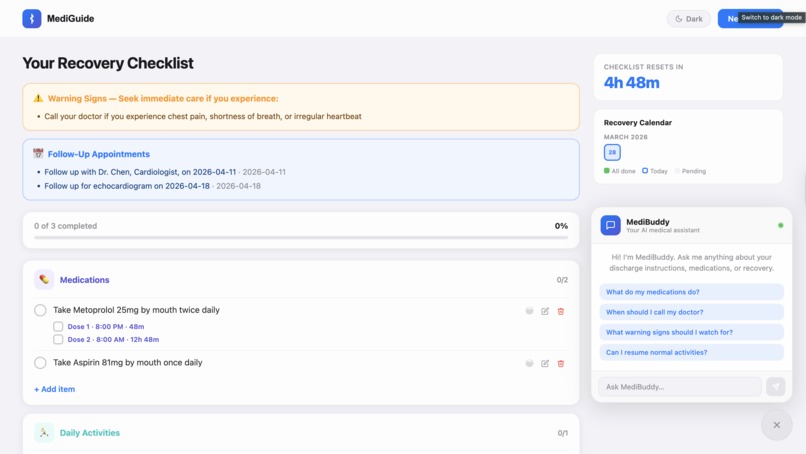
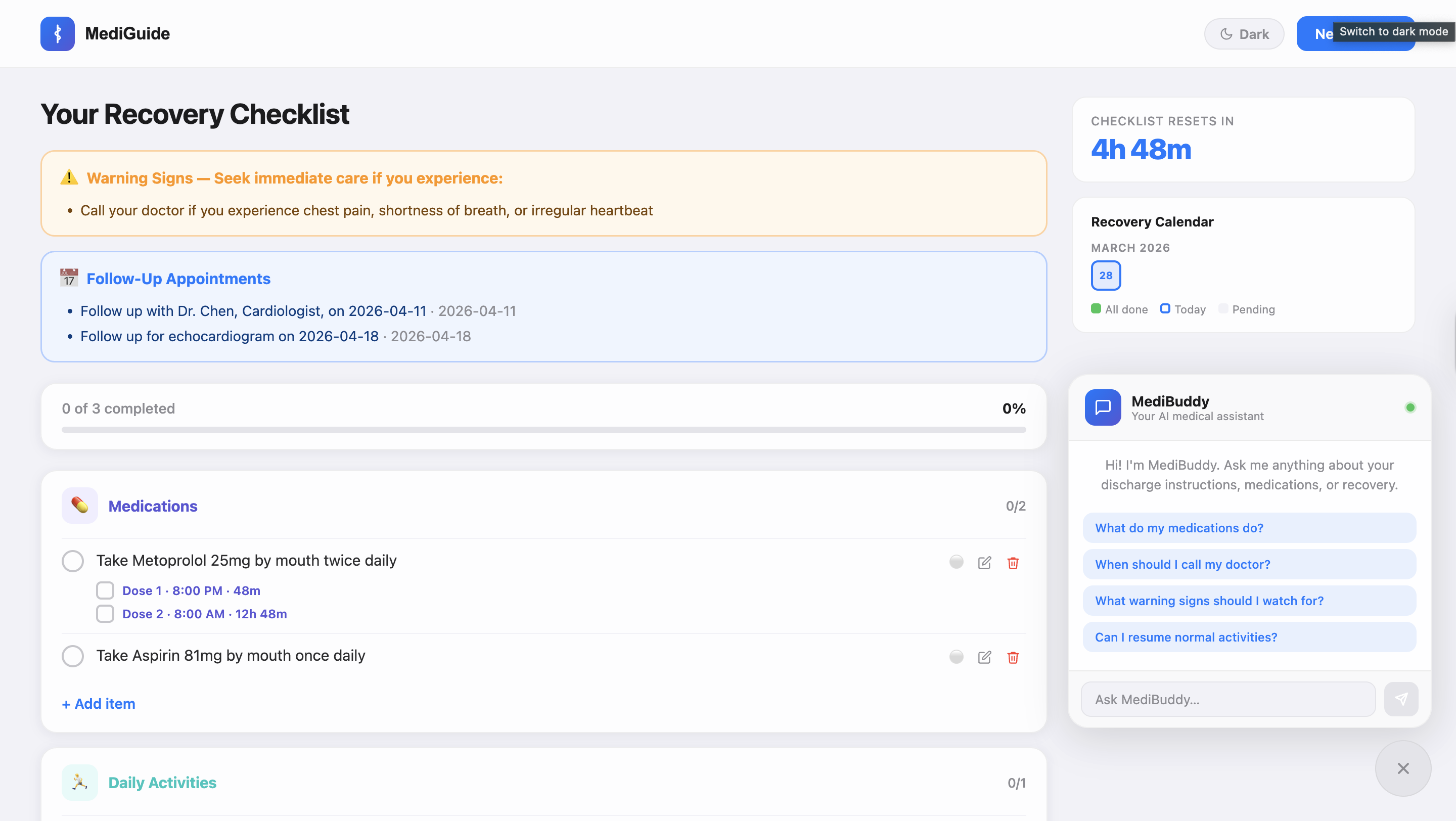
Checklist Page (light)
Inspiration
Previously, our group worked in healthcare over the summer where we would manage the front desk at hospitals. Whenever patients who were being discharged from the emergency room had questions they would come to the front desk. Unfortunately, we were not trained to understand all the medical jargon on patients' discharge papers and patients weren't able to gain the information that they were looking for.
What it does
Our website, MediGuide, allows patients to create their own accounts and upload their discharge papers securely into the application. Using AI-powered text processing, MediGuide creates personalized checklists, medication schedules, and easy to understand instructions to ensure that patients are following the confusing instructions on their discharge papers. Additionally, MediGuide includes an AI-powered medical assistant to help the user with any additional questions they may have.
How we built it
We used Kiro to build our requirements page that we then edited to meet the standards for our application. Then we had Kiro build our design and run enough tasks to make our MVP. After making sure our design was solid, we gradually added more features and connected Kiro to our AWS accounts, integrating AWS services to configure the backend and support frontend development. Toward the end, we focused on improving usability by adding features like a calendar system to remind users when to take their medications.
Challenges we ran into
One of our biggest challenges that we faced was connecting the frontend to the backend, especially when we were making sure that the application handled file uploads and processed them properly. We also encountered issues with parsing the medical documents because the formats varied.
Accomplishments that we're proud of
We are proud that we were able to build a working MVP that takes in real discharge documents and converts them into actionable steps that are easy to understand. We also were able to combine multiple technologies, like AI, cloud services, and frontend, into one cohesive application.
What we learned
With this project, we learned how to work with cloud-based architectures and integrate multiple AWS services into a full application. We also were able to gain experience using AI tools for real-world applications, especially in processing and simplifying complex text. Not only this, we improved our debugging skills and learned how important it is to ensure that the design is user-centered, especially in healthcare where accessibility and clarity is crucial.
What's next for MediGuide
In the future, we plan to expand MediGuide by adding in multilingual support for patients who speak different languages, therefore they can benefit from the platform too. We also want to incorporate voice-based explanations for accessibility which would allow users to listen to their instructions and checklists instead of reading them. Additionally, we would like to improve the actual parser by using a better AI model to interpret the complex medical terminology more efficiently and effectively.
Built With
- amazon-web-services
- api
- bedrock
- cloudfront
- cognito
- kiro
- lambda
- react
- rekognition
- s3
- typescript
- vite

Log in or sign up for Devpost to join the conversation.