-
-
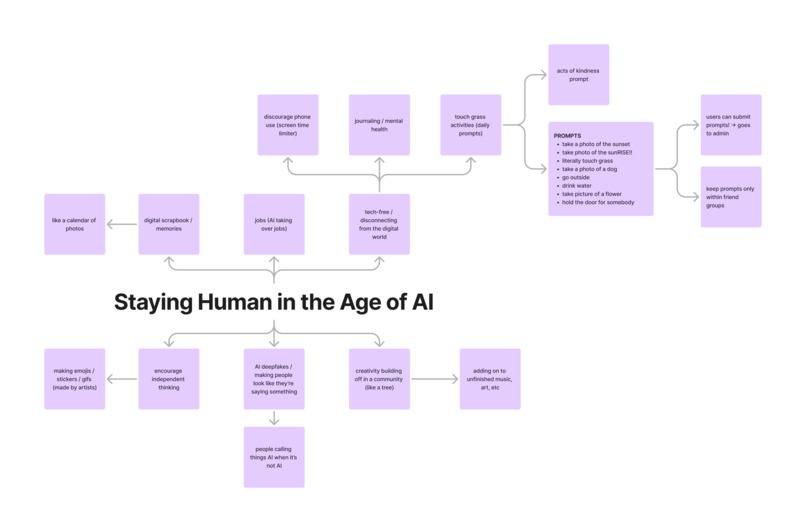
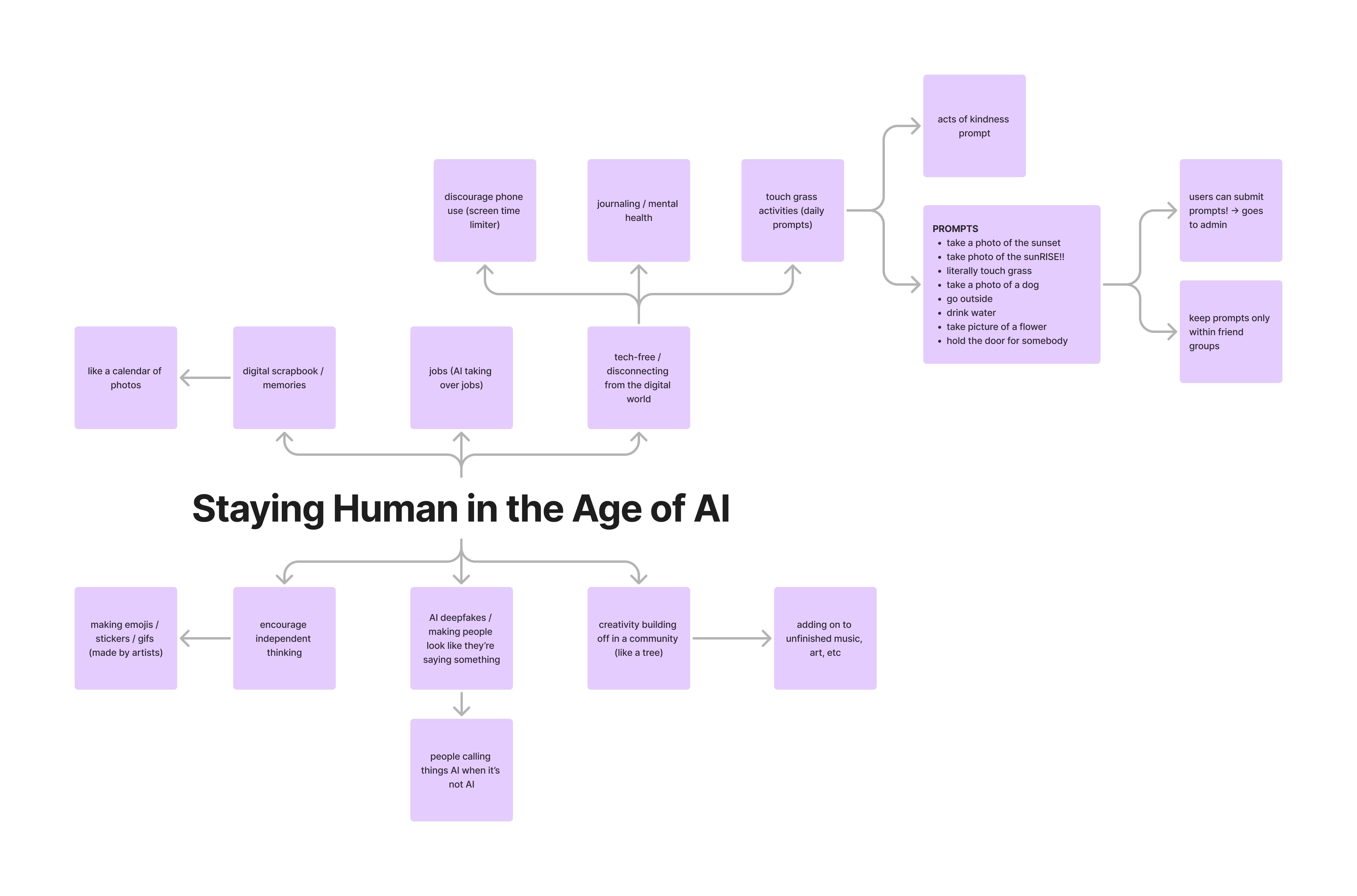
Brainstorming
-
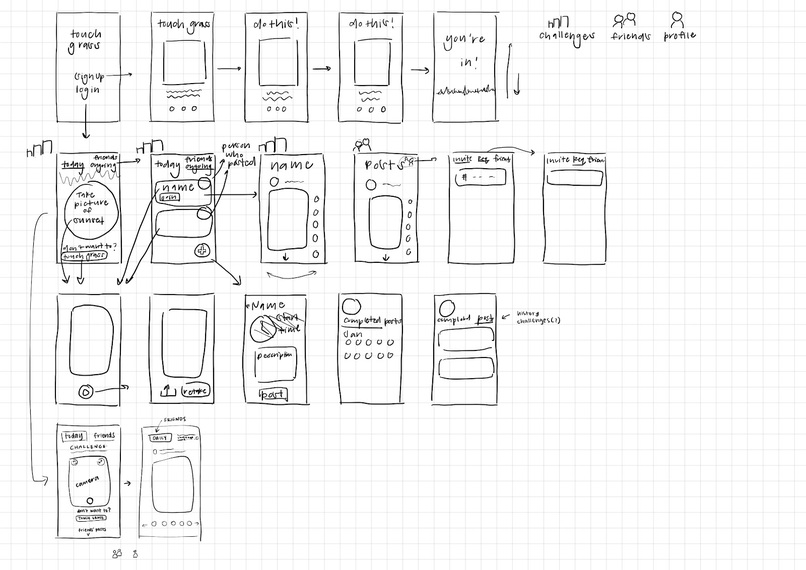
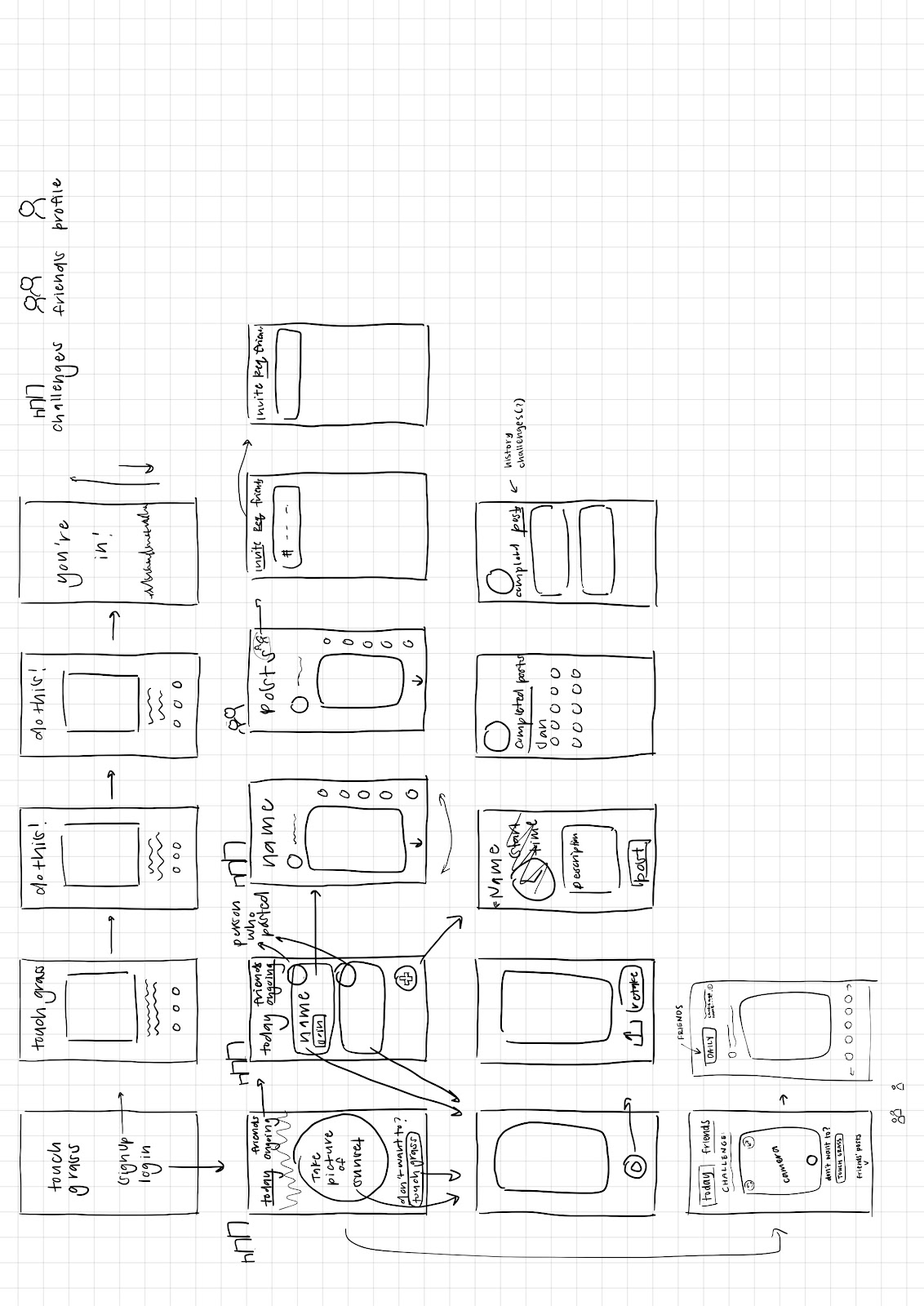
Sketches
-
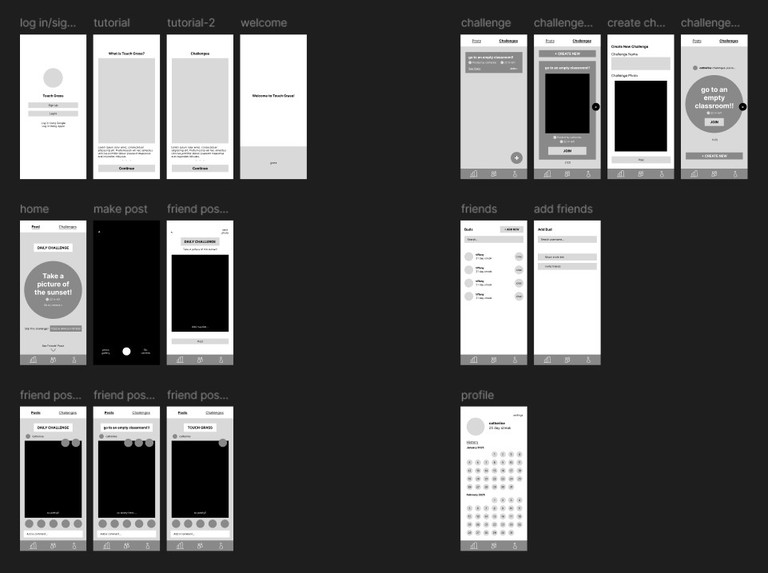
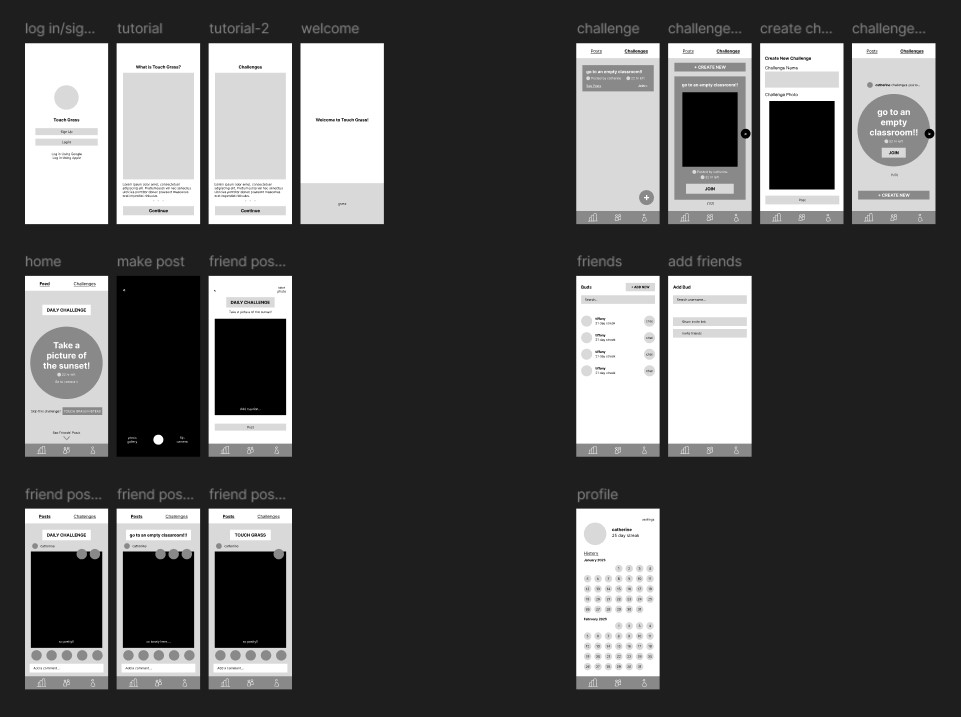
Wireframes
-
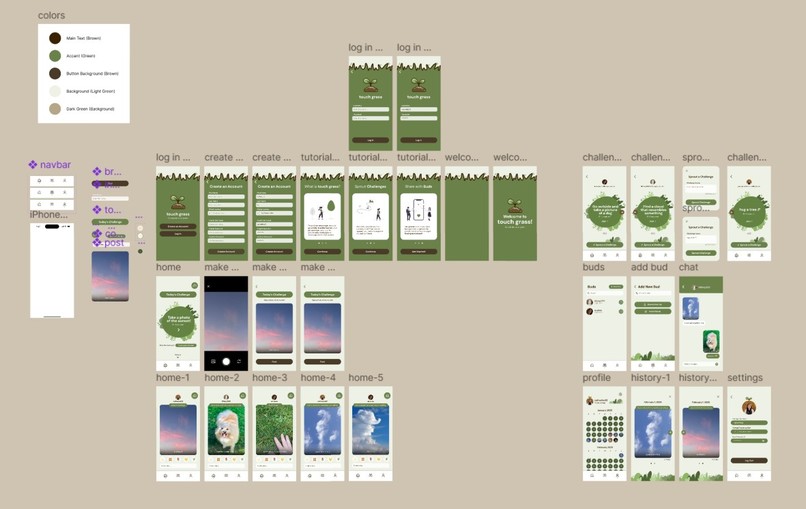
Hi-Fi Mockups
-
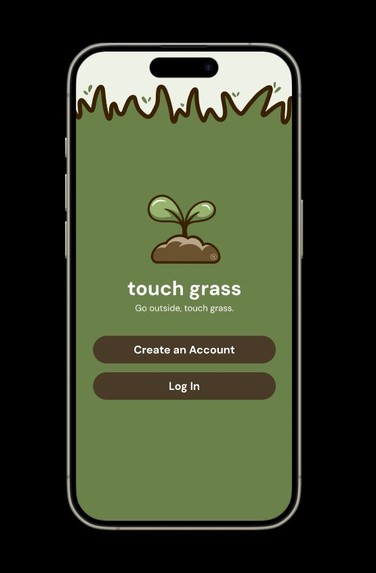
Log In Screen
-
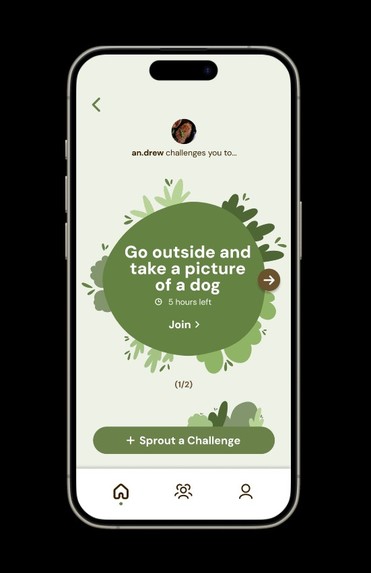
Daily Challenge Screen
-
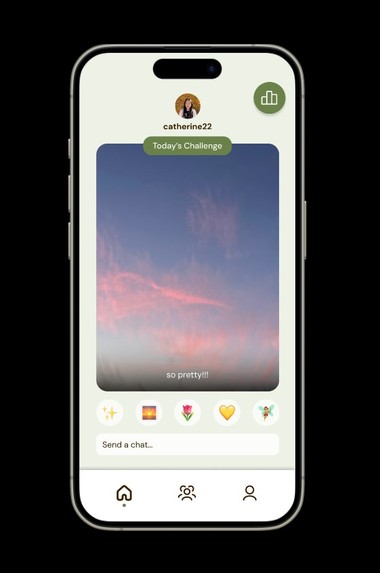
Touch Grass Post
-
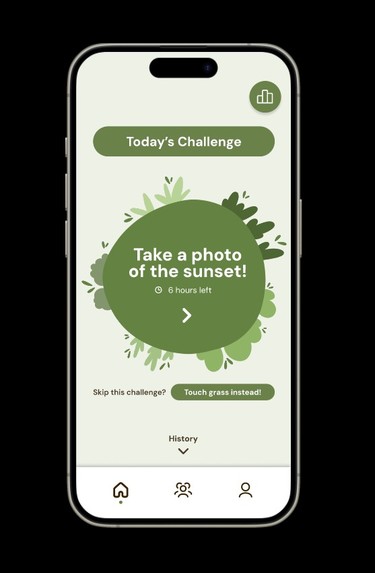
Buds' Challenge Screen
-
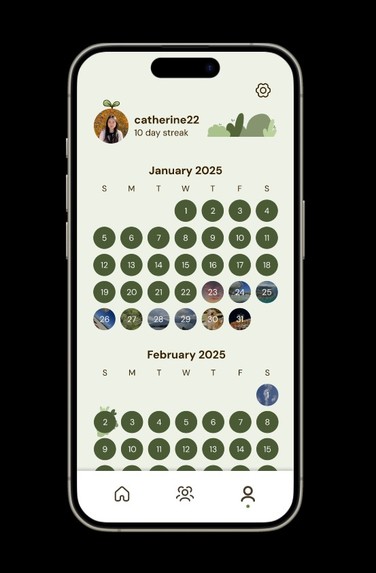
Profile Screen
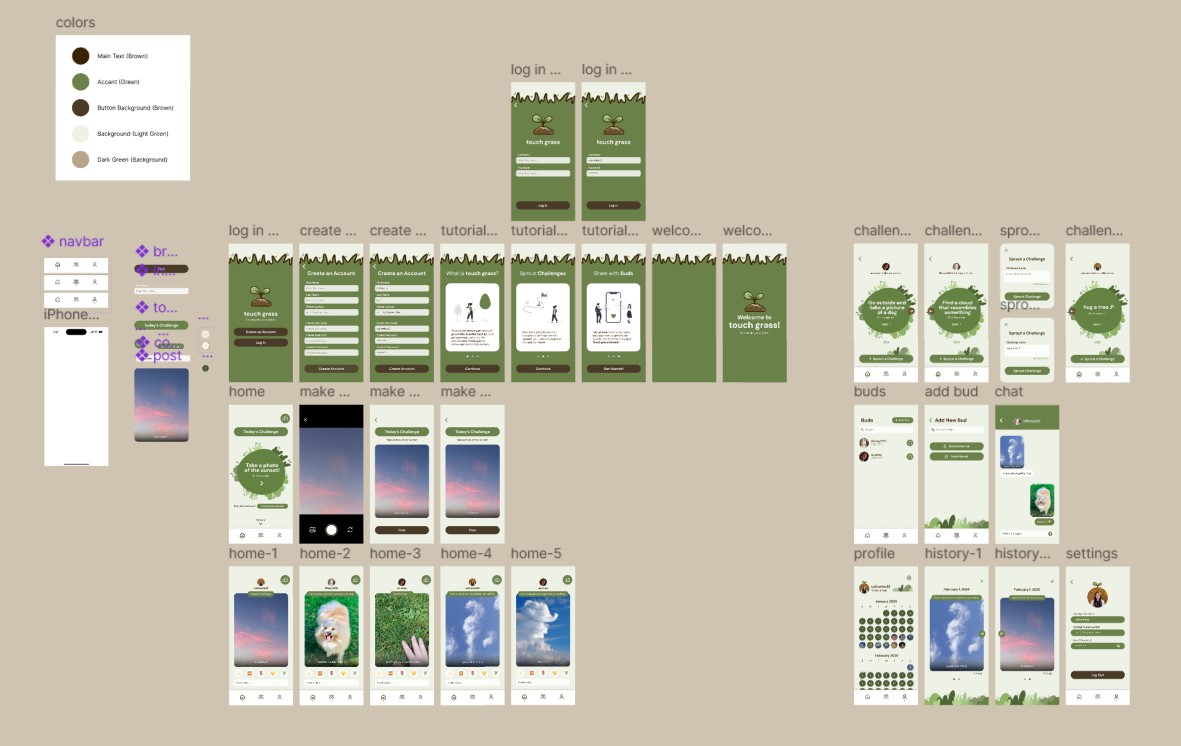
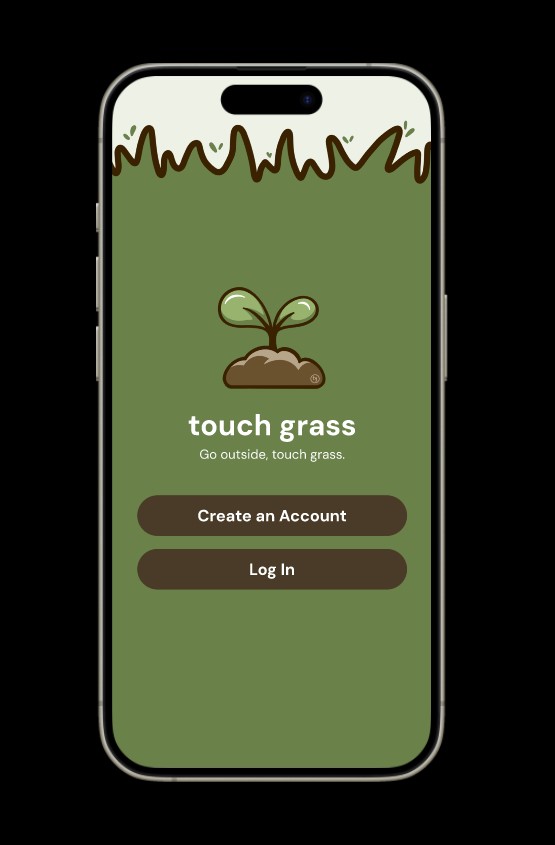
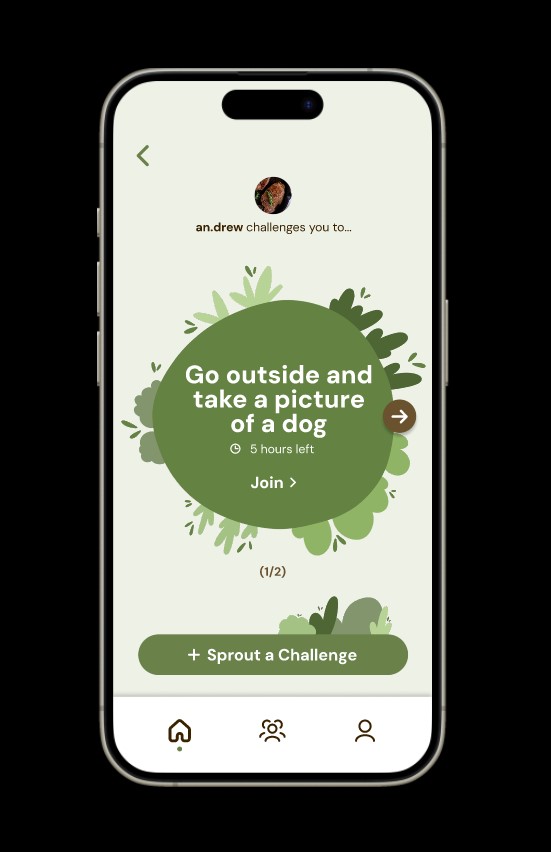
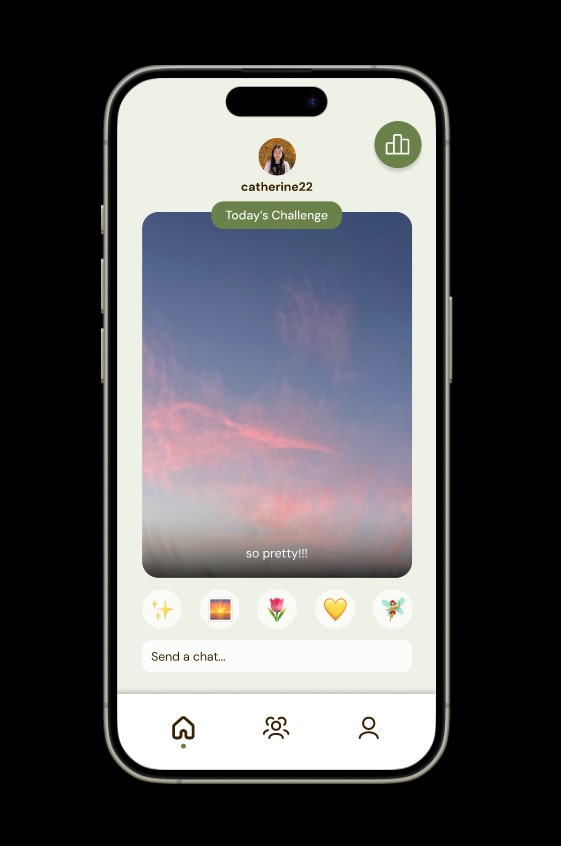
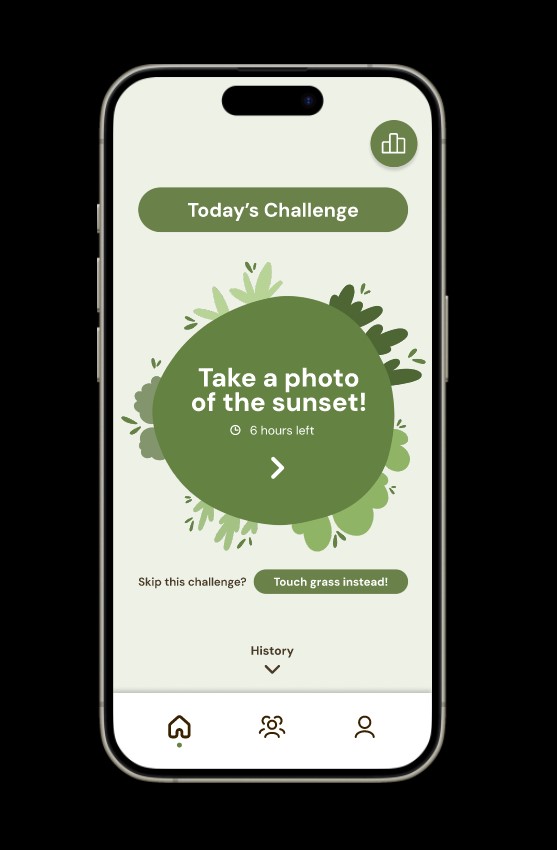
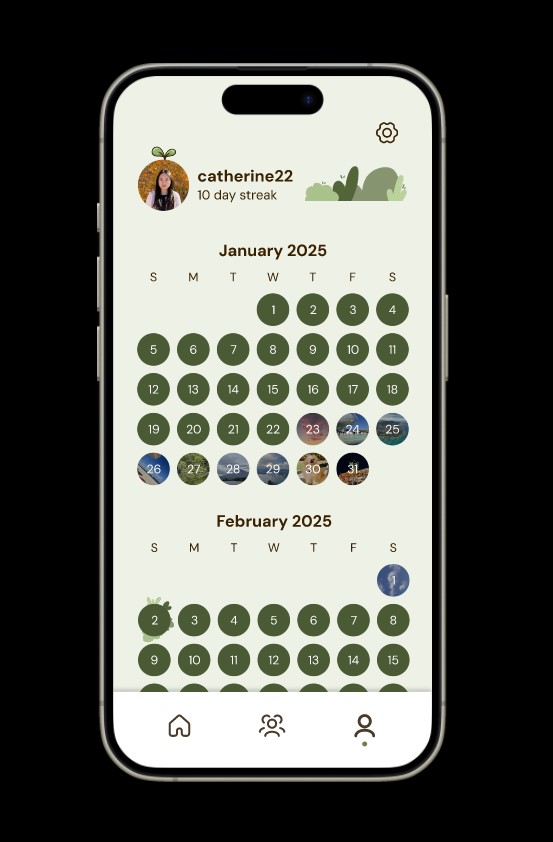
Prototype link (Please submit a link to a playable prototype, not a link to your design file)
touch grass Figma PrototypeDescribe your project (max 150 words)
touch grass
[ tuhch ] [ gras, grahs ]
verb- a phrase to urge someone to spend more time in the real world that is often used humorously or sarcastically.
Touch grass is an application that encourages users to go outside, breathe fresh air, and get sunshine everyday. We often get caught up in our digital worlds, so touch grass provides a daily reminder to embrace things that are real.
Each day, the system provides challenges, such as “Take a photo of the sunset!” or “Hug a tree.” Users will take photos to show that they've completed the challenge. Completing challenges daily will contribute to user streaks. To keep users engaged and encourage them to keep using the app everyday, they have a feed that shows their friends’ photos for challenges as well. Users can also introduce their own challenge prompts to their friends to add something new and exciting.
- Describe your research process and findings. If you conducted any surveys or interviews, please include the survey form and/or interview questions here. If you conducted secondary research by pulling from online sources, please include a link to your sources. (Max 500 words)
User Survey
Our target audience for touch grass is high school and college students and our responses consisted of 30 people, with 93.3% being a part of our target audience. The survey covers a few areas of inquiry including the problem we are trying to solve, demand for such a tool, and user design preferences.
Problem: In our survey, we asked questions “Have you ever spent a whole day without going outside in the past year?” and “What is stopping you from going outside more often?”. The goal of these questions was to determine whether lack of activity, specifically outdoor activity, was an issue with high school and college students. 93.3% of users reported practices of spending entire days not going outside within the past year, with 33.3% of respondents reporting that they very often spend an entire day without going outside. These responses support our initial assumptions and suggest that there is a problem of students not being very active. When asked what is stopping them from going outside, people pointed to lack of motivation (53.3%), not knowing what to do outside (46.7%), and laziness (36.7%) as some of the reasons.
Demand: To gauge user demand for touch grass, we asked questions like “How often do you seek out new experiences in your daily life?”, “Do you wish you spent more time outside?”, and “Would you enjoy receiving small daily challenges to change up your daily routine or experience something new?” 86.7% of participants reported that they do seek out new experiences in daily life. 90% of participants reported that they would want to (or maybe want to) spend more time outside. 80% of participants responded that they would enjoy (or would maybe enjoy) receiving daily challenges. These findings suggest that there would be interest within our target audience for our app.
Design choices: To help with significant design choices within our application, we asked more specific questions regarding features that they would like to see, such as incentives, a social aspect with friends/family, or creating their own challenges. 50% of users reported wanting competitive tracking like streaks as opposed to no-penalty tracking or no tracking at all. Based on this finding, we implemented tracking streaks as a part of our application to track daily challenge entries. 66.7% of participants reported wanting to share their content with family and friends, so we implemented a social aspect for the app. 63.3% of participants wanted to introduce their own challenges, so we implemented this as well.
- Describe your most important design decisions. What research findings and/or user testing results led you to make these decisions? (Max 500 words)
Application name: The phrase “touch grass” inspired the idea for our app. The roots of this phrase embody the perceived problem, and the phrase itself is a representative solution to the problem, so it was a clear choice to us that our app should be named “touch grass.” Our slogan is “Go outside, touch grass.”
Color scheme and branding: Our app consists of a largely green and brown color scheme to reflect nature, which reinforces our app’s goal of regular outdoor activity. For typography, we used DM Sans, which is a simple font that contrasts the more vivid aspects of our app. We decided to hand draw many of the elements within our app such as the logo and framing for challenges to create a unique balance of images representing our brand, while also maintaining a theme that was casual and visually appealing. This helped us differentiate our app from others, such as overly serene nature apps or overstimulating social media apps. To further strengthen our branding, we incorporated nature-related terminology such as calling friends “buds” and using “sprout” to mean creating challenges.
Social Aspect: Our user research revealed that 80% of respondents would like (or were open to) sharing their activity with friends/family. Open-ended responses reinforced this preference, with users expressing a desire for “something fun with friends” or “a social aspect like BeReal.” Concerns about “losing interest or forgetting” and getting “bored with the prompts” led us to emphasize social interaction— we placed friends’ posts on a feed-like home page and allowed users to create (“sprout”) their own challenges as well. With more social aspects integrated in this app, it is more appealing to our target audience and fosters more motivation by making outdoor activities feel more fun and like a team effort.
Streaks and Calendar Tracking: We were initially unsure of how to best incentivize daily participation. Survey results showed that 50% of respondents preferred incentives to be more competitive (e.g., streaks) and 41.2% of respondents preferred progress tracking with no penalty. To balance both preferences, we implemented streaks without making them feel high pressure— users can maintain their streak by simply “touching grass” if the daily challenge isn’t feasible for them. Furthermore, there is not too much emphasis on streaks, so users don’t feel too stressed about them. In addition to streaks, we introduced a calendar feature to track past challenges, offering users a more visual history of their outdoor activities. Beyond motivation, this calendar serves as a place to look back on fun and memorable activities, reinforcing the habit of cherishing time spent outside.
Throughout the design process, we prioritized simplicity and engagement, ensuring our app remains fun, accessible, and aligned with user needs. By blending nature-inspired branding, social interaction, and flexible progress-tracking features, we created an experience that encourages daily outdoor activity without overwhelming users.
Built With
- figma


Log in or sign up for Devpost to join the conversation.