Inspiration
The inspiration for Hobscotch stems from a paradox in early young adulthood: we are more digitally connected than ever, yet we face a crisis of social isolation. Whether transitioning into college, navigating the post-grad slump, or settling into a new career, many young adults find their social circles shrinking and their personal growth stagnating. Our survey data revealed a heartbreaking reality: over 50% of people feel small talk never translates to deep friendship, leaving them stuck in a cycle of surface-level interactions and doomscrolling.
We realized that the barrier to both personal mastery and deep connection was the same. People want to learn new skills like coding, cooking, or guitar, but they are “hitting a wall” due to the high costs of classes and the motivation-lacking sterility of YouTube tutorials.
Hobscotch was born from the idea that a shared goal is the fastest shortcut to a real bond. By turning personal growth into a social architecture, we remove the awkwardness of “forced” networking and replace it with the organic accountability of a peer-to-peer exchange. We aren't just helping people learn skills; we are building a world where the act of teaching and learning becomes the foundation for lasting community.
What it does
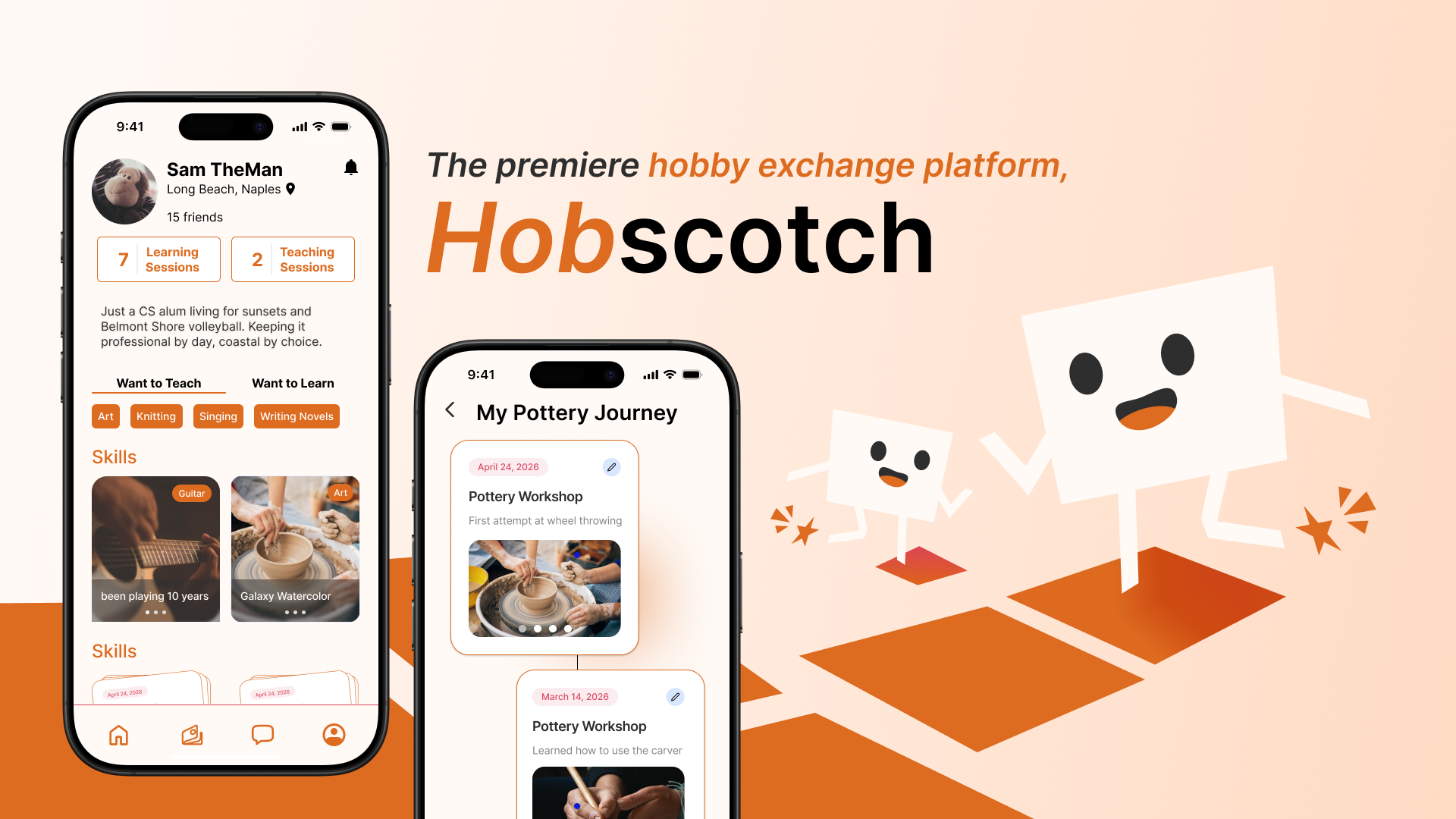
Hobscotch is a peer-to-peer barter system that allows users to trade skills as currency. This means a user might teach someone how to draw with water colors in exchange to bake or play the drums. Since the platform also matches on mutual interests it creates a solid common ground for users to find real companionship and growth.
How we built it
We utilized Gemini and Figma AI to brainstorm the core user journey and refine the app’s flow and logic. For the design phase, we moved from low-fidelity wireframes to high-fidelity prototypes in Figma, focusing on a UI that feels approachable, warm, and low-stakes for our target audience.
Challenges we ran into
Initially our group had a lot of indecisiveness about the exact direction our app should take, specifically who our target audience should be. In the end, we realized that all our speculation was meaningless without having any user data to make informed conclusions. Moving on from this hurdle, we immediately delved into user research through surveys and interviews, which made it clear which direction we should take.
Another challenge was addressing the "stranger danger" issue when meeting people online. Many users expressed that they would be hesitant to meet someone from an app. We balanced this by implementing video and photo-sharing features to humanize profiles.
Our last hurdle was determining our target audience. At first we intended our app to be for post grads because it was assumed that skill based sharing is more desirable for them however after conducting user interviews on college students we realize that we cannot use those findings to represent post grad students.
Accomplishments that we're proud of
Accessible Learning: We created a system where time and talent are the only requirements, making personal growth accessible regardless of financial status. Novel Safety Features: We prioritized "low-stakes media" (like voice notes or casual photos) to verify users, which proved more effective at building trust than traditional, sterile ID verification. Social Impact: We successfully addressed the "loneliness epidemic" by ensuring the reward of the app isn't just a certificate, but a meaningful connection.
What we learned
Our research reveals that in-person mentorship is both more desirable and more effective. The face-to-face format facilitates real-time feedback and fosters a deeper interpersonal connection that enhances the learning experience. We learned that teaching is the highest form of learning; many users found that explaining concepts to others helped them achieve “active recall” and mastery of their own skills. On top of that, in person learning boosts accountability which was one of the pain points from our user research.
What's next for Hobscotch
Verification & Trust: Develop a 'Verified Partner' program that integrates with local businesses (third spaces) to offer reserved seating for skill-swaps, ensuring all meetups occur in highly visible, safe community hubs. Integrate AI-driven matching to suggest partners based not just on skill keywords but on learning styles and personality compatibility, reducing the social friction of starting a conversation with a stranger.
Built With
- figma


Log in or sign up for Devpost to join the conversation.