-

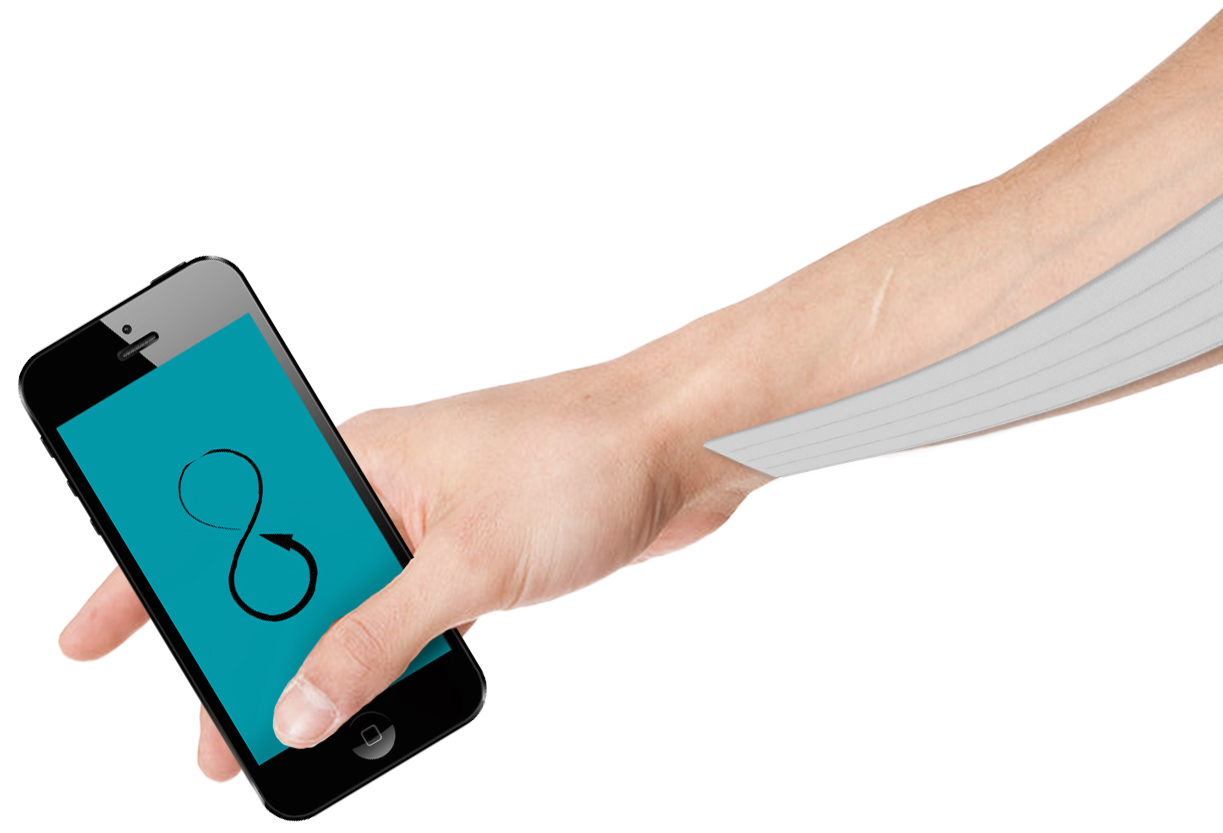
Our name signifies motion & music. A figure 8 is the most basic hip pattern in latin dance. An 8 count is also the most common music pattern
-
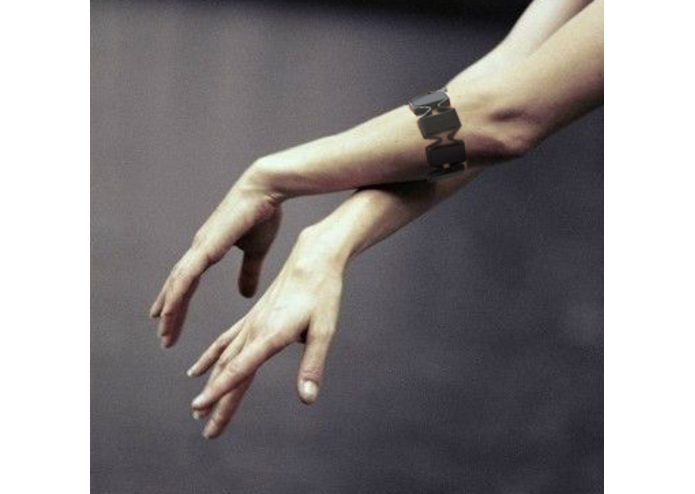
Arm Wearable: This conceptual wearable would be used by dance instructors to capture the proper arm motion for students to later emulate
-
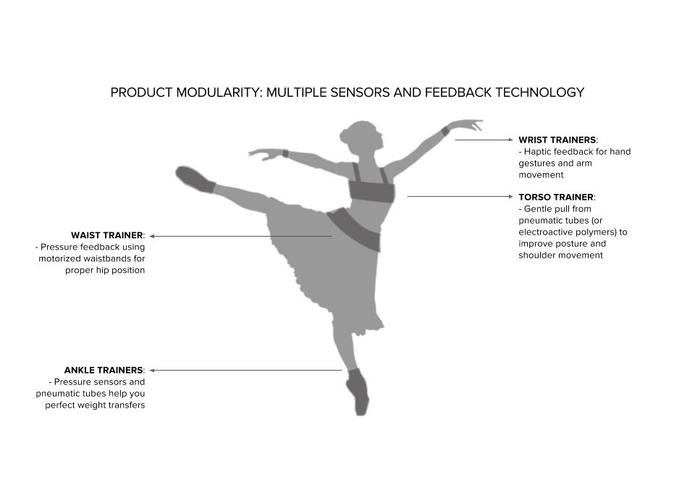
Modular Design: Our product would consist of several wearables that users could pick and choose, depending on what they were training
-
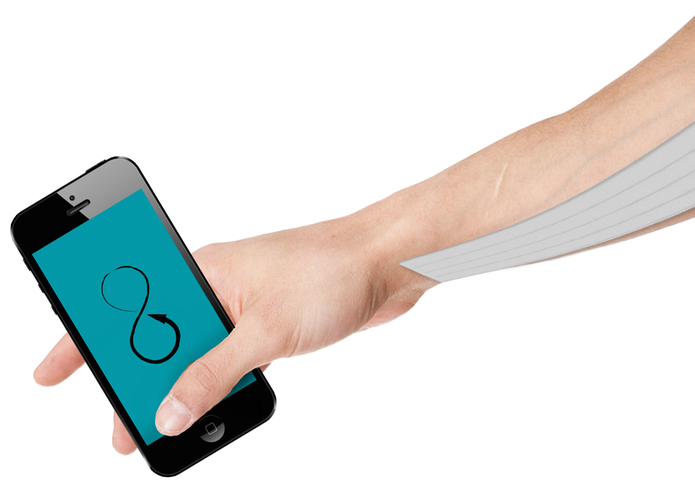
Adv. Materials: We aim to use materials where we can control their rigidity in specific ways, like electroactive polymers.


Inspiration
5… 6... 7... 8! We are a team of five artists and technologists who are inspired to use dance technology as a learning platform for future dancers. Collectively we are dance lovers, but understand the challenges that come with trying to learn and teach this kinetic art form. Tamer (MIT Sloan 2017), a novice dancer, shared his frustrations with trying to learn Lindy Hop this summer. Classes were large, instructors can be hard to follow, and the classes are not catered to the learning curve of each student. Arthur (MIT Sloan 2017), a ballroom dance teacher, can relate. As an instructor, he emphasizes the necessity of a supplementary feedback system-- both to increase confidence and improve dance abilities. Margaret’s (MIT 2018) interest to prompt muscle memory through responsive feedback systems, and Linda’s (Pratt 2018) background in architectural and industrial design contribute to the viability of this technology as a product that can be brought to the market. Natalie’s (Tufts Alumni 2016) experience in dance and new media curation helps to identify potential users. With our joint skill sets we are confident we are presenting a product that can revolutionize the way we learn musicality and dance skills through physical digital responses and haptic feedback. We aim to push discouraged individuals back into dance classrooms, teach beginners the basics of movement, and deliver world-class instruction to all open-minded students.
What it does
Introducing, Figure 8 - an app + wearable solution to help dancers get better - almost like a personal dance instructor. The app contains the techniques and figures of a variety of dance styles. The companion to the app is a set of modular, wearable devices, which go on various parts of the body (Waist, Wrist, Torso, Ankle/Feet). These wearables are sync'ed to your app, and as you practice specific moves, these wearables capture your technique (position, motion, movement, etc), and provide gentle "nudges" via a variety of technologies (haptic, pneumatic tubes, mini-motors) to help guide your movement to being more correct
How we built it
We built a demo for the most basic dance skill - musicality. Musicality means the ability to identify the beat or tempo pattern in the music you are listening to, so that you can then time your movements to the music. To help train someone in this, we wanted to give the user a physical indicator for the tempo of a song they are listening to. This approach emulates how Arthur would teach musicality to his students- by playing music and tapping them on the shoulder so they could associate the beat they are hearing with the tap they are feeling. To accomplish this, we created an iPhone app that leverages the built-in haptic engine to provide a physical cue to the user that aligns with the music they are listening to. This transforms auditory to physical, thereby helping the student learn how to identify the right beat, and stay on beat while practicing basic motions.
Challenges we ran into
One of the main challenges we ran into was whether or not our product would be a standalone product, or one that uses the existing framework of an iphone. We found that integrating it with an iphone was a powerful idea because it made Figure 8 more accessible to the public. However, we also decided that a standalone product could be the next phase.
Accomplishments that we're proud of
We are proud to be integrating technology with dance pedagogy through a playful and professional application. We are including state-of-the-art technology.
What we learned
We learned that the user needs direct feedback from the product modules we create. Rather than being something that is simply instructive, the wearable modules needs to be devices that tell you, like an instructor would, whether or not you are doing the movements correctly.
What's next for Figure 8
After our initial prototype, we plan to continue developing our product “modules” - modular wearables for different parts of the body: Wrist, Waist, Torso, Ankle. These modules will incorporate various types of sensors to input data, as well as various feedback technologies to provide feedback.

Log in or sign up for Devpost to join the conversation.